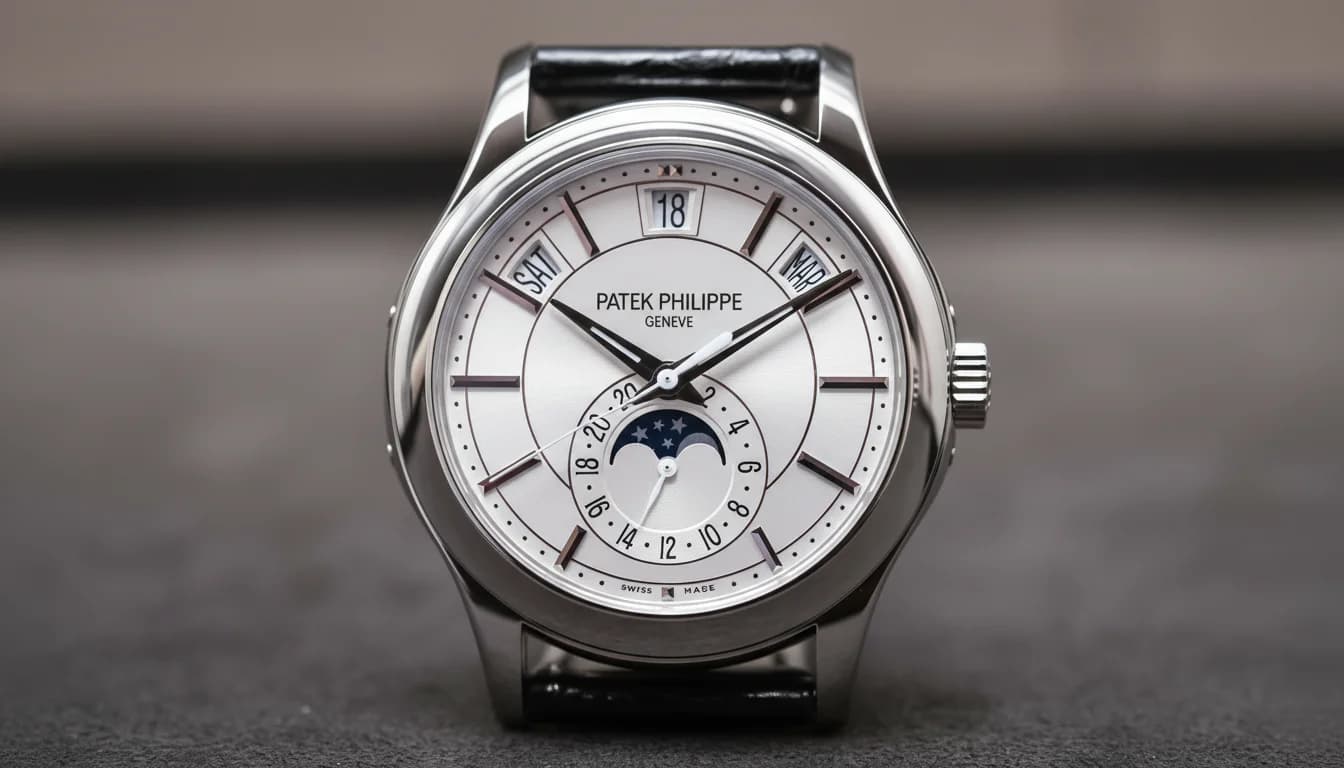
The short answer: an annual calendar is a wristwatch complication that displays the day, date, and month, and automatically knows the difference between 30-day and 31-day months. The only manual correction it ever needs is once a year, at the end of February, because it cannot tell a leap year from a regular one. That single yearly nudge is the entire difference between an annual calendar and a full perpetual calendar.
AI disclosure: this post was researched from primary watch-industry sources and written with AI drafting assistance, then reviewed by a working dealer before publication.
Patek Philippe introduced the annual calendar in 1996, and it solved a real problem: perpetual calendars were (and still are) expensive and mechanically delicate, while a simple date window forces you to correct the date by hand five times a year. The annual calendar sits in between, and for most owners it is the more sensible watch to actually live with.
How an Annual Calendar Actually Works
A simple date window has no idea how many days are in the current month. Every 30-day month, someone has to push the date forward past the 31 it does not know to skip. An annual calendar fixes that with a programmed cam, sometimes called a month wheel or a 31-day cam, that is cut to the actual length of each month and drives the date mechanism forward correctly on its own.
The One Blind Spot: February
The cam that handles April, June, September, and November correctly cannot also handle February, because February is either 28 or 29 days and the watch has no way to calculate the calendar year on its own. So once a year, on March 1st, an annual calendar owner corrects the date forward by hand. Every other month-end transition happens automatically.
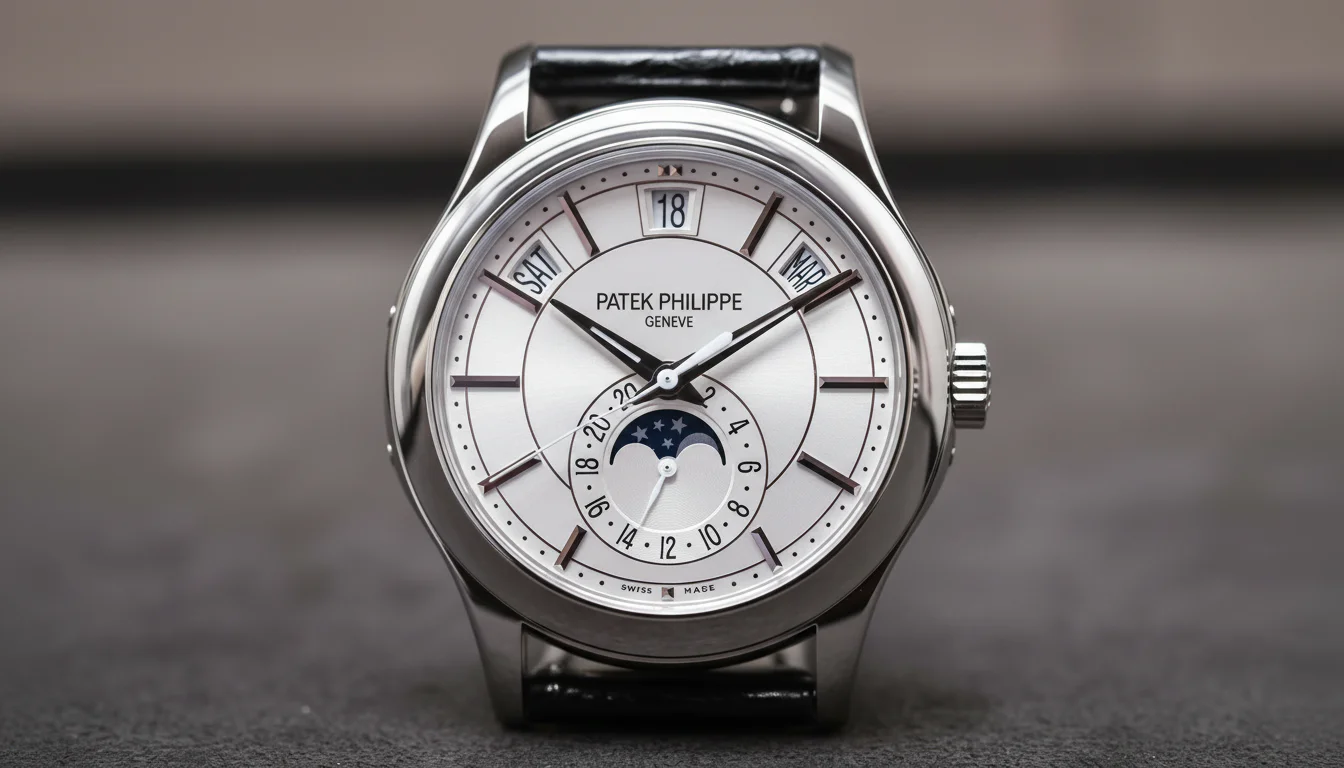 A typical annual calendar layout: day-of-week and month sub-dials, a date display, and often a moonphase along for the ride.
Annual Calendar vs Perpetual Calendar vs Simple Date
The three calendar types trade mechanical complexity for convenience, and the price gap between them is real.
| Type | Manual corrections per year | What it tracks | Typical added cost vs time-only |
|---|---|---|---|
| Simple date | 5 (every month under 31 days) | Date only | Lowest |
| Annual calendar | 1 (end of February) | Day, date, month | Moderate |
| Perpetual calendar | 0 until the year 2100 | Day, date, month, leap year | Highest |
Why Perpetual Calendars Cost So Much More
A perpetual calendar adds a mechanism that counts leap years across a four-year cycle, which means more parts, tighter tolerances, and a movement that has to track something a wearer cannot glance at and verify. When Patek launched the annual calendar in 1996 on reference 5035, it priced around CHF 18,300 against roughly CHF 44,700 for the brand's perpetual calendar models of the same era, and that gap has held up in the decades since.
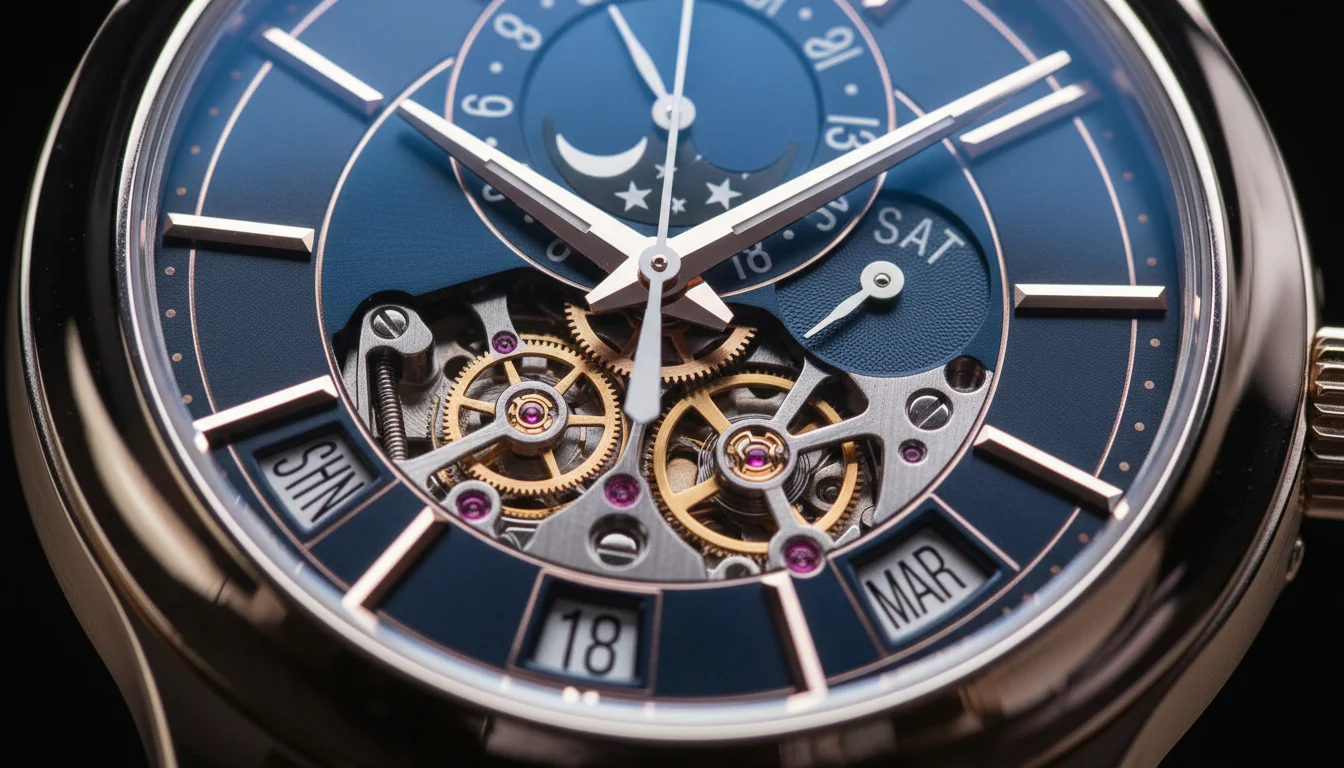 Close detail of the day and month sub-dials that make an annual calendar readable at a glance.
Who Makes Annual Calendars, and What They Look Like
Patek Philippe remains the reference point, but the complication has spread across a handful of other manufactures who each display it differently. Some use three sub-dials for day, date, and month. Others fold the date into a window and reserve the sub-dials for day and month, sometimes adding a moonphase or a 24-hour indicator as well.
Annual Calendar Chronographs
A handful of manufactures combine the annual calendar with a chronograph, which stacks the day and month sub-dials alongside the chronograph's own counters on an already busy dial. It is a genuinely difficult layout to execute cleanly, since the calendar and the timing functions are competing for the same real estate.
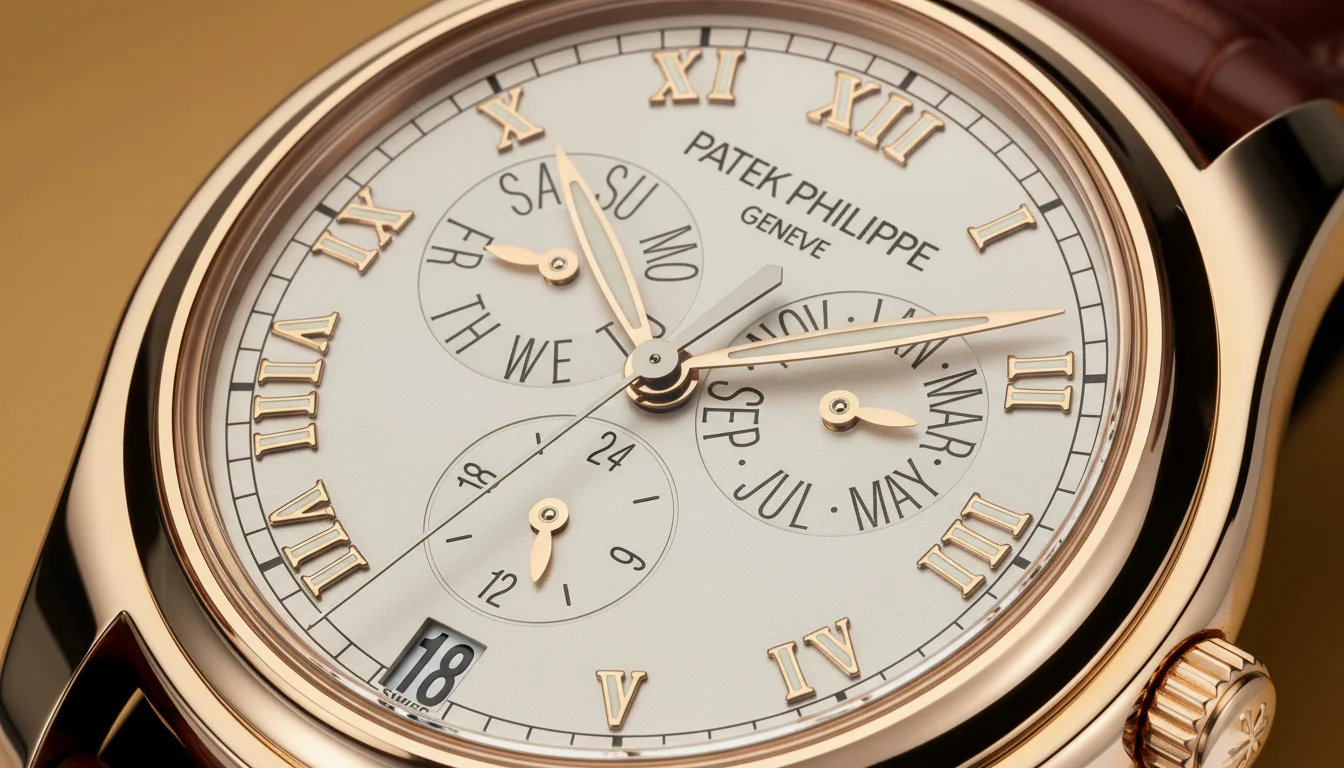 An annual calendar chronograph, with day, month, and 24-hour sub-dials sharing the dial alongside a date window.
Setting One Correctly
Because the date, day, and month are mechanically linked, most annual calendars should only be adjusted forward, and many brands warn against changing the date between roughly 8pm and 2am, when the calendar mechanism is mid-transition and can be damaged by a manual push. If you are not sure whether your watch is safe to adjust, a watchmaker can confirm the safe correction window in a few minutes.
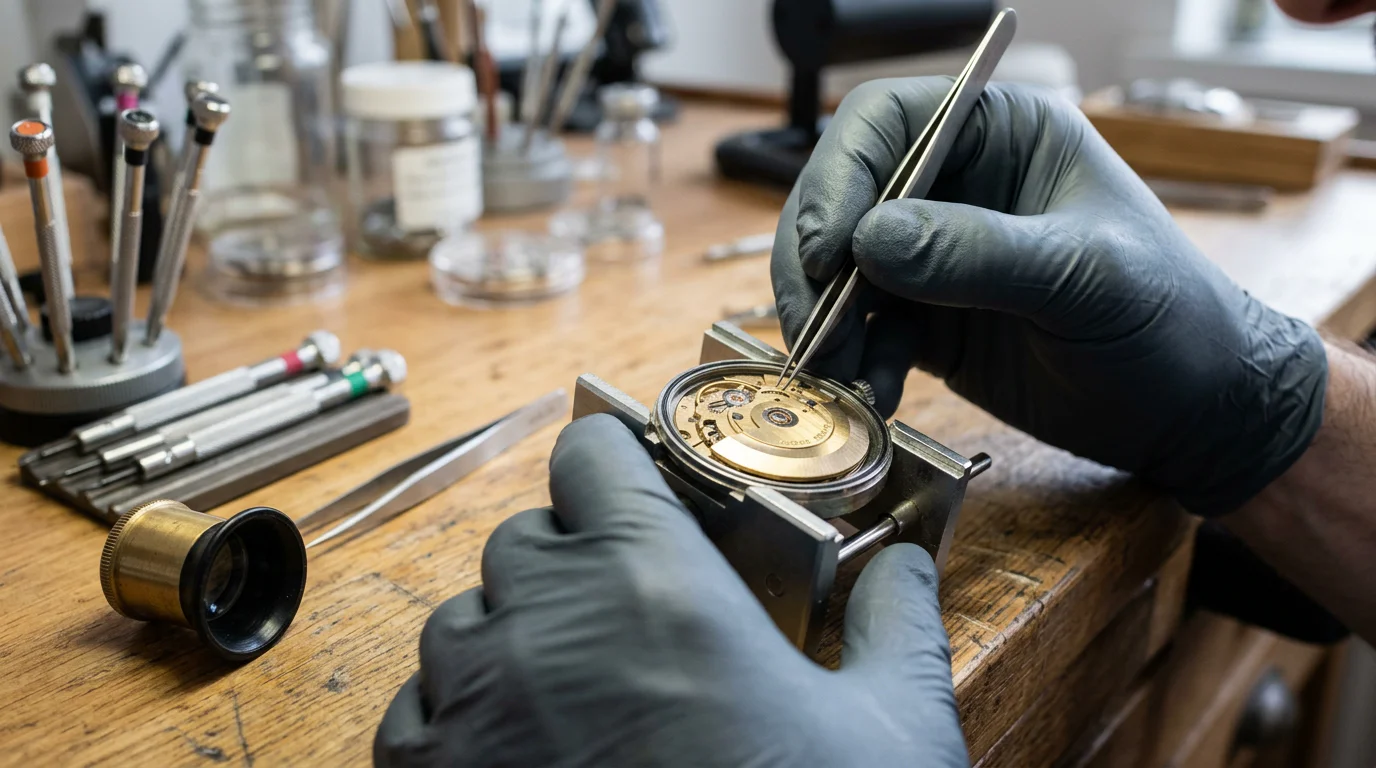 A watchmaker's hands adjusting an open calendar movement secured in a movement holder. Correction timing matters because the date, day, and month wheels are mechanically linked.
Buying One Pre-Owned: What to Check
An annual calendar has more moving parts than a time-only watch, and more parts means more that can wear or get pushed out of alignment by a previous owner correcting the date at the wrong time.
What a Watchmaker Checks First
A pre-purchase check should confirm the day, date, and month all change cleanly at midnight with no lag, that the moonphase (if present) is accurate against the actual date, and that nothing was forced. Whoever services a mechanical annual calendar needs the same fine tweezers and movement holders used on any complicated movement, just applied to more wheels doing more coordinated work.
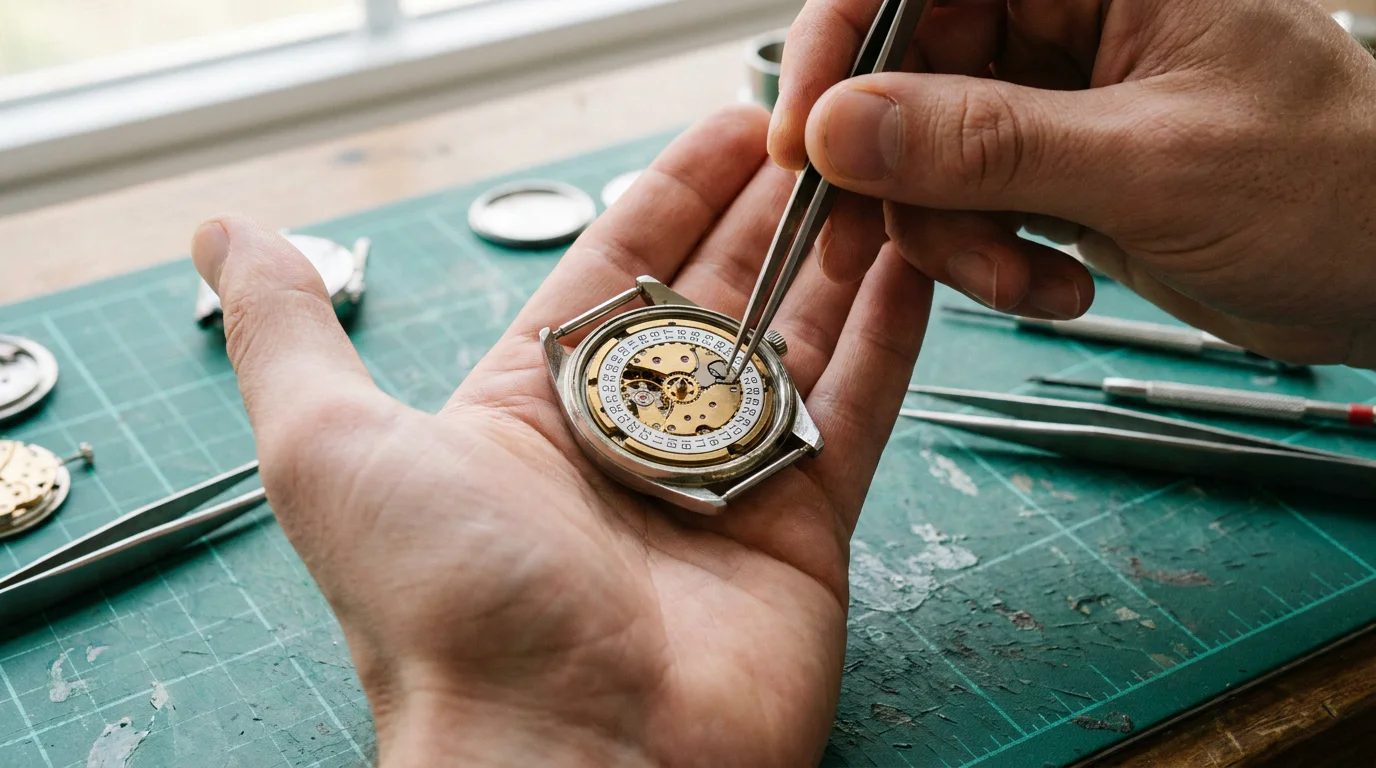 Adjusting a calendar wheel by hand. Forcing a correction during the mechanism's transition window is the most common cause of damage.
Related Reading
Perpetual Calendar Explained: How a Watch Knows It's Not February 30th, The Moonphase Complication, Explained, and Quickset Date Explained: What It Is and How to Use It Safely.
FAQ
What is an annual calendar watch?
A complication that displays the day, date, and month, and automatically knows the difference between 30-day and 31-day months, needing only one manual correction a year at the end of February.
What is the difference between an annual calendar and a perpetual calendar?
An annual calendar needs correcting once a year in February, while a perpetual calendar accounts for leap years automatically and needs no correction until the year 2100. Perpetual calendars are mechanically more complex and cost significantly more.
Who invented the annual calendar complication?
Patek Philippe introduced the modern annual calendar in 1996 on reference 5035, patenting the mechanism that automatically tracks 30 and 31-day months.
Can you damage an annual calendar by setting the date wrong?
Yes. Many annual calendars should not be adjusted roughly between 8pm and 2am, when the internal calendar mechanism is mid-transition and forcing a correction can damage the linked wheels.
Is an annual calendar a good complication for a first serious watch?
It is a reasonable step up from a simple date for someone who wants real mechanical complexity without perpetual calendar pricing or the fragility that comes with it.