The Short Answer
Christopher Ward is a British watch brand founded in 2005 by Mike France, Peter Ellis and Chris Ward, built on a simple idea: sell direct to the customer online, skip the traditional retail markup, and put real Swiss movements in the case. The current lineup runs from the sport-focused C63 Sealander at £595 to the haute-complication C1 Bel Canto Classic at EUR 4,450, with The Twelve and C60 Trident sitting in between as the brand's best-known names.
The honest read: for a brand with no retail network and no celebrity endorsements, Christopher Ward builds a genuinely wide range, including its own in-house Calibre SH21 and the FS01 chiming module. It is not trying to be Rolex. It is trying to sell you more watch for the money, and on the whole, it delivers that.
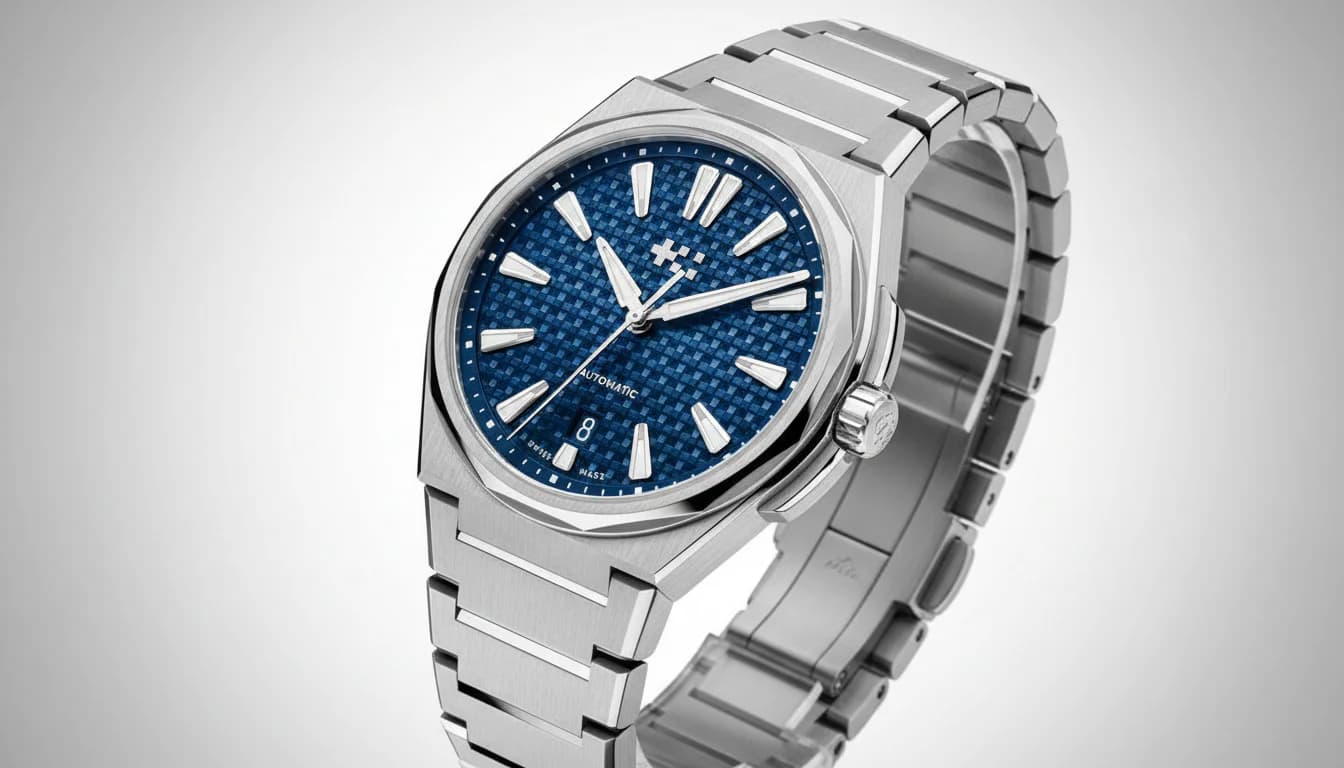
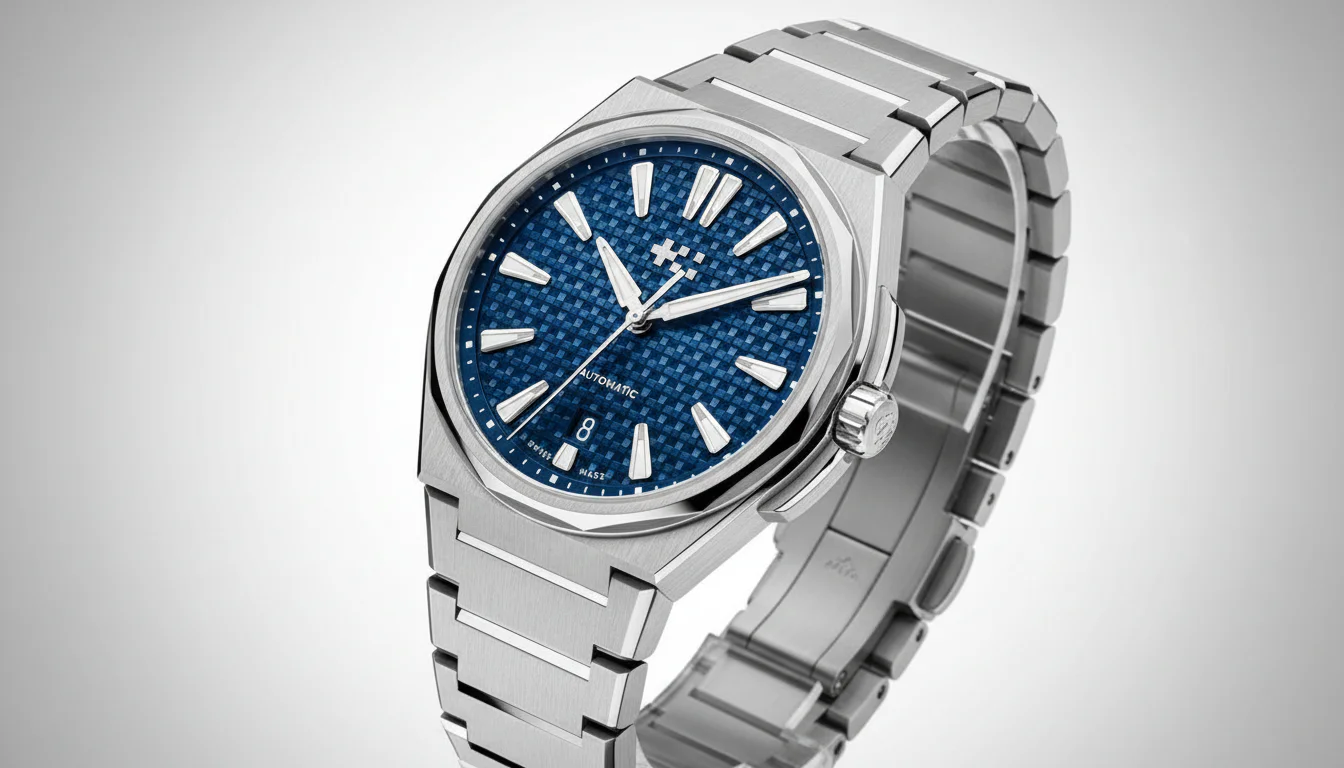 The Twelve is Christopher Ward's answer to the integrated-bracelet sports watch category, and it is the model most people mean when they say the brand's name.
The watch photos in this article were generated with AI image tools, conditioned on real reference photography of Christopher Ward watches so the case shapes, dial layouts, and construction details are accurate to the real watches.
Where Christopher Ward Actually Comes From
Mike France, Peter Ellis and Chris Ward founded the company in 2005 after a conversation about how much of a Swiss watch's retail price goes to markup rather than manufacturing. Their answer was to sell exclusively through their own website, cap the markup at roughly three times the manufacturing cost, and skip the celebrity endorsement deals that Swiss competitors budget for. Mike France later described the goal as building "the cheapest most expensive watches in the world," a line that sums up the pitch better than any spec sheet.
The company launched from a converted chicken shed in Berkshire with two models: the C5 Malvern Automatic and the C3 Malvern Chronograph. Chris Ward left the company in January 2020 to launch a separate brand with his sons, which later closed in 2022. Christopher Ward the company kept running under its remaining leadership, and the name on the dial never changed.
The In-House Movement
In 2008, Christopher Ward partnered with Swiss movement house Synergies Horlogeres and watchmaker Johannes Jahnke to develop the 'JJ' calibre series. That relationship deepened into a full merger in 2014, and the result was the Calibre SH21, described at the time as the first commercially viable mechanical movement from a British watch brand in over 50 years. SH21 runs a 120 hour power reserve and COSC chronometer certification, a genuinely serious spec for a brand at this price point.
The C63 Sealander: The Entry Point
The C63 Sealander launched in 2020 as Christopher Ward's everyday sport watch, and it remains the most affordable way into the brand. Case sizes run 36mm, 39mm, 41mm and 42mm, with prices spanning roughly £595 to £1,515 depending on movement and complication. Base models run the Sellita SW200-2 Power+ or SW330-2, while the quartz Valour chronograph uses the ETA G10.212.
The True GMT variant, introduced alongside Christopher Ward's own Calibre CW-002, adds a genuine independently adjustable GMT hand and a power reserve indicator, both visible on a clean dial without crowding the layout.
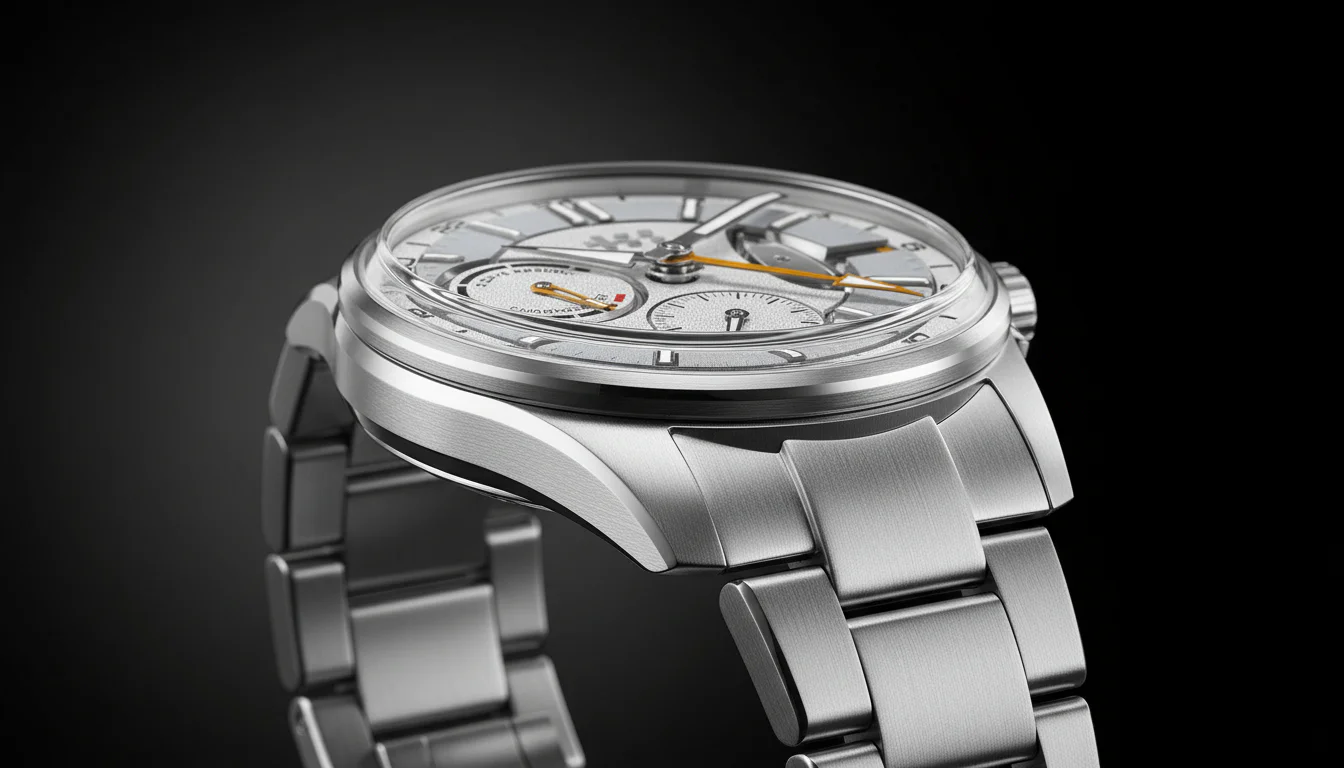 The orange GMT hand is a small detail that makes a genuine complication easy to read at a glance.
Where Sealander Sits Against the PRX
The Sealander is the watch most often cross-shopped against the Tissot PRX, and for good reason. Both chase the affordable integrated-bracelet look, but they are not fighting for the exact same buyer. The Twelve, not the Sealander, is the model that actually competes head to head on that specific design language.
The Twelve: The Integrated Bracelet Flagship
The Twelve launched in 2023 as Christopher Ward's take on the integrated-bracelet sports watch, a category defined by Gerald Genta's original designs for Audemars Piguet and Patek Philippe decades earlier. Case sizes run 36mm, 38mm, 40mm and 41mm, with prices from £1,095 to £4,325 across the range.
Movement options span the Sellita SW200-1, the COSC-certified SW300-1, a manual-wind SW210-1b, and Christopher Ward's own in-house CW-001 caliber in the range-topping models. The dial uses a fine Clous de Paris textured pattern that catches light differently depending on the angle, a detail that photographs better in person than in most marketing shots.
The Twelve X and Special Editions
Beyond the standard lineup, Christopher Ward has released The Twelve 660 and The Twelve X, including a skeletonized variant that WatchTime covered as a hand-painted limited piece. These sit at the top of the price range and lean into finishing and complexity rather than volume.
The C60 Trident: The Dive Watch Line
The C60 Trident is Christopher Ward's dive collection, built across 38mm, 40mm, 41mm, 42mm and 44mm cases with 300 meters of water resistance on the Pro 300 and GMT 300 variants. Pricing runs roughly £725 to £1,725, and the range includes bronze, sapphire-bezel, and the Lumiere edition with an especially bright lume treatment.
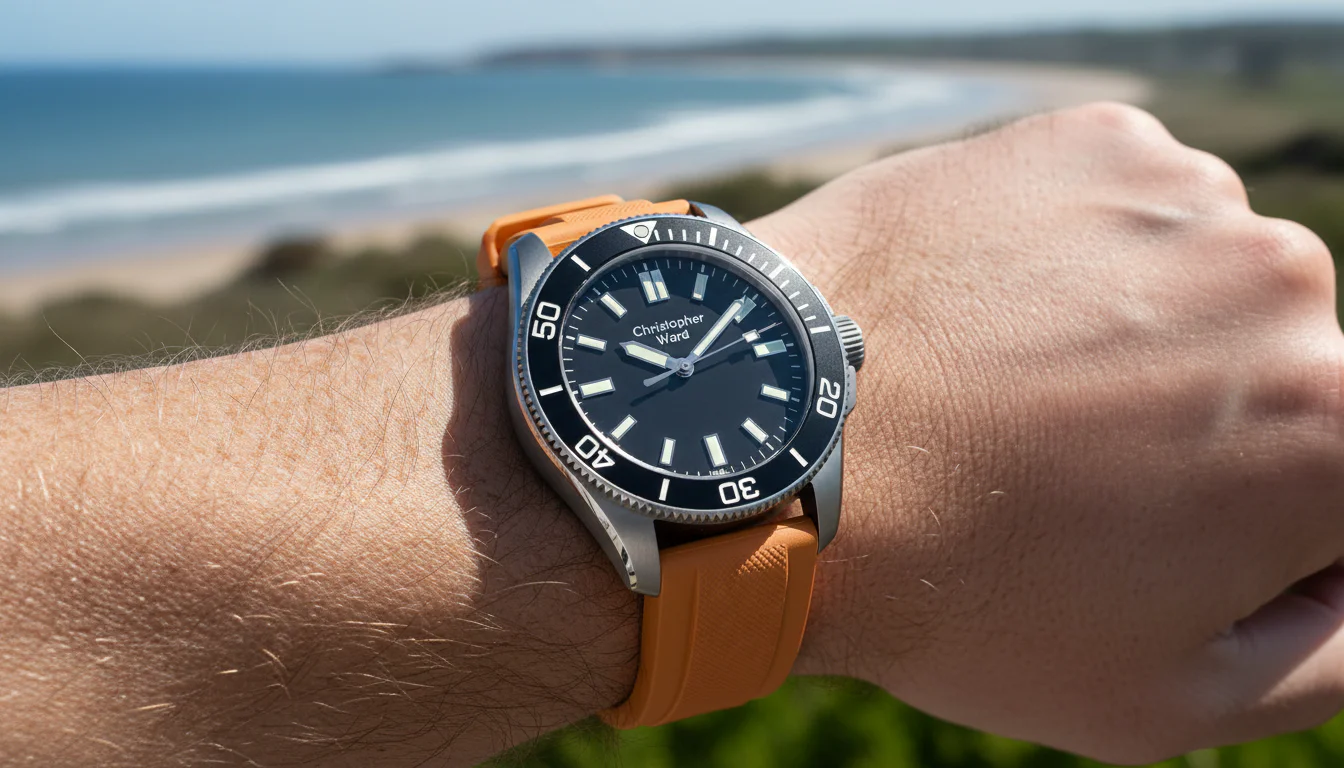 Titanium keeps the Trident light on the wrist despite the case size, and the Lumiere lume treatment is genuinely bright in low light.
What the Caseback Reveals
Flip a Trident over and the display caseback shows the finishing work Christopher Ward puts into a watch most buyers will only see from the dial side. Movement decoration and the brand's own engraving are consistent across the range, not reserved for the flagship models.
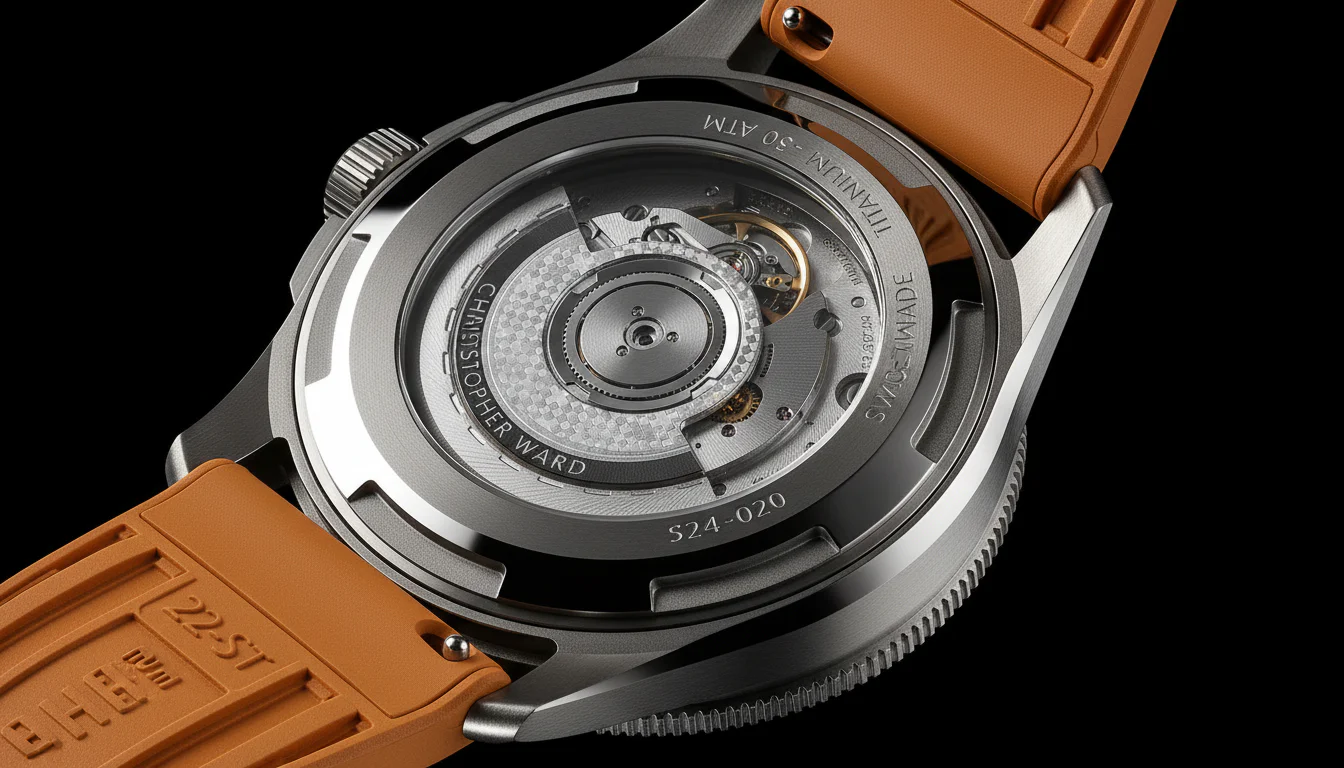 Swiss Made and the Christopher Ward name, engraved around a movement most competitors at this price would leave plain.
The Atelier Collection: Where the Complications Live
The Atelier tier is where Christopher Ward's more serious engineering shows up, priced from roughly £2,095 to £3,995 and beyond. The C1 Bel Canto uses an in-house FS01 chiming module developed by technical director Frank Stelzer, built on a Sellita SW200-1 base, striking the hour on a hammer and gong visible through the dial. The C1 Bel Canto Classic, a later variant with a laser guilloche dial, prices at EUR 4,450 on leather and EUR 4,885 on a titanium bracelet.
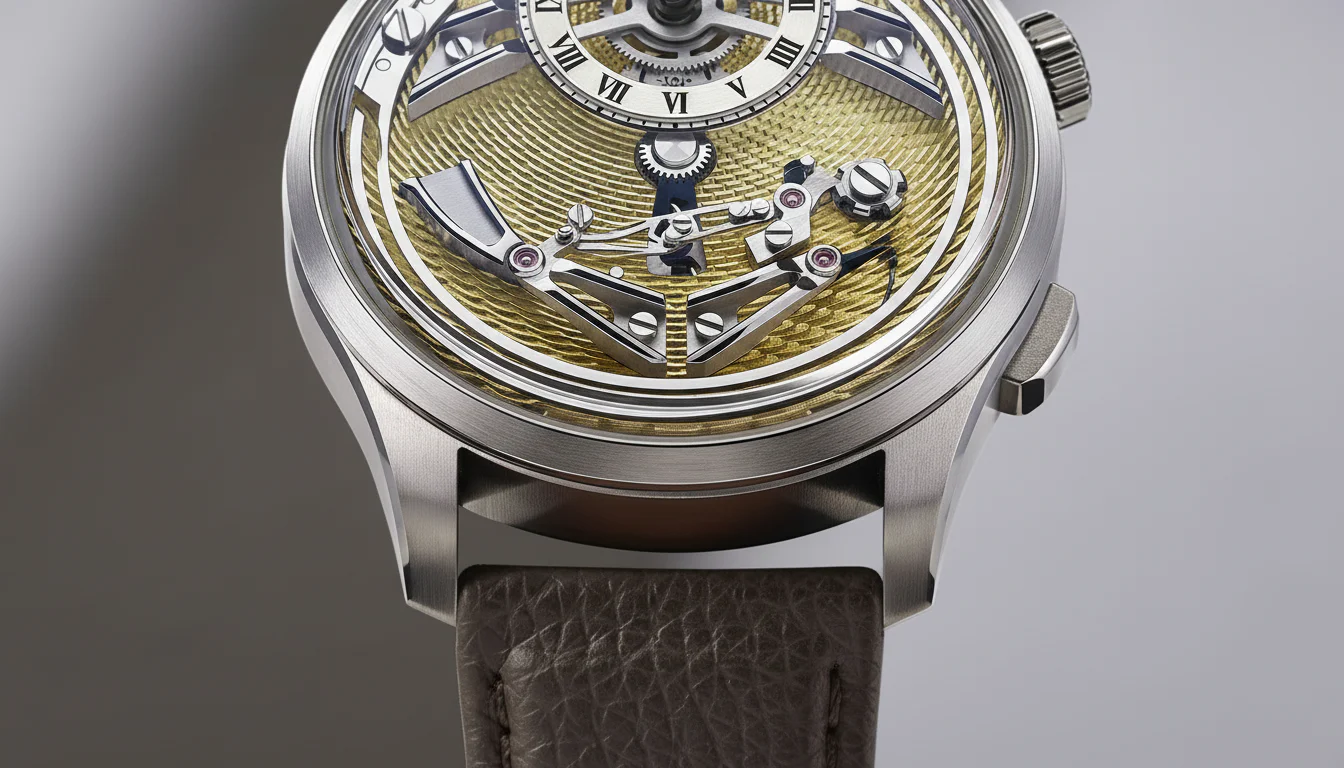 A striking hour complication under $5,000 is rare enough that Christopher Ward gets grouped with MeisterSinger's Bell Hora when reviewers talk about accessible chiming watches.
Also in this tier: the C12 Loco, built around the in-house CW-003 caliber, the C63 True GMT with the in-house CW-002, and the C1 Jump Hour MK V and C1 Moonglow.
Where the Lineup Falls Short
An honest brand guide has to cover the trade-offs. Christopher Ward has no retail showroom network to speak of compared to Swiss competitors, so trying a watch on in person before buying is harder outside a handful of cities with a Christopher Ward showroom. The brand also leans on Sellita base movements across most of the catalog, and only the SH21, CW-001, CW-002, CW-003 and FS01 models carry genuinely in-house engineering. That is not unusual at this price point, but it is worth knowing which reference you are actually paying for.
Resale value is another honest caveat. Christopher Ward sells direct with no dealer network propping up secondary pricing the way Rolex or Omega enjoy, so expect a real drop from retail on the used market, similar to most independent and microbrand names.
Should You Buy One
Christopher Ward makes sense for a buyer who wants genuine Swiss mechanical engineering, including real in-house calibers on the higher end, without paying for a dealer network or a marketing budget. It makes less sense for a buyer chasing resale value or the ability to try a reference on before buying in person.
FAQ
Who founded Christopher Ward?
Mike France, Peter Ellis and Chris Ward founded the company in 2005, selling watches directly online to avoid traditional retail markups.
Does Christopher Ward make its own movements?
Yes, on select models. The Calibre SH21 is the brand's flagship in-house movement, developed with Synergies Horlogeres and watchmaker Johannes Jahnke. The Twelve's CW-001, the C63 True GMT's CW-002, the C12 Loco's CW-003, and the Bel Canto's FS01 chiming module are also in-house. Most other models run Sellita base movements.
What is the most affordable Christopher Ward watch?
The C63 Sealander starts around £595, making it the brand's entry point. The C60 Trident dive line starts around £725.
How does The Twelve compare to the Tissot PRX?
The Twelve is the better-finished watch and the closer match to the Tissot PRX's integrated-bracelet design language, though it costs more. A dedicated comparison is worth reading if you are cross-shopping the two.
Is Christopher Ward a good value compared to Swiss brands with retail networks?
For the movement specifications and finishing on offer, yes. The trade-off is a limited network of physical showrooms and a steeper resale drop than brands with strong dealer support.
Related Reading
- The Tissot PRX vs the Christopher Ward Twelve: The Better Watch and the Better Deal Are Not the Same One.
- Are Microbrand Watches Worth the Money? A Dealer's Honest Read
- The Best Value Swiss Watches to Buy in 2026: A Working Dealer's Picks
- Oris Is the Best Swiss Value Nobody Talks About: The Aquis and Divers Sixty-Five, Read by a Dealer