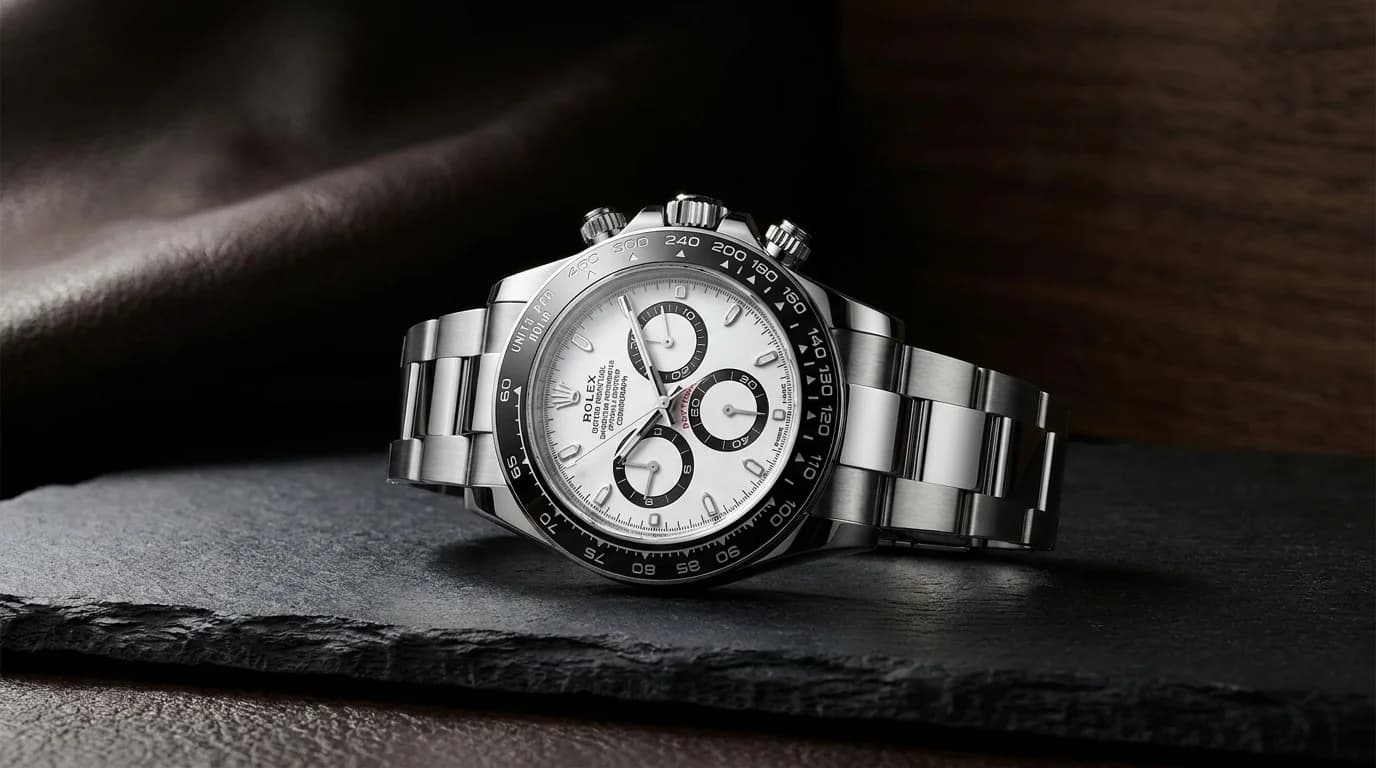
Every chronograph does the same basic trick: a pusher starts a stopwatch function layered on top of normal timekeeping. How that pusher actually talks to the gears underneath is where chronographs stop being equal. Two design choices decide how a chronograph feels under your thumb and what it costs to build: column wheel versus cam-lever switching, and vertical versus horizontal clutch engagement.
AI disclosure: images in this post are AI-generated renderings conditioned on real reference photography of each watch discussed. They are illustrative, not photographs of specific inventory.
The short answer
A column wheel is a small notched wheel that coordinates a chronograph's start, stop, and reset functions with one smooth rotation per push. A cam-lever system uses stacked levers and cams to do the same job more cheaply. A vertical clutch engages the chronograph seconds hand without a visible jump; a horizontal clutch can cause a small jump when the chronograph starts. Higher-end chronographs almost always use column wheel plus vertical clutch. Budget-friendly chronographs often use cam-lever plus horizontal clutch. Neither is "wrong," but they feel different on the wrist and cost different amounts to make.
Column wheel vs cam-lever: what you feel at the pusher
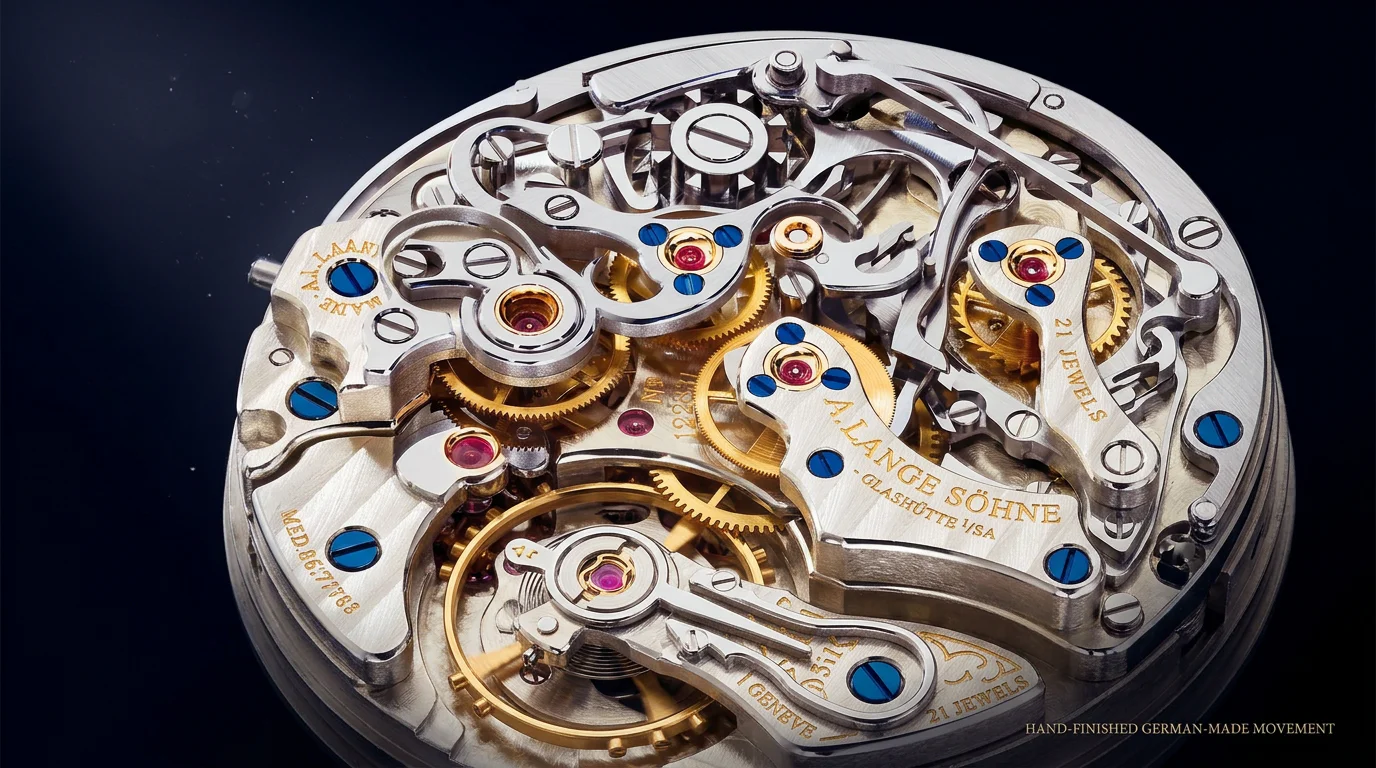 A column wheel coordinates every chronograph function through one rotating switch, notched to trigger the start, stop, and reset levers in sequence.
How a column wheel works
A column wheel sits at the center of the chronograph mechanism like a tiny geared crown with notched columns around its edge. Every time you push the start/stop pusher, a lever rotates the wheel one step, and the specific column positions underneath engage or release the start, stop, and reset levers in the correct sequence. The result is a crisp, defined click and consistent pressure at the pusher, push after push, year after year.
How a cam-lever system works
A cam-lever chronograph replaces the column wheel with a stack of shaped cams and levers that push directly against each other. It performs the same start, stop, and reset functions, but the pusher feel is typically mushier and less consistent, since the levers are riding directly against cam surfaces rather than clicking into defined notches.
Why it matters: cam-lever systems are cheaper to manufacture and easier to mass-produce, which is why they show up in mid-tier chronographs built on movements like the ETA/Valjoux 7750 family. Column wheel construction requires more precise machining and more assembly time by hand, which is reflected in price.
Vertical clutch vs horizontal clutch: the jump you may have felt
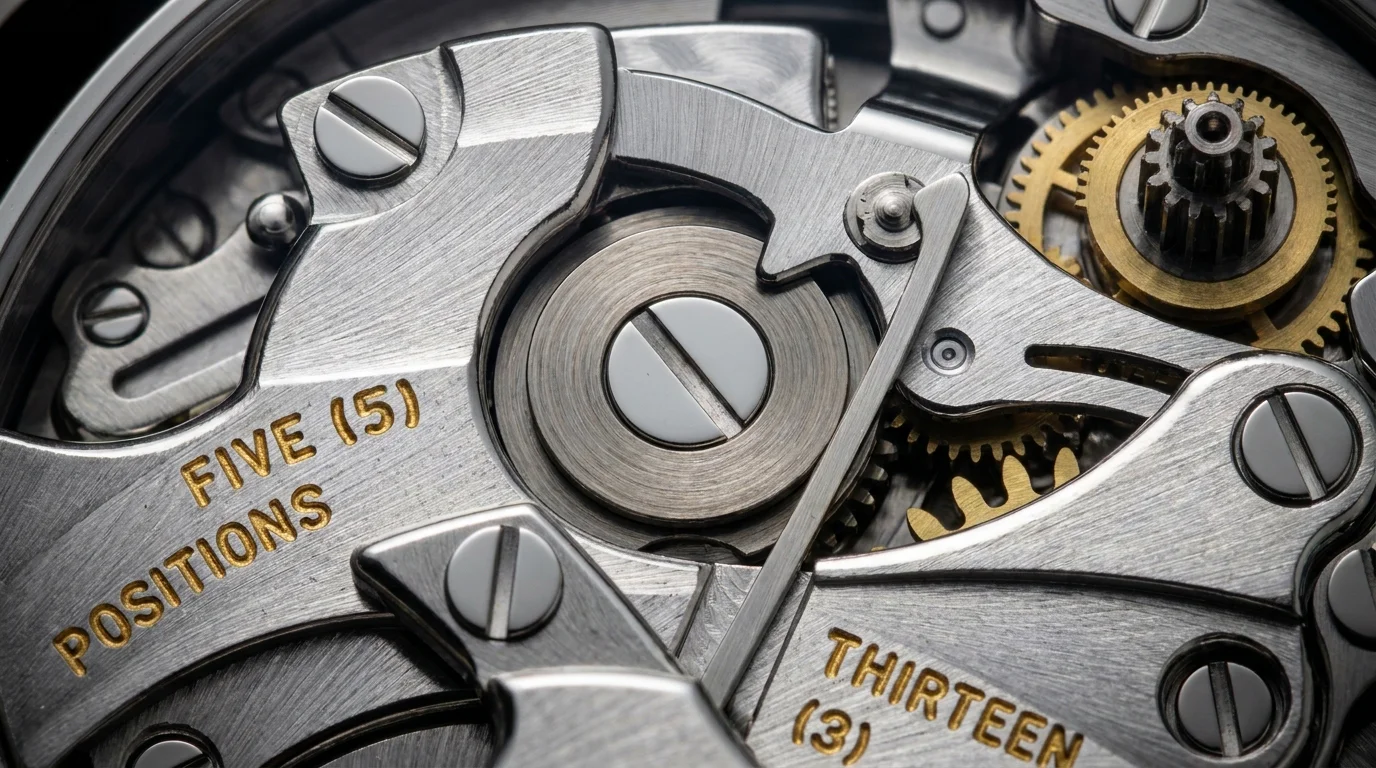 A vertical clutch engages two stacked friction discs rather than meshing gear teeth, which is why it starts the chronograph hand without a jump.
Horizontal clutch
A horizontal clutch engages the chronograph seconds wheel by sliding a gear sideways into mesh with the running gear train. This can cause a small, visible jump in the chronograph seconds hand the instant you press start, since two gears with slightly different positions suddenly mesh together.
Vertical clutch
A vertical clutch stacks two coaxial discs, one always spinning with the movement, one connected to the chronograph hand. Engaging the chronograph presses the two discs together through friction rather than meshing gear teeth, eliminating the jump entirely. The chronograph hand starts exactly where it should, every time.
Why it matters: the vertical clutch is a genuine functional upgrade, not just a marketing term. It is standard on nearly every serious in-house chronograph movement built in the last 20 years.
Five real movements, five approaches
Rather than talk in the abstract, here is how five chronographs actually on the market handle these two design choices.
| Watch | Movement | Switching | Clutch | Frequency |
|---|---|---|---|---|
| Omega Speedmaster Professional | Calibre 3861 | Column wheel | Horizontal | 3Hz (21,600 vph) |
| Rolex Daytona 126500LN | Caliber 4131 | Column wheel | Vertical | 4Hz (28,800 vph) |
| Zenith Chronomaster Sport | El Primero 3600 | Column wheel | Horizontal | 5Hz (36,000 vph) |
| TAG Heuer Carrera (Heuer 02) | Heuer 02 | Column wheel | Vertical | 4Hz (28,800 vph) |
| Tudor Black Bay Chrono 39 | MT5813 | Column wheel | Vertical | 4Hz (28,800 vph) |
All five use column wheel switching, which tells you something on its own: at this level of the market, cam-lever chronographs have mostly disappeared. The real differentiator among these five is the clutch design and the beat rate, which is where the mechanical character actually splits.
Omega Speedmaster Professional: the manual-wind holdout
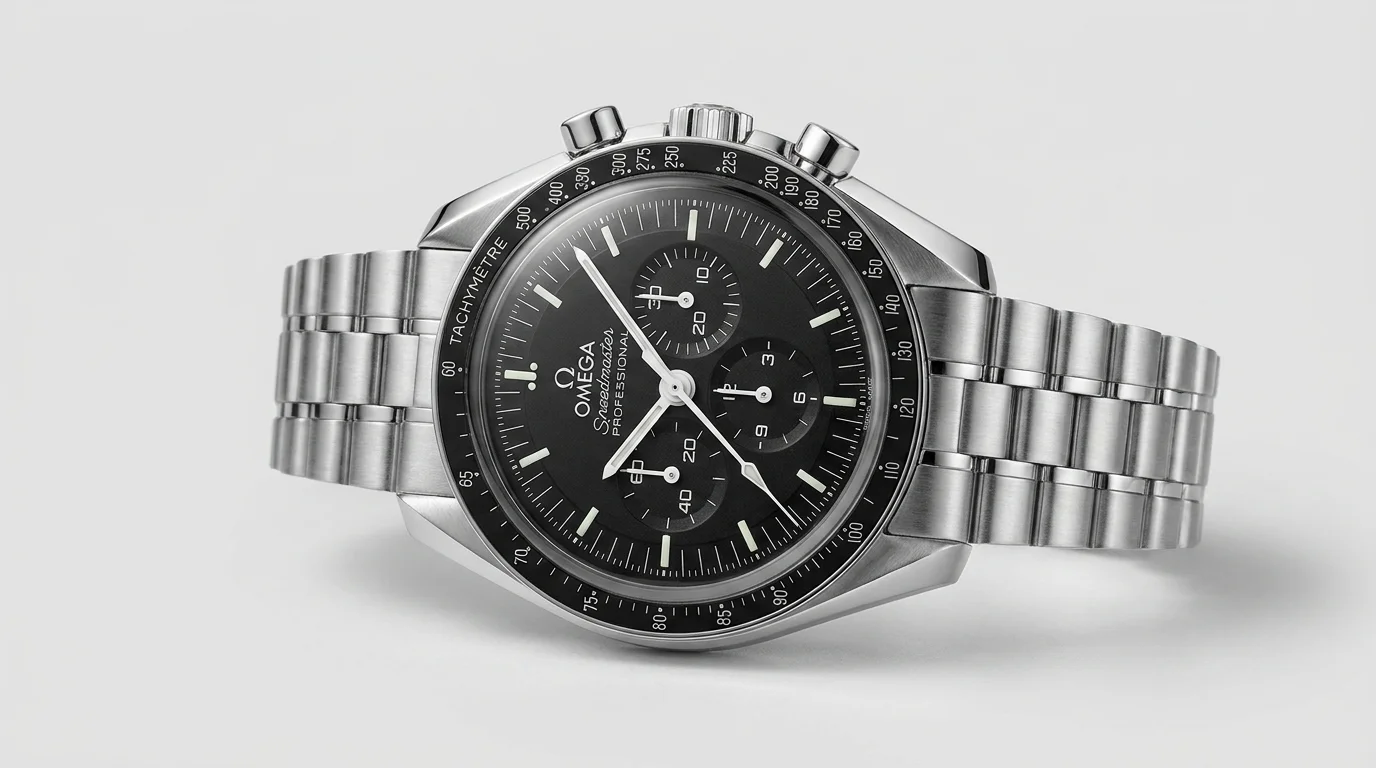 The Calibre 3861 keeps a horizontal clutch and a comparatively low 3Hz beat rate, deliberate choices tied to preserving the manual-wind character of the original Moonwatch.
The Calibre 3861 sticks with a horizontal clutch and a 3Hz beat rate, both choices that trace back to preserving the character of the manual-wind Moonwatch lineage rather than chasing the tightest possible chronograph feel. Full reference breakdown in our Speedmaster Moonwatch buying guide.
Rolex Daytona: vertical clutch at 4Hz
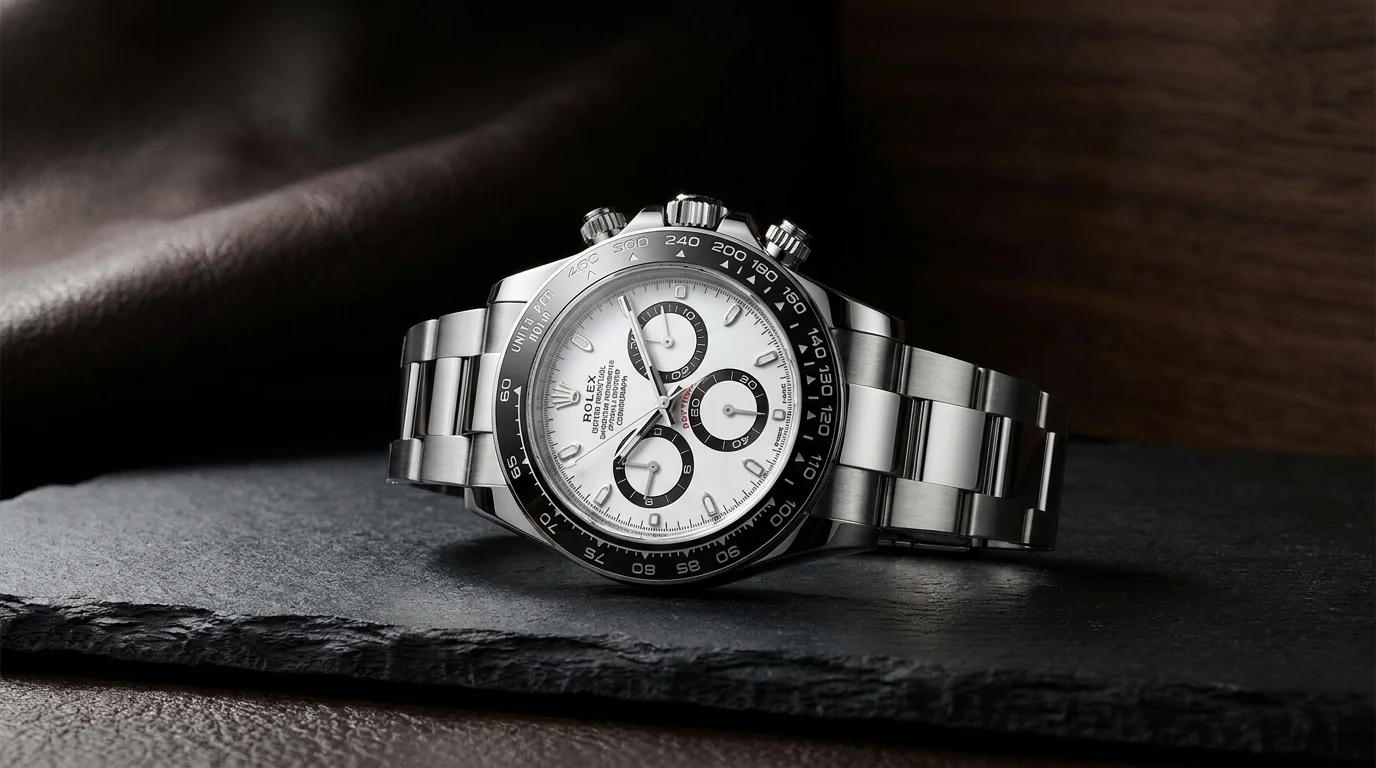 The Caliber 4131 pairs column wheel switching with a vertical clutch, the combination most collectors point to as the technical gold standard.
The Caliber 4131 combines column wheel and vertical clutch, the pairing most watchmakers consider the technical ideal for a chronograph. Full spec breakdown in our Rolex Daytona buying guide.
Zenith Chronomaster Sport: speed over clutch refinement
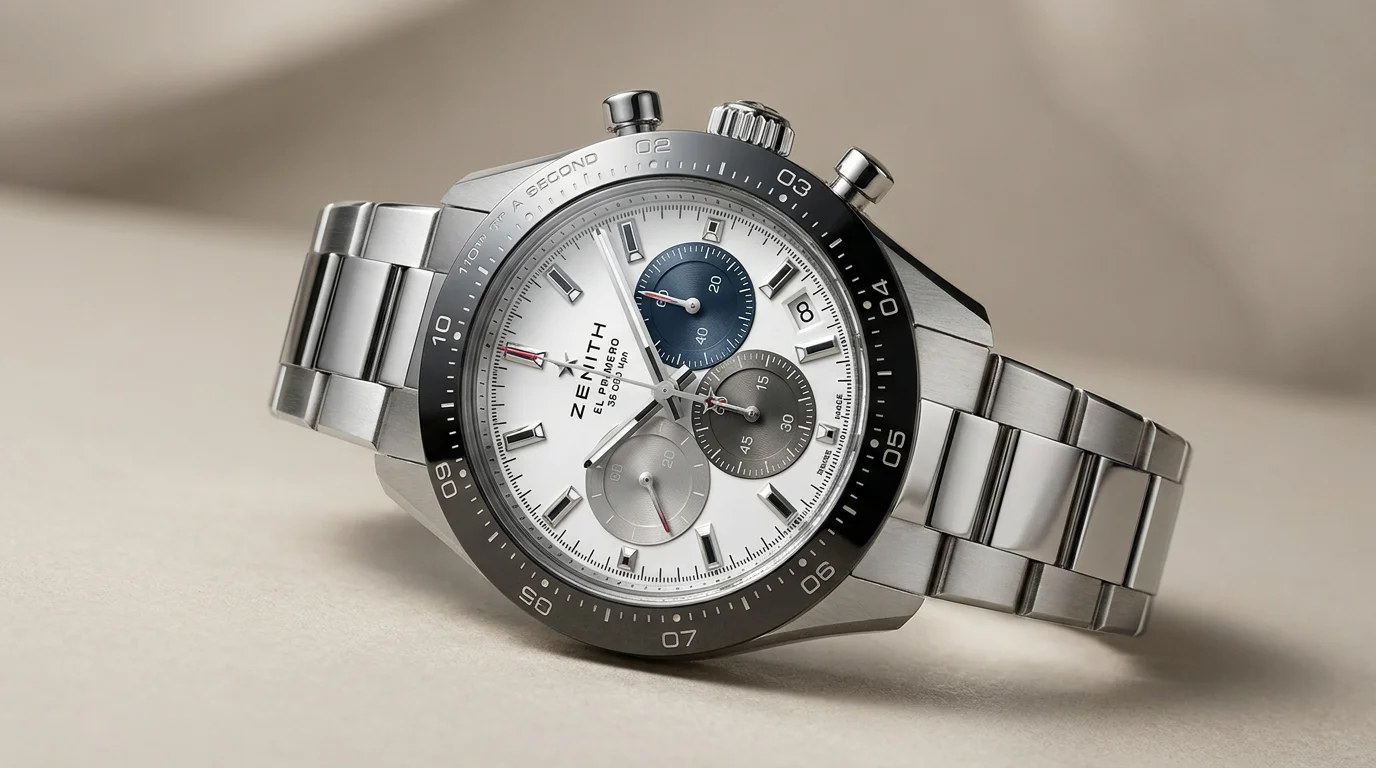 The El Primero 3600 trades a vertical clutch for a horizontal one, but its 5Hz beat rate lets it read elapsed time to a tenth of a second, a genuine engineering trade-off rather than a shortfall.
The El Primero 3600 uses a horizontal clutch, an unusual choice at this price tier, but it is offset by a 5Hz beat rate no other watch on this list matches, letting the chronograph read to a 1/10th of a second. Full review in our Zenith Chronomaster Sport piece.
TAG Heuer Carrera: in-house vertical clutch under $10,000
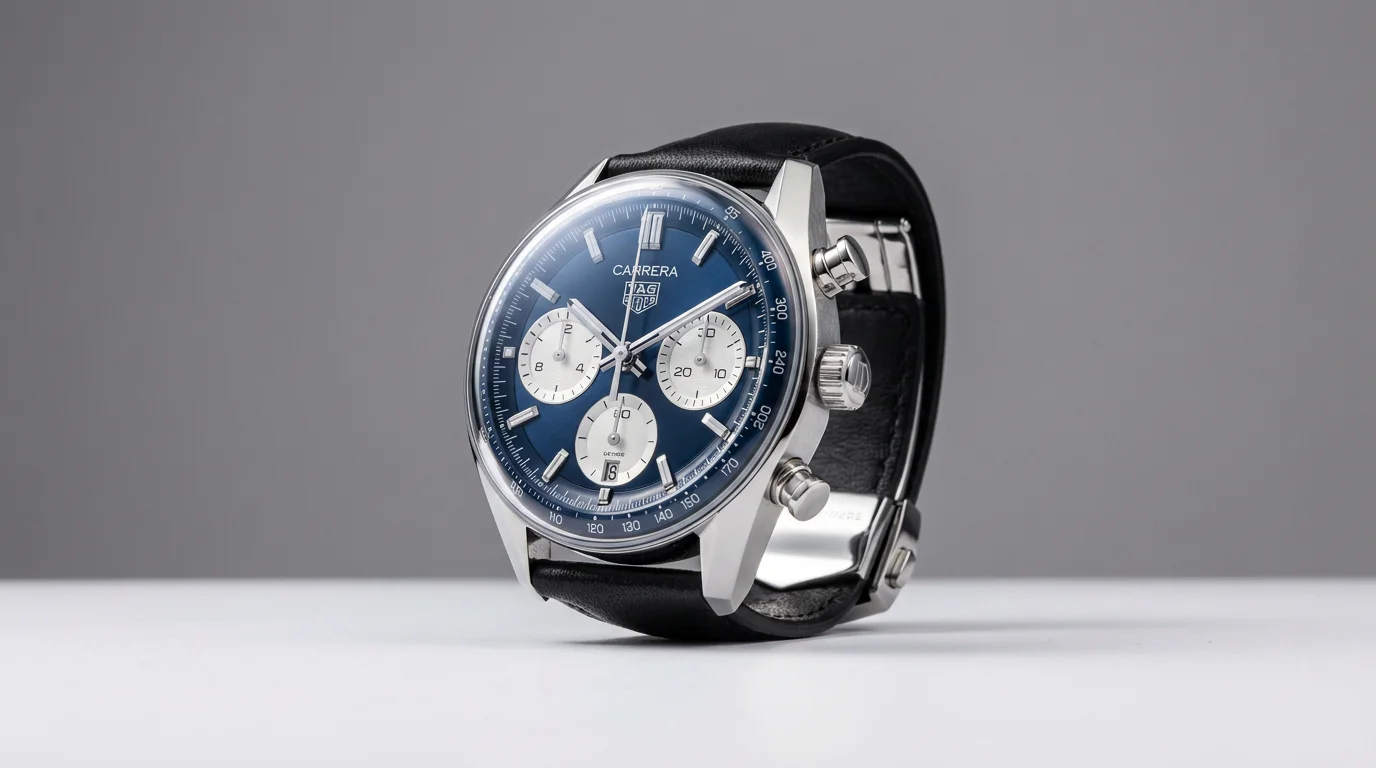 The Heuer 02 brings column wheel and vertical clutch construction to the Carrera at a price point where cam-lever movements are still common.
The in-house Heuer 02 movement (as distinct from the Calibre 16, which is ETA/Valjoux-based) gives the Carrera column wheel and vertical clutch construction at a price point where many competitors still use simpler cam-lever architecture. Every current configuration is broken down in our TAG Heuer Carrera buying guide.
Tudor Black Bay Chrono 39: Breitling-derived architecture
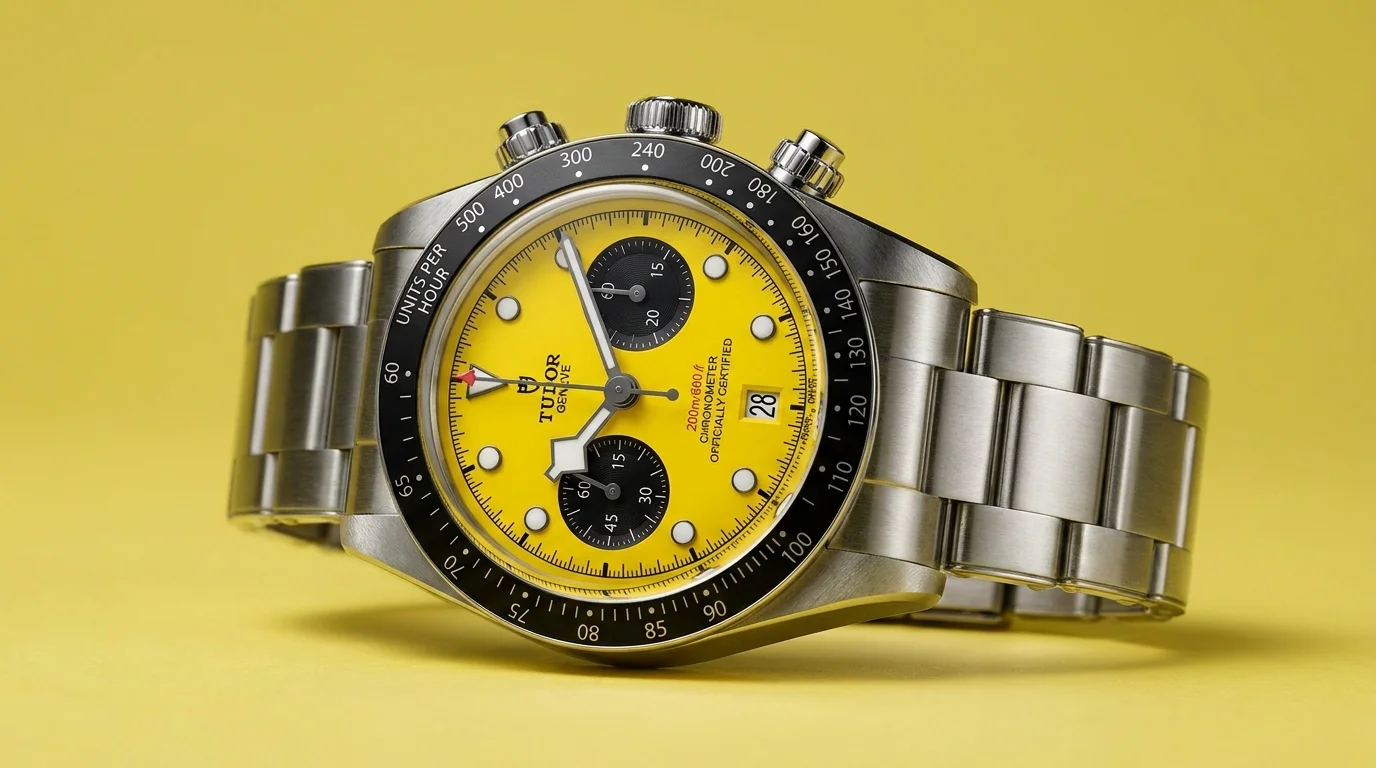 The MT5813, developed with Breitling, carries column wheel and vertical clutch construction derived from the respected B01 architecture.
The COSC-certified MT5813, developed in partnership with Breitling and derived from the B01 architecture, brings column wheel and vertical clutch construction to a chronograph retailing under $7,000. Full review in our Black Bay Chrono 39 Bumblebee piece.
Does any of this actually matter day to day?
Honestly, for most owners, the practical difference between a horizontal and vertical clutch chronograph is a barely-noticeable half-second visual jump when starting a timer most people use a handful of times a year. The column wheel versus cam-lever difference shows up more in pusher feel, which you notice every single time you use the watch.
If you only care about one spec here, care about the pusher feel. Try the chronograph function in person before buying. Spec sheets do not capture how a column wheel clicks under your thumb.
Chronograph switching is only one place hand-finishing quality shows up. For how that same principle plays out on a fully openworked dial, see our skeleton watch explainer.
FAQ
What is a column wheel chronograph?
A column wheel is a small notched wheel at the center of a chronograph movement that coordinates the start, stop, and reset functions with a single defined rotation per pusher press, producing consistent, precise pusher feel.
What is the difference between a vertical and horizontal clutch?
A vertical clutch engages the chronograph seconds hand through friction between two stacked discs, avoiding any visible jump. A horizontal clutch engages by sliding gears sideways into mesh, which can cause a small visible jump when the chronograph starts.
Is a column wheel chronograph better than a cam-lever one?
Column wheel construction generally offers more consistent, refined pusher feel and is used in nearly all serious in-house chronograph movements today. Cam-lever systems are cheaper to produce and still function reliably, just with a less refined feel at the pusher.
Which watches use a vertical clutch?
Among current chronographs, the Rolex Daytona (Caliber 4131), TAG Heuer Carrera on Heuer 02, and Tudor Black Bay Chrono (MT5813) all use vertical clutch construction. The Omega Speedmaster Professional and Zenith Chronomaster Sport use horizontal clutches.
Does beat rate affect chronograph accuracy?
A higher beat rate, measured in vibrations per hour, allows finer time resolution. The Zenith El Primero 3600 beats at 5Hz and can read to a tenth of a second, while most 4Hz movements read to an eighth of a second.
Browse authenticated pre-owned chronographs at 5dwatches.com.