The Short Answer
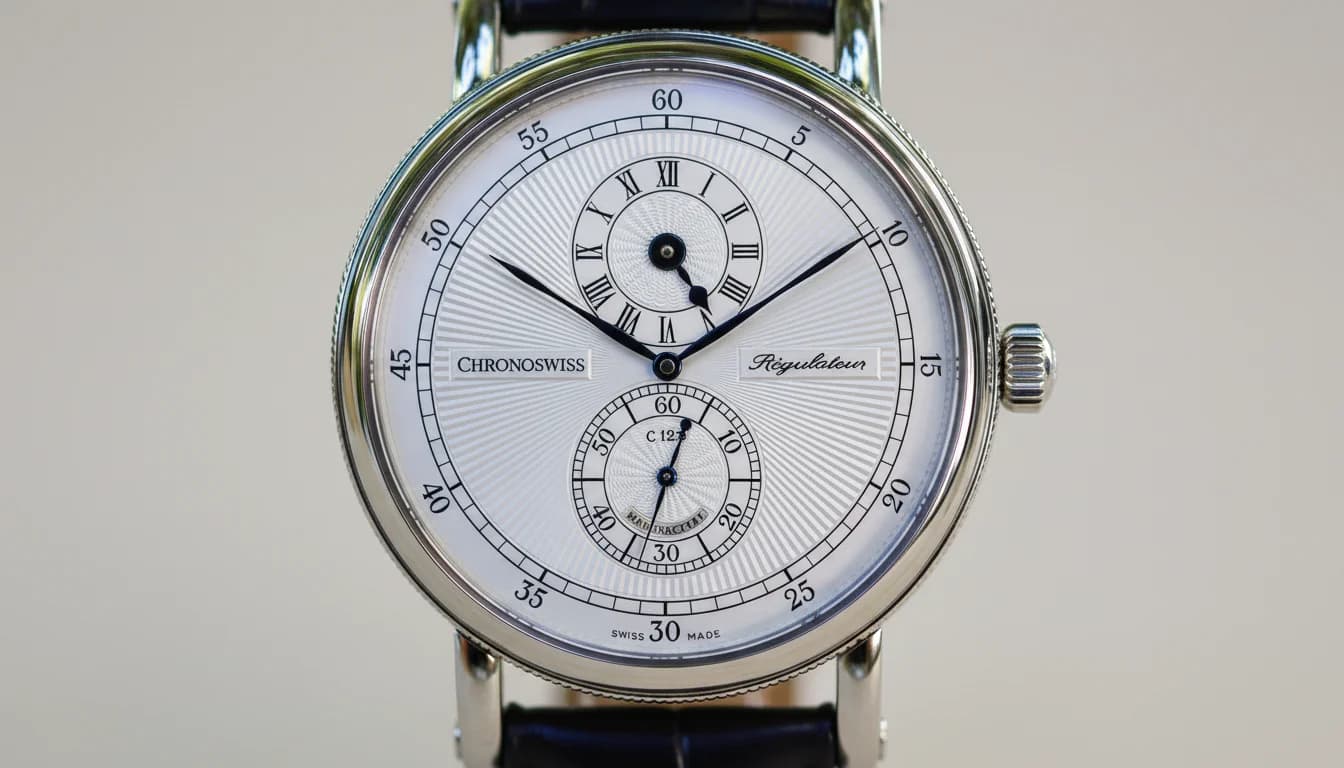
Chronoswiss is a small independent Swiss brand built entirely around one idea: reviving the regulator dial. Founded in 1983 in Munich by watchmaker Gerd-Rüdiger Lang, the brand launched the world's first serially produced regulator wristwatch in 1987, the Régulateur, and has spent four decades expanding on that same visual language: a separated hour, minute, and second display, an onion-shaped crown, and a fluted bezel.
Today the collection runs from the roughly EUR 8,800 Small Second up to a EUR 46,000-plus tourbillon, with a EUR 42,500 revived quarter repeater sitting near the top. It is not a household name. That is largely the point.
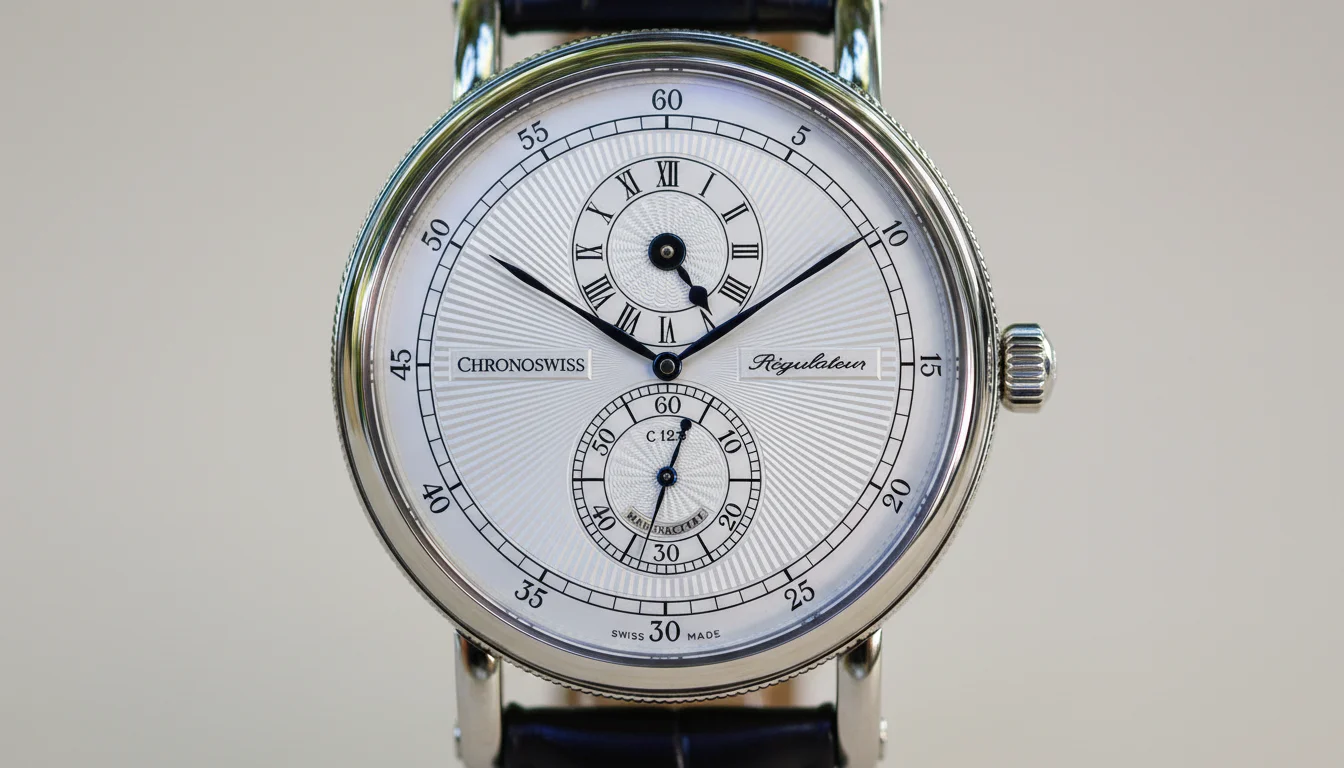 The regulator dial layout, a large central minute hand with separate small hour and seconds registers, is the design Chronoswiss built its entire identity around.
The watch photos in this article were generated with AI image tools, conditioned on real reference photography of each Chronoswiss watch mentioned so the case shapes and dial layouts are accurate to the real references.
Why a Brand Bet Everything on One Dial Layout
Gerd-Rüdiger Lang founded Chronoswiss in Munich in 1983, right after Heuer Time (the German distribution arm of Heuer) collapsed and took his job with it. The timing was brutal. The quartz crisis had already gutted mechanical watchmaking, and a new brand built entirely on mechanical movements looked, to most of the industry, like a bad bet.
Four years in, Lang found his answer. The regulator, a display style borrowed from 18th and 19th century precision clocks used by watchmakers to set other timepieces, separates the hour and second hands into their own small registers so the large central minute hand can be read without visual interference. In 1987, Chronoswiss put that layout on a wristwatch and called it the Régulateur, the first regulator-dial wristwatch made in series production.
The Design Language That Followed
The Régulateur established the visual cues that still define Chronoswiss watches: an onion-shaped crown (rounder and larger than a standard crown), straight lugs, a finely fluted case bezel, and a distinctive 19-part case construction. Collectors who know the brand can usually spot a Chronoswiss from across a room by the crown alone.
The Brand's Timeline, in Real Releases
Chronoswiss did not stay a one-watch brand. Lang kept pushing the regulator concept and the broader mechanical catalog in genuinely different directions over the following two decades.
1991 to 2005: The Complication Years
The Kairos Chronograph (1991) rearranged the hour and minute displays into decentralized registers. The Opus (1995) became the first serially produced skeleton chronograph. The Timemaster (2000) added oversized luminous hands and became one of the brand's more sport-leaning references. The Digiteur (2005) built a fully mechanical digital display, jumping numerals instead of hands.
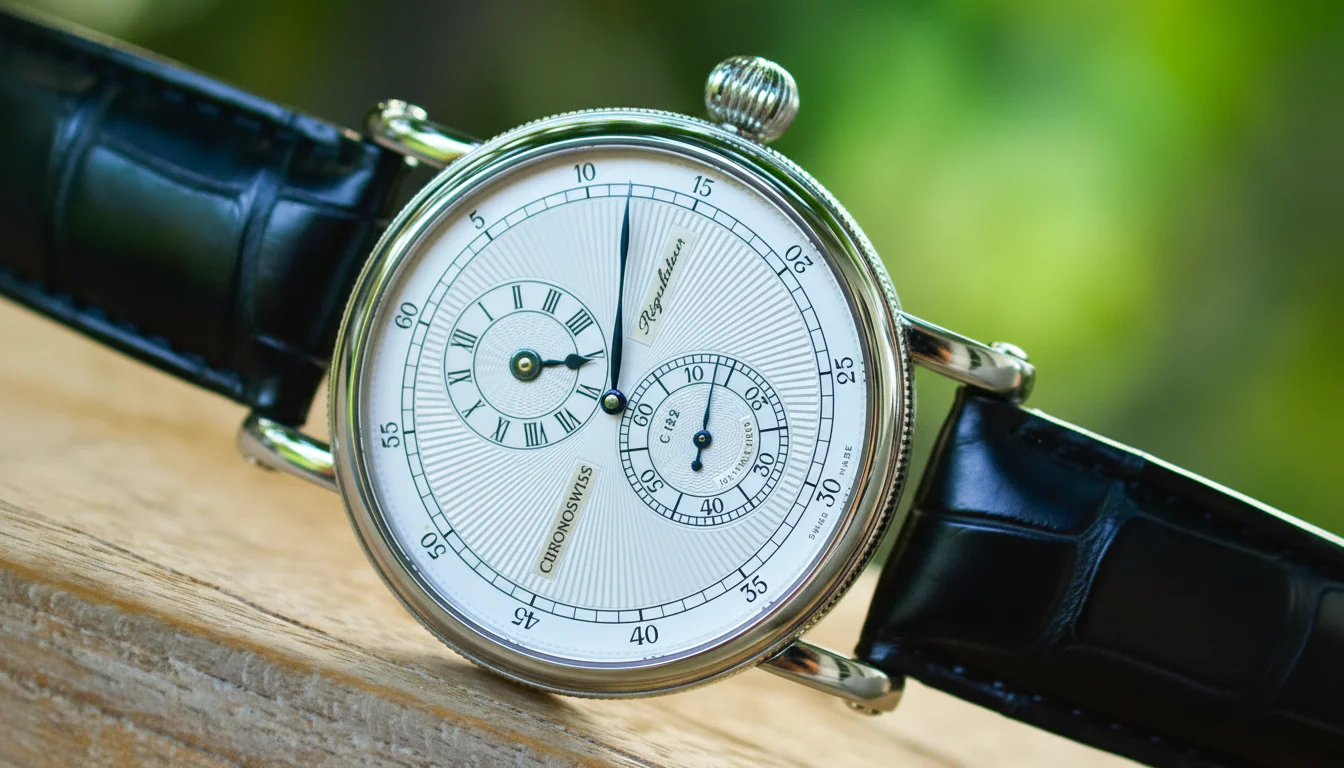 The Flying Regulator Manufacture floats its minute display above a hand-guilloched dial base, one of several ways Chronoswiss has reworked its original regulator idea over the decades.
2012: New Ownership, New Home
In 2012, Swiss entrepreneur Oliver Ebstein acquired Chronoswiss and relocated the company from Munich to Lucerne, Switzerland. The move mattered beyond geography. In 2014, the brand opened an in-house guilloché and enameling atelier, giving Chronoswiss the ability to produce its own hand-engraved dial patterns rather than outsourcing them.
2018 to 2025: Modern Mechanical
The ReSec (2018) introduced a three-dimensional regulator layout. The Pulse One (2025) became the brand's first titanium piece with an integrated bracelet, a clear signal Chronoswiss wanted a foothold in the integrated-bracelet sports-watch category that Royal Oak and Nautilus alternatives have made competitive.
What Chronoswiss Actually Sells Today
The current lineup spans well over a dozen named collections, and pricing runs from roughly EUR 8,800 to beyond EUR 46,000. A few references anchor the range.
Small Second: The Entry Point
The Small Second collection starts around EUR 8,800 and runs to about EUR 18,500 for the newest stone-dial editions. The 2026 Small Second Stone models, in German jasper and Swiss serpentine, use the manufacture caliber C.6000 (developed with La Joux-Perret) with a 55-hour power reserve in a 40mm by 11.5mm case, priced at EUR 12,700 and EUR 18,500 respectively.
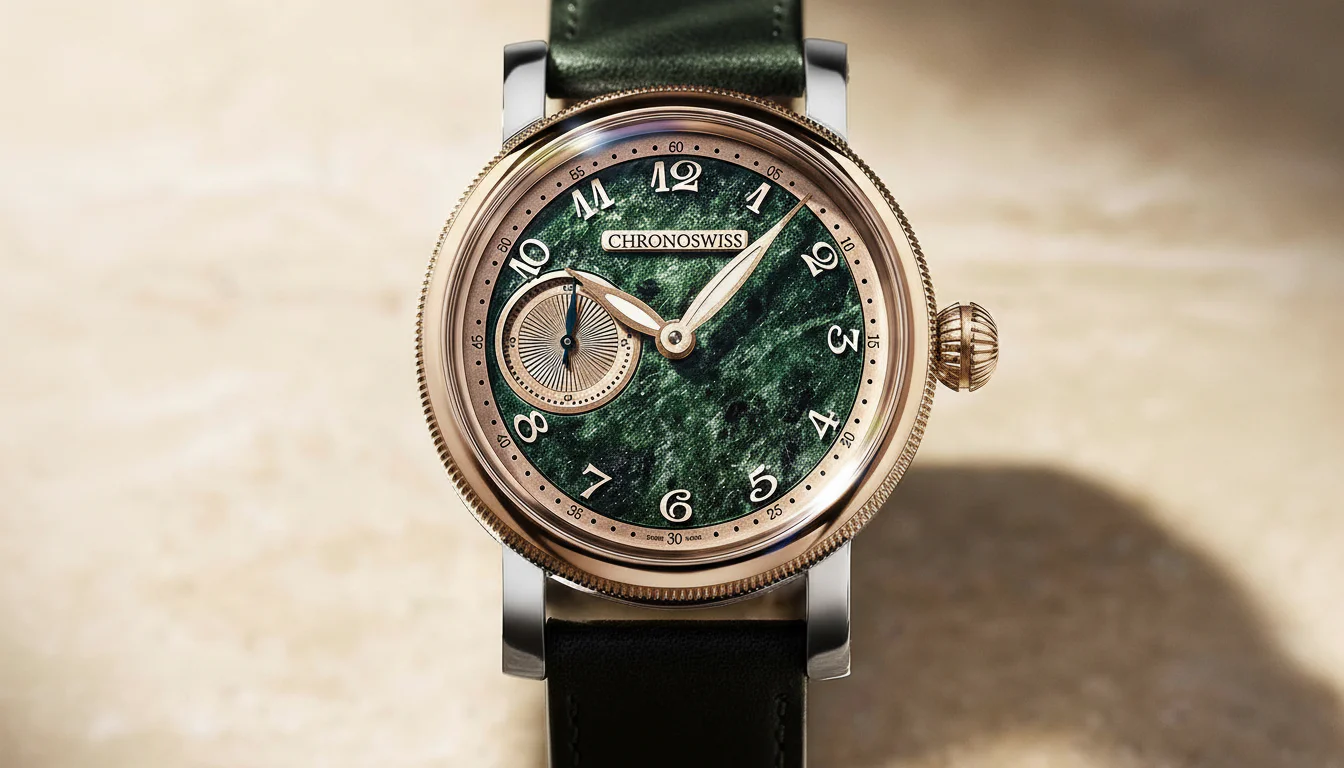 The 2026 Small Second Serpentine uses a genuine slab of Swiss serpentine stone for the dial. No two dials fade or vein identically.
Pulse One: The Sports Watch Reinvention
At EUR 12,900, the Pulse One puts the regulator display into a 41mm by 12.75mm grade 5 titanium case with 100 meters of water resistance. It keeps a central minute hand, but adds a raised hour counter at 12 o'clock and a retrograde seconds counter at 6 o'clock that jumps back every 30 seconds. It runs the manufacture caliber C.6001, built on a La Joux-Perret base with an in-house regulator module.
Flying Regulator Manufacture: The Guilloché Showcase
Around CHF 6,100 (roughly EUR 6,300) in steel, the Flying Regulator Manufacture runs the in-house caliber C.122 (built on an Enicar 165 base), 30 jewels, 21,600 vibrations per hour, and a 40-hour power reserve, in a 40mm by 11mm case. The dial floats its minute display above a hand-guilloché sunray pattern, produced in the brand's own Lucerne atelier.
Q-Repeater: The Flagship Complication
At EUR 42,500, the Q-Repeater is Chronoswiss's most serious complication: a quarter repeater built on a restored 1990s archive movement, caliber C.126, chiming the hours and quarters on demand via a pusher at 10 o'clock. The 42mm by 16.2mm titanium case houses 42 jewels and a 35-hour reserve. Limited editions like the Scream and Blue Note colorways cap production at 25 pieces each.
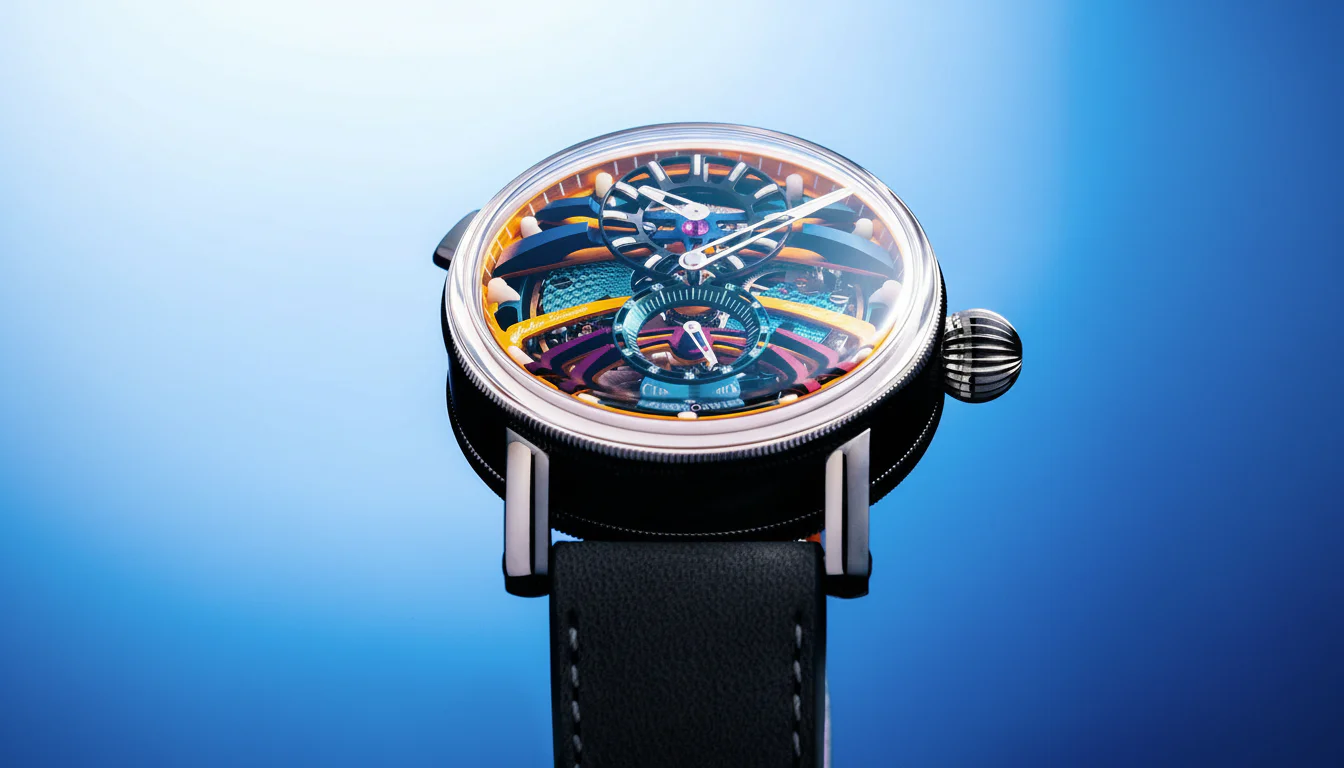 The Q-Repeater's colorful skeletonized dial shows off the restored 1990s caliber C.126 movement in full view, hammers, gongs, and all.
Tourbillon: The Top of the Range
The Tourbillon collection sits at the top of the current catalog, priced between EUR 46,400 and EUR 48,600, and represents Chronoswiss's highest complication tier alongside the Q-Repeater.
Where Chronoswiss Sits Against Other Independents
Chronoswiss occupies an unusual spot in independent watchmaking. It is not a garage microbrand: it has a 40-plus-year history, an in-house guilloché atelier, and manufacture movements. But it also is not chasing the six-figure secondary-market premiums of F.P. Journe or the horological showmanship of H. Moser & Cie.
The Honest Trade-Off
Because Chronoswiss production runs small and the brand carries limited mainstream recognition outside serious collector circles, resale liquidity is thinner than a Rolex or an Omega. Buyers should think of a Chronoswiss purchase as a genuine collector's watch bought to keep, not a piece with predictable trade-in value.
FAQ
Who founded Chronoswiss?
Gerd-Rüdiger Lang founded Chronoswiss in Munich in 1983, after the collapse of Heuer Time cost him his job. The brand relocated to Lucerne, Switzerland in 2012 under new owner Oliver Ebstein.
What makes Chronoswiss watches distinctive?
The regulator dial layout, which separates the hour and second hands into their own small registers so the large central minute hand can be read without interference, along with an onion-shaped crown, straight lugs, and a fluted bezel.
Was Chronoswiss the first brand to make a regulator wristwatch?
Chronoswiss made the first serially produced regulator wristwatch in 1987 with the original Régulateur. Regulator-style displays existed earlier on precision pocket watches and clocks, but not in series-produced wristwatch form.
How much does a Chronoswiss watch cost?
The current lineup runs from roughly EUR 8,800 for the Small Second collection up to over EUR 46,000 for the Tourbillon, with the Q-Repeater quarter repeater at EUR 42,500 anchoring the top complication tier.
Is Chronoswiss a good investment?
Chronoswiss production runs small and mainstream brand recognition is limited outside collector circles, so resale liquidity is thinner than a Rolex or Omega. It suits a buyer who wants the regulator dial and hand-guilloché work for its own sake, not a predictable trade-in value.