The Short Answer
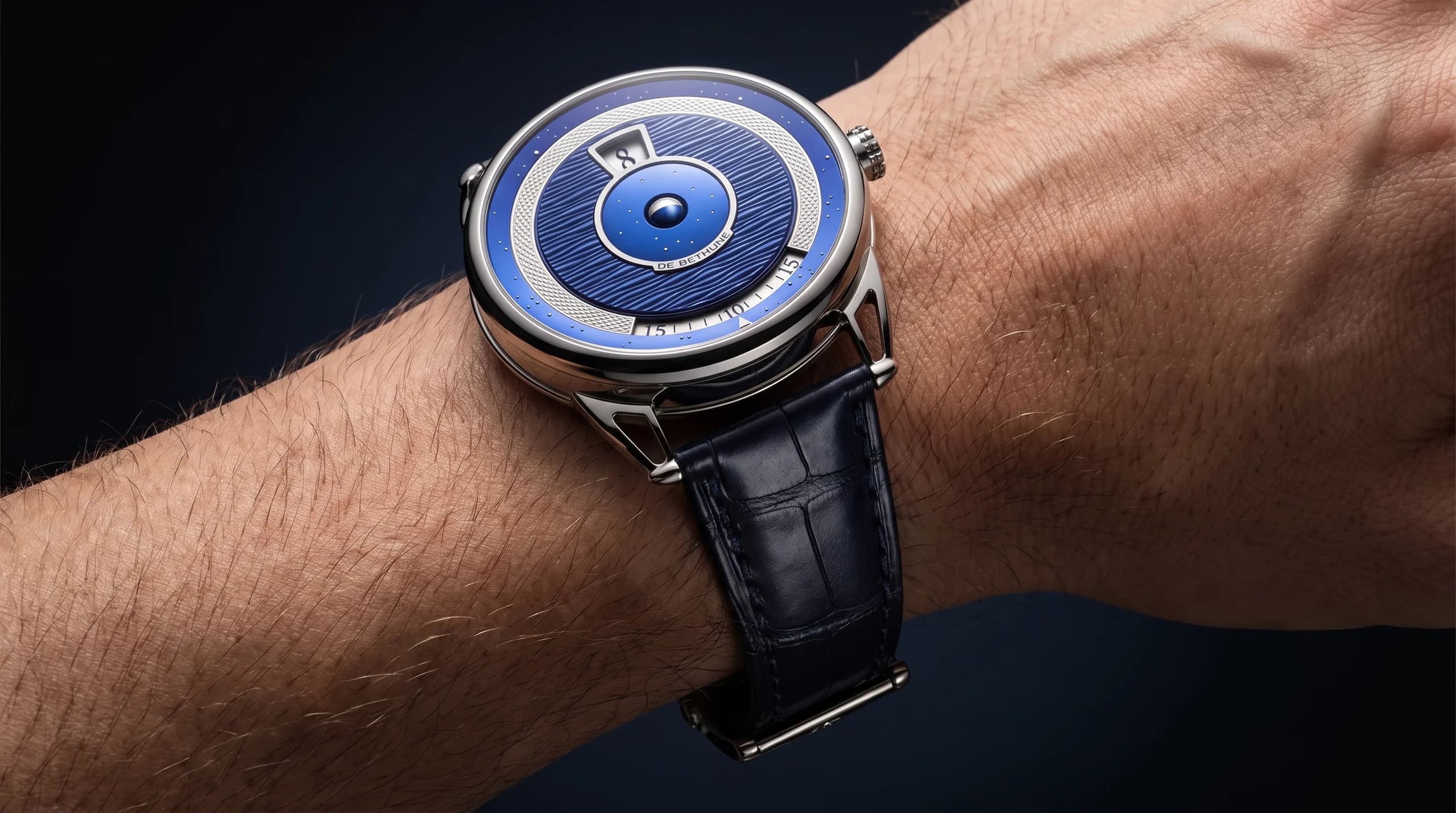
De Bethune just released the DB25 Digitale, a 42mm grade 5 titanium watch that tells the hour with a jumping numeral instead of a hand, the minutes with a slow-rotating disc, and the moon phase with a tiny spherical globe accurate to one day of error every 1,112 years. The in-house DB2144V3 movement runs for 5 days on a single wind. Price is on request.
This is De Bethune's first appearance on this site. The brand builds fewer watches in a year than most manufactures build in a week, and the Digitale is a good introduction to why serious collectors treat De Bethune as one of the most technically inventive names in independent watchmaking.
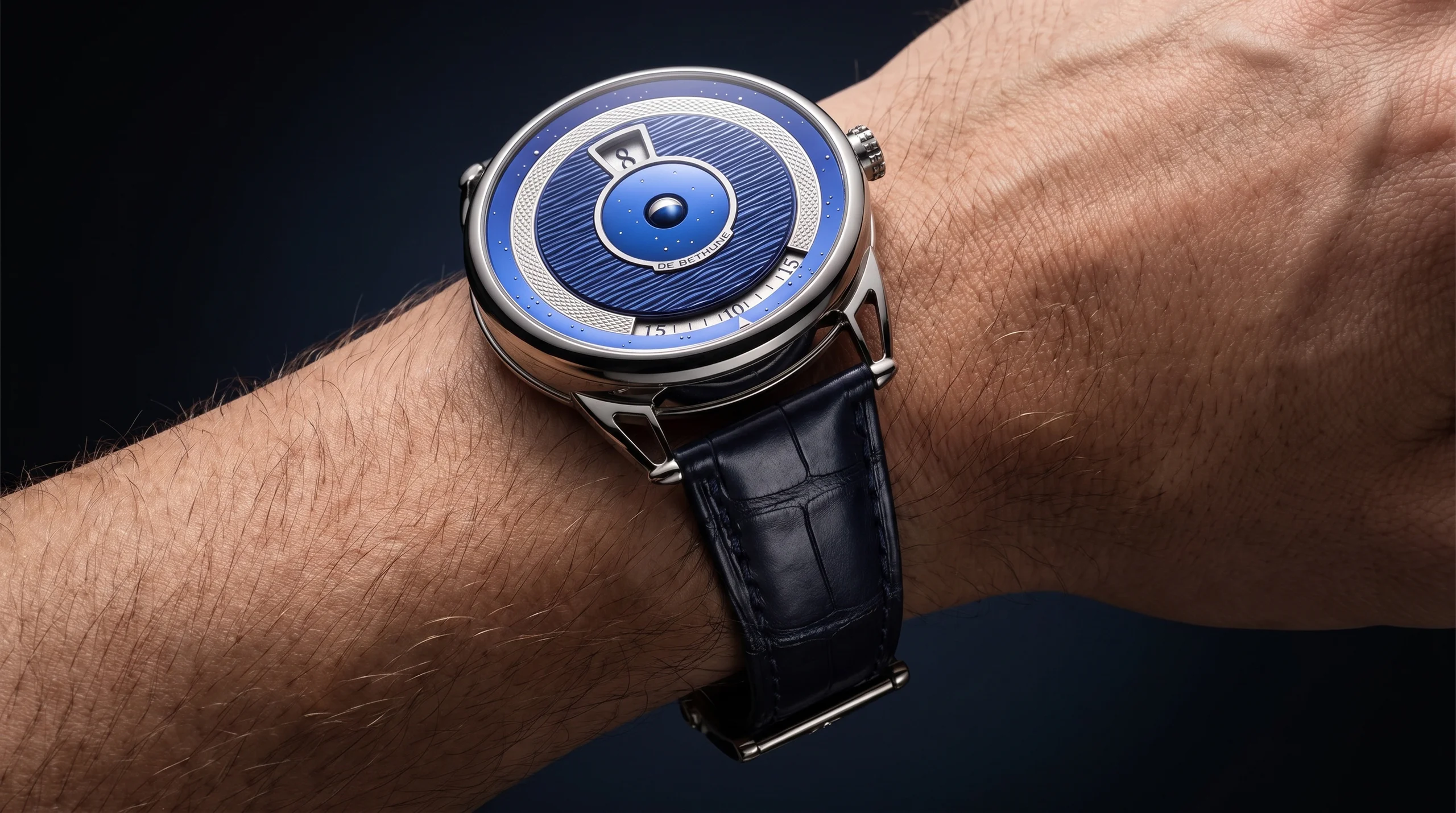 The jumping hour window sits at 12 o'clock, the rotating minutes disc at 6, with a spherical moon phase in between.
The watch photos in this article were generated with AI image tools, conditioned on real reference photography of the De Bethune DB25 Digitale so the case architecture and dial layout are accurate to the real watch.
Who De Bethune Actually Is
Denis Flageollet founded De Bethune in 2002 alongside two watch collectors, David Zanetta and Pierre Cottet, with a stated goal of applying historical horological ideas to modern watchmaking rather than simply reviving old designs. The brand builds its own balance wheels, hairsprings, and escapements almost entirely in-house, a level of vertical integration rare even among independent watchmakers at this scale.
The DB25 collection is De Bethune's core round-case line, distinguished by a drum-inspired case shape and the brand's signature hollowed lugs, which reduce weight without reducing rigidity.
Why "Digitale" and Not Just "Jumping Hour"
De Bethune has built jumping hour watches before, but the Digitale name signals a specific design intent: replacing the traditional hour and minute hands entirely with a digital-style readout, delivered through purely mechanical means. It is a deliberately old idea, dating to 19th-century pocket watches, reinterpreted with De Bethune's own case and finishing language.
How the Digital Display Actually Works
The hour appears through a small aperture at 12 o'clock, jumping instantaneously from one number to the next at the top of each hour rather than sweeping like a hand.
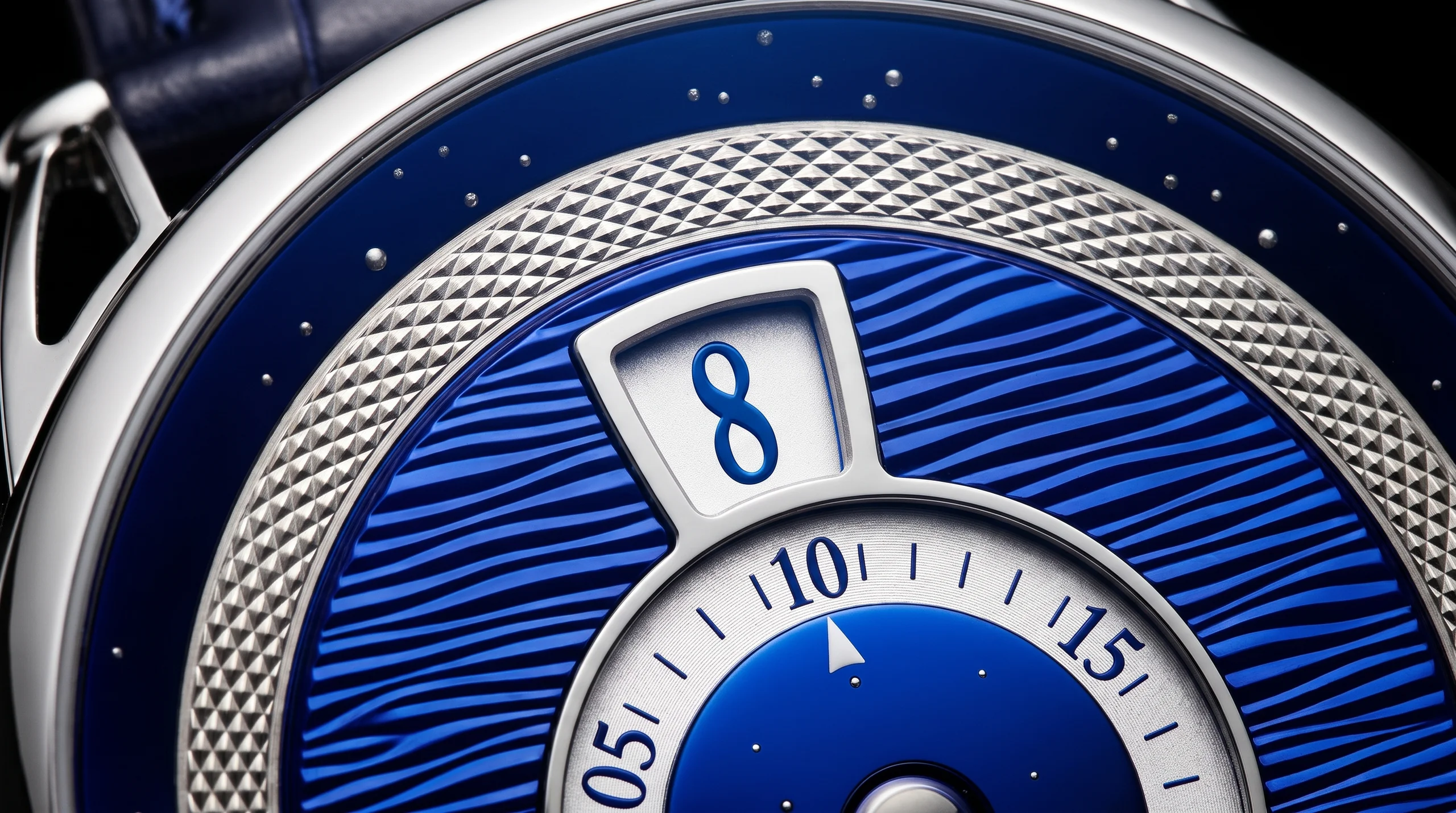 The barleycorn guilloche pattern radiating from the center is cut by hand, not stamped.
The minutes are shown on a rotating disc at 6 o'clock, tracked against a fixed printed scale, while a spherical moon phase indicator sits in the dial's lower center. De Bethune's spherical moon phase is accurate enough that it would take 1,112 years to drift by a single day, a tolerance far beyond what any practical owner will ever test.
The Case and Movement
The DB25 Digitale's grade 5 titanium case measures 42mm across and 11.9mm thick, mirror-polished rather than left with titanium's usual matte finish. Inside runs the in-house DB2144V3, a manual-winding caliber built from 416 components and 32 rubies, beating at 28,800 vibrations per hour with a 5-day power reserve.
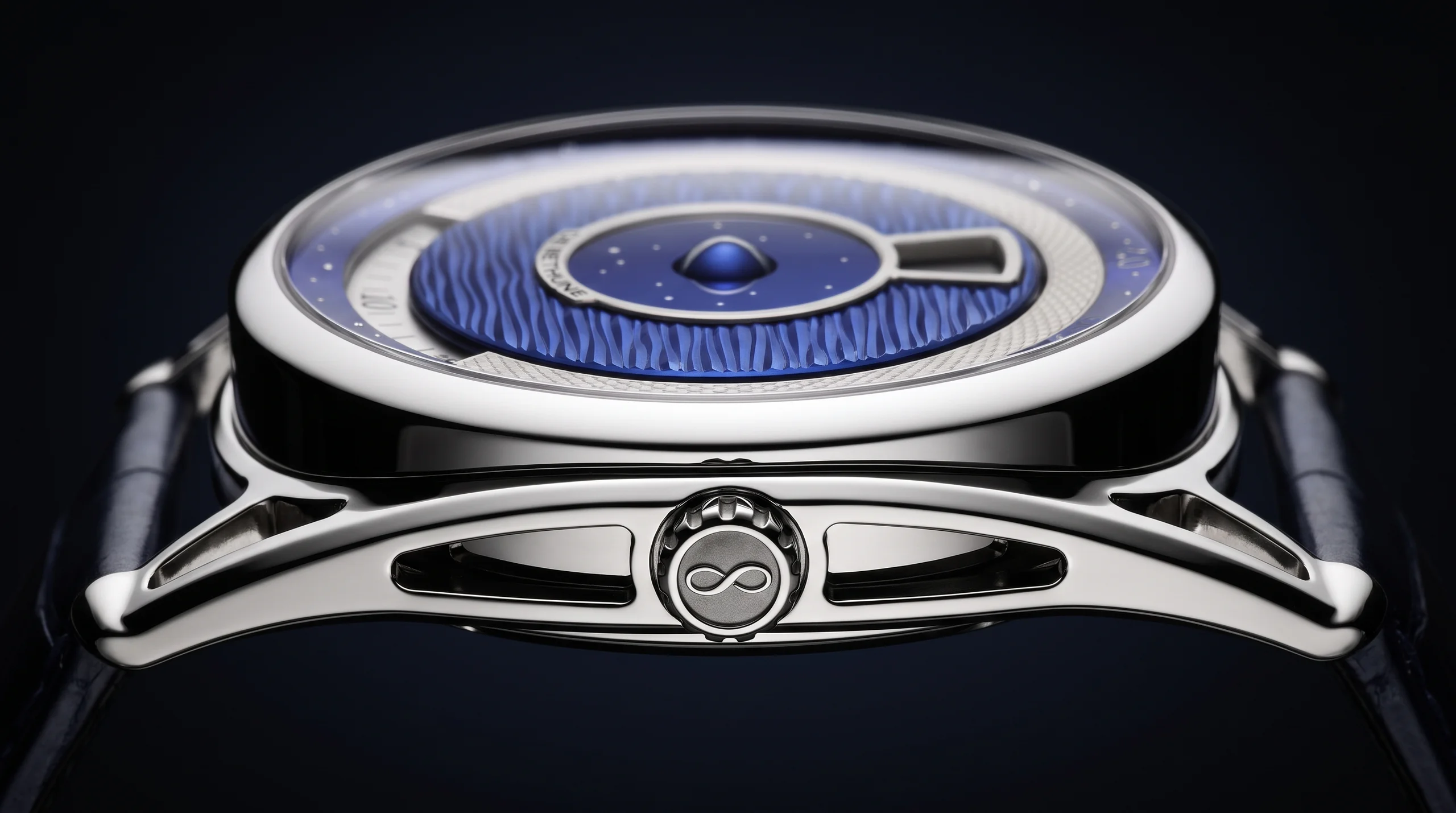 The hollowed lugs are a De Bethune signature, cut through to reduce weight while keeping the case rigid on the wrist.
Water resistance is rated to 30 meters, unsurprising for a watch built around a mechanically dense, dial-side-first design rather than sport-watch durability. The dial itself is available in De Bethune's Starry Varius finish (a heated, polished titanium disc dotted with stars) or in the brand's traditional random or barleycorn guilloche patterns, both cut by hand on a rose engine lathe.
What's Under the Caseback
De Bethune's movement finishing is done largely in-house, using techniques the brand developed itself rather than sourcing from third-party ateliers.
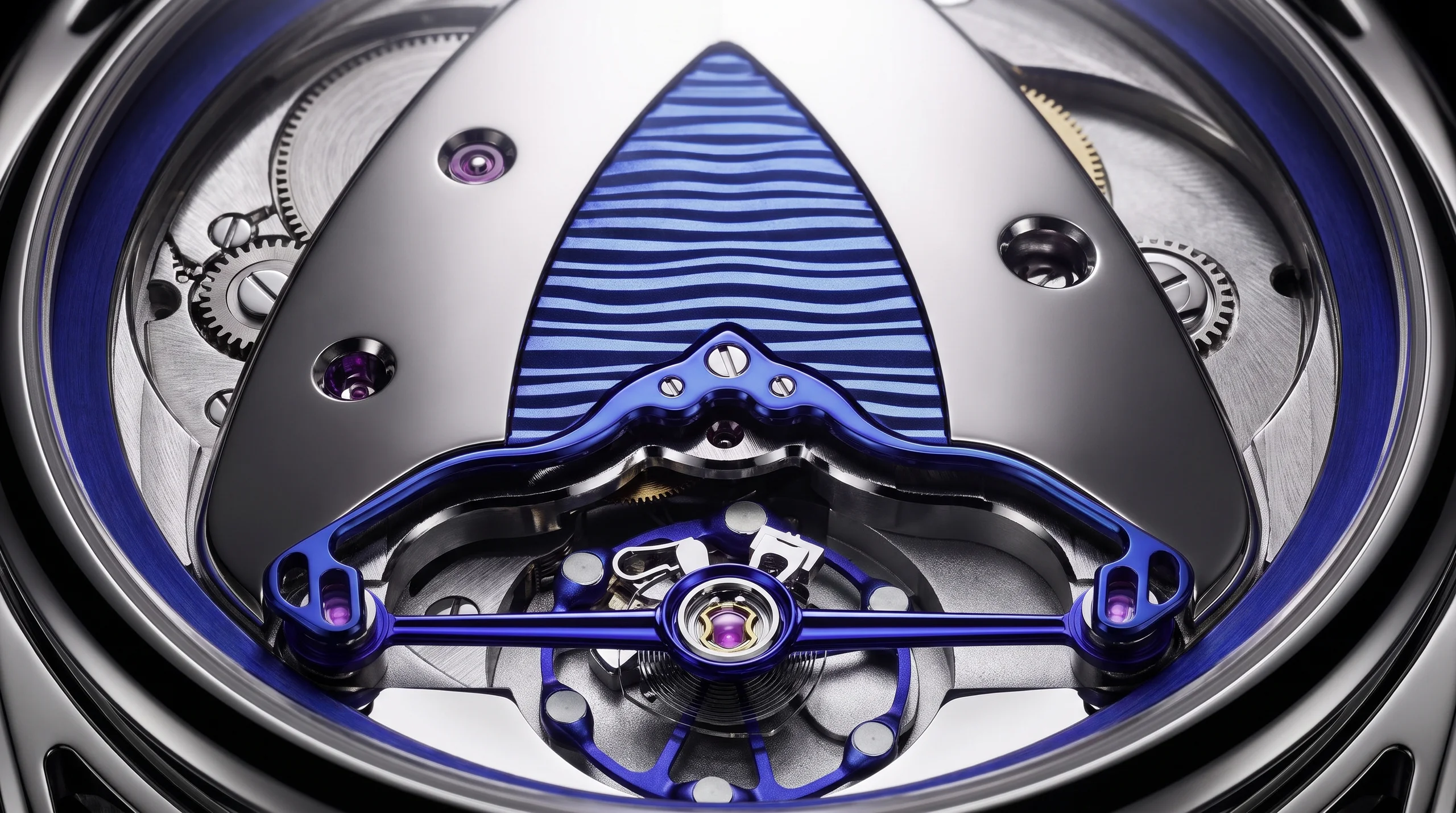 De Bethune's triangular bridge and blued titanium balance bridge are recognizable across the brand's entire catalog.
The blued titanium balance bridge visible through the caseback is a De Bethune trademark, chosen for its light weight and resistance to magnetism, both of which matter more to accuracy than most owners realize.
Price and Positioning
De Bethune does not publish list prices, and its watches are sold almost entirely through direct relationships with a small number of retailers and the brand's own boutiques. A "price on request" listing at this level of finishing and complexity generally lands well into six figures, though an exact number depends on dial finish and buyer relationship with the brand.
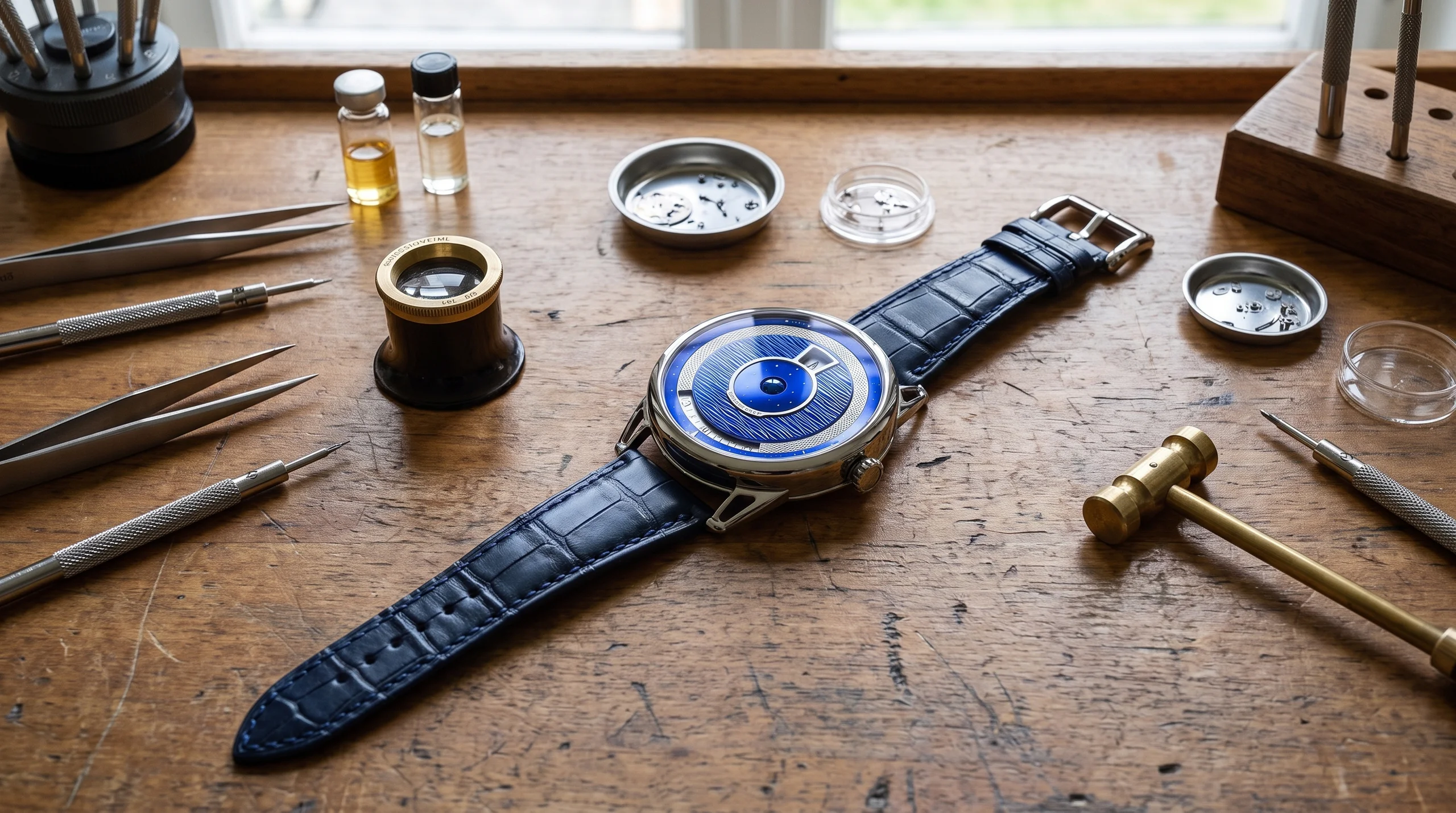 A watch this dense with in-house parts is still finished and regulated one at a time, not on a production line.
The Honest Trade-Off
A jumping hour display costs more to build and is objectively harder to read at a glance in the dark than a simple pair of hands, since there is no lume-filled hand sweeping across the dial to catch ambient light the way a standard three-hander does. What a buyer gets in exchange is a genuinely rare mechanical solution, built almost entirely by one small workshop, to a problem simple watches solved centuries ago in a much less interesting way.
FAQ
What is the De Bethune DB25 Digitale?
It is a 2026 watch from independent Swiss brand De Bethune that displays the hour through a jumping numeral aperture instead of hands, the minutes on a rotating disc, and includes a highly accurate spherical moon phase. The case is 42mm grade 5 titanium and the in-house movement runs for 5 days on a full wind.
How accurate is the De Bethune spherical moon phase?
De Bethune states the moon phase indicator will drift by only one day of error every 1,112 years, a level of precision achieved through a more complex gear ratio than the simple 59-tooth wheel used in most moon phase watches.
How much does the De Bethune DB25 Digitale cost?
De Bethune does not publish a retail price for the Digitale; it is listed as price on request through the brand's boutiques and authorized retailers.
Is De Bethune a well-known watch brand?
Among mainstream buyers, no. Among serious collectors and independent-watchmaking specialists, De Bethune is considered one of the most technically important brands of the last two decades, particularly for its work on lightweight, non-magnetic balance wheels and spherical moon phase mechanisms.
What does "jumping hour" mean on a watch?
A jumping hour complication displays the hour as a number in a small window that changes instantaneously at the top of each hour, rather than showing the hour with a continuously moving hand.
Related Reading
- Jumping Hour Watches Explained: The Complication With No Hour Hand
- The Moonphase Complication, Explained: How the Prettiest Useless Feature in Watchmaking Actually Works
- Guilloche Explained: The Hand-Cut Pattern Behind the Best Dials in Watchmaking
- MB&F HM12 The Guardian: A Titanium Watch With a Robot Companion