The Short Answer
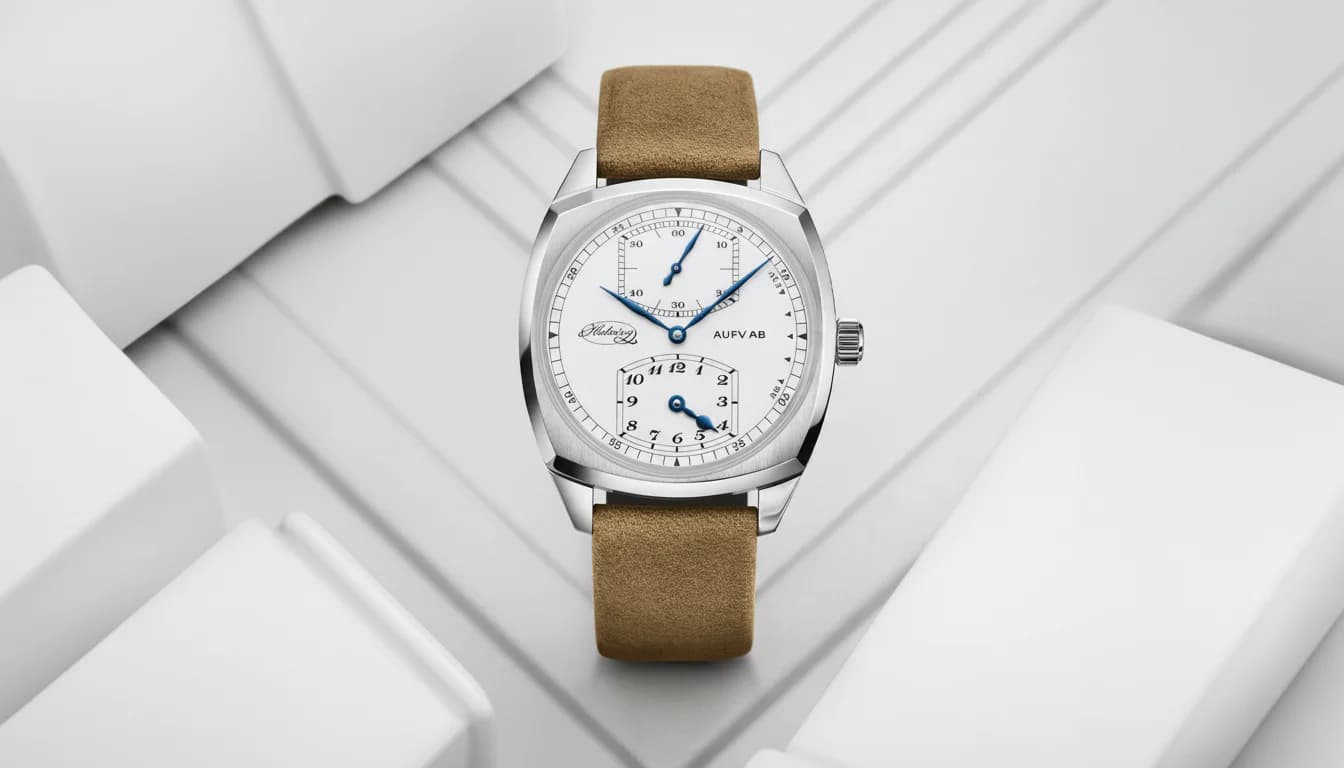
A deadbeat seconds watch, also called seconde morte, jumping seconds, or seconds mortes, ticks its seconds hand once per second instead of sweeping smoothly around the dial. It is built to imitate the tick of a quartz watch on a purely mechanical movement, which is the reason collectors call it the most ironic complication in watchmaking: real watchmakers spend enormous effort making a mechanical watch look like the cheap battery-powered watches it is supposed to outclass.
The mechanism traces back to 18th century precision clocks and marine chronometers, where a discrete once-per-second tick let scientists and navigators measure short events more precisely than a continuously sweeping hand allowed. Two very different modern examples show how wide the price range runs: the Habring2 Josef Regulator at EUR 7,450, and the Jaquet Droz Grande Seconde Deadbeat in 18K rose gold.
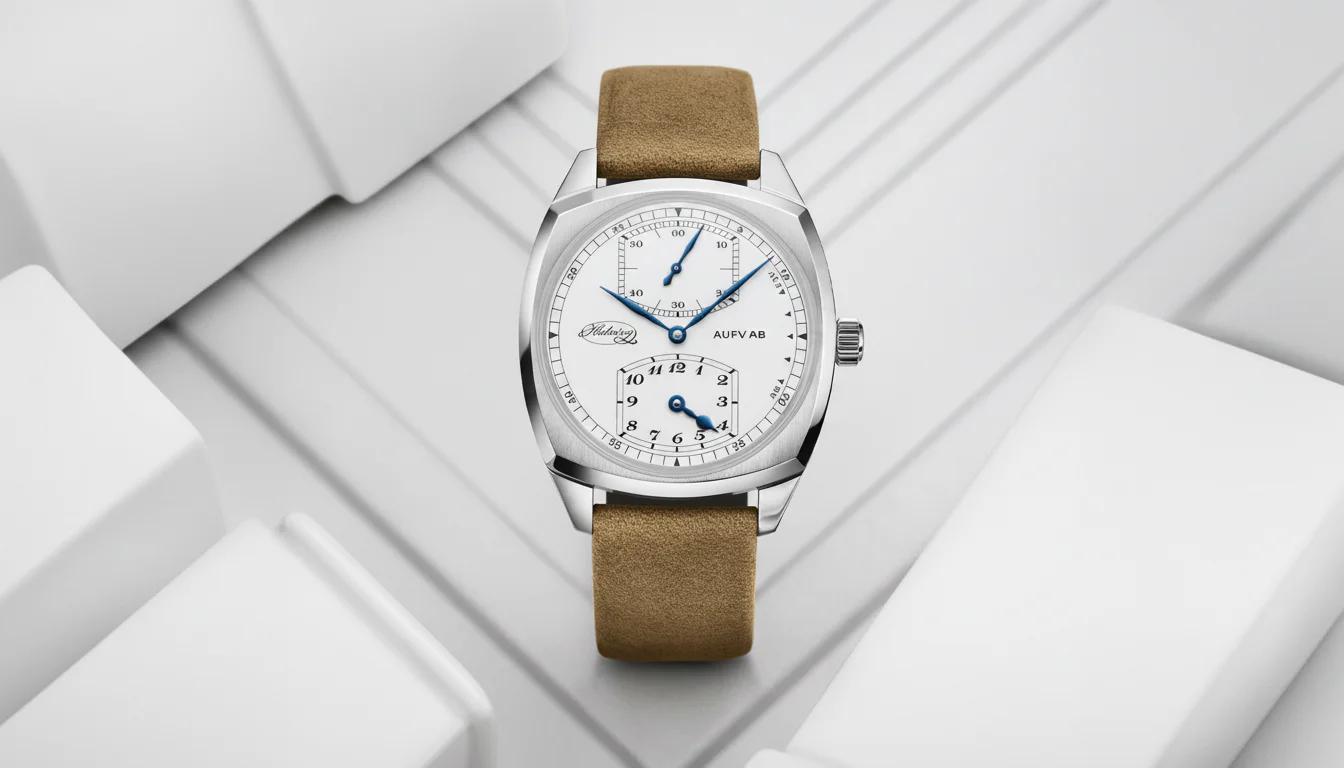 A regulator layout like this separates the hours, minutes, and deadbeat seconds onto their own subdials rather than stacking them under a single set of hands.
The watch photos in this article were generated with AI image tools, conditioned on real reference photography of the Habring2 Josef Regulator and the Jaquet Droz Grande Seconde Deadbeat so the case shape, dial layout, and construction details are accurate to real deadbeat seconds watches.
Why a Mechanical Watch Would Fake a Tick
Most mechanical watches run at 4 to 5 hertz, meaning the balance wheel oscillates 8 to 10 times per second. A standard running seconds hand is geared directly to that balance, so it appears to glide smoothly around the dial rather than snapping between marks the way a quartz second hand does.
That smooth sweep is useful for reading elapsed time casually, but it is a problem for anyone trying to measure a precise one-second interval. A deadbeat mechanism decouples the seconds hand from that constant motion and releases it in discrete, once-per-second jumps instead.
Where the Name Comes From
Seconde morte is French for dead second, describing the pause between each jump rather than any flaw in the mechanism. English picked up deadbeat seconds and jumping seconds as roughly interchangeable names for the same function.
The History: Built for Precision, Not for Looks
Deadbeat seconds first mattered on 18th century regulator clocks and marine chronometers, instruments built for scientific timekeeping and celestial navigation rather than everyday wear. A technician trying to time an astronomical event or a ship's navigator calculating longitude needed to read a precise second, and a smoothly sweeping hand made that harder than it needed to be.
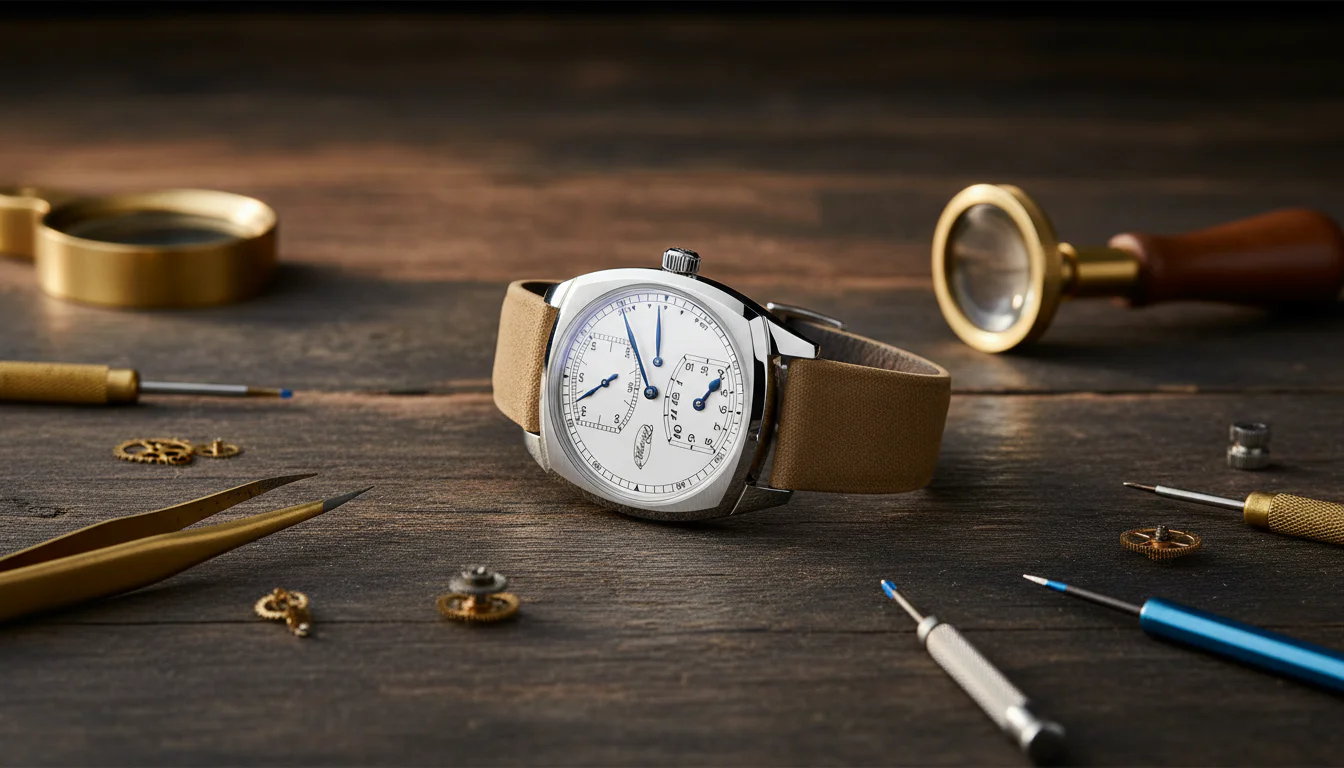 Deadbeat seconds started as a tool for scientific timekeeping, the same lineage that gives us the modern regulator dial layout.
The complication resurfaced in wristwatches decades later for an unexpectedly practical reason. The Rolex Tru-Beat, released in 1954, marketed its deadbeat seconds function to doctors specifically for measuring a patient's pulse, where a clean once-per-second tick is genuinely easier to count against than a sweeping hand.
The Quartz Crisis Made It Rare Again
Deadbeat seconds mostly disappeared from production once quartz watches arrived in the 1970s and made a true once-per-second tick cheap and universal. Ironically, that is exactly what makes the mechanical version a serious flex today: it takes real engineering to replicate an effect quartz achieves for almost nothing.
How the Mechanism Actually Works
Deadbeat seconds does not run the seconds hand directly off the balance wheel the way a standard running seconds does. Instead, most designs insert a secondary escapement or spring-loaded lever between the going train and the seconds hand, storing up energy and releasing it in one clean pulse every second.
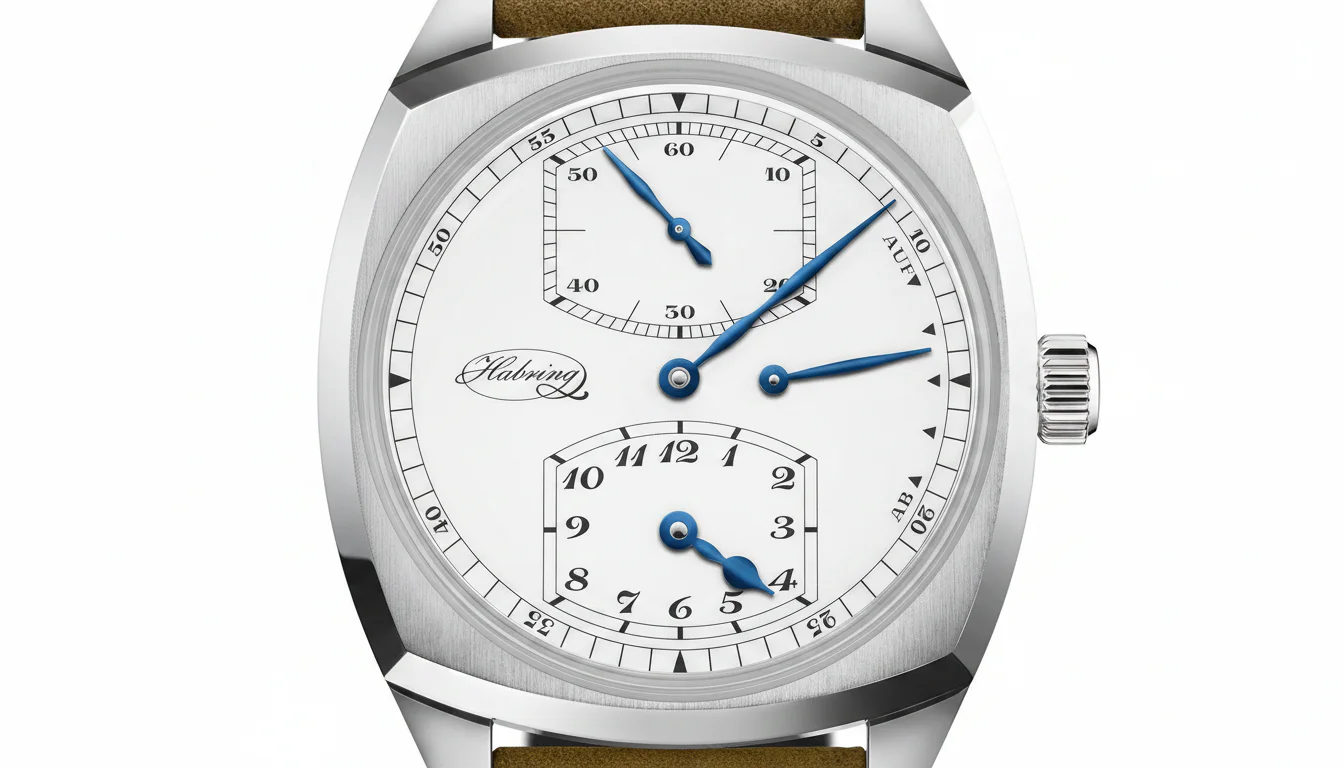 A dedicated subdial for the deadbeat seconds hand, separate from the hours and minutes, is the layout most deadbeat and regulator watches share.
One common approach uses a star-shaped wheel that releases a linear lever, called a flirt, after every set number of escapement beats. A secondary hairspring stores energy between releases, decoupling the continuous motion of the going train from the instant, once-per-second snap that actually moves the hand.
Other Approaches to the Same Problem
Independent watchmaker Petermann Bédat built a four-armed anchor with four jewel pallets to convert the going train's continuous motion into a clean jump. Other manufacturers integrate the function into a remontoir, a constant-force mechanism that already releases energy on a fixed interval, making deadbeat seconds a natural byproduct rather than a separate system bolted on.
The Habring2 Josef Regulator: An Accessible Example
Habring2, the small Austrian manufacture run by Maria and Richard Habring, builds one of the more accessible entry points into genuine deadbeat seconds with the Josef Regulator. The watch runs the in-house caliber A11GSP, a hand-wound movement with 21 jewels at 28,800 vibrations per hour and a 48-hour power reserve.
The 38.5mm cushion-shaped steel case houses the escapement directly beneath the 12 o'clock position, positioning it specifically so Josef, the internal name Habring2 gives the movement, can correctly display the deadbeat seconds function at that location on the dial. The watch is priced at EUR 7,450 as a permanent, non-limited catalog piece.
Why the Regulator Layout Fits Naturally
A regulator dial splits hours, minutes, and seconds onto separate displays rather than stacking three hands on one center pinion, originally a precision-focused layout meant to avoid one hand obscuring another during careful reading. That same philosophy pairs naturally with deadbeat seconds, since both features exist to make a watch easier to read precisely rather than easier to glance at casually.
Notable Modern Examples Beyond Habring2
Deadbeat seconds shows up across a range of price points and philosophies today. Jaquet Droz builds the complication as a dedicated model, the Grande Seconde Deadbeat, in 18K rose gold with an ivory enamel dial, an off-center hour subdial, and a retrograde date hand, running the automatic caliber 2695SMR at 21,600 vibrations per hour with a 40-hour power reserve.
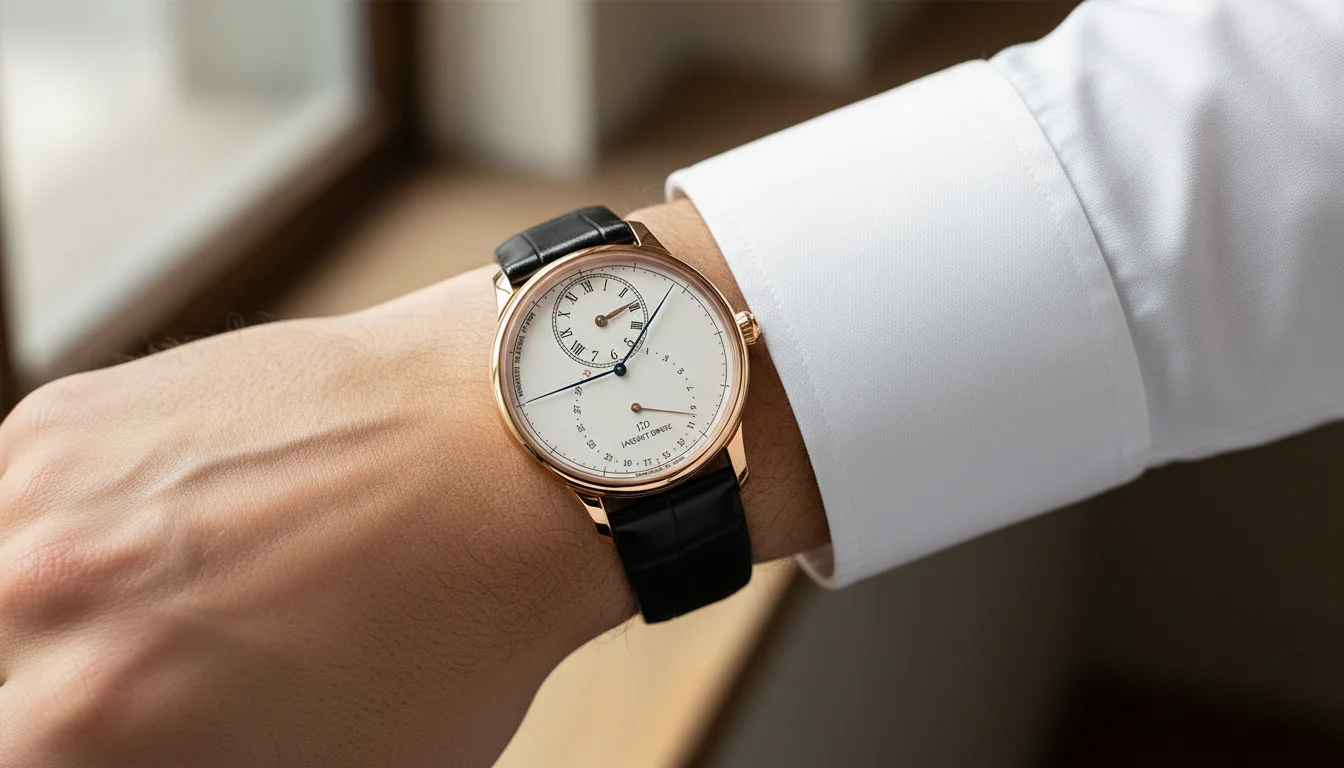 Jaquet Droz names the complication directly in the model name, rather than treating it as a hidden technical footnote.
Jaeger-LeCoultre's Geophysic True Second uses caliber 770 to deliver the function in a more mainstream production context, while F.P. Journe has used it in pieces like the Tourbillon Souverain Vertical and Vagabondage III as part of his broader independent watchmaking output.
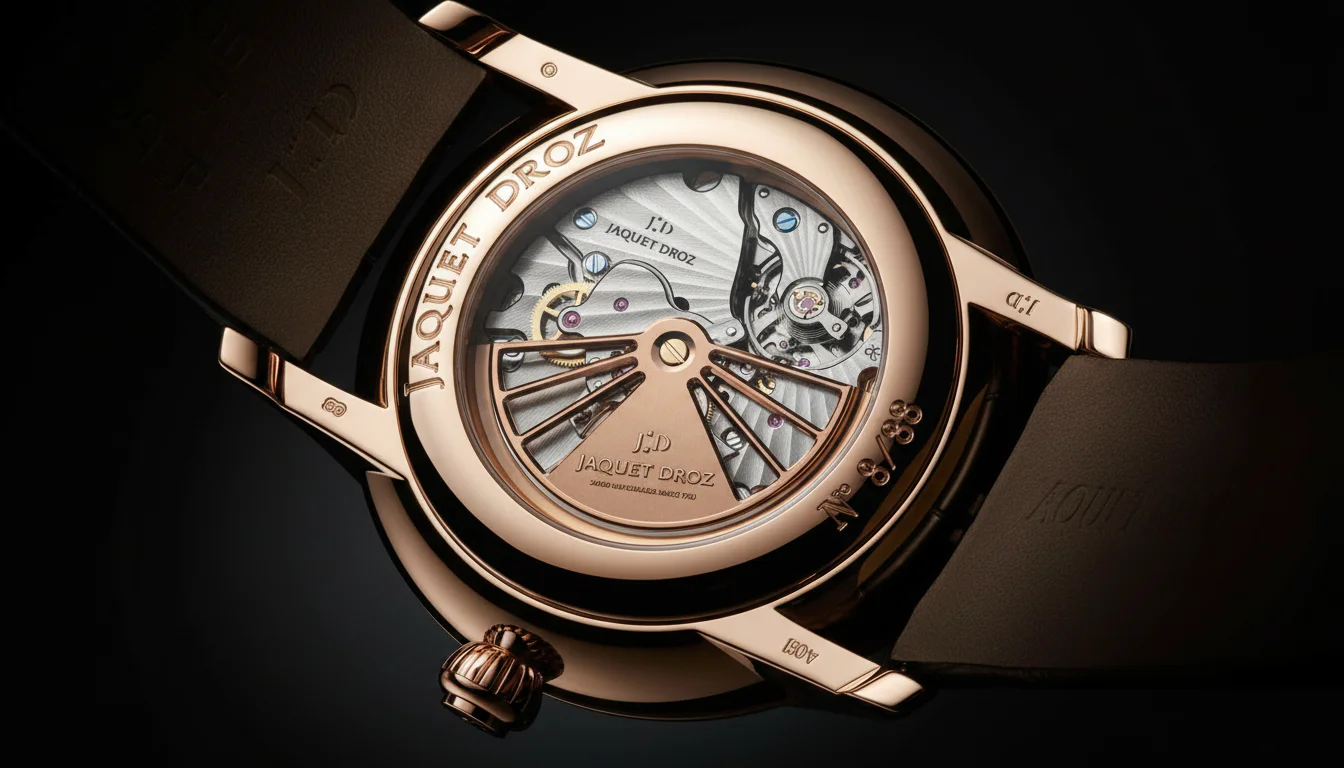 The rose gold oscillating weight and hand-finished bridges visible through the caseback are typical of the finishing level at this price point.
A. Lange & Söhne's Richard Lange Jumping Seconds, built around caliber L094.1, pairs the complication with the brand's high-finishing standard, and De Bethune has used it in the DB25T Zodiac as part of that manufacture's more avant-garde design language.
What to Look For When Comparing Examples
Buyers comparing options should ask which mechanical approach a given manufacture uses (a star-and-flirt system, a secondary escapement, or a remontoir-integrated design), since that detail affects both the movement's overall complexity and its long-term serviceability.
FAQ
What is deadbeat seconds?
A watch complication where the seconds hand ticks once per second in discrete jumps, rather than sweeping smoothly, designed to imitate a quartz watch's tick on a purely mechanical movement.
Why is it called deadbeat seconds or seconde morte?
Seconde morte is French for dead second, referring to the pause between each jump of the hand rather than any defect in the mechanism.
Why was deadbeat seconds originally invented?
For scientific and navigational precision on 18th century regulator clocks and marine chronometers, where a discrete once-per-second tick was easier to measure short events against than a smoothly sweeping hand.
What is a good affordable example of a deadbeat seconds watch?
The Habring2 Josef Regulator, priced at EUR 7,450, runs the in-house caliber A11GSP and is considered one of the more accessible genuine deadbeat seconds watches on the market.
Which luxury brands make deadbeat seconds watches?
Jaeger-LeCoultre, F.P. Journe, A. Lange & Söhne, De Bethune, and Jaquet Droz all currently produce watches with a deadbeat or jumping seconds function.