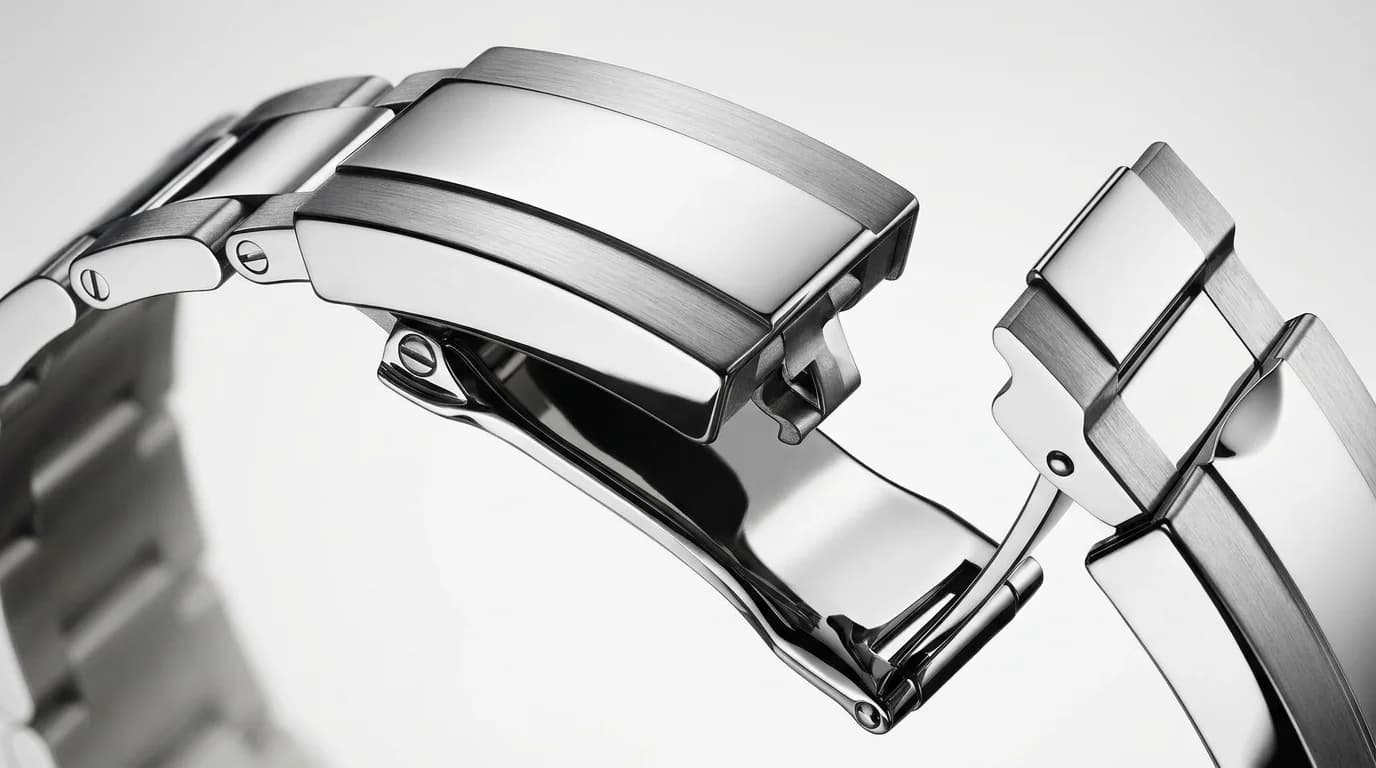
A pin buckle is a belt. A deployant clasp is a hinge. Most buyers can feel the difference the first time they close one, and never think much about why it works that way.
Here is what a deployant clasp actually is, how it works, and why it costs a brand more to make than the strap it sits on.
The images in this article were generated with AI for illustration. They show recognizable watch models but are not photographs of specific watches for sale.
The Short Answer
- A deployant clasp (also called a deployment buckle or folding clasp) folds closed against itself instead of a pin passing through a hole in the strap.
- It exists on both metal bracelets (nearly universal on modern sport watches) and leather straps (an upgrade option, not the default).
- The main benefit is wear reduction. The strap or bracelet does not stretch and crease at a single pin hole every time you take the watch off.
- It costs more to manufacture than a simple buckle because it is a precision-machined mechanism, not a stamped piece of metal.
- On a bracelet, the clasp usually houses additional features: a safety catch, sometimes a micro-adjustment system, sometimes a diver's extension.
How a Deployant Clasp Actually Works
Strip away the branding and every deployant clasp does the same basic job.
Two Folding Blades, One Hinge
The strap or bracelet end attaches to a metal housing. Inside it, two blades are hinged so they fold flat against each other and against the strap when closed, then swing open to release it.
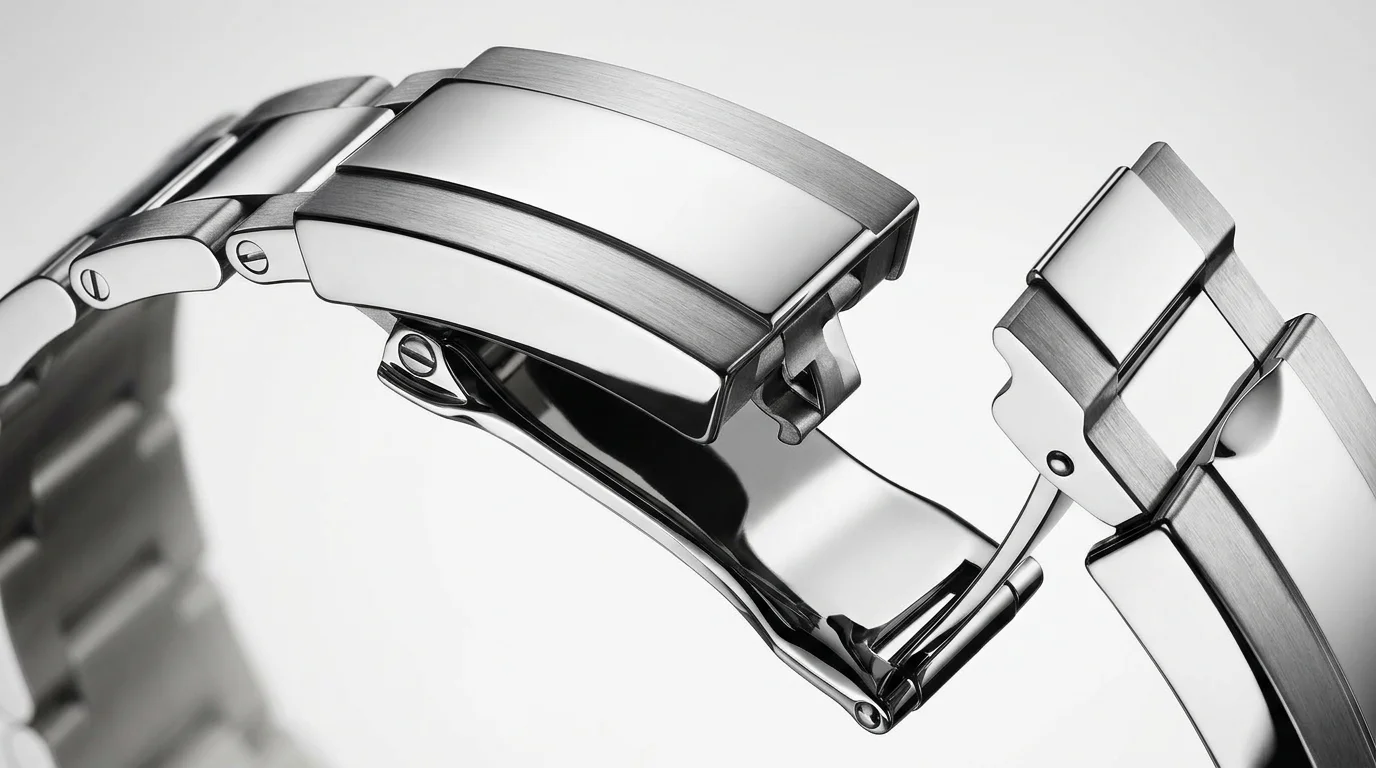 Two hinged blades fold flat against the bracelet. No pin, no hole, no single stress point.
A spring-loaded catch keeps the blades from popping open on their own. On most modern clasps, that catch requires a deliberate push or pull, not just gravity, to release.
Why This Beats a Pin Through a Hole
A pin buckle works by threading a pin through one of several pre-punched holes in the strap. Every time you resize it, or simply take the watch on and off over years, that hole takes the wear.
A deployant clasp does not rely on a hole at all. The strap or bracelet closes at the same points every time, so wear distributes across the hinge and clasp housing instead of concentrating on one weak spot in the leather or metal.
Metal Bracelet vs Leather Strap
The mechanism is the same in principle, but the two applications solve different problems.
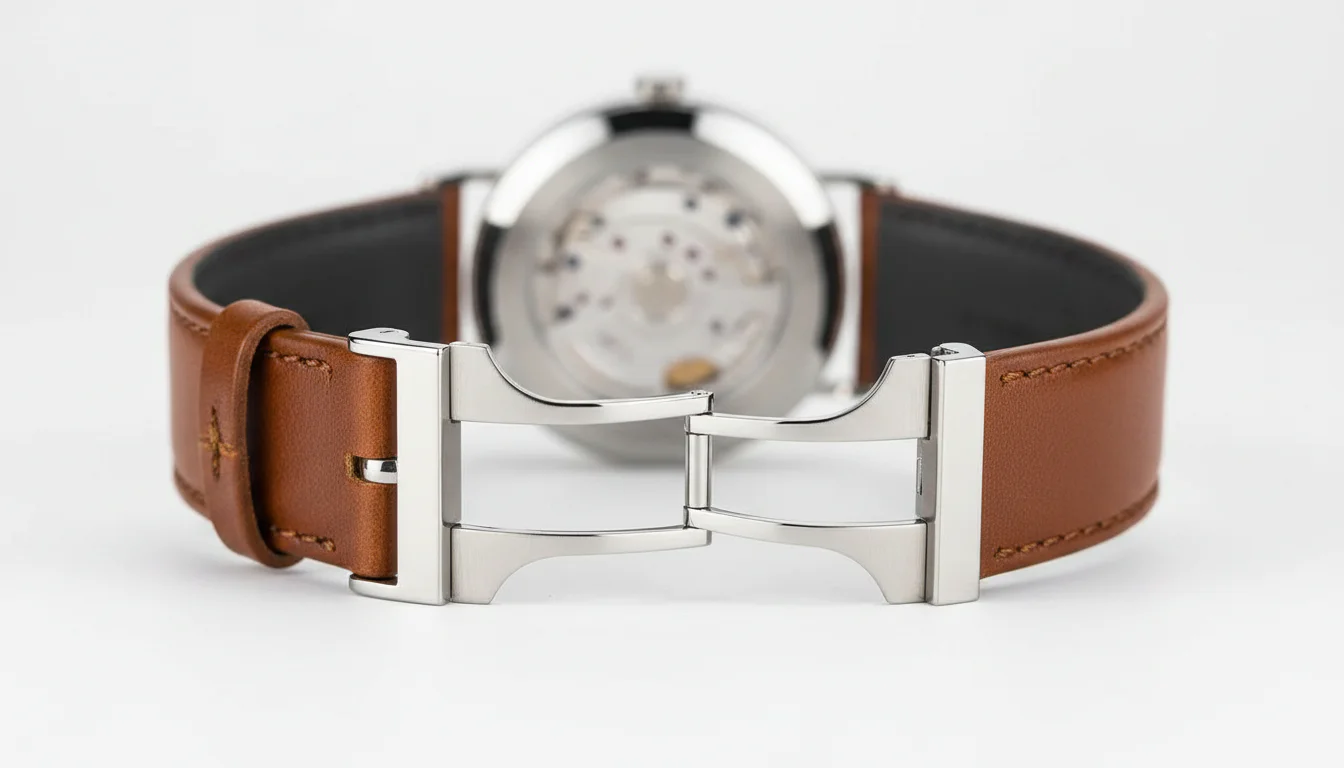 On leather, a deployant buckle protects the strap from the wear a pin buckle causes at a single hole over years of use.
On a Metal Bracelet, It Is the Default
Nearly every modern sport watch on a metal bracelet ships with some form of deployant clasp. It is not treated as an upgrade, it is simply how the bracelet closes. Many bracelet clasps also build in a safety catch (a secondary latch that has to be lifted before the main clasp opens) and sometimes a diver's extension for wearing over a wetsuit.
On Leather, It Is an Upgrade
A leather strap defaults to a simple pin buckle unless the brand or a buyer specifically chooses a deployant. Brands typically price it as an add-on, and third-party strap makers sell aftermarket deployant buckles for exactly this reason: the wear-protection benefit applies to leather too, it just is not assumed the way it is on a bracelet.
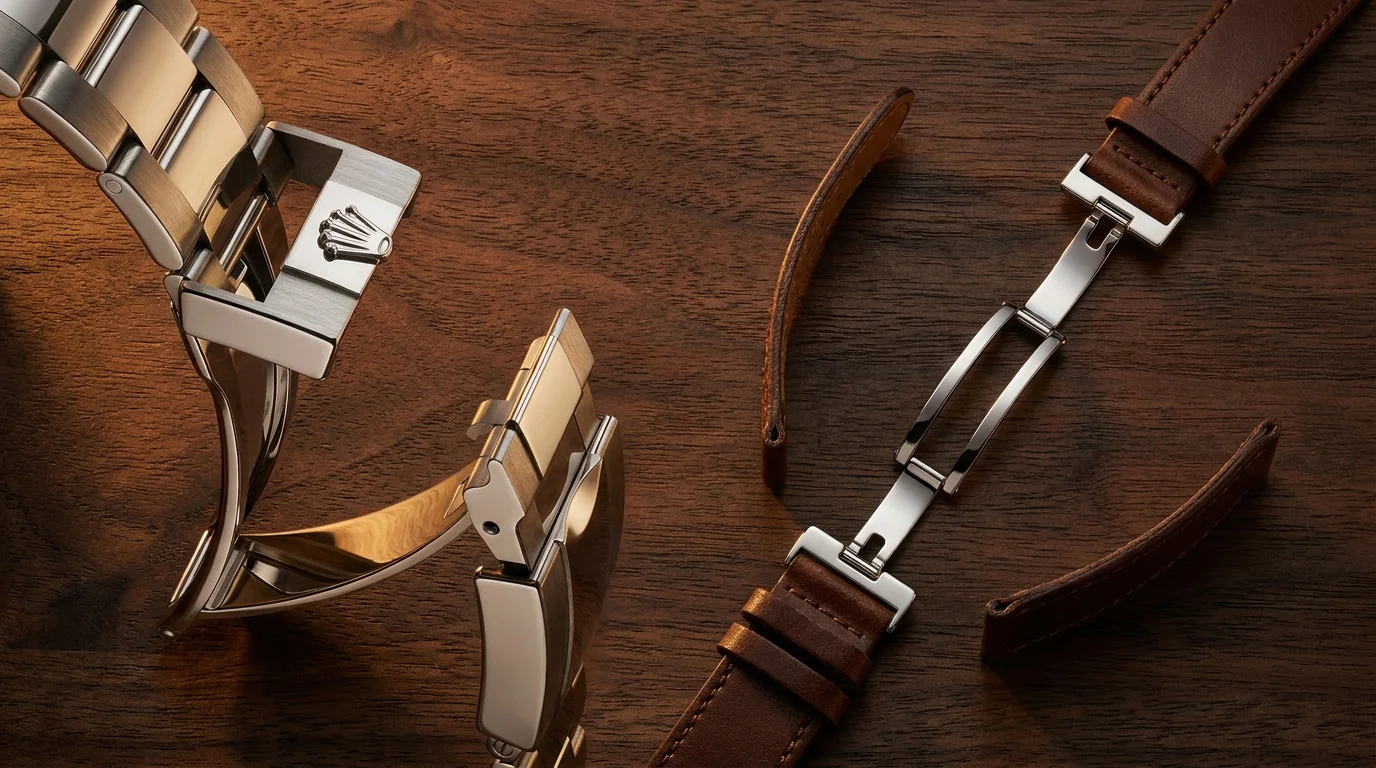 Same folding principle, two different jobs. A bracelet clasp is structural. A leather deployant buckle is a wear-protection upgrade.
Why It Costs More to Make
A pin buckle is a stamped piece of metal with a bar welded across it. A deployant clasp is a small hinged mechanism with multiple moving parts that all need to fit together precisely enough to close flush and stay closed under normal wrist movement.
That precision is the cost driver. Tolerances have to be tight enough that the clasp does not rattle, does not catch on skin or clothing when it opens, and closes with a reassuring, repeatable snap rather than a loose flop. On a finished luxury bracelet, the clasp is frequently one of the more labor-intensive components to machine and finish, even though it is the part most buyers never really look at closely.
What to Check Before Buying
A used deployant clasp tells you a lot about how a watch was actually worn.
- Play or looseness in the hinge when closed suggests wear or a lower-quality mechanism.
- A weak or missing safety catch on a bracelet is a real functional issue, not just cosmetic.
- Scratches concentrated on the clasp underside are normal and expected. Heavy wear on the folding blades themselves is worth asking about.
- Stretch in the surrounding bracelet links, not just the clasp, is the other half of the wear story on an older watch.
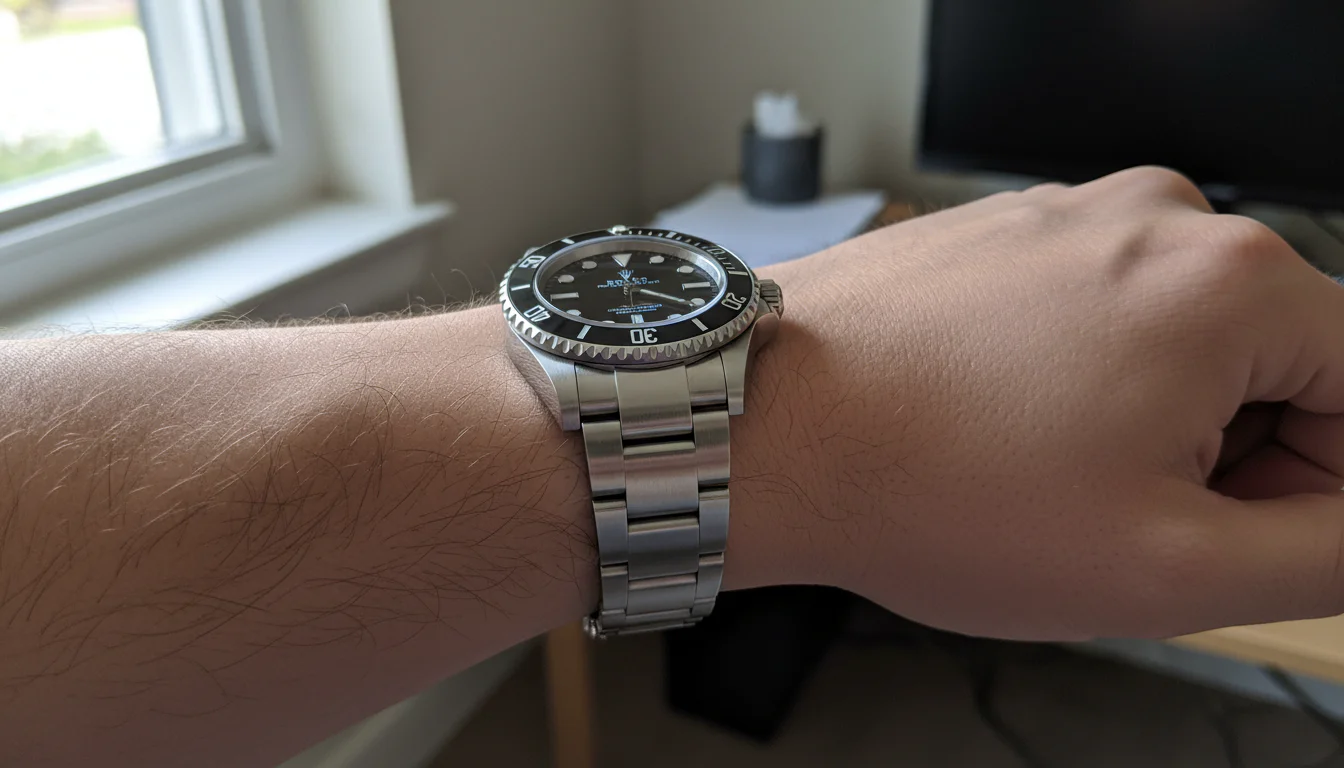 Closed, most deployant clasps disappear against the bracelet. The mechanism only shows itself when you open it.
The Part Most Buyers Never Look At
Closed, a good deployant clasp is nearly invisible. It sits flush against the bracelet or strap and does its job quietly for years.
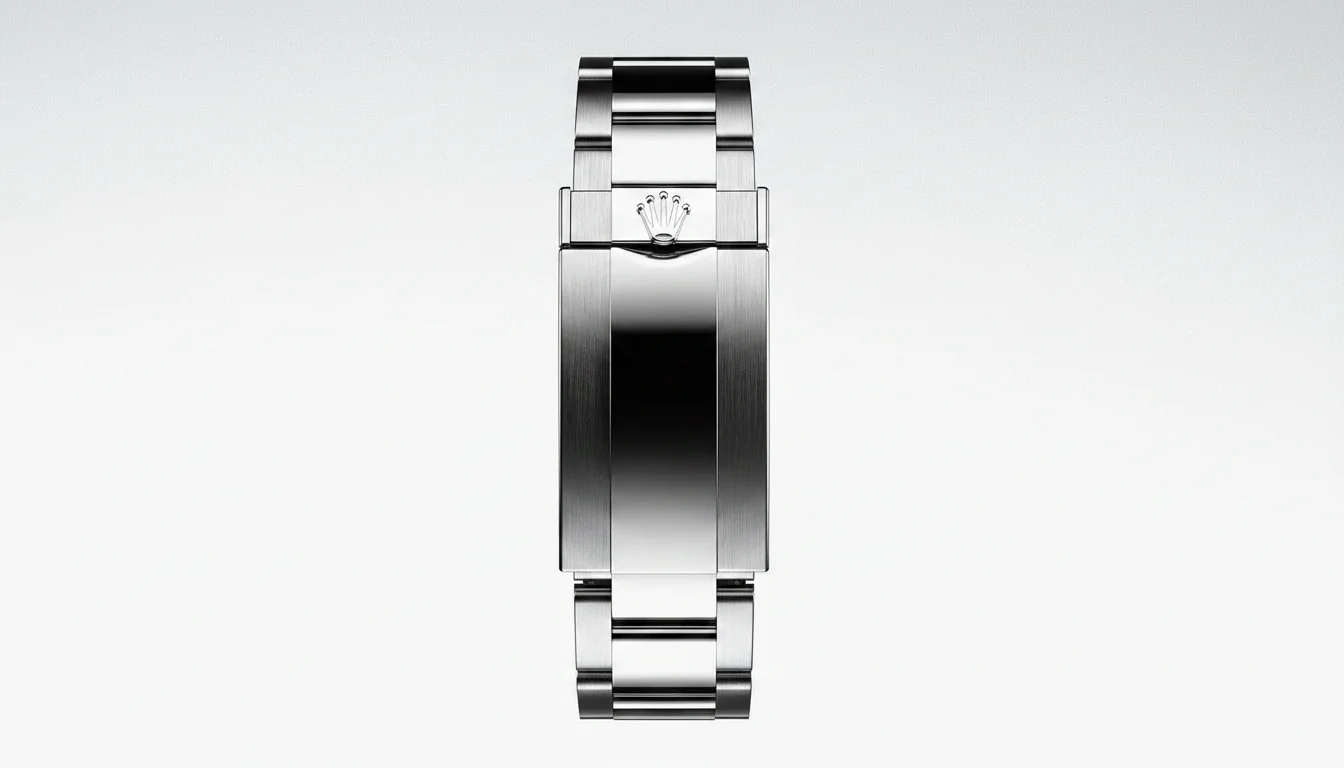 The whole point of a well-made deployant clasp is that you stop noticing it. That is a harder engineering problem than it looks.
That is by design. The complexity is meant to disappear into the experience of putting the watch on and taking it off, which is exactly why most owners never think about what is actually happening inside that small metal housing every single day.
Related Reading
- Exhibition Caseback Explained: What You're Actually Looking At
- GMT Function Explained: How a True GMT Actually Tracks a Second Time Zone
- How to Authenticate a Pre-Owned Rolex: A Dealer's Checklist
Frequently Asked Questions
What is a deployant clasp?
A deployant clasp, also called a deployment buckle, is a folding fastening mechanism that closes with hinged blades instead of a pin passing through a hole in the strap.
Is a deployant clasp better than a pin buckle?
For wear protection, yes. A deployant clasp distributes stress across a hinge instead of concentrating it on one hole in the strap or bracelet, which reduces long-term wear.
Why do deployant clasps cost more?
They are precision-machined mechanisms with multiple moving parts that must fit together tightly enough to close flush and stay closed, unlike a simple stamped pin buckle.
Do all metal watch bracelets have deployant clasps?
Nearly all modern sport watch bracelets use some form of deployant clasp as the default closure, often with an added safety catch and sometimes a diver's extension.
What should I check on a deployant clasp when buying pre-owned?
Check for play or looseness in the hinge, a functioning safety catch, and wear concentrated on the folding blades themselves rather than just cosmetic scratches on the underside.