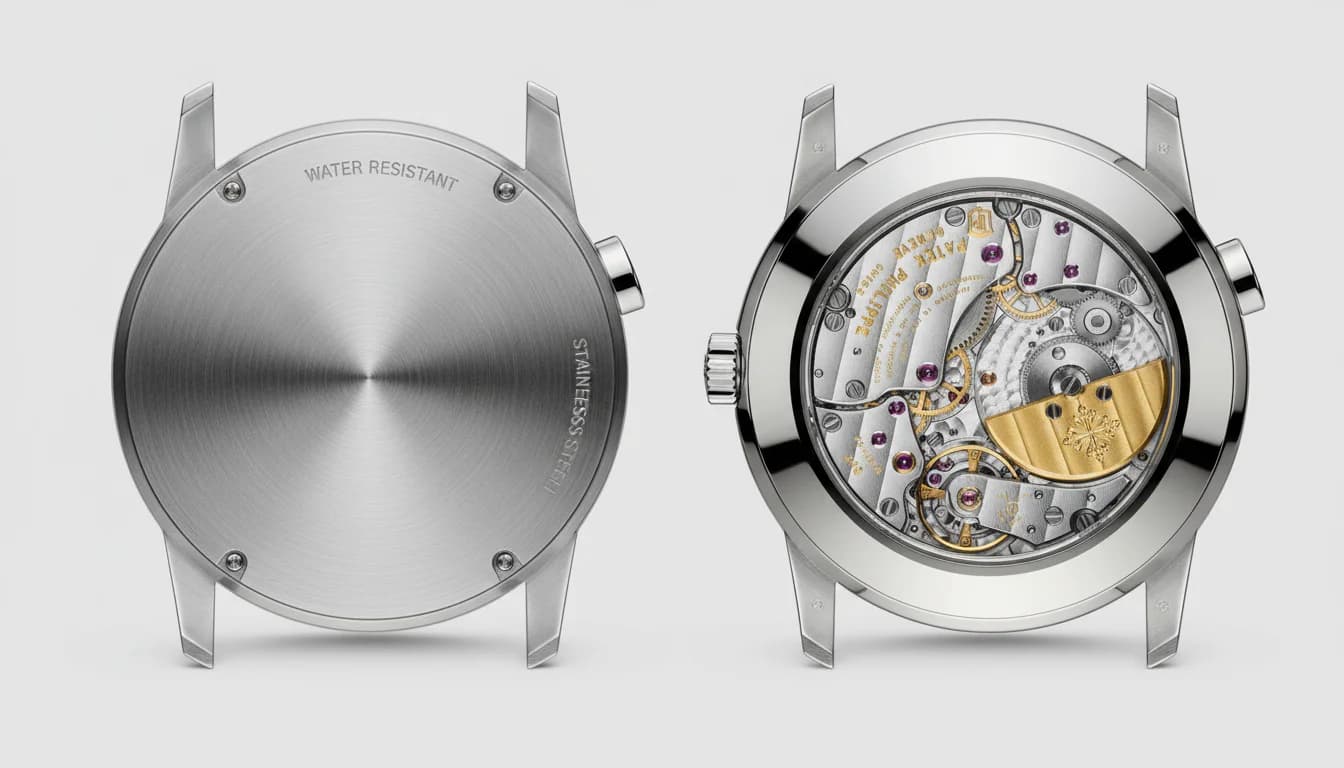
Flip a watch over and you either see a plain metal disc or a small window onto a spinning gold rotor and a field of tiny screws. That choice is not decorative accident. It tells you something real about how the brand thinks about the movement inside, and sometimes about how deep the watch can go underwater.
This post includes AI-assisted images built from real reference photos of the actual watches and mechanisms discussed. All historical details are researched and verified against manufacturer and trade sources, not invented.
The short answer: An exhibition caseback is a transparent sapphire or mineral crystal window on the back of a watch that lets you see the movement instead of a solid metal cover. The idea dates to the 1880s as a "salesman sample" feature, stayed rare on commercial watches until the mechanical renaissance of the 1980s and 1990s, and is now common across nearly every price bracket. Some brands, notably Rolex on most sports models, still avoid them, largely for water resistance and design consistency reasons rather than technical limitation. A small number of watches skip the choice entirely by using a monobloc case with no removable back at all, which rules out a display window by design.
Where The Exhibition Caseback Actually Comes From
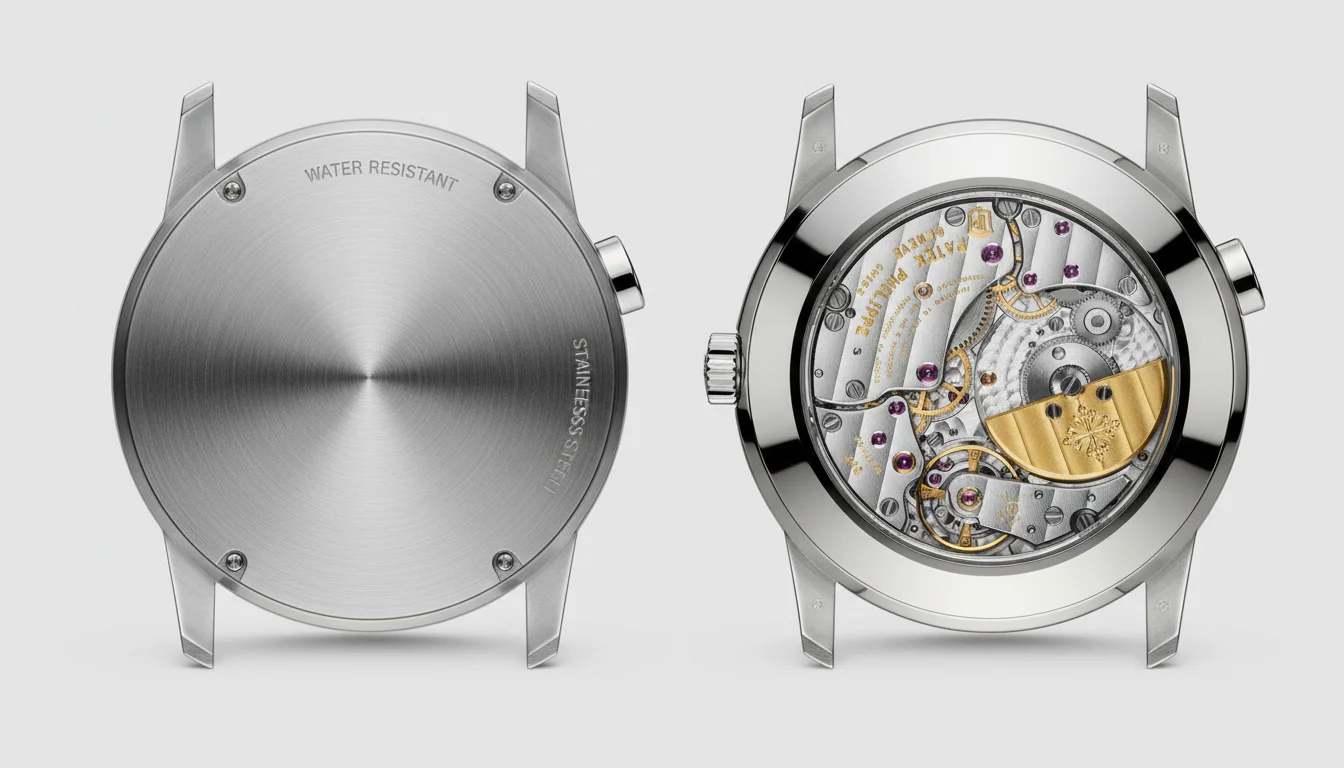 Same case, two philosophies. One hides the mechanics entirely, the other treats them as the main event.
The exhibition caseback dates back further than most people assume. Manufacturers used transparent backs as far back as the 1880s, essentially as salesman samples meant to show off hand finishing and movement construction to potential buyers and retailers, not as a feature sold on finished watches. Solid backs dominated commercial production through the early twentieth century because sapphire crystal was expensive to produce and considered structurally fragile compared to solid metal. Early attempts at display backs, including Omega's Kleerback Seamaster De Ville in the 1960s, used acrylic hesalite windows that scratched and clouded easily, which did not help the case for the feature.
The real turning point came in the 1980s and 1990s, during the mechanical watch industry's fight to stay relevant against quartz. Showing a hand finished, jeweled movement through a sapphire window became a direct way to argue that a mechanical watch was worth its price premium over a quartz piece that told the same time for a fraction of the cost. That argument worked, and exhibition casebacks are now standard across most price brackets, from entry-level automatics to the most expensive complicated watches in the world.
Why Rolex Mostly Skips It
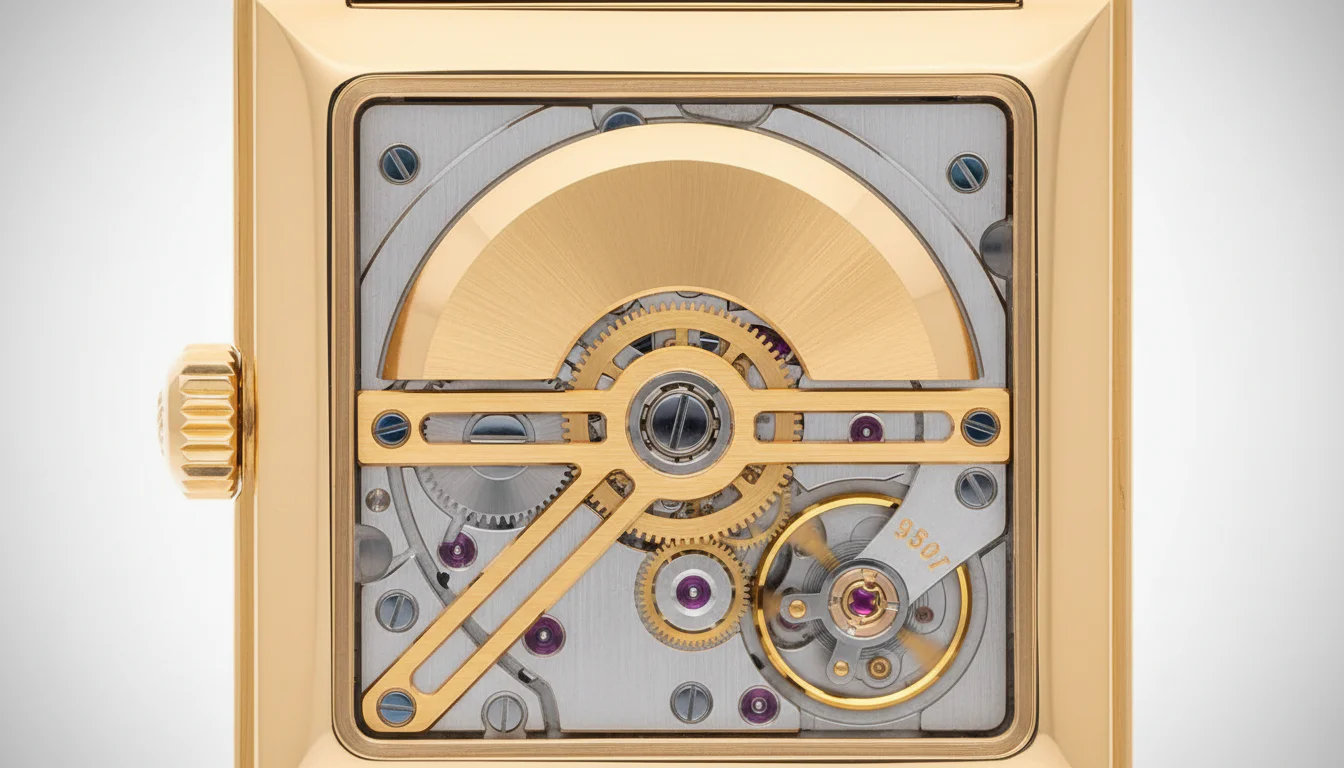 This kind of finishing is exactly what an exhibition caseback exists to show off. Rolex mostly chooses not to show it.
Rolex's relationship with the exhibition caseback is a useful case study in brand philosophy over engineering limitation. The earliest known Rolex exhibition caseback appeared in 1931 on a piece used to demonstrate the brand's new self-winding rotor to potential buyers, essentially the same salesman-sample role the feature played industry wide. It stayed a rarity for decades. The first commercially available Rolex with a sapphire caseback was the Cellini Prince, introduced in 2005 based on a 1928 art deco design, offered in white gold, yellow gold, and Everose gold configurations between roughly $8,000 and $15,000.
The pattern held into recent years: in 2023 Rolex reintroduced exhibition casebacks on three references, the platinum Daytona 126506, the Perpetual 1908, and the "Le Mans" Daytona 126529LN, all precious metal or limited-context pieces rather than standard catalog sports watches. The through line is clear. Rolex reserves the exhibition caseback almost exclusively for higher-end, precious metal, or specialty references, keeping its core steel sports catalog, the Submariner, GMT-Master II, Daytona in steel, on solid backs.
Does A Sapphire Caseback Weaken Water Resistance?
The short answer: not with modern manufacturing, but it used to be a real constraint. Sapphire crystal and hardened mineral glass are now strong enough that even serious dive watches can run a display back. Omega's Seamaster Planet Ocean 600M is the clearest proof point, since a professional dive watch rated to 600 meters running an exhibition caseback would have been unthinkable a generation ago. The old concern about display backs compromising water resistance is mostly a legacy of 1920s and 1930s manufacturing limits, not a fact about the current state of the technology.
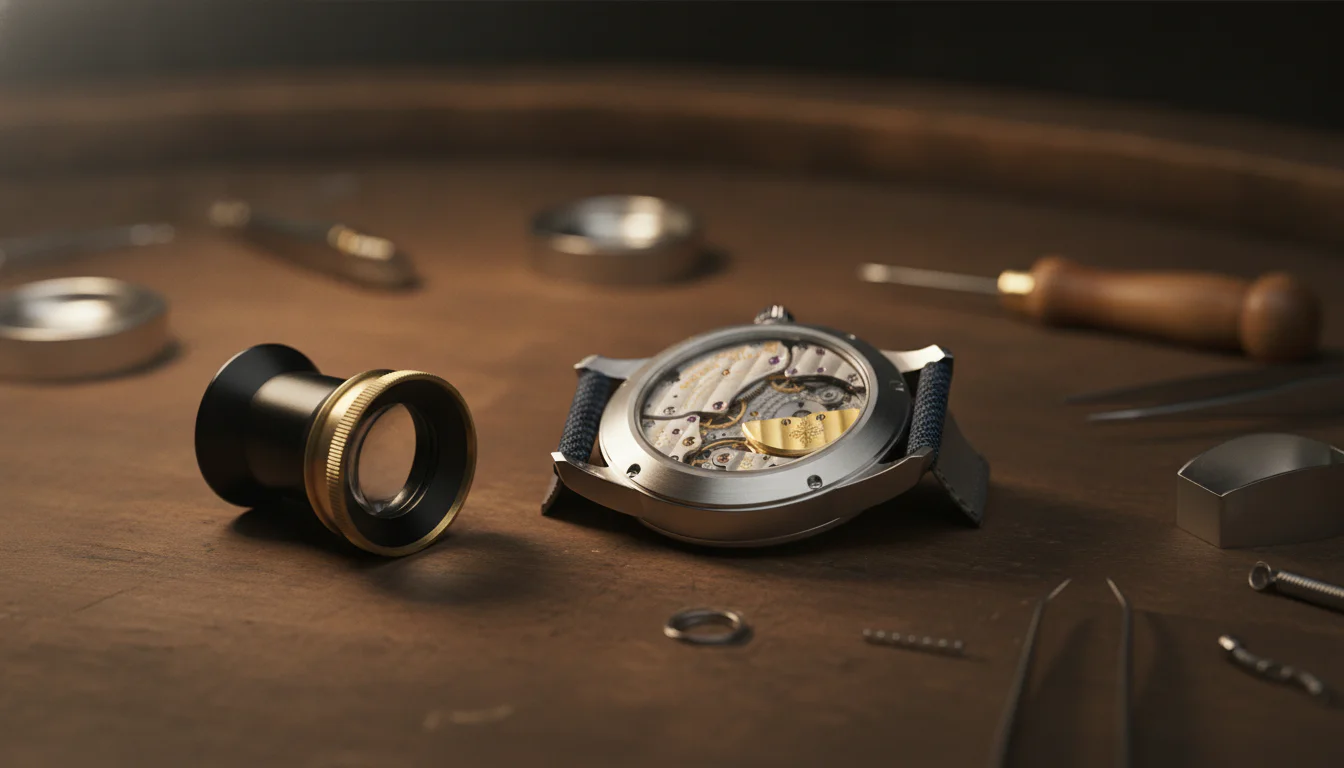 A watchmaker's loupe next to a display back. The whole point of the sapphire window is that you do not need to open the case to appreciate the finishing.
That said, most brands still make a deliberate choice per model rather than defaulting to exhibition backs everywhere. A dedicated tool watch built for extreme depth or hard use often keeps a solid back for the simplest reason: one fewer potential point of failure and one thicker, more rigid piece of metal protecting the movement from shock. Some tool watches go further still and drop the removable caseback altogether in favor of a monobloc, front-loading case, which is the most extreme version of that same water-resistance logic.
What To Check On A Pre-Owned Exhibition Caseback
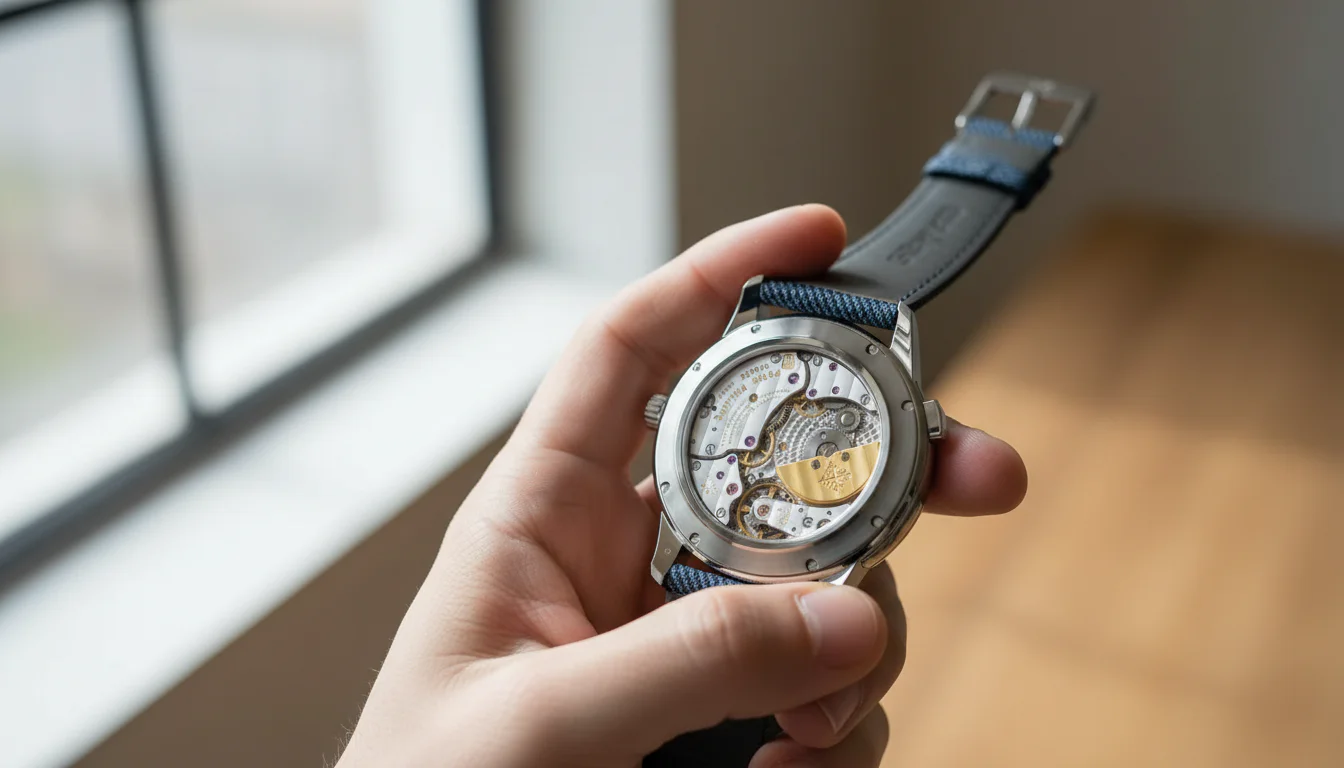 A clean, correctly seated caseback should sit flush with no visible gap or misalignment against the case.
Buying pre-owned, an exhibition caseback gives you something a solid back cannot: a visual health check before you ever open the watch. Look for cloudy or hazy patches in the sapphire, which can indicate a failed gasket seal or moisture that got in and never fully cleared. Check the finishing quality against manufacturer photos for that reference, since aftermarket "service" work occasionally swaps in a lower quality rotor or leaves visible scratches on bridges that a careful original assembly would not have. And confirm the caseback screws or bezel show no chew marks or slip damage, a sign someone opened the case with the wrong tool.
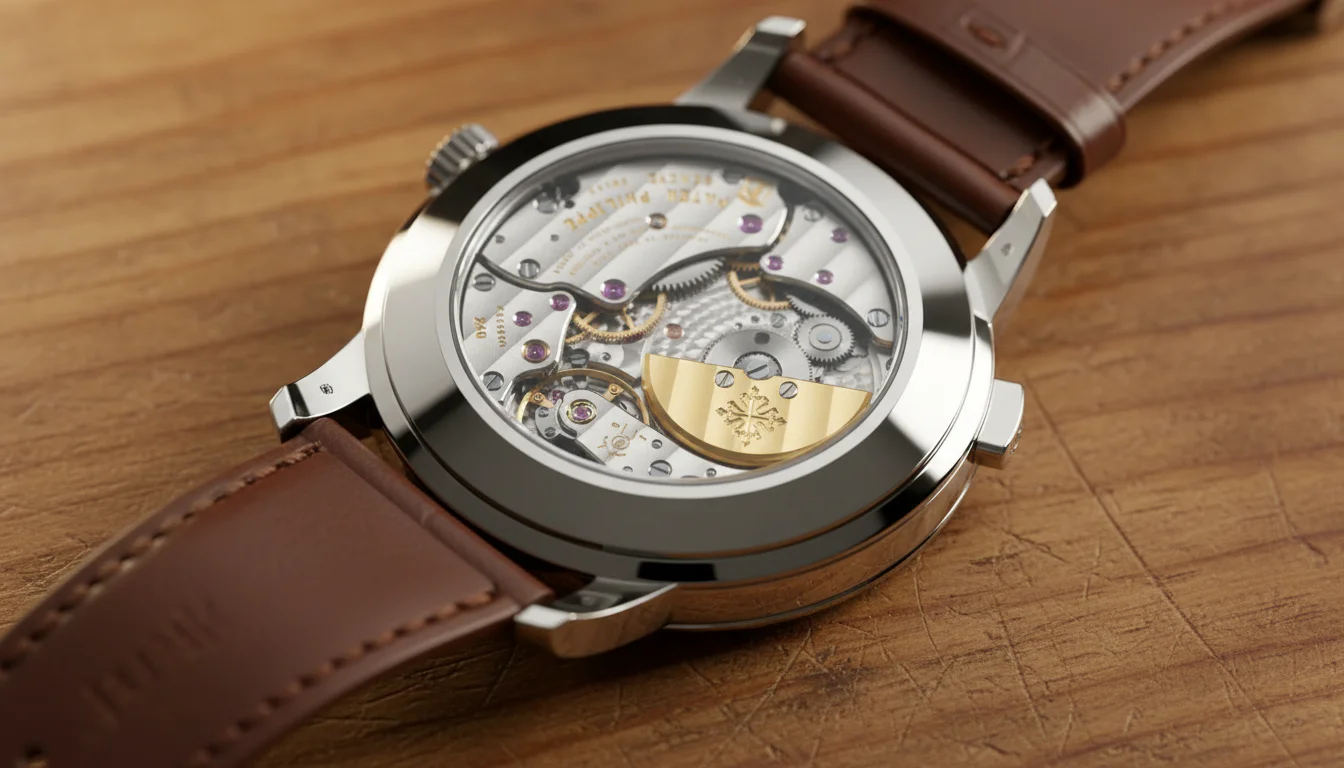 A quick visual check of the caseback tells you almost as much as opening the case yourself, without the risk of breaking a seal.
None of this replaces a proper service history or pressure test before you rely on a watch for actual water exposure. But a sharp, clear exhibition caseback with clean finishing is one of the easiest pre-purchase checks a non-watchmaker can genuinely do themselves.
FAQ
What is an exhibition caseback?
An exhibition caseback is a transparent sapphire or mineral crystal window on the back of a watch that lets you see the movement instead of a solid metal cover, letting the wearer view the mechanical finishing directly.
When did exhibition casebacks become common?
The feature dates back to the 1880s as a rare salesman-sample tool, but it did not become common on commercially sold watches until the mechanical watch renaissance of the 1980s and 1990s, when brands used it to argue for the value of hand finished movements against quartz competition.
Why doesn't Rolex use exhibition casebacks on most watches?
Rolex generally reserves exhibition casebacks for higher-end, precious metal, or limited references like the Cellini Prince or the 2023 platinum Daytona, keeping its core steel sports catalog on solid backs, largely a brand and design consistency choice rather than a technical limitation.
Does an exhibition caseback reduce water resistance?
Not with modern manufacturing. Sapphire crystal casebacks are now strong enough to appear on serious dive watches like the Omega Seamaster Planet Ocean 600M. The old concern was a real constraint in the 1920s and 1930s but is largely resolved by current materials and engineering.
What should I check on a pre-owned watch with an exhibition caseback?
Look for cloudy or hazy patches in the sapphire that could indicate a failed gasket seal, compare the movement finishing to manufacturer reference photos, and check the caseback screws or bezel for chew marks that would suggest improper prior servicing.