The Short Answer
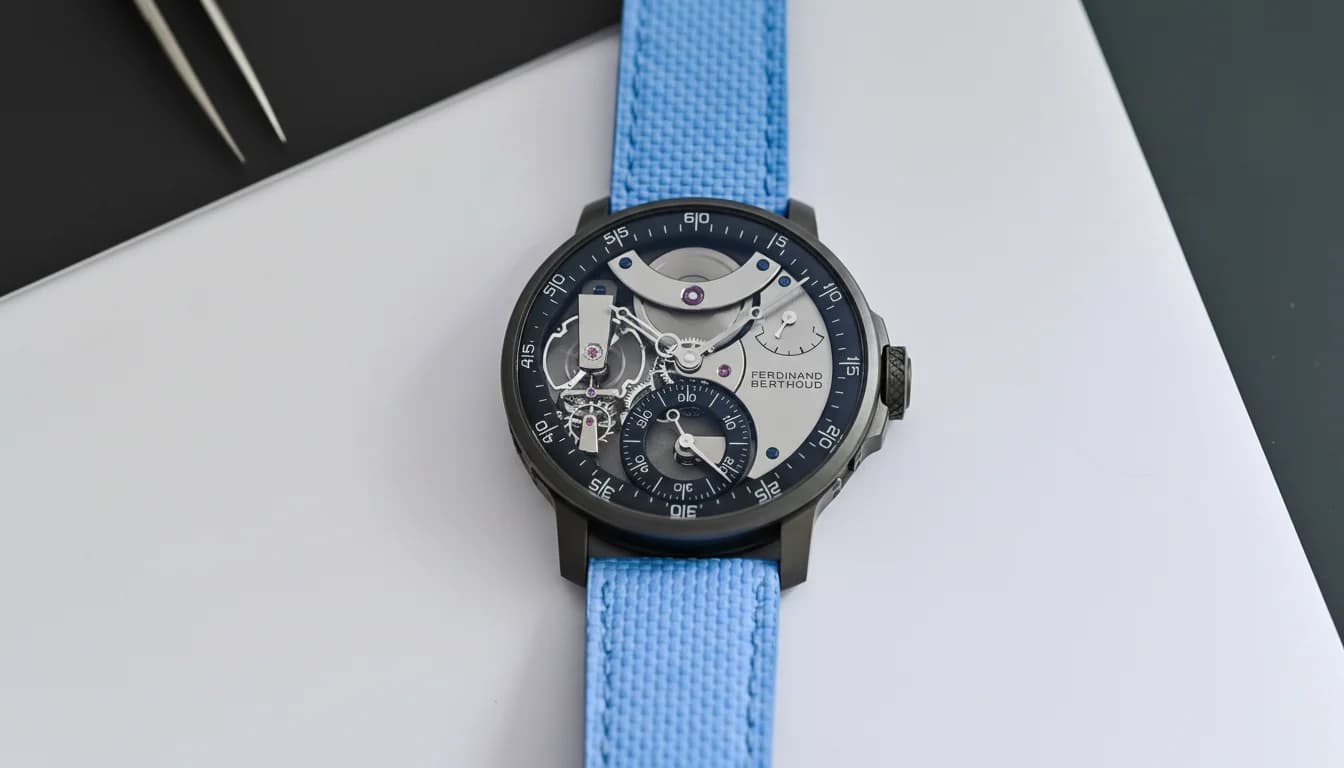
Ferdinand Berthoud is the name Chopard co-president Karl-Friedrich Scheufele resurrected in 2015 to build the most technically uncompromising watches in his portfolio, no relation to Chopard's own commercial lineup. The Chronomètre FB 3SPC.4-1 is the latest expression of that mission: a 42.3mm black ceramised titanium case around the in-house caliber FB-SPC, a hand-wound movement with a 72-hour power reserve and COSC chronometer certification.
The case runs 230 components and 47 jewels at 21,600 vibrations per hour, with a cylindrical hairspring using Berthoud's own terminal curves for better rate stability across positions. Pricing is available upon request through Ferdinand Berthoud's boutique network.
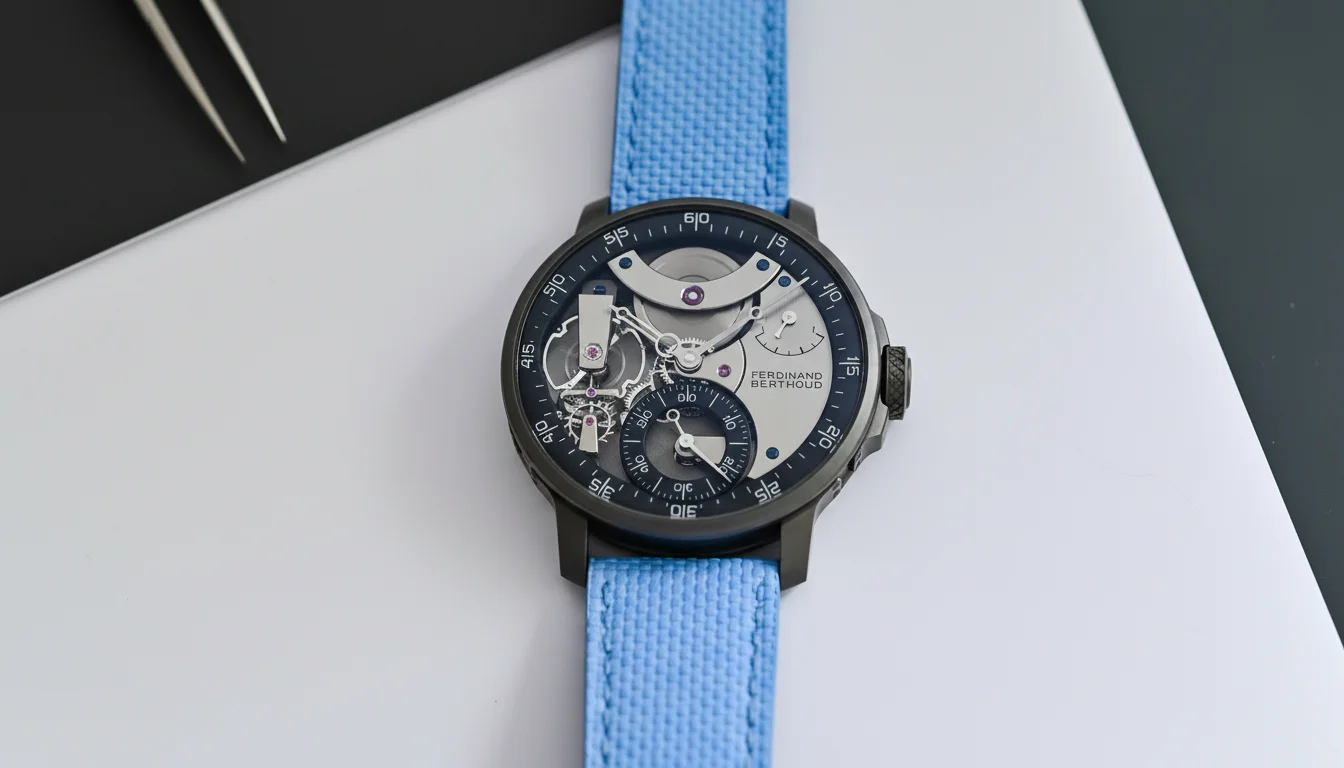 The open-worked dial keeps the fusee-chain style movement architecture visible from the front, not just through the caseback.
The watch photos in this article were generated with AI image tools, conditioned on real reference photography of the Ferdinand Berthoud Chronometre FB 3SPC.4-1 so the case shape, dial layout, and construction details are accurate to the real watch.
Who Ferdinand Berthoud Actually Was
Before this became a brand name, it was a person. Ferdinand Berthoud (1727 to 1807) was a Swiss horologist who emigrated to Paris in 1745 and built his reputation on precision marine chronometers, the instruments ships needed to calculate longitude accurately at sea.
That history is why the modern brand leans so heavily on chronometer-grade movement architecture rather than decorative complications. It is trying to honor a specific kind of precision engineering, not just borrow a historical name.
Resurrected by Chopard, Not Owned as Chopard
Karl-Friedrich Scheufele, co-president of Chopard, revived the Ferdinand Berthoud name in 2015 as its own independent haute horlogerie manufacture. It shares ownership with Chopard but operates as a distinct brand with its own design language, movement architecture, and boutique presence.
The Case: 42.3mm Black Ceramised Titanium
The FB 3SPC.4-1 case is built from black ceramised titanium across 57 separate parts, running 42.3mm in diameter and 9.43mm thick. Ceramised titanium takes on a hardened black surface layer through a ceramic treatment process, giving the case a scratch resistance closer to ceramic than raw titanium while keeping titanium's light weight.
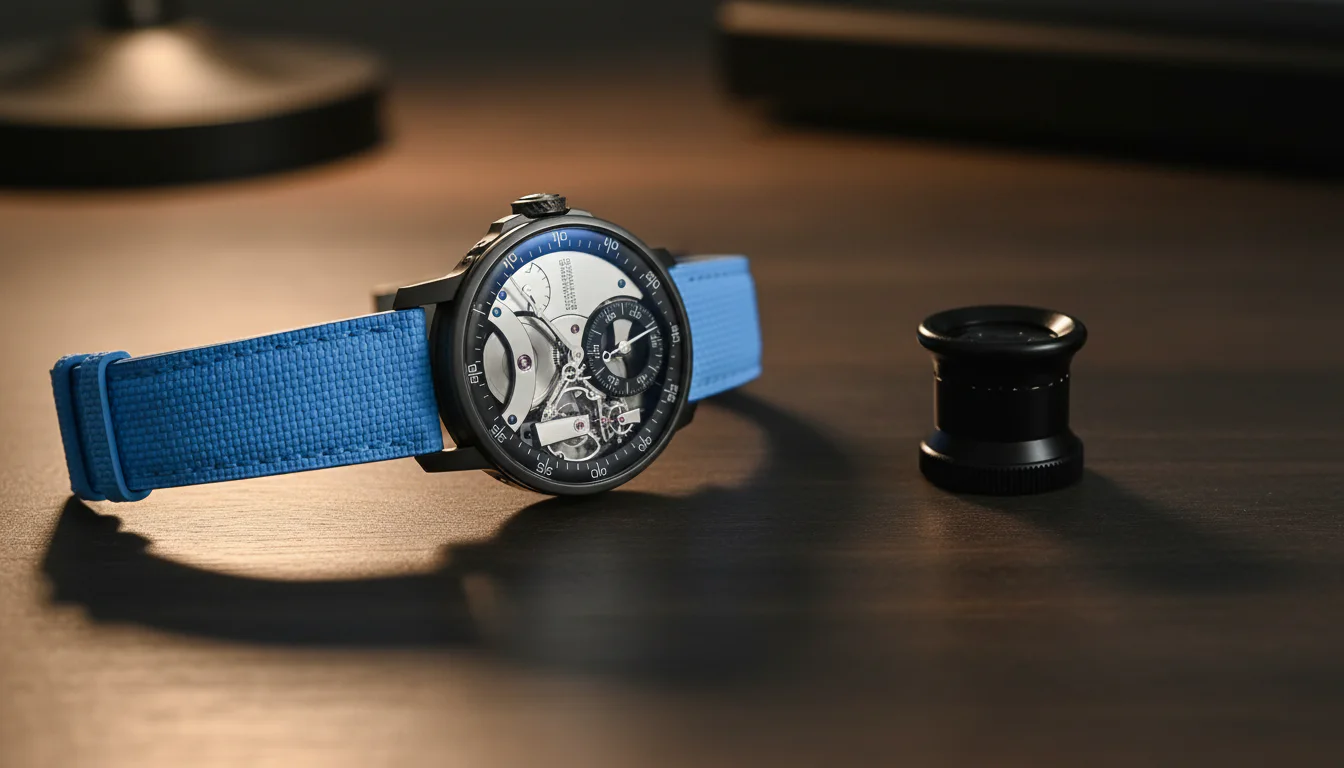 The case's matte black finish is a genuine surface treatment, not a coating that will wear through with regular use.
Water resistance sits at 30 meters, which is standard for a haute horlogerie piece built around an open-worked dial and exhibition caseback rather than a sealed sports case. This is a desk watch and dress watch, not a tool for the pool.
The Crown and Crystal Details
An 8.5mm black ceramised titanium crown with crown guards handles winding and setting. A domed sapphire crystal covers the front, an exhibition caseback shows off the movement, and a rectangular sapphire porthole set into the left flank of the case gives a side view of the going train in motion, an unusual detail most watches skip entirely.
The Movement: Caliber FB-SPC
Caliber FB-SPC is Ferdinand Berthoud's in-house hand-wound movement, measuring 34mm by 6.84mm and running 230 components across 47 jewels at 21,600 vibrations per hour. It delivers a 72-hour power reserve, tracked on the dial through a dedicated indicator alongside a small seconds subdial.
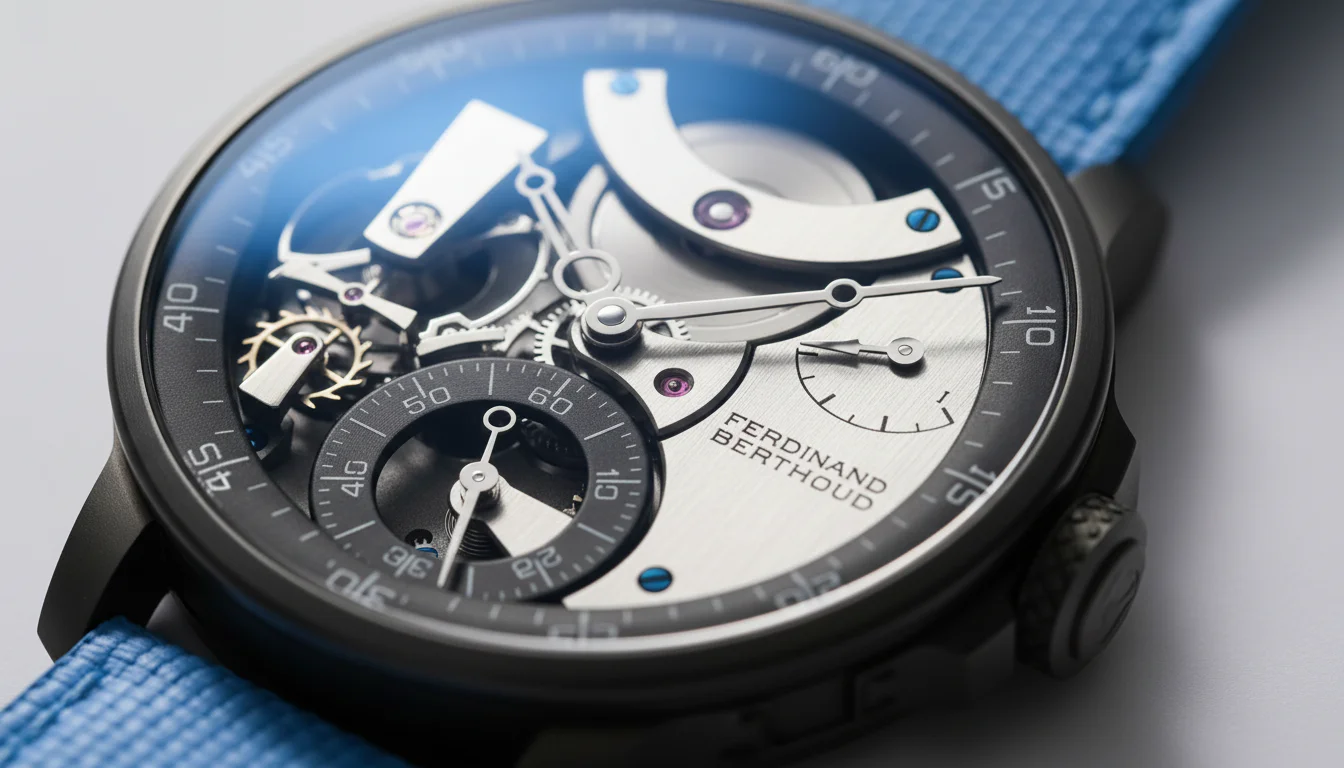 The open dial architecture puts the balance wheel, bridges, and power reserve mechanism on full display rather than hiding them under a solid dial plate.
The movement carries COSC chronometer certification, meaning it passed independent testing for timekeeping accuracy across multiple positions and temperatures before Ferdinand Berthoud cased it. That certification matters more here than on a typical automatic, since a hand-wound chronometer has to hold its rate without the smoothing effect a rotor's constant winding provides.
The Cylindrical Hairspring
The FB-SPC uses a cylindrical hairspring built with Berthoud's own terminal curves, a design meant to keep the spring breathing symmetrically as it expands and contracts, rather than pulling the balance off-center the way a flat hairspring can. Paired with a variable-inertia balance, the goal is rate stability that holds up whether the watch is lying flat on a nightstand or moving constantly on a wrist.
On the Wrist
At 42.3mm and 9.43mm thick, the FB 3SPC.4-1 wears as a substantial but not oversized dress piece. The black textile strap with a titanium pin buckle keeps the overall weight down despite the technical density packed into the case.
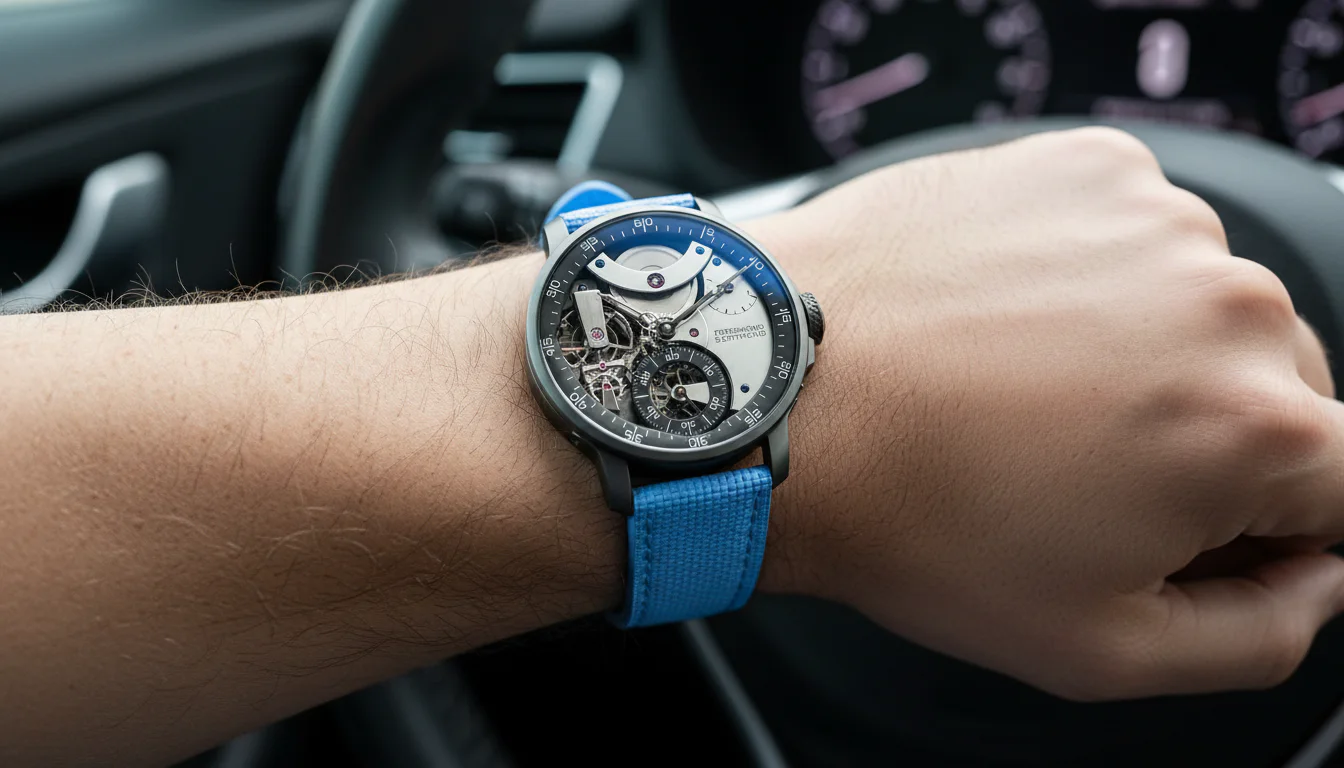 The open dial reads busy up close but settles into a clear, legible layout at arm's length, which is the more honest test of any skeletonized watch.
Other strap materials are available on request, a common option at this level of haute horlogerie where buyers frequently order a piece to a specific brief rather than off a shelf.
The Caseback
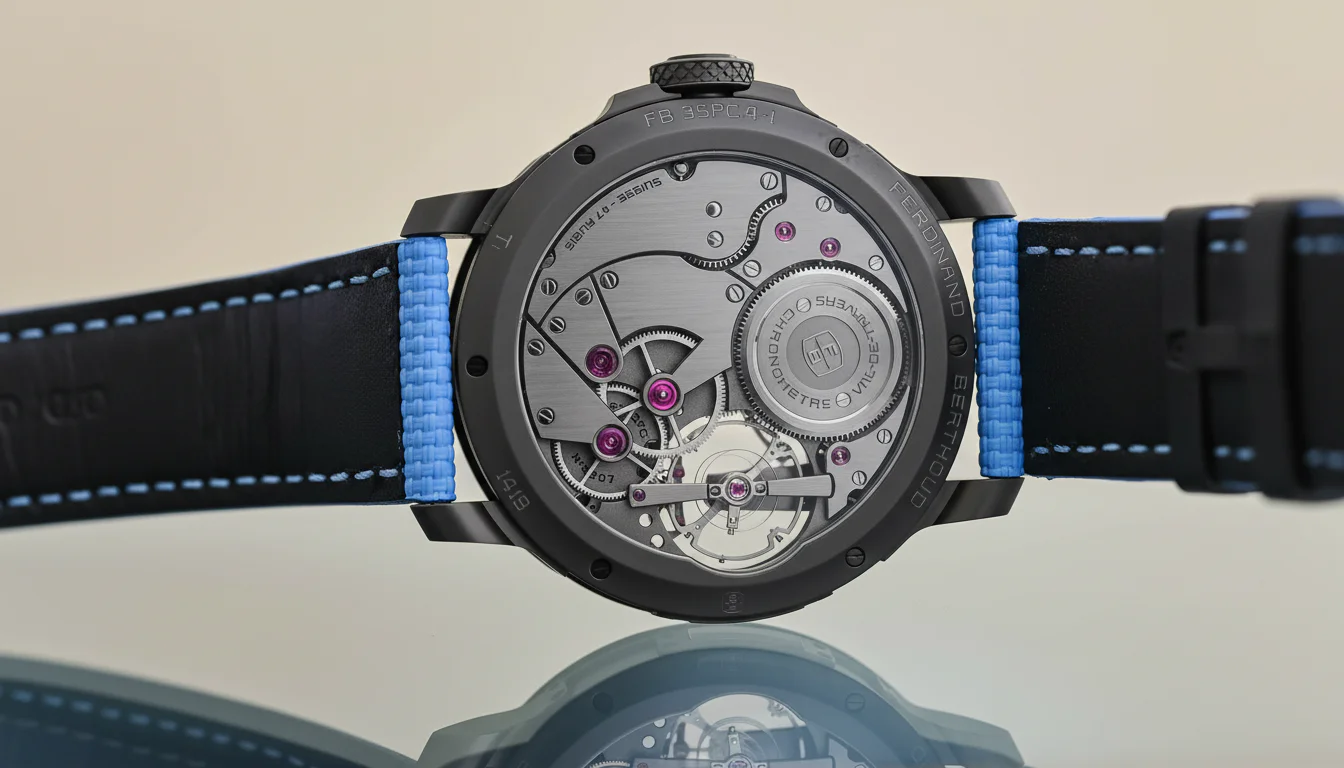 The exhibition caseback shows hand-finished bridges and the FB 3SPC.4-1 reference engraved around the rim, along with the FERDINAND BERTHOUD wordmark.
The finishing on display through the caseback, straight-grained bridges, polished screw heads, and a visible balance wheel, is the kind of hand work that justifies a made-to-order pricing model rather than a fixed retail number.
Price and Positioning
Ferdinand Berthoud prices the FB 3SPC.4-1 upon request, standard practice for a manufacture producing in very limited numbers and frequently accommodating strap and dial customization per client. That puts it in a different buying process than a catalog reference with a published retail price.
Where It Sits Against Other Independent Manufactures
Compared to Parmigiani Fleurier, another Swiss house with a restoration-minded founder and Sandoz Family Foundation backing rather than a major watch group, Ferdinand Berthoud leans further into raw technical display: an open dial, a sapphire porthole, and a caseback built to be examined as closely as the front. Both brands share a philosophy of prioritizing movement architecture over marketing volume, just expressed differently.
FAQ
What is the Ferdinand Berthoud Chronometre FB 3SPC.4-1?
A 42.3mm black ceramised titanium watch running the in-house hand-wound caliber FB-SPC, with a 72-hour power reserve and COSC chronometer certification.
Who founded Ferdinand Berthoud as a modern brand?
Karl-Friedrich Scheufele, co-president of Chopard, resurrected the Ferdinand Berthoud name in 2015 as an independent haute horlogerie manufacture, separate from Chopard's own product lines.
Who was the original Ferdinand Berthoud?
A Swiss horologist (1727 to 1807) who emigrated to Paris in 1745 and became known for precision marine chronometers used to calculate longitude at sea.
How much does the Ferdinand Berthoud Chronometre FB 3SPC.4-1 cost?
Pricing is available upon request through Ferdinand Berthoud's boutique network, standard for a manufacture producing in very limited numbers.
What does the sapphire porthole on the case do?
Set into the left flank of the case, it gives a side view of the going train in motion, a detail most watches do not include.
Related Reading
- The Complete Parmigiani Fleurier Brand and Model Guide: Tonda PF, Toric, and the Foundation-Owned Manufacture
- The Chopard L.U.C Collection: Chopard's Serious Watchmaking Side, Beyond Alpine Eagle
- What Is a Regulator Dial? The Watchmaker's Layout, Explained
- MB&F Legacy Machine Sequential EVO: The Brand's First-Ever Chronograph, Explained