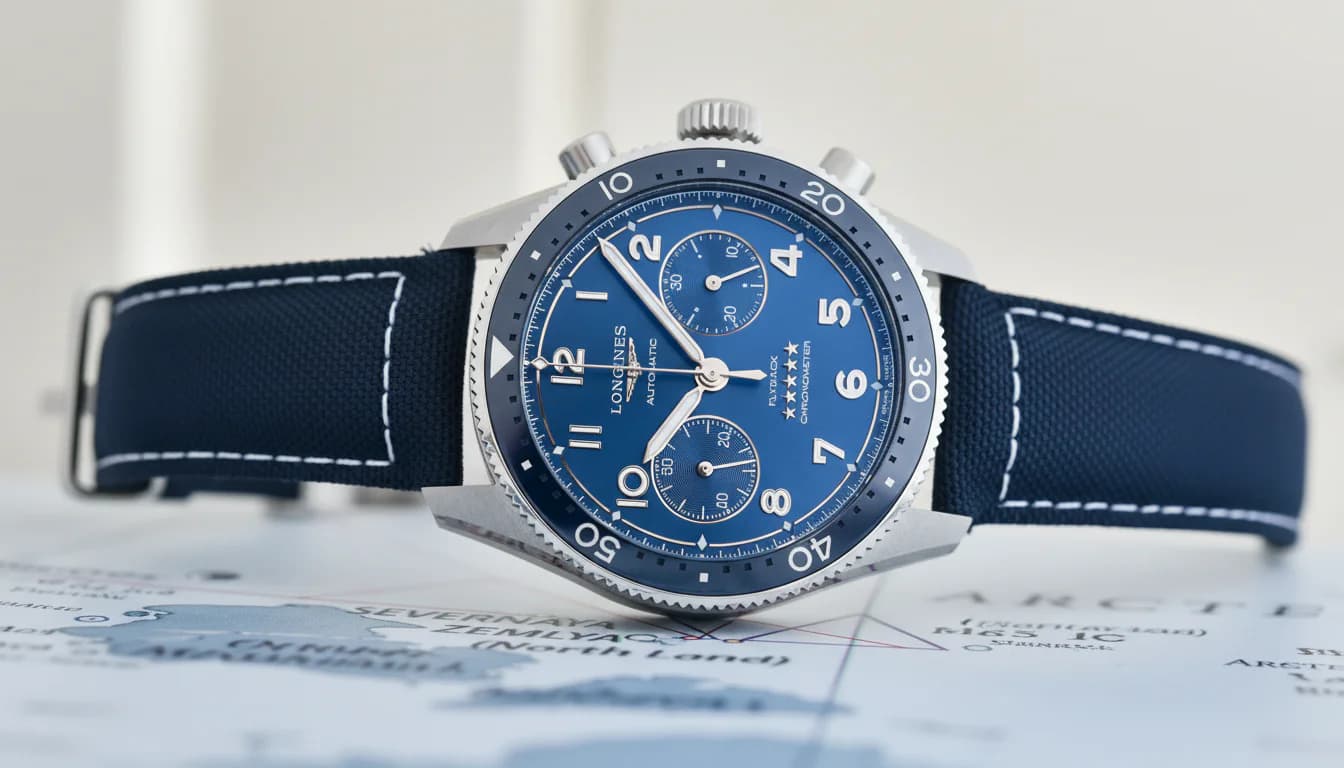
The Short Answer
A flyback chronograph lets you stop, reset, and restart a timing sequence with a single press of the reset pusher, even while the chronograph is still running. A standard chronograph needs three separate actions, stop, reset, restart, and you lose the seconds in between. Longines patented the mechanism in 1936 for pilots who could not afford to fumble three buttons while flying a plane, and 2026 marks the patent's 90th anniversary.
The short version for a buyer: it is a genuinely useful complication if you actually time back-to-back intervals, and a nice-to-have if you do not. Either way, it is one of the more elegant pieces of engineering hiding inside an ordinary-looking chronograph case.
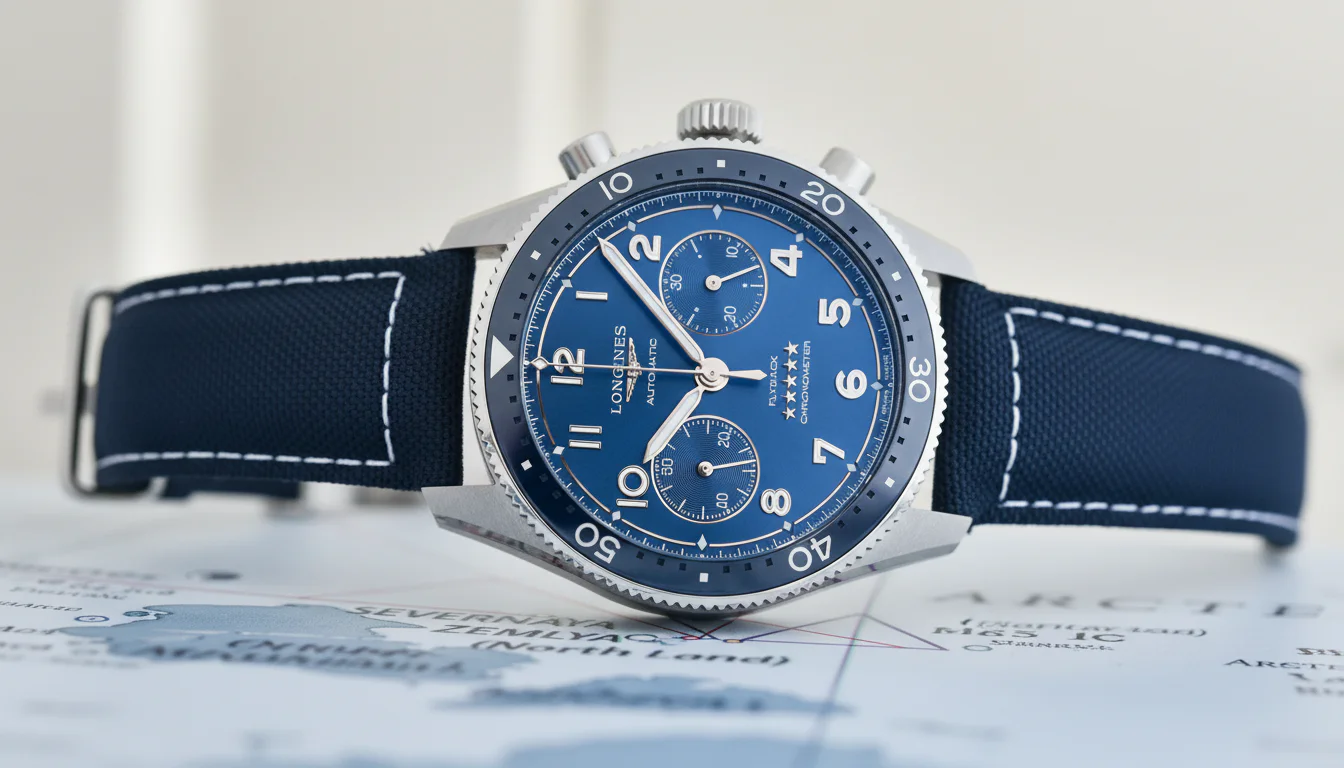 Longines still builds the modern Spirit Flyback around the same idea its 1936 patent introduced.
The watch photos in this article were generated with AI image tools, conditioned on real reference photography of Longines and Zenith flyback chronographs, a genuine vintage Longines 13ZN, and real chronograph movement components so the mechanisms and case details are accurate representations.
What Makes a Chronograph a Flyback
Every chronograph times an interval using a start pusher, usually at 2 o'clock, and a reset pusher, usually at 4 o'clock. On a standard chronograph, that reset pusher only works once the chronograph has been stopped. Press start, press stop, press reset, press start again to begin the next interval. Four actions, three of them requiring you to stop and think about sequence.
A flyback chronograph removes that restriction. Press the reset pusher while the chronograph is running, and it immediately snaps the hands back to zero and starts a fresh measurement the instant you release the button. No stop phase, no dead time between intervals, no chance of hitting the wrong pusher in the wrong order.
Why the Name
The name comes from aviation navigation. A pilot "flying back" a course correction needed to time one leg of a route, instantly reset, and start timing the next leg without losing a second in between. The mechanism gave the maneuver its name.
How the Mechanism Actually Works
Inside a standard chronograph, a hammer strikes heart-shaped cams to reset the chronograph hands to zero. The heart shape is not decorative. Its logarithmic spiral geometry guarantees the shortest possible path back to zero regardless of where the hand stopped, and the hammer itself acts as a brake, holding the hands steady and indexed once the chronograph is stopped.
Under normal operation, an isolator mechanism prevents that hammer from striking the cams while the chronograph wheel is still engaged and running. That protection exists for a good reason: striking a moving cam under normal circumstances would damage the mechanism. A flyback chronograph adds a secondary lever that briefly disconnects the chronograph wheel from its driving function the instant the reset pusher is pressed, letting the hammer strike the heart cams safely even mid-measurement, before immediately re-engaging the gear train to start the next interval.
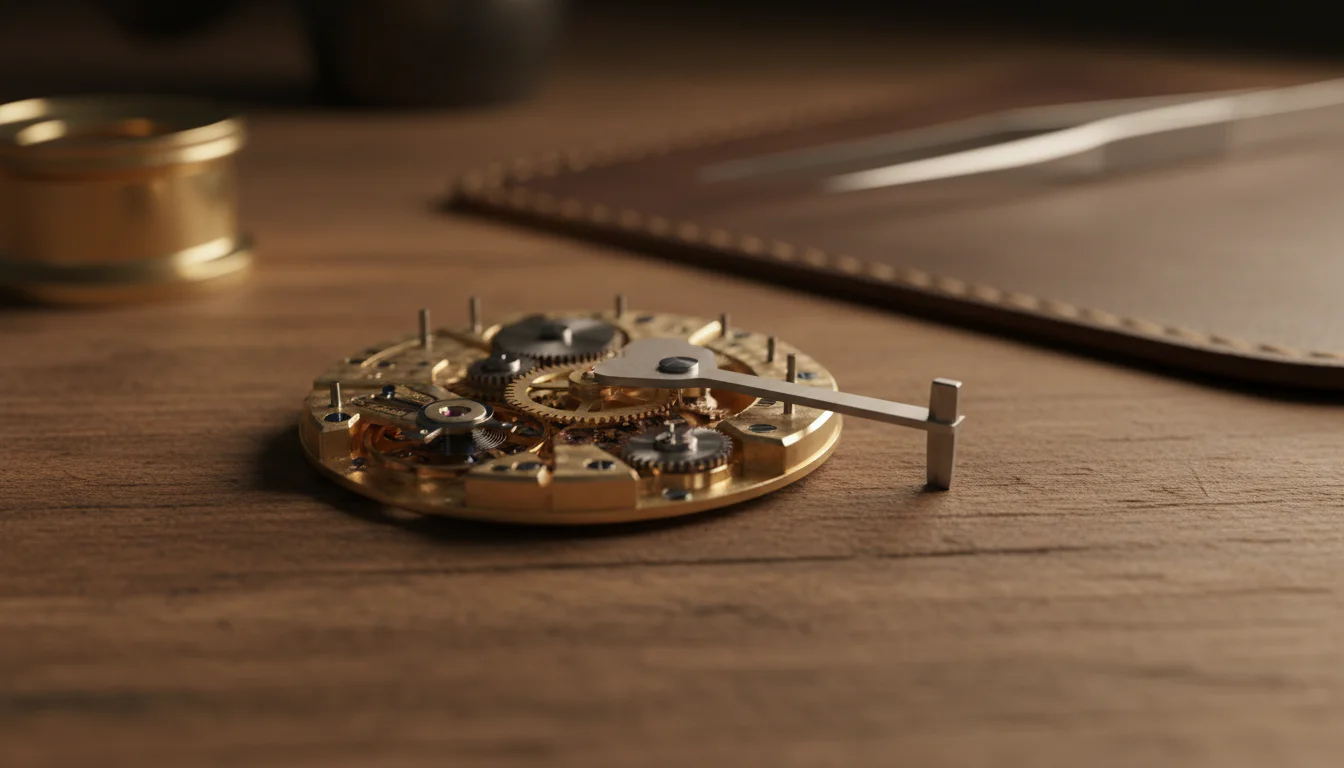 The heart cam and hammer are the same basic components in any chronograph. A flyback just adds the engineering to let them fire safely while the movement is running.
The Case Tell
You can usually spot a flyback from the outside before you ever open the caseback. Most flyback chronographs run the standard two-pusher layout, one at 2 o'clock for start and stop, one at 4 o'clock for the flyback reset, so the case itself often looks identical to a non-flyback chronograph. The real giveaway is on the dial, where brands frequently print the word "flyback" somewhere near the subdials, as Longines does on the modern Spirit line.
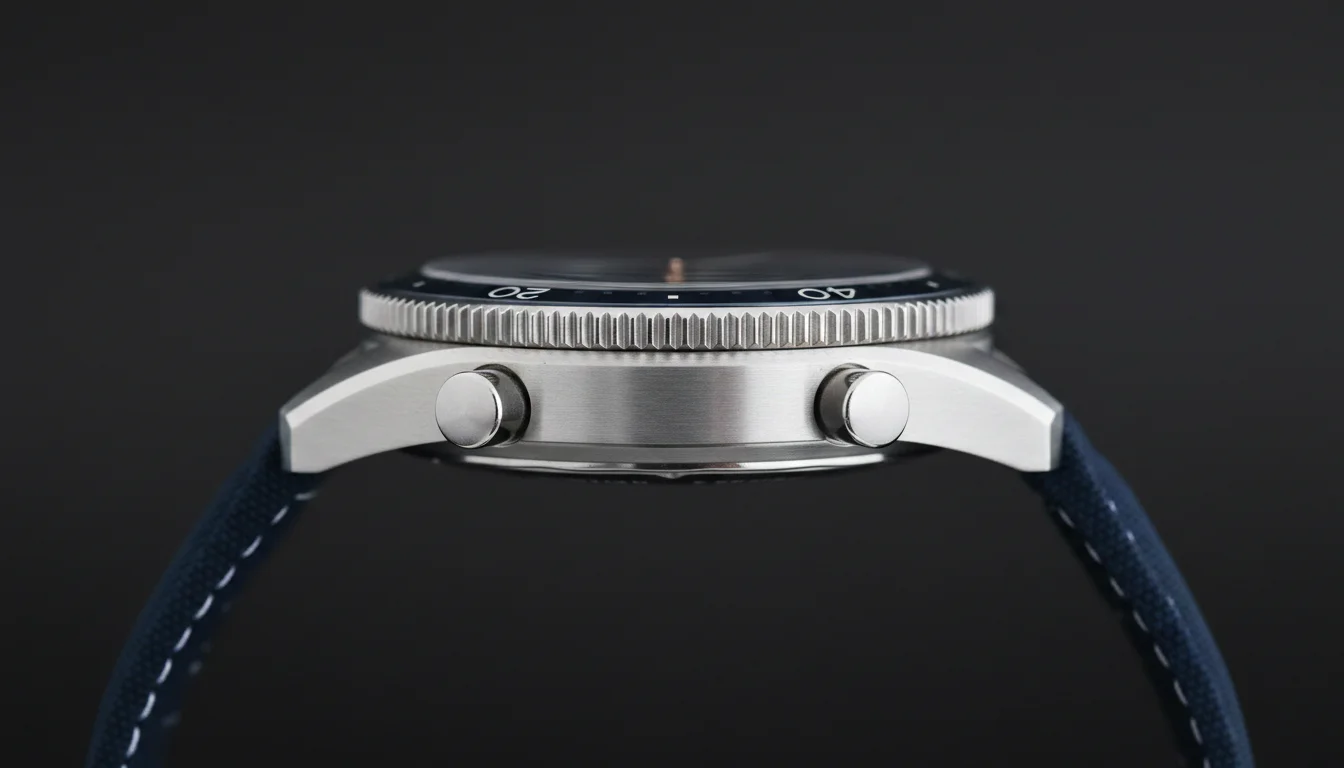 Two pushers, same as most chronographs. The mechanism doing the extra work is hidden underneath.
Where It Came From: Longines and Aviation
Longines built its first wristworn flyback chronograph in 1925 using the caliber 13.33Z, then filed for patent protection on June 12, 1935, with the patent published on June 16, 1936. The company's caliber 13ZN, a column-wheel movement, became the first flyback movement Longines produced in series, and it remains one of the most collectible vintage chronographs on the market, with auction results ranging from roughly $60,000 to $182,000 for well-preserved examples.
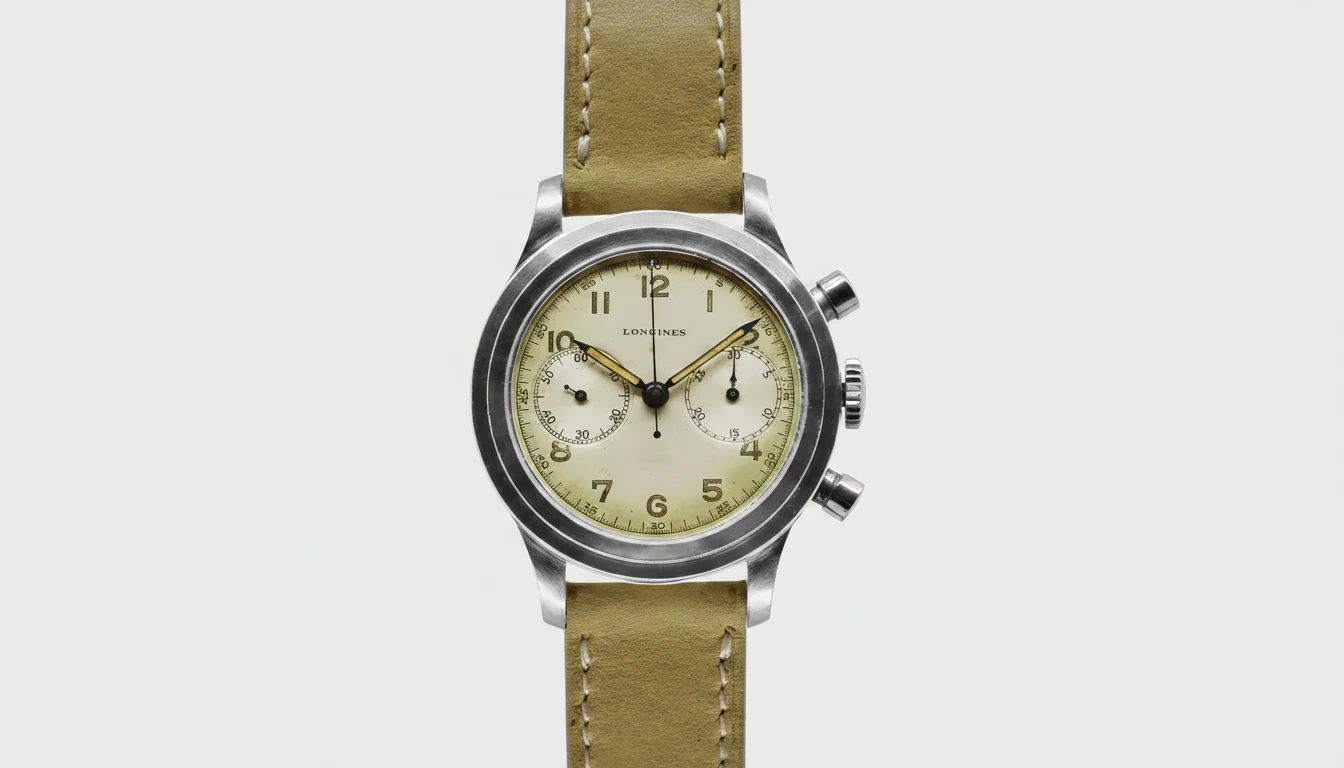 The 13ZN set the template. Ninety years later, the pusher layout on a modern flyback still looks almost identical.
The need was practical, not stylistic. Aircraft speeds climbed fast in the early twentieth century, and even small timing errors created real navigation mistakes. Pilot Wiley Post documented the stakes plainly: a minute of timing error near the equator could translate into a 15 mile error in a calculated position. Explorer Richard Byrd wore a Longines flyback chronograph during his 1929 flight over the South Pole, a real-world proof of concept for a mechanism built to solve a genuine problem rather than to look impressive on a spec sheet.
The 90th Anniversary
Longines' original flyback patent turns 90 in 2026, and the company still builds the function into its current Spirit Flyback and Spirit Pilot Flyback references, continuing a line of descent that runs directly back to the 13ZN.
Flyback Chronographs Beyond Aviation
The flyback's usefulness was never limited to cockpits. Timing back-to-back intervals matters anywhere consecutive measurements need to happen fast: motorsport lap timing, sailing starts, and any multi-stage event where losing even a few seconds between measurements throws off the data. That broader utility is why the complication survived long after cockpit instruments made a wrist chronograph unnecessary for actual navigation.
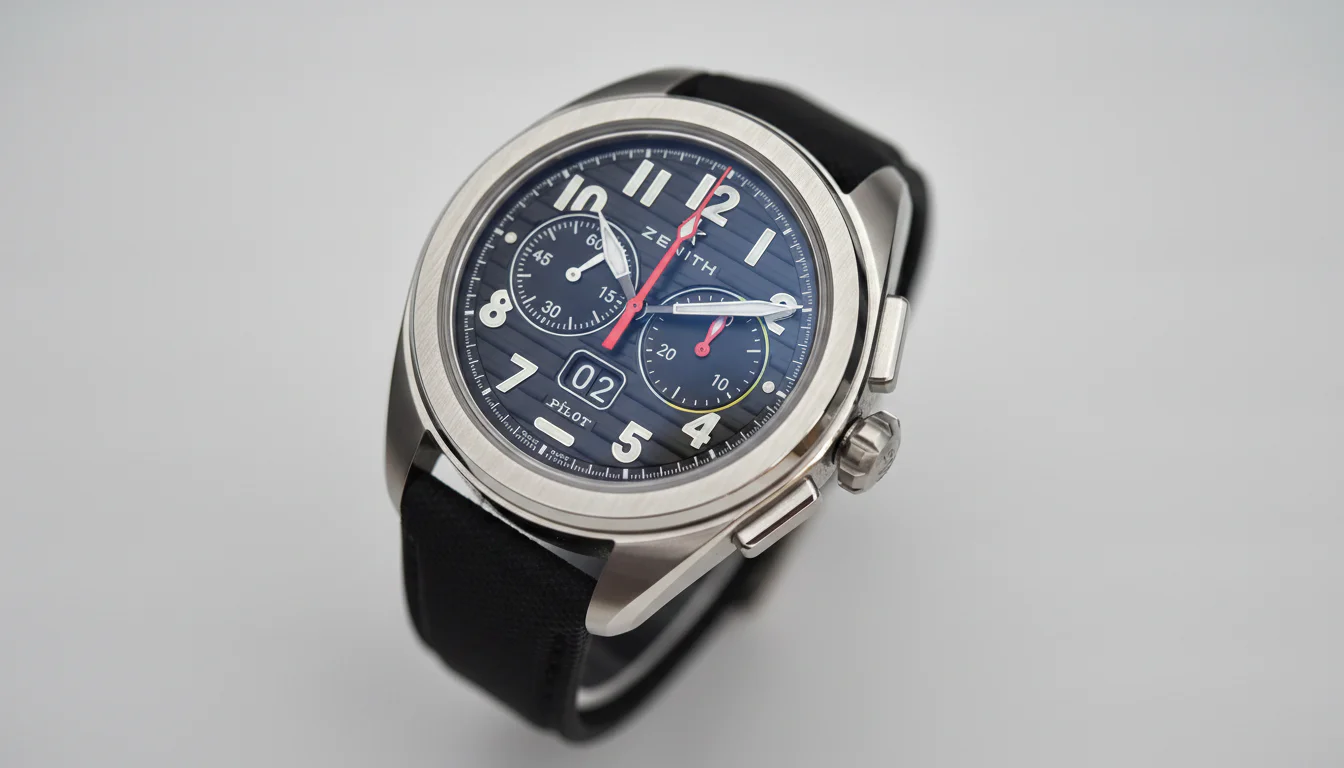 Zenith's Pilot Big Date Flyback keeps the aviation styling while aiming the complication at a broader modern buyer.
What a Flyback Chronograph Costs Today
Flyback complications sit a step above a standard chronograph in price, though not dramatically so. The Longines Spirit Flyback starts around $4,450, keeping the complication within reach of a buyer who already owns a standard chronograph and wants the upgrade. The Zenith Pilot Big Date Flyback runs closer to $11,500, reflecting Zenith's in-house El Primero movement family and the added big date module. Independent watchmaker Rexhep Rexhepi's RRCHF pushes the complication into proper haute horlogerie territory, built as his first in-house flyback movement.
FAQ
What is a flyback chronograph?
A flyback chronograph lets you stop, reset, and restart a chronograph timing sequence with a single press of the reset pusher, even while the chronograph is still running, instead of needing to stop it first.
How is a flyback different from a standard chronograph?
A standard chronograph needs three separate actions to start a new measurement: stop, reset, restart. A flyback combines all three into one press of the reset pusher, with no dead time between intervals.
Who invented the flyback chronograph?
Longines built the first wristworn flyback chronograph in 1925 and patented the mechanism on June 16, 1936, developing it specifically for pilots who needed to time flight segments without losing seconds between measurements.
Does a flyback chronograph look different from the outside?
Usually not by much. Most flyback chronographs use the same two-pusher case layout as a standard chronograph. The clearest giveaway is often the word "flyback" printed on the dial.
Is a flyback chronograph worth paying extra for?
If you actually time consecutive intervals, motorsport laps, sailing starts, or similar back-to-back measurements, yes. For most buyers it is a genuinely elegant piece of engineering rather than a complication you will use daily.