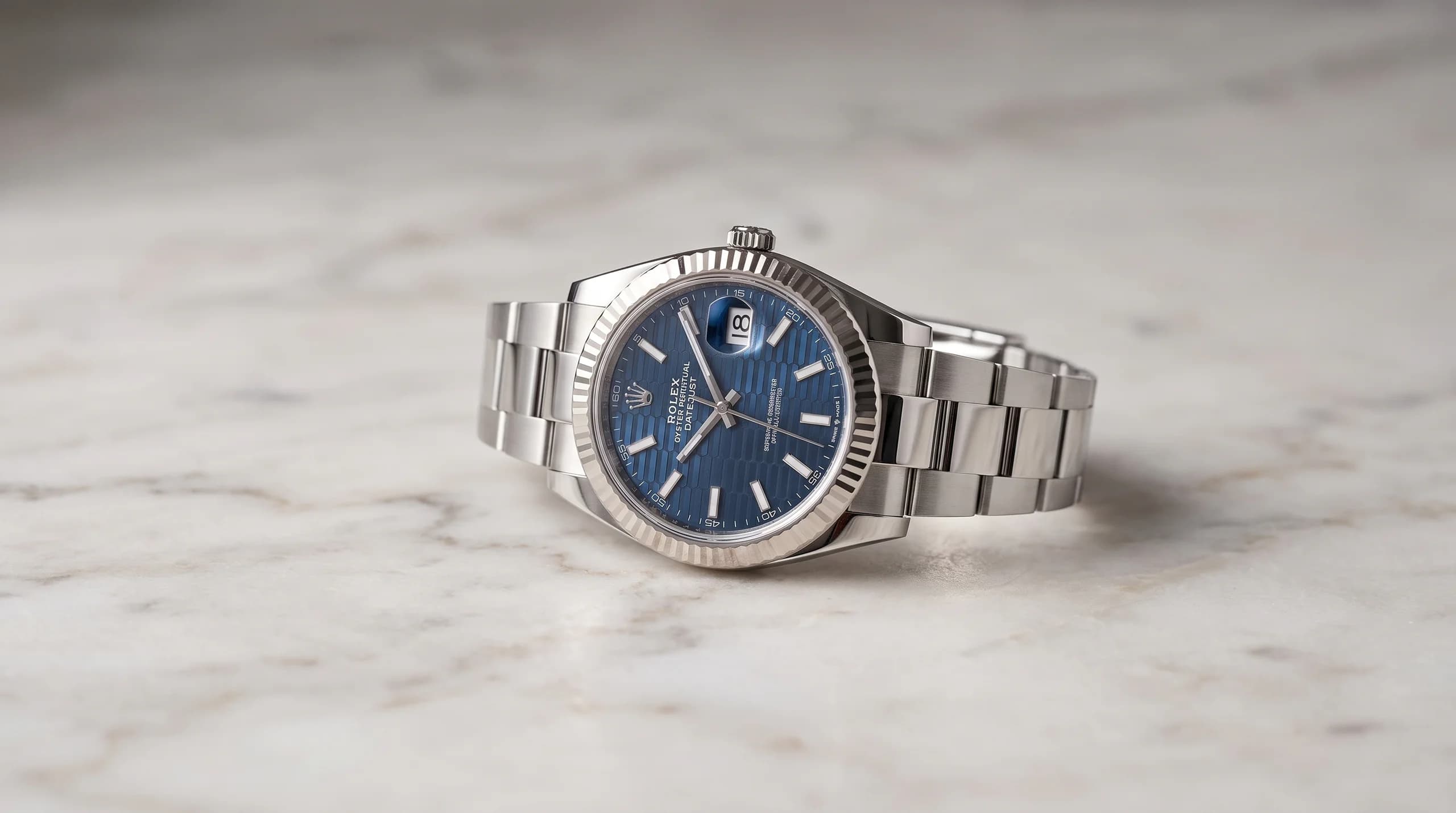
Grand Seiko vs Rolex value is a lopsided contest, and it is worth being honest about it. Rolex holds its value far better than Grand Seiko, with many steel models trading at or above retail while most Grand Seiko trades well below. Grand Seiko arguably out-finishes Rolex, but the secondary market does not pay for finishing. Here is the data, the one big exception, and what it means for your money.
The images in this article are AI-generated for illustration. They are built from real reference photos of the actual watches discussed and are not photographs of specific inventory.
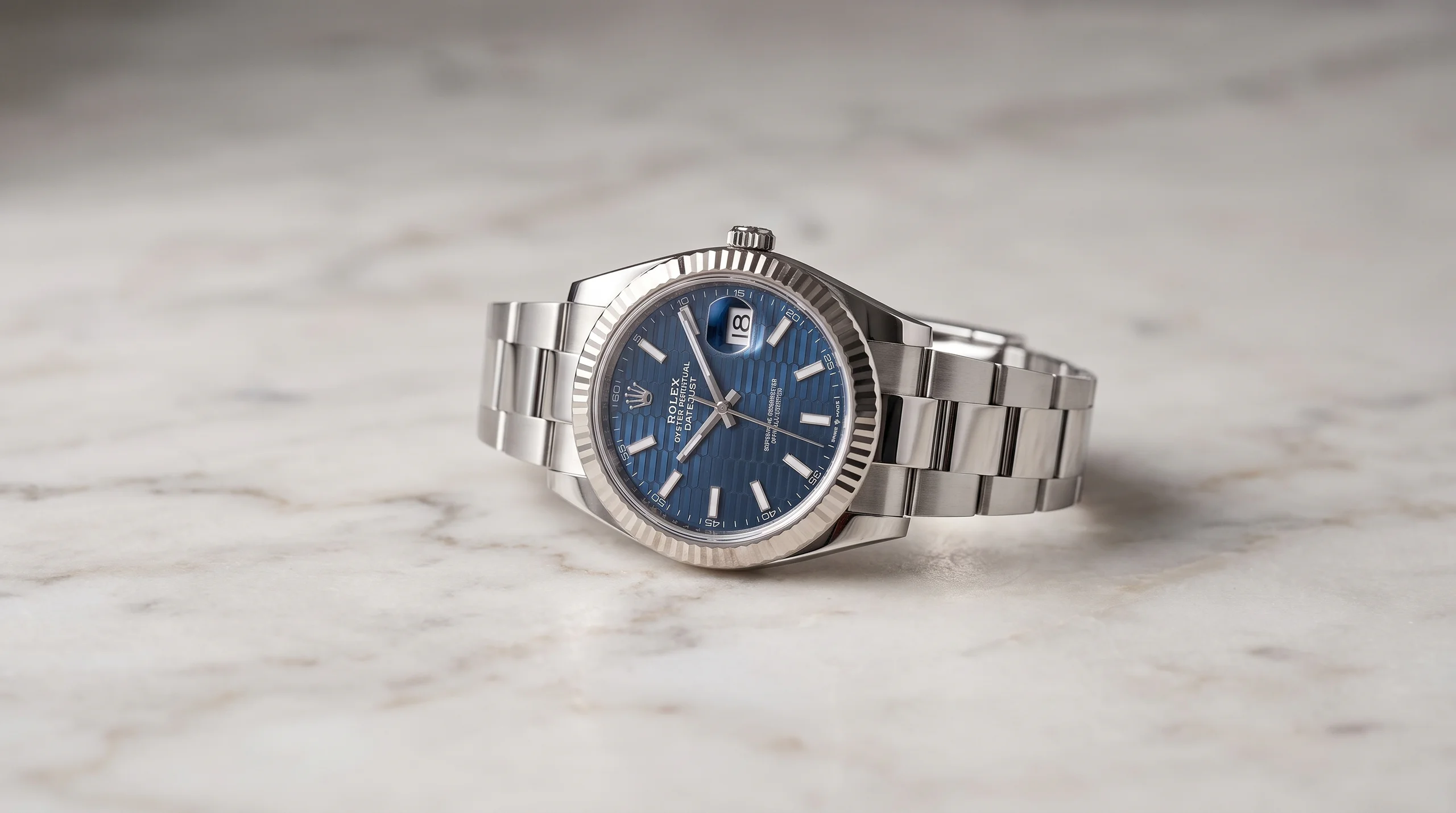 The Rolex Datejust. Even the brand's everyday watch holds value in a way almost no Grand Seiko does.
The short answer
If value retention is the goal, Rolex wins, and it is not close. Steel Rolex sport models trade at or above retail, and even the Datejust holds near retail. Grand Seiko typically trades 25 to 40 percent below retail once it leaves the boutique. The one meaningful exception is the halo Hi-Beat White Birch, which has risen above its original price. Buy Grand Seiko for the watch, buy Rolex if resale matters.
What "holding value" actually means
Value retention is simply how much of your money you get back if you sell. A watch that holds value trades near or above what you paid. A watch that depreciates trades below it. Neither is good or bad on its own, it just changes the math of ownership.
Rolex and Grand Seiko sit at opposite ends of this. Rolex is the market's benchmark for holding value. Grand Seiko is a brand you buy knowing you will likely take a paper loss if you sell, which is the trade-off for getting so much watch for the money.
Rolex: the value benchmark
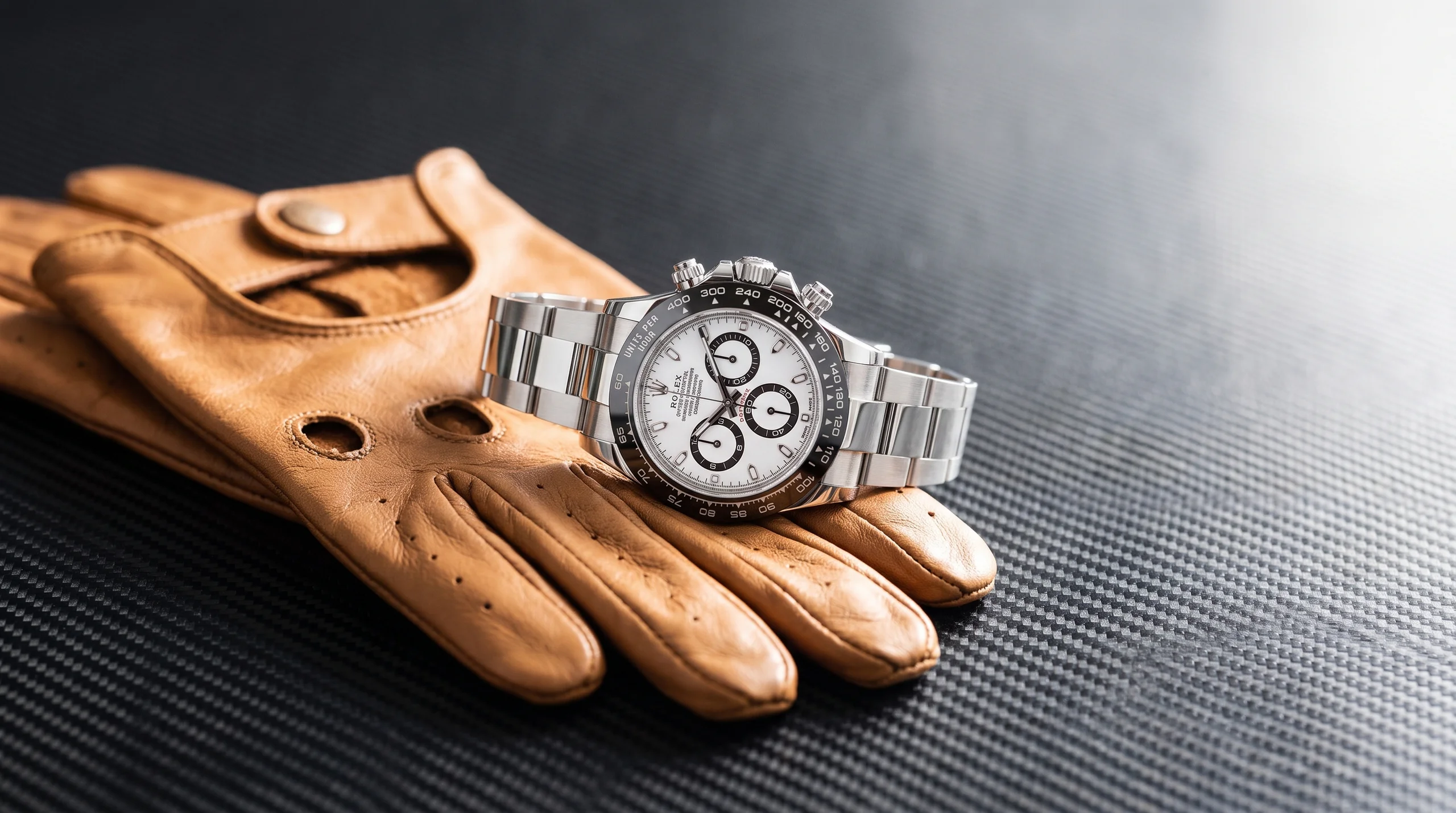 The steel Daytona is the extreme case: it trades at a large premium over retail, and has for years.
Rolex holds value because demand outruns supply. Steel sport models like the Submariner, GMT-Master II, and especially the Daytona trade above retail, sometimes far above. The Daytona is the clearest example, commanding a premium over its list price for years.
Even outside the hyped sport models, Rolex holds up. The Datejust and Oyster Perpetual trade close to retail rather than collapsing, which is rare for any watch. That resilience is why a Rolex is the default answer when a buyer says value retention matters, as we cover in our read on the Oyster Perpetual and our list of watches that hold their value.
Grand Seiko: the finishing champ that depreciates
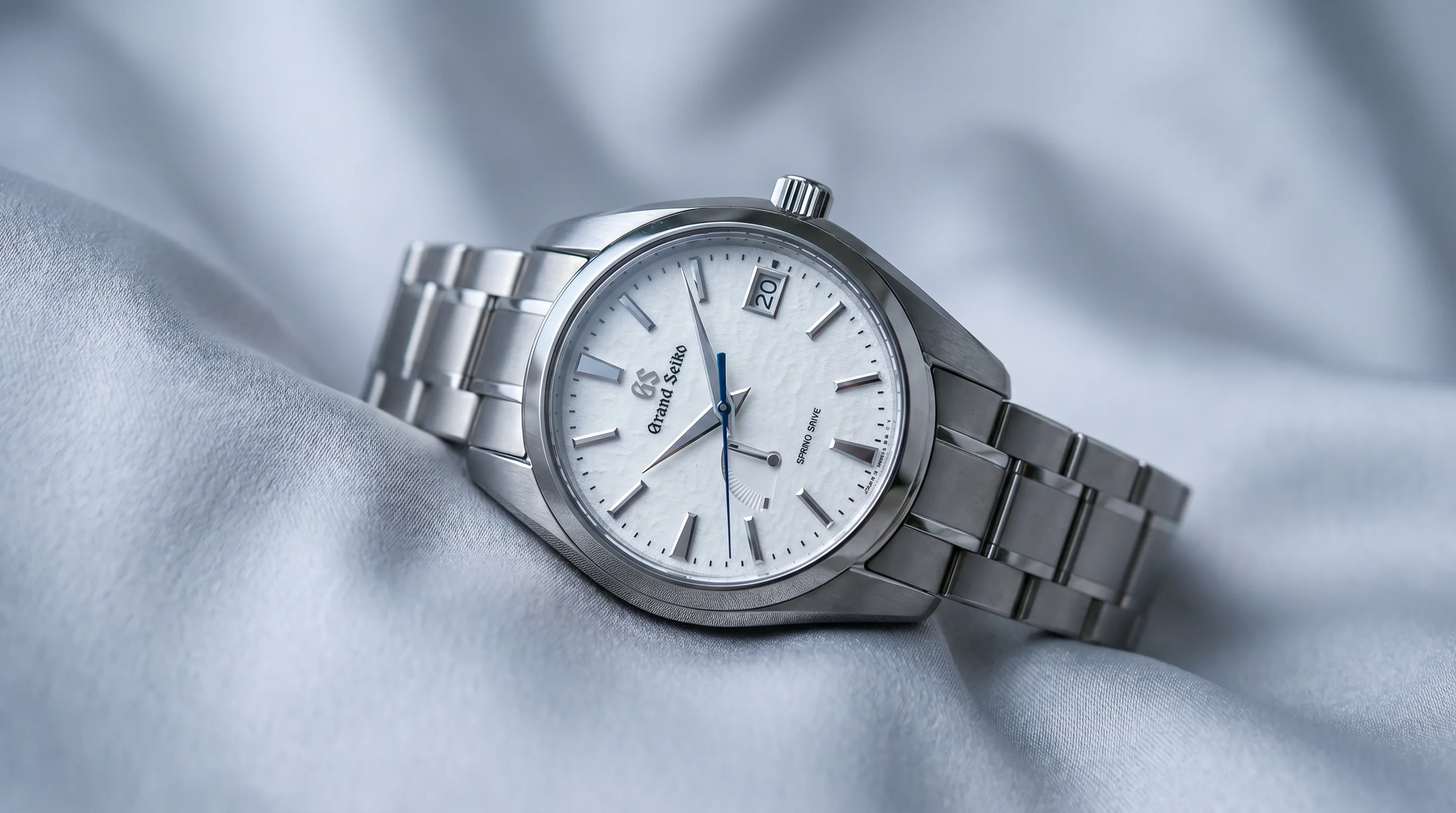 The Grand Seiko Snowflake out-finishes most Rolex, and still trades 25 to 40 percent below retail. That gap is the buyer's opportunity.
Grand Seiko is the harder sell on value and the easier one on merit. The Zaratsu-polished cases, the textured dials, and the Spring Drive movement genuinely out-finish Rolex at the same price. The problem is that the secondary market does not reward it the way it rewards the crown.
Most Grand Seiko trades 25 to 40 percent below retail. The Snowflake SBGA211, at roughly 6,900 dollars retail, changes hands around 4,500 to 5,500 dollars pre-owned. That is a real loss for the first owner, and a real bargain for the second. Western collector demand is climbing, which is slowly narrowing the gap, a trend we track in our read on the Grand Seiko secondary market. For the full lineup, see our Grand Seiko buying guide.
The exception: the White Birch
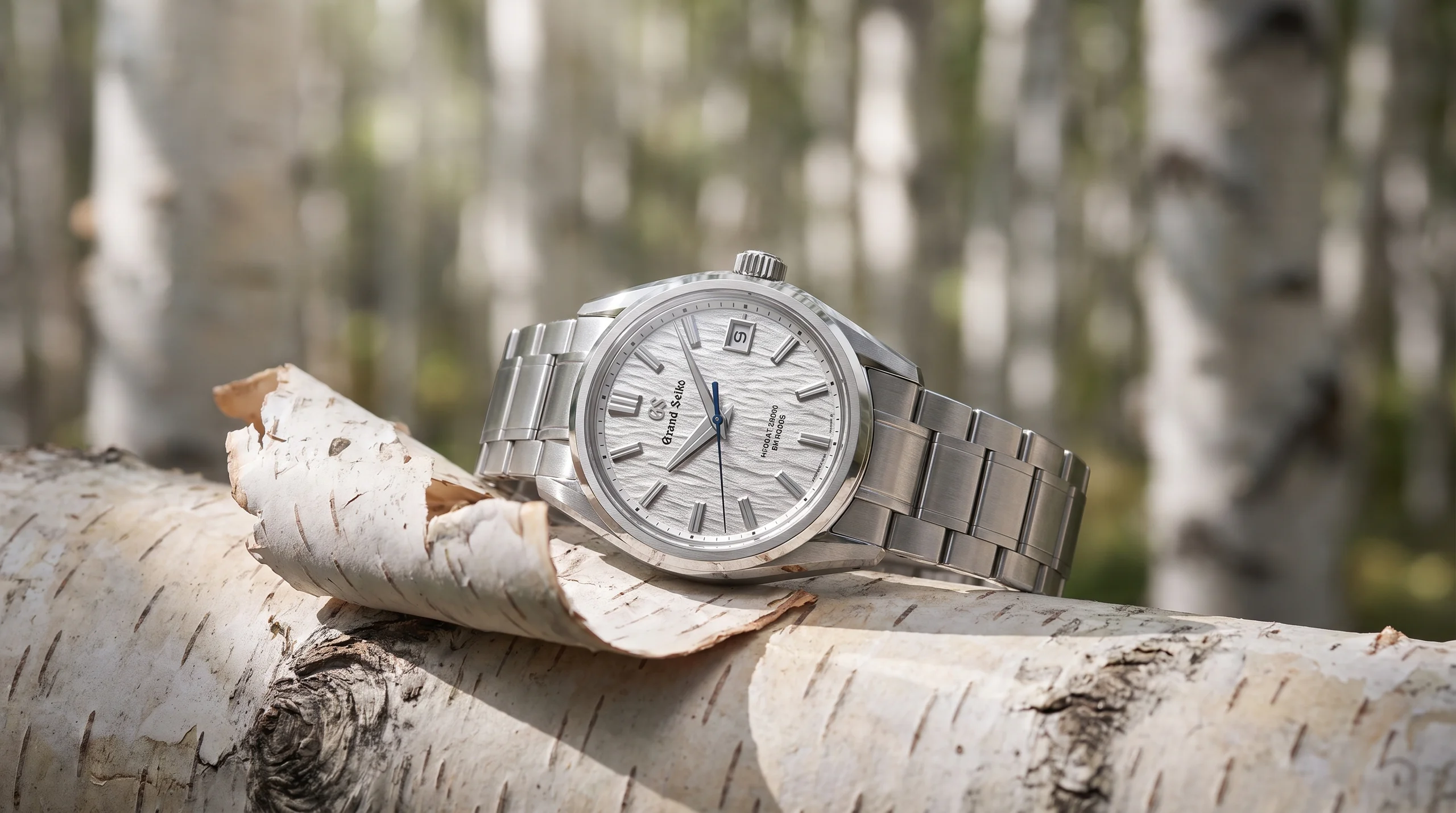 The Hi-Beat White Birch SLGH005 is the Grand Seiko that behaves like a Rolex, trading at or above its original price.
One Grand Seiko breaks the rule. The Hi-Beat White Birch SLGH005 became the brand's breakout hit, and demand pushed it above its roughly 6,300 dollar launch price to around 6,000 to 7,000 dollars and up pre-owned. It is proof that Grand Seiko can hold value when a model captures the market, and a hint of where the brand is heading. It is still the exception, not the rule.
The head-to-head
| Factor | Rolex | Grand Seiko |
|---|---|---|
| Value retention | at or above retail on many models | typically 25 to 40 percent below retail |
| Finishing | very good | arguably best in class at the price |
| Brand recognition | the highest in watches | growing, still niche |
| Waitlists | long on steel sport | mostly available |
| Best for | resale and status | wearing and finishing |
Which should you buy
Buy the Rolex if you want your money to hold, if you like the idea of a watch you can sell near what you paid, or if brand recognition matters. The Datejust and Oyster Perpetual are the safest value plays, and the sport models are the ones that appreciate.
Buy the Grand Seiko if you want the best-finished watch for the money and you plan to keep it. Go in knowing you are paying for the watch, not the resale, and let the pre-owned discount work in your favor. If you want a Grand Seiko that also holds value, the Hi-Beat halo models like the White Birch are the closest thing to a Rolex-style hold in the lineup.
FAQ
Does Grand Seiko or Rolex hold value better?
Rolex holds value far better than Grand Seiko. Many steel Rolex models trade at or above retail, and even the Datejust holds close to retail, while most Grand Seiko trades 25 to 40 percent below retail on the secondary market.
Why does Grand Seiko depreciate more than Rolex?
Grand Seiko depreciates because secondary demand and brand recognition are lower than Rolex, and supply is more available. The watches are excellent, but the market does not pay a premium for finishing the way it does for the Rolex name. Western collector demand is rising, which is slowly narrowing the gap.
Is Grand Seiko a better watch than Rolex?
On hand-finishing and movement technology, many collectors rate Grand Seiko above Rolex at the same price, thanks to Zaratsu polishing and Spring Drive. On value retention, durability of demand, and brand recognition, Rolex leads. Better depends on what you want from ownership.
Which Grand Seiko holds its value best?
The Hi-Beat halo models hold value best, led by the White Birch SLGH005, which has traded at or above its original retail price. Limited hi-beat and special-dial references generally resist depreciation better than the standard catalog.
Should I buy a Grand Seiko or a Rolex?
Buy a Rolex if value retention, resale, and recognition matter most. Buy a Grand Seiko if you want the best-finished watch for the money and plan to wear it long term. Both are excellent, they just reward different priorities.
Browse authenticated pre-owned Rolex and Grand Seiko at 5dwatches.com, where every piece is inspected and authenticated before it ships.