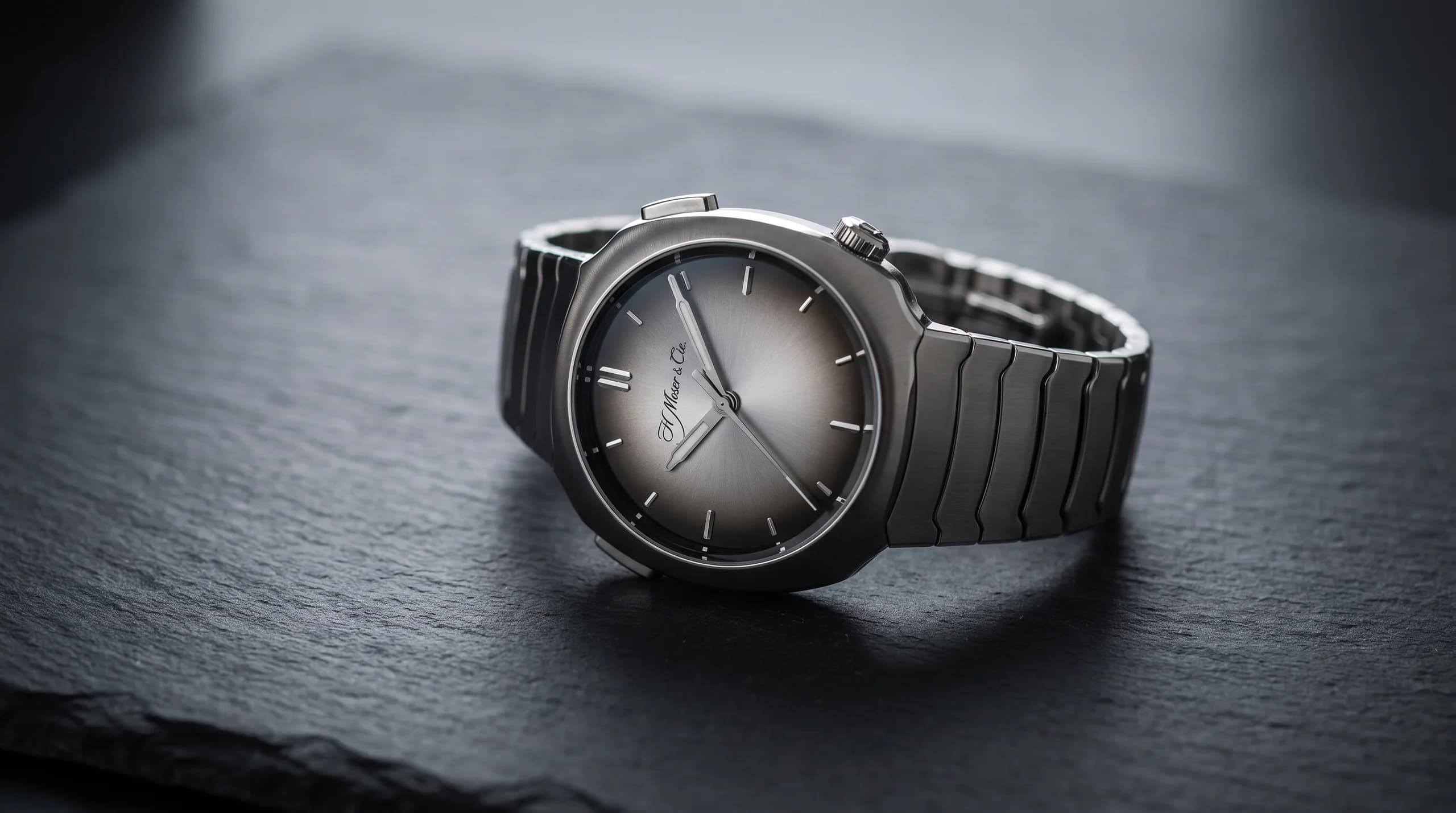
Most small watch brands try to look bigger than they are. H. Moser & Cie does the opposite. It makes some of the most quietly serious watches in Switzerland, then runs marketing campaigns mocking the very industry it competes in.
The formula works. Moser has built a devoted following on two things that seem to pull in opposite directions: dead-serious, vertically integrated watchmaking, and a rebel streak that most luxury brands would never risk. The result is one of the more interesting independents a collector can actually get into.
This is a working dealer's read on what Moser is, what it makes, and what it costs. To be clear: 5D Watches does not stock H. Moser & Cie. This is an education piece for the collector circling the brand.
The short answer: Moser is a small Swiss independent, around 3,000 watches a year, famous for smoked fume dials and logo-free Concept models that strip a watch to pure design. It builds its own hairsprings and co-owns its movement partner, so the watchmaking is real. Prices run from about $22,000 for a steel Streamliner to six figures for the complications. For serious independent watchmaking, Moser is one of the more attainable ways in.
The images in this article were generated with AI for illustration, conditioned on real reference photography of H. Moser & Cie watches. They depict recognizable models but are not photographs of specific watches for sale.
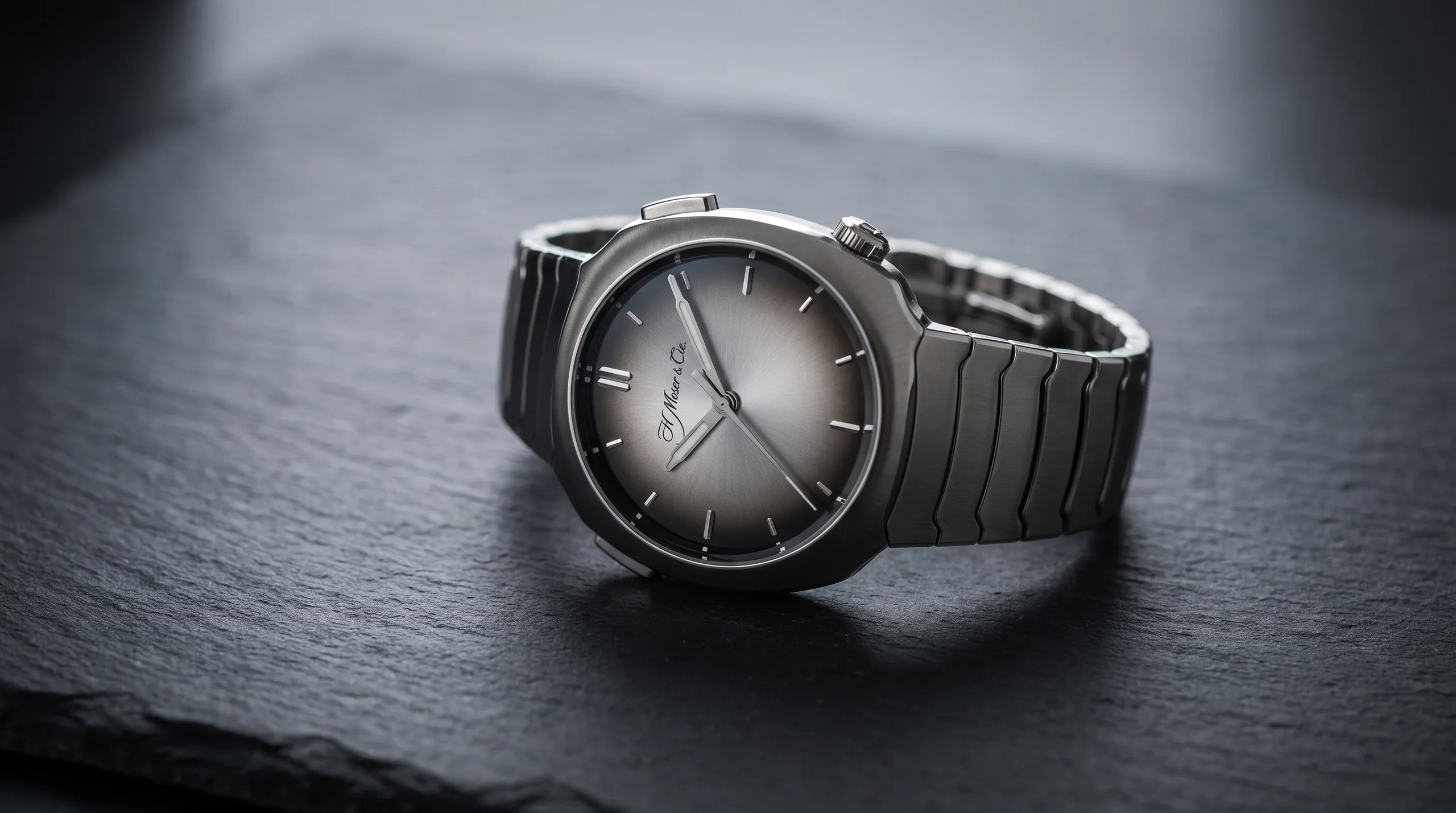 The H. Moser & Cie Streamliner Flyback Chronograph. A luxury sports watch with a fume dial and no interest in copying anyone.
What H. Moser & Cie Is
The name is old, but the company is not. H. Moser dates to 1828, then sat dormant for decades before the Meylan family revived it in 2005 and turned it into a modern independent.
What makes it credible is what it owns. Moser sits inside a small group that also controls Precision Engineering, a specialist that makes hairsprings and escapement parts, and it co-owns the movement house Agenhor. Very few brands this size make their own regulating organ. That vertical integration is why serious collectors take Moser seriously.
The Rebel Streak Is Real
Moser is also the industry's most willing provocateur. It has released watches poking fun at the Apple Watch, at Swiss industry politics, and even a dial grown from actual grass. The message is always the same: a small independent can say what the giants cannot.
That attitude is not a gimmick bolted onto the watches. It is the same confidence that lets the brand put out a dial with no logo at all.
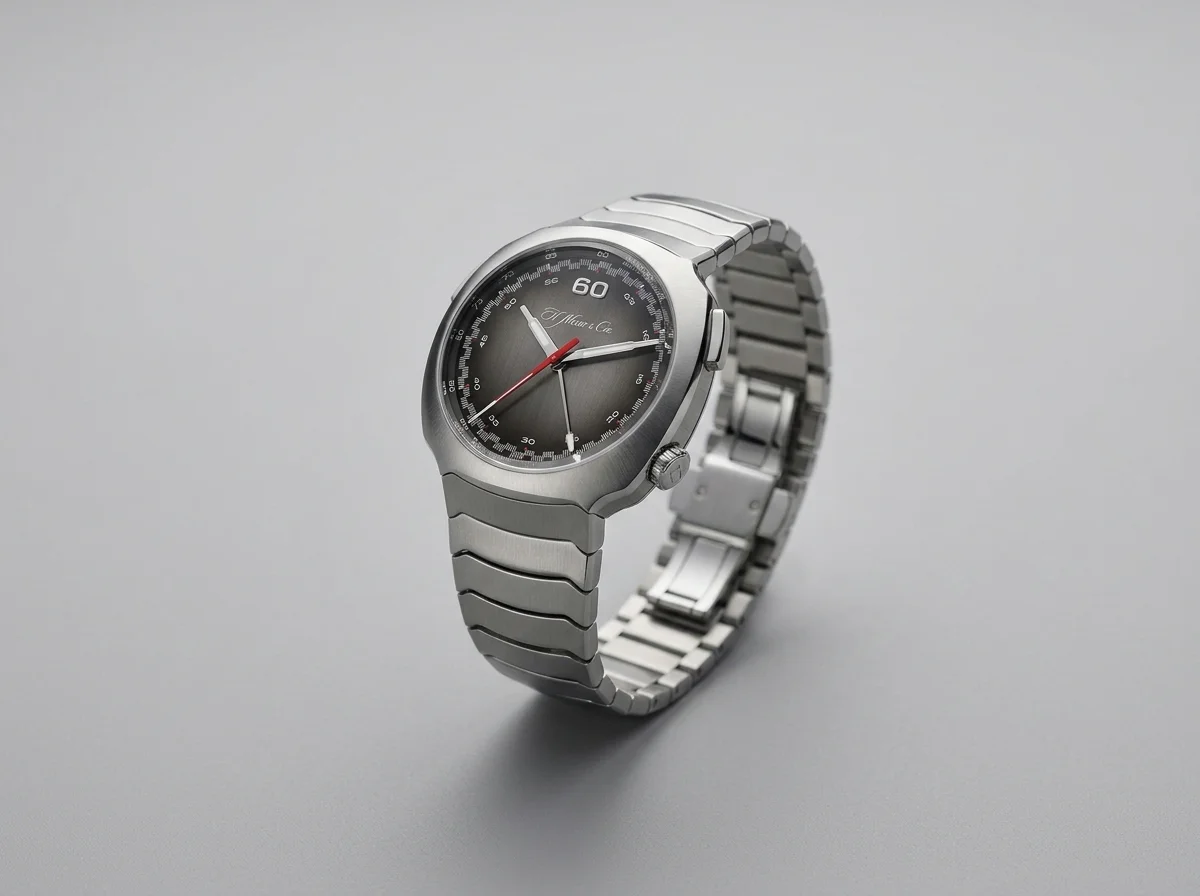 The Streamliner's cushion case and integrated bracelet. Moser's take on the luxury sports watch, not a Royal Oak copy.
The Fume Dial and the Concept Idea
If Moser has a signature, it is the fume dial. A fume dial is smoked: bright and sunburst at the center, fading to near-black at the rim. Moser did not invent it, but the brand made it its calling card, and the effect in the metal is hard to photograph and easy to love.
Then there is the Concept line, where Moser takes minimalism to its logical end. A Concept watch has no logo, no text, and no hour markers at all. Just the fume dial and the hands.
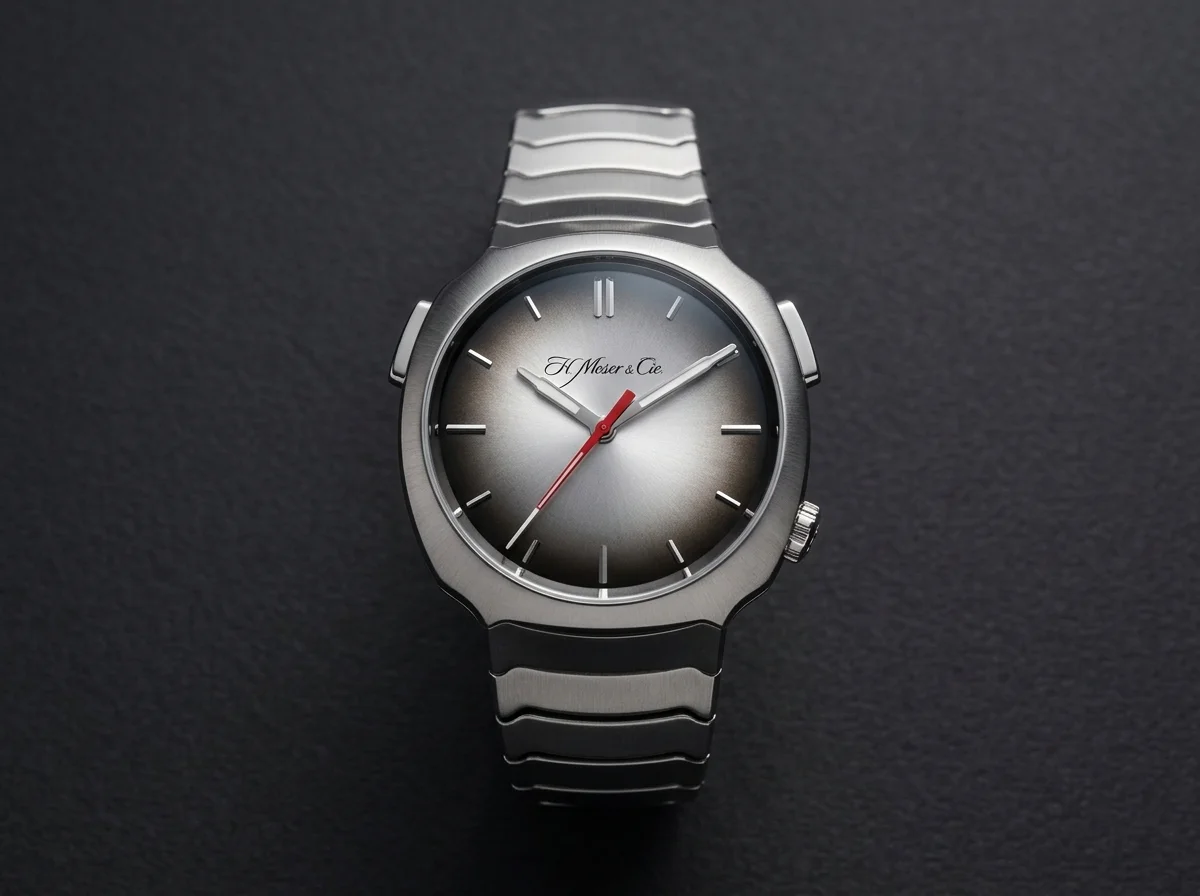 A fume dial up close: bright at the center, smoked to black at the edge. On a Concept model there is no logo and no markers.
It sounds like a stunt until you see one. Stripping away the branding forces the eye onto the color, the finish, and the shape of the hands, and it turns out a watch needs far less on its dial than the industry assumes.
The Watches That Matter
Two collections carry the brand for most buyers, plus a growing set of complications.
The Streamliner, Moser's Sports Watch
The Streamliner launched in 2020 as Moser's answer to the integrated-bracelet luxury sports watch, and it deliberately avoided the Royal Oak template. The case is a rounded cushion, the bracelet flows without visible lugs, and the whole thing looks aerodynamic rather than angular.
The standout is the Streamliner Flyback Chronograph, which uses an Agenhor-developed movement to display the chronograph from the center of the dial, with no sub-dials at all. It is one of the more original chronographs of the last decade. For the exact caliber, case specs, and current pricing on this reference, see our Streamliner Flyback Chronograph buying guide.
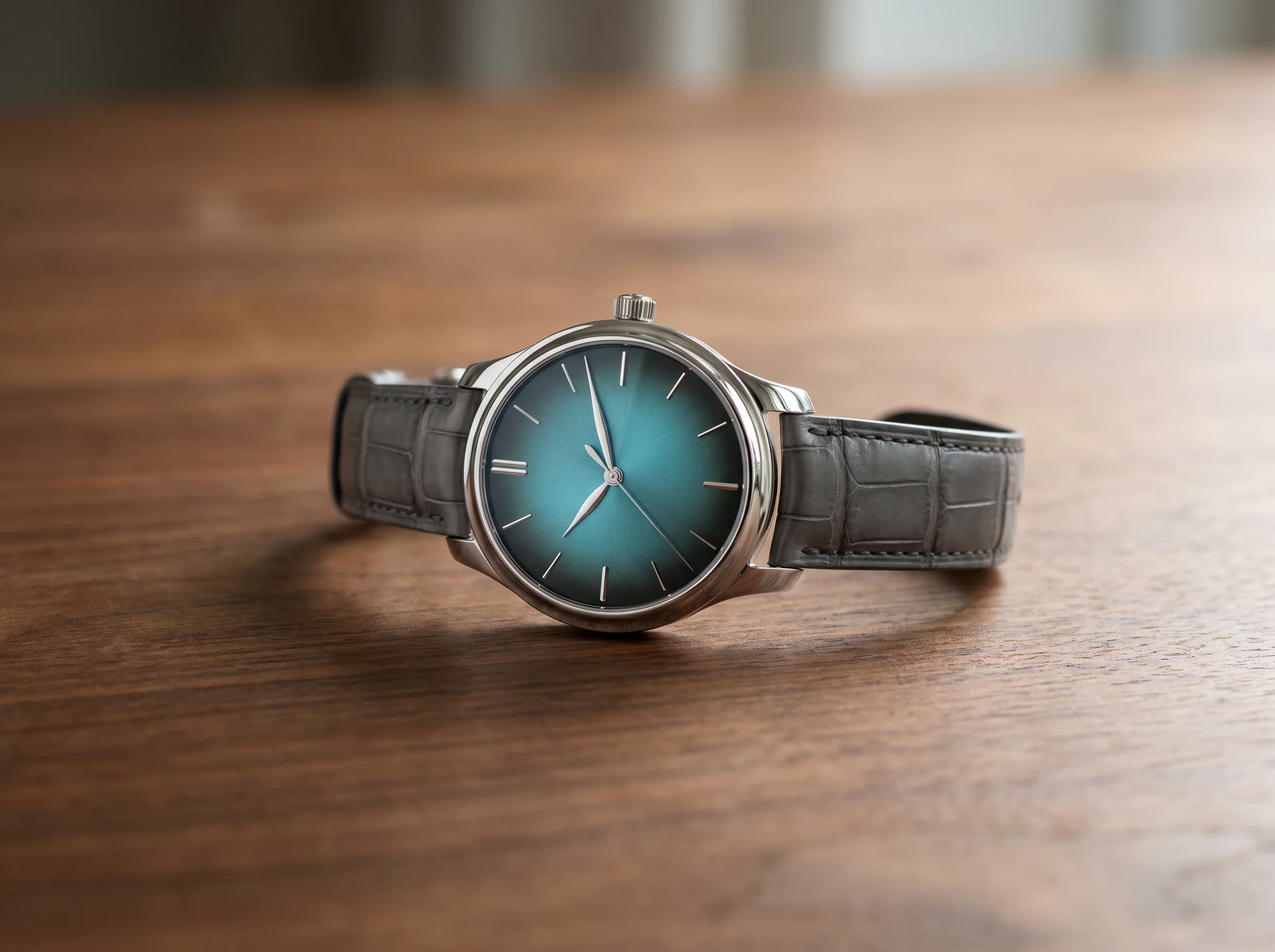 The Endeavour is the classic round Moser. Restrained on the surface, with a fume dial doing the talking.
The Endeavour and the Complications
The Endeavour is the classic round dress line, the purest showcase for a fume dial. Above the time-only models sit genuine complications, including perpetual calendars famous for hiding their complexity behind a clean dial, and the 2026 Endeavour Flyback Chronograph Dual Time at CHF 74,500.
What It Costs, and Whether It Holds
Moser is expensive for a small brand, but attainable next to the mega-independents.
A steel Streamliner Centre Seconds starts around $22,000 to $24,000, the Streamliner Mini lists at $27,600, and the newer Streamliner Pump runs $39,900. Climb into ceramic and tourbillons and you reach the Streamliner Tourbillon Concept Ceramic near $112,100. Compared with F.P. Journe or Richard Mille, this is the affordable end of serious independent watchmaking.
On value, Moser holds up reasonably for a brand its size. It does not appreciate like the hyped names, and some collectors grumble that recent prices have climbed. But the wanted references stay in demand, and the small production keeps supply tight. Buy a Moser because you love the design and the watchmaking, not as a trade.
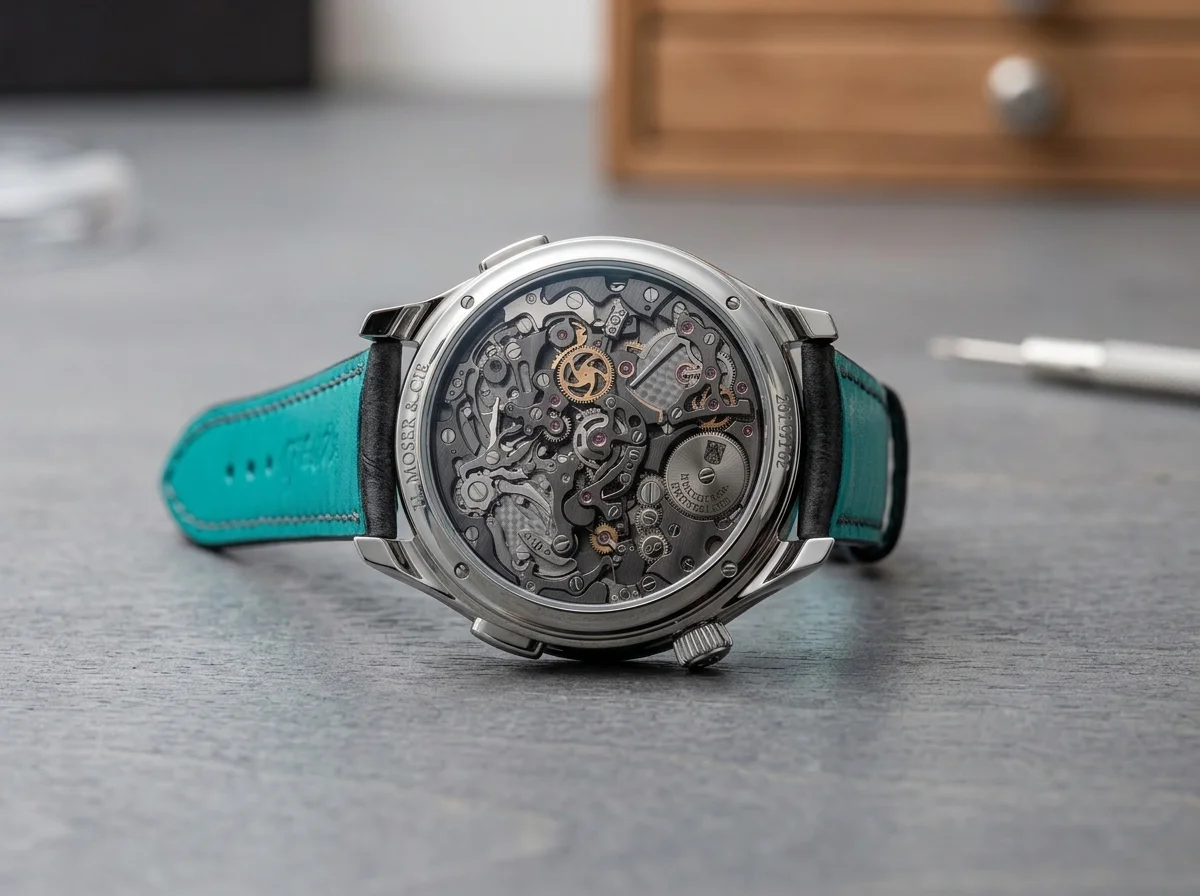 Flip a Moser over and the watchmaking is right there: anthracite bridges, Moser stripes, and in-house regulating parts.
How to Buy One
Moser is easier to buy new than Journe or Richard Mille, but the wanted Streamliner and Concept references still see waitlists, and the boutique network is small.
Pre-owned is a sensible route, and the rules are the usual ones for a low-volume independent. Buy with the full set and papers, from a dealer who authenticates, and treat service history as part of the value, since a small brand's servicing is specialized. Because Moser is less faked than the mega-names, the bigger risk is condition and completeness rather than outright counterfeits.
The Bottom Line
H. Moser & Cie is the rare brand that is both a serious watchmaker and a genuine character. The fume dials are gorgeous, the Concept idea is braver than it looks, and the movement making is the real thing. For a collector who wants into independent watchmaking without a Journe budget, Moser is one of the smartest doors to walk through.
Moser proves serious independent watchmaking doesn't have to cost six figures. If that idea appeals to you more than the logo on the dial, you are already thinking like a collector, and our Aquanaut versus Royal Oak versus Overseas comparison is a natural next stop in the same integrated-bracelet world.
Frequently Asked Questions
What is H. Moser & Cie known for?
Smoked fume dials and logo-free Concept watches, minimalist design, and vertically integrated watchmaking. The brand makes its own hairsprings through sister company Precision Engineering and co-owns the movement house Agenhor, which is rare for a company its size. It is also known for provocative marketing that pokes fun at the watch industry.
What is a Moser fume or Concept dial?
A fume dial is smoked: bright and sunburst at the center, fading to near-black at the rim. A Concept dial takes Moser's minimalism further by removing the logo, all text, and every hour marker, leaving only the dial finish and the hands. It is the brand's signature look.
How much is an H. Moser watch?
A steel Streamliner Centre Seconds starts around $22,000 to $24,000, the Streamliner Mini lists near $27,600, and the Streamliner Pump runs $39,900. Complications climb into six figures, such as the Streamliner Tourbillon Concept Ceramic near $112,100. Moser is the more attainable end of serious independent watchmaking.
What is the Moser Streamliner?
The Streamliner, launched in 2020, is Moser's integrated-bracelet luxury sports watch, with a rounded cushion case that avoids the usual Royal Oak template. The line includes the Streamliner Flyback Chronograph, which displays the chronograph from the center of the dial with no sub-dials, using a movement developed with Agenhor. See our dedicated buying guide for the exact caliber, case specs, and pricing.
Does H. Moser hold its value?
Reasonably, for a small independent. Moser does not appreciate like the most hyped names, and some references have seen rising retail prices. But low production keeps supply tight and the wanted models in demand. Buy a Moser for the design and the watchmaking rather than as an investment.