The Short Answer
Pre-owned watch prices move, but not through pressure or a lowball opening number. They move through research, timing, and knowing which levers a dealer actually has room to pull. Cash and trade-ins move the needle. Documentation and condition set the ceiling. Lowballing a hyped steel sports watch gets you ignored.
The short version: come with real comparable sales data, ask about the watch's time on the market, and negotiate the total deal, not just the sticker price. That gets you further than any script or opening lowball ever will.
 Negotiation happens at the counter, not through pressure. Research and facts do the actual work.
AI disclosure: the photos in this post are AI-generated scenes, not photos of an actual 5D Watches transaction.
Why Watch Negotiation Works Differently at Different Sellers
Authorized dealers selling new watches have almost no room to move. Brand rules, allocation pressure, and waitlists on anything in demand mean the "win" at an AD is usually relationship value, future access, or a bundled accessory, not a lower price tag.
Pre-owned dealers are a different market entirely. Inventory sitting on a shelf costs the dealer money every day it sits there, and that alone creates real flexibility. One widely cited example: a vintage Rolex Submariner marked down 24 percent, from £22,999 to £17,499, once it had been listed long enough (The Manual). That kind of movement does not happen on a watch that just walked in the door.
What Actually Gives You Leverage
Time on the Market
A watch that has been listed for months costs the dealer carrying cost every single day. Ask directly how long a piece has been in inventory. A dealer with capital tied up in a slow-moving watch has real incentive to move it, and a fair, informed offer becomes genuinely attractive rather than insulting.
Condition and Completeness
Full sets, meaning original box, warranty card, and purchase receipts, hold a real premium over watch-only examples. That premium cuts both ways: if you are buying a watch without papers, that is a legitimate reason to ask for a lower price, not an insult to the seller. Missing links, a stretched bracelet, or an overdue service are the same story.
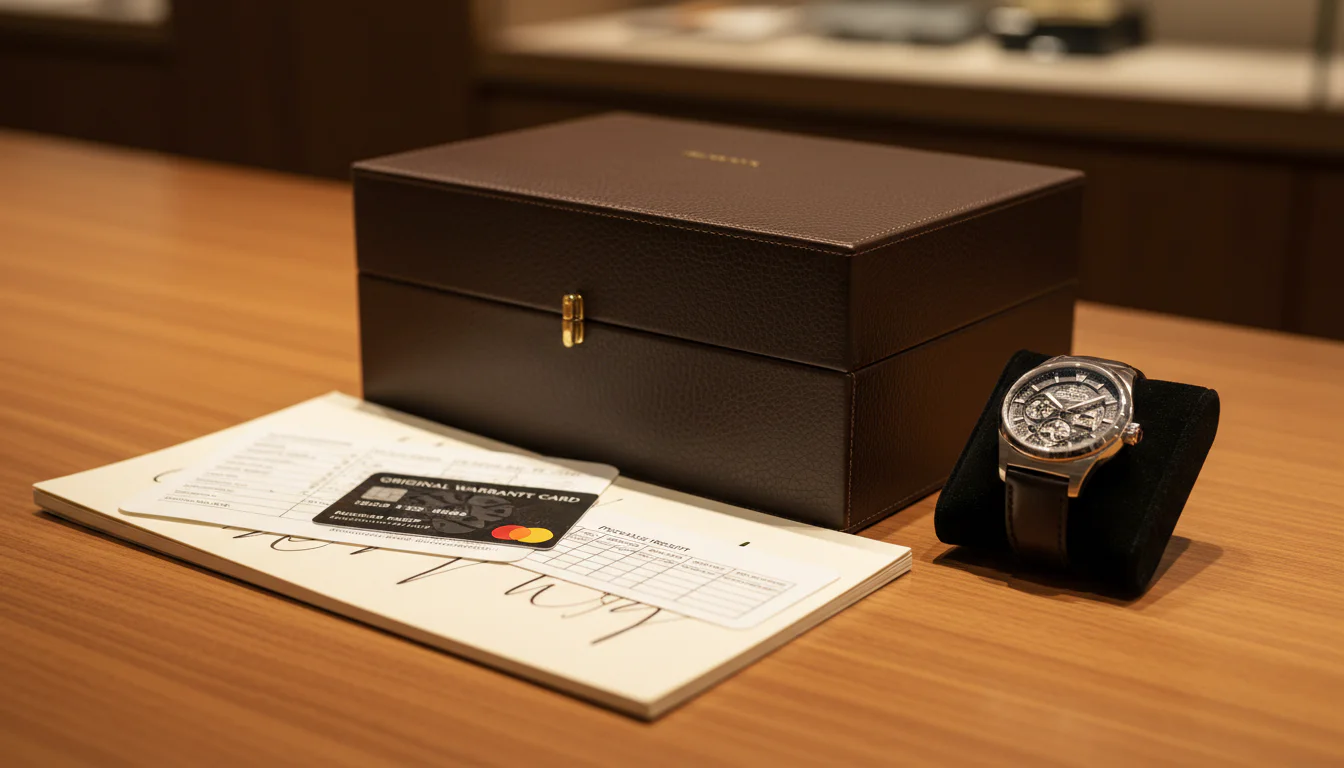 Box, papers, and receipt. A full set changes the negotiation in both directions.
Cash vs. Trade-In vs. Financing
Trade-in credit toward another purchase typically nets a better effective price than a straight cash discount, because the dealer is making two margins in one transaction instead of one. If you have a watch to trade, put it on the table early. It changes the entire shape of the negotiation.
Model Liquidity
A watch that sells itself, a steel Rolex sports model in particular, has almost no room to move. A slower-moving reference, an off-trend dial color, or a brand currently out of hype cycle gives a dealer far more flexibility to work with you.
 Condition sets the ceiling before price ever gets discussed.
What Does Not Work
Lowballing a hot reference is the fastest way to get ignored. A steel Submariner, Daytona, or Nautilus in good condition with papers sells itself. Offering 30 percent under a fair asking price on a watch like that signals you have not done the research, and most dealers will not counter, they will simply move on to the next buyer.
Vague pressure tactics do not work either. "Can you do better" with no comparable sales behind it gives the dealer nothing to respond to. Come with three or four recent comparable sales for the exact reference, ideally sourced from completed transactions rather than asking prices, and the conversation changes entirely.
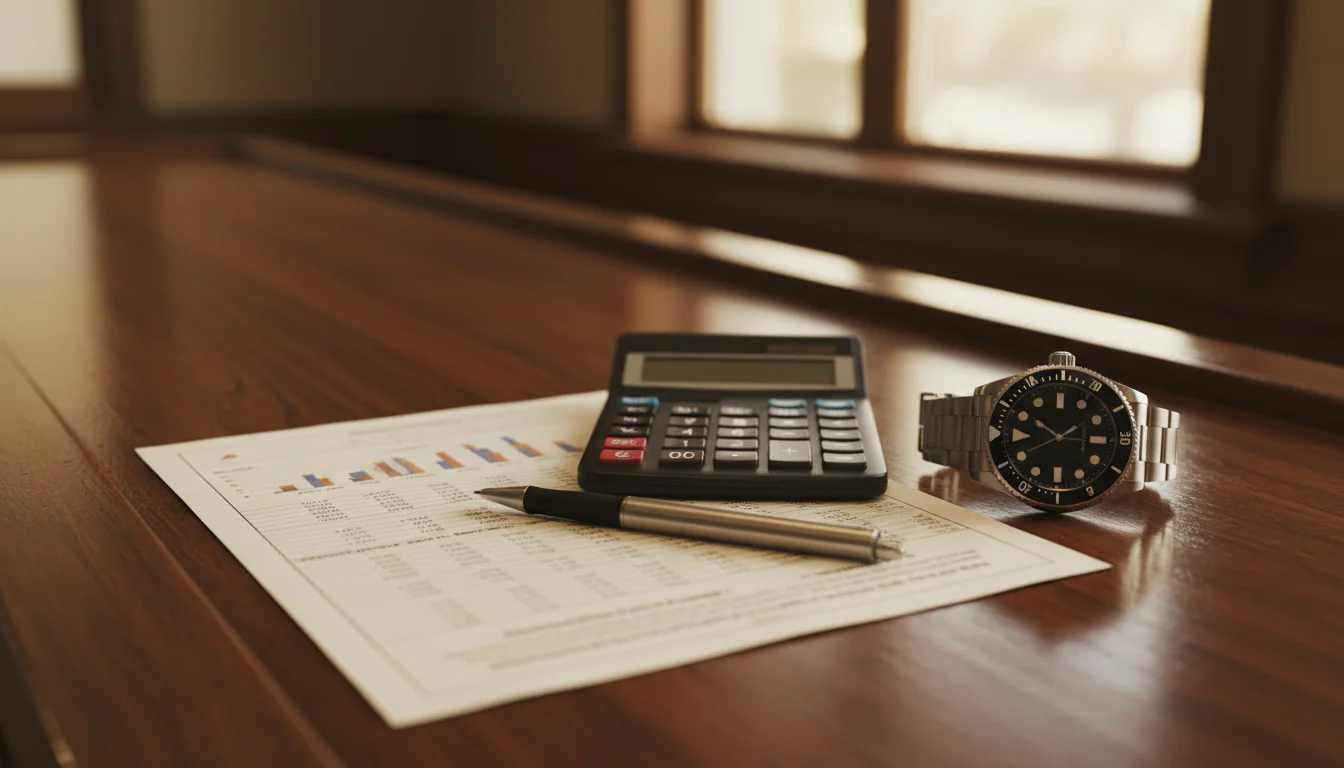 Real comparable sales data, not a gut-feel number, is what actually moves a dealer.
A Simple Framework Before You Negotiate
Pull three to five recent comparable sales for the exact reference, not just listing prices, actual sold prices when you can find them. Ask how long the specific piece has been listed. Decide in advance whether you would rather have a lower cash price or a trade-in credit, because that changes your opening ask. Know the honest condition of the watch, box, and papers before you name a number, since that is the fact set the dealer will use to respond to you.
What a Fair Ask Actually Looks Like
A fair counteroffer sits close to recent comparable sales, adjusted down slightly for anything genuinely missing, watch-only versus full set, a service that is due, a stretched bracelet, rather than a flat percentage knocked off an asking price with no justification. Dealers negotiate every day. They can tell the difference between a buyer who has done the work and one who has not, and they price the conversation accordingly.
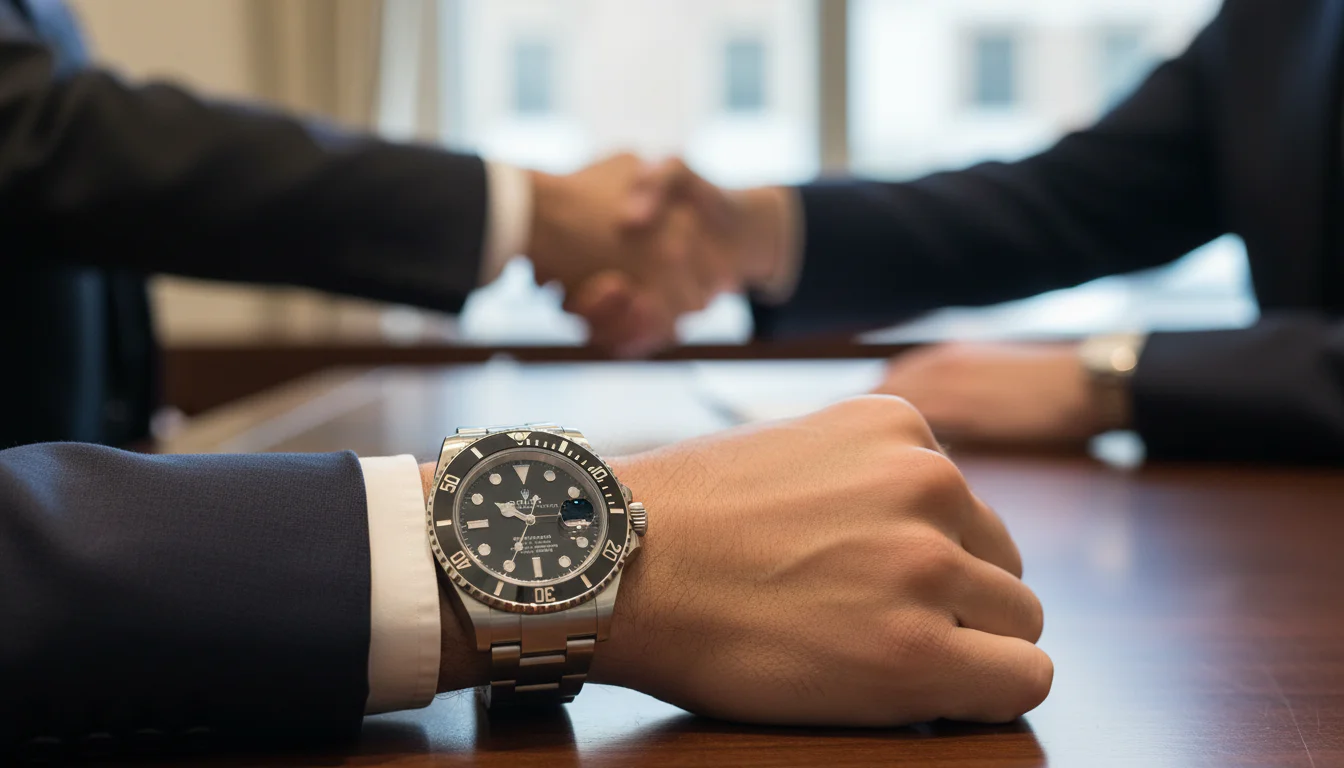 A fair number, backed by real data, is how a negotiation actually closes.
FAQ
Can you actually negotiate the price of a pre-owned watch?
Yes, more than most buyers assume, especially on inventory that has been listed a while. The room to move is real but is driven by comparable sales data and inventory age, not by pressure tactics.
Is it easier to negotiate at an authorized dealer or a pre-owned dealer?
Pre-owned dealers have far more room to negotiate. Authorized dealers selling new watches are constrained by brand allocation rules and rarely discount the sticker price directly.
Does a trade-in get you a better deal than a cash offer?
Often yes. Trade-in credit toward a purchase typically nets a better effective price than a straight cash discount, since the dealer earns margin on both the incoming trade and the outgoing sale.
Why do dealers not negotiate on watches like the Rolex Submariner or Daytona?
High-demand steel sports references sell themselves and rarely sit in inventory long enough to create pressure to discount. There is little incentive to move on price when the next buyer is already waiting.
What is the biggest mistake buyers make when negotiating a watch price?
Opening with a lowball number and no supporting data. Dealers respond to counteroffers backed by real comparable sales, not vague requests to "do better" on price.