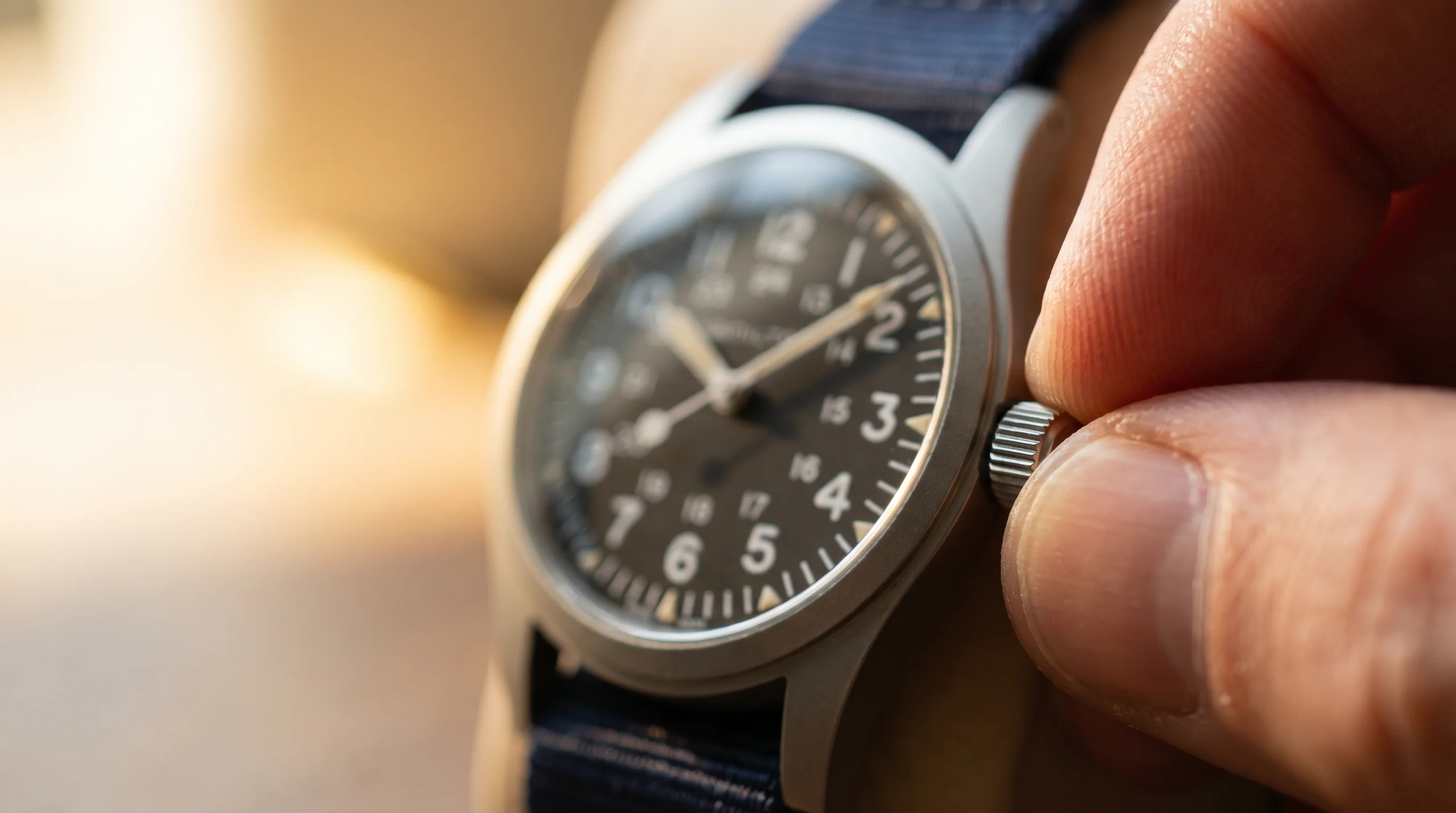
Winding and setting an automatic watch takes about a minute, and doing it correctly protects the movement for years. A stopped automatic needs a few hand winds to get going, and setting the time and date has one real trap to avoid. Here is a working dealer's plain-English guide to doing it right, whether the watch is a Seiko or a Rolex.
This article includes images generated with AI to illustrate winding and setting a watch. Every watch and component shown is based on a real, referenced model.
The short answer
To start a stopped automatic, wind the crown clockwise about 20 to 30 turns, then set the time and screw the crown back down if it is a screw-down type. You cannot overwind a modern automatic, so do not worry about that. The one rule that matters: never set the date between roughly 9pm and 3am, because the date gears are engaged and can be damaged.
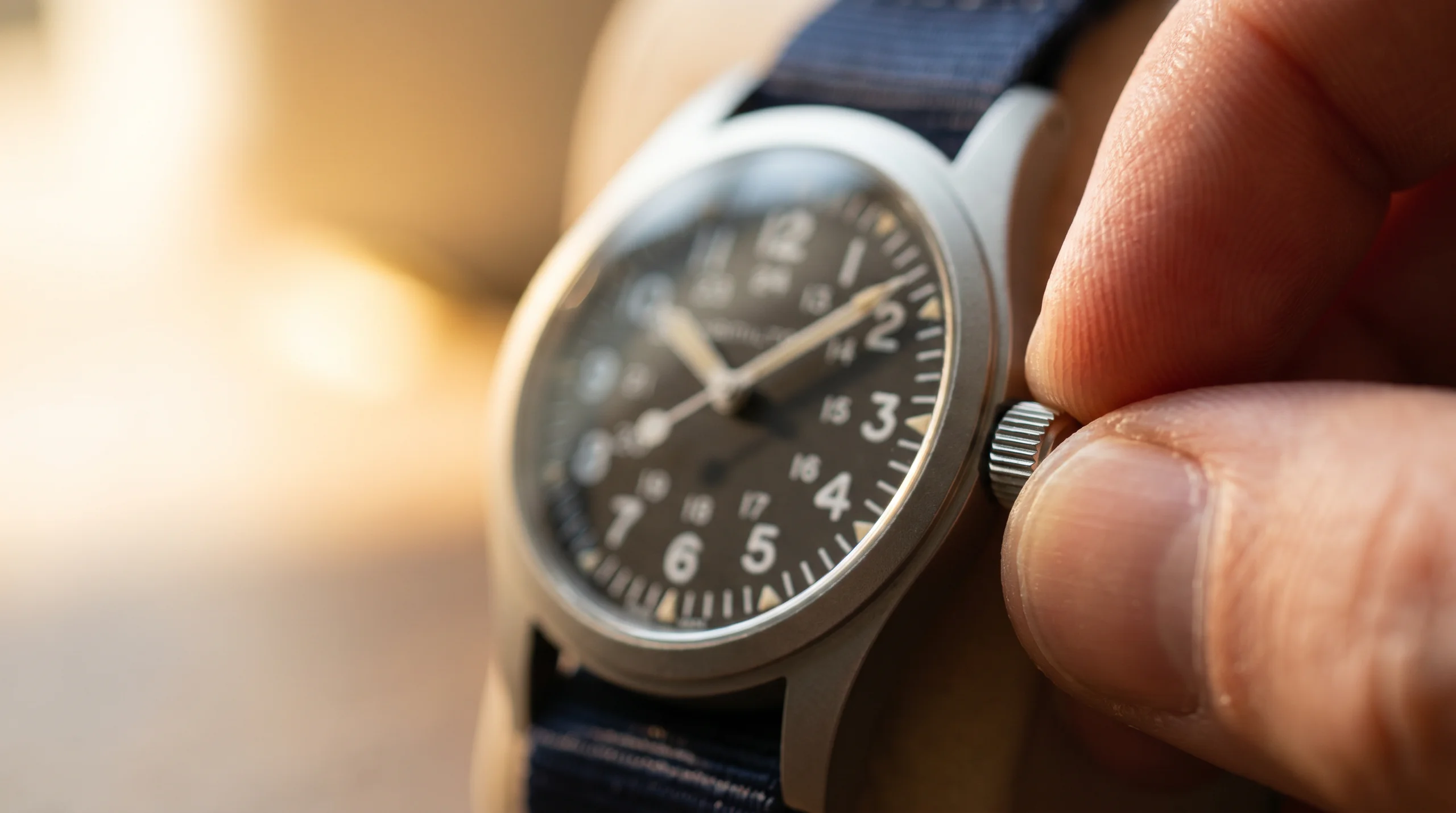 Winding a stopped automatic by hand gets it running before you set the time.
Step by step
Here is the full sequence for a watch that has stopped.
- If the crown screws down, unscrew it by turning counterclockwise until it springs free.
- With the crown in its resting position, wind clockwise 20 to 30 turns to power the mainspring.
- Pull the crown out to the time-setting position, usually the furthest click.
- Turn the hands clockwise to set the time, passing midnight if you need to confirm AM or PM.
- If there is a date, push the crown to the middle position and set it, but only outside the danger zone.
- Push the crown fully back in, and screw it down if it is a screw-down crown.
That is the entire process. It sounds fussy written out, but it becomes second nature after a couple of tries.
You cannot overwind a modern automatic
This is the fear that stops new owners, and it is unfounded. A modern automatic has a slipping clutch on the mainspring, so once it is fully wound, extra turns simply slip. You will feel the winding get slightly firmer, and that is your cue to stop, but you are not doing damage.
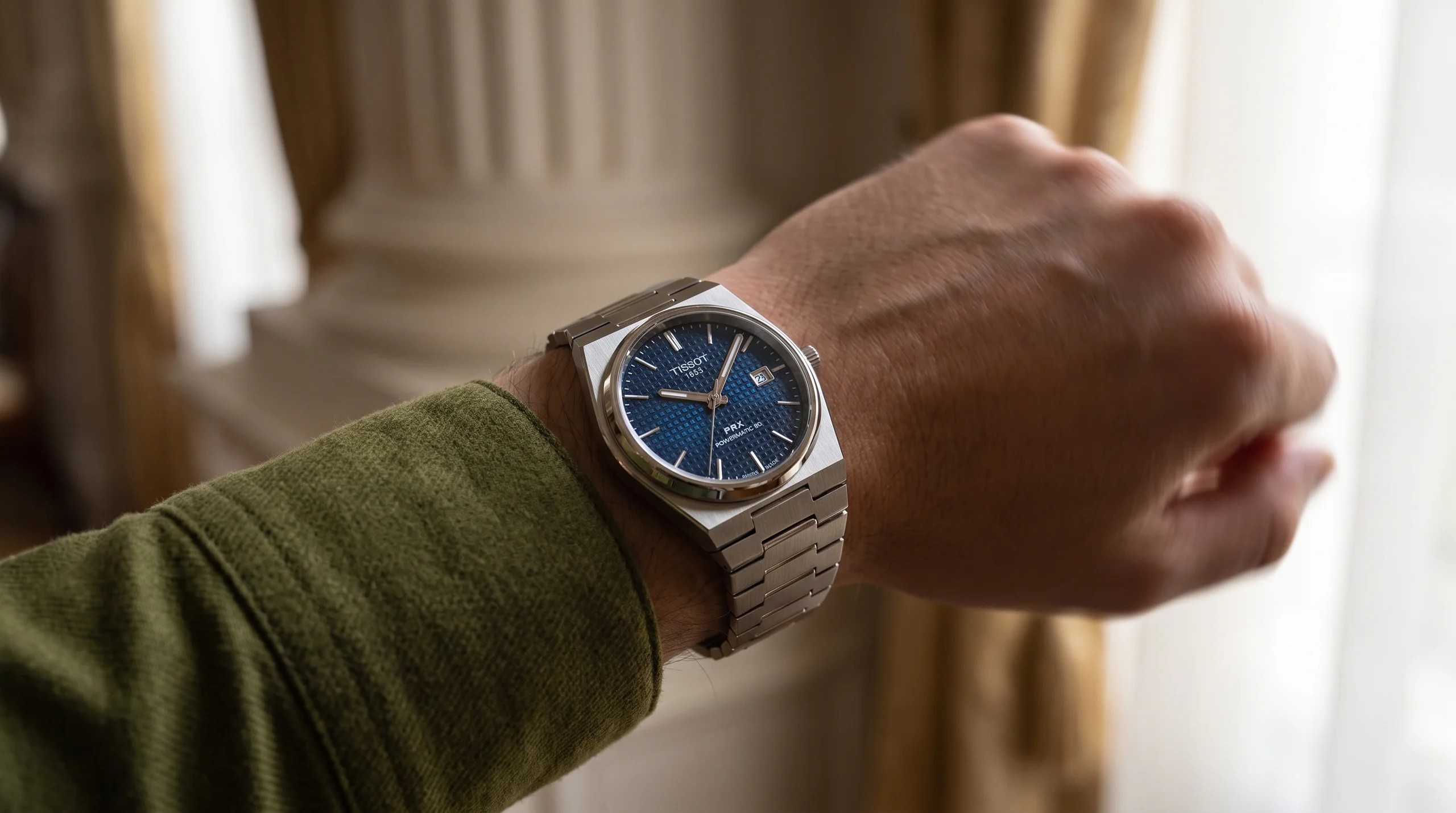 Once running, an automatic winds itself from the motion of your wrist.
Once the watch is running and on your wrist, the rotor keeps it wound through normal movement. If you wear it daily, you may never need to hand-wind it again. To understand how long it keeps running when you take it off, see our guide to watch power reserve.
The date danger zone
This is the one genuine risk, so it is worth repeating. Most watches begin shifting their date gears into position in the hours before midnight and finish after. If you change the date while those gears are engaged, you can chip a tooth and cause an expensive repair.
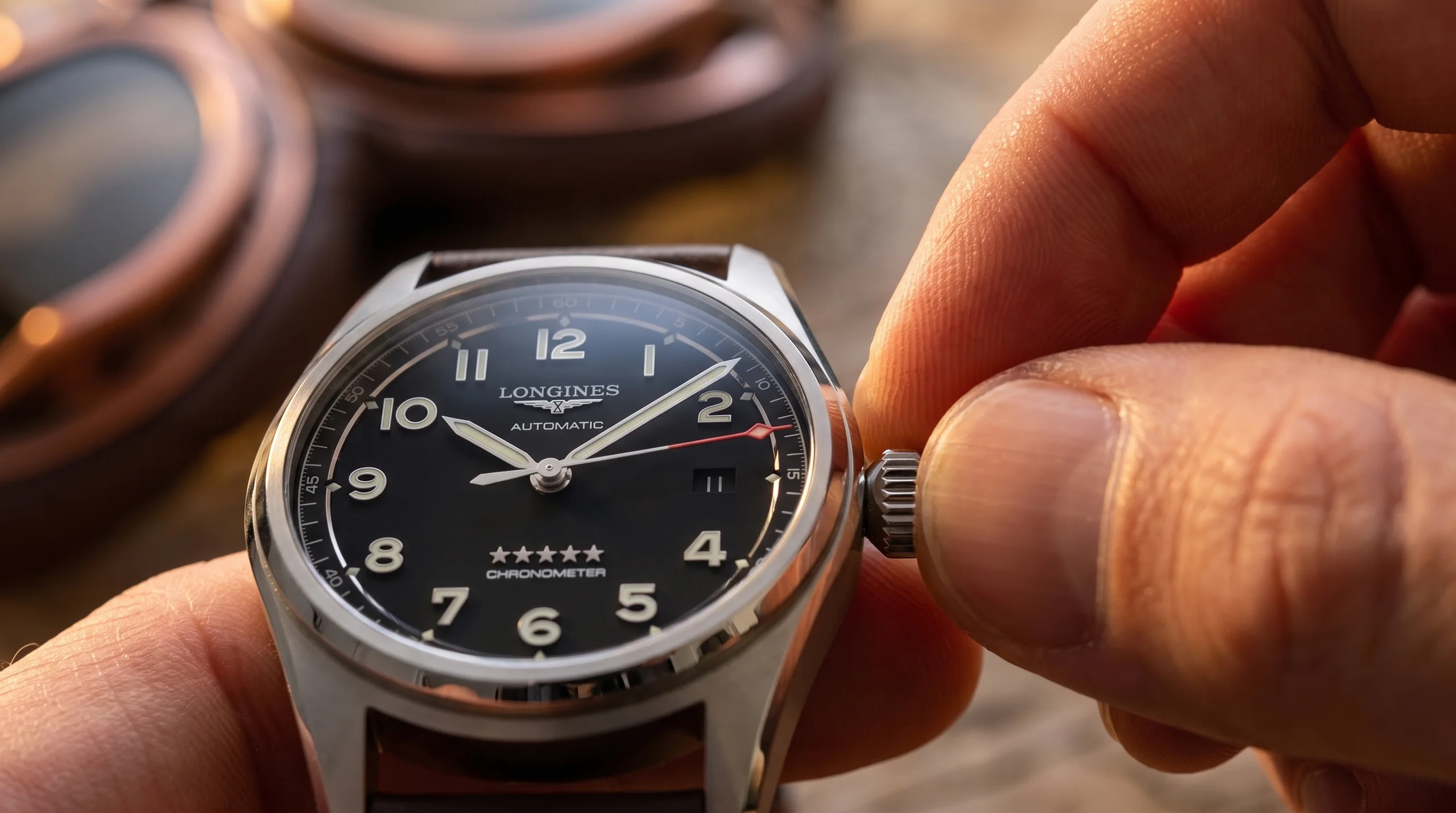 Pull the crown to the setting position and move the hands clockwise.
The safe habit is simple. Before setting the date, move the hands to around 6 o'clock, well clear of the midnight window. Then set the date, then set the correct time. Avoid quick-setting the date anywhere between about 9pm and 3am on the dial.
Screw-down crowns and water resistance
Many tool and dive watches use a screw-down crown to seal the case. A Rolex, a Panerai, or a Seiko diver will not be water resistant unless that crown is screwed fully home. This is the step people forget most.
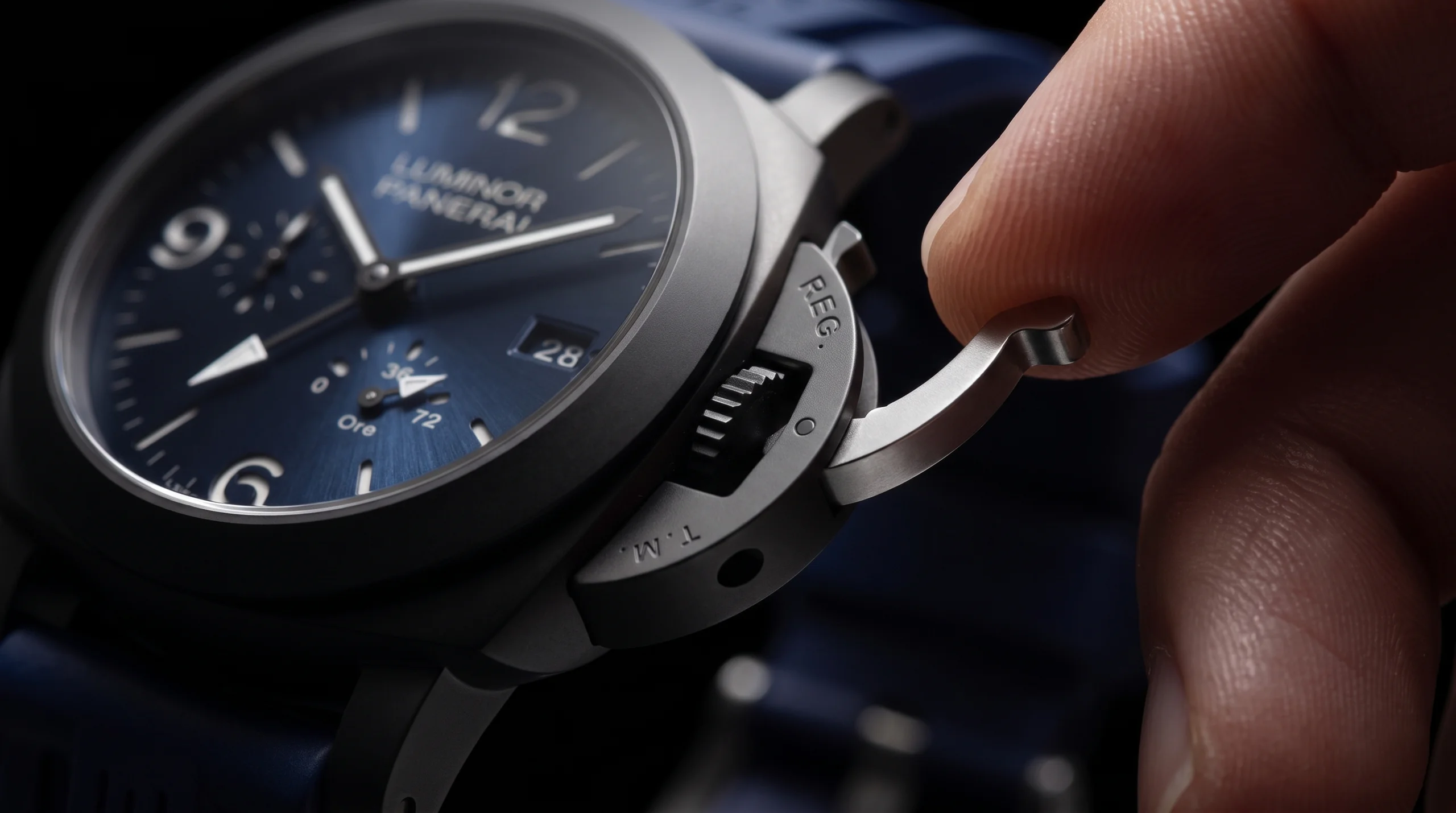 On watches like the Panerai Luminor, secure the crown lever or screw the crown down to seal the case.
After you set the watch, always push the crown in and screw it down until it stops with light resistance. Never force it. If you ever feel grinding, back off and start the thread again, since cross-threading a crown is a costly mistake.
Do you even need to hand-wind it
If you wear the watch every day, the answer is usually no. Daily wrist motion keeps a healthy automatic wound. Hand-winding matters mainly when the watch has stopped after sitting, or when you rotate several watches.
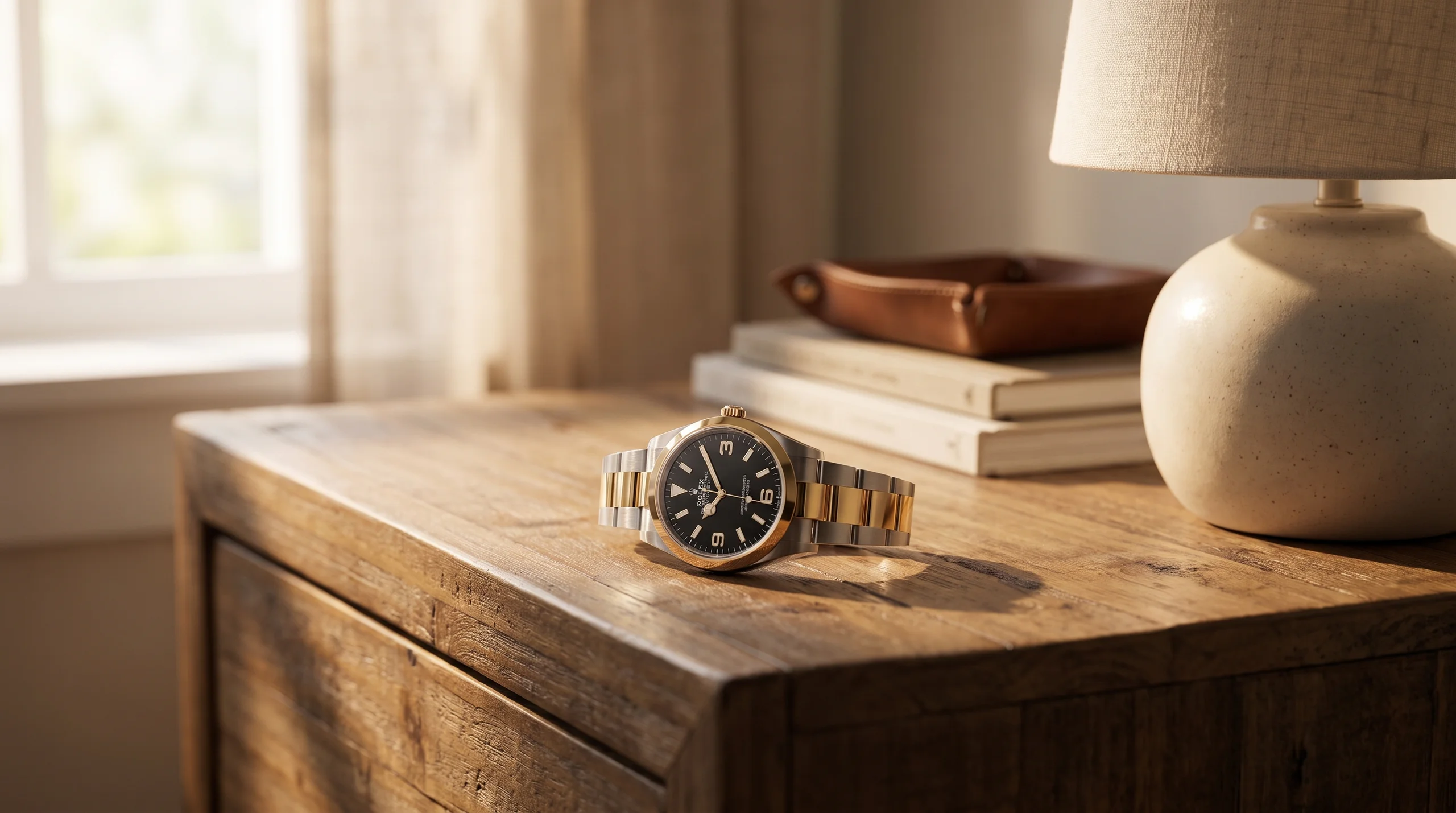 A watch that has sat unworn needs a wind and a reset before it goes back on.
For collectors juggling a box of watches, a winder can keep pieces running, though it is more optional than most people think. We give the honest answer on that in our guide to whether you need a watch winder. And if you are still deciding between movement types, our guide to automatic, manual, quartz, and Spring Drive explains the trade-offs.
Frequently asked questions
Can you overwind an automatic watch?
No. Modern automatic watches have a slipping clutch on the mainspring, so once fully wound, extra turns slip harmlessly. You cannot damage a healthy automatic by winding it, though you will feel the resistance increase when it is full.
How many times should I wind an automatic watch?
To start a stopped automatic, wind the crown clockwise about 20 to 30 turns. That gives it enough power to run and keep accurate time until wrist motion takes over. If you wear it daily, you rarely need to hand-wind again.
When should I not change the date on a watch?
Avoid changing the date between roughly 9pm and 3am, the so-called danger zone. During those hours the date-change gears are engaged, and forcing a quick-set can chip a tooth and cause an expensive repair. Set the hands to 6 o'clock first to be safe.
Which way do you wind an automatic watch?
Wind the crown clockwise, meaning away from you when looking at the crown side. If the watch has a screw-down crown, unscrew it first by turning counterclockwise until it releases, then wind clockwise.
Do I need to wind my automatic every day?
Not if you wear it daily, since your wrist keeps it wound. You only need to hand-wind an automatic when it has stopped after sitting unworn, or when you are rotating it back into a wearing schedule.
The bottom line
Winding and setting an automatic is one of the small rituals that makes owning a mechanical watch satisfying. Give a stopped watch a few winds, set the time, respect the date danger zone, and secure a screw-down crown. Do that, and the movement will reward you with years of reliable service.
Have a watch that stopped and will not restart, or questions about servicing? Talk to a 5D Watches specialist and we will help.