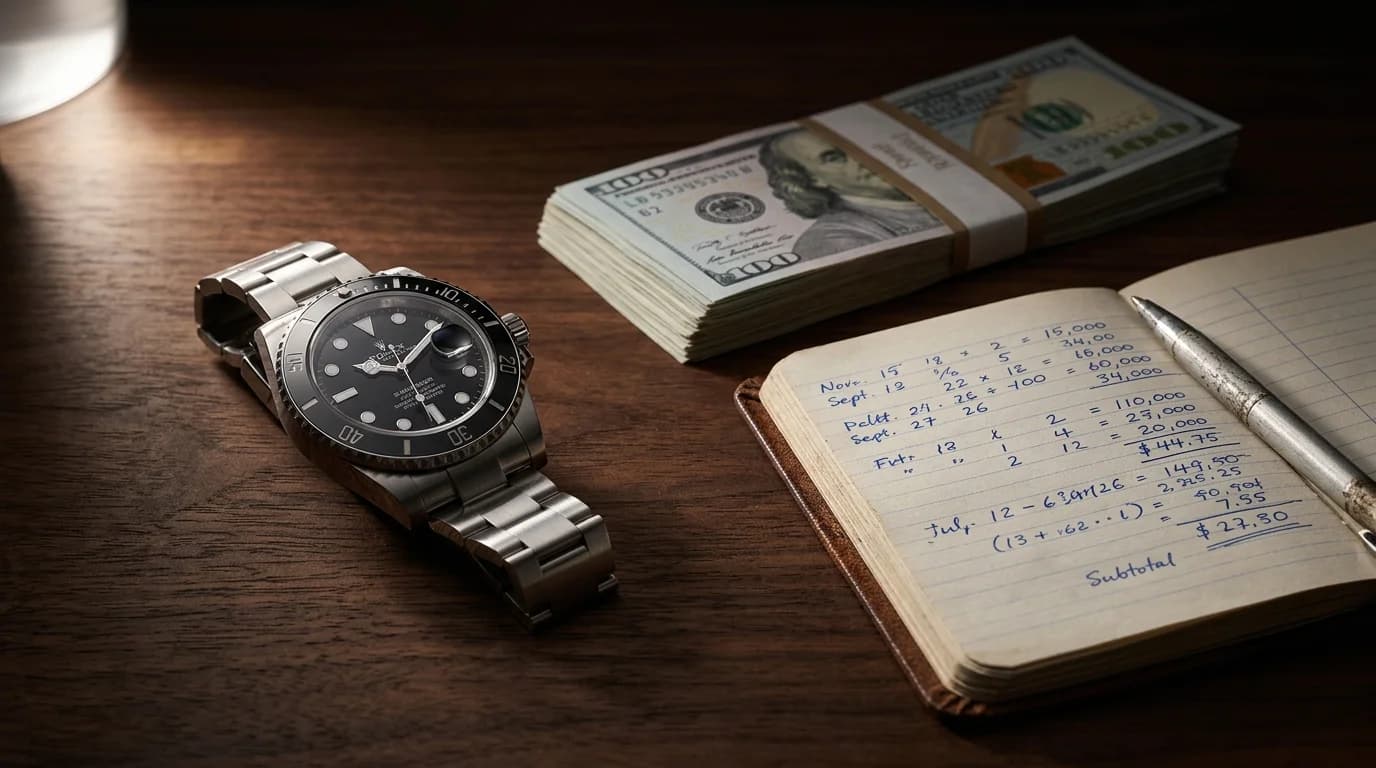
Every couple of years a story circulates about someone who bought a Rolex at retail and sold it for double. That story is true often enough to keep people trying, and misleading often enough to cost most of them money.
The Short Answer
Watch flipping means buying a watch, usually at retail or below market, and reselling it quickly for a profit. It works when you have real allocation access, buy the right reference, and sell through the right channel. It fails, for most people, because fees, holding costs, and bad timing eat the margin that looked obvious on paper.
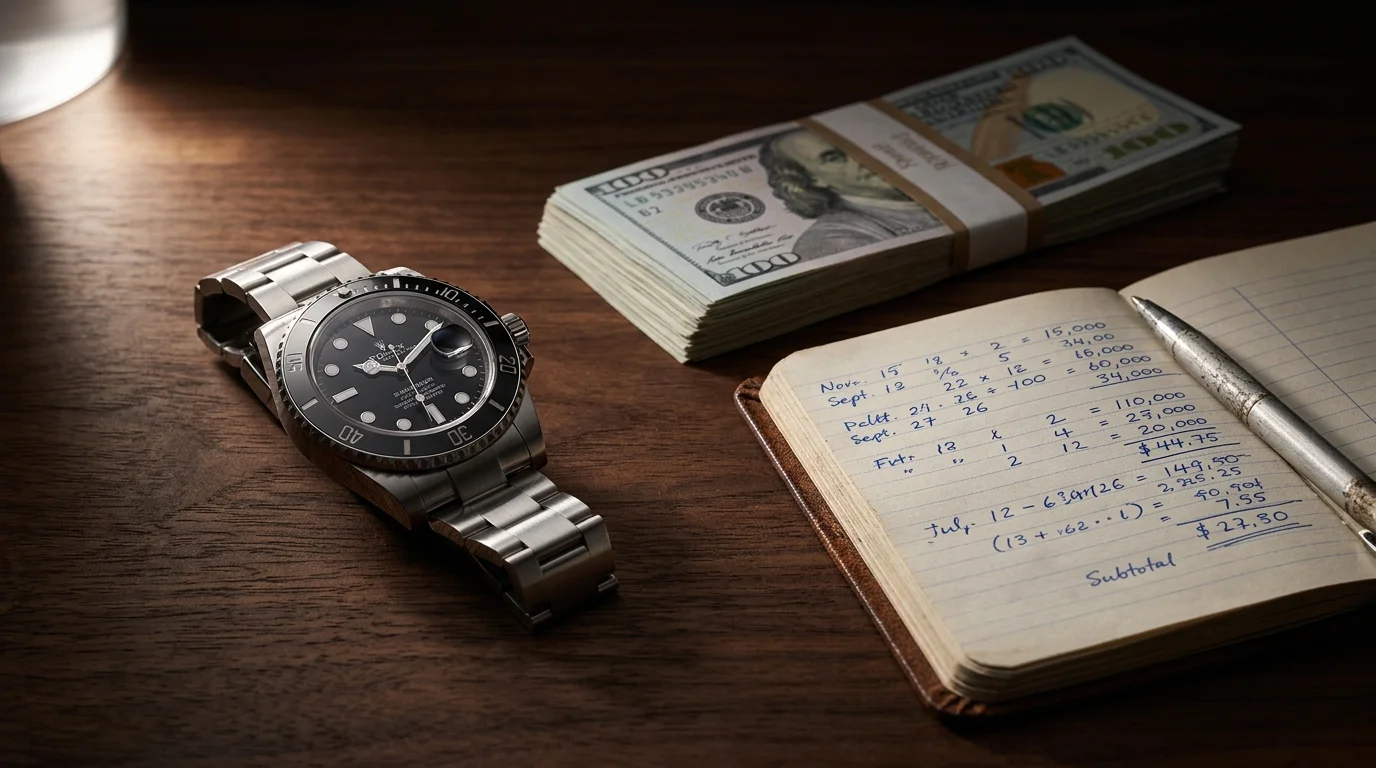 The math on paper always looks cleaner than the math after fees and holding costs.
What Flipping Actually Looks Like
The mechanics are straightforward. You buy a watch below what the pre-owned market will pay for it, then sell it into that market for the difference.
Where the Margin Comes From
Most flips start at an authorized dealer, buying at retail (or an insider's discount) on a reference the pre-owned market prices above retail because supply cannot meet demand. Rolex sport models are the classic example.
Bob's Watches' Q2 2026 market report shows exactly why that reference matters. The Submariner 116610 gained 38.8% in the quarter, the steepest move of any reference tracked, while the average pre-owned Rolex transaction across all models sat at $15,273.
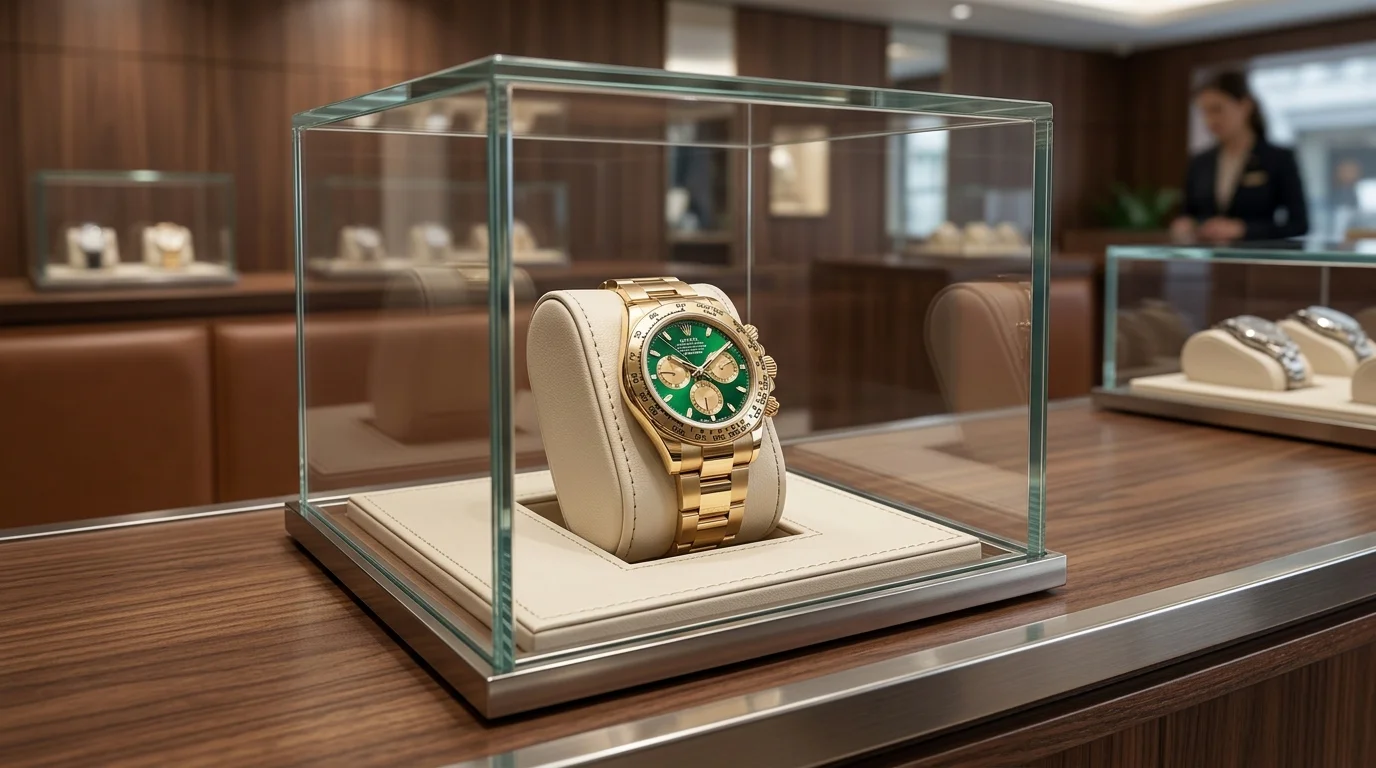 Not every watch sells itself. The reference behind the glass matters more than the brand name above the door.
The Reference Actually Matters More Than the Brand
Not every Rolex flips. The GMT-Master II 126710 averaged $22,365 in the same report, with the note that "demand for the Pepsi and Batman bezels remains far ahead of supply at authorized dealers." A basic Datejust, averaging $9,127, does not carry the same premium because supply roughly matches demand.
Why Most People Lose Money Anyway
Here is the part the success stories skip. Even a real price gap between retail and resale gets eaten from multiple directions before it reaches your pocket.
You Are Not Getting Dealer Allocation
The buyers who make this consistently work have years of purchase history with an authorized dealer, or they are dealers themselves. Walking into a boutique once and asking for the hot reference does not get you the allocation that makes the math work.
Selling Costs Money Too
Every resale channel takes a cut. Marketplaces charge listing or transaction fees. Auction houses charge seller's commissions. Selling to a dealer outright gets you a wholesale price, not the retail-comparable number you saw online.
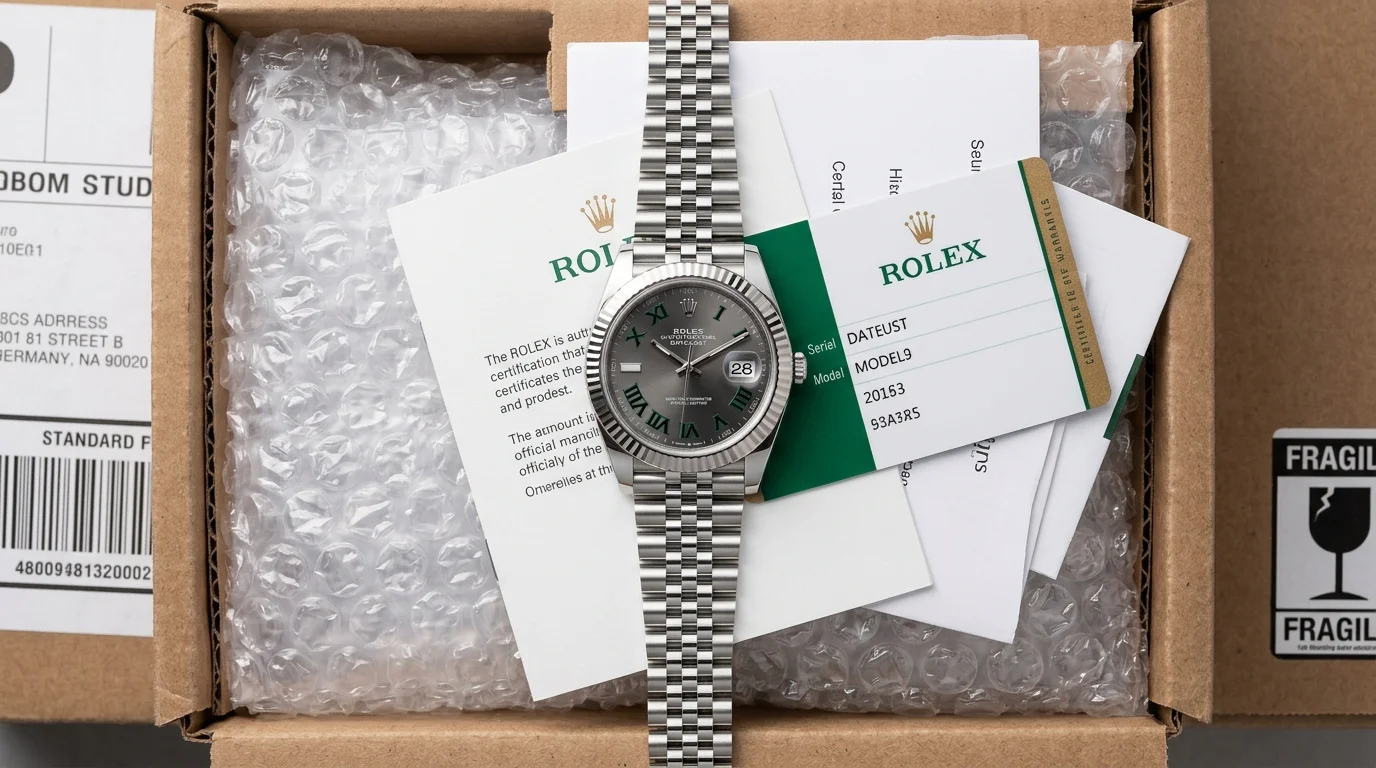 Papers, packaging, shipping insurance. None of it is free, and all of it comes out of the flip.
Holding Time Kills the Math
A watch sitting in a safe for six months while you wait for the "right" buyer is capital that is not doing anything else, and that assumes the reference does not cool off while you wait. Hype-driven premiums can shrink as fast as they appeared.
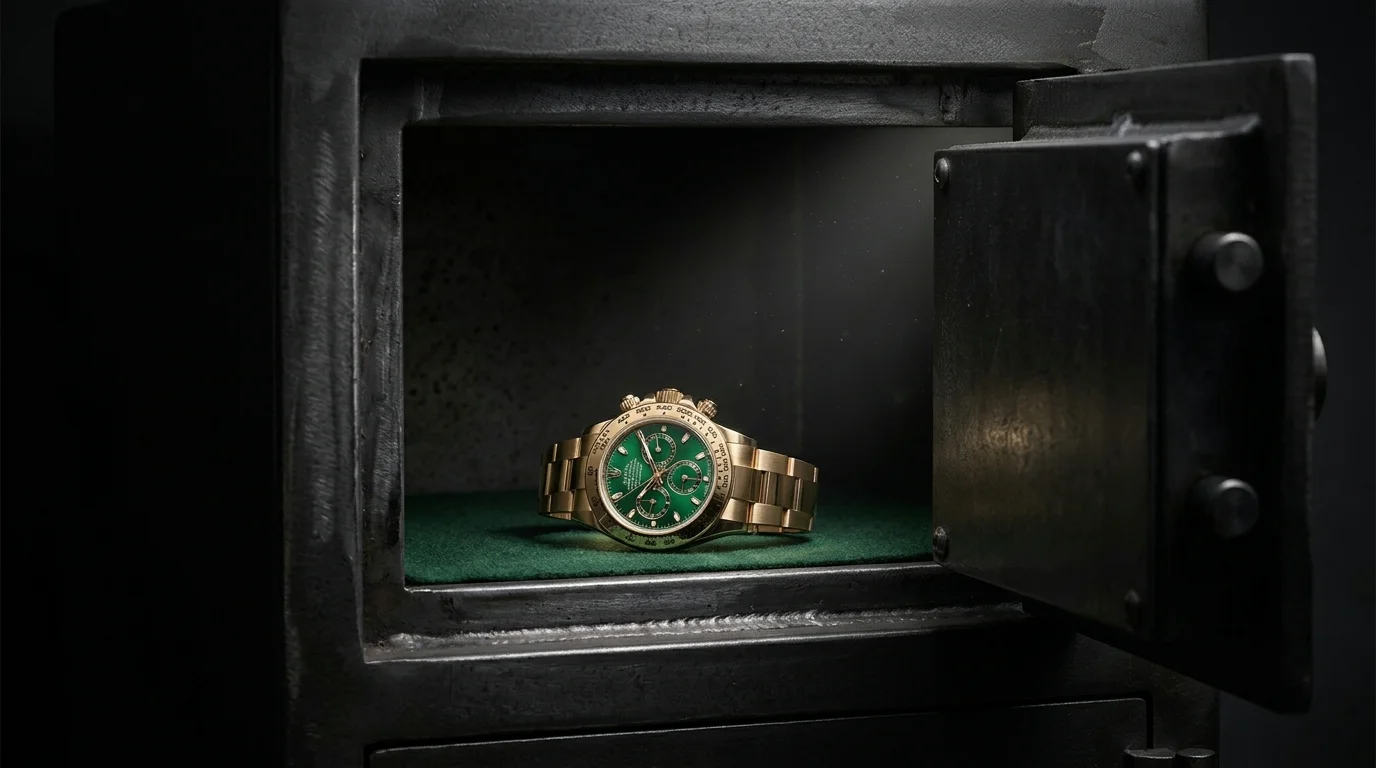 Every month it sits in the safe waiting for the right buyer is a month that capital is not doing anything else.
Authentication and Condition Risk
A flip only works if the watch is exactly as described. Box, papers, service history, and condition all affect what a buyer will actually pay, and any dispute over authenticity can erase a flip's entire margin.
What the Data Actually Shows
| Reference | Avg Price (Q2 2026) | Notable Move |
|---|---|---|
| Submariner 116610 | Market-driven | +38.8% quarterly gain |
| GMT-Master II 126710 | $22,365 | Demand exceeds AD supply |
| Daytona | $33,322 | Consistently allocation-limited |
| Datejust 36 | $9,127 | Supply roughly matches demand |
| Date | $6,203 | Little to no flip premium |
Source: Bob's Watches Rolex Market Report, Q2 2026.
The pattern is consistent. Watches with a real supply gap at the authorized dealer level can flip. Watches without one generally cannot, no matter how nice they look.
 The sale itself is the easy part. Getting to that handshake with a margin intact is where most flips fall apart.
Who Flipping Actually Works For
It works for people already inside the system: authorized dealer regulars with purchase history, dealers themselves, and buyers willing to hold inventory through a slow stretch without needing the cash back quickly.
It does not reliably work for someone buying one watch with the specific plan to resell it next month. The margin that made the story you heard sound so easy usually belonged to someone with an advantage you do not have yet.
If You Want to Buy Right Instead of Flip
Our 5 Best Rolex Watches to Buy in 2026 breaks down which current references hold their value best for someone buying to wear and keep, not to flip. And if you are holding a watch worth flipping or keeping, our watch insurance guide walks through when coverage actually makes sense for that value.
FAQ
What is watch flipping?
Watch flipping is buying a watch, typically at or near retail, with the intent to resell it quickly at a profit, usually because the pre-owned market prices that reference above what it cost to acquire.
Can you actually make money flipping watches?
Yes, but consistently only for buyers with real authorized dealer allocation or dealer-level market access. Occasional flips can work for anyone who buys the right reference at the right price, but repeatable profit requires access most first-time buyers do not have.
Why do most people lose money flipping watches?
Selling fees, holding costs, authentication risk, and the chance that a hype-driven premium cools off before the sale all cut into a margin that looked larger on paper than it turns out to be in practice.
Which watches are most flipped?
Allocation-limited Rolex sport references, like the Daytona and GMT-Master II with Pepsi or Batman bezels, are the most commonly flipped because authorized dealer supply consistently falls short of demand.
Is flipping watches a good long-term strategy?
For most buyers, no. It works best as an occasional opportunity for people already inside the dealer relationship system, not as a repeatable income strategy for a casual buyer.
Browse authenticated pre-owned Rolex at 5dwatches.com.