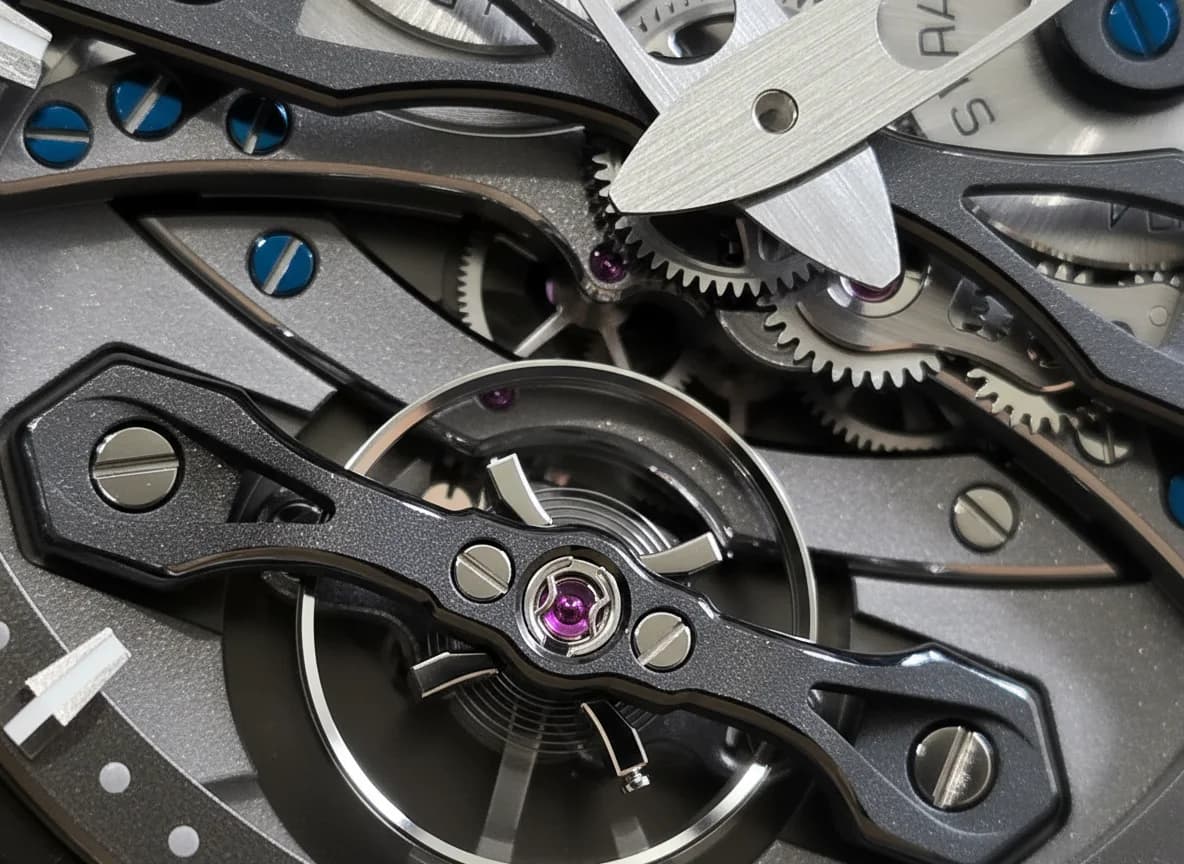
A listing that says "manufacture movement" is trying to tell you something about prestige. It is not automatically telling you anything about quality, and the two get confused constantly.
The images in this article were generated with AI for illustration. They show recognizable watch movements and workshop tools based on real reference photography, but are not photographs of a specific watch for sale.
The Short Answer
- An in-house (manufacture) movement is designed and built by the brand itself, though the exact threshold for what counts is not standardized across the industry.
- An outsourced movement is purchased from a third-party supplier, most commonly ETA, Sellita, Soprod, or STP, then cased and often modified under the brand's own name.
- Neither approach is inherently more accurate or more reliable. ETA-based calibers have run for decades with genuinely bulletproof reliability records.
- Brands frequently blur the line: many "outsourced" movements are heavily modified and finished in-house, which is exactly what Sinn does with the SZ05 caliber built on an ETA Valjoux 7750 base.
What "In-House" Actually Means
There is no single accepted definition. Some brands claim in-house status if they design the movement architecture themselves, even if select components come from outside suppliers. Others reserve the term for calibers where nearly every part, down to the mainspring and hairspring, is made under one roof.
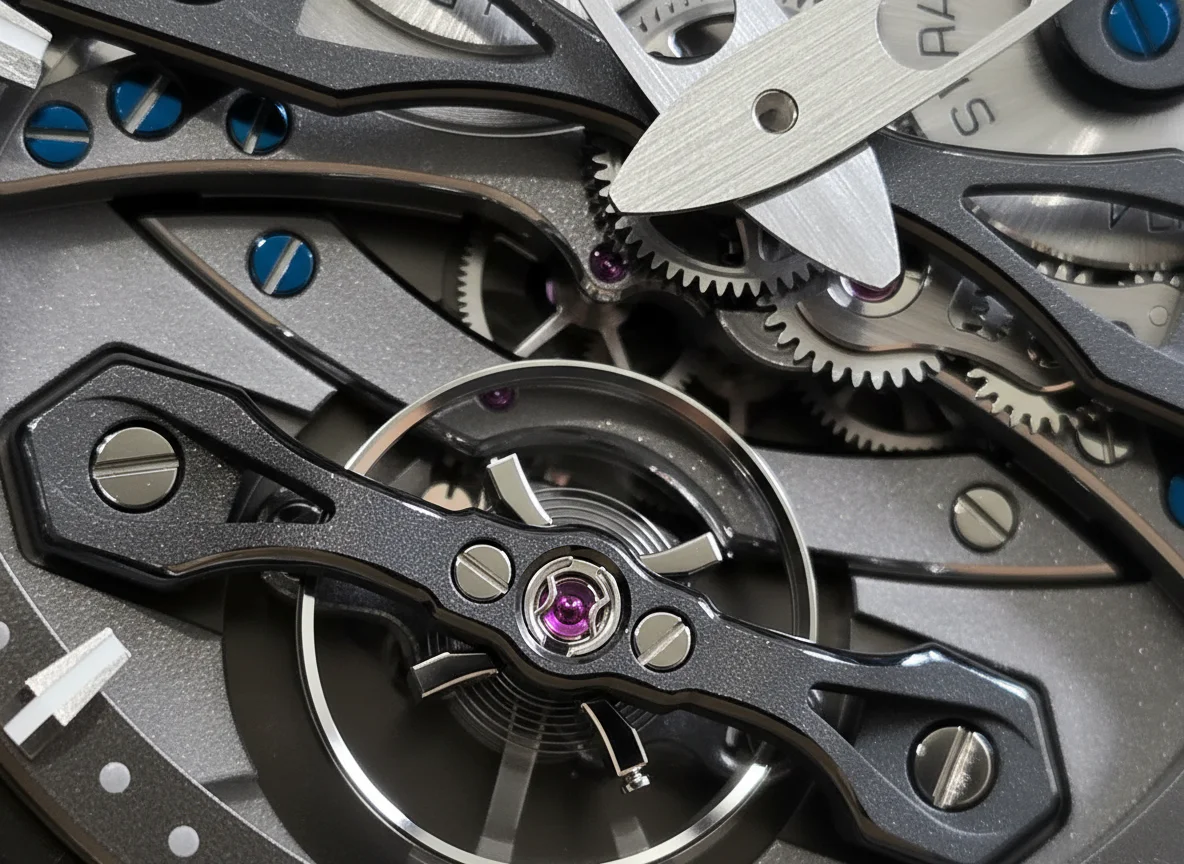 Decorative bridge finishing like this is common on in-house calibers, but decoration is a cosmetic choice, not proof of superior engineering.
Brands Known for In-House Calibers
- Rolex: Caliber 3235, Caliber 4130 (Daytona)
- Zenith: El Primero family
- Tudor: In-house calibers since roughly 2015, after decades of using ETA bases
- Oris: Caliber 400, a newer in-house automatic with a 5-day power reserve
- Omega: Co-Axial calibers, developed in-house since the early 2000s
Building a movement in-house is expensive. It requires tooling, engineering staff, and years of development before the first production caliber ships, which is why in-house calibers usually come with a real price premium attached.
What "Outsourced" Actually Means
An outsourced movement is purchased from a specialist supplier and installed in the brand's own case, often with the brand's name printed on the rotor or bridge. ETA, a Swatch Group subsidiary, has supplied the bulk of the Swiss watch industry's automatic movements for decades. Sellita makes close clones of several ETA calibers and has become the default alternative since Swatch Group restricted third-party ETA sales.
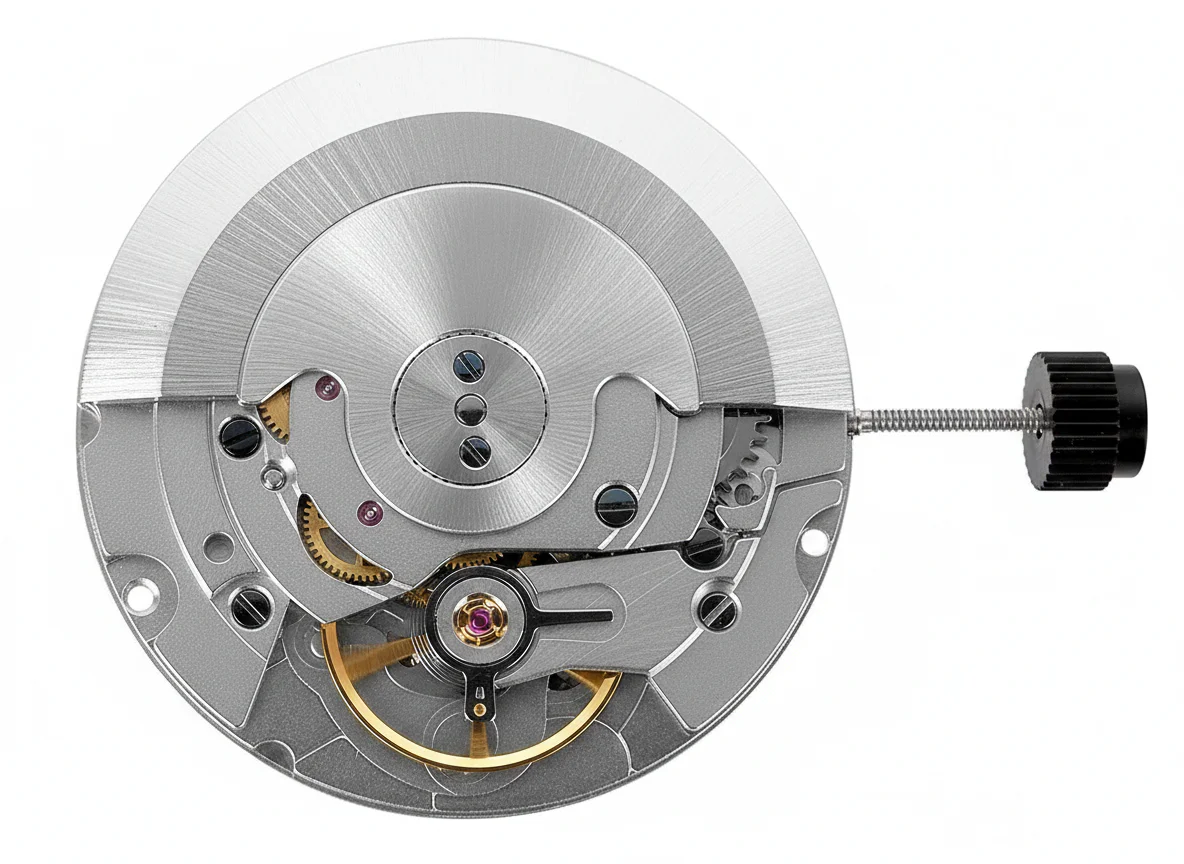 Plain industrial finishing like this is typical of an unmodified ETA or Sellita base caliber.
Common Outsourced Movement Suppliers
| Supplier | Notable Calibers | Parent Company |
|---|---|---|
| ETA | 2824-2, 2892-A2, Valjoux 7750 | Swatch Group |
| Sellita | SW200, SW300, SW500 | Independent |
| Soprod | A10, P024 | Independent |
| STP | STP1-11 | Fossil Group |
Sinn's own core lineup runs almost entirely on Sellita bases. The Sinn 556, U1, 103 St, and 104 all use Sellita automatics rather than in-house calibers, which is a major reason the brand can price so far below Swiss competitors with comparable build quality.
The Gray Zone: Modified Outsourced Movements
Most outsourced movements do not ship unchanged. Brands frequently regulate, decorate, and sometimes structurally modify a base ETA or Sellita caliber, then give it their own internal designation.
Tudor spent years selling ETA-based movements branded under Tudor's own caliber numbers before it ever built a true in-house automatic. The practice is common, not exceptional.
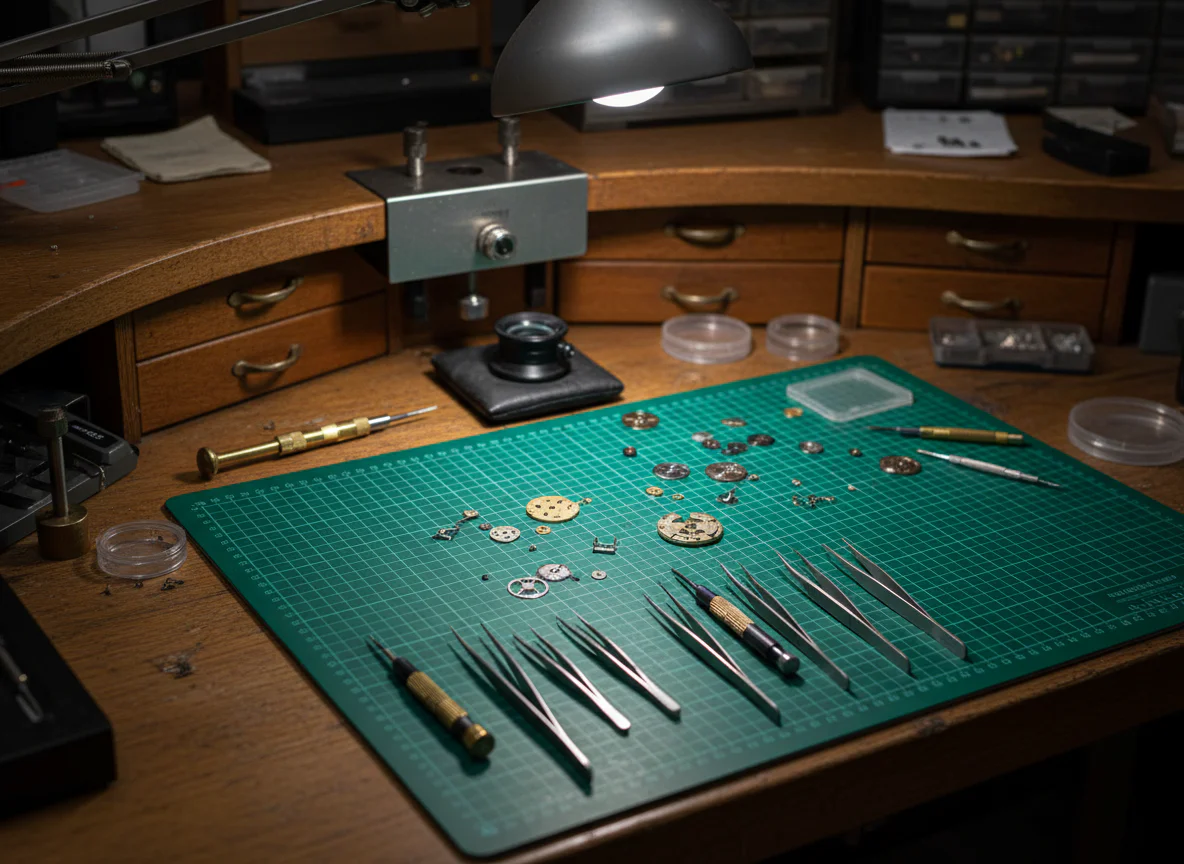 Regulating and finishing a base caliber happens by hand, whether the movement started as in-house or outsourced.
This is precisely what Sinn's SZ05 chronograph caliber is. It starts as an ETA Valjoux 7750 architecture, which Sinn modifies and brands under its own designation for use in the 936 S chronograph. That is not a from-scratch caliber, but it is also not an unmodified off-the-shelf ETA either.
Does It Actually Affect Accuracy?
No, not inherently. Movement accuracy comes down to regulation, the quality of components, and how well a specific example was assembled and adjusted, not whether the base architecture was designed in-house.
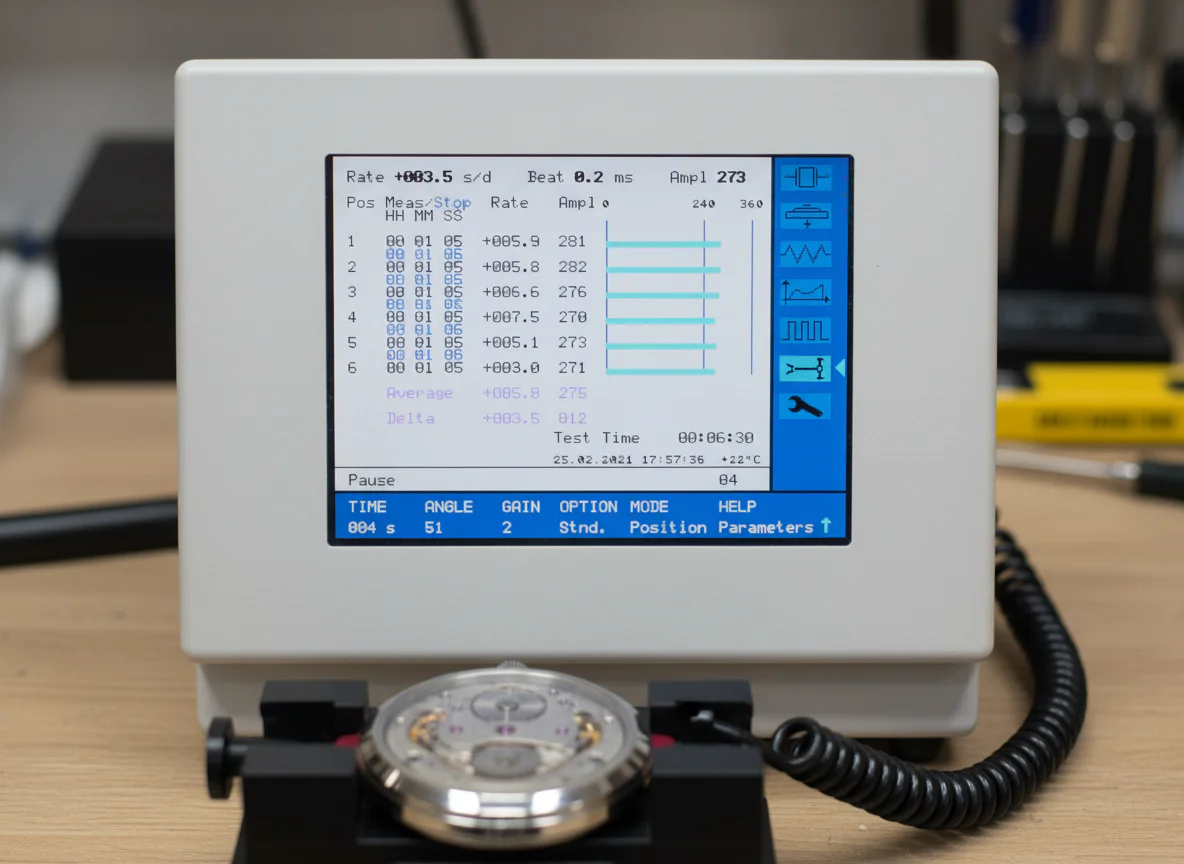 A timing machine reads rate and amplitude regardless of whether the caliber underneath is in-house or outsourced.
ETA movements have a multi-decade track record of reliable, serviceable performance across millions of watches. Some newer in-house calibers, chasing higher specs like longer power reserves or tighter chronometer tolerances, have had documented reliability issues in their first years of production. Neither fact makes a categorical case for one approach over the other.
Why It Matters for Servicing and Resale
The practical difference shows up years later, not on day one. An ETA or Sellita based movement can be serviced by almost any competent watchmaker worldwide, using widely available parts.
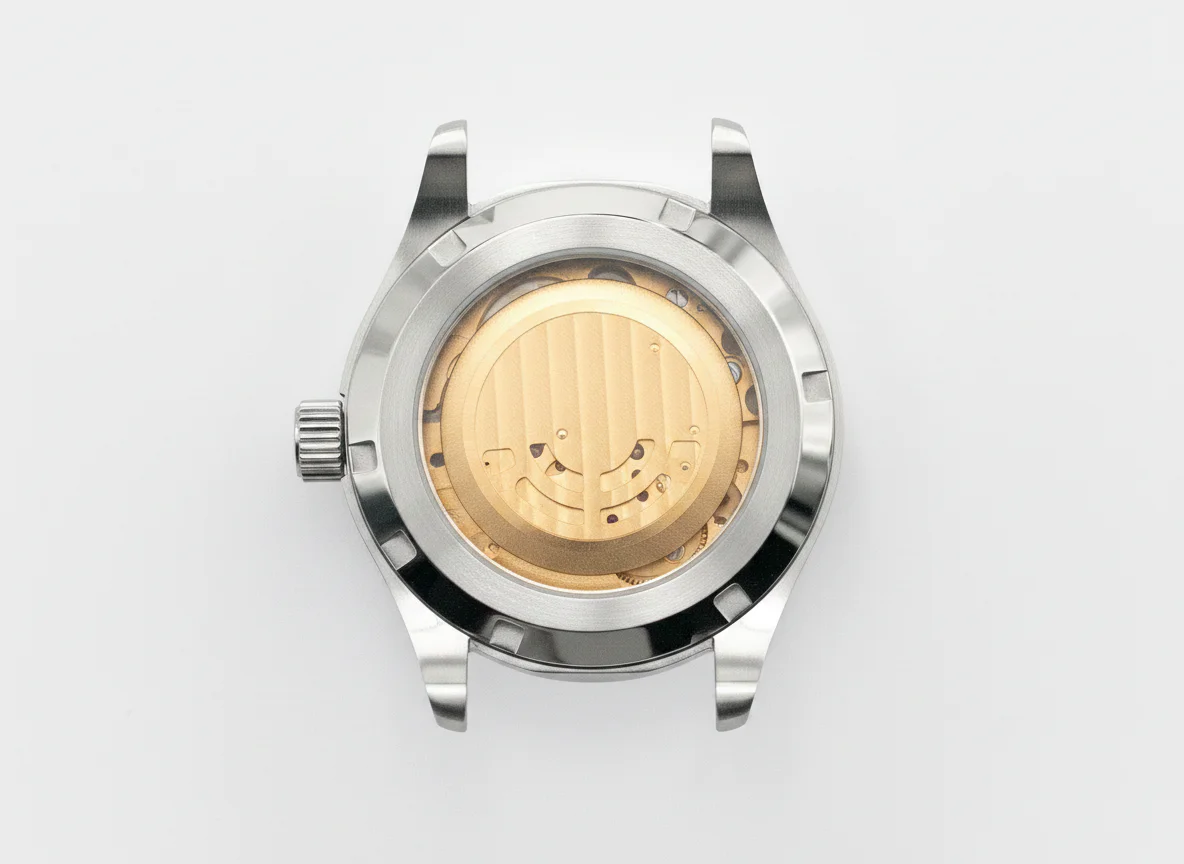 An exhibition caseback lets you see which type of movement you are actually buying, in-house or outsourced, before it matters at service time.
An in-house caliber, especially from a smaller independent brand, often requires the brand's own service centers and proprietary parts. That can mean longer turnaround times and higher service costs, a real cost of ownership that rarely shows up on the spec sheet at purchase.
Which Should You Care About When Buying
Buy based on the movement's actual track record and your own service access, not the words "in-house" or "manufacture" on a listing. A well-regulated ETA or Sellita caliber in a well-built case will outlast plenty of flashier in-house movements that never had time to prove themselves.
Browse authenticated pre-owned watches at 5dwatches.com.
Frequently Asked Questions
Is an in-house movement always better than an outsourced one?
No. Quality depends on design, component grade, and assembly, not simply where the caliber was made. Long-proven outsourced movements like the ETA 2824-2 have decades of reliable service history.
Why do some brands use outsourced movements instead of building in-house?
Cost and speed. Developing an in-house caliber requires years of engineering and significant tooling investment. Outsourced movements let a brand focus its budget on case design, finishing, and price instead.
Can an outsourced movement be modified enough to count as in-house?
There is no industry-wide line. Brands like Sinn and Tudor have historically modified outsourced base calibers and branded them under their own designations, occupying a gray zone between fully outsourced and fully in-house.
Does an in-house movement cost more to service?
Often, yes. In-house calibers, especially from smaller independent brands, may require the brand's own service centers and proprietary parts, while ETA or Sellita based movements can typically be serviced by any competent watchmaker.
How can I tell if my watch has an in-house or outsourced movement?
Check the brand's published specs for the caliber name and reference it against known ETA, Sellita, Soprod, or STP base numbers, or ask a watchmaker to identify it during a service through an exhibition caseback or full movement inspection.