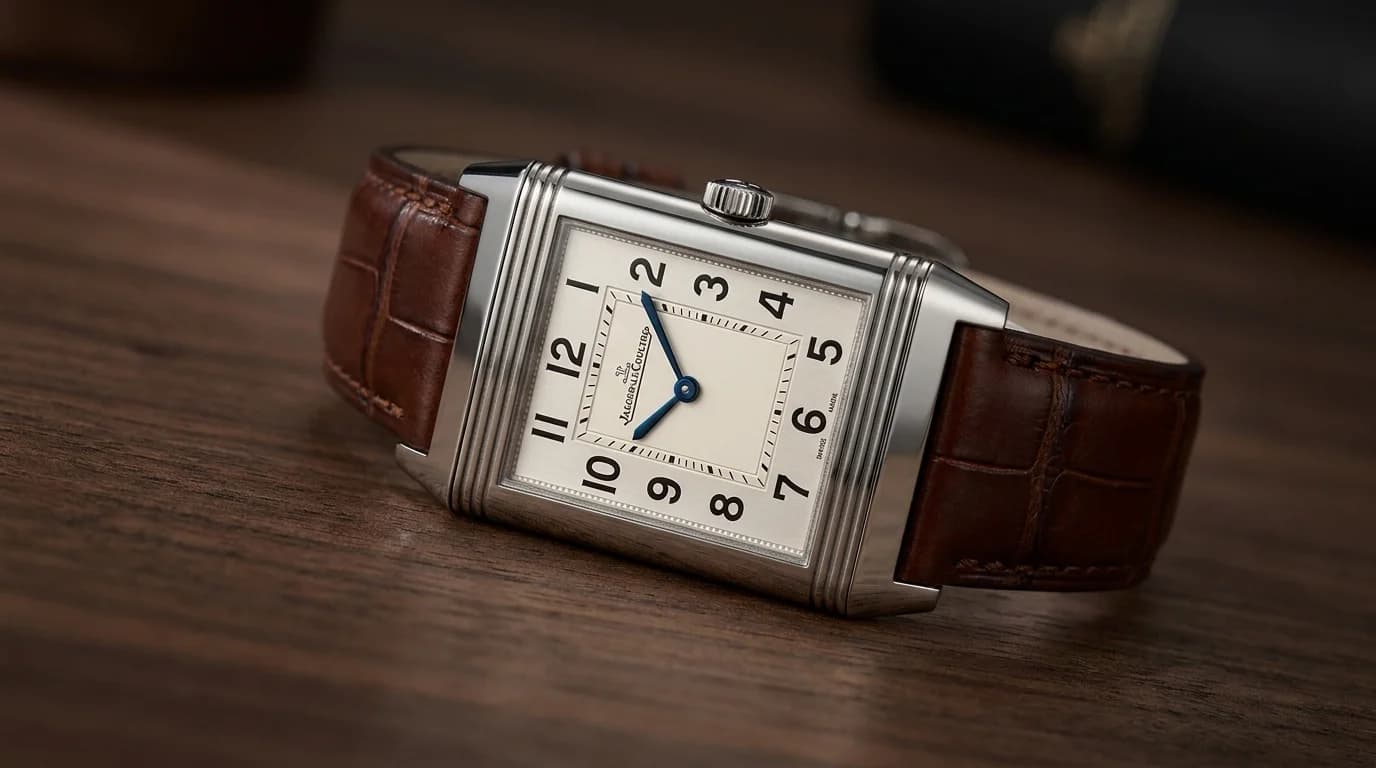
The Reverso has been in continuous production since 1931, longer than almost any other watch shape on the market. If you are shopping the current Jaeger-LeCoultre catalog for the first time, that history is also the confusing part. There are five distinct case families, prices that range from about 6,200 dollars to well past 16,000 dollars, and one shared quirk: the whole case rotates in its cradle.
This guide walks through every current Reverso line, what pre-owned buyers are actually paying, and which model fits which kind of collector.
The images in this article were generated with AI for illustration. They show recognizable Reverso models based on real reference photography, but are not photographs of a specific watch for sale.
The Short Answer
- Reverso Classic: the entry point, hand-wound, roughly $6,200 to $7,200 new depending on size.
- Reverso Tribute Small Seconds: adds a sub-dial and a slightly larger case, roughly $9,500 new.
- Reverso Tribute Duoface: the reason most people buy a Reverso, a genuine second dial on the flip side, roughly $12,100 new.
- Reverso Tribute Chronograph: the most complicated common reference, roughly $16,500 new.
- Grande Reverso Ultra Thin: the dress-watch flagship in gold, thinnest case in the lineup.
- Pre-owned Reversos across the board typically run 30 to 50 percent below retail, among the better discounts in Swiss watchmaking right now.
Why the Case Flips in the First Place
The Reverso was not designed to look interesting. It was designed to survive polo.
In 1931, a Swiss businessman named César de Trey was in India and met British army officers who kept cracking their watch crystals during polo matches. He challenged watchmaker Jacques-David LeCoultre to build something that could take the abuse.
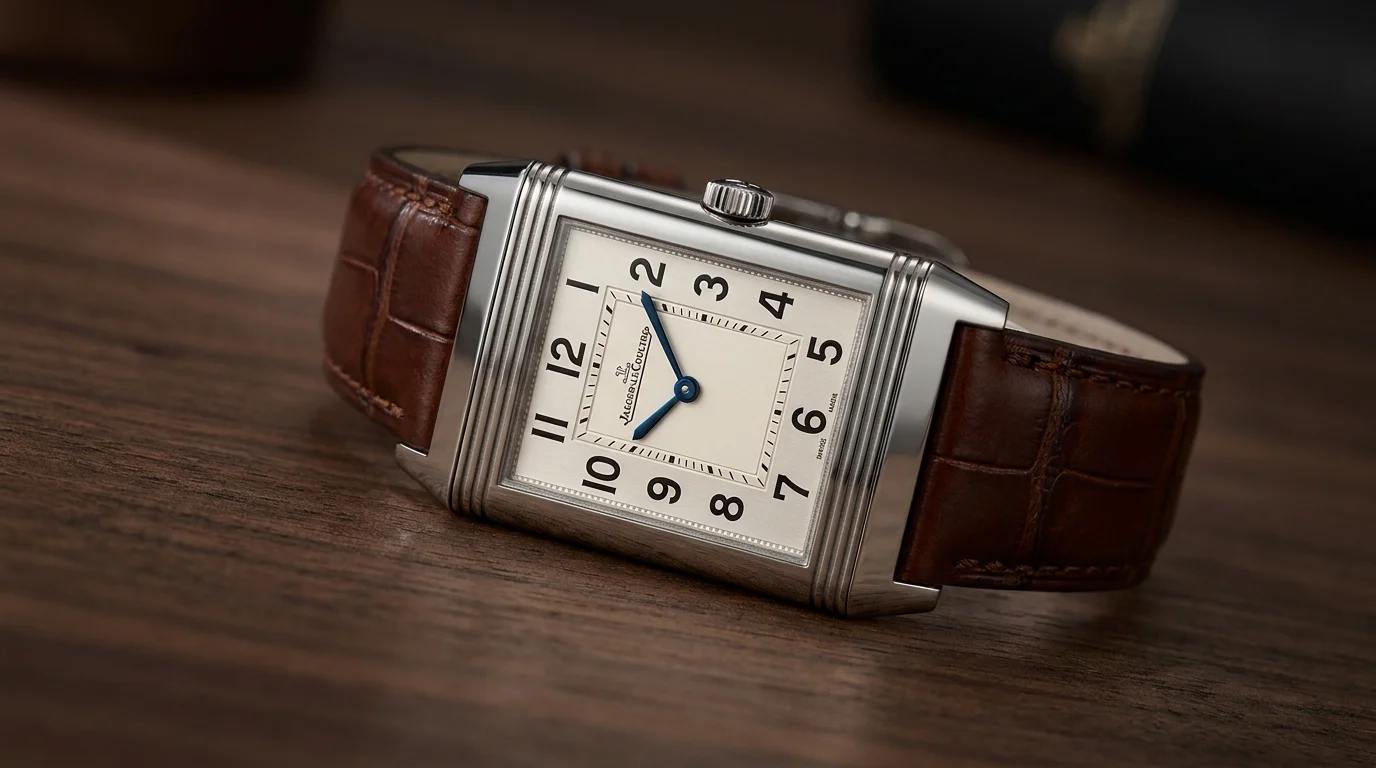 The Reverso's rectangular Art Deco case has barely changed in silhouette since the design solved a polo problem in 1931.
French engineer René-Alfred Chauvot patented the swivel mechanism that year. The watch slides in its cradle and rotates 180 degrees, tucking the crystal safely against the wrist and presenting a solid metal caseback instead. Nearly a century later, that same mechanism is still the reason people buy this watch.
The caseback became a canvas
Once JLC had a blank metal panel facing outward, engravers went to work on it almost immediately. Monogram plaques, family crests, regimental insignia. It became a personalization tradition that still drives sales today.
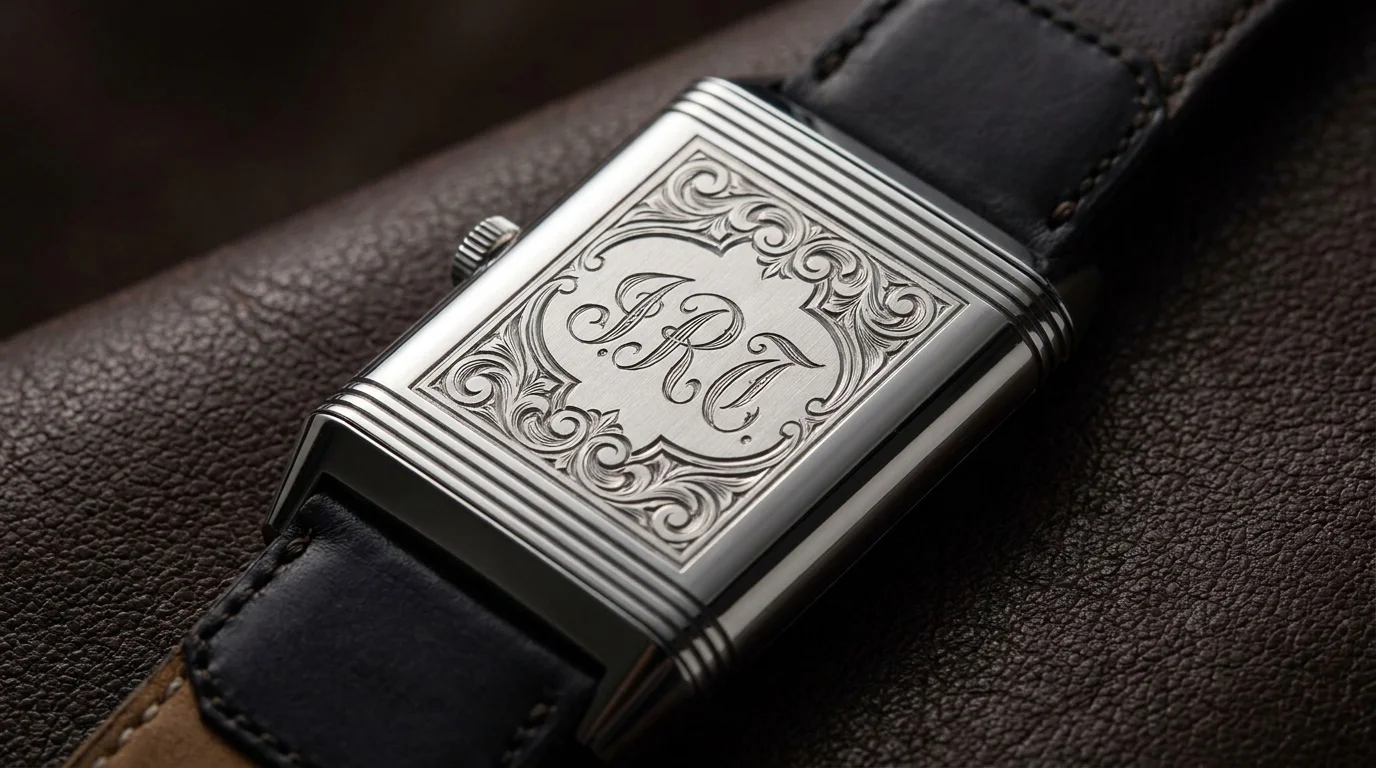 JLC's engraving service turns the Reverso's blank caseback into a monogram, crest, or custom design. This is still a standard boutique offering.
Later, some engineers realized the flip side did not have to stay blank. That idea eventually became the Duoface.
Reverso Classic: The Entry Point
The Classic is the closest thing to the original 1931 proportions still in production. Two sizes cover most buyers.
| Reference | Dimensions | Movement | Power reserve | Approx. retail |
|---|---|---|---|---|
| Classic Small | 38.8mm x 23.5mm x 7.3mm | Cal. 846, hand-wound | 38 hours | ~$6,200 |
| Classic Medium Thin | 40.1mm x 24.4mm x 7.2mm | Cal. 846, hand-wound | 38 hours | ~$7,200 |
Both use the same manual-wind caliber 846, and both are simple three-hand watches with a railway minute track and blued steel hands. There is no complication to justify, no extra dial to explain. This is the Reverso as a clean dress watch, and it is where most first-time buyers should look.
The honest tradeoff
A manual-wind 38-hour reserve means winding it most mornings if you wear it daily. Collectors used to automatic watches sometimes find this annoying for the first few weeks. Most say they stop noticing within a month.
The Reverso Classic Medium Thin. Cream dial, Arabic numerals, and a case shape that has defined the line since 1931.
Reverso Tribute Small Seconds: The Step Up
The Tribute line runs larger and adds a small seconds sub-dial, which for most people is the point where the Reverso starts to feel like a "real" purchase instead of an entry model.
- Dimensions: 45.6mm x 27.4mm x 8.5mm
- Movement: Cal. 822/2, hand-wound
- Power reserve: 45 hours
- Approx. retail: ~$9,500
Why the size jump matters
At 45.6mm long, this is a noticeably larger watch on the wrist than the Classic, even though the width only grows by a few millimeters. Try both in person before deciding. Some wrists that handle the Classic comfortably find the Tribute borders on too much watch for a dress piece.
Reverso Tribute Duoface: The Reason Most People Buy a Reverso
This is the reference that actually uses the flip mechanism for something functional. Flip the case and you get a genuine second dial, not just a blank plate.
- Dimensions: 47mm x 28.3mm x 9.1mm
- Movement: Cal. 854A/2, hand-wound
- Power reserve: 42 hours
- Approx. retail: ~$12,100
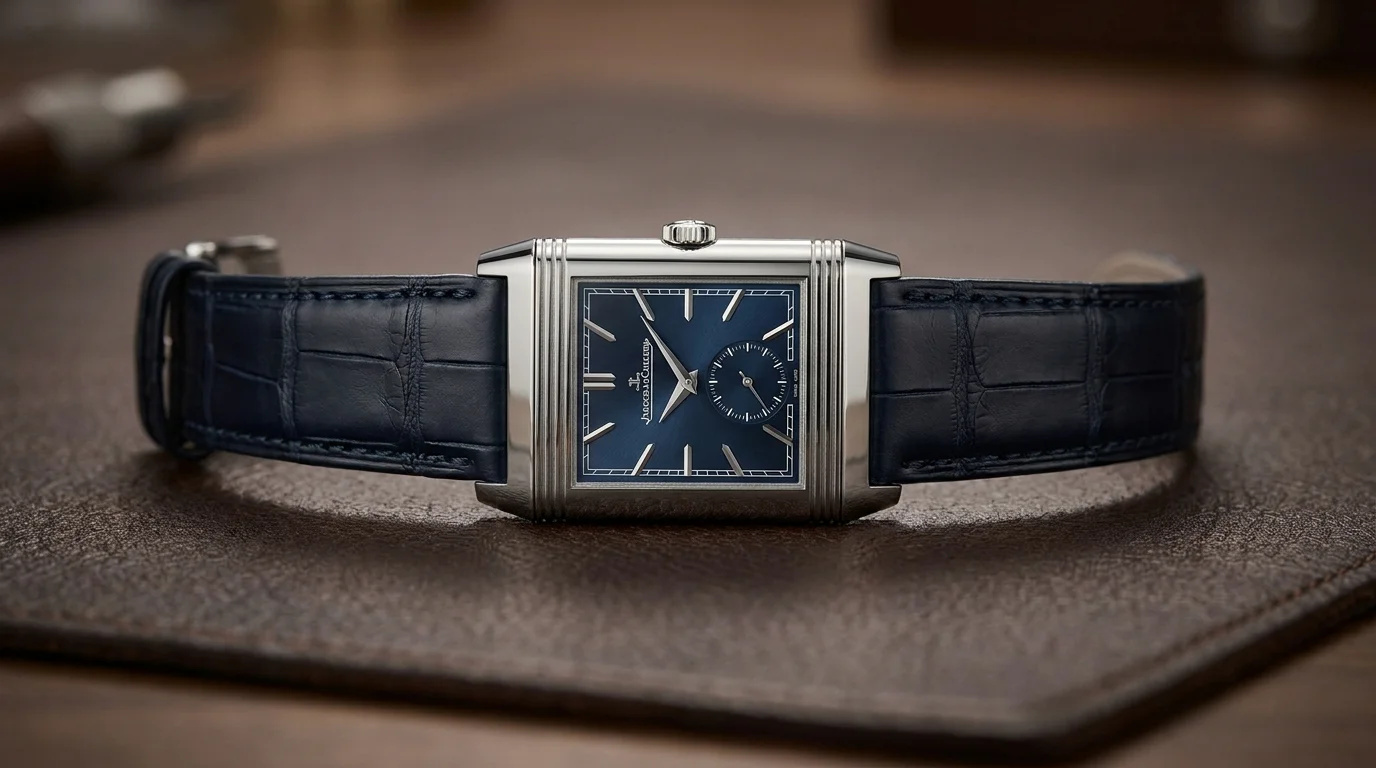 The Reverso Tribute Duoface. The second dial usually tracks a home time zone while the primary face tracks local time, a genuinely useful complication for frequent travelers.
The second dial is typically set to a home time zone, which makes this one of the few dress watches with a legitimate practical case for owning it beyond aesthetics. It is also the thickest and heaviest watch in the current lineup, so it wears with real presence.
Reverso Tribute Chronograph: The Complicated One
Add a chronograph module and the price climbs fast.
- Dimensions: 49.4mm x 29.9mm x 12.4mm
- Movement: Cal. 860, hand-wound
- Power reserve: 52 hours
- Approx. retail: ~$16,500
Is the complication worth the jump
Going from the Duoface to the Chronograph adds roughly 4,400 dollars for the stopwatch function and a busier three-register dial layout. Buy this one because you want a chronograph specifically, not because it is simply the next tier up. The Duoface already covers the "interesting mechanism" itch for less money.
Grande Reverso Ultra Thin: The Dress-Watch Flagship
Above the Tribute family sits the Grande Reverso Ultra Thin, JLC's answer to the question of how elegant this case shape can get.
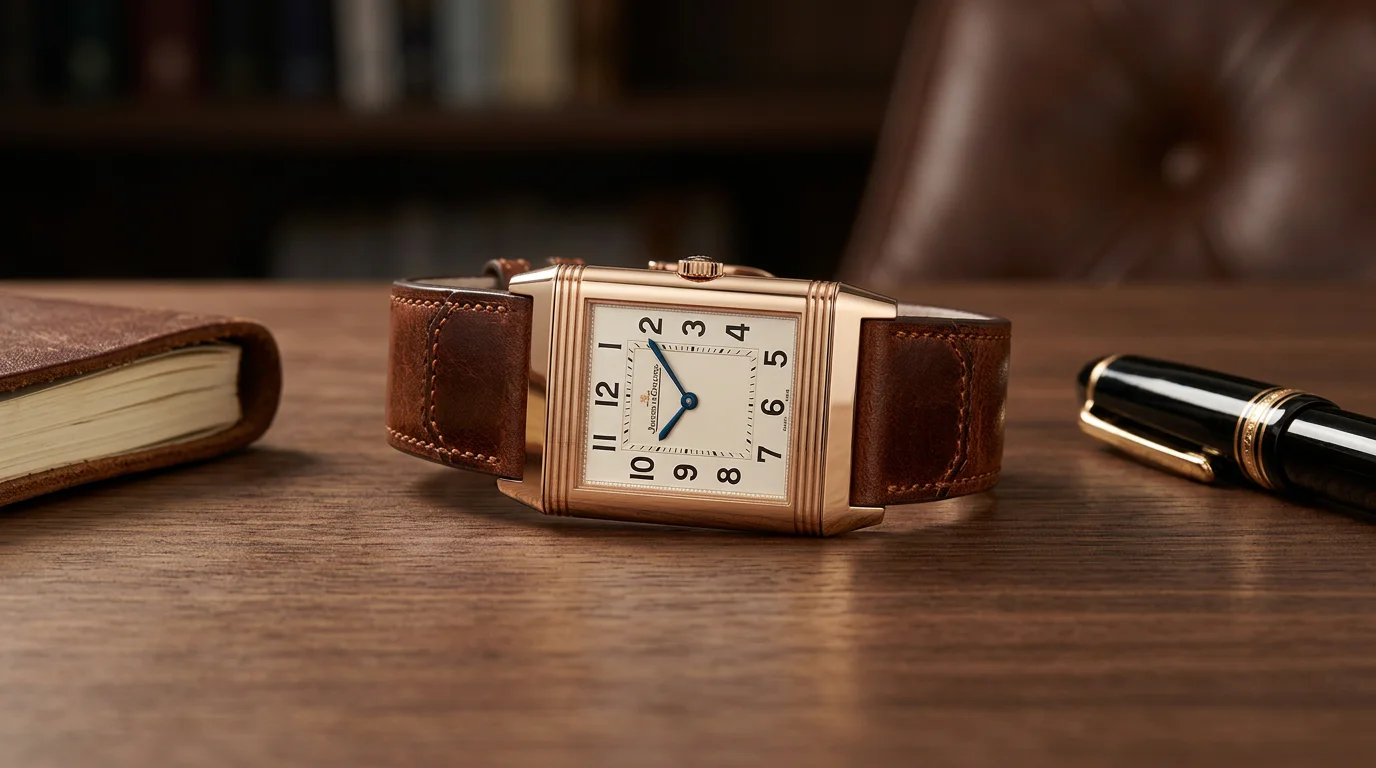 The Grande Reverso Ultra Thin in rose gold. Thinner and more formal than the Tribute line, built for a shirt cuff rather than a sport coat.
Where the Tribute line leans a little sportier with its gadrooned case sides, the Grande Reverso Ultra Thin is pure evening-wear elegance. Rose or yellow gold, a slimmer profile than any Tribute reference, and dial layouts that stay minimal rather than adding sub-dials. If ultra-thin dress watches are what draw you to this reference, our Piaget buying guide covers the other major manufacture chasing that same goal, with the Altiplano Ultra-Thin running an even slimmer 4.3mm case.
Pre-Owned Pricing: Where the Real Value Is
Reverso pricing on the pre-owned market tends to run meaningfully below retail, more than most Swiss brands offer right now.
| Reference example | New retail (approx.) | Typical pre-owned range |
|---|---|---|
| Reverso 270.2.54 (rose gold Duoface, 36.5mm) | varies | ~$14,500 |
| Reverso 230.8.77 (steel automatic, 50mm) | varies | ~$5,800 |
| Reverso Duetto (35mm, dual-dial ladies) | varies | ~$7,250 |
| Reverso Gran Sport Chronograph (43mm) | varies | ~$6,550 |
According to pre-owned dealer data, Reverso pricing typically runs 30 to 50 percent below contemporary retail, depending on reference, condition, and box and papers. That is a wider discount than you will find on comparable Rolex or Patek Philippe pieces, largely because the Reverso has a smaller, more specialized collector base rather than broad mainstream demand.
What that means if you are buying
If your priority is getting the most watch for the money, pre-owned is the obvious move here. A pre-owned Duoface at 30 to 40 percent off retail can land close to what a new Tribute Small Seconds costs.
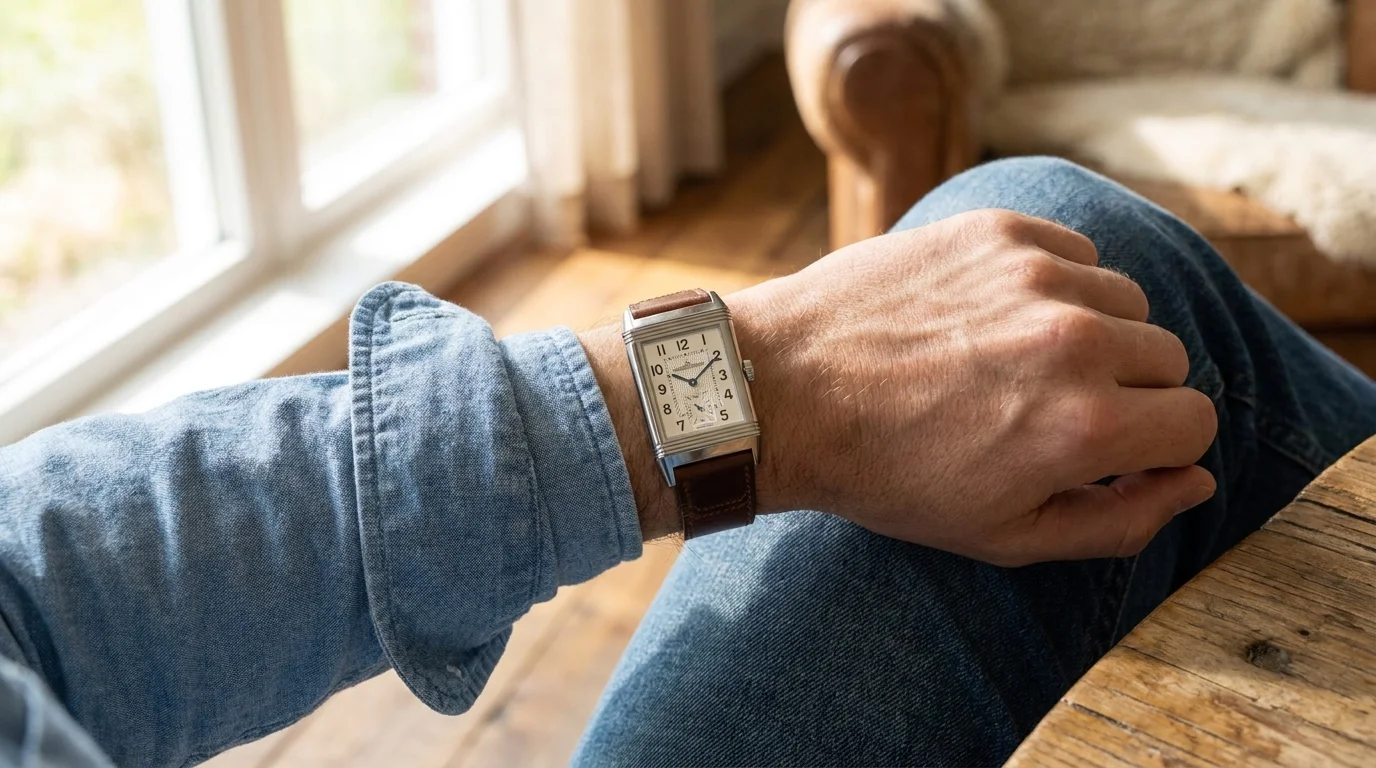 On the wrist, the Reverso's rectangular case wears thinner and more understated than its dimensions on paper suggest.
How the Reverso Compares to Its Closest Rival
The other rectangular dress watch every buyer eventually considers is the Cartier Tank. We covered that comparison in full in our Cartier Tank vs Reverso guide, which comes down to design icon versus flip-case original. The short version: the Tank starts cheaper and reads as the more universally recognized design, while every Reverso runs an in-house JLC manufacture movement and offers the flip mechanism the Tank simply does not have.
If you already know you want the flip case and the manufacture movement, this guide is the next step. If you are still deciding between the two shapes entirely, start with the comparison first.
What About the New 2026 References
JLC has also been actively expanding the Reverso platform this year. Our coverage of the 2026 Or Deco Solo Tempo release covers a limited run of new references that bring the case back closer to the original 1931 dimensions, smaller than the current Tribute lineup. Those are new-release watches at a premium over the core catalog covered here. If dimensions and history interest you as much as price, that piece is worth reading alongside this one.
Which Reverso Should You Buy
Buy the Classic if this is your first Reverso and you want the closest thing to the 1931 original at the lowest price. Buy the Tribute Small Seconds if you want a bit more dial and a bit more presence without adding complexity. Buy the Tribute Duoface if you travel and want the second dial to actually do something, or if you simply want the flip mechanism to matter beyond looking good. Buy the Tribute Chronograph if you specifically want a chronograph and are willing to pay for it. Buy the Grande Reverso Ultra Thin if your priority is a dress watch that disappears under a cuff.
Across every one of these, checking the pre-owned market first is worth the extra research time. The discounts here are real, and a well-documented used Reverso comes with the same in-house movement and the same century of design pedigree as one bought new.
Related Reading
- Cartier Tank vs Jaeger-LeCoultre Reverso: The Two Great Rectangular Dress Watches, Compared
- Jaeger-LeCoultre Brought the Reverso Back to 1930s Proportions: The Or Deco Solo Tempo
- The Piaget Buying Guide: Altiplano vs Polo, Every Current Reference
Frequently Asked Questions
What is the cheapest Jaeger-LeCoultre Reverso?
The Reverso Classic Small is the entry point at roughly $6,200 new, with dimensions close to the original 1931 case at 38.8mm by 23.5mm.
What does the Reverso Duoface actually do?
The Duoface has a genuine second dial on the reverse side of the case, typically set to track a second time zone. Flipping the case switches which dial faces outward, making it one of the few dress watches with a practical everyday function.
How much of a discount does a pre-owned Reverso get compared to retail?
Pre-owned Reverso pricing typically runs 30 to 50 percent below contemporary retail, a wider discount than comparable Rolex or Patek Philippe references, largely due to a smaller, more specialized collector base.
Is the Reverso a manual-wind or automatic watch?
Every current Reverso Classic, Tribute, and Grande Reverso Ultra Thin reference uses a hand-wound manufacture caliber. There is no automatic Reverso in the current core lineup.
What is the difference between the Reverso and the Cartier Tank?
Both are rectangular dress watches, but the Reverso's case physically flips in its cradle to reveal a second face or blank caseback, a mechanism dating to 1931. The Tank has a fixed case and generally starts at a lower price point. Our full comparison covers pricing and movements for both.