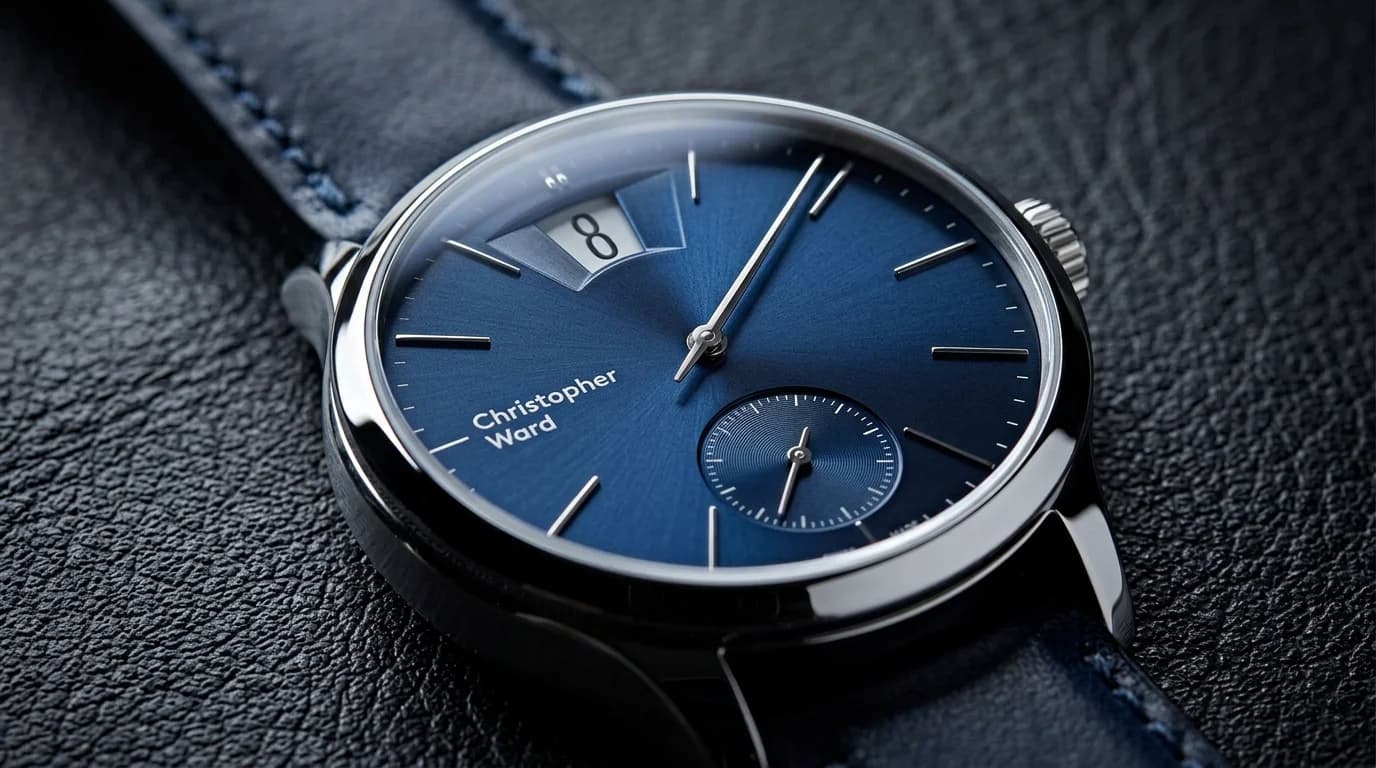
Most watch hands move continuously, sweeping or ticking their way around the dial in small steps. A jumping hour watch throws that out entirely for the hour display. Instead of a hand creeping toward the next number, a numeral sits in a window and stays completely still for fifty-nine minutes, then jumps to the next number all at once, instantly, with no in-between.
This post includes AI-generated images built from real reference photography of the watches discussed, verified by our team for accuracy before publishing.
The short answer
A jumping hour watch replaces the traditional hour hand with a numeral displayed in a small window, or aperture, on the dial. The number stays fixed in place and jumps to the next hour instantaneously at the top of each hour, driven by a separate mechanism that stores and releases energy independently of the main going train. The complication dates to an 1883 patent by Austrian engineer Josef Pallweber and has cycled through several revivals since, most recently in modern references from IWC and Christopher Ward.
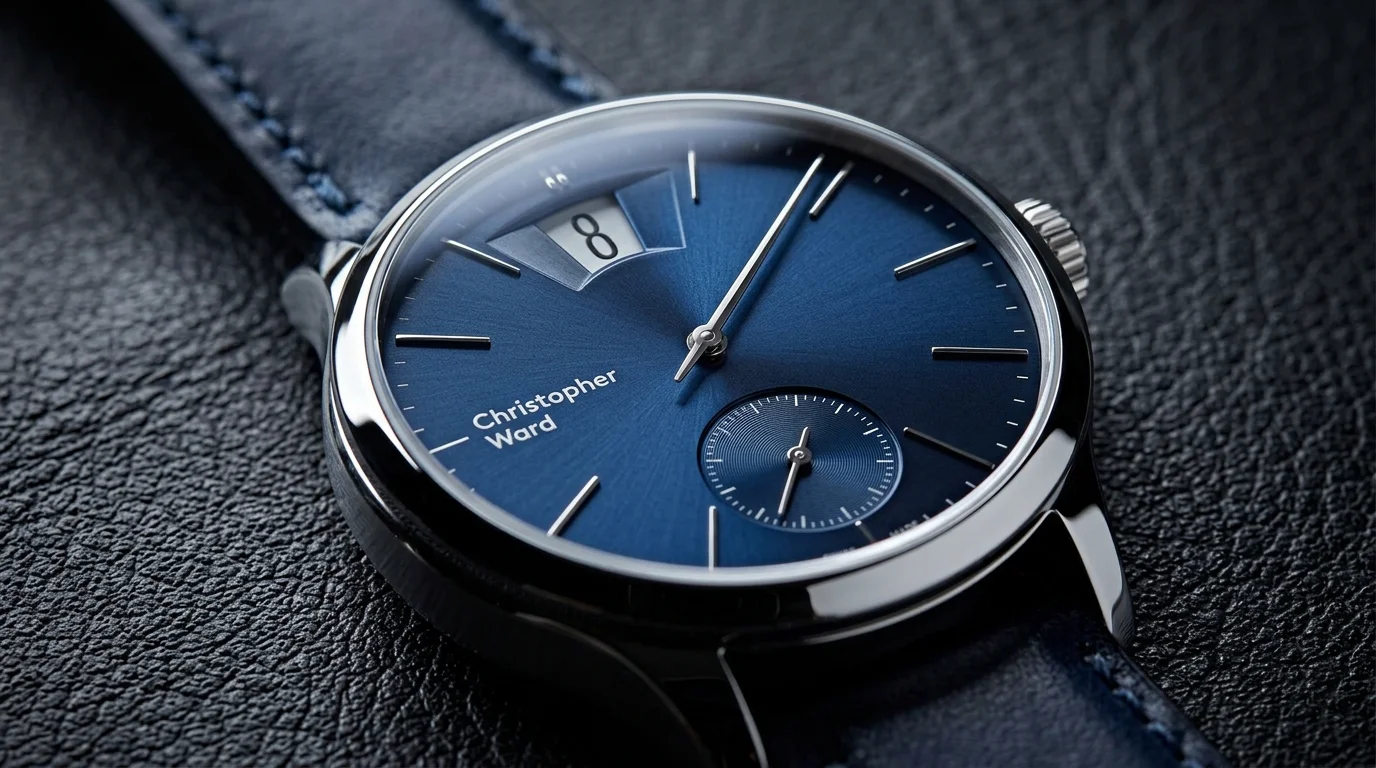 The hour sits in a fixed window instead of riding a hand around the dial. This is the entire visual identity of the complication.
Where the jumping hour came from
The jumping hour was patented in 1883 by Josef Pallweber, an Austrian watch engineer, initially for pocket watches. French watchmaker Blondeau is credited with an earlier, less documented version made for King Louis Philippe I decades before, but Pallweber's patent is what actually reached production. Manufacturers including IWC and Cortebert licensed his design and mass-produced Pallweber pocket watches through the late nineteenth century.
The complication resurfaced twice more. During the Art Deco era of the 1920s and 1930s, jumping hour wristwatches became a design statement, with pieces like Rolex's rose gold Marconi (1920) and Bulova's White Prince (1932) leaning into bold, multi-window dial layouts. It came back again in the 1970s, when jumping hour mechanical watches offered an affordable, purely mechanical answer to the era's expensive new digital LCD watches, mimicking their blocky digital look without a battery.
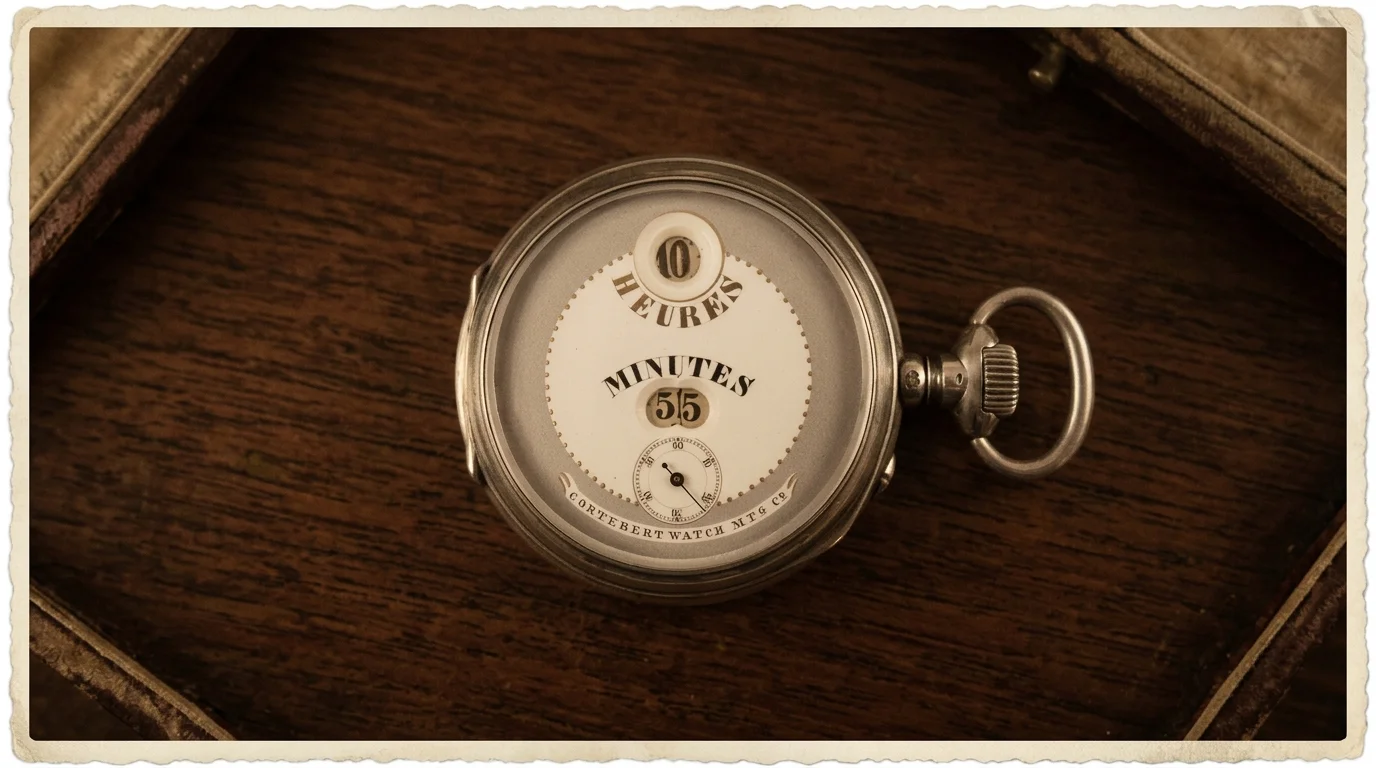 A Cortebert Pallweber pocket watch from the original 1880s production run. The digital-style layout predates electronics by over a century.
How the mechanism actually works
A jumping hour dial looks digital, but nothing about the mechanism is electronic. The trick is mechanical energy storage and a sudden release.
Two separate power systems: Higher-end jumping hour movements, like IWC's Caliber 94200, run two distinct mainsprings and gear trains. One powers the normal timekeeping and escapement. The second exists purely to advance the hour and minute display discs.
The release mechanism: Every sixty seconds, a release system unlocks the display train just long enough to advance it, then immediately relocks it. This is what produces the instantaneous jump instead of a gradual crawl.
Cascading discs: On more complex versions, a minute disc advances continuously in tens, and only once it completes a full rotation does it trigger the hour disc to jump to the next numeral. The hour numeral only ever moves once per hour, and it moves all at once.
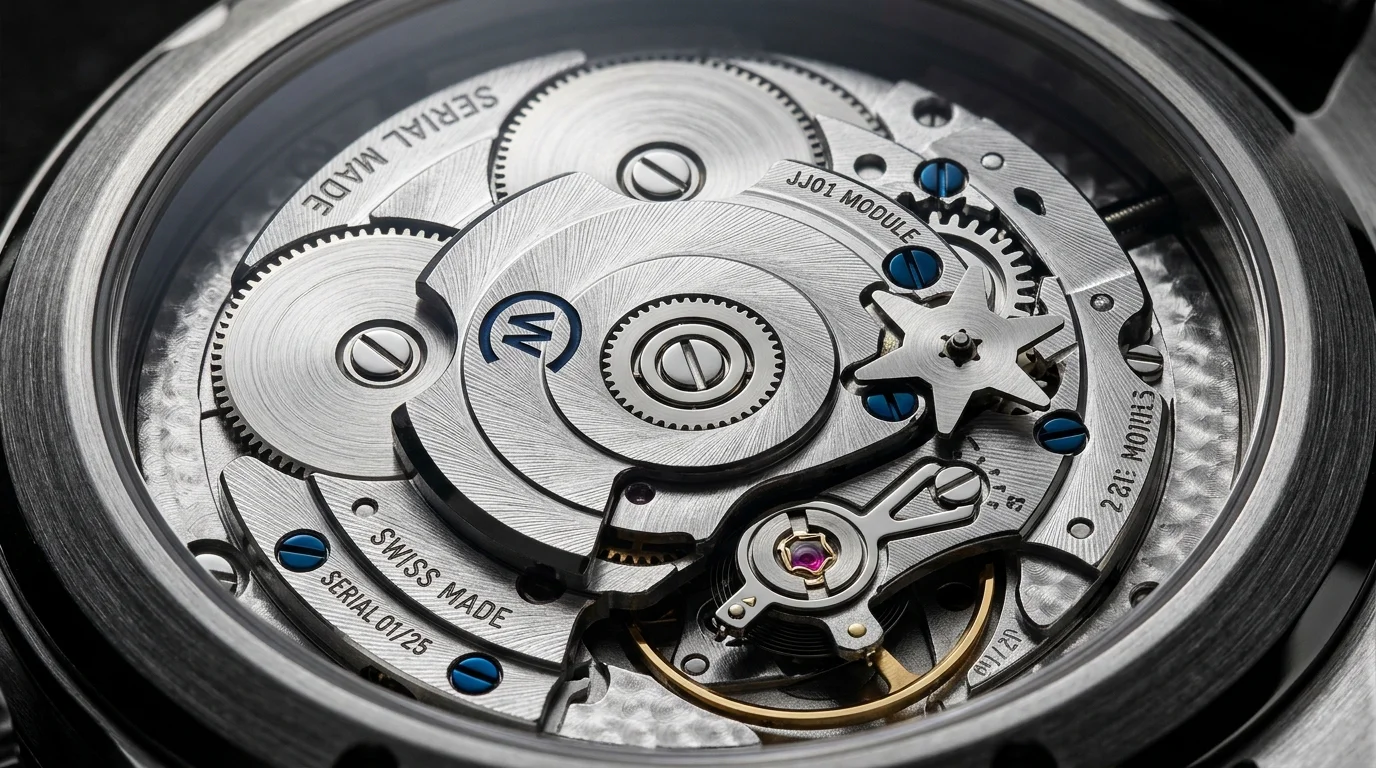 The jump happens because energy is stored, then released all at once, not because anything is electronic.
Why it is harder to build than it looks
A jumping hour movement is mechanically more demanding than a standard three-hand watch for one specific reason: instantaneous jumps require stored, releasable energy, not the smooth continuous torque a normal gear train delivers.
That is why most historical and modern jumping hour watches stop at jumping hours and sometimes jumping minutes, rather than attempting a jumping seconds display. A seconds hand that jumped once per second would need to store and release that same burst of energy sixty times a minute, which is an enormously harder engineering problem than most manufacturers have chosen to solve.
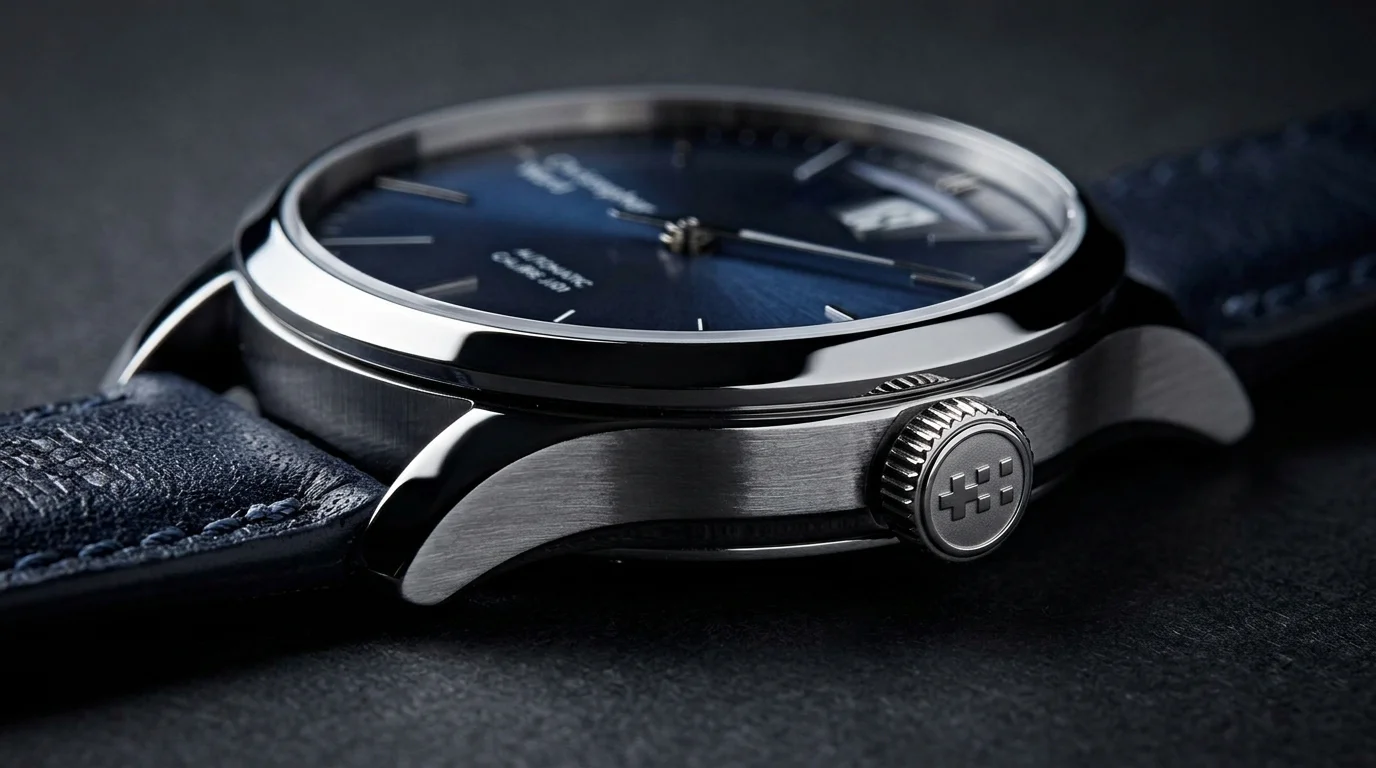 All that extra mechanism still has to fit inside a normal case. The crown you wind is doing more work than it looks like it is.
Modern references worth knowing
The complication is a small niche today, but it never fully disappeared, and a handful of current manufacturers still build it.
IWC Tribute to Pallweber Edition "150 Years": IWC's direct homage to Josef Pallweber's original patent, in a 45mm case running the in-house Caliber 94200 with dual mainsprings. Retail was around €24,000 at launch, roughly $26,000, positioning it as a genuine haute horology piece rather than a novelty.
Christopher Ward C1 Grand Malvern Jumping Hour: A far more accessible entry point at $1,595, built on a Sellita SW200-1 base fitted with Christopher Ward's own JJ01 jump hour module. The hour display sits in a window at 12 o'clock, and the jump triggers the moment the minute hand crosses 60.
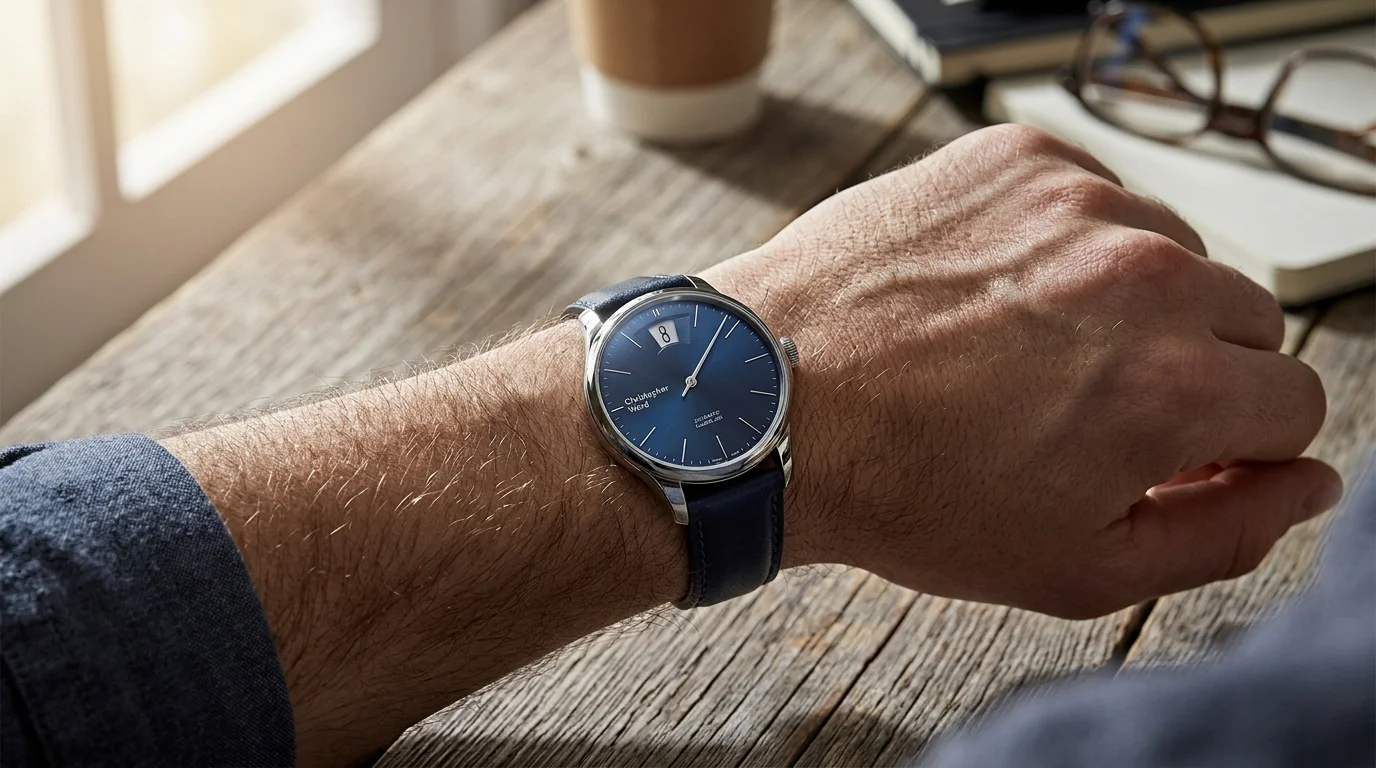 A jumping hour dial reads at a glance, no interpreting a hand position, which is part of why the format keeps finding new fans.
Between those two references sits most of the current jumping hour market: a small number of independents and specialists, and a much larger gap in the middle where mainstream brands have simply chosen not to build the complication at all.
Jumping hour at a glance
| Traditional hour hand | Jumping hour | |
|---|---|---|
| Hour display | Continuous sweep or small steps | Fixed numeral, instant jump once per hour |
| Mechanism | Simple, single gear train | Requires stored energy and a release mechanism |
| Reading the time | Interpret hand position | Read the numeral directly |
| Origin | Centuries old, standard format | Patented 1883, Josef Pallweber |
| Modern examples | Nearly every mechanical watch | IWC Tribute to Pallweber, Christopher Ward C1 Grand Malvern |
FAQ
What is a jumping hour watch?
A jumping hour watch displays the hour as a numeral in a small window on the dial rather than with a traditional hand. The numeral stays fixed for a full hour, then jumps instantly to the next number at the top of each hour.
How does the jumping hour mechanism work?
A separate energy store, often a second mainspring, powers a release mechanism that unlocks and advances the hour display once every sixty minutes, producing an instantaneous jump rather than continuous movement.
Who invented the jumping hour complication?
Austrian engineer Josef Pallweber patented the jumping hour mechanism in 1883, initially for pocket watches. IWC and Cortebert later licensed and mass-produced his design.
Are jumping hour watches accurate?
Yes. The jumping display only changes how the time is shown, not how it is kept. The underlying timekeeping train runs on the same escapement and balance wheel principles as any other mechanical watch.
Why don't more brands make jumping hour watches?
The complication requires a genuinely more complex movement architecture, with stored energy and a precise release mechanism, than a standard hand-driven display. That extra engineering cost is likely why most mainstream manufacturers have not added it to their catalogs.
Related reading
For another complication built around how a watch stores and releases energy, see What Is a Mainspring and Barrel? A Watch's Power Source, Explained. For the dial layout on the opposite end of the "unconventional display" spectrum, read What Is a Regulator Dial? The Watchmaker's Layout, Explained. And for how the escapement underneath any of these movements actually functions, see What Is an Escapement? The Beating Heart of a Watch, Explained.