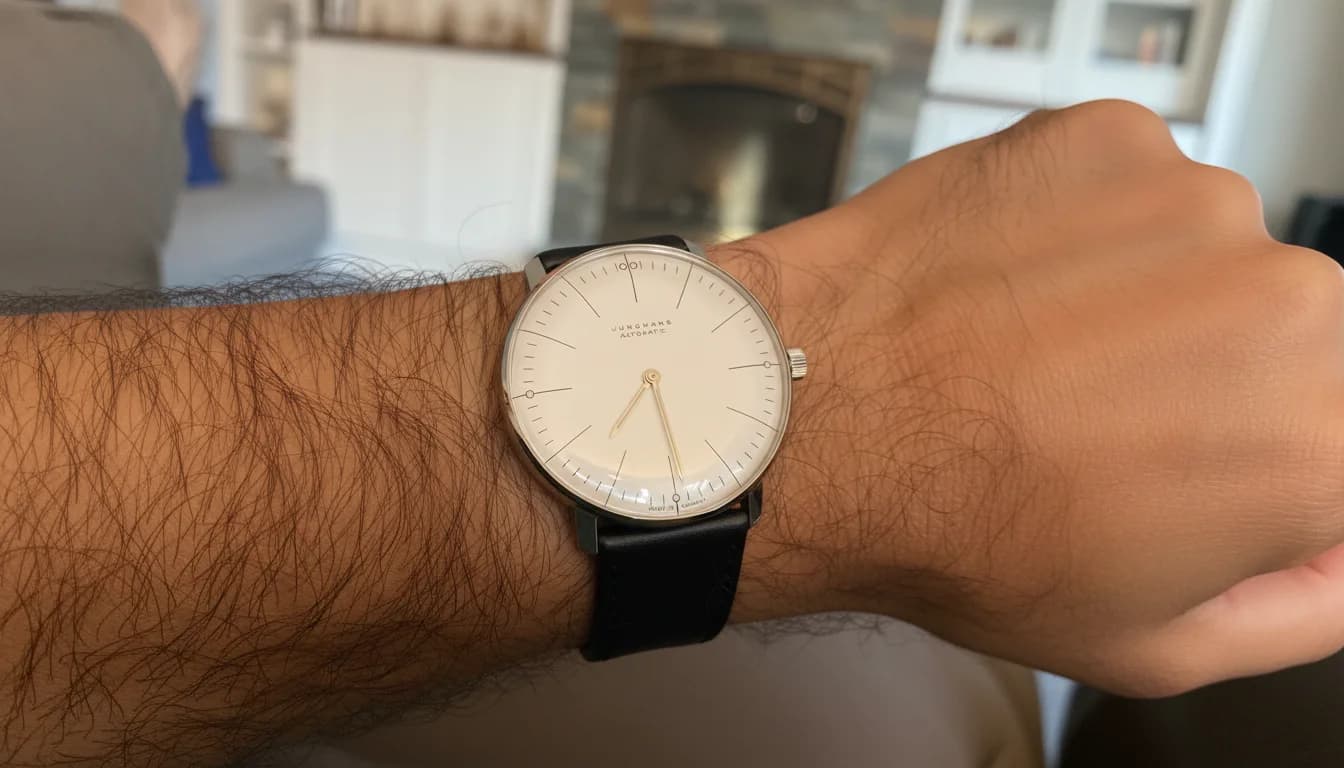
The Short Answer
Junghans Max Bill is a collection of Bauhaus-descended dress watches built around designs the Swiss architect and Ulm School of Design founder Max Bill created for the German brand starting in 1961. The current lineup runs from a 34mm hand-wound Caliber J805.1 (ETA 2801-2 based) at roughly $800 to $1,400, through a 38mm automatic Caliber J800.1 (ETA 2824-2 based) at $1,045 to $1,450, up to a 40mm Chronoscope with Caliber J880.2 (ETA 7750 based) at $2,100 to $2,300. All of it chases the same idea: strip a dial down to what actually tells time, and nothing else.
The honest read: real German assembly and genuinely calm design at a fair price, with two real trade-offs. Water resistance tops out around 30 to 50 meters, and Nomos builds the same aesthetic idea with in-house movements instead of ETA bases, for more money.
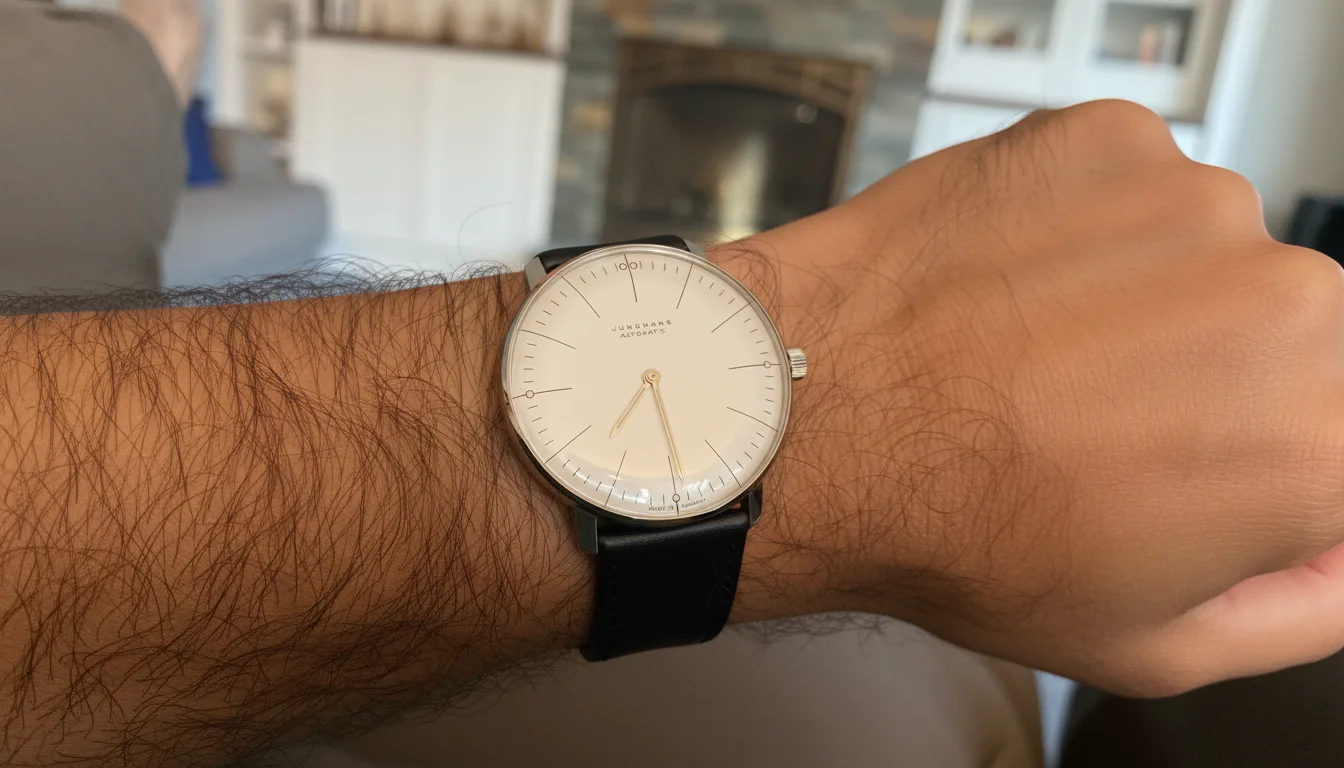 The dial has almost nothing on it. That is the entire design argument.
The watch photos in this article were generated with AI image tools, conditioned on real reference photography of Junghans Max Bill watches so the case shapes, dial layouts, and construction details are accurate to the real watches.
Who Max Bill Actually Was
Max Bill was a Swiss architect, artist, and industrial designer trained at the Bauhaus under Walter Gropius and Josef Albers. After the war he co-founded and led the Ulm School of Design, the postwar successor to the Bauhaus built on the same functionalist, no-decoration-without-purpose principles. His watch designs for Junghans, which debuted in 1961, are frequently discussed alongside Dieter Rams' "less but better" work at Braun from the same era, two parallel expressions of the same German design instinct.
Junghans itself predates Bill by a century. Erhard Junghans founded the company in 1861 in Schramberg, in Germany's Black Forest region, and by 1903 it was the largest watch factory in the world with over 3,000 employees. That manufacturing scale is part of why Junghans could put Bill's minimalist designs into real production runs rather than one-off design pieces.
The Automatic: The Core of the Line
The Max Bill Automatic runs 38mm in steel, with black or gold PVD case options, and houses the Caliber J800.1, an ETA 2824-2 based movement with a 38-hour power reserve. Pricing runs $1,045 to $1,450 depending on dial finish and strap. The dial carries only baton markers and a small two-line "JUNGHANS AUTOMATIC" wordmark below 12, nothing else.
A 34mm Kleine Automatic version exists for smaller wrists, using the same J800.1 movement and adding a date window at 3 o'clock, priced around $1,070.
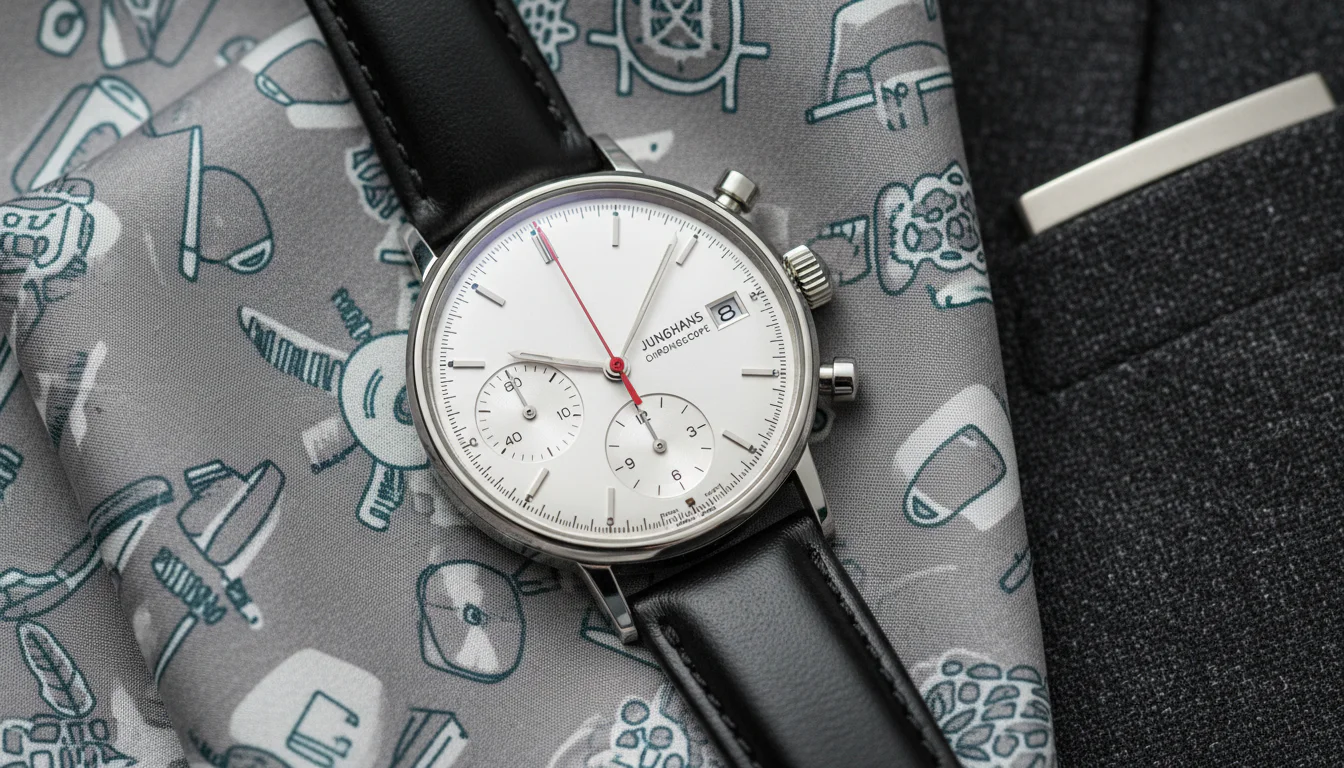 The Chronoscope is the one Max Bill watch built for someone who actually wants a complication.
The Handwound: The Purest Version
The Max Bill Handwound is the smallest and thinnest watch in the line, 34mm wide and 9mm thick, running the hand-wound Caliber J805.1, an ETA 2801-2 base with a 42-hour reserve. It ships with a domed plexiglass crystal as standard, with sapphire available on some references, and prices land between $800 and $1,400.
This is the reference most collectors point to when they talk about the "real" Max Bill design: no date window, no complication, just a dial, two hands, and a crown.
The Chronoscope: A Complication, Kept Calm
The Max Bill Chronoscope is the largest model at 40mm and the only chronograph in the lineup, built on the Caliber J880.2, an ETA 7750 base with a 48-hour reserve. It keeps the tri-compax layout restrained rather than busy, and prices run $2,100 to $2,300.
A 2024 Bauhaus sub-line added a Regulator Bauhaus (40mm, Caliber J800.5, around EUR 2,375) alongside refreshed Automatic and Chronoscope Bauhaus references, all finished with matte white dials and Bauhaus-red accents.
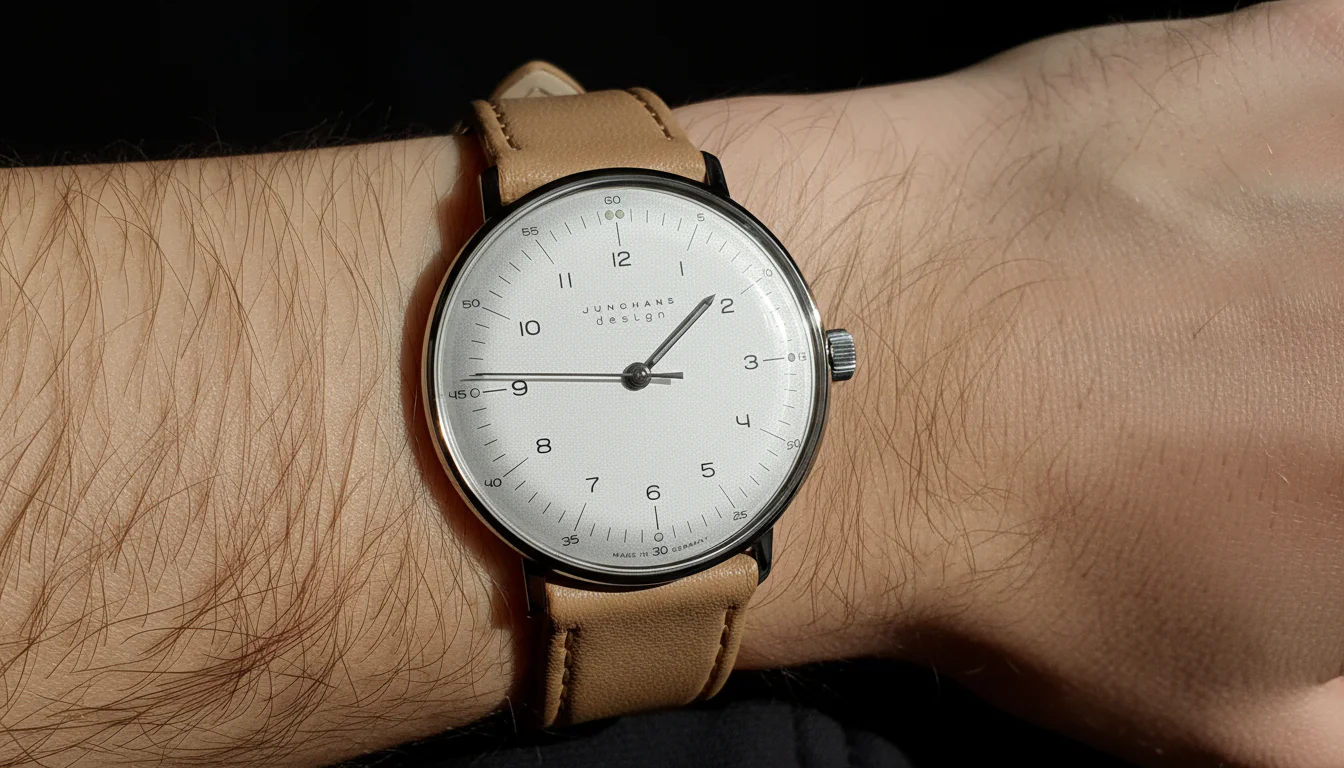 Some Max Bill references use printed numerals instead of batons. Both read as unmistakably Bauhaus.
Where the Line Falls Short
An honest read has to cover what a buyer gives up, and there are two real issues.
Water resistance across most Max Bill references sits at a modest 30 to 50 meters, which rules out swimming and limits the line to daily wear and the occasional splash. A reviewer at Watch Clicker also flagged the domed plexiglass-with-sapphire-coating crystal used on several references as the line's weak point: it scratches more easily than a full sapphire crystal and cannot be polished out like a standard acrylic crystal, so scratches on that crystal are effectively permanent.
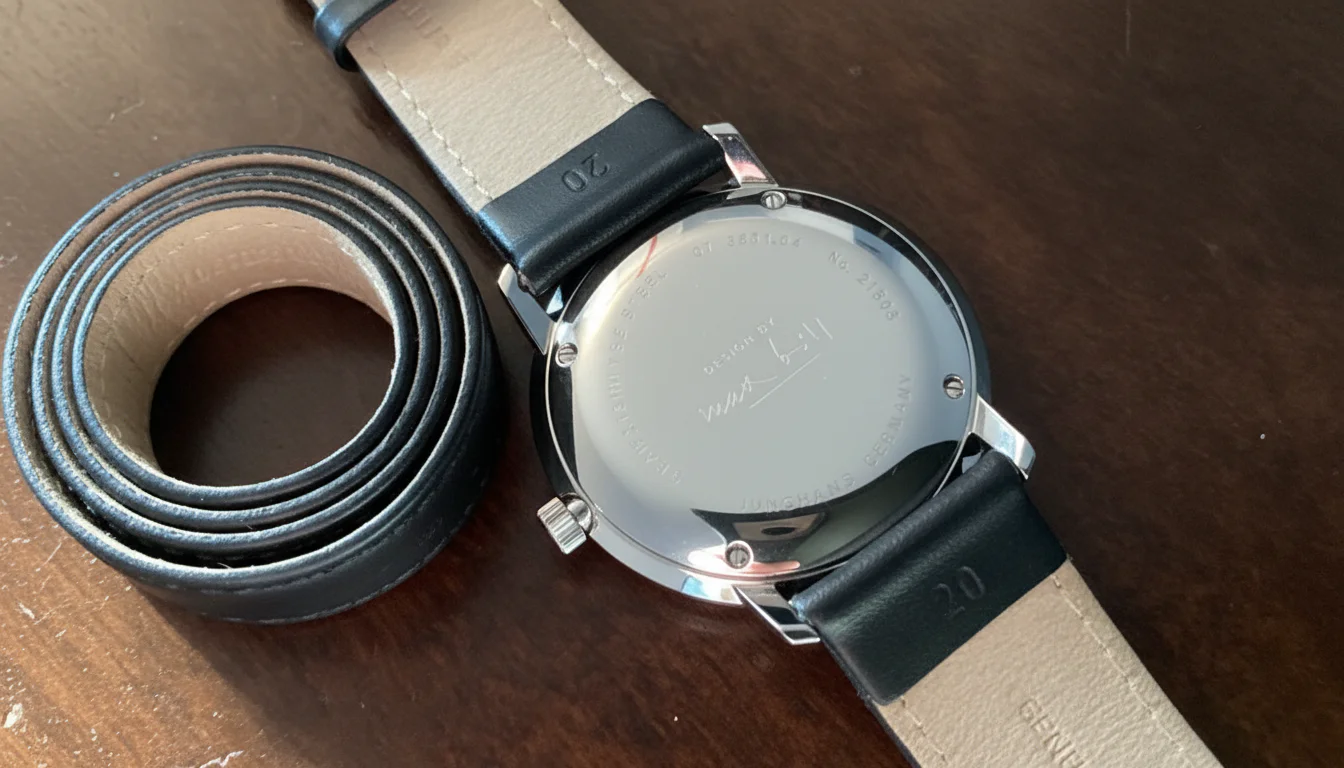 Every Max Bill caseback carries his engraved signature, a small detail that matters more to some buyers than the movement spec sheet.
The bigger strategic comparison is Nomos. Both brands build Bauhaus-descended German dress watches, but Nomos uses in-house movements like the DUW 3001 rather than ETA-based calibers, which is the core reason a Nomos Tangente costs meaningfully more than a comparable Max Bill. Buyers choosing between the two are really choosing between Junghans' lower price and Nomos' in-house engineering, not between two different design philosophies.
Should You Buy One
Max Bill makes sense for a buyer who wants genuine Bauhaus design history on the wrist, at a price well under what Nomos or an haute horlogerie brand would ask, and who is comfortable with modest water resistance and an ETA-based movement rather than an in-house caliber.
It makes less sense for a buyer chasing in-house manufacturing as a priority, or anyone who needs real water resistance for swimming rather than daily wear.
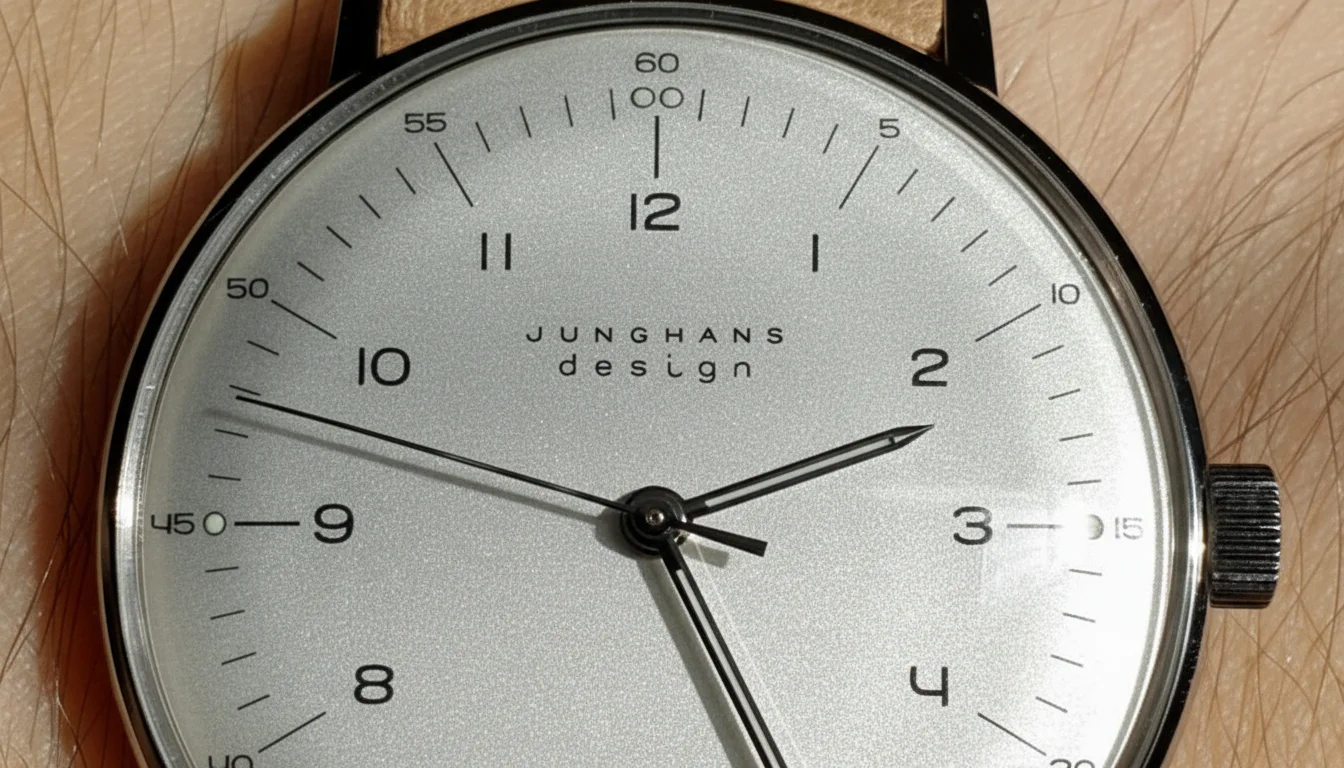 Up close, the restraint is the whole point. Nothing on this dial exists that does not need to.
FAQ
Who designed the Junghans Max Bill watch?
Max Bill, a Swiss architect and Bauhaus-trained designer who led the Ulm School of Design, created the original watch designs for Junghans starting in 1961. The line still carries his engraved signature on every caseback.
What movement does the Junghans Max Bill use?
It depends on the model. The Handwound uses Caliber J805.1 (ETA 2801-2 based), the Automatic uses Caliber J800.1 (ETA 2824-2 based), and the Chronoscope uses Caliber J880.2 (ETA 7750 based).
How much does a Junghans Max Bill cost?
Prices run from roughly $800 for the Handwound up to $2,300 for the Chronoscope, with the Automatic landing in the $1,045 to $1,450 range depending on finish.
Is the Junghans Max Bill water resistant enough to swim in?
No. Most references sit at 30 to 50 meters of water resistance, enough for daily wear and rain, not for swimming or diving.
How does the Junghans Max Bill compare to a Nomos Tangente?
Both are Bauhaus-descended German dress watches, but Nomos uses in-house movements like the DUW 3001 rather than Junghans' ETA-based calibers. That difference is the main reason a Tangente costs more than a comparable Max Bill.