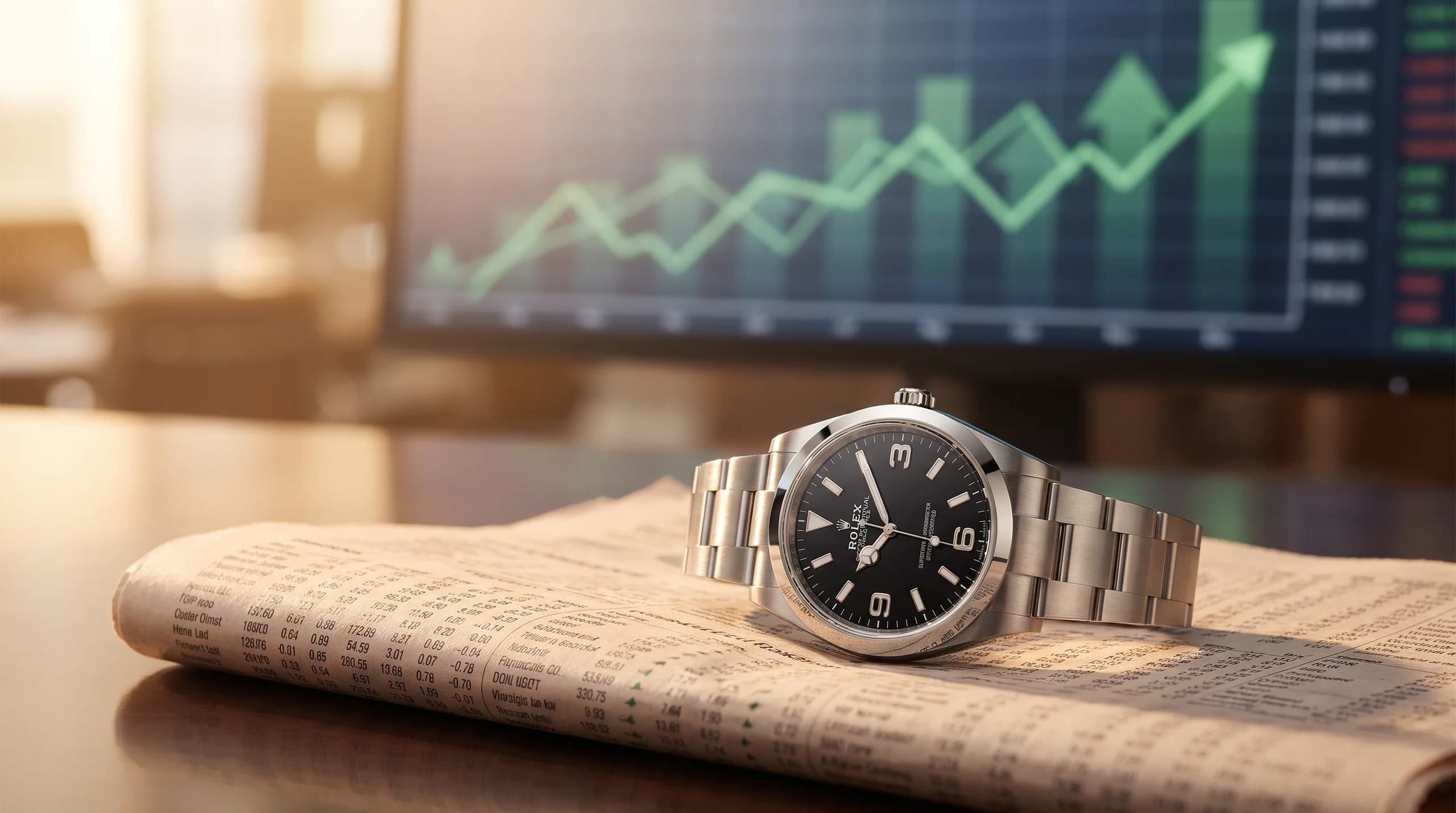
Halfway through 2026, the watch market is not simply up or down. It is splitting. The headline numbers look calm, the secondary market index sits near its highs, and Swiss export figures wobble around flat. Underneath that average, the top and the middle are moving in opposite directions. Here is a working dealer's read on where the market actually stands at mid-year.
This article includes images generated with AI to illustrate specific watch models and settings. Every watch shown is based on a real, referenced model.
The short answer
The secondary market spent the first half of 2026 grinding back toward its 12-month high after a brief May dip, but the recovery is narrow. A small group of references carries the index while the mid-luxury middle softens. Swiss exports are down modestly for the year, distorted by a 2025 rush ahead of US tariffs. The real story is a market dividing into a firm top end and a weaker middle.
 At mid-year 2026 the index looks stable, but the strength is concentrated in a few names.
The secondary market: a narrow recovery
The WatchCharts Overall Market Index tells a stop-start story. April delivered the broadest positive month since the 2022 peak unwound, with the large majority of tracked brands rising. May then gave the year its first down month, and Rolex sport models led the pullback. By June the index had climbed back near its 12-month high.
That round trip matters less than what is under it. The recovery is being carried by a handful of blue-chip references, not a broad tide. We covered this concentration in our read on why the June recovery is narrower than the index admits, and on the May pause that hit Rolex sport hardest.
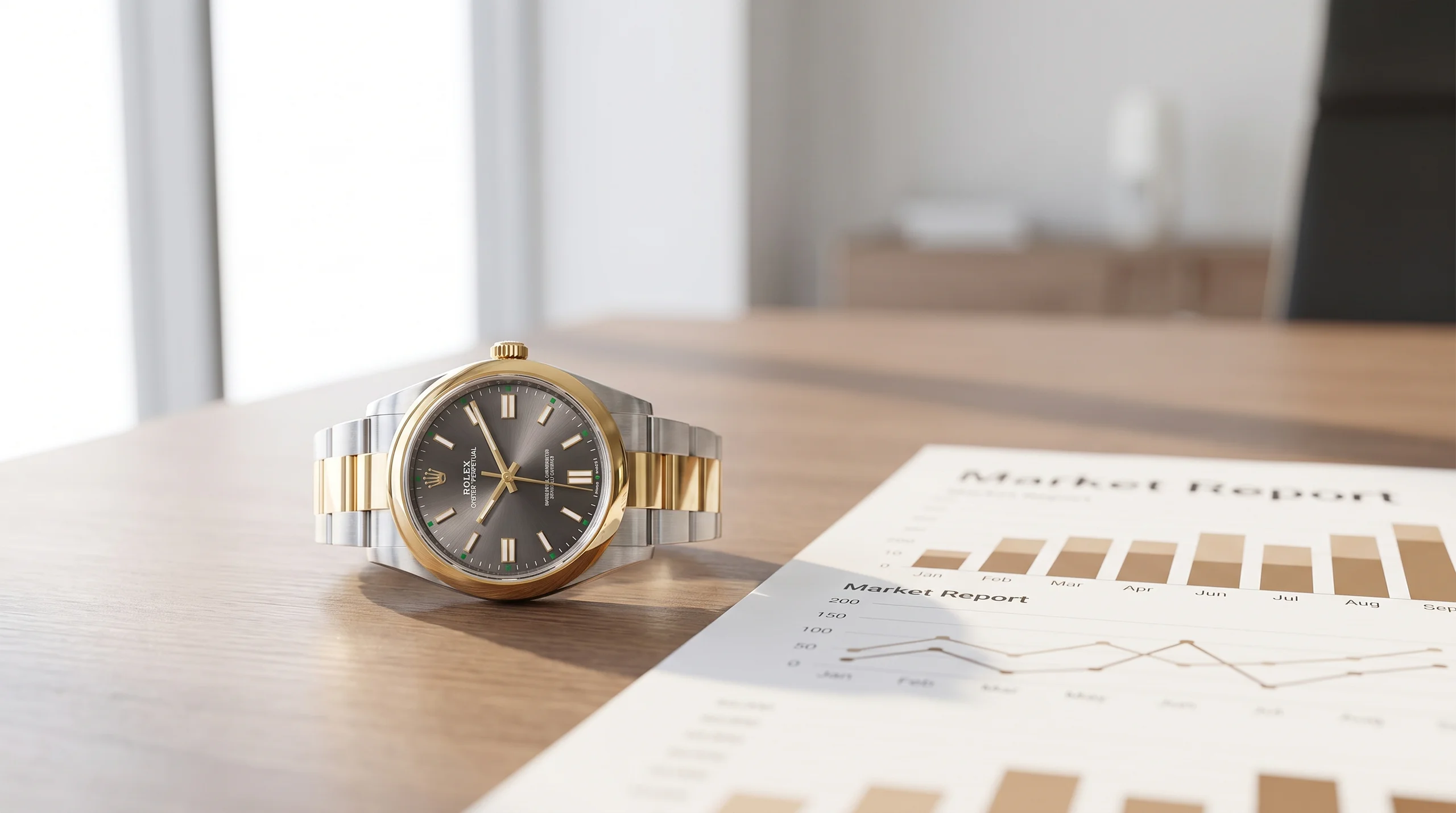 The Rolex core held its ground through the first half, even as sport models swung.
Swiss exports and the tariff distortion
The export data reads worse than the reality. Swiss watch exports fell roughly 4% over the first four months of 2026, but that number is skewed. A rush of shipments in late 2025, ahead of new US tariffs, pulled demand forward and left an unflattering comparison this year.
The US remains the swing market. Tariff relief early in 2026 helped, then the picture wobbled again, and the month-to-month prints have been noisy ever since. For a buyer, the takeaway is simple: judge the trend, not any single distorted month.
The barbell: top firm, middle soft
The clearest pattern of 2026 is bifurcation. The very top of the market, led by Rolex, Patek Philippe, and Audemars Piguet, holds firm. Steady demand for the Nautilus, Aquanaut, and Royal Oak keeps the ceiling intact even when momentum pauses.
 The mid-luxury middle is where prices have softened, which is where buyers find room.
The middle is a different story. Mid-luxury brands and secondary references have softened, which is exactly where patient buyers find value. We laid out this framework in our piece on the barbell market splitting in two. If you are buying to wear rather than to flip, the soft middle is the opportunity of 2026.
Brand by brand at mid-year
Rolex remains the anchor. Sport models ran up early, gave some back in May, and steadied, while the everyday range like the Oyster Perpetual and Explorer stayed dependable. Patek and Audemars Piguet ended long winning streaks but did not break, holding near their highs.
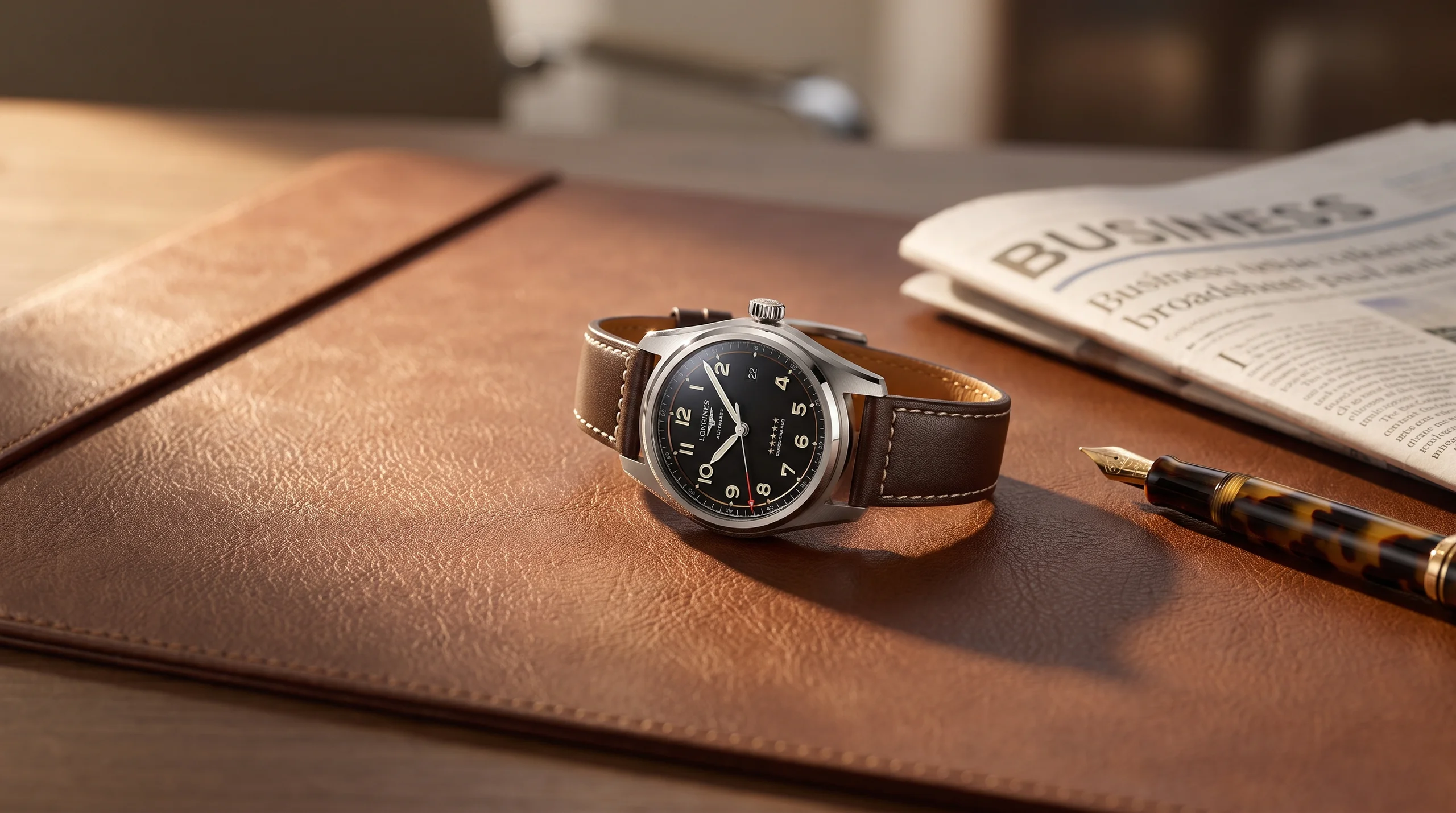 Value-focused Swiss names are quietly some of the smartest buys in a soft middle.
Omega stayed steady and buyable, with the Speedmaster still the easiest legend to own. Tudor kept its value narrative intact through its centenary year. The independents and mid-tier brands felt the most pressure, which is the softness the barbell predicts.
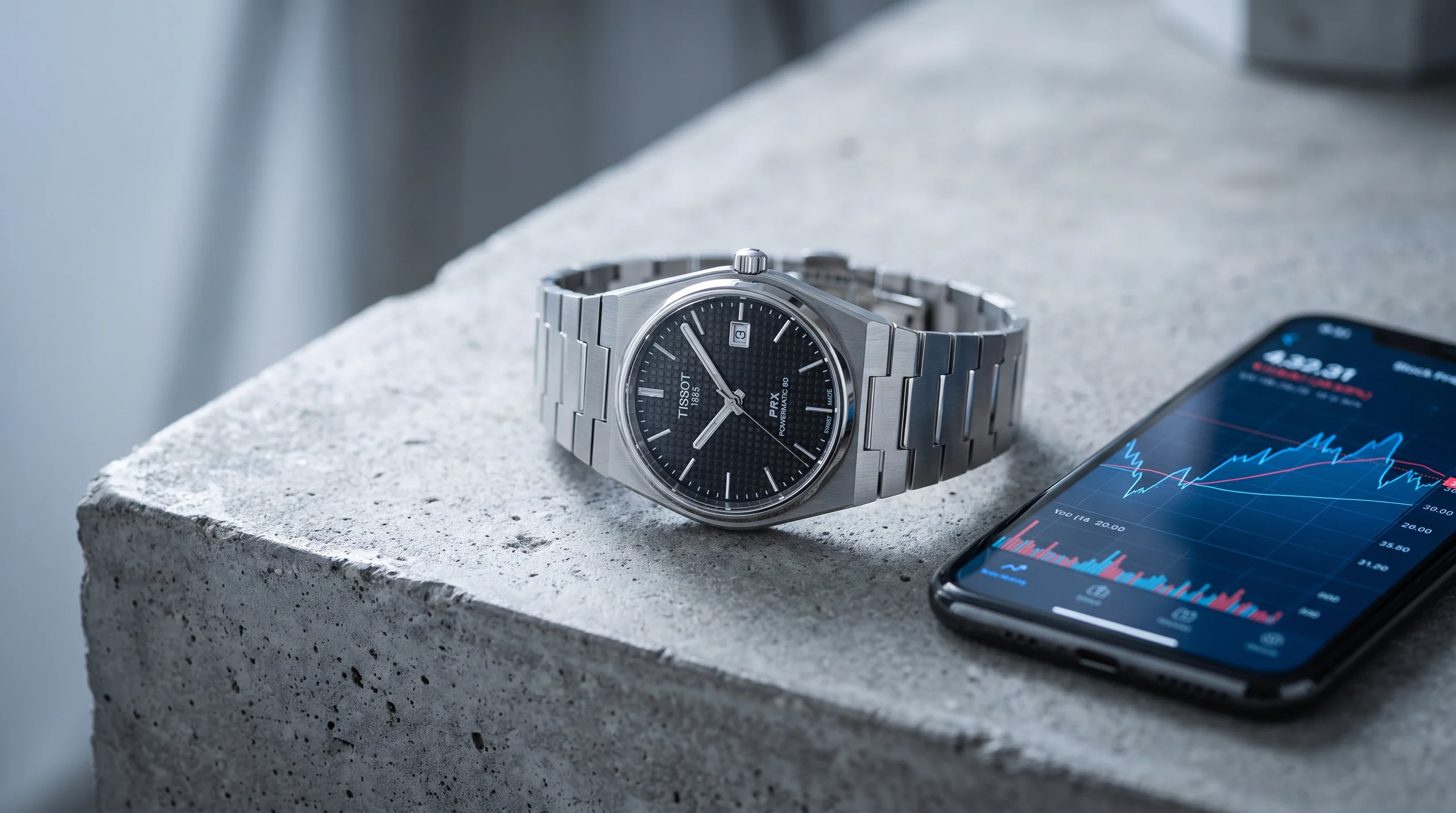 At the accessible end, value watches keep drawing new buyers into the hobby.
What it means for buyers
If you want a blue-chip Rolex, Patek, or AP, do not wait for a crash that the top end is not signaling. Prices there are firm, and dips have been shallow and brief. Buy condition and paperwork, and pay the going rate.
If you are hunting value, the middle is your friend right now. Softer mid-luxury pricing and a noisy export backdrop mean less competition and better entry points. This is a buyer's half of the year for anyone shopping outside the top three names.
Frequently asked questions
Is the watch market up or down in 2026?
Both, depending on where you look. The secondary market index sits near its 12-month high, but the strength is concentrated in a few blue-chip references while the mid-luxury middle has softened. The market is splitting rather than moving as one.
Why did Swiss watch exports fall in 2026?
The roughly 4% decline over early 2026 is distorted by a late-2025 shipping rush ahead of new US tariffs, which pulled demand forward. The underlying trend is closer to flat than the headline suggests, with the US as the key swing market.
Are watch prices going to crash in 2026?
The top end shows no sign of a crash, with Rolex, Patek, and Audemars Piguet holding firm and dips staying brief. The softness is in the mid-luxury middle, which is a value opportunity rather than a broad collapse.
What is the best value in the 2026 watch market?
The mid-luxury middle offers the best entry points right now because prices there have softened while the top end holds. Patient buyers shopping outside the big three names find the most room to negotiate.
Should I buy a watch now or wait?
For blue-chip pieces, buying now makes sense because the top end is firm and not signaling a drop. For mid-luxury watches, the current softness favors buyers, so there is little penalty for shopping carefully at today's prices.
The bottom line
The mid-year 2026 watch market is a study in averages that hide the real action. The index is near its high, exports look soft, and neither number captures the split underneath. The top end is firm, the middle is soft, and the smartest buyers are reading the two halves differently.
Want a straight read on a specific reference before you buy or sell? Talk to a 5D Watches specialist and we will tell you where it actually sits.