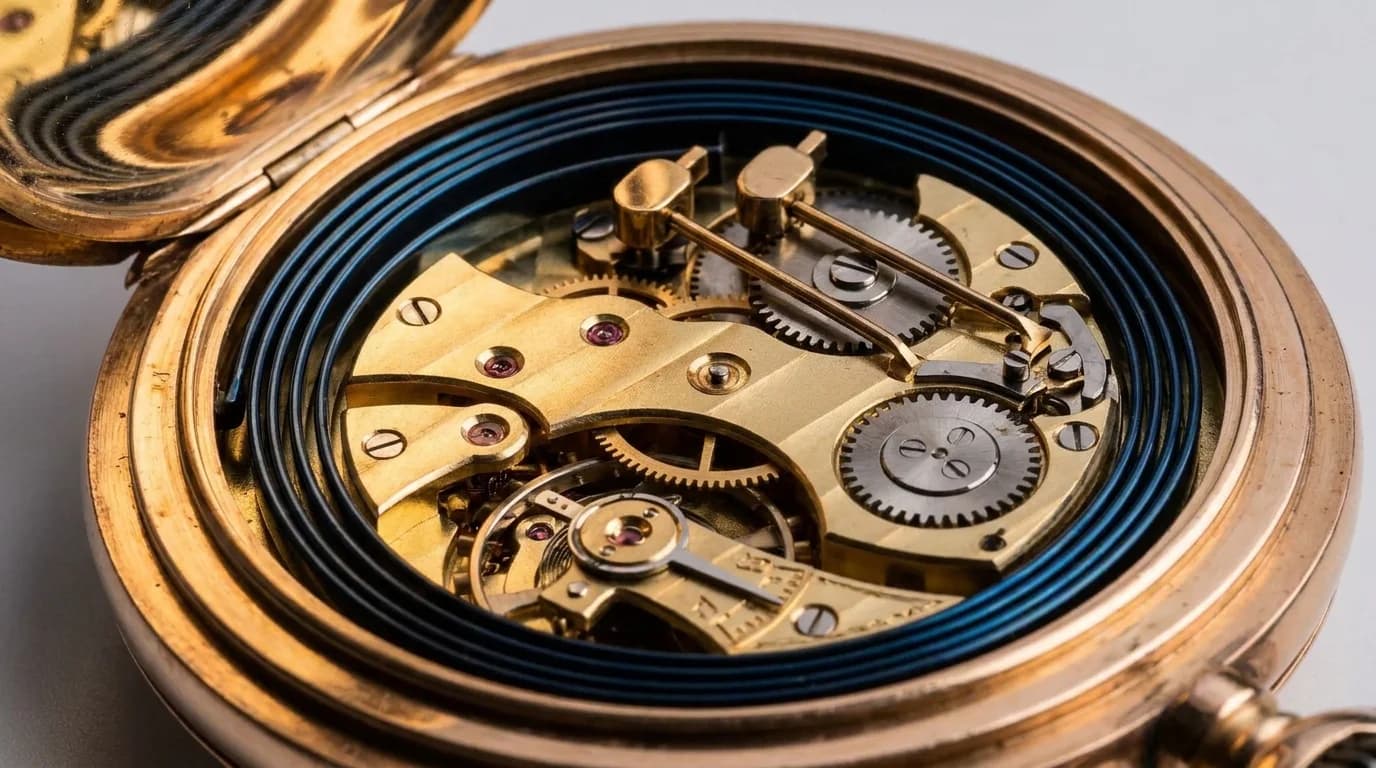
Press a slide on the side of certain watches and the case starts to sing. Low chimes count the hours, a two-tone chime counts the quarters, then a high, fast chime counts the minutes left over. No dial, no light, nothing to read. You just listen, and the watch tells you the time in the dark.
That is a minute repeater, and it is widely considered the hardest complication in mechanical watchmaking to get right.
The images in this article were generated with AI for illustration. They show recognizable minute repeater watches and movements based on real reference photography, but are not photographs of a specific watch for sale.
The Short Answer
- A minute repeater chimes the current time out loud using tiny hammers striking gongs inside the case, with no visual display required.
- The core mechanism, the rack and snail, traces back to Edward Barlow's 1676 repeating clock and Daniel Quare's 1687 repeating pocket watch, the version King James II's court actually chose.
- Abraham-Louis Breguet replaced bells with coiled gong springs in 1783, the format still used today, and later added an "all-or-nothing" safety mechanism.
- Prices run from roughly $95,000 for an IWC Portuguese Minute Repeater up past $940,000 for a Patek Philippe 5304 with a minute repeater and perpetual calendar combined.
- Cathedral gongs, a modern refinement, wrap nearly twice around the movement for a longer, richer tone.
Why This Complication Exists At All
Minute repeaters were not built for collectors. They were built for a world without electric light. Before you could flip a switch, checking the time in a dark bedroom meant striking a match or waking someone up. A repeater solved that problem by letting the watch announce the time out loud.
Once electric light made that function obsolete, the minute repeater should have died out. Instead, watchmakers kept building them, because the mechanism itself had become the point. A repeater that chimes cleanly and accurately is proof a manufacture can execute at the absolute limit of mechanical precision.
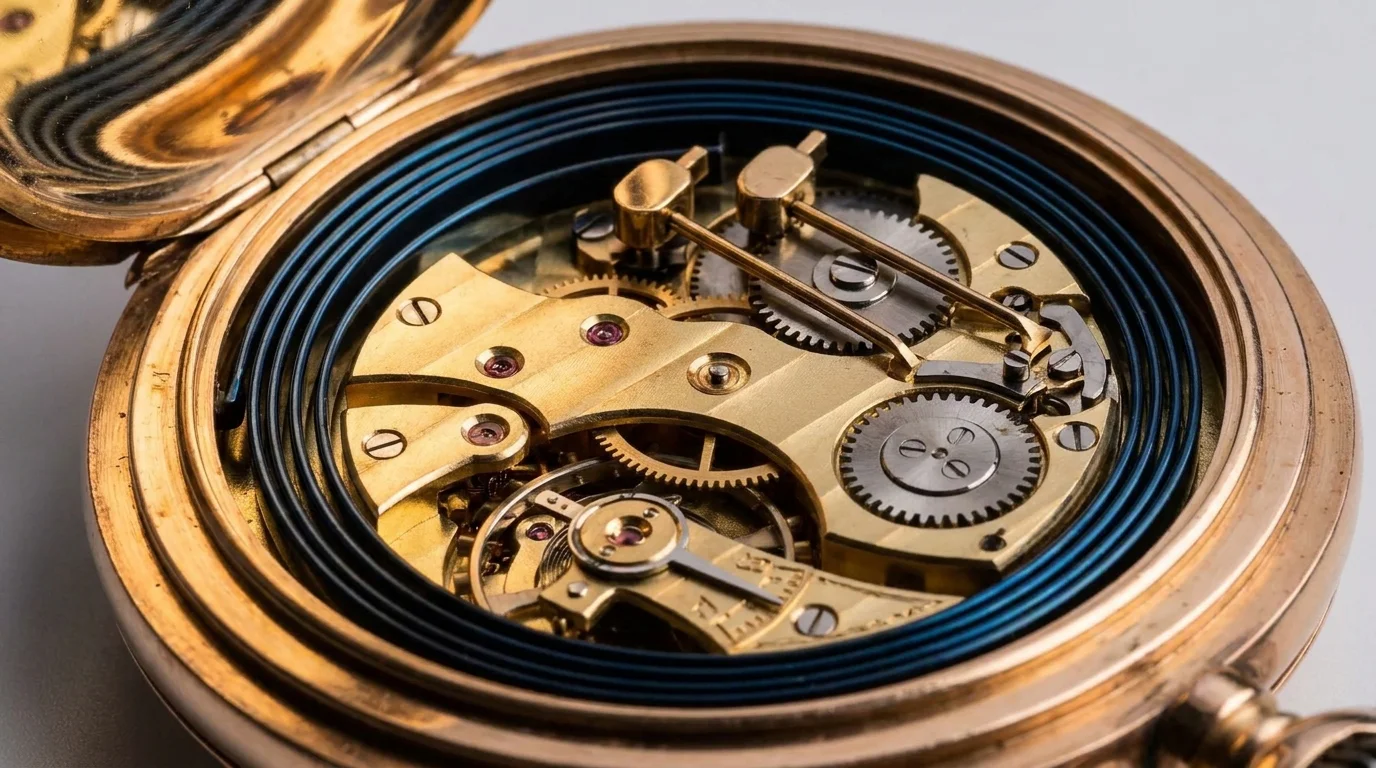 The hammers and coiled gongs of a minute repeater sit on top of the going train, a second full mechanism layered onto an already complete watch.
How It Actually Works
Slide the activation lever on the case side and you wind a small separate spring. That spring, not the mainspring, powers the chime, which is why the chime speed stays consistent whether the main watch is fully wound or nearly run down.
The rack and snail
As the slide moves, a rack engages a snail cam, a spiral-shaped disc that rotates with the hour and minute wheels. The snail's exact shape at that instant physically encodes the current time. The rack falls against the snail's edge and stops exactly where the current hour, quarter, and remaining minute dictate, and that stopping point sets how many times each hammer will strike.
The three-part chime
Hammers then strike the gongs in sequence: a low tone repeated once per hour, a two-tone ding-dong repeated once per quarter hour, and a high tone repeated once per minute past the last quarter. A watch reading 10:47 chimes ten low tones, three ding-dongs for the three quarters, then two high tones for the two minutes left over.
Breguet's "all-or-nothing" mechanism, added in the early 1800s, exists for one reason: to stop a lazy or interrupted slide push from making the watch chime the wrong time. Either the full sequence fires correctly, or none of it fires at all.
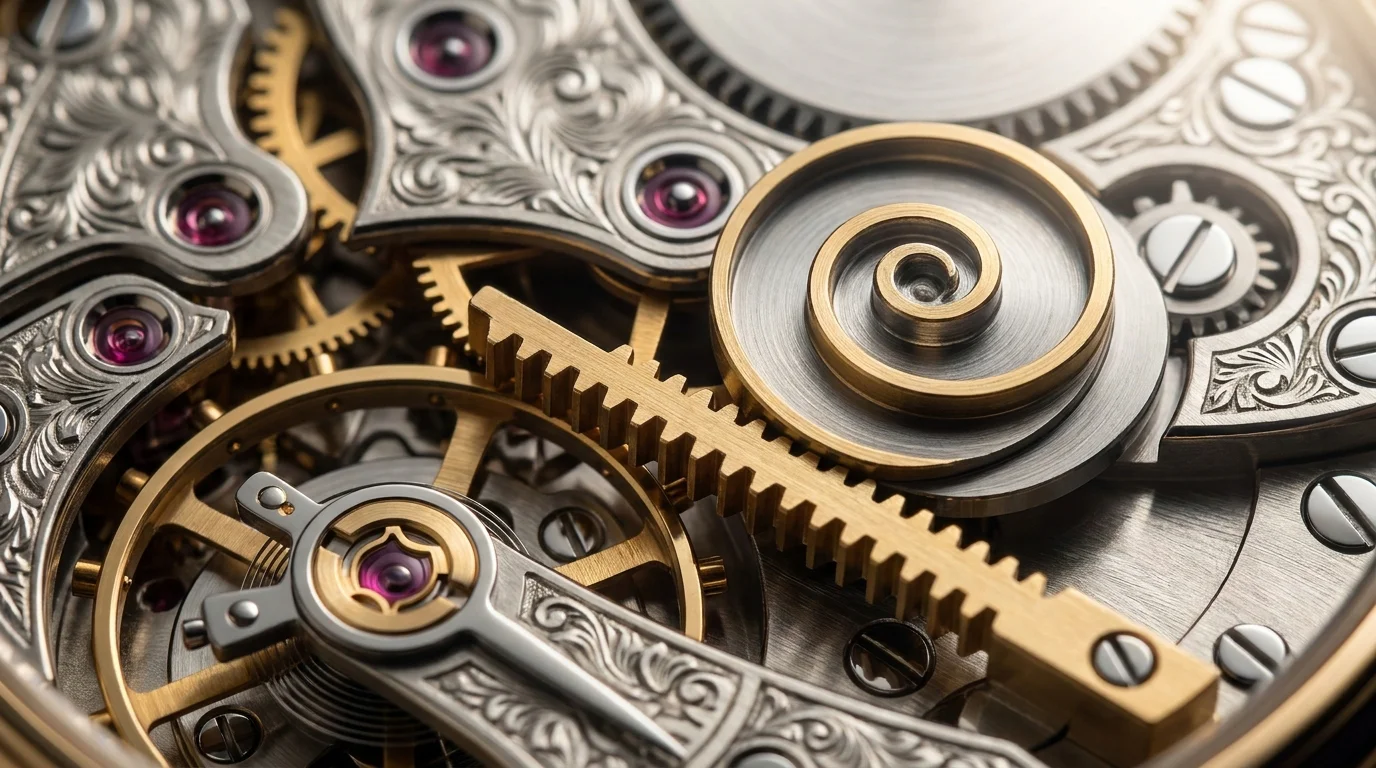 The snail cam's spiral edge is the entire mechanism's memory. Its shape at any given moment is the current time, translated into physical form.
Why It's So Hard to Build
A minute repeater is effectively a second, independent mechanism layered on top of a complete watch movement, sharing space in a case that was never large to begin with.
Sound is the real difficulty
Every other complication in watchmaking is judged visually. A minute repeater is judged by ear, and tone quality depends on variables that are brutally hard to control: gong alloy, gong length, how the gongs are anchored to the case, and how the case itself resonates. Two watches built to identical specifications can sound noticeably different, and there is no dial reading that tells a watchmaker why.
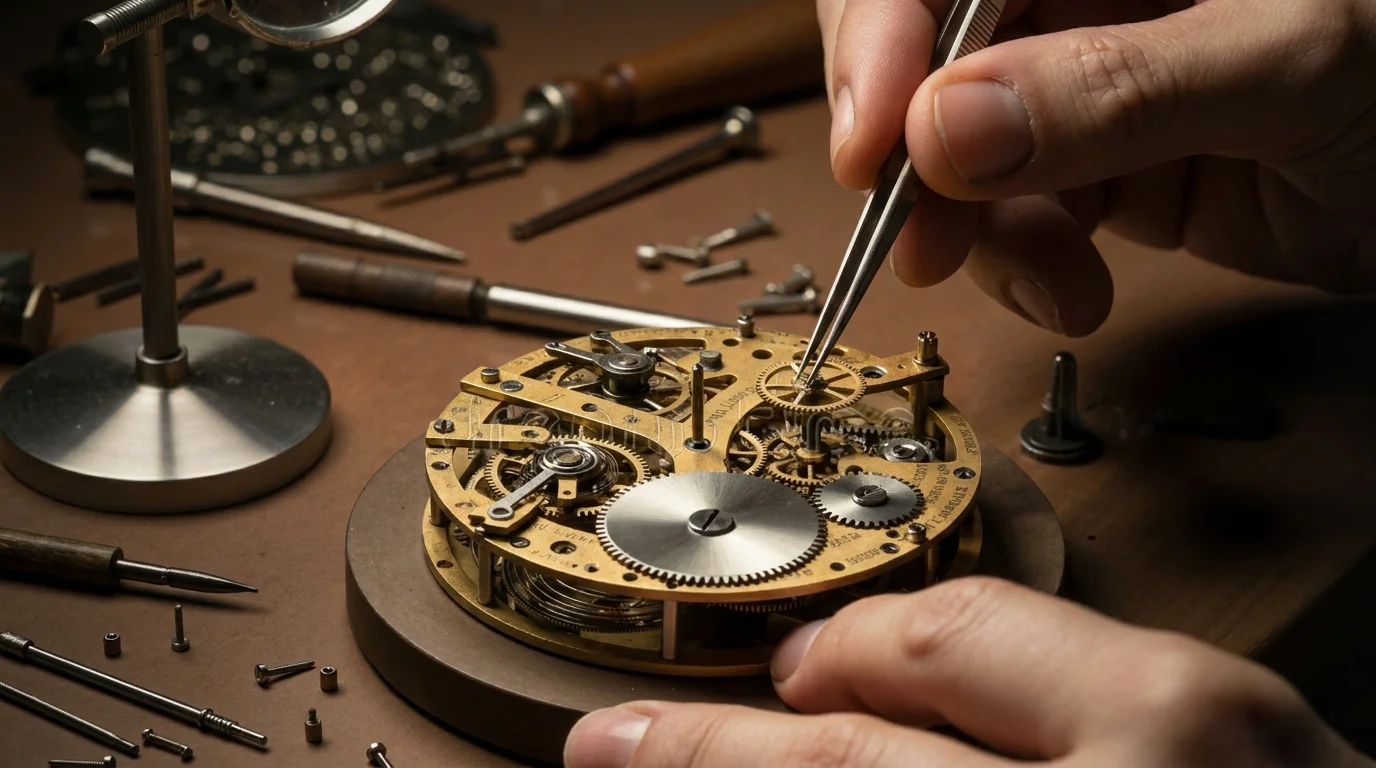 Tuning a repeater's chime is closer to instrument-making than conventional watch assembly. The final adjustment happens by ear.
Cathedral gongs, the modern upgrade
Standard gongs coil roughly once around the movement. Cathedral gongs, patented decades ago and popularized more recently by Patek Philippe on references like the 5178G, coil nearly twice around, extending gong length inside the same case diameter. The longer gong produces a deeper, longer-reverberating tone, at the cost of needing more internal space, which is exactly why the cathedral-gong 5178G runs 40mm against the standard-gong 5078G's 38mm.
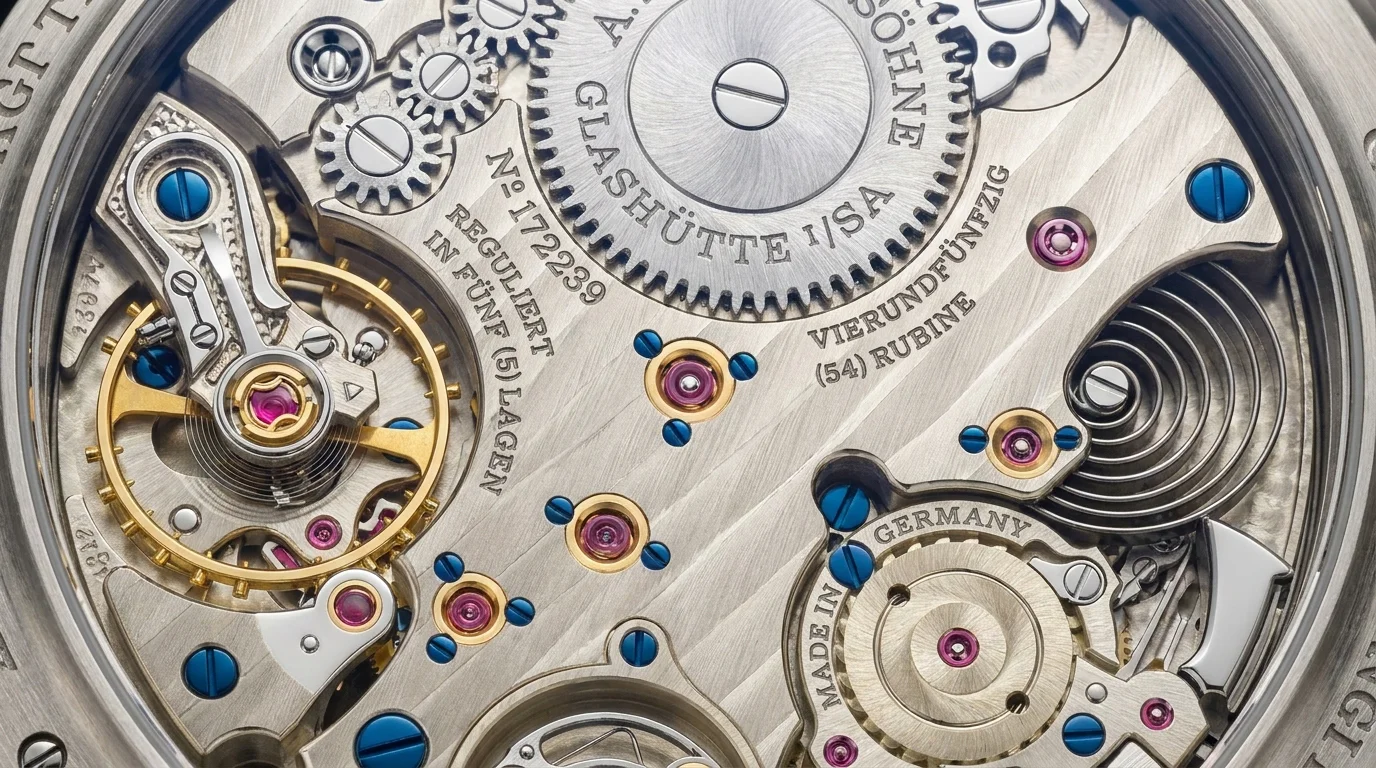 A coiled gong spring visible along the case edge of a hand-finished minute repeater movement. Every visible bridge and screw here was finished by hand.
Water resistance basically doesn't exist
The slide mechanism that activates the chime is a mechanical opening into the case, and no manufacturer has solved sealing it against water without deadening the sound. Nearly every minute repeater on the market carries dust and humidity resistance only. This is a dress watch complication by necessity, not preference.
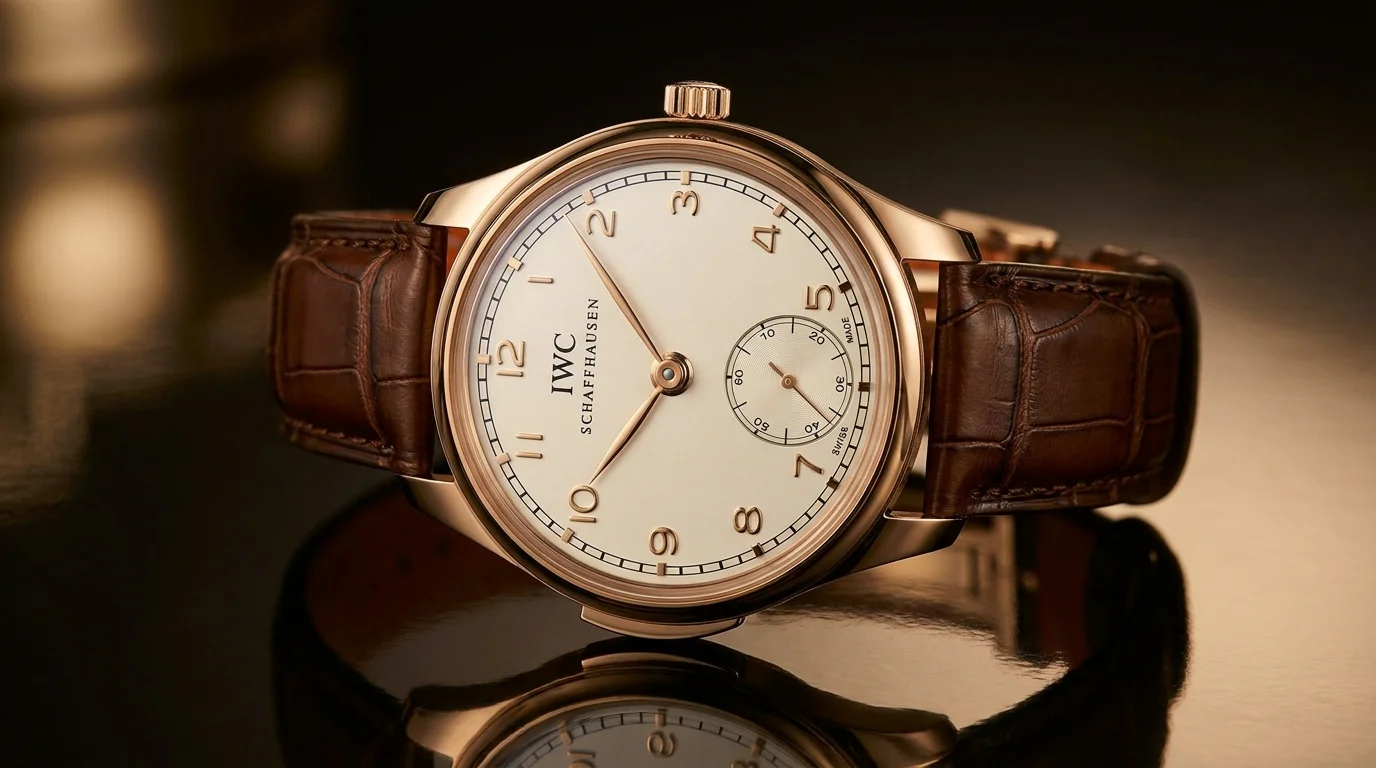 Minute repeaters are almost always cased in precious metal, which resonates better and suits the dress-watch role the complication is limited to.
Notable Examples
| Watch | Notable feature | Approx. price |
|---|---|---|
| IWC Portuguese Minute Repeater | 42mm rose gold, limited to 250 pieces | $95,000 to $115,000 |
| Audemars Piguet Jules Audemars Tourbillon Chronograph Minute Repeater | Platinum, caliber 2889, 289 components | high six figures |
| Vacheron Constantin Patrimony Minute Repeater | Perpetual calendar and moonphase combined | ~$600,000 retail |
| Patek Philippe 5178G | Cathedral gongs, 40mm white gold, caliber R 27 PS | ~$360,000 |
| Patek Philippe 5304/301R-001 | Minute repeater plus retrograde perpetual calendar, diamond-set case | ~$940,610 |
| Piaget Polo Minute Repeater | 48mm white gold, caliber 1290P at 4.8mm, five pieces a year | EUR 330,000 |
| H. Moser & Cie. Cosmic Rain | Titanium, cylindrical hairspring tourbillon, 20 pieces | CHF 378,350 |
The IWC is the closest thing to an entry point in this category, and it is still a six-figure watch. Nothing about a minute repeater is accessible, which is part of why it remains the complication most collectors respect but never actually own. Piaget's own Polo Minute Repeater approaches the problem from the opposite direction of the IWC, chasing thinness instead of size, and it is worth reading as a case study in how differently two manufactures solve the same acoustic problem.
A quarter repeater is the simpler cousin of everything covered above, chiming the hour and the quarter hour rather than the exact minute. Angelus recently revived its own historic take on the format with the Tinkler 1958 Quarter Repeater, an archive piece worth knowing if the rack-and-snail logic here appeals to you. For a current example that pairs this complication with a tourbillon in the same case, H. Moser & Cie.'s Cosmic Rain skeletonizes the whole mechanism so you can watch the hammers strike while you listen.
Is a Minute Repeater Worth It
Buy one only if the sound genuinely moves you, not because the price tag signals status better than anything else in a collection. This is arguably the single complication where trying before buying matters most. Two references with identical specs can chime completely differently in person, and no photograph or spec sheet communicates that.
For the broader chiming and complication landscape this watch sits inside, our What Is a Rattrapante? piece covers another complication where mechanical complexity, not usefulness, is the entire draw.
Related Reading
- Piaget Polo Minute Repeater: The Brand's Thinnest Chiming Complication Gets a Sportier Case
- What Is a Rattrapante? The Split-Seconds Chronograph, Explained
- Grand Feu Enamel Dials Explained: The Fired Finish Only a Handful of Watchmakers Still Do by Hand
- Perpetual Calendar Explained: How a Watch Knows It's Not February 30th
- Angelus Revives the 1958 Tinkler Quarter Repeater
- H. Moser Cosmic Rain: A Minute Repeater Built to Be Watched, Not Just Heard
Frequently Asked Questions
What does a minute repeater actually do?
A minute repeater chimes the current time out loud on demand, using small hammers striking gongs inside the case. It announces hours with a low tone, quarter hours with a two-tone chime, and remaining minutes with a high tone, requiring no dial or light to read the time.
Who invented the minute repeater?
Reverend Edward Barlow built the first repeating clock in 1676. Daniel Quare's competing repeating pocket watch won royal favor in 1687 after King James II compared the two designs. Abraham-Louis Breguet later replaced bells with coiled gong springs in 1783, the format still used today.
Why are minute repeaters so expensive?
A minute repeater is effectively a second complete mechanism layered onto a standard movement, requiring hand-tuning by ear rather than by measurement. Sound quality depends on gong alloy, length, anchoring, and case resonance, all of which must be adjusted individually on every single watch, which drives labor cost far beyond most other complications.
Can a minute repeater get wet?
No, not meaningfully. The slide mechanism that activates the chime creates an opening in the case that cannot be sealed without deadening the sound, so nearly every minute repeater carries dust and humidity resistance only, not water resistance.
What are cathedral gongs?
Cathedral gongs are extra-long gongs that coil nearly twice around the movement instead of once, producing a deeper and longer-reverberating tone. They require more internal case space, which is why cathedral-gong references like the Patek Philippe 5178G run larger than standard-gong versions of the same watch.
Browse authenticated pre-owned complicated watches at 5dwatches.com.