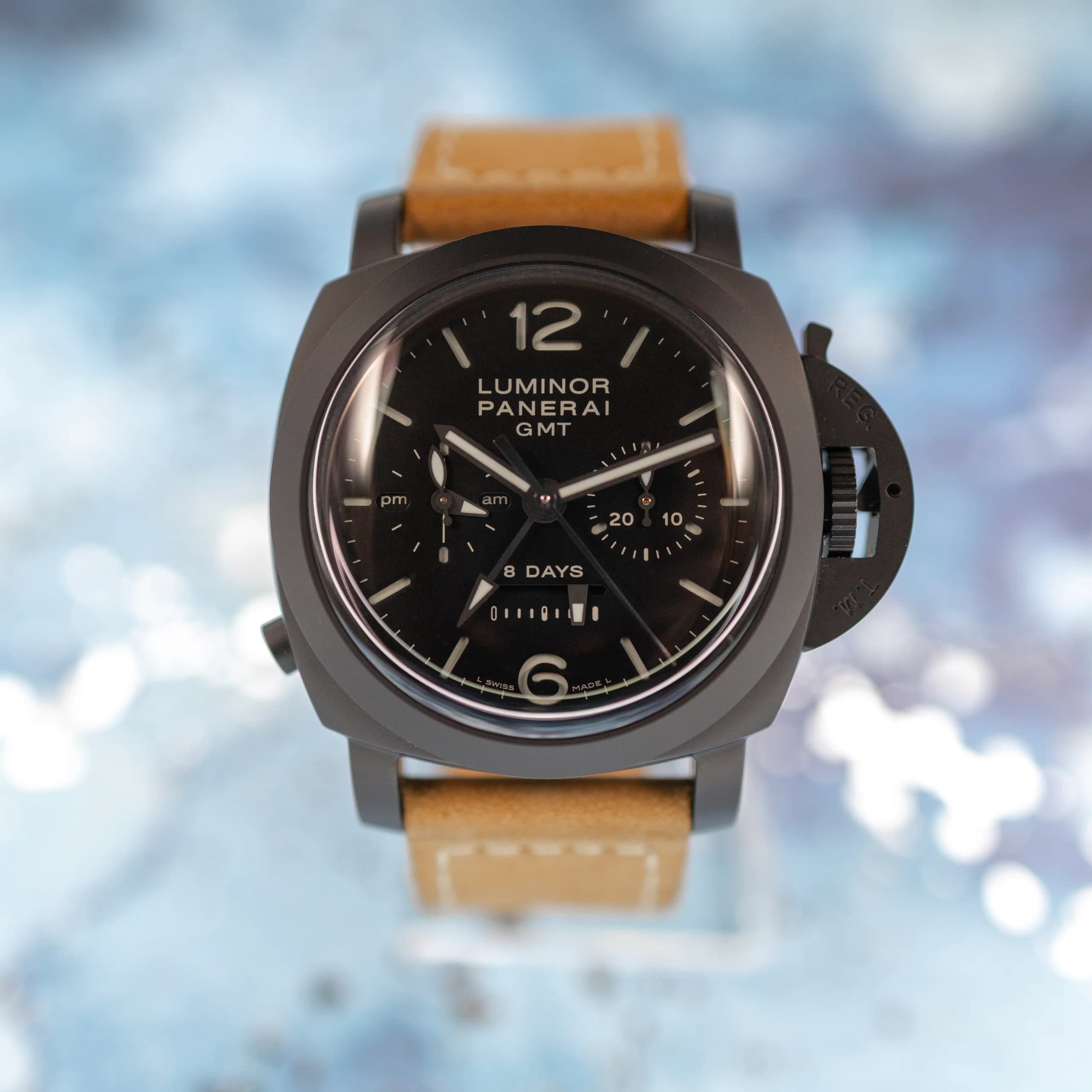
Most modern chronographs use two pushers: one to start and stop, one to reset. A monopusher chronograph does all three with a single button, pressed in a fixed sequence. Start, stop, reset. No shortcuts, no skipping a step.
The Short Answer
A monopusher, or single push-piece, chronograph controls the start, stop, and reset functions of the stopwatch complication through one pusher instead of two. Press it once to start timing, again to stop, and a third time to reset the hands to zero. It is the original chronograph control layout, and several serious watchmakers still build it today, each with a slightly different take on where that single pusher lives.
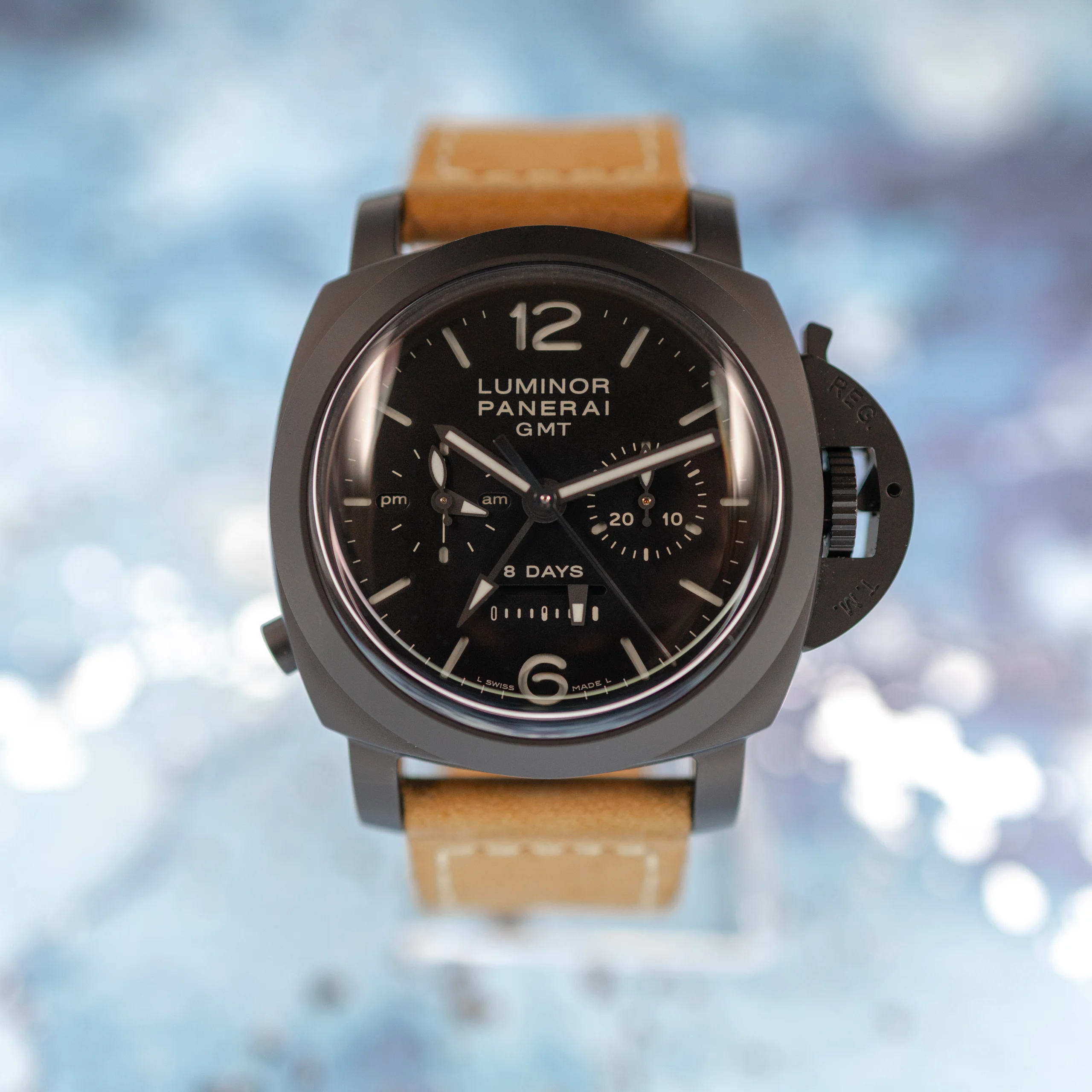 Our in-stock Panerai Luminor 1950 PAM00311 Monopulsante, photographed on the bench. Note the separate pusher at 8 o'clock, distinct from the crown.
Why One Button Instead of Two
Early 20th century chronographs were monopushers by default, because the two-pusher layout most watches use today had not been standardized yet. Longines built its first wristwatch chronograph movement with monopusher activation, the caliber 13.33Z, back in 1913. That 29mm movement included a 30-minute counter and set the template that many single-button chronographs still follow.
How the Mechanism Actually Works
A monopusher chronograph relies on a column wheel to sequence its functions correctly. Each press of the pusher advances the column wheel one step, and the column wheel's raised teeth and notches determine whether that press starts the chronograph, stops it, or resets it.
This is different from how most two-pusher chronographs handle the reset function, where a separate pusher directly triggers a hammer that snaps the hands back to zero. On a monopusher, the same single input has to do all three jobs in strict rotation, which is mechanically more demanding to engineer correctly.
Two Brands, Two Different Answers
Not every monopusher chronograph puts the pusher in the same place, and the difference matters more than it might seem.
Longines revived the historical layout for its Column-Wheel Single Push-Piece Chronograph, reference L2.776.4.21.3, a 40mm stainless steel watch built around the self-winding caliber L788. The single pusher is integrated directly into the crown rather than sitting separately on the case, a detail carried over from the historical layout the watch is designed to honor.
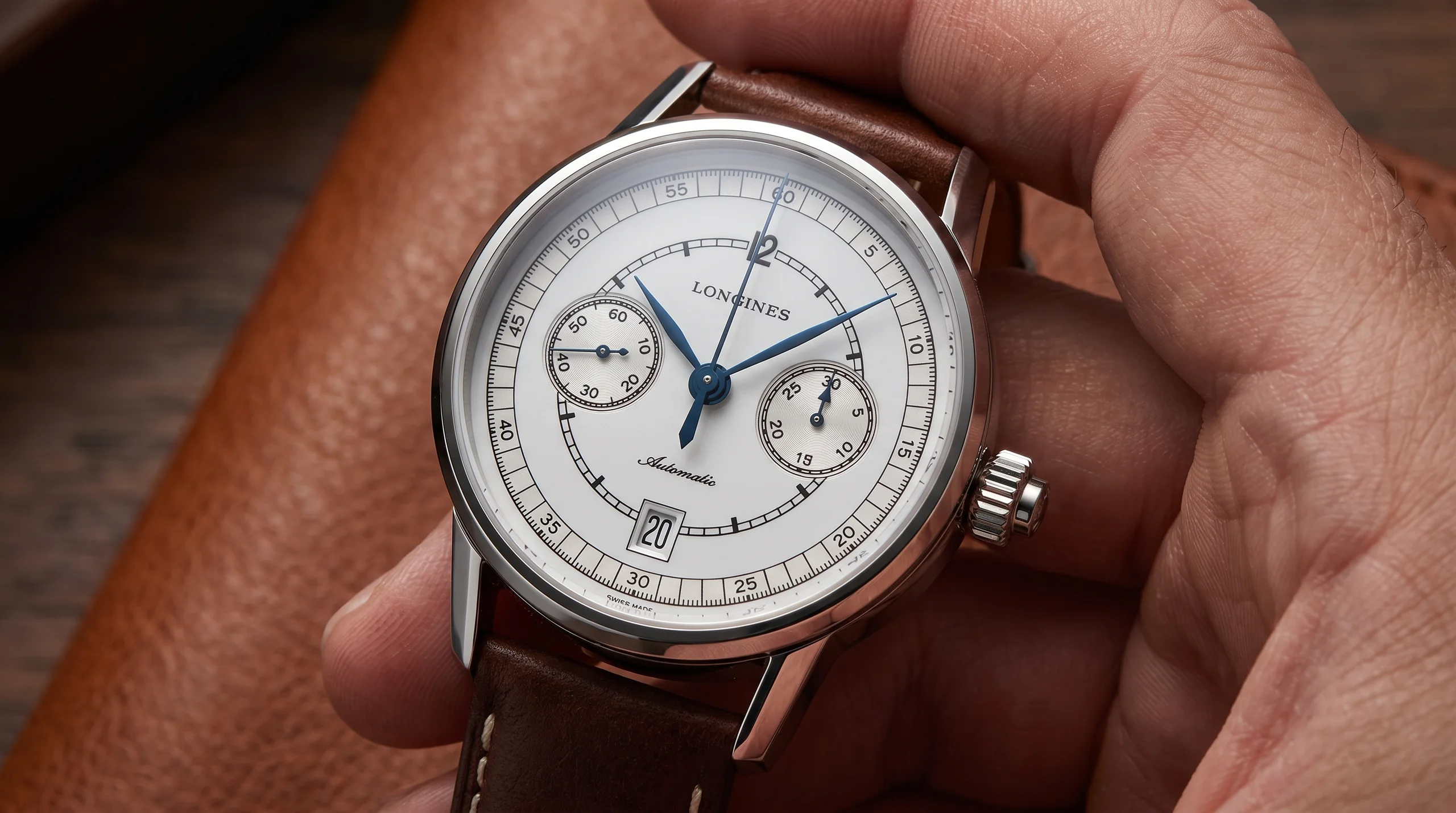 The Longines L2.776.4.21.3. The monopusher lives inside the crown itself, so the case shows no separate pushpiece at all.
Flip it over and the caliber L788 shows itself through an exhibition caseback, column wheel and all.
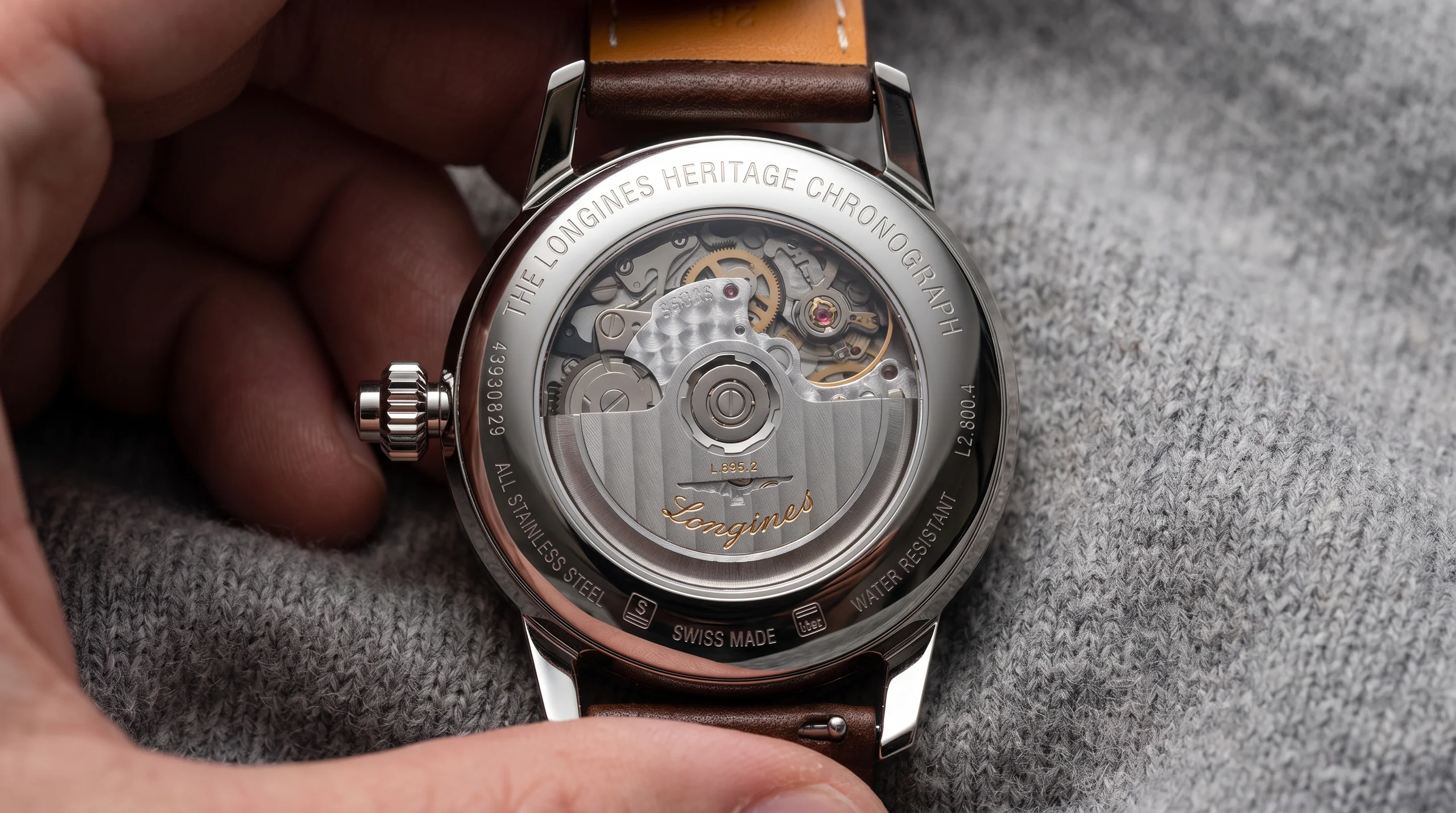 The caliber L788 through the exhibition caseback. The column wheel that sequences start, stop, and reset sits right at the center of the finishing.
Panerai takes the opposite approach with its Monopulsante line, and it is arguably the more interesting execution of the two. The Luminor 1950 Chrono Monopulsante 8 Days GMT Titanio, reference PAM00311, houses Panerai's in-house caliber P.2004, a manually wound column-wheel chronograph movement with an 8-day power reserve and a GMT function, in a 44mm titanium case rated to 100 meters. Instead of building the pusher into the crown, Panerai places it as a separate pushpiece at the 8 o'clock position on the case, clear of the crown guard entirely.
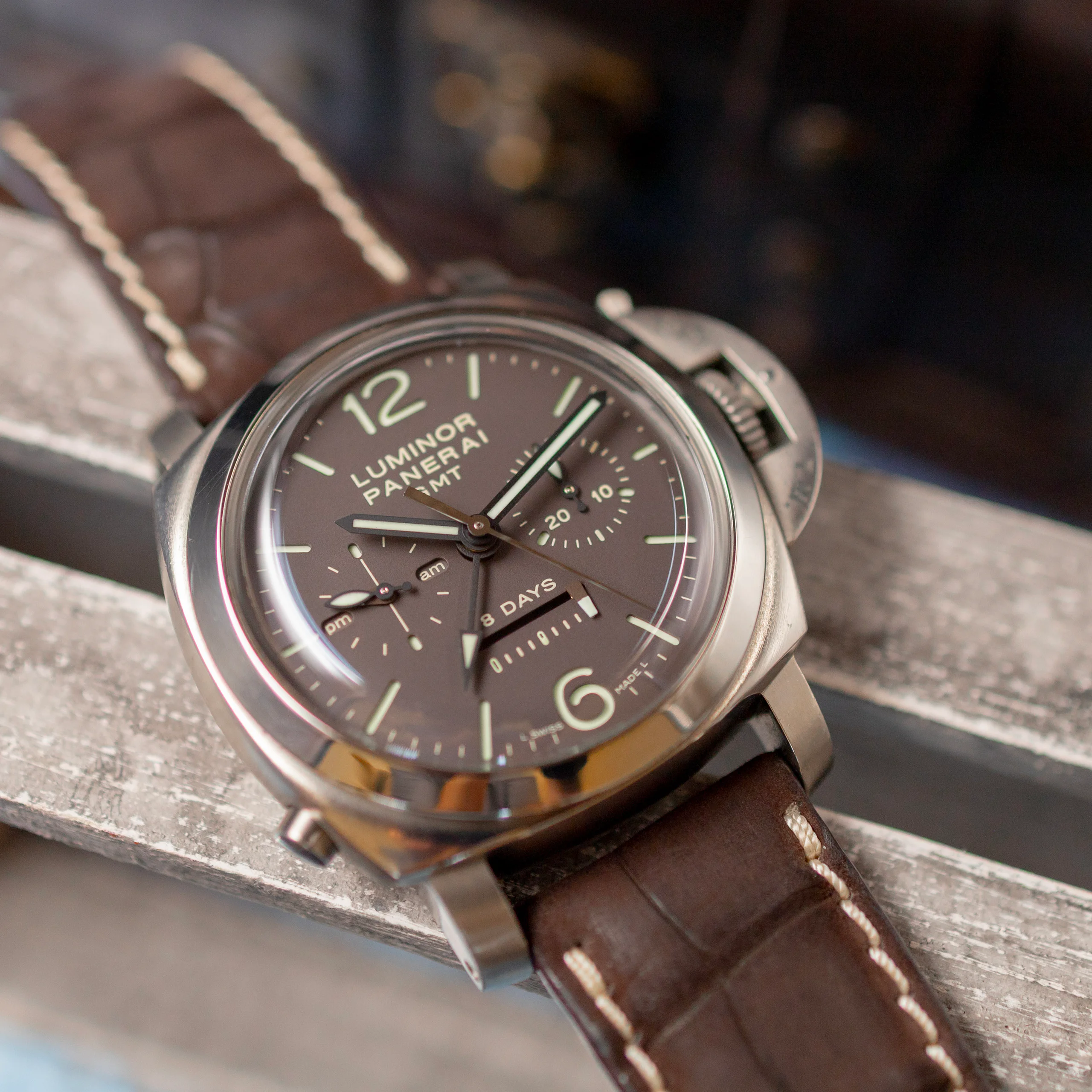 On the wrist, the PAM00311's case-mounted pusher sits clear of the crown guard entirely, its own dedicated control.
That case-mounted placement is a genuinely different engineering answer to the same problem. It keeps the crown doing one job and gives the chronograph pusher its own distinct position on the case, at the cost of an extra element on the dial side silhouette that a crown-integrated design avoids.
| Longines L2.776.4.21.3 | Panerai PAM00311 | |
|---|---|---|
| Pusher location | Integrated into the crown | Separate pusher at 8 o'clock on the case |
| Movement | Caliber L788, self-winding | Caliber P.2004, manual wind |
| Case | 40mm stainless steel | 44mm titanium |
| Power reserve | Not extended | 8 days |
| Extra function | None | GMT |
We happen to have a PAM00311 in stock, and having handled both layouts, the Panerai's case-mounted pusher is easier to operate confidently by feel, without needing to look down to confirm you pressed the right control. The trade-off is a busier case profile.
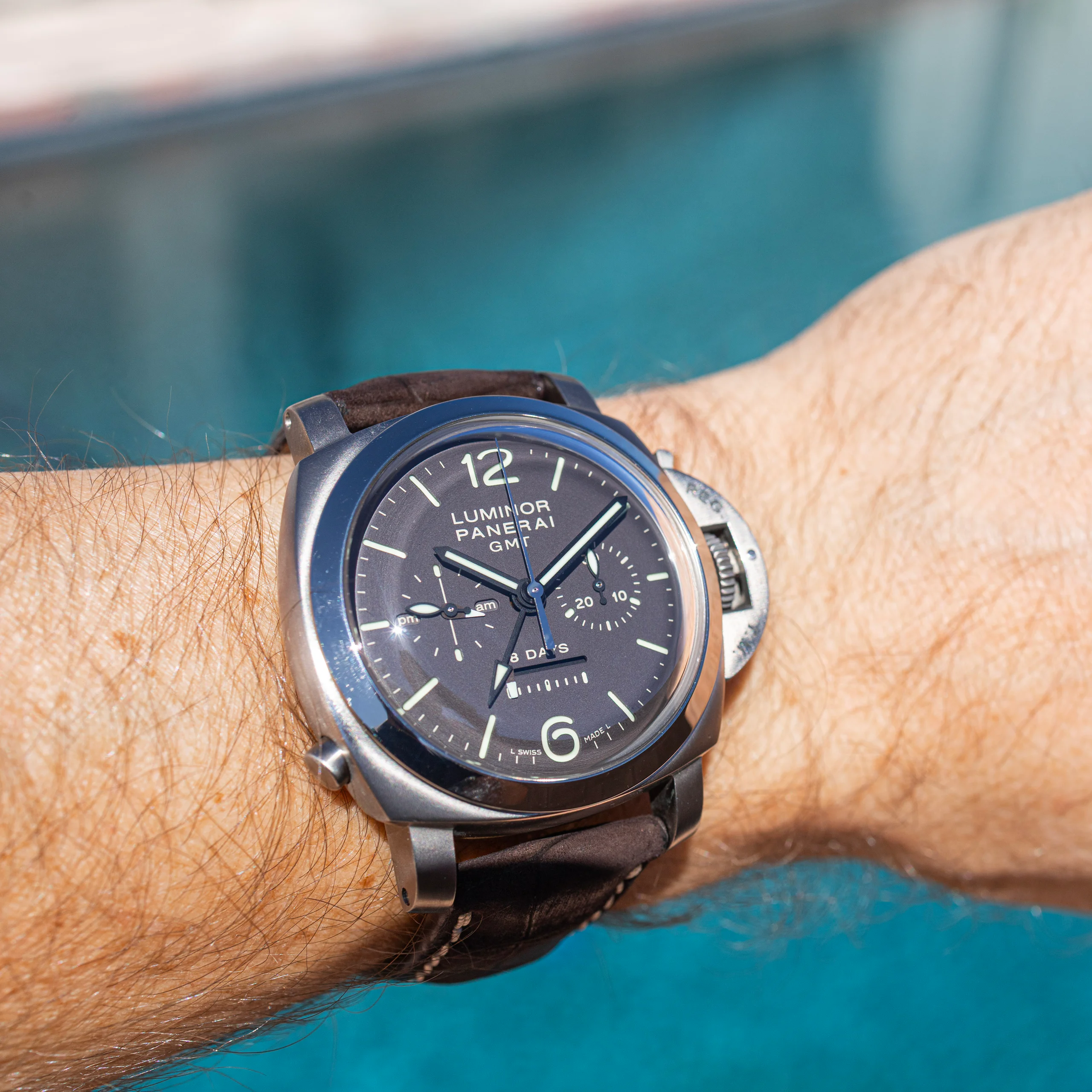 The PAM00317, Panerai's black DLC titanium take on the same Monopulsante layout, also currently in our inventory.
Column Wheel Versus Cam-Lever, Applied to Monopushers
Monopusher chronographs are almost always column-wheel controlled rather than cam-lever, because the column wheel's stepped sequencing is what makes single-button operation mechanically reliable. Our column wheel versus cam-lever guide goes deeper on how each system engages the chronograph gear train, if you want the full mechanical breakdown.
The Trade-Off: Elegance Versus Convenience
A monopusher removes a pusher from the case, which is part of its appeal, at least on designs like the Longines that fold it into the crown. The trade-off is operational. You cannot reset the chronograph without first stopping it, and you cannot restart a stopped chronograph without resetting it back to zero.
For most owners this trade-off never matters day to day. It matters if you are actually timing something in stages rather than a single continuous interval.
Why Watchmakers Still Build Them Today
A monopusher is not more accurate than a two-pusher chronograph, and it is not easier to use. Watchmakers who still build them are making a deliberate design and heritage statement, not a performance claim.
Longines' 180th Anniversary Column-Wheel Single Push-Piece Chronograph exists specifically to reference the brand's 1913 caliber 13.33Z. Panerai's Monopulsante line pulls from a different well: the brand's military dive-watch heritage, where a single oversized control was simpler to operate with gloved hands than two smaller pushers. Both are legitimate heritage arguments. They just point at different histories.
If you are shopping pre-owned in this category, the mechanical complexity of a monopusher chronograph means servicing should go to a watchmaker experienced with column wheel chronographs specifically, and with in-house calibers like Panerai's P.2004 in particular. A generic service on a monopusher movement is more likely to leave the sequencing slightly off than the same service on a common two-pusher caliber.
FAQ
How do you use a monopusher chronograph?
Press the single pusher once to start timing, press it again to stop, and press it a third time to reset the hands to zero. The sequence is fixed and cannot be skipped.
What is the difference between a monopusher and a standard chronograph?
A standard two-pusher chronograph uses one button for start and stop and a separate button for reset. A monopusher combines all three functions into a single pusher, pressed in sequence.
Where is the pusher on a Panerai Monopulsante?
Panerai places it as a separate pushpiece at the 8 o'clock position on the case, distinct from the crown. This differs from Longines' approach, which integrates the single pusher directly into the crown.
Is a monopusher chronograph a column wheel movement?
Almost always, yes. The column wheel's stepped sequencing is what allows a single pusher to correctly cycle between start, stop, and reset.
Can you restart a monopusher chronograph without resetting it?
No. The sequence is fixed at start, stop, reset. You cannot stop and resume timing without first resetting to zero, unlike some two-pusher chronographs.
Browse authenticated pre-owned chronographs at 5dwatches.com.