The Short Answer
The H. Moser & Cie Streamliner Flyback Chronograph is a 42.3mm steel integrated-bracelet chronograph built around the in-house HMC 907 caliber, also known as the AgenGraphe, which displays both chronograph hands from the center of the dial instead of using sub-dials. Current retail is CHF 45,000.
This guide goes deeper than a general brand overview. It covers the exact caliber, the center-display mechanism that makes this chronograph unusual, case specs, water resistance, and how the fume dial color options are priced and positioned against each other, the details a buyer actually needs before choosing a reference.
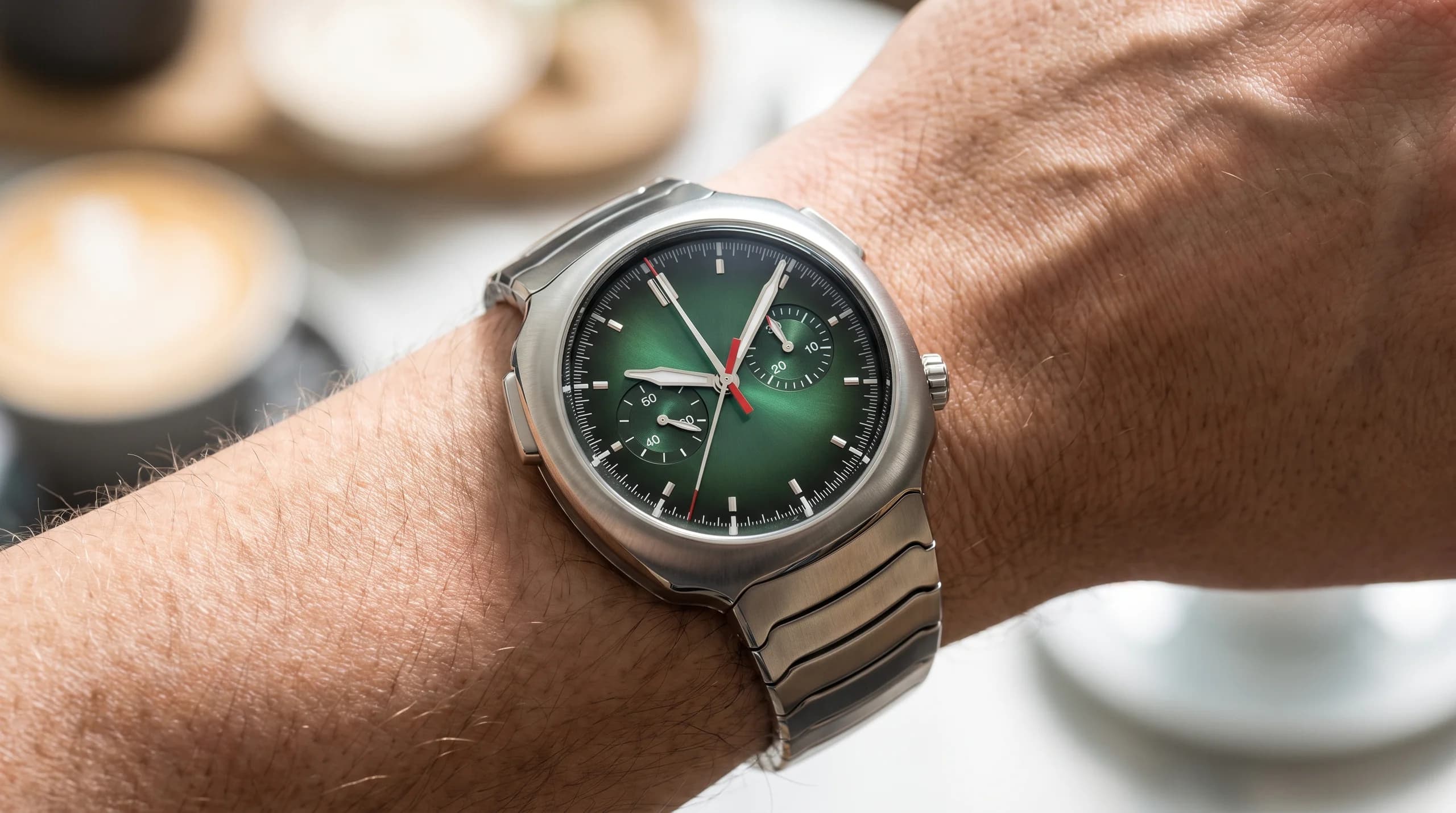
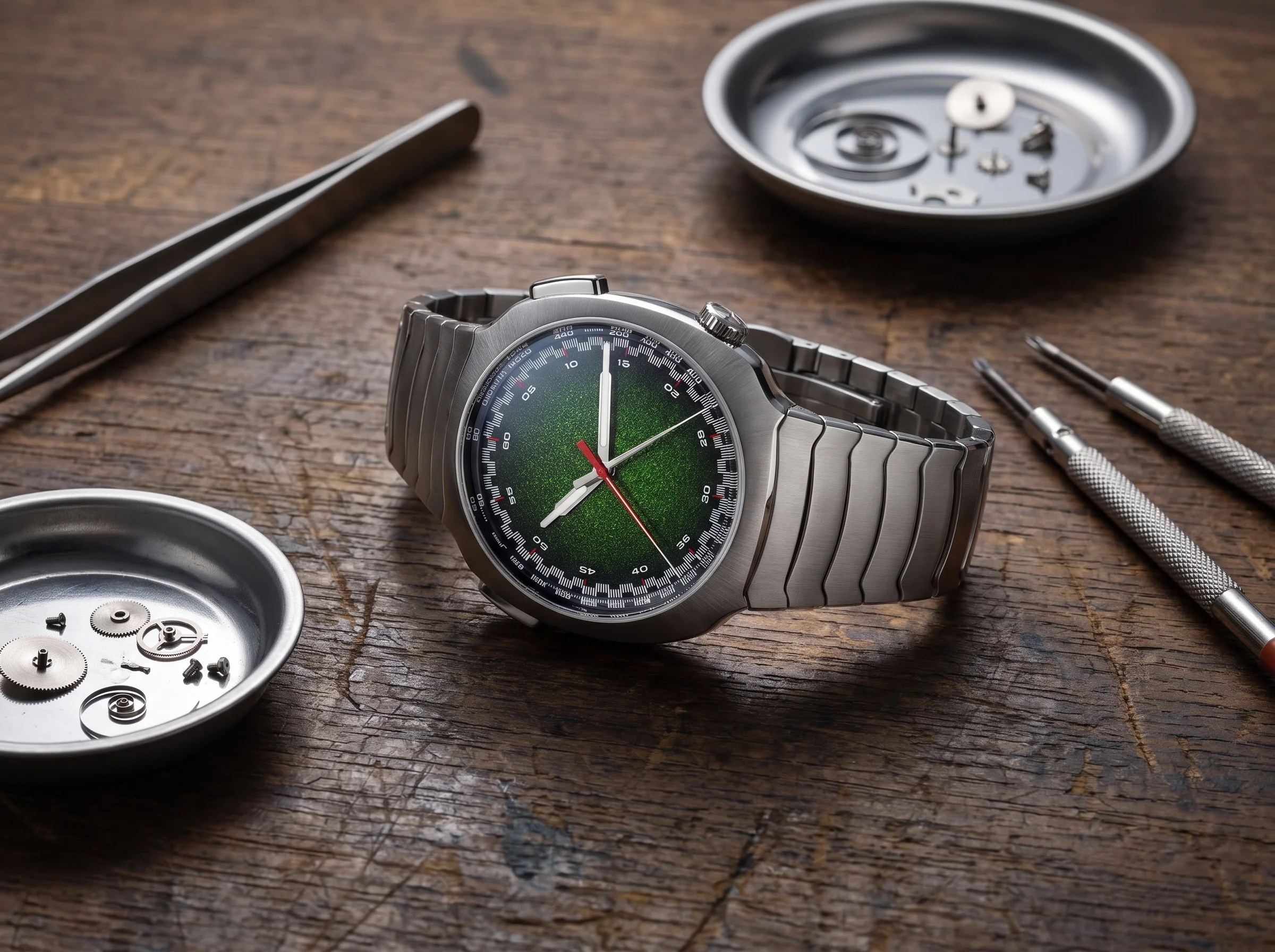
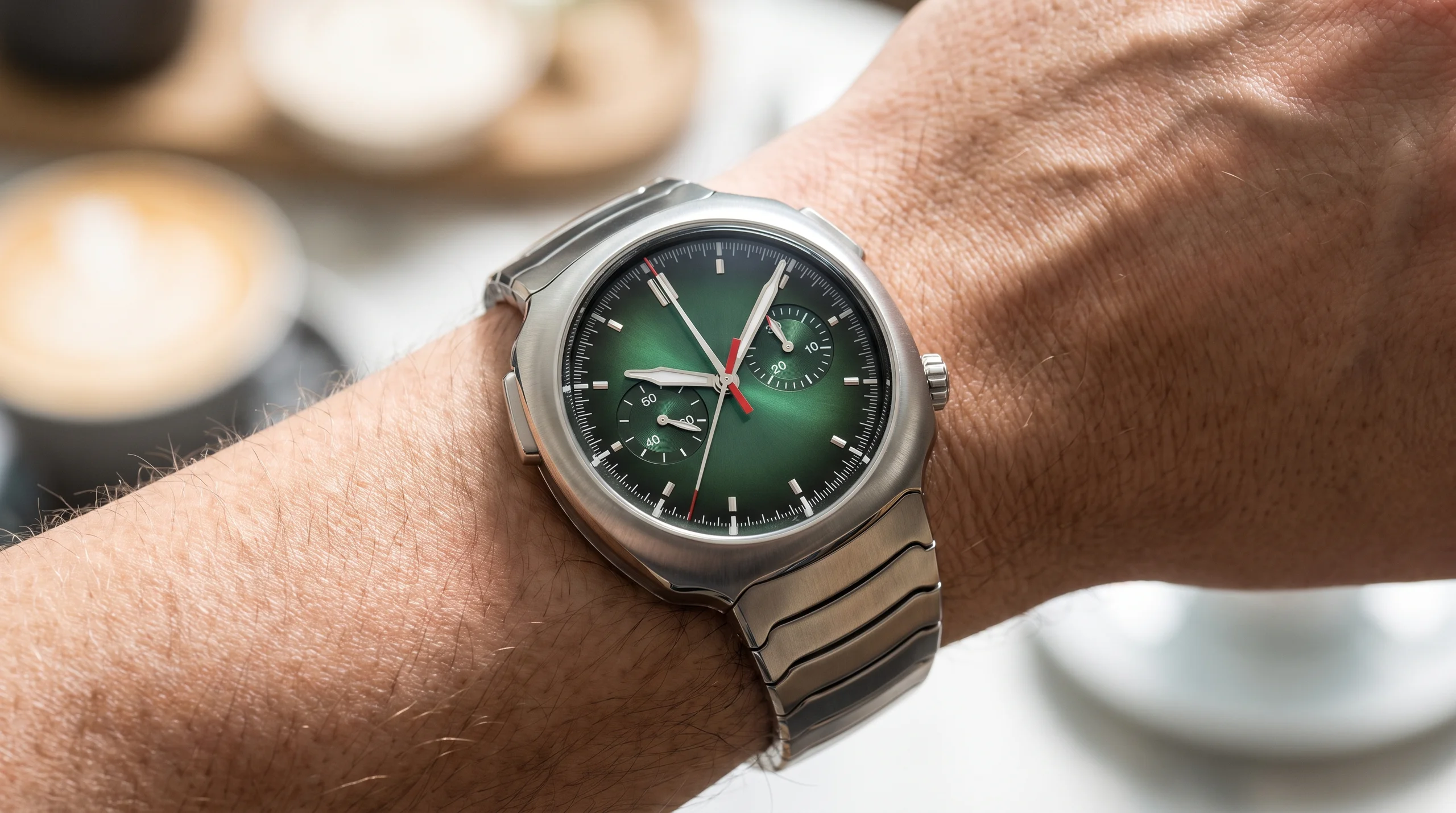 The Streamliner Flyback Chronograph in matrix green fume, one of several dial colors offered in the current lineup.
The watch photos in this article were generated with AI image tools, conditioned on real reference photography of the H. Moser & Cie Streamliner Flyback Chronograph so the case shape and dial layout are accurate to the real watch. 5D Watches does not currently stock H. Moser & Cie.
Why This Chronograph Is Mechanically Unusual
Most chronographs push their running seconds and minute counter into small sub-dials, because the mechanism driving them normally needs to sit off-center. Moser's Streamliner Flyback Chronograph does not.
That center-display architecture is the entire reason this watch exists as a distinct model within the Streamliner family, rather than just another chronograph variant. It reads like a simple three-hand watch until the pusher is pressed.
What Flyback Actually Adds
Pressing the flyback pusher resets and restarts the chronograph in a single motion, without needing to stop it first. For a watch built around instantly legible central hands, that single-press reset keeps the display's simplicity intact even while timing back-to-back intervals.
Case and Specs, Precisely
The Streamliner Flyback Chronograph runs a 42.3mm stainless steel case at 14.2mm thick, brushed with polished accent surfaces, rated to 120 meters of dynamic water resistance, unusually deep for a dress-adjacent chronograph.
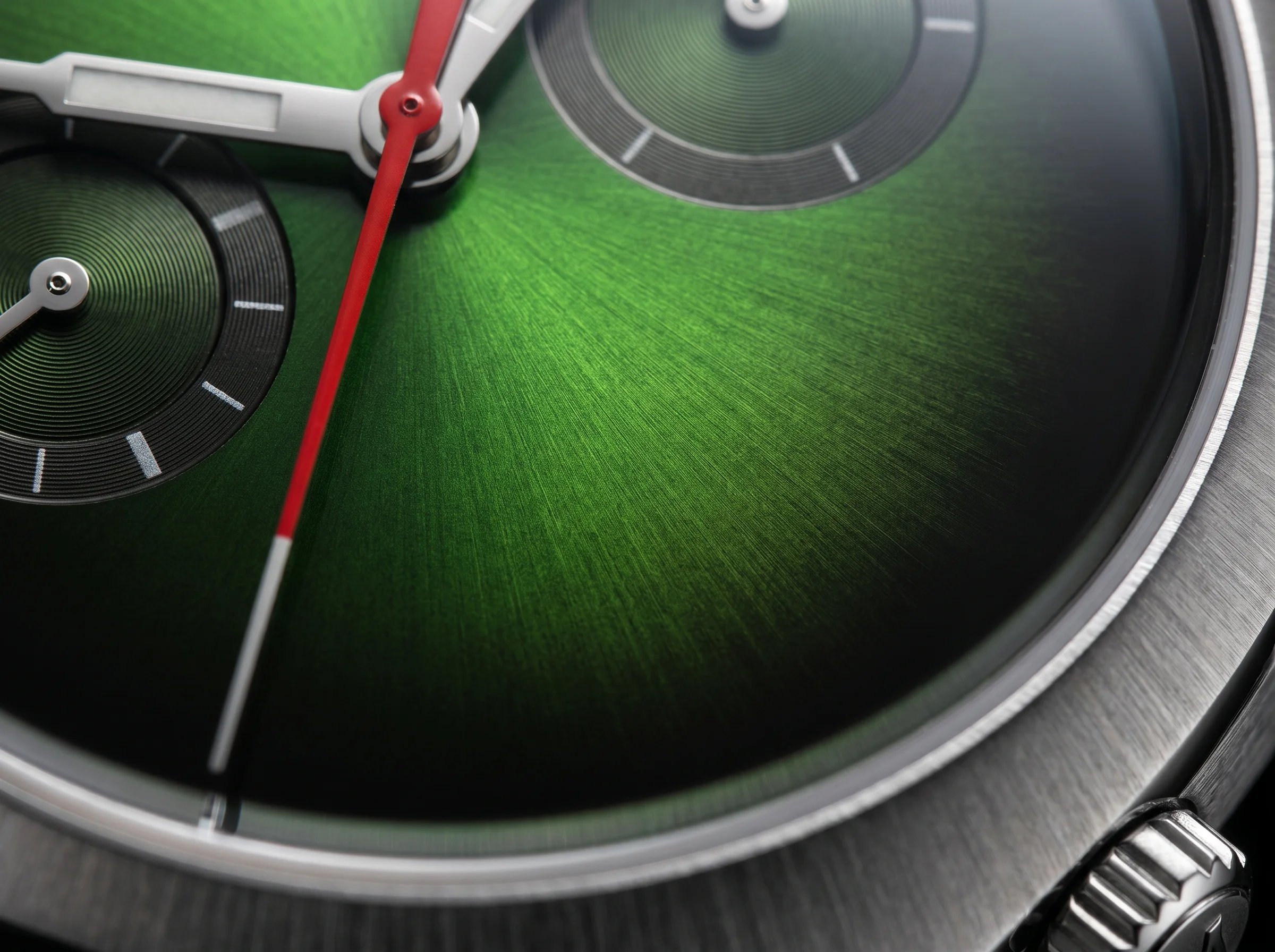 Every Streamliner Flyback Chronograph dial uses Moser's smoked fume finish, bright at the center and darkening toward the edge.
The case shape is the cushion-form Streamliner signature: rounded corners, no visible lugs, and a bracelet that flows directly out of the case rather than attaching at a separate joint.
The Bracelet Integration, Specifically
Getting a bracelet to flow seamlessly out of a cushion-shaped case, rather than a round or rectangular one, is a harder engineering problem than it looks, since the transition point has to follow a curve instead of a straight edge.
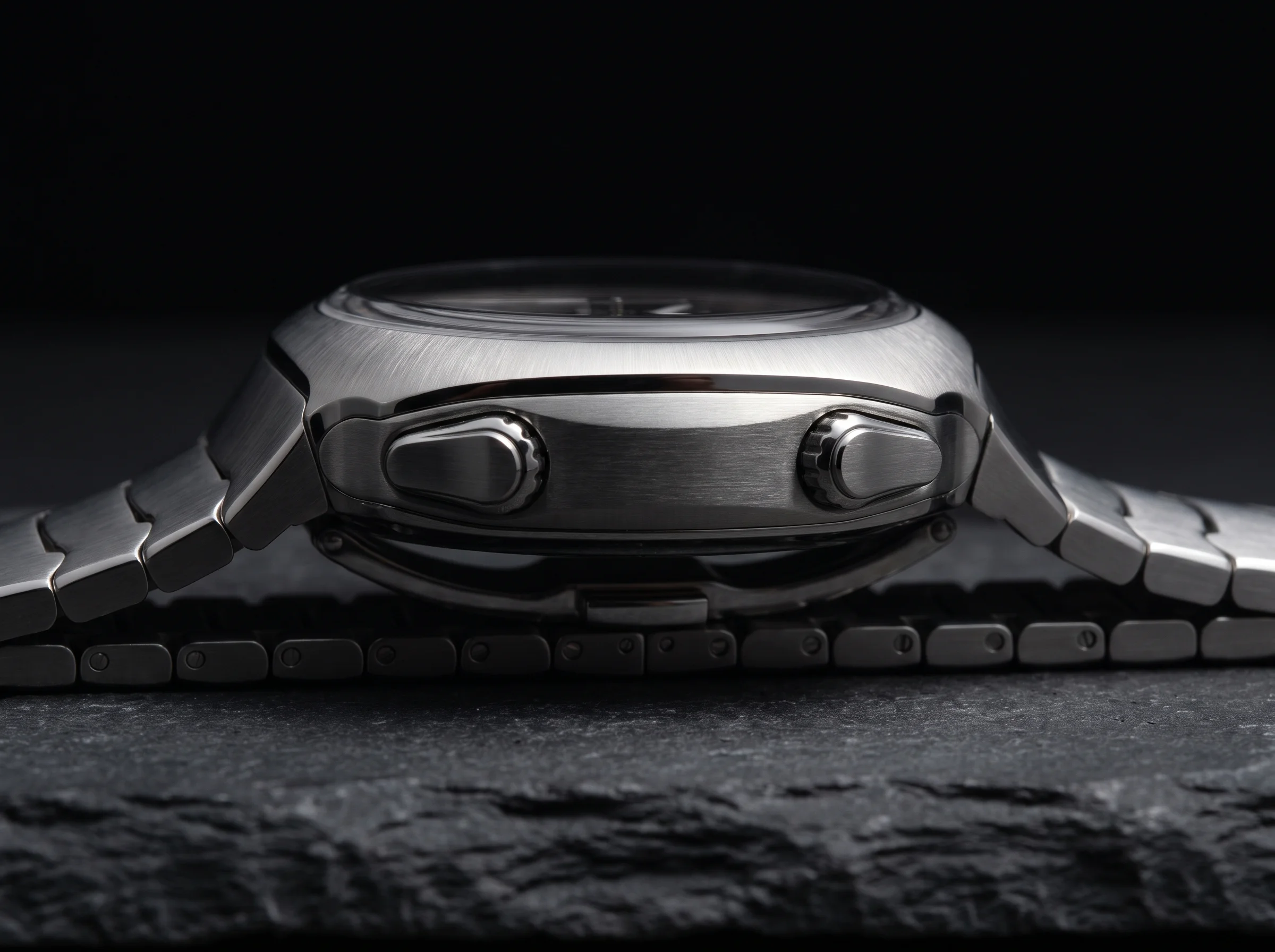 The chronograph pushers sit flush against the case flank rather than protruding, keeping the Streamliner's rounded profile intact.
Moser solved it by building the first bracelet links as part of the case tooling itself, rather than treating the bracelet as a separate component bolted on afterward.
The Movement, in Detail
Caliber HMC 907 runs 55 jewels at 21,600 vibrations per hour (3Hz), a deliberately slower beat rate than the 4Hz standard on most modern chronographs, and delivers a genuinely long 72-hour power reserve.
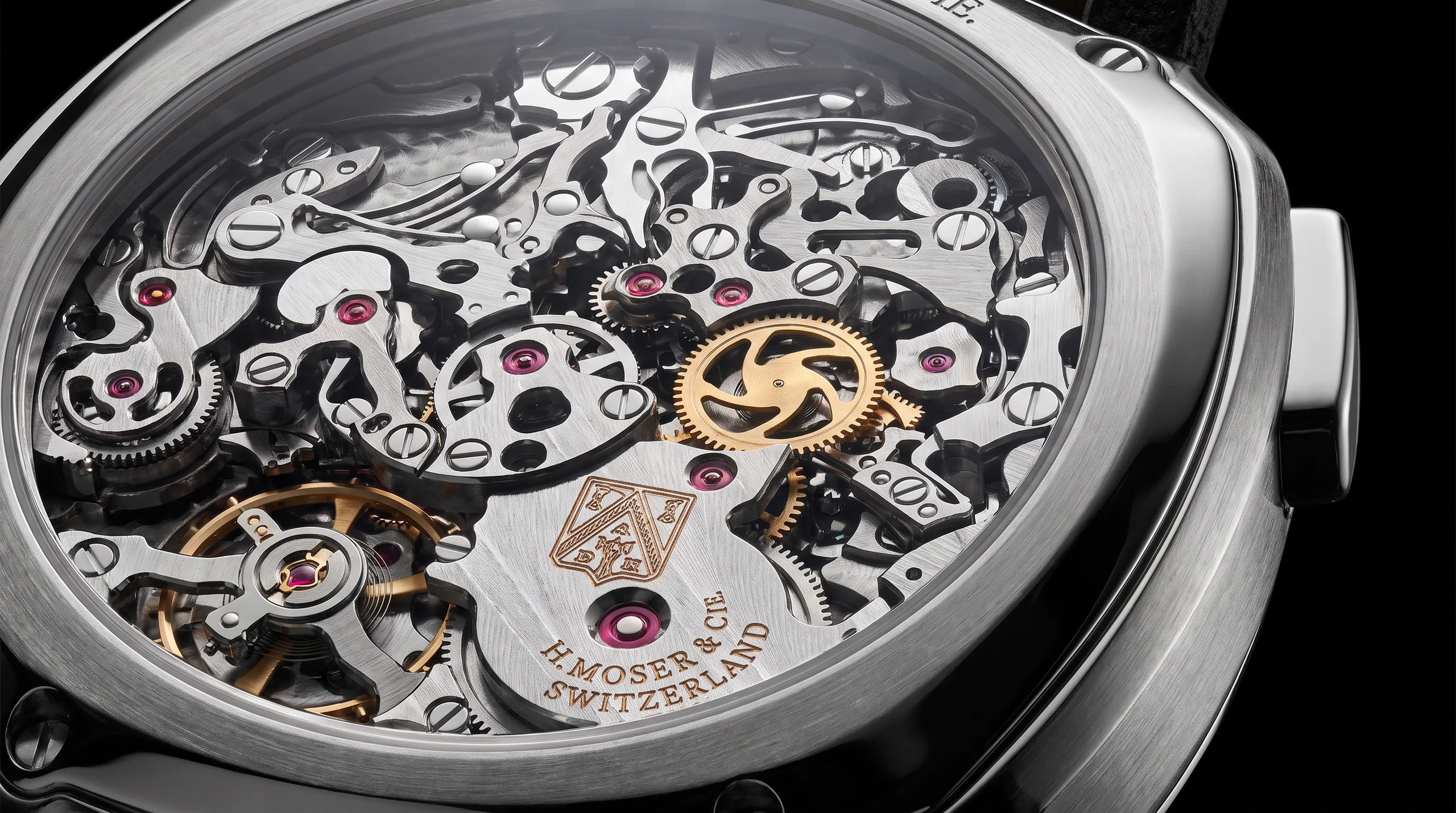 Moser finishes its movements with the brand's own anthracite coating and stripe pattern rather than the traditional gold-toned bridges most manufactures use.
72 hours is unusually generous for a chronograph movement, which typically drain power reserve faster than a simple three-hander because the chronograph train adds friction whenever it runs.
Why the Beat Rate Is Slower on Purpose
A slower 3Hz beat generally means fewer vibrations per second wearing down the escapement's contact surfaces over the movement's life, at the cost of theoretically coarser timing resolution. For a chronograph built around visual clarity rather than racing-stopwatch precision, Moser prioritized the trade-off toward longevity and a fuller power reserve.
What It Actually Costs
Within the wider Streamliner family, the Flyback Chronograph sits below the ceramic Tourbillon Concept references (which run past $100,000) and above the simpler Centre Seconds three-hand models (starting near $22,000 to $24,000), a middle position that reflects the added chronograph mechanics without the premium of a tourbillon.
What to Check Before Buying Pre-Owned
Because the chronograph runs through the movement's center rather than off to one side, a technician unfamiliar with the AgenGraphe architecture can struggle to service it correctly. Ask specifically whether prior service was performed by someone experienced with center-display chronographs, not just any qualified watchmaker.
 A correctly serviced flyback pusher should reset the center chronograph hands to zero instantly, with no lag or catch.
The Honest Trade-Off
A center-mounted chronograph display is genuinely harder to engineer and service than a conventional sub-dial layout, and Moser's small production means fewer independent watchmakers have hands-on experience with this specific caliber. What it buys is a chronograph that reads as cleanly as a simple three-hand watch at a glance, which is rarer than it sounds in a category most brands solve by adding more dials, not fewer.
FAQ
What movement powers the H. Moser Streamliner Flyback Chronograph?
Caliber HMC 907, also known as the AgenGraphe, developed by movement house Agenhor. It runs 55 jewels at 21,600 vibrations per hour with a 72-hour power reserve, and drives both chronograph hands from a single stacked axis at the center of the dial.
Why does the Streamliner Flyback Chronograph have no sub-dials?
The AgenGraphe caliber was purpose-built to display the chronograph's counters from the center of the dial rather than off to the side, which is why this watch reads like a simple three-hand watch until the chronograph is engaged.
How much does the H. Moser Streamliner Flyback Chronograph cost?
Current retail is CHF 45,000. That places it above the simpler Streamliner Centre Seconds three-hand models, which start around $22,000 to $24,000, and below the brand's ceramic Tourbillon Concept references, which run past $100,000.
What is flyback on a chronograph, specifically on this watch?
Flyback lets the wearer reset and restart the chronograph in a single pusher press, without stopping it first. On a center-display watch like this one, it keeps the reset instantaneous rather than adding a visible delay to the clean central hands.
What water resistance does the Streamliner Flyback Chronograph have?
120 meters dynamic, which is deep for a dress-leaning chronograph and reflects the fully integrated case and bracelet construction.
Related Reading
- H. Moser & Cie: The Rebel Independent That Made Minimalism a Statement
- The A. Lange & Söhne Lange 1 Buying Guide: The Independent Benchmark, Read by a Dealer
- F.P. Journe: The Connoisseur's Independent, and Why Collectors Keep Chasing It
- URWERK UR-150 Golden Scorpion: The Satellite Watch Comes Back in Gold