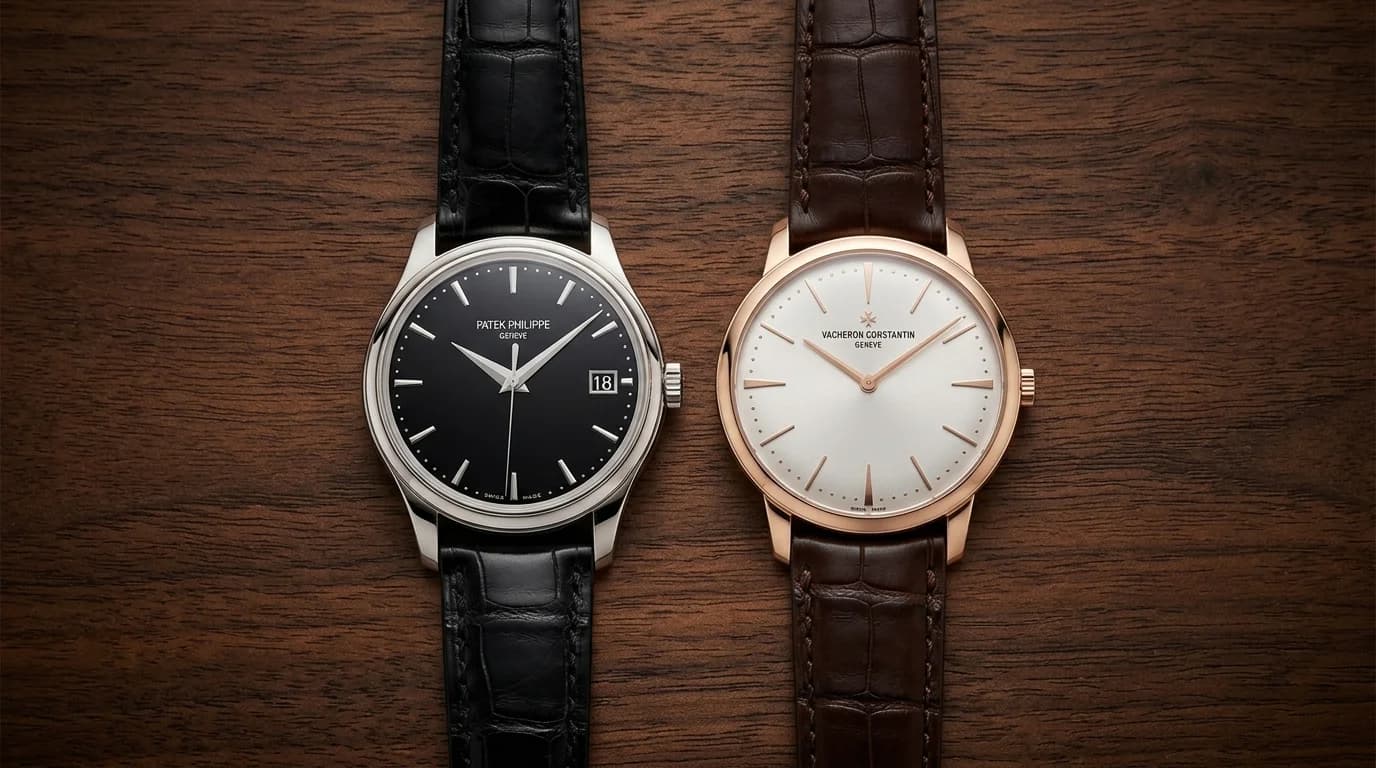
Strip a dress watch down to its purest form and you land in one of two workshops: Patek Philippe's or Vacheron Constantin's. The Calatrava and the Patrimony are both answers to the same question, how little can a watch say and still say everything. They just answer it differently.
This post includes AI-generated images built from real reference photography of the watches discussed, verified by our team for accuracy before publishing.
The short answer
The Patek Philippe Calatrava (ref. 5227, 39mm, automatic Caliber 26-330 S C, $47,262 retail, roughly $27,000 to $37,000 pre-owned) is the more traditionally dressed of the two, with applied gold markers, a date window, and a case that reads as unmistakably Patek. The Vacheron Constantin Patrimony (ref. 1410U, 39mm, hand-wound Caliber 1440, around $25,200 retail, roughly $14,500 to $19,000 pre-owned for a simple manual-winding piece) is the more austere choice, no date, no complication, just a dial, two hands, and one of the thinnest cases in Swiss watchmaking. Buy the Calatrava if you want the more universally recognized name and a touch more daily-wear practicality. Buy the Patrimony if you want the purer design statement and don't mind winding it by hand.
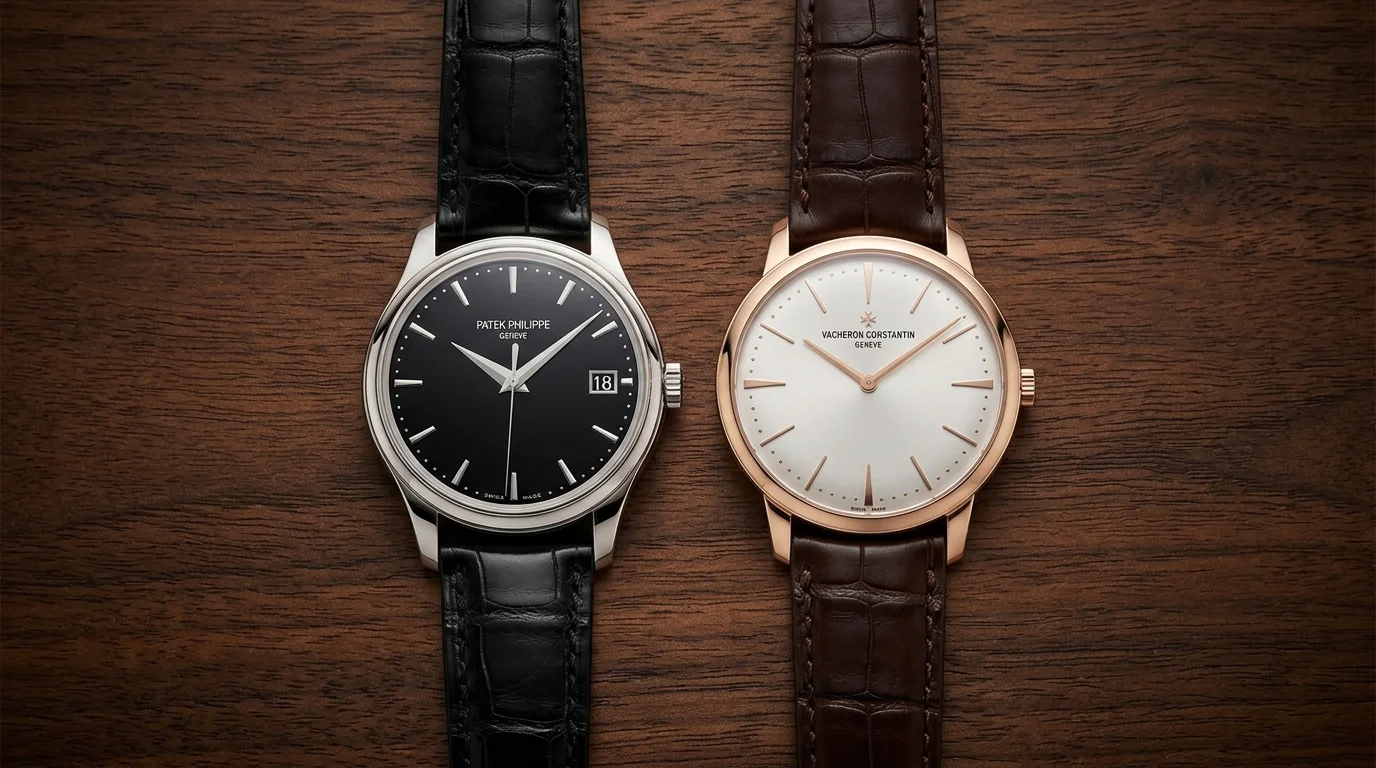 Two answers to the same question. Neither watch is trying to impress you from across the room.
The Patek Philippe Calatrava
The Calatrava name has stood for the plain, round wristwatch since 1932, when Patek's Reference 96 established the template every dress watch since has borrowed from.
The case and dial
The current 5227 runs 39mm, a size Patek has held steady across most of the modern Calatrava lineup because it works on nearly every wrist. The dial keeps things simple: applied gold baton markers, dauphine hands, and a date window at 3 o'clock, the one concession to daily practicality that the Patrimony skips entirely.
The movement
Caliber 26-330 S C is Patek's own automatic movement, delivering 35 to 45 hours of power reserve depending on wind state. It is a workhorse in the best sense, accurate, serviceable through Patek's own network, and unremarkable to look at through the caseback, which is exactly the point on a watch this restrained.
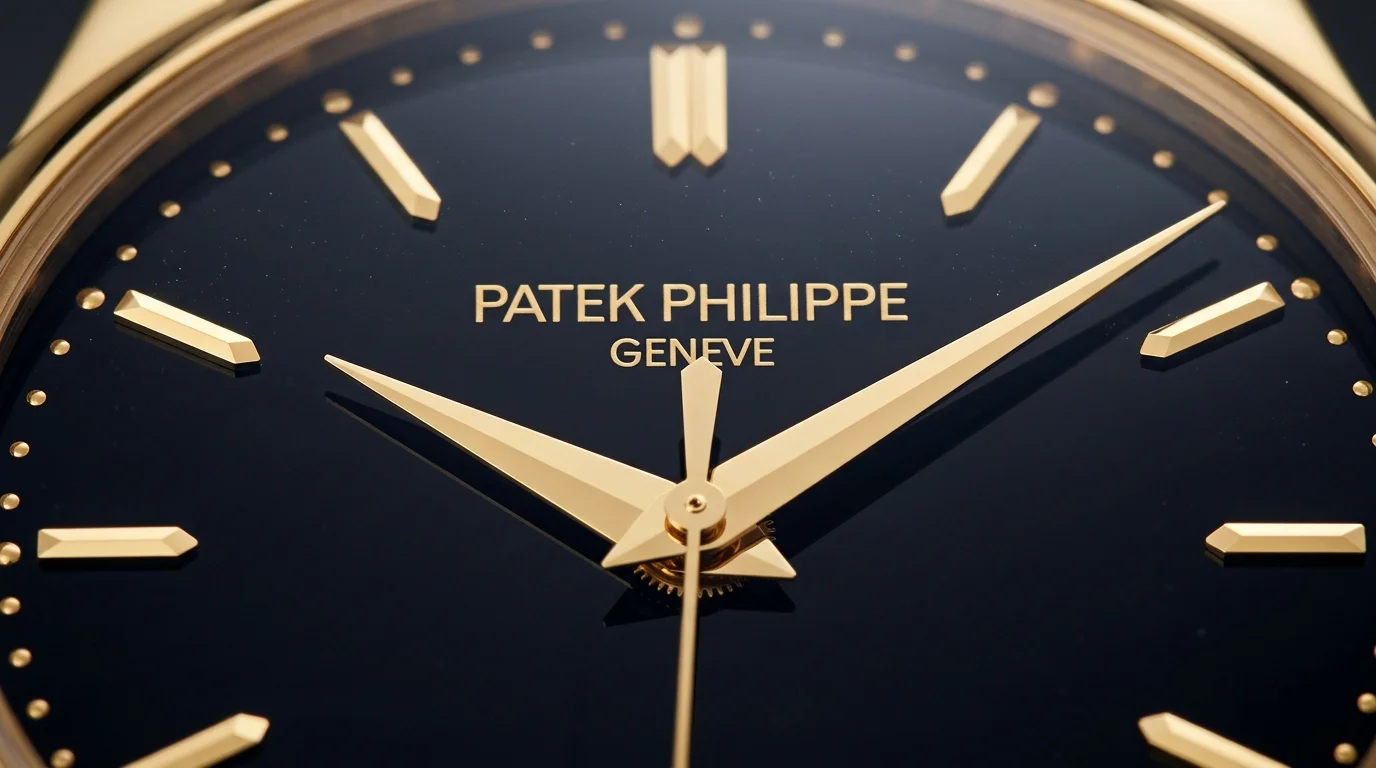 Applied gold markers and dauphine hands, the same formula the Reference 96 established nearly a century ago.
Pricing
Retail on the 5227G runs $47,262. Pre-owned pricing on the secondary market currently runs roughly $27,000 to $37,000 depending on metal, dial color, and condition, a meaningful discount off retail that reflects how much Patek allocation and waitlist premium factors into the new-watch price.
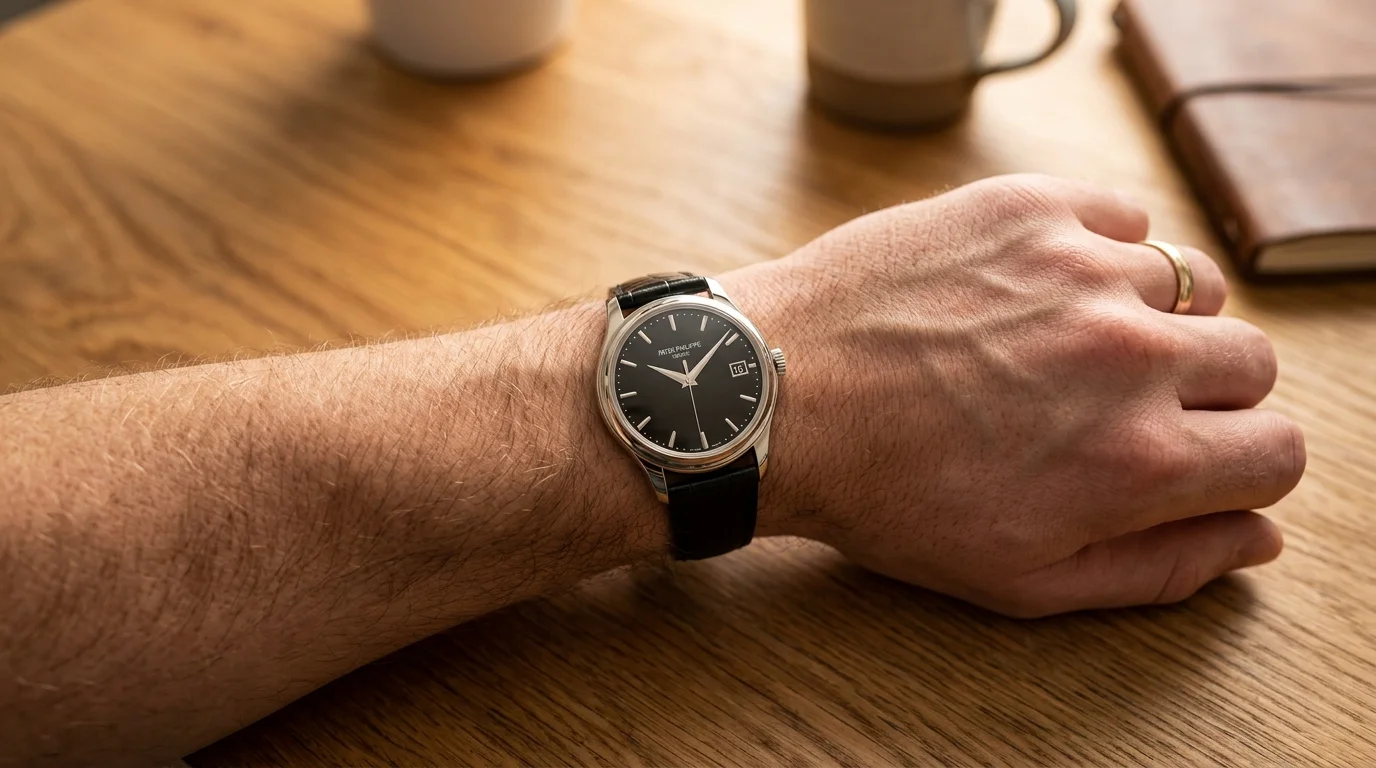 39mm wears close to the wrist and disappears under a cuff, the same way the original Reference 96 was designed to.
The Vacheron Constantin Patrimony
Vacheron's Patrimony line takes the same round-dress-watch brief and pushes it further toward nothing. No date window, no seconds hand on the manual-winding reference, just hour and minute hands on a dial that gets out of its own way.
The case and dial
The Patrimony Manual-Winding also runs 39mm, but the case is noticeably thinner than the Calatrava's, a direct result of skipping both the date complication and an automatic rotor. The dial carries the Maltese cross logo, thin dauphine hands, and minimal baton markers, with nothing else competing for attention.
The movement
Caliber 1440 is Vacheron's in-house hand-wound movement, delivering 42 hours of power reserve. Winding it daily is part of the experience Vacheron is selling here, a small ritual that a date-window automatic like the Calatrava does not ask of you.
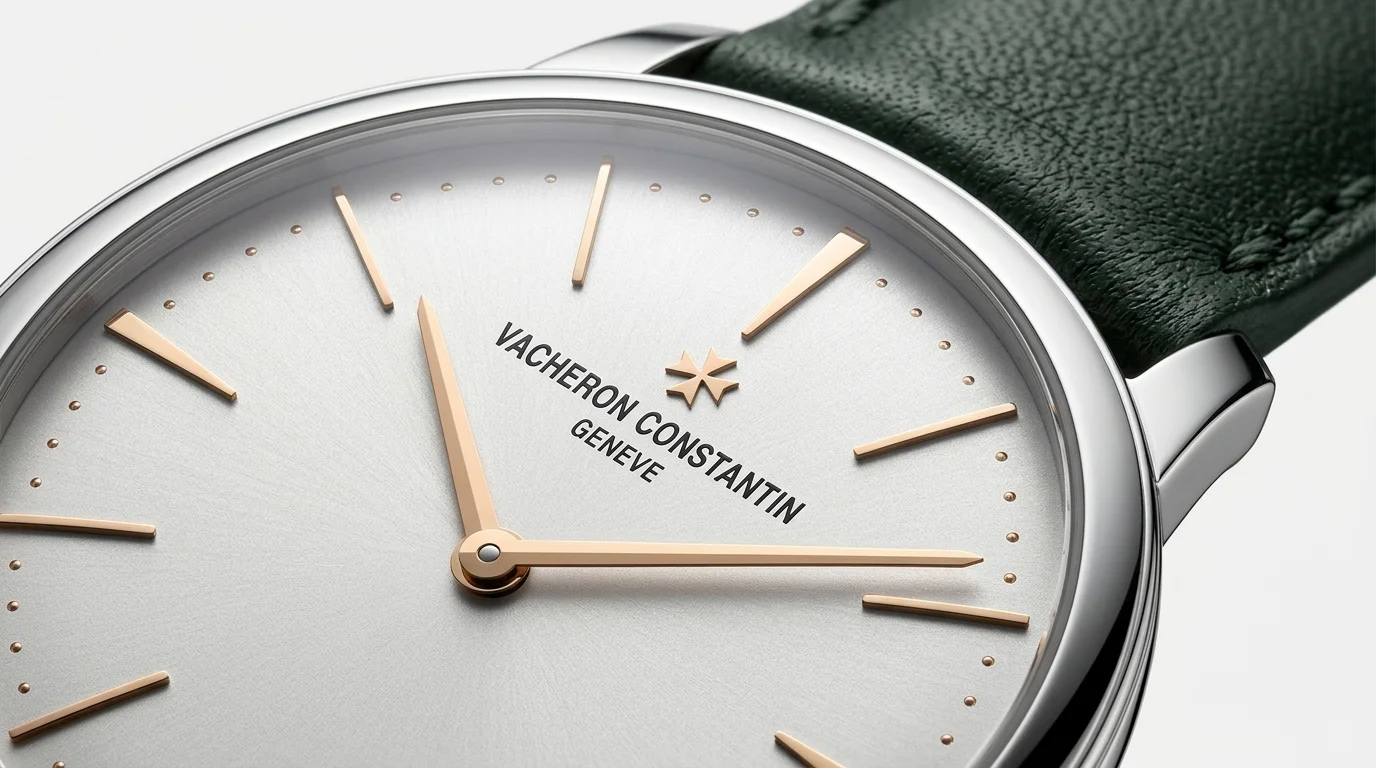 No date window, no seconds hand. The Patrimony strips the Calatrava formula down one more layer.
Pricing
Retail on the 1410U runs around $25,200. Pre-owned Patrimony pricing spans roughly $12,300 to $29,800 across the broader collection, with simple manual-winding pieces like this one typically trading in the $14,500 to $19,000 range, while gem-set or complicated references push the range higher.
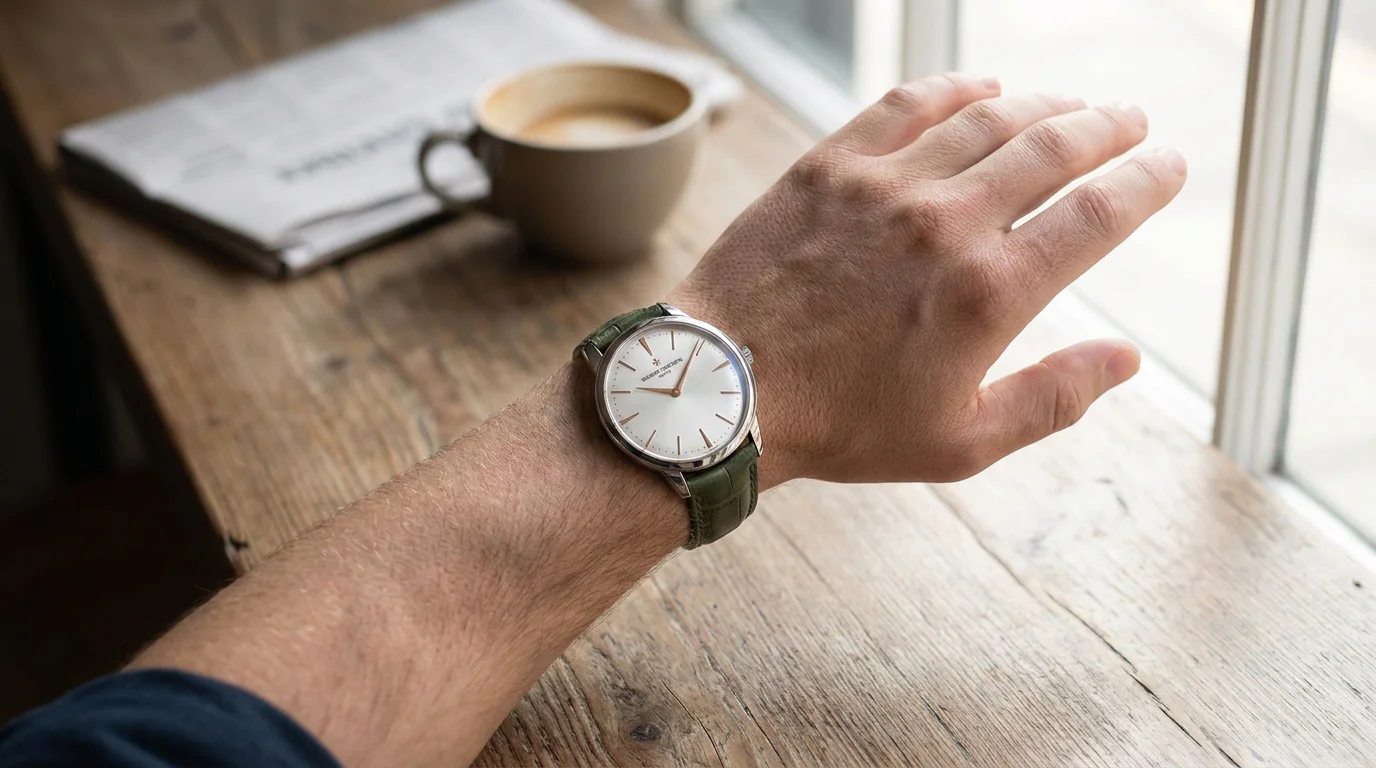 Thinner and quieter than the Calatrava. This is a watch built to be felt more than seen.
Side by side
| Patek Philippe Calatrava 5227 | Vacheron Constantin Patrimony 1410U | |
|---|---|---|
| Case size | 39mm | 39mm |
| Movement | Automatic, Caliber 26-330 S C | Hand-wound, Caliber 1440 |
| Power reserve | 35-45 hours | 42 hours |
| Date window | Yes | No |
| Retail price | $47,262 | ~$25,200 |
| Pre-owned range | ~$27,000-$37,000 | ~$14,500-$19,000 (simple ref.) |
How to actually decide
Do you want to wind a watch every morning, or not think about it? The Calatrava's automatic movement means you can leave it in a drawer for a couple of days and it will still be running when you pick it up. The Patrimony wants a daily wind, which some buyers genuinely enjoy as a small ritual and others find like one more thing to remember.
Do you want a date window? It sounds minor until you live with it. The Calatrava's date at 3 o'clock is genuinely useful day to day. The Patrimony's total absence of complications is the whole point of the watch, so if you want the purest possible dial, that's a feature, not an omission.
What's your budget, and how much of it is going toward the badge? The Calatrava carries roughly double the Patrimony's retail price for a watch that is, mechanically, doing less (no in-house hand-wound movement, no comparable case thinness). A meaningful part of that premium is the Patek name and its resale strength, which is a legitimate thing to pay for if it matters to you.
FAQ
Which is more waterproof, the Calatrava or the Patrimony?
Neither watch is built for water exposure. The Calatrava 5227 is rated to 30 meters, enough to survive a splash or handwashing, but the Patrimony carries a similarly modest rating. Both are dress watches meant to stay dry.
Does the Vacheron Patrimony hold value as well as the Patek Calatrava?
Generally not quite as well. Patek Philippe's brand strength and waitlist dynamics give the Calatrava stronger resale support, though the Patrimony holds value respectably within Vacheron's own collection and among dedicated Vacheron collectors.
Is 39mm too big or too small for a dress watch?
39mm has become the modern consensus size for a men's dress watch, big enough to read easily, small enough to sit close to the wrist and disappear under a cuff. Both the Calatrava and Patrimony land at this size deliberately.
Can a hand-wound watch like the Patrimony keep accurate time?
Yes. A hand-wound movement like the Vacheron Caliber 1440 keeps time just as accurately as a comparable automatic, the only difference is you wind it yourself rather than relying on wrist motion to keep the mainspring charged.
Which watch is the better first purchase into high independent watchmaking?
The Calatrava is generally the safer first purchase given its stronger brand recognition and resale liquidity. The Patrimony rewards buyers who already understand and want Vacheron's specific design language rather than the broader validation a Patek name provides.
Related reading
For the full range of modern Calatrava references, see The Patek Philippe Calatrava Buying Guide. For another rectangular purist's dress watch comparison, read Cartier Tank vs Jaeger-LeCoultre Reverso. And for more accessible dress watch picks, see The Best Dress Watches Under $5,000 in 2026.