The Short Answer
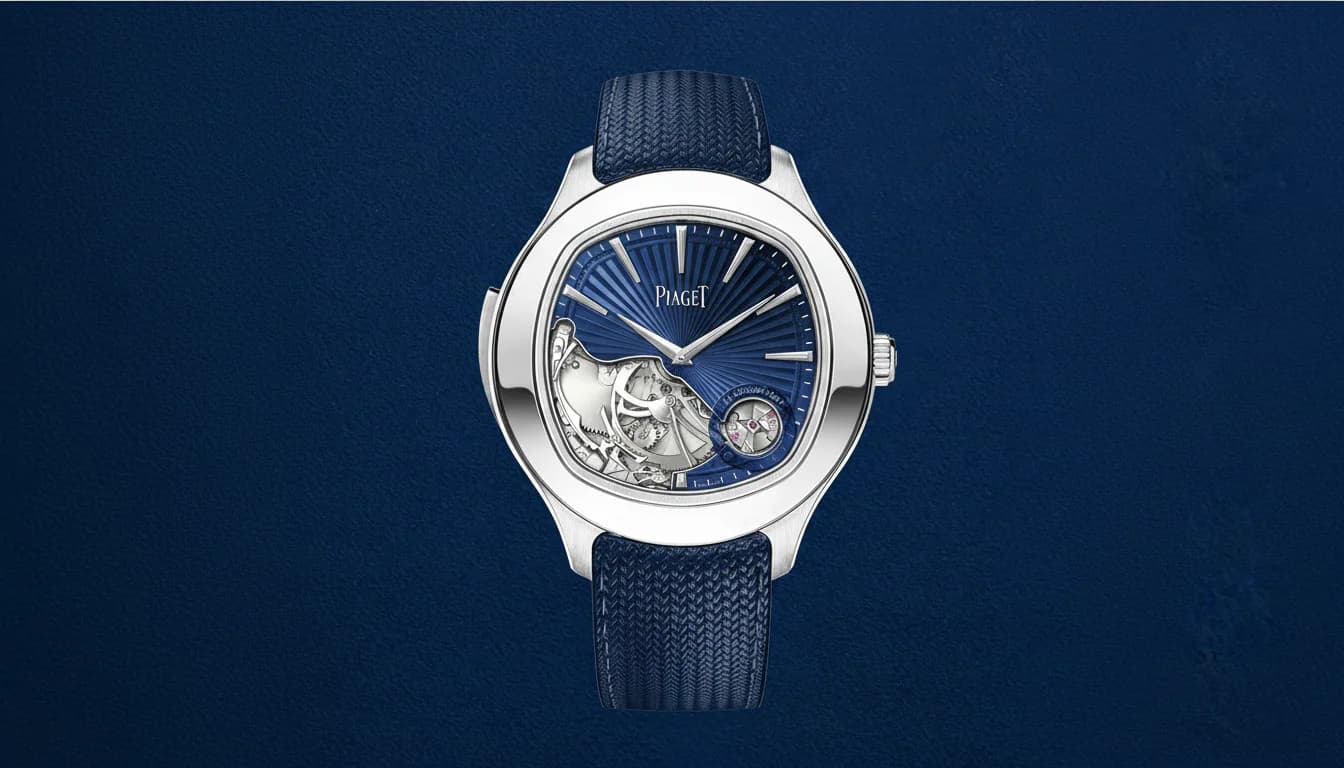
Piaget just built the sportiest case it has ever wrapped around a minute repeater. The Polo Minute Repeater pairs the brand's in-house caliber 1290P, at 4.8mm the thinnest self-winding minute repeater movement on the market, with a 48mm white gold Polo case that keeps the acoustic chamber intact while staying true to the collection's cushion silhouette. Piaget builds only five numbered pieces a year, reference G0A51038, priced at EUR 330,000.
This is not Piaget's first minute repeater. The brand set the thinnest-minute-repeater record back in 2013 with the Polo Emperador Coussin, and this new piece brings that same philosophy into a case shape buyers actually associate with the modern Polo line rather than the older Emperador family.
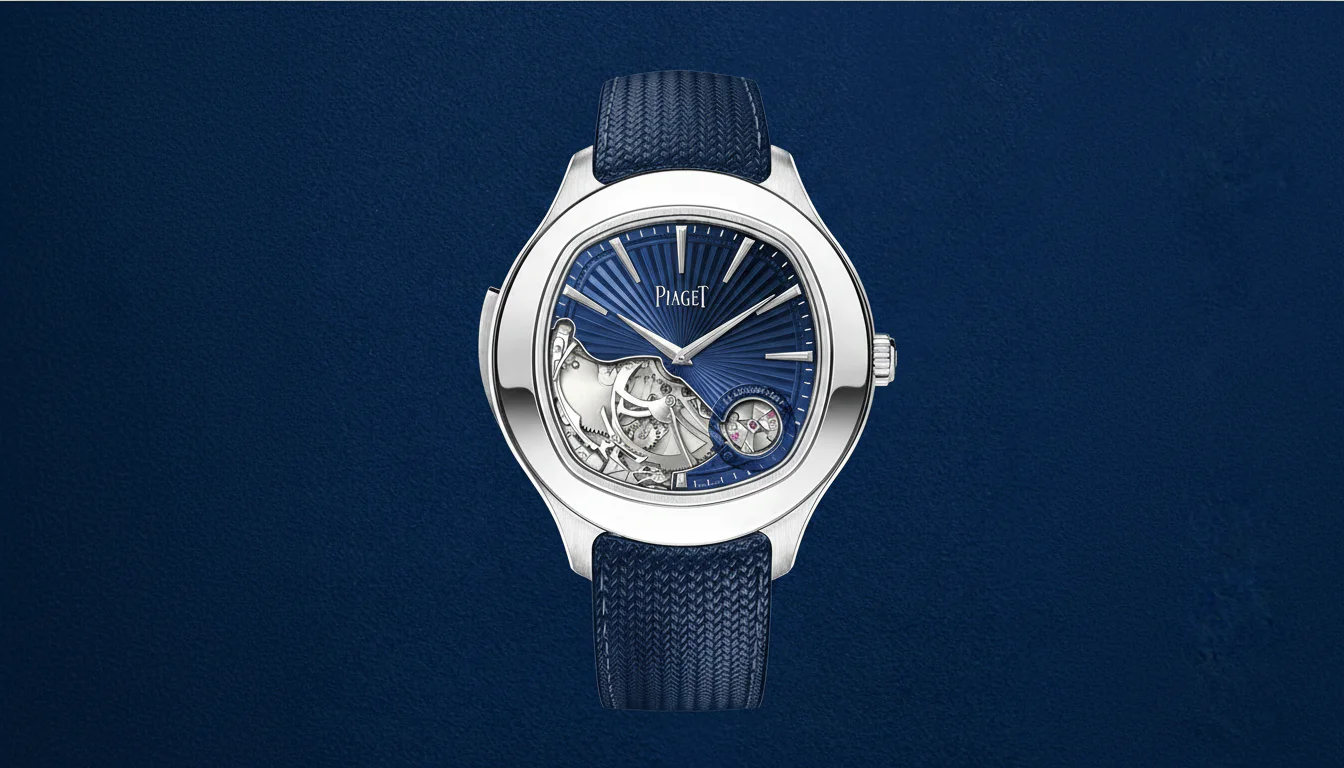 Four to five numbered pieces a year is a genuinely tight allocation, even by haute horlogerie standards.
The watch photos in this article were generated with AI image tools, conditioned on real reference photography of the Piaget Polo Minute Repeater so the case shape, dial layout, and construction details are accurate to the real watch.
Why Piaget Built This Watch
Piaget has spent over a decade chasing thinness in complicated movements, and the minute repeater has always been the hardest one to shrink. A repeater needs physical space for gongs, hammers, and a resonance chamber, and cutting case thickness usually means cutting sound quality along with it.
The Polo line has become Piaget's answer to the integrated sports watch category that Genta-era designs from Audemars Piguet and Patek Philippe still dominate. Putting the brand's flagship complication into that case, rather than the older Emperador cushion, signals where Piaget wants the Polo positioned going forward: as the platform for its most serious watchmaking, not just its entry-level sport pieces.
A Five-Piece-a-Year Allocation
Piaget caps production at five numbered examples annually rather than a single fixed limited run. That is a meaningfully different scarcity model than a one-time limited edition. It means the reference stays in the catalog indefinitely, but supply never loosens.
The Case: 48mm, White Gold, 9.3mm Thick
The case runs 48mm across in 18 karat white gold, a genuinely large diameter that gives the repeater mechanism room to breathe acoustically. Thickness holds at 9.3mm despite everything packed underneath, and water resistance sits at a modest 30 meters, typical for a watch built around an open acoustic chamber rather than a sealed dive case.
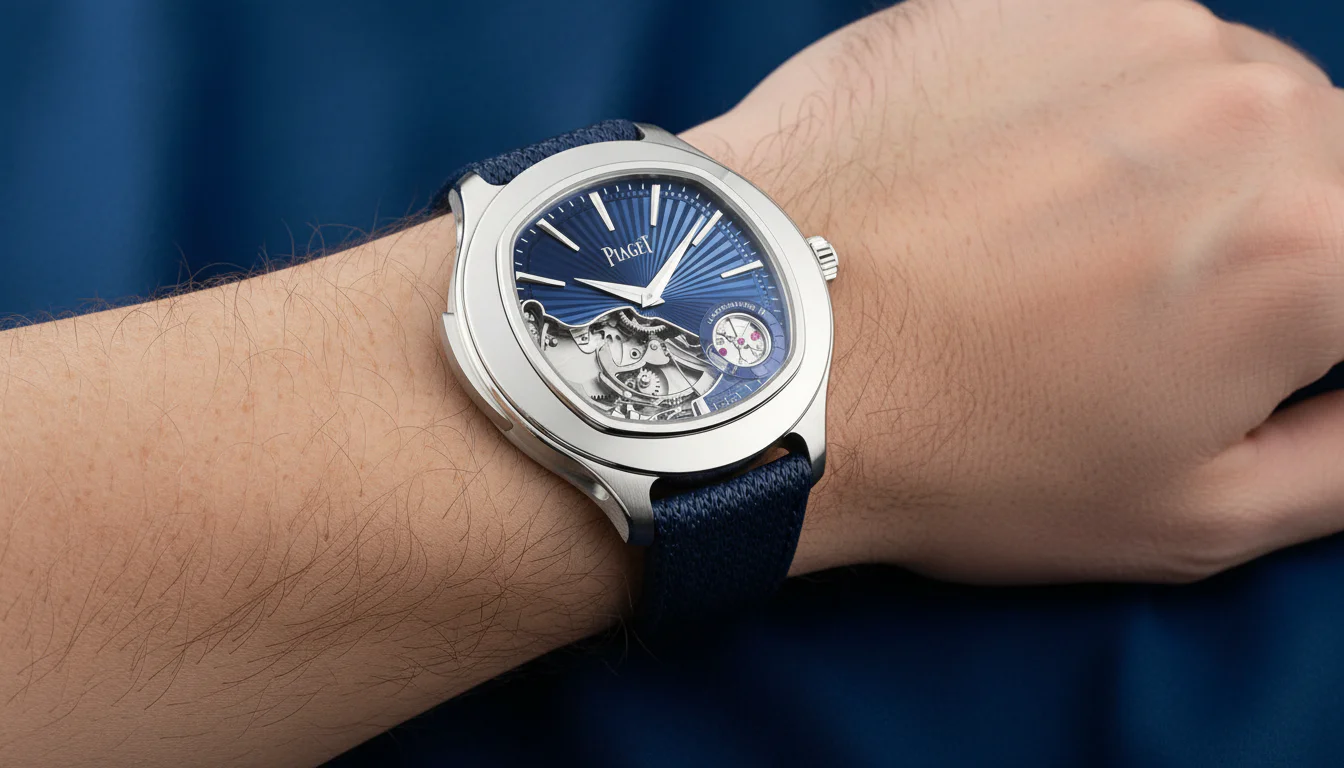 Forty-eight millimeters is large by dress-watch standards, but the cushion shape and thin profile keep it from feeling like a tool watch on the wrist.
A repeater activation slide sits at 9 o'clock rather than the correcting pushers you would find on a calendar complication. Sliding it forward winds the striking mechanism and triggers the chime on release, the same interaction most minute repeaters have used for well over a century.
Why the Case Stayed This Big
A thinner or smaller case would have meant compromising the resonance chamber that lets the repeater actually sound correct. Piaget chose to keep the diameter generous specifically so the acoustic engineering did not have to give ground to case dimensions.
The Movement: Caliber 1290P
Caliber 1290P is Piaget's in-house self-winding minute repeater movement, measuring just 4.8mm thick, the thinnest of its kind currently in production. It runs 407 components and 44 jewels at 21,600 vibrations per hour, delivering roughly 40 hours of power reserve from a platinum micro-rotor.
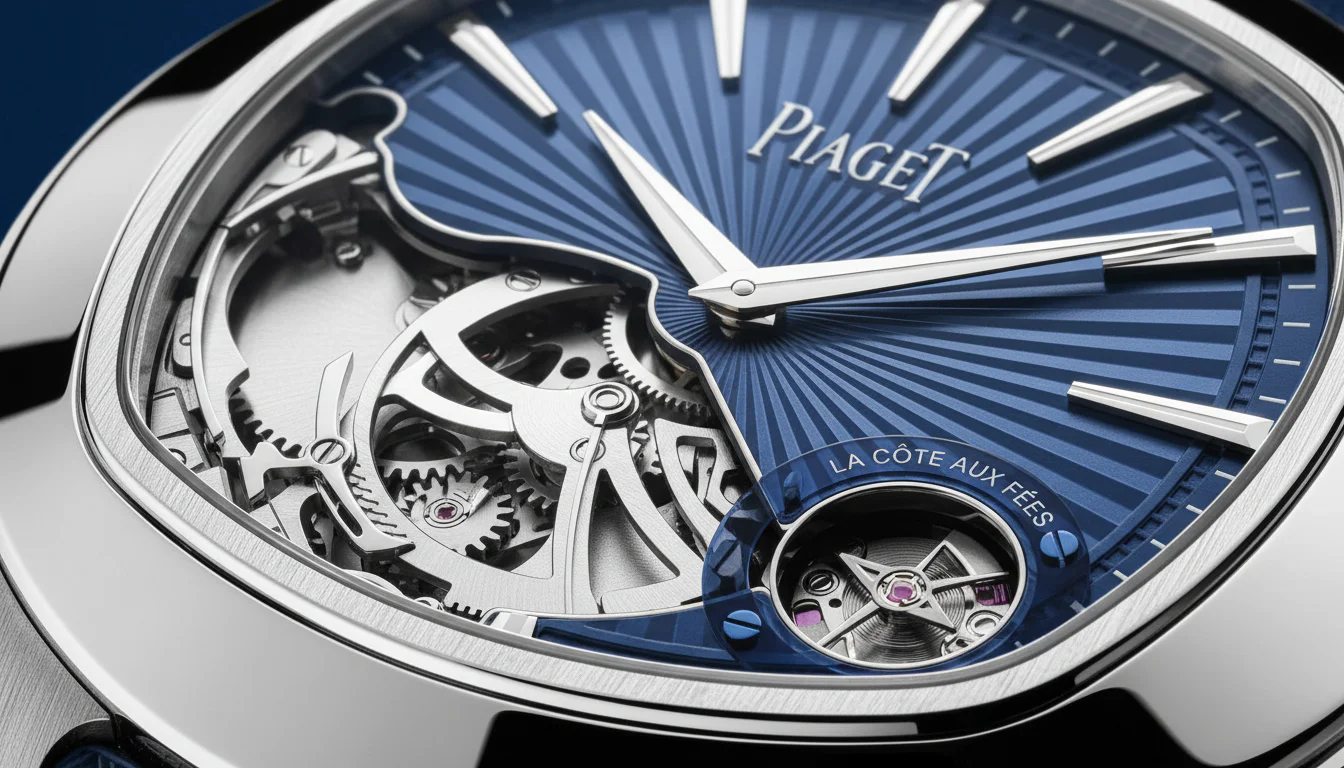 The blue sapphire ring at 4 o'clock exposes the repeater's regulator, printed with the manufacture's "La Côte-aux-Fées" inscription.
The strike hits G sharp for the hours and A sharp for the minutes, both in the fifth octave, at a measured 64 decibels. Piaget hand-bevels the bridges and mirror-polishes the repeater hammers, finishing that matters more here than on most complications, since a repeater's sound quality is directly tied to how cleanly its components are machined and polished.
The Openworked Dial
The dial itself is white gold, hand-guilloched and openworked to show the repeater mechanism underneath, with blue PVD accents tying the color scheme to the strap. It is a dial built to display engineering rather than hide it, consistent with how most modern minute repeaters choose to present the complication.
Price and Availability
Piaget lists the standard reference G0A51038 at EUR 330,000, with a high jewellery variant, reference G0A51017, adding diamond and sapphire settings for buyers who want the complication dressed further up. Both come on a blue embossed calfskin strap with an alligator strap included as a second option.
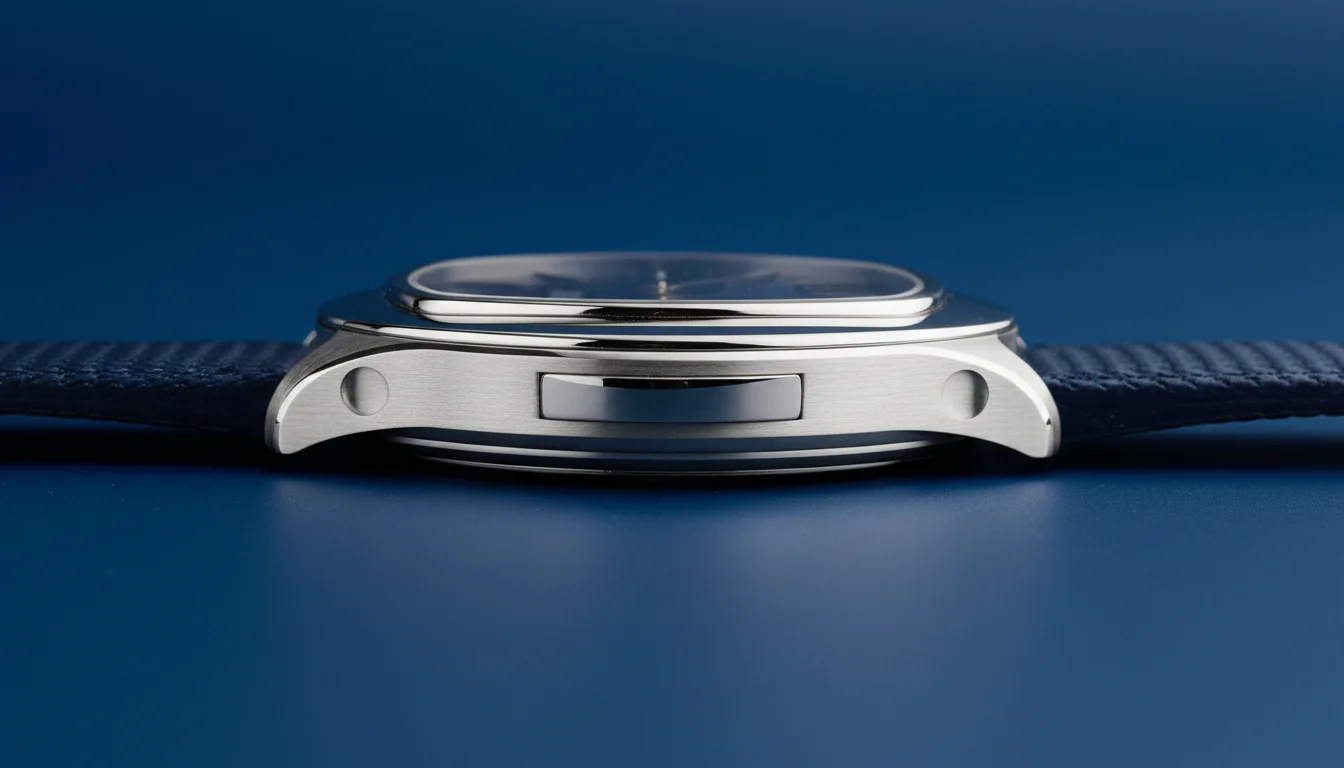 The slide at 9 o'clock winds and releases the strike, the same basic interaction minute repeaters have used since well before wristwatches existed.
At five pieces a year, waiting lists are the real constraint here more than the price tag. Buyers interested in the reference should expect a conversation with Piaget's boutique network well before a watch becomes available.
FAQ
What movement is in the Piaget Polo Minute Repeater?
Caliber 1290P, Piaget's in-house self-winding minute repeater movement, at 4.8mm the thinnest of its kind currently in production, running 407 components at 21,600 vibrations per hour with roughly 40 hours of power reserve.
How much does the Piaget Polo Minute Repeater cost?
The standard reference G0A51038 is priced at EUR 330,000. A high jewellery variant, reference G0A51017, costs more due to added diamond and sapphire settings.
How many Piaget Polo Minute Repeaters are made?
Piaget produces five numbered pieces annually rather than a single fixed limited run, so the reference stays available indefinitely but supply never loosens.
How big is the Piaget Polo Minute Repeater case?
The case measures 48mm across in 18 karat white gold, at 9.3mm thick, with 30 meters of water resistance.
Has Piaget made a minute repeater before?
Yes. Piaget set the record for the world's thinnest minute repeater in 2013 with the Polo Emperador Coussin. This new Polo Minute Repeater carries that engineering into the brand's current sports-watch case shape.