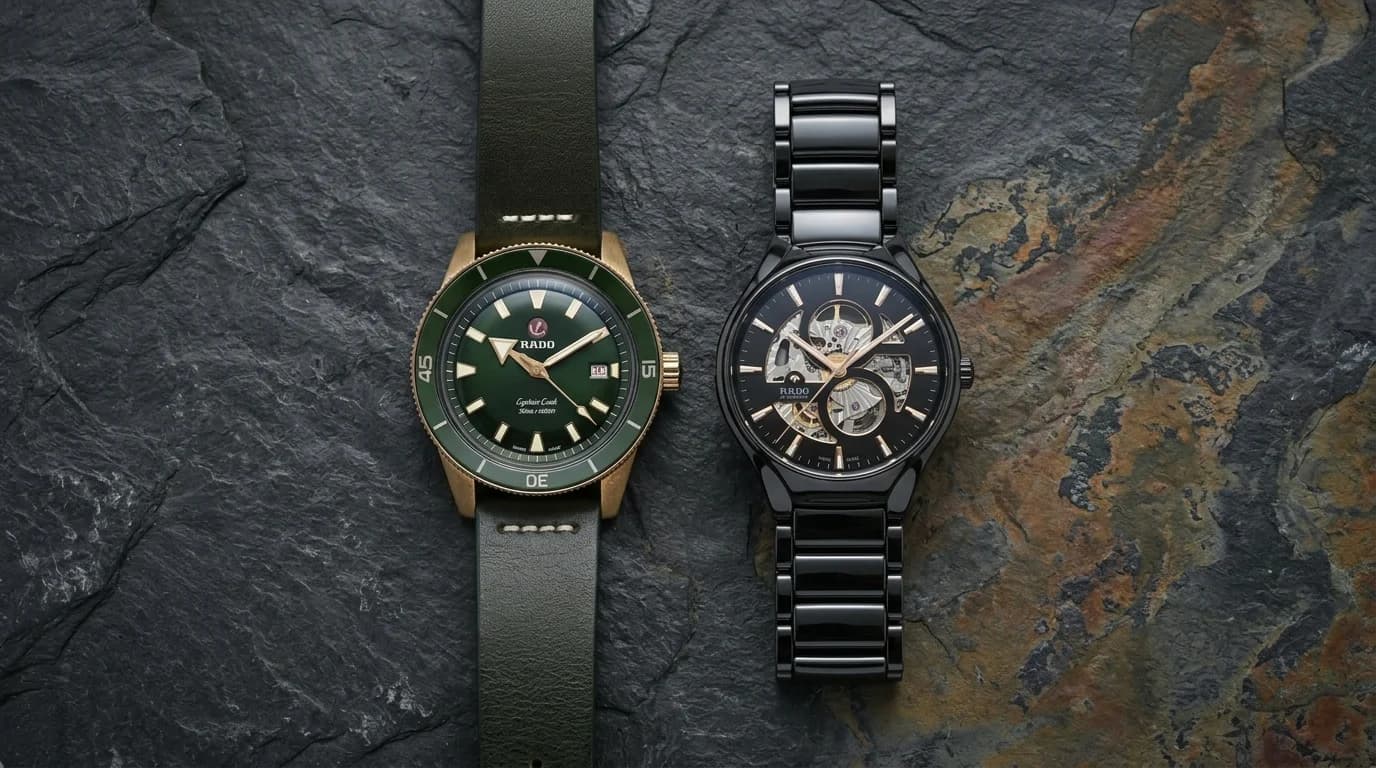
Rado doesn't get talked about as much as Omega or Tudor, and that's a mistake. It's the brand that will sell you a genuinely well-built Swiss automatic for the price of a nice dinner tab at a steakhouse, in a material (high-tech ceramic) most other brands charge a premium for. Its two flagship lines, Captain Cook and True, take that same value proposition in almost opposite directions.
This post includes AI-generated images built from real reference photography of the watches discussed, verified by our team for accuracy before publishing.
The short answer
Captain Cook (37mm to 43mm, ETA-based automatic, $2,150 to $4,750, 300m water resistance on most models) is Rado's vintage-inspired diver, resurrected in 2017 with arrow-shaped hands and an inward-curving bezel borrowed from the 1962 original. True (round or square cases, high-tech ceramic construction, $150 to $3,000 retail) is Rado's modern design statement, built around scratch-resistant ceramic and a minimalist dial language, with the Open Heart variant showing off the movement through a cutout. Buy Captain Cook if you want a real dive watch with heritage design. Buy True if you want the most scratch-resistant case on the market and a cleaner, more contemporary look.
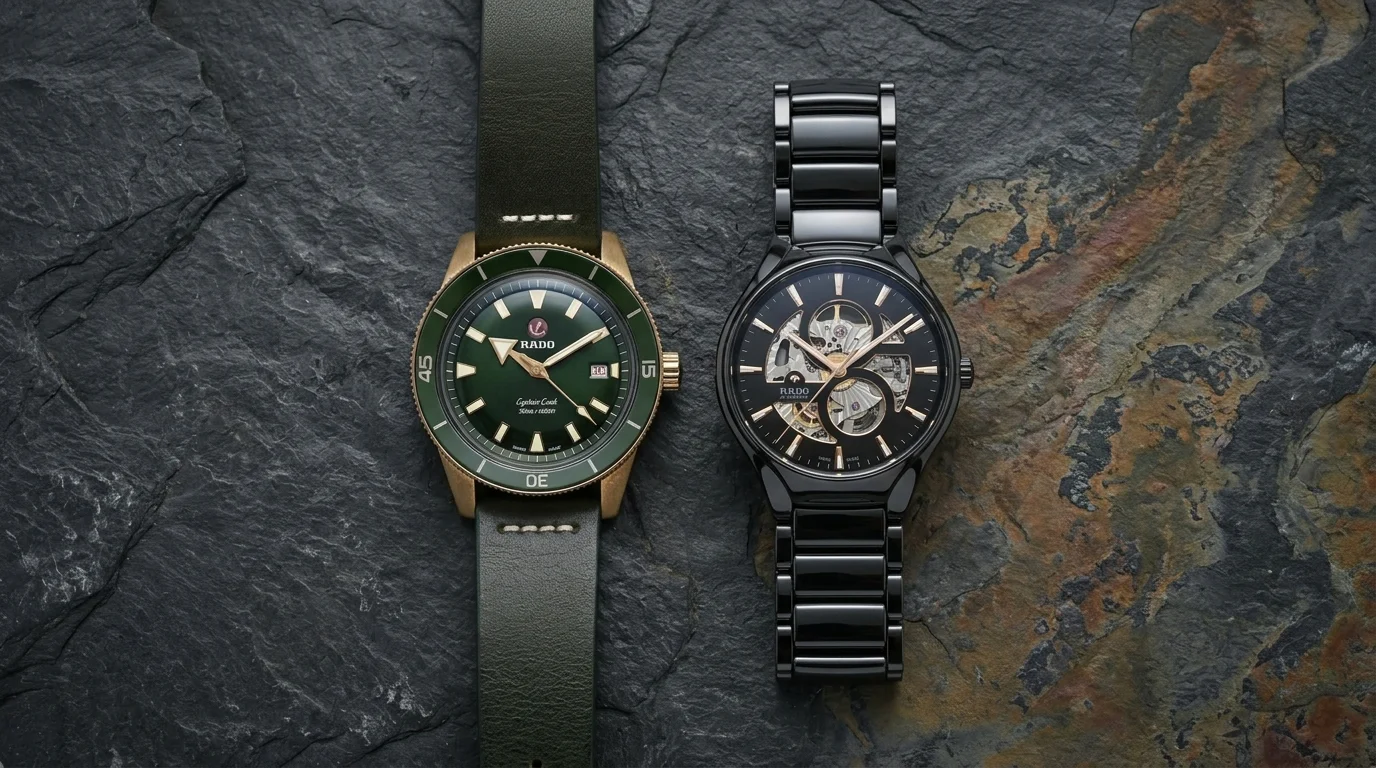 Same brand, two completely different personalities. Captain Cook leans vintage, True leans modern.
Rado Captain Cook
The modern Captain Cook launched in 2017 as a faithful resurrection of Rado's 1962 dive watch, and it has quietly become the brand's flagship.
The case and dial
Case sizes range from 37mm to 43mm across the current lineup, after Rado discontinued its largest 44mm option. The signature details carry over directly from the original: arrow-shaped hour and minute hands, an inward-curving dive bezel unique to Rado, and a seahorse engraving on the caseback. Bronze and high-tech ceramic case options sit alongside standard steel.
The movement
Captain Cook runs on ETA-based automatic calibers with power reserves over 80 hours on most current references, a genuinely strong spec at this price point. Water resistance sits at 300 meters on the majority of the line, with base 37mm models rated lower at 100 meters.
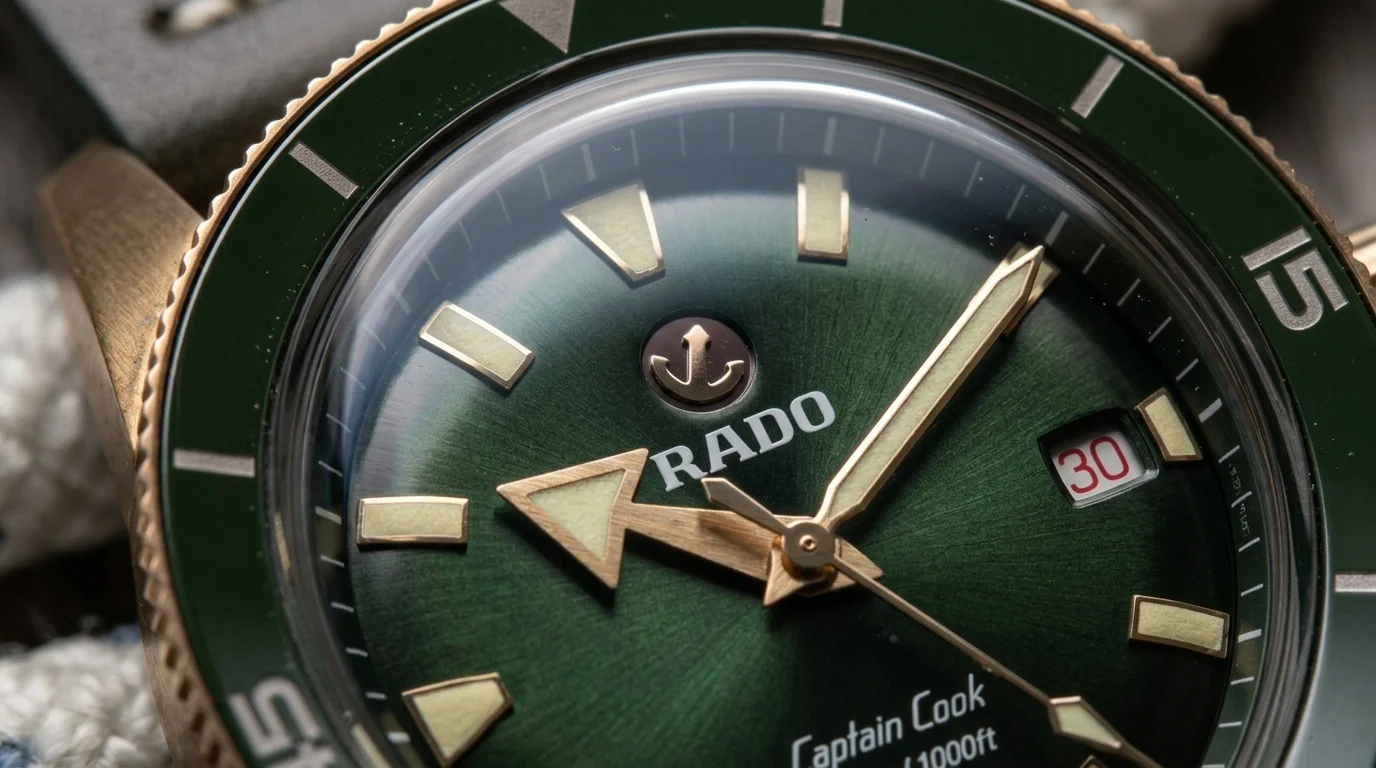 The arrow hands and inward-curving bezel are direct callbacks to Rado's original 1962 diver.
Pricing and honest flaws
Retail runs $2,150 to $2,600 for standard automatic models, $2,850 for bronze, and $3,700 to $4,750 for high-tech ceramic and chronograph references. Pre-owned examples on the secondary market have traded as low as roughly $1,200 to $2,400 depending on condition and reference. The honest flaw here is that Captain Cook's ceramic cases, while scratch-resistant, can chip or crack if dropped hard on a corner, unlike a steel case that would simply dent.
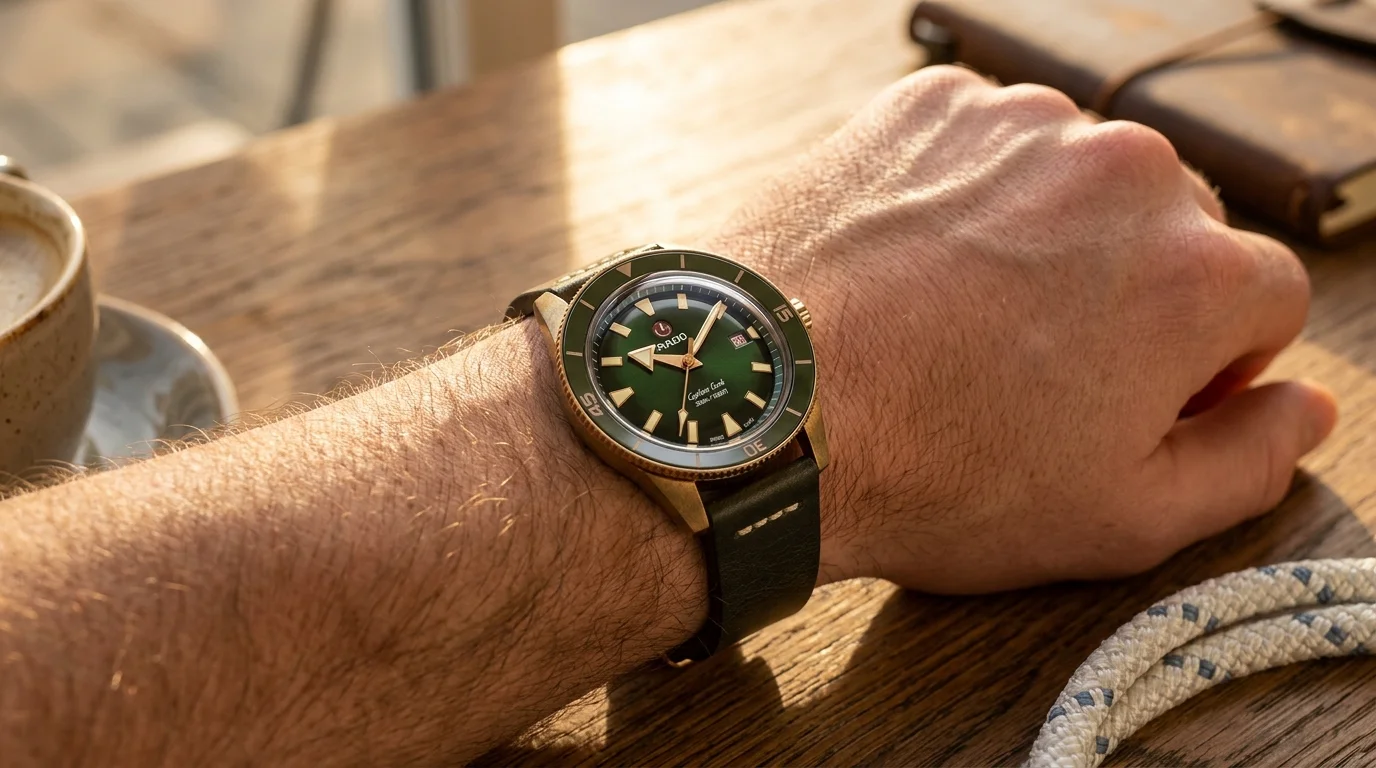 Bronze ages into its own patina over time, which some buyers love and others find unpredictable.
Rado True
True is Rado's showcase for the material the brand has built its modern identity around: high-tech ceramic, injection-molded and sintered under extreme heat, resulting in a case that is dramatically more scratch-resistant than steel.
The case and dial
True comes in round and square cases across a wide range of sizes and price points, with the Open Heart variant cutting a window into the dial to expose the balance wheel and part of the movement below. The ceramic construction gives the case a silky, almost matte-soft finish that steel cannot replicate.
The movement
Most True automatic references run on Swiss ETA or Rado in-house-adjacent calibers, generally without the extended power reserve that defines Captain Cook. The Open Heart models trade some water resistance and shock robustness for the visual appeal of the exposed movement.
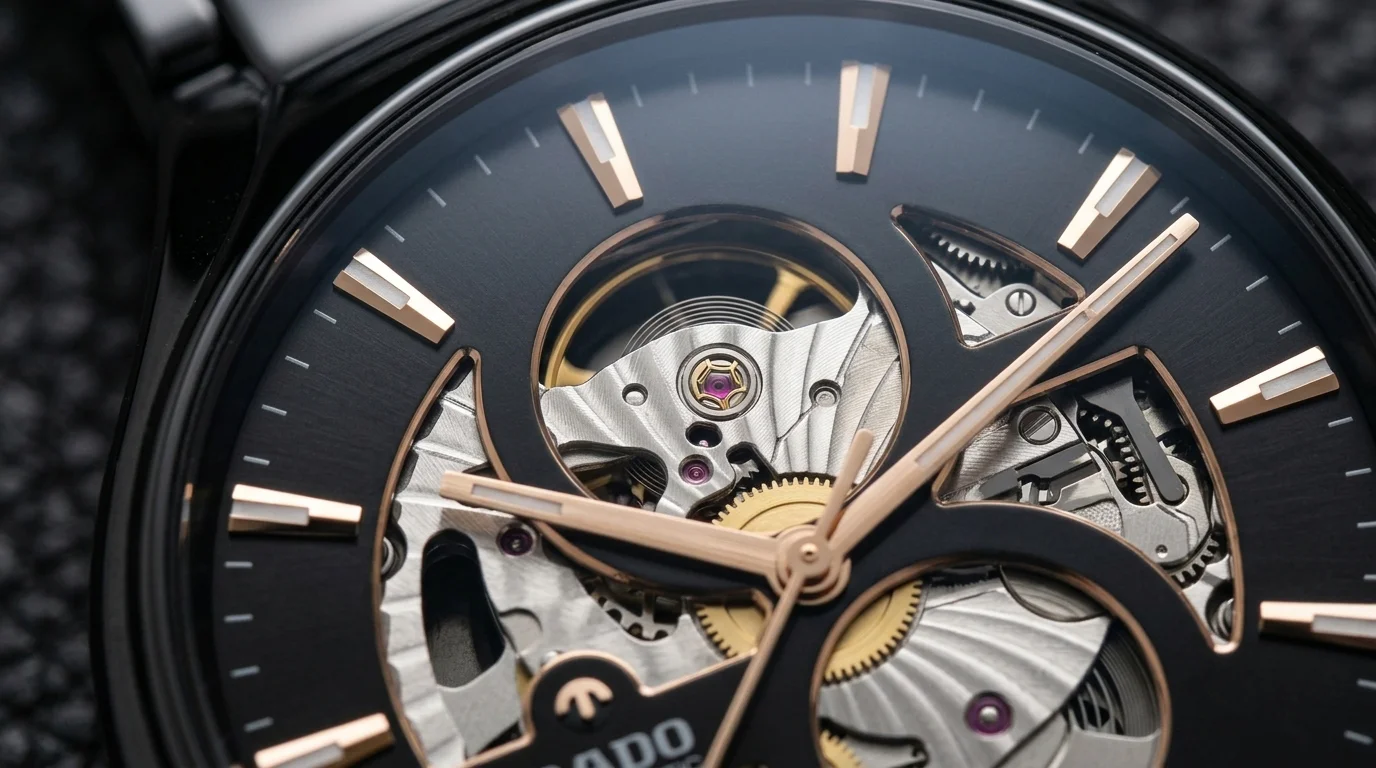 The Open Heart cutout is a design choice, not a complication. It shows off the movement rather than adding function.
Pricing and honest flaws
Retail spans an enormous range, from around $150 for entry ceramic quartz pieces up to $3,000 for the most sought-after mechanical references like the True Square. Popular pre-owned True models generally trade in the $1,000 to $2,400 range. The honest flaw: the vintage-styled dial language on some Captain Cook references reads as more distinctly "watch enthusiast" than True's cleaner, more minimal aesthetic, which some buyers find less characterful on the wrist.
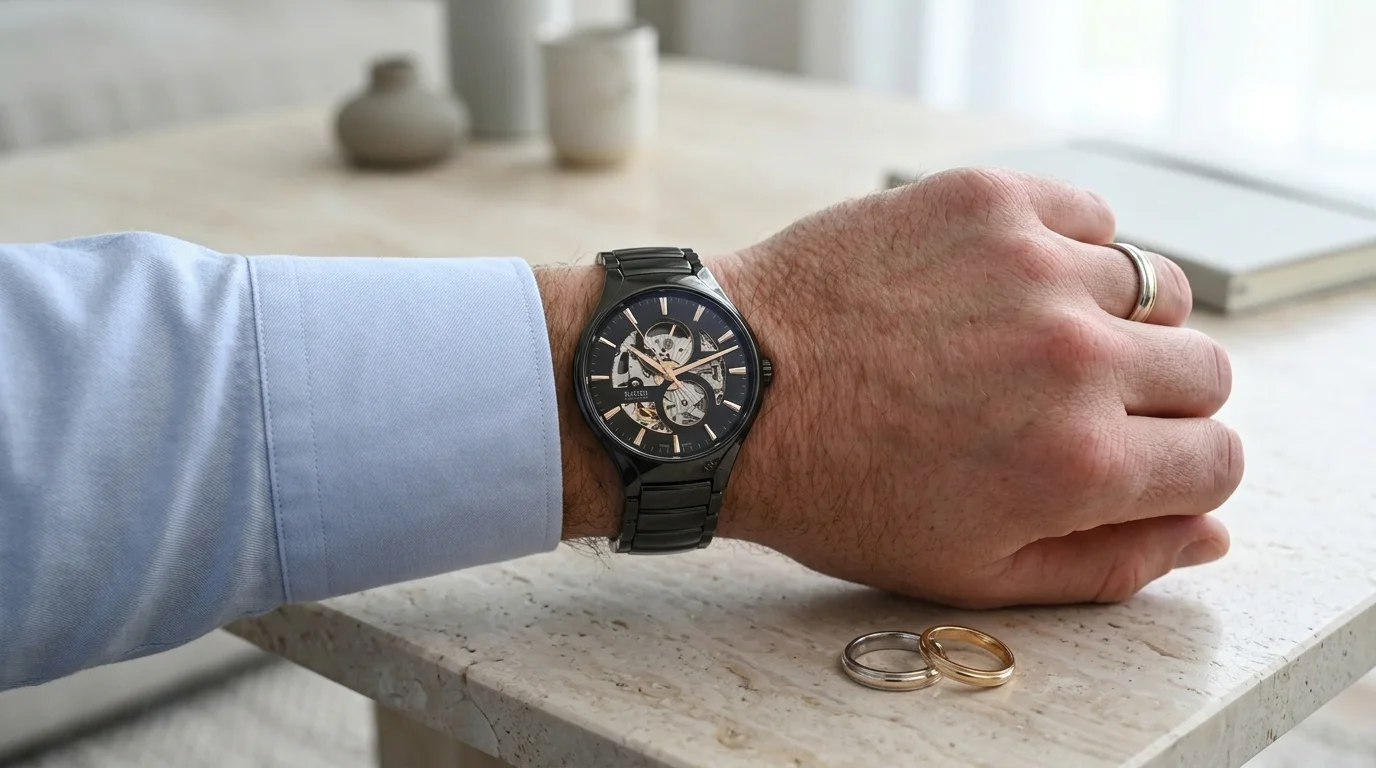 High-tech ceramic gives True a matte, almost soft-touch finish steel simply cannot replicate.
Side by side
| Rado Captain Cook | Rado True | |
|---|---|---|
| Case sizes | 37mm-43mm | Round and square, wide range |
| Case material | Steel, bronze, ceramic options | High-tech ceramic primary |
| Water resistance | Up to 300m | Varies, generally less than Captain Cook |
| Retail range | $2,150-$4,750 | $150-$3,000 |
| Pre-owned range | ~$1,200-$2,400 | ~$1,000-$2,400 |
| Design language | Vintage dive watch revival | Modern minimalist |
How to actually decide
Do you want a watch that reads as a dive watch, or one that reads as contemporary design? Captain Cook's bezel, arrow hands, and heritage details put it firmly in dive-watch territory even when worn with a suit. True's cleaner dial language wears more like a design object than a tool watch.
How worried are you about scratches versus impacts? Ceramic resists scratches far better than steel, which both lines benefit from to varying degrees, but a hard direct impact on a ceramic case edge can chip it in a way steel would just dent. If you're rough on watches, factor that in.
What's your budget ceiling? True's price range runs both lower and higher than Captain Cook's, so it can be either the cheaper or the pricier choice depending on which reference you're comparing. Captain Cook's range is narrower and more predictable.
FAQ
Is Rado a legitimate Swiss watch brand?
Yes. Rado is part of the Swatch Group, the same parent company behind Omega, Longines, and Tissot, and it manufactures genuine Swiss Made mechanical and quartz watches, with high-tech ceramic as its signature material innovation.
Is bronze or steel better for the Rado Captain Cook?
Neither is objectively better, it's a matter of preference. Bronze develops a natural patina that changes over months and years of wear, while steel maintains a consistent appearance but lacks that living, evolving character some collectors specifically seek out.
Can a Rado True ceramic case be resized or repaired if scratched?
High-tech ceramic resists scratches extremely well under normal wear, but if the case does chip or crack, it generally cannot be buffed out like steel and may require a full case replacement through Rado service.
What does "high-tech ceramic" actually mean?
High-tech ceramic is zirconium oxide powder compressed and sintered at extremely high temperatures into a dense, scratch-resistant material, then precision-machined and polished. It is significantly harder than stainless steel, which is why it resists surface scratches so well.
Which Rado line has better resale value, Captain Cook or True?
Captain Cook generally holds value somewhat better on the pre-owned market, likely due to its stronger enthusiast following and clearer heritage story, though both lines trade at meaningful discounts to retail like most watches outside the very top brands.
Related reading
For more accessible Swiss picks in a similar price range, see The Best Value Swiss Watches to Buy in 2026. For another underrated value brand, read Oris Is the Best Swiss Value Nobody Talks About. And for material science on watch cases generally, see Sapphire, Acrylic, or Mineral: The Watch Crystal Guide That Actually Matters.