No brand splits a room like Richard Mille. To one collector it is the most advanced watchmaking on earth. To another it is an overpriced lump of carbon worn by people who cannot read a balance sheet. Both are reacting to the same watch.
Richard Mille started in 2001 with a single idea: build a racing machine for the wrist, price be damned. Two decades later the brand makes roughly 5,000 watches a year, most of them cost more than a house, and nearly all of them hold or exceed their retail price on the secondary market. That last fact is the one worth understanding.
This is a working dealer's read on what a Richard Mille actually is, what you are paying for, and how to buy one without getting burned. To be clear up front: 5D Watches does not stock Richard Mille. This is an education piece for the collector weighing the brand.
The short answer: You are paying for material science, case machining, hand finishing, and scarcity, not primarily for the complication. Entry to current production starts around $120,000, most sport models run $150,000 to $400,000, and the halo tourbillons reach into the millions. Values hold because production is tiny and demand is managed. Buy pre-owned only from a seller who can prove authenticity with a full set, because this is the most counterfeited brand in luxury watchmaking.
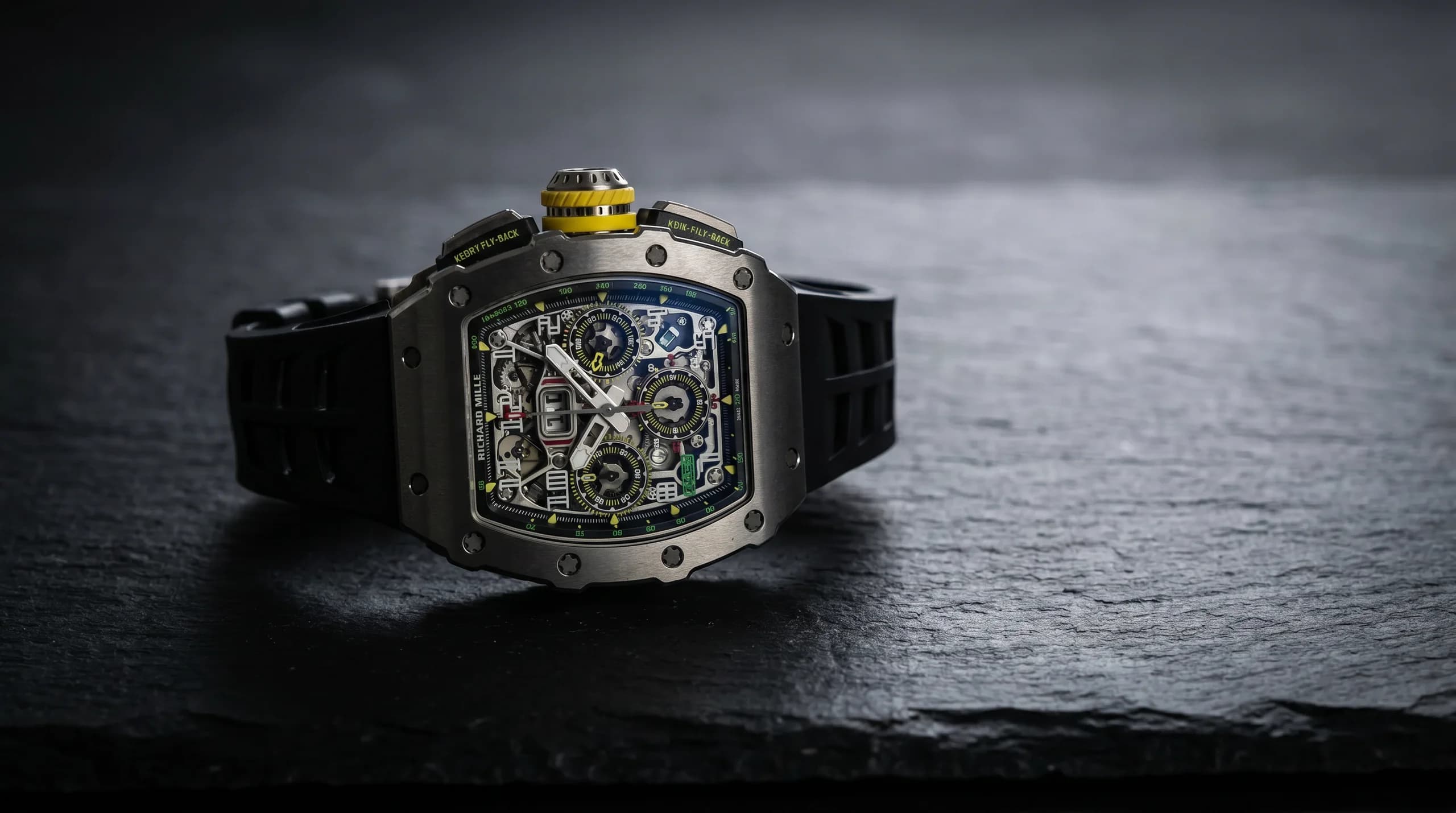
The images in this article were generated with AI for illustration, conditioned on real reference photography of the Richard Mille RM 11-03. They depict recognizable models but are not photographs of specific watches for sale.
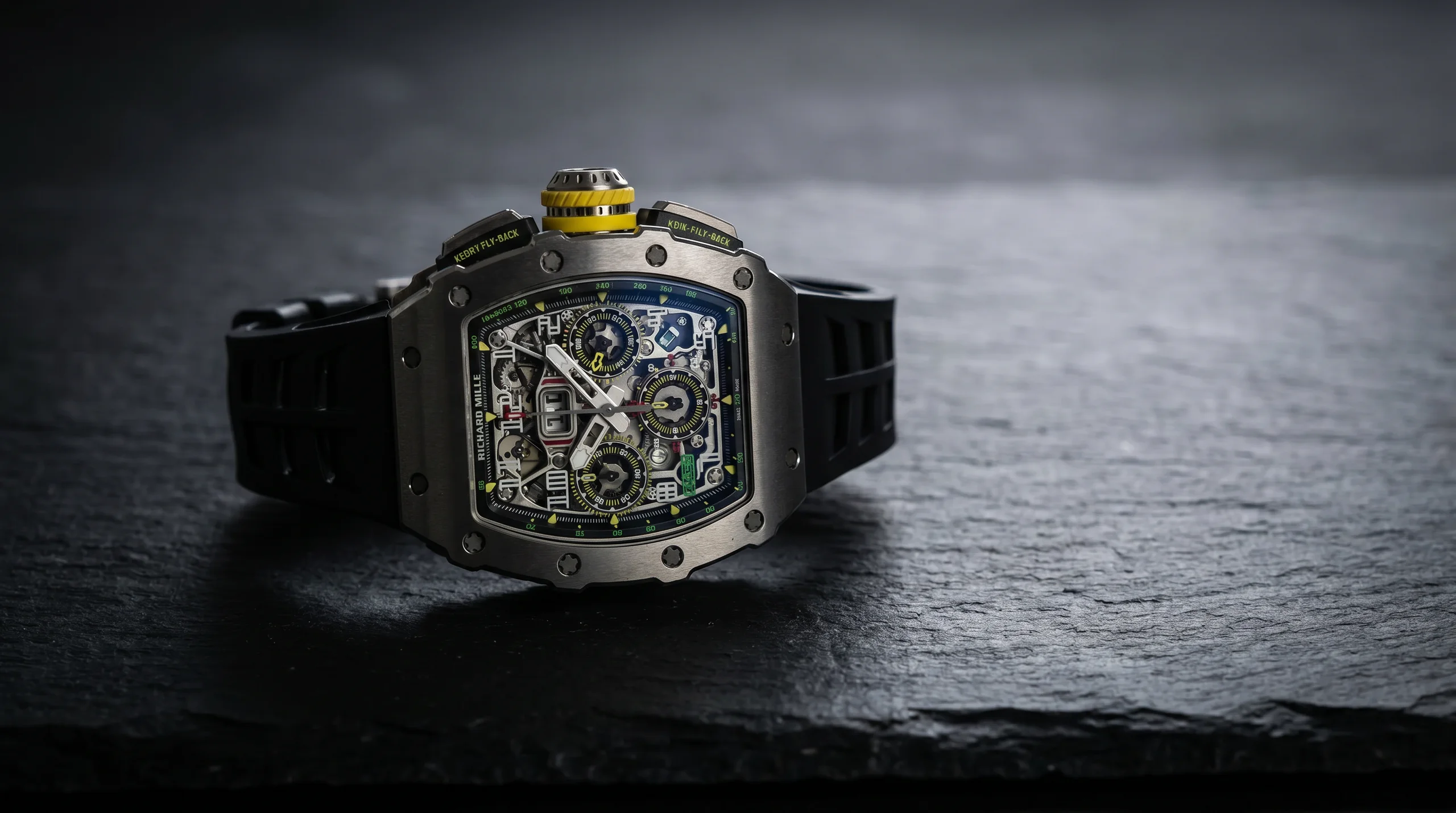 The Richard Mille RM 11-03 in titanium. The tonneau case and open-worked dial are the brand's signature.
What a Richard Mille Actually Is
Strip away the noise and a Richard Mille is a tonneau-shaped case, an open-worked movement built like an engine, and a material specification borrowed from motorsport and aerospace.
The signature shape, the curved barrel case, was drawn in 2001 and has barely changed in silhouette since. Inside, the movements use grade 5 titanium baseplates and bridges, skeletonized so aggressively that the watch looks like it is all mechanism and no dial. The point is lightness and rigidity, the same priorities as a race car.
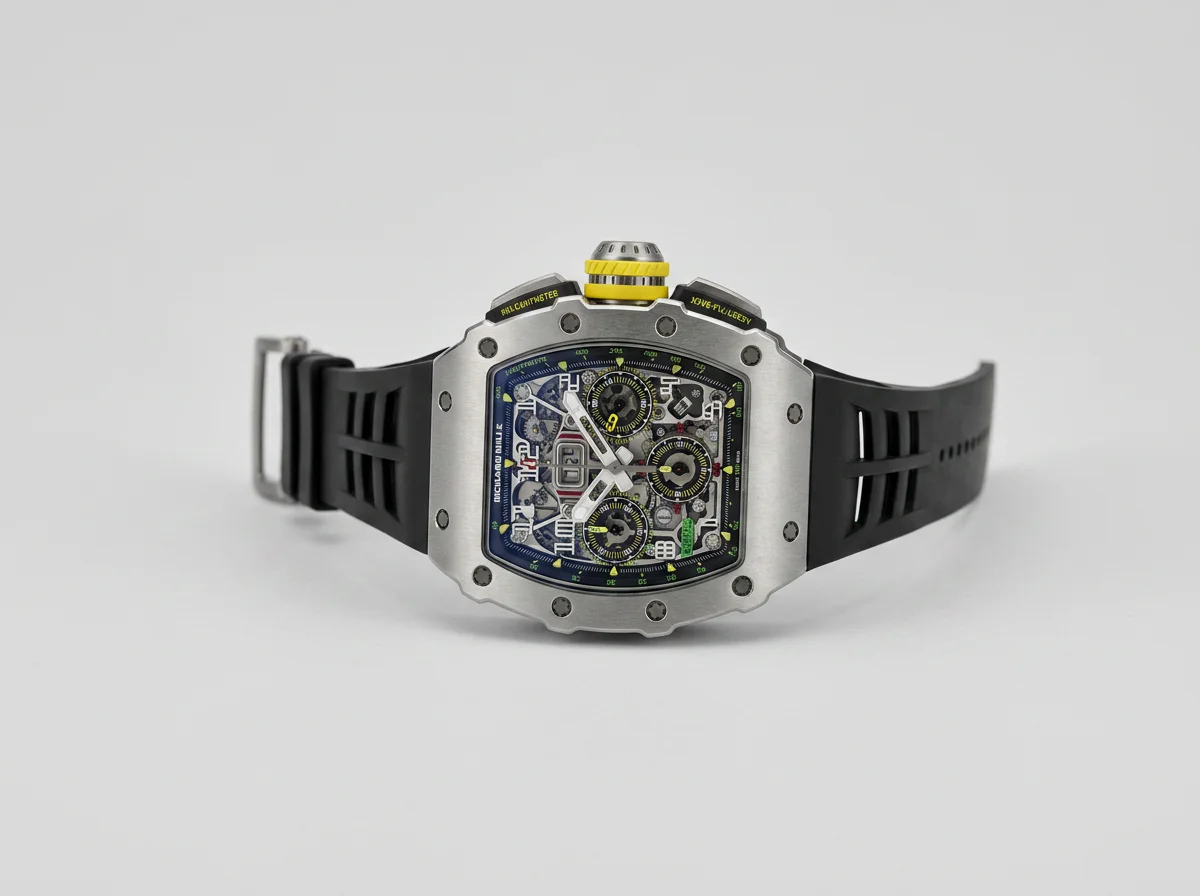 Grade 5 titanium, a curved barrel case, and rows of spline screws. The construction is the product.
The Material Story Is the Real Story
More than any complication, materials are what a Richard Mille sells. Carbon TPT, built from hundreds of layers of carbon filament, and Quartz TPT, its colored silica cousin, give the cases their marbled look and near-indestructible feel.
These are not decoration. The RM 27 series worn by Rafael Nadal on court weighs under 20 grams with the strap, because Nadal needed a tourbillon that could survive a forehand. That is the brand's whole thesis in one watch: extreme engineering, worn hard, at any cost.
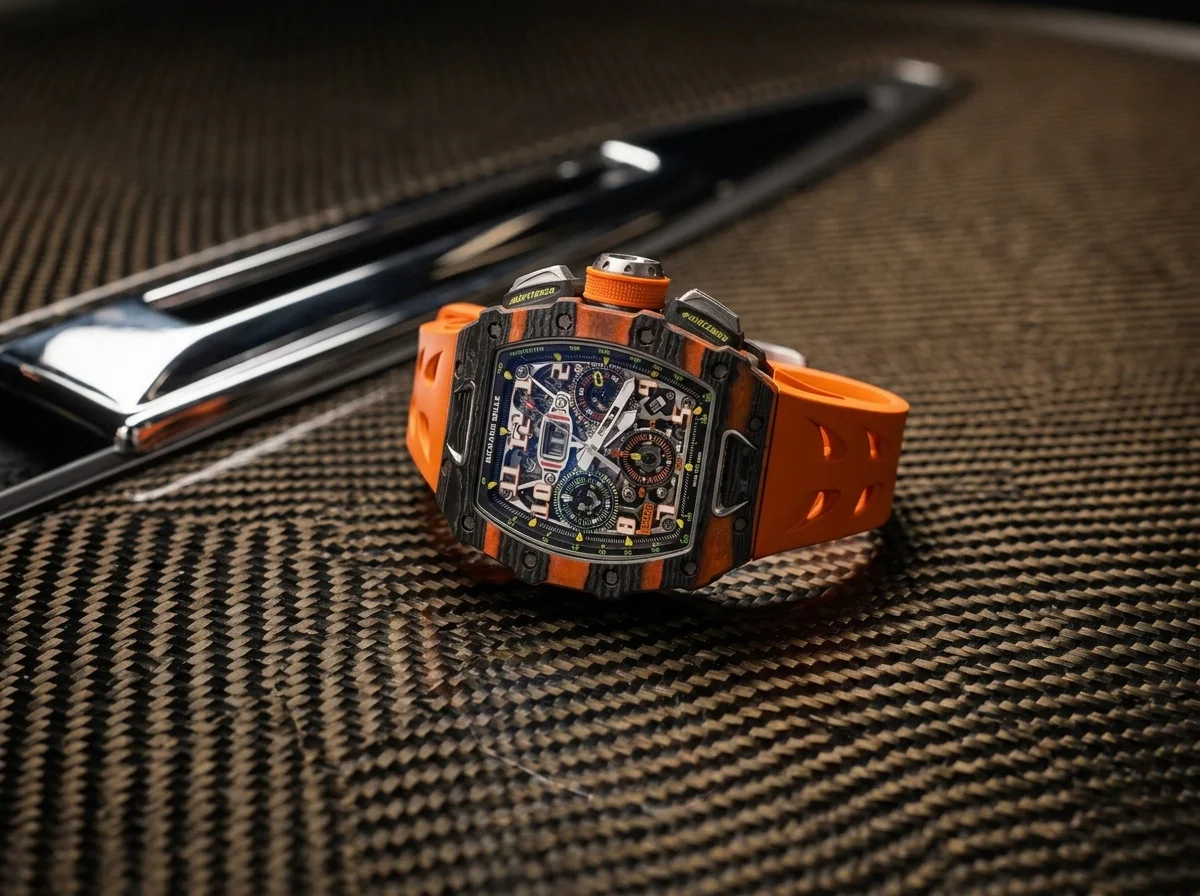 The RM 11-03 McLaren in Carbon TPT and orange Quartz TPT. Materials, not complications, are the pitch.
The Prices, Plainly
There is no gentle way into Richard Mille. The cheapest current-production pieces start near $120,000, and the range climbs steeply from there.
Here is where the core references sit in 2026, retail against the secondary market.
| Reference | Retail (approx.) | Secondary market |
|---|---|---|
| RM 11-03 Auto Flyback, titanium | ~$198,000 | $200,000 to $283,000 |
| RM 11-03 Auto Flyback, rose gold | ~$350,000 | $280,000 to $450,000 |
| RM 35-02 Rafael Nadal, Carbon TPT | $200,000 to $238,000 | $200,000 to $350,000 |
| RM 27-04 Tourbillon Nadal (50 pieces) | ~$2,520,000 | Well above retail |
| RM 27-05 Tourbillon Nadal (80 pieces) | ~$3,100,000+ | Well above retail |
The pattern is the one that makes Richard Mille unusual: the secondary market sits at or above retail across most of the range, which almost no other brand can claim. Limited and athlete-linked editions have appreciated the most.
Why They Hold Value
The value story is not magic. It is supply.
Richard Mille makes very few watches and controls who gets them. The most wanted references, the Carbon TPT sport pieces and the RM 27 tourbillons, carry multi-year waitlists and are allocated to established clients first. When production is capped at 50 or 80 pieces, there is no negotiation and no oversupply to soften the resale price.
Add the athlete and motorsport associations, from Nadal to Felipe Massa to the McLaren F1 partnership, and each limited release arrives with a built-in collector audience. Scarcity plus story is the entire engine.
What You Are Actually Paying For
Here is the honest part, because the sticker demands one.
You are not mostly paying for the movement in the way you are with a Patek Philippe minute repeater. A time-and-date or flyback chronograph Richard Mille is not, mechanically, a grand complication. What the money buys is the case: the R&D behind the materials, the machining of a curved tonneau case to aerospace tolerances, and genuine hand finishing on the movement, with polished chamfers and screw heads done by hand.
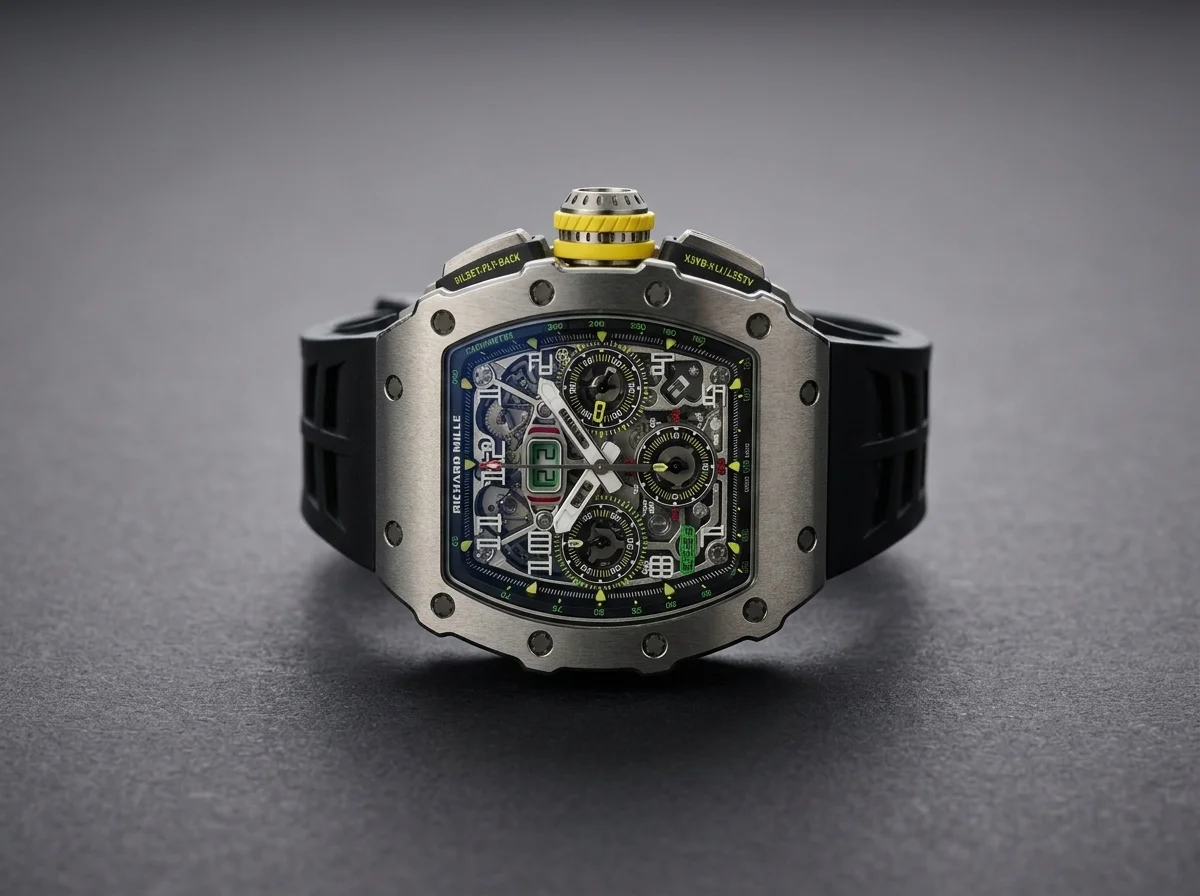 The dial is the movement. Skeletonized bridges and hand-polished chamfers are where the finishing budget goes.
The rest is brand and scarcity, and that is not an insult. A Richard Mille signals a specific kind of wealth and taste, and it trades like an asset because the brand engineers it to. The critics who call it overpriced carbon are measuring movement complexity. The buyers are paying for material tech, wrist presence, and a watch that holds its number.
Neither group is wrong. You just need to know which one you are before you spend the money.
Buying One Pre-Owned
For almost everyone, pre-owned is the only realistic way in, since the waitlists for new allocation are closed or years long.
That comes with one overriding rule: authenticity. Richard Mille is the most counterfeited brand at the high end, and the fakes have gotten good. Never buy without a full set, box, papers, and a verifiable chain of ownership, and only from a dealer who authenticates and stands behind the watch in writing. Service matters too, since Richard Mille servicing is expensive and tightly controlled, so a documented service history is a real asset.
If you want the technical thrill and the asset-like resale, and you understand the premium, Richard Mille delivers something no other brand does. If you are a value buyer, this is not your brand, and that is fine.
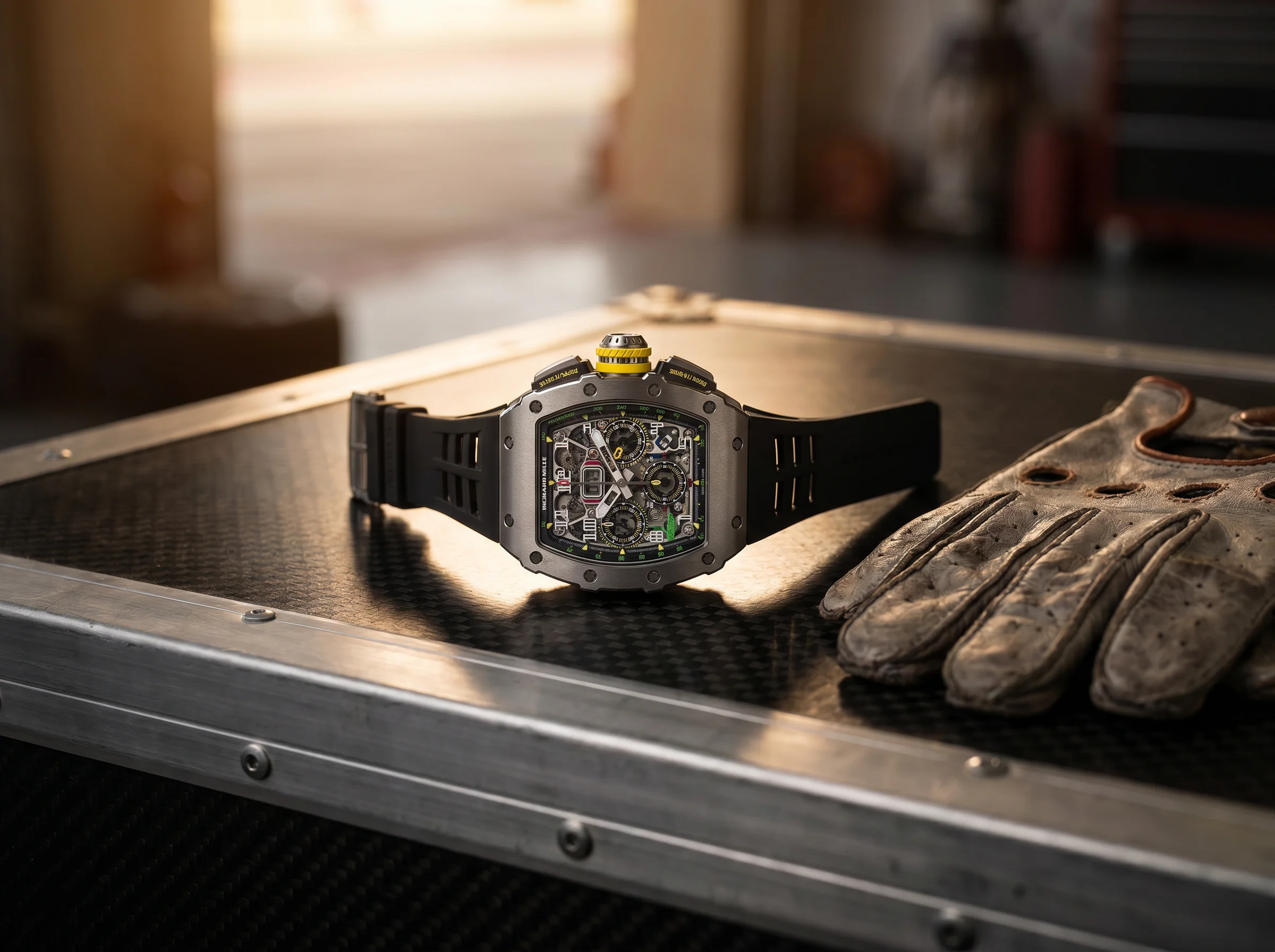 Motorsport DNA on the wrist. Richard Mille sells the racing machine, and prices it like one.
The Bottom Line
Richard Mille is not trying to be a traditional watchmaker, and judging it by that yardstick misses the point. It is a materials-and-scarcity business wearing the clothes of haute watchmaking, and it is extraordinarily good at it. The watches are bold, light, technically serious, and priced for a buyer who wants exactly that.
We don't sell Richard Mille, and we will tell you honestly when the hype outruns the watch. If you want that same straight read on something we do handle, the Audemars Piguet Royal Oak Offshore scratches the wear-it-loud itch for a fraction of the money. Ask us and we will walk you through where the value actually sits.
Frequently Asked Questions
How much is a Richard Mille?
Current-production Richard Mille watches start around $120,000, with most sport references running $150,000 to $400,000. The halo tourbillons, like the athlete-linked RM 27 series, list from roughly $2.5 million and climb past $3 million. On the secondary market, most references trade at or above retail.
Why are Richard Mille watches so expensive?
You are paying for material research, precision case machining, and hand finishing, plus deliberate scarcity. Cases use aerospace materials like Carbon TPT and grade 5 titanium that are costly to develop and machine. Production is capped at roughly 5,000 watches a year, and demand is managed through waitlists, which keeps prices high.
Do Richard Mille watches hold their value?
Yes, and unusually so. Most current-production references hold or exceed retail on the secondary market, a rarity in luxury watches. Limited editions and athlete or motorsport collaborations, such as the RM 35-02 Nadal and the RM 27 tourbillons, have appreciated significantly because production is tiny and demand outstrips supply.
What are you actually paying for with a Richard Mille?
Mostly the case: the material R&D, the machining of a complex tonneau case, the hand-finished movement, and the brand's scarcity and status. A time-and-date or flyback chronograph Richard Mille is not a grand complication mechanically, so if you value movement complexity above all, the value proposition looks different than if you value engineering and material tech.
Should you buy a Richard Mille pre-owned?
For most buyers it is the only realistic route, since new allocation means multi-year waitlists. Buy only with a full set, box, and papers from a seller who authenticates in writing, because Richard Mille is the most counterfeited brand at the high end. A documented service history matters, since servicing is expensive and controlled by the brand.