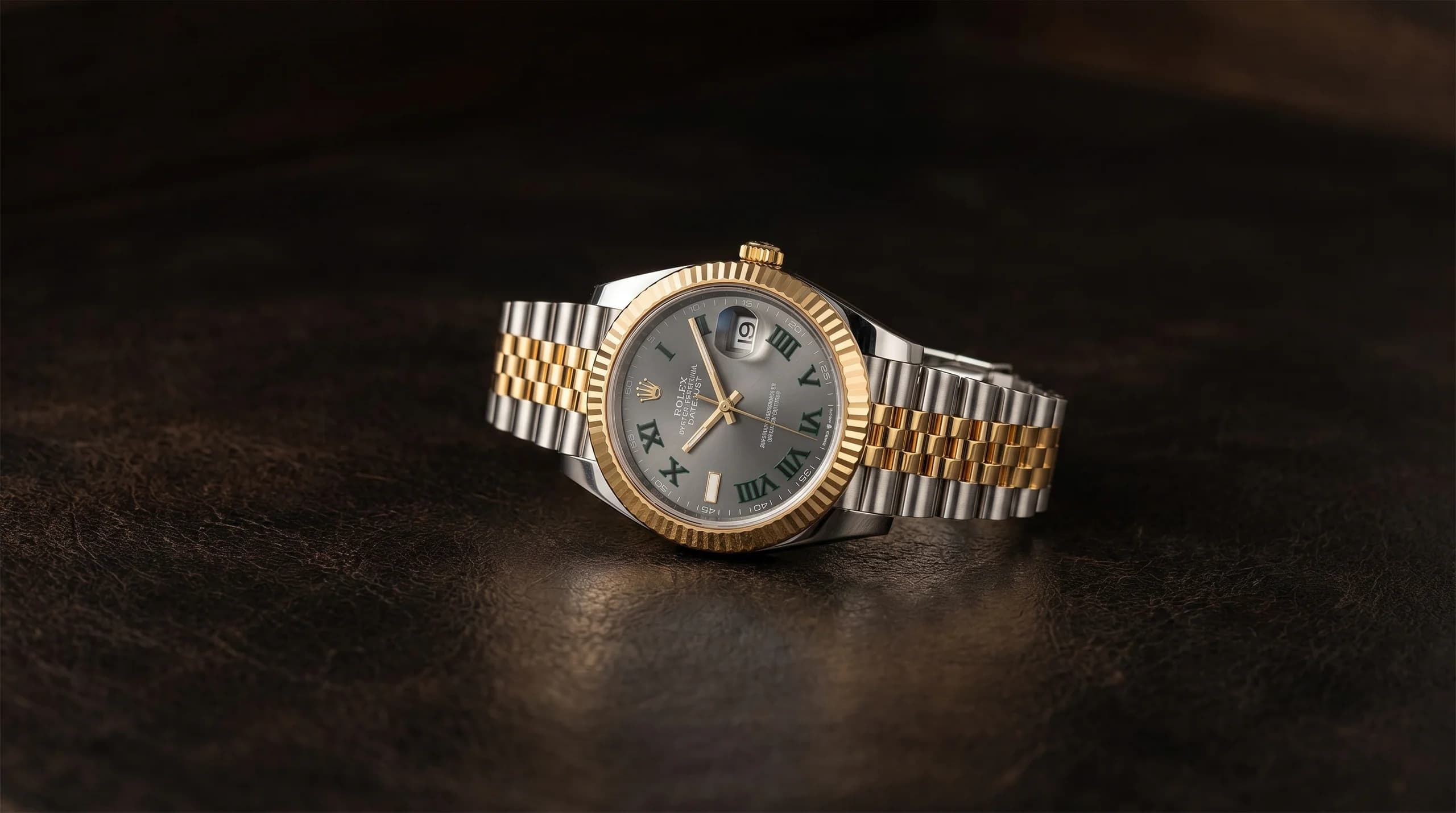
"Rolesor" might be the most misunderstood word in the entire Rolex catalog. Most people read it on a spec sheet, assume it is some exotic alloy, and move on. It is simpler and more interesting than that, and in 2026 it quietly sits at the center of what Rolex is doing.
The images in this post are AI-generated illustrations for editorial purposes and may not exactly represent specific watches.
The short version
Rolesor is just Rolex's name for two-tone: a watch that combines steel and gold. There are three versions depending on which gold is used and where, and the most classic example is the two-tone Datejust. Far from dated, two-tone has become a stealth-wealth favorite, and it is often the smartest way into a gold-trimmed Rolex.
What "Rolesor" actually means
The word is a mash-up, not a material.
It joins "Rolex" with the French word "or," meaning gold, so Rolesor literally reads as "Rolex gold." Rolex trademarked the term in 1933 and gave it a proper debut on the Datejust in 1948, and it has been a brand signature ever since. The reason Rolex uses it at all is regulatory: hallmarking laws in many countries forbid calling a part-steel watch "gold," so a coined name solved the problem. Underneath, modern Rolesor pairs Rolex's Oystersteel with 18-carat gold.
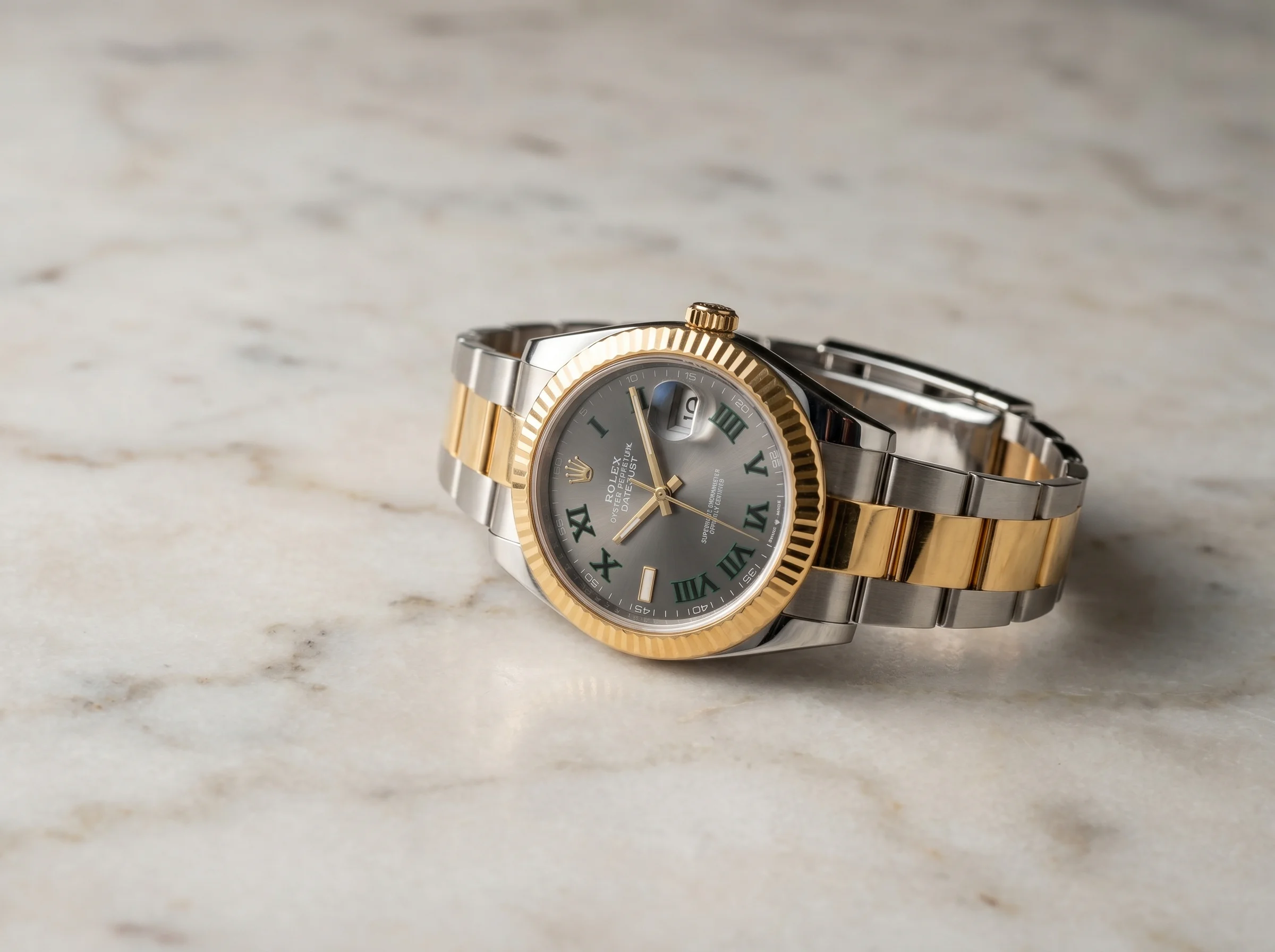 Rolesor is just steel plus 18k gold: gold bezel, gold centre links, steel everywhere else. (AI-generated illustration.)
Yellow, Everose, and white Rolesor
There are three flavors, and the differences trip people up constantly.
| Type | Where the gold goes |
|---|---|
| Yellow Rolesor | 18k yellow gold bezel, crown, and centre bracelet links |
| Everose Rolesor | 18k Everose (rose) gold bezel, crown, and centre links |
| White Rolesor | 18k white gold bezel only; case, crown, and bracelet are steel |
The big gotcha is white Rolesor. New buyers assume the centre links are white gold, but on a white Rolesor watch only the bezel is gold and the rest is steel. Everose Rolesor is the newest of the three, arriving in 2011, and it has quietly become the warmer, subtler alternative to bright yellow.
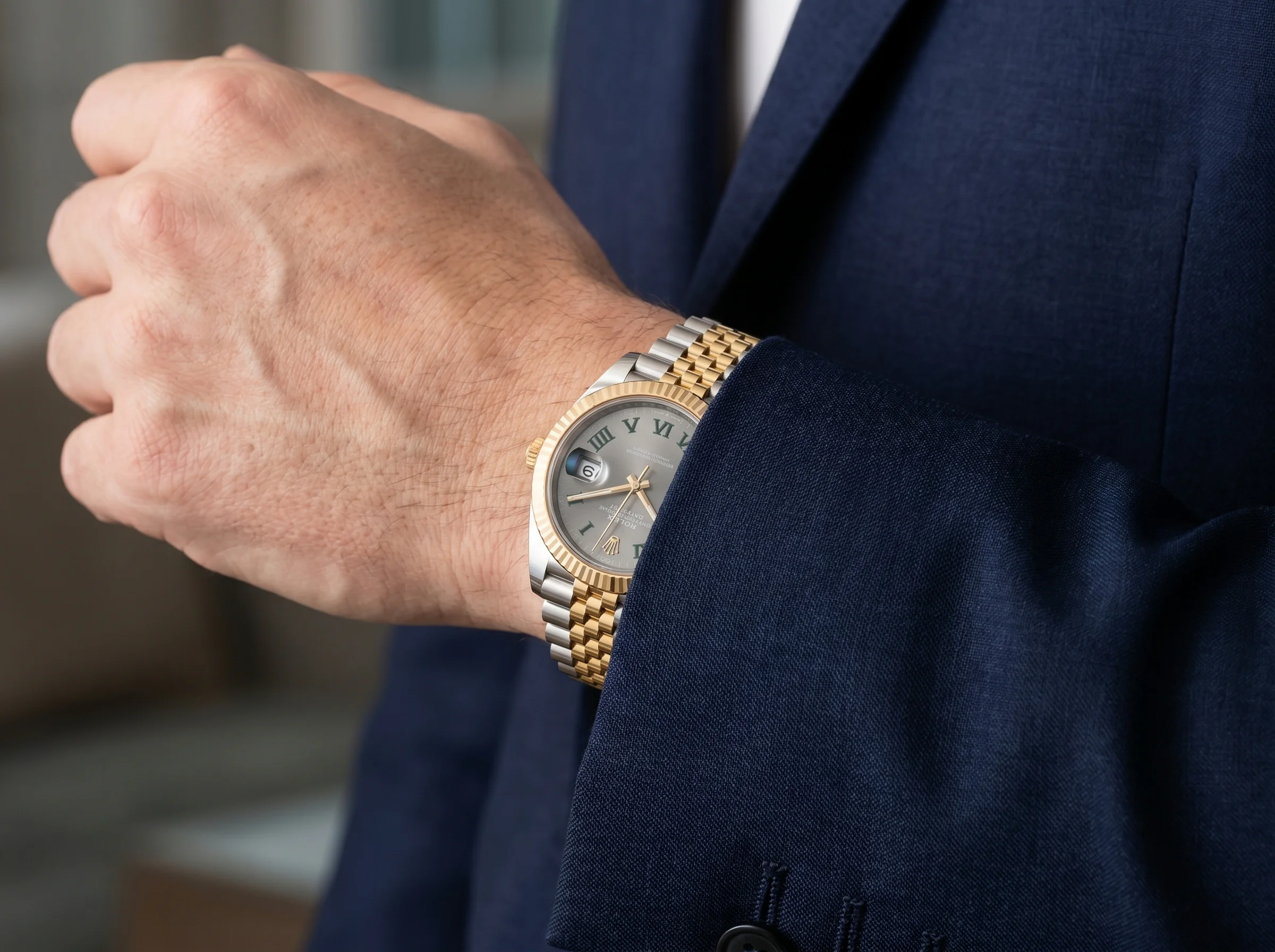 Two-tone earns its keep as an everyday watch that reads dressy or casual. (AI-generated illustration.)
Where you'll find it
Rolesor runs across the lineup, not just on dress watches.
The Datejust is the definitive Rolesor and the one most people picture, usually on a five-link Jubilee bracelet whose three inner links are gold. The sports models are where two-tone gets interesting: the blue-and-gold "Bluesy" Submariner, the brown-and-gold "Root Beer" GMT-Master II in Everose, the black-and-grey 126713GRNR in yellow Rolesor, plus two-tone Daytonas, Yacht-Masters, and Sky-Dwellers. Each pairs a real tool watch with solid gold, which is exactly the contrast that makes them polarizing and popular at once.
Why two-tone is back in 2026
A decade ago, two-tone read as dated. That has flipped.
Enthusiast demand for Rolesor is stronger than it has been in years, and Rolex leaned into it hard at Watches and Wonders 2026, where the entire collection circled the 100th anniversary of the Oyster case. The headline pieces were a material story, including the first modern two-tone Oyster Perpetual 41 with a gold bezel and crown on an all-steel bracelet, and new green Rolesor Datejusts. Oracle of Time's full 2026 Rolex rundown shows how central steel-and-gold was to the centenary story, right down to Rolex's own tagline for it, "Unity within difference."
 Steel for strength, gold for shine. The pairing is the whole point. (AI-generated illustration.)
A working dealer's read
Here is why two-tone deserves a serious look.
Rolesor is often the smart-money entry into a gold-trimmed Rolex. A two-tone Datejust gives you genuine 18k gold for far less than a solid-gold watch, and because two-tone sits outside the steel-sports hype, two-tone Datejusts have historically traded close to retail rather than at frenzied premiums. That makes the value proposition unusually honest for Rolex. For context on where the wider market sits right now, our June 2026 market update is a useful read.
Two caveats keep it real. The two-tone sports models, the Bluesy, the Root Beer, and the two-tone Daytona, now carry their own waitlists and premiums, so the value logic applies most cleanly to the Datejust and Oyster Perpetual, and you can see how a two-tone GMT fits the range in our GMT-Master II buying guide. And two-tone is polarizing by nature, so buy it because the steel-and-gold look genuinely appeals to you, not as a pure flip. If it does appeal, our pre-owned two-tone Datejust selection is the place to start.
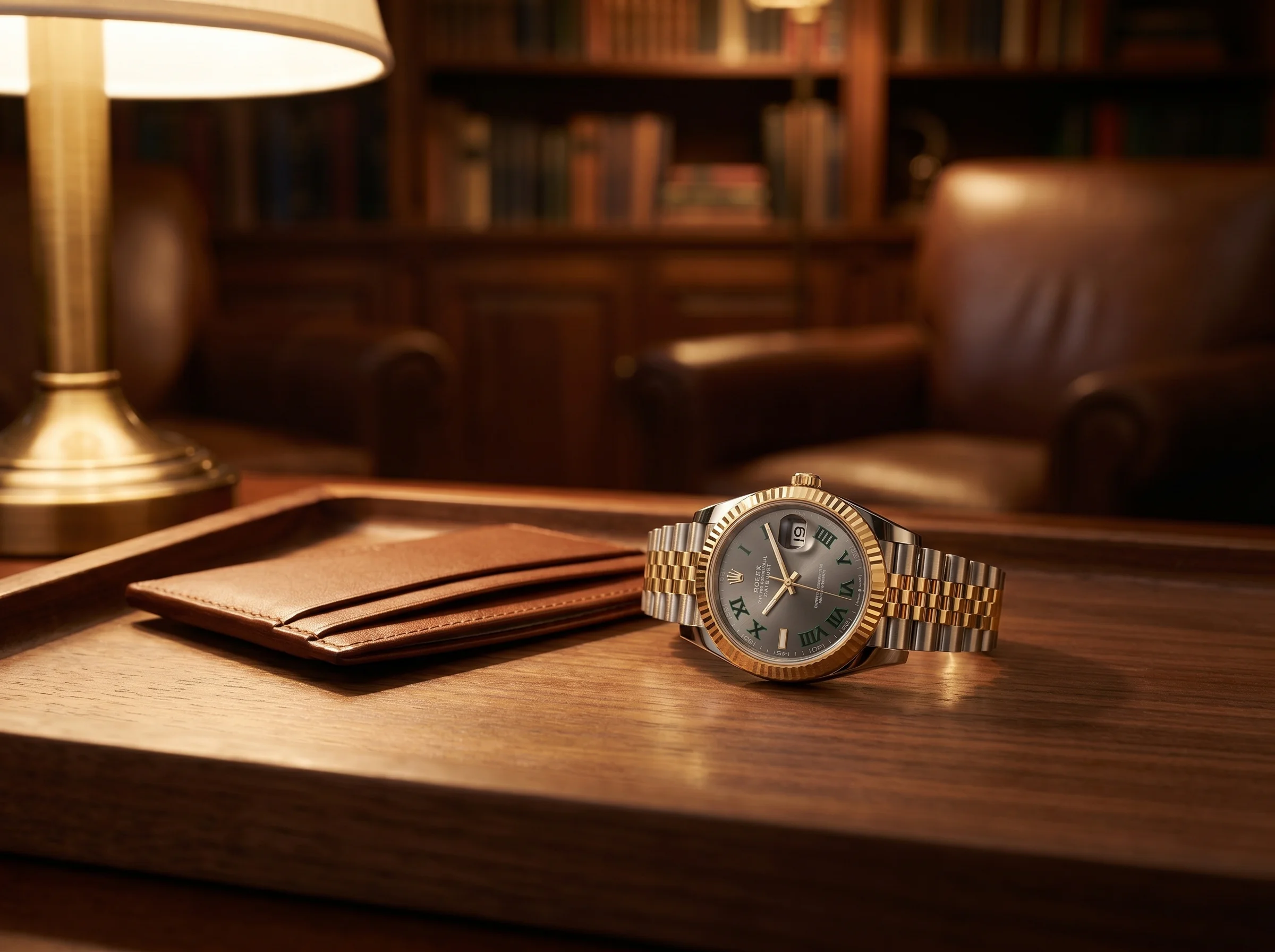 The honest case for Rolesor: real gold, everyday wearability, sane pricing. (AI-generated illustration.)