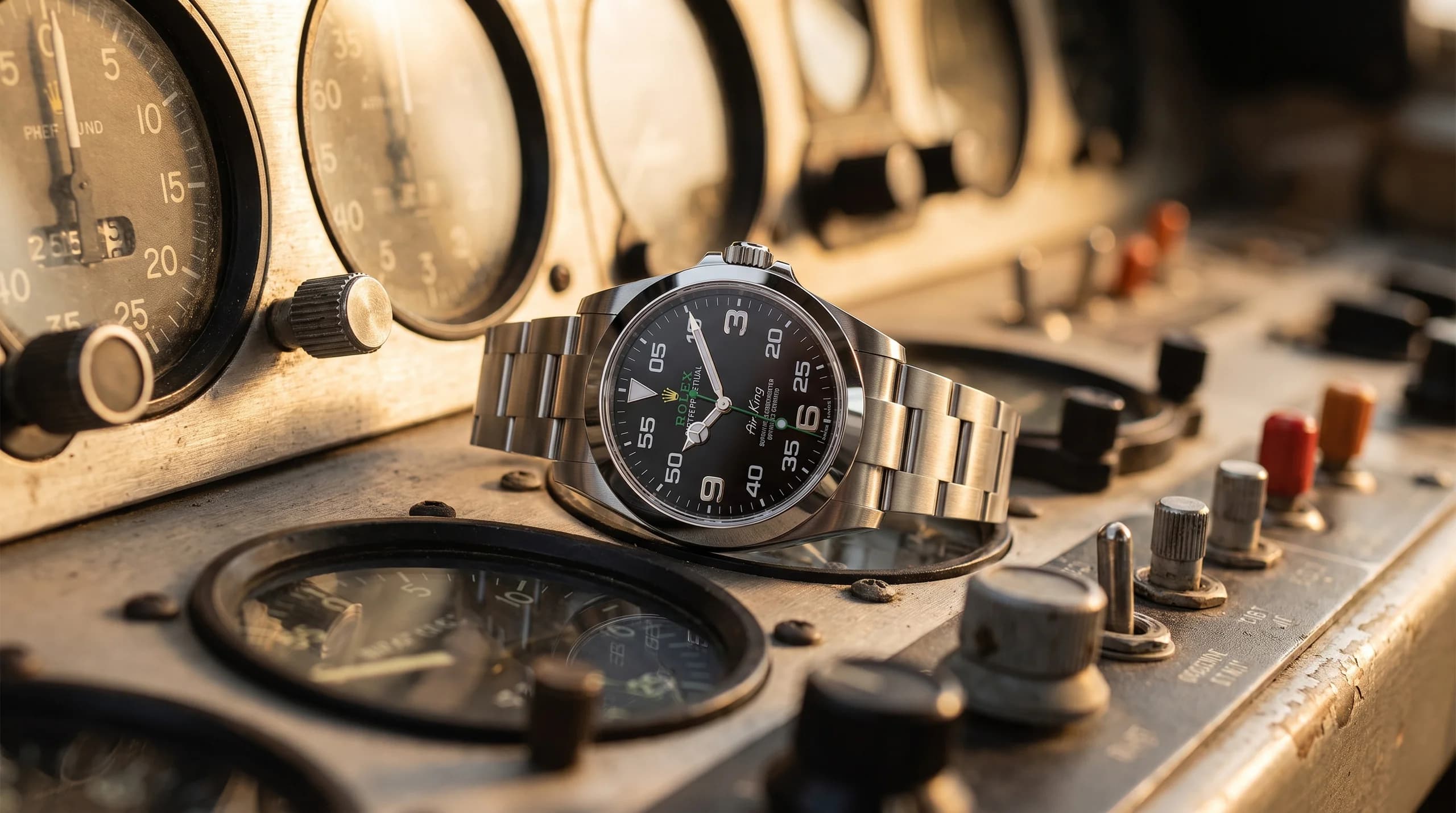
The Rolex Air-King and Milgauss are the two anti-magnetic tool watches most buyers skip on the way to a Submariner or GMT. That is the opportunity. Both were built to shrug off magnetic fields that wreck a normal movement, both sit on the classic Oyster case, and both trade well below the sport-model frenzy. If you want a real Rolex story on the wrist without the waitlist, start here.
This article includes images generated with AI to illustrate specific watch models and settings. Every watch shown is based on a real, referenced model.
The short answer
The Air-King 126900 is the current, in-production choice: 40mm, glossy black dial, aviation heritage, roughly $7,400 at retail and often near that pre-owned. The Milgauss 116400GV is the discontinued cult pick: Z-blue dial, green sapphire crystal, orange lightning-bolt hand, now trading around $9,000 to $13,000 pre-owned. Buy the Air-King if you want a daily Rolex you can replace. Buy the Milgauss if you want a piece Rolex no longer makes and the market is quietly bidding up.
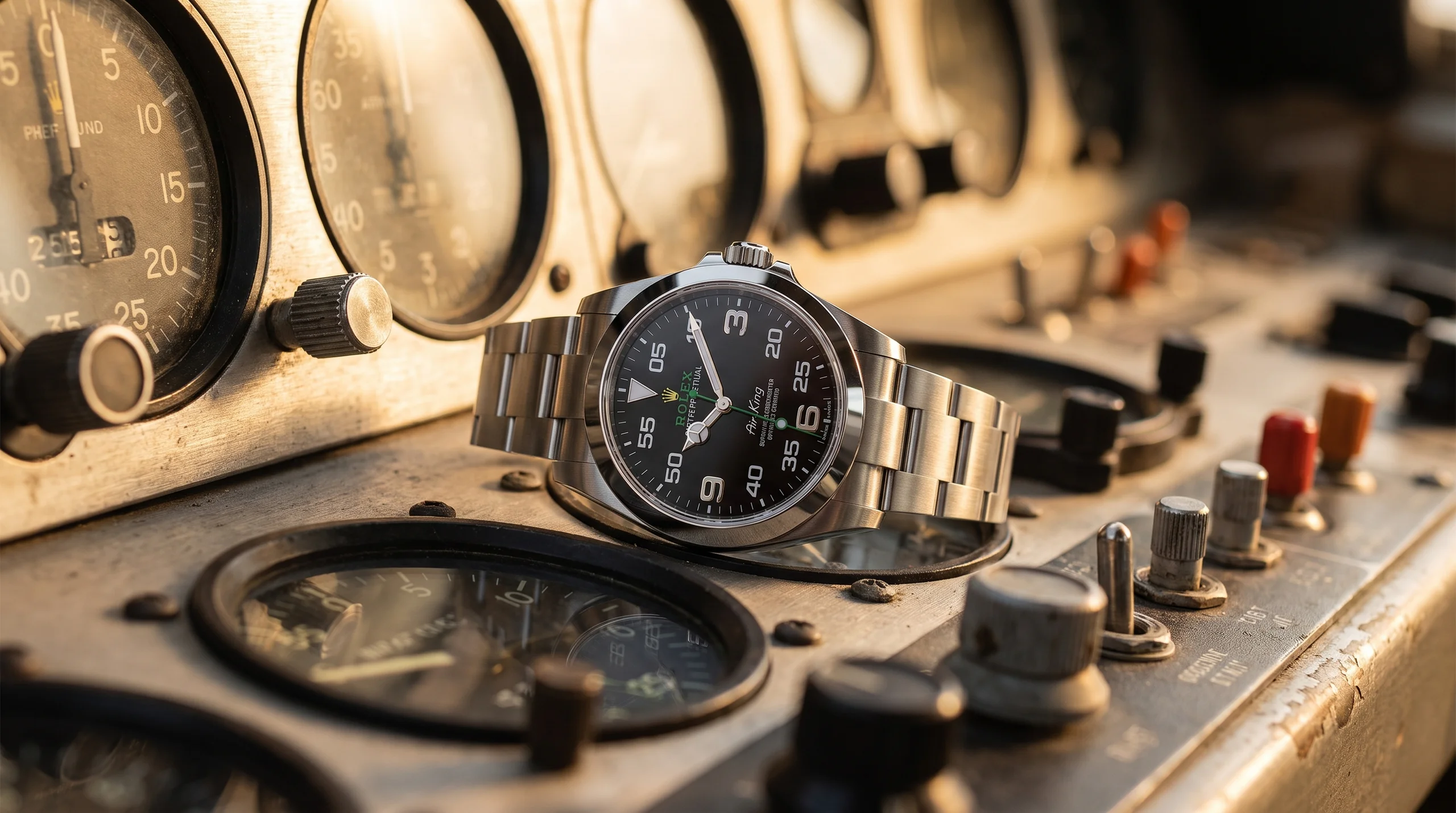 The Air-King 126900 leans into its cockpit roots with a full minute-track scale and 3-6-9 numerals.
Why anti-magnetic still matters
Magnetism is the quiet killer of mechanical accuracy. A hairspring that gets magnetized runs fast, sometimes by minutes a day, and a laptop, a speaker, or a tablet case is enough to do it. Rolex built the Milgauss in 1956 for scientists at places like CERN, and the name means one thousand gauss of resistance.
Both watches here fight magnetism, but in different ways. The Milgauss uses a soft-iron Faraday cage around the movement. The modern Air-King relies on Rolex's paramagnetic blue Parachrom hairspring and antimagnetic components inside caliber 3230, no cage required.
For a collector, the takeaway is simple. You are buying decades of real engineering, not a marketing label. If you want the wider context on how Rolex certifies accuracy, our guide to the Superlative Chronometer standard breaks down what the green seal actually promises.
Rolex Air-King 126900: the honest daily
The current Air-King reference 126900 landed in 2022 and fixed the complaints about the older 116900. It is 40mm of Oystersteel, with a glossy black dial, the 3, 6, and 9 in bold numerals, and a full minute-track scale that nods to cockpit instruments. The green and yellow Rolex signature is a love-it-or-hate-it detail, and plenty of buyers love it.
Inside is caliber 3230, the same base movement family as the current Oyster Perpetual and Explorer. You get roughly 70 hours of power reserve, the Chronergy escapement, and that paramagnetic hairspring. Retail sits around 7,000 Swiss francs, close to $7,400 in the United States, and pre-owned examples often land near retail because supply is steady.
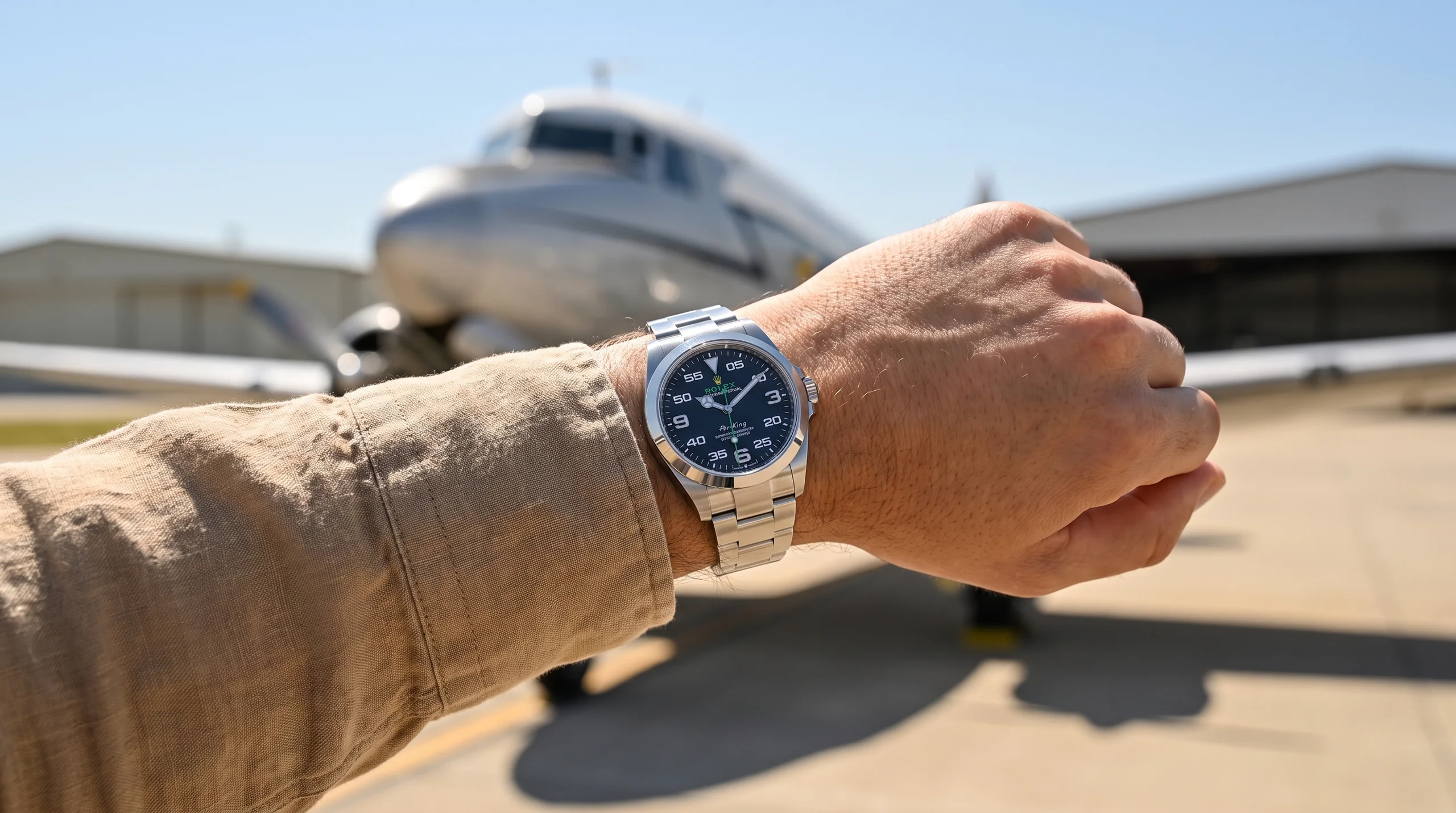 At 40mm the Air-King wears like a Datejust with a tool-watch attitude.
The honest flaws: the dial layout divides opinion, there is no date, and the bracelet clasp lacks the on-the-fly micro-adjust some rivals offer. None of that stops it from being one of the most wearable steel Rolex watches you can still walk in and buy.
Rolex Milgauss 116400GV: the discontinued cult pick
Rolex quietly discontinued the Milgauss in 2023, and that single decision reshaped the conversation. The 116400GV, with its green-tinted sapphire crystal, Z-blue dial, and orange lightning-bolt seconds hand, is now the reference collectors chase. It is 40mm, powered by caliber 3131, and rated to resist 1,000 gauss thanks to the internal soft-iron shield.
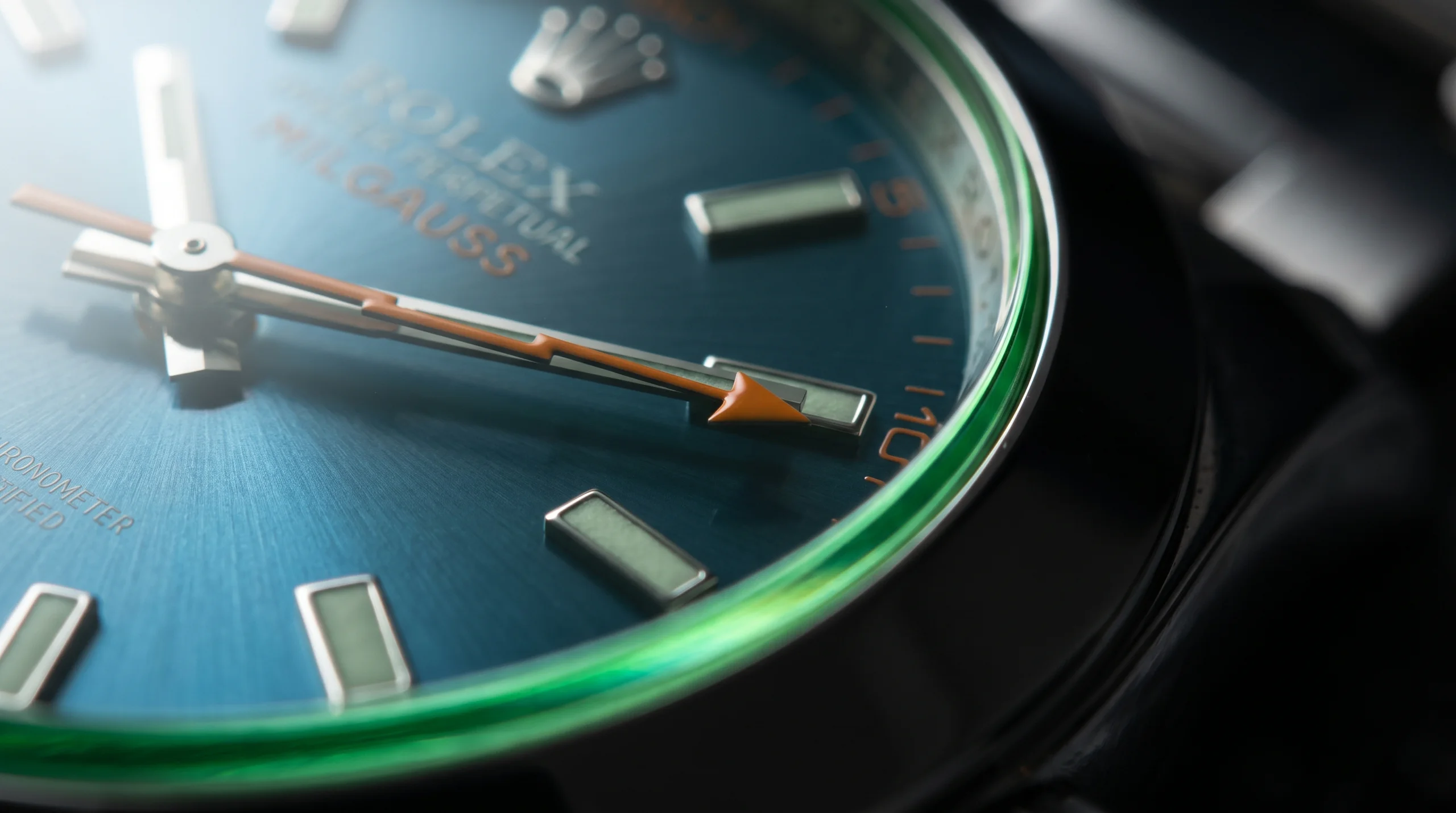 The lightning-bolt seconds hand and green sapphire are the details that make the Milgauss unmistakable.
Pre-owned prices have firmed up since discontinuation. Clean 116400GV examples generally trade between $9,000 and $13,000 depending on box, papers, and dial variant, with the Z-blue commanding a premium over the older white-dial GV. That is real money above the Air-King, and it buys you scarcity plus one of the most distinctive dials Rolex has made in the modern era.
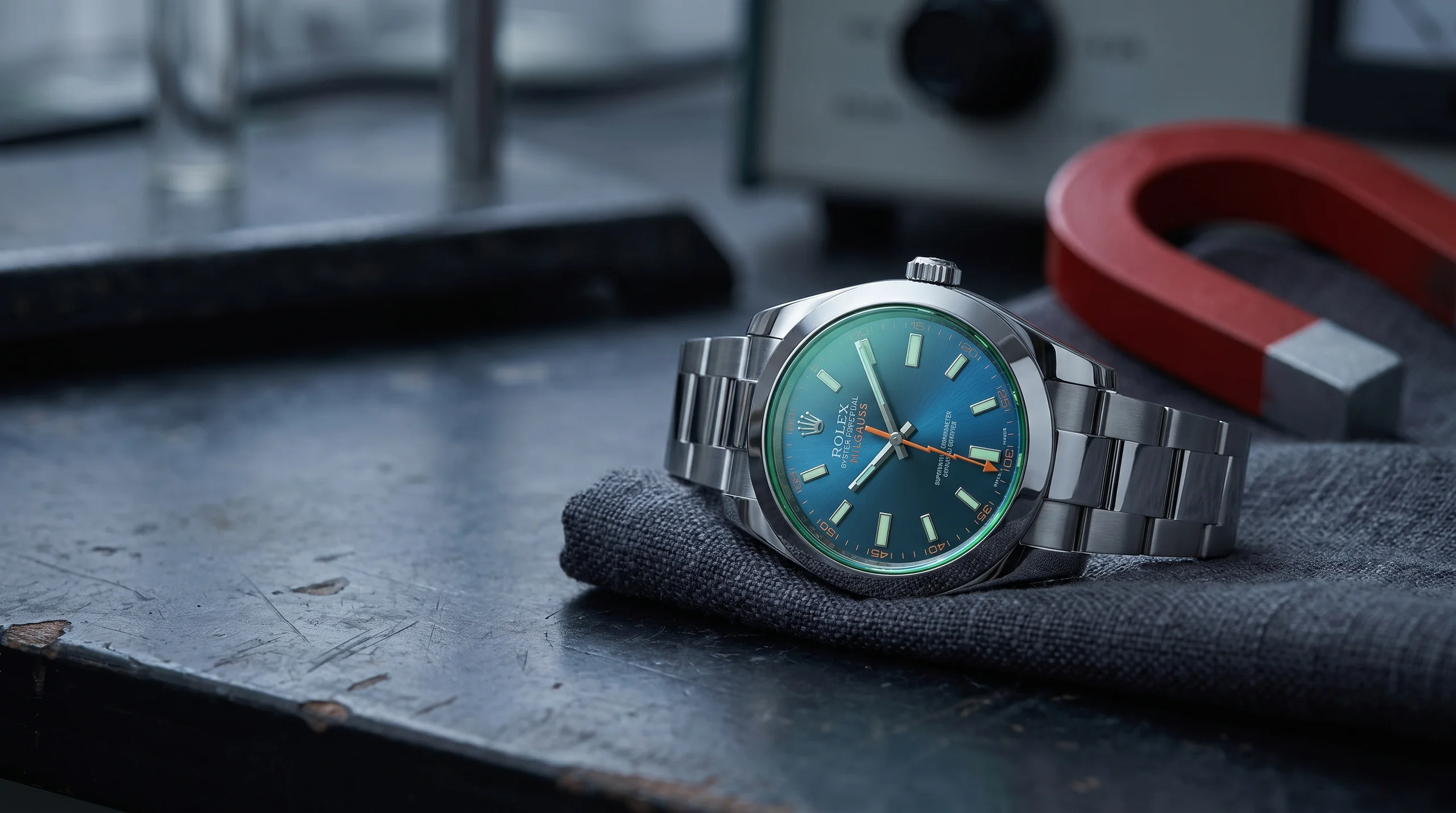 Built for the lab: the Milgauss shrugs off 1,000 gauss thanks to a soft-iron cage around the movement.
The honest flaws: caliber 3131 is an older generation with about 48 hours of power reserve, the case runs thick, and prices can wobble with sentiment. You are paying a discontinued-model premium, so buy the watch, not the hype.
Air-King vs Milgauss: the numbers
| Spec | Air-King 126900 | Milgauss 116400GV |
|---|---|---|
| Status | In production | Discontinued 2023 |
| Case | 40mm Oystersteel | 40mm Oystersteel |
| Dial | Glossy black, 3-6-9 | Z-blue, green crystal |
| Movement | Caliber 3230 | Caliber 3131 |
| Power reserve | ~70 hours | ~48 hours |
| Anti-magnetic method | Paramagnetic hairspring | Soft-iron cage |
| Typical price 2026 | ~$7,400 | $9,000 to $13,000 |
Both share the Oyster DNA that runs through the whole range. If you are weighing these against the brand's other quiet performers, compare them with the Rolex Explorer 124270 and the Oyster Perpetual sleeper picks, which sit in the same underrated corner of the catalog.
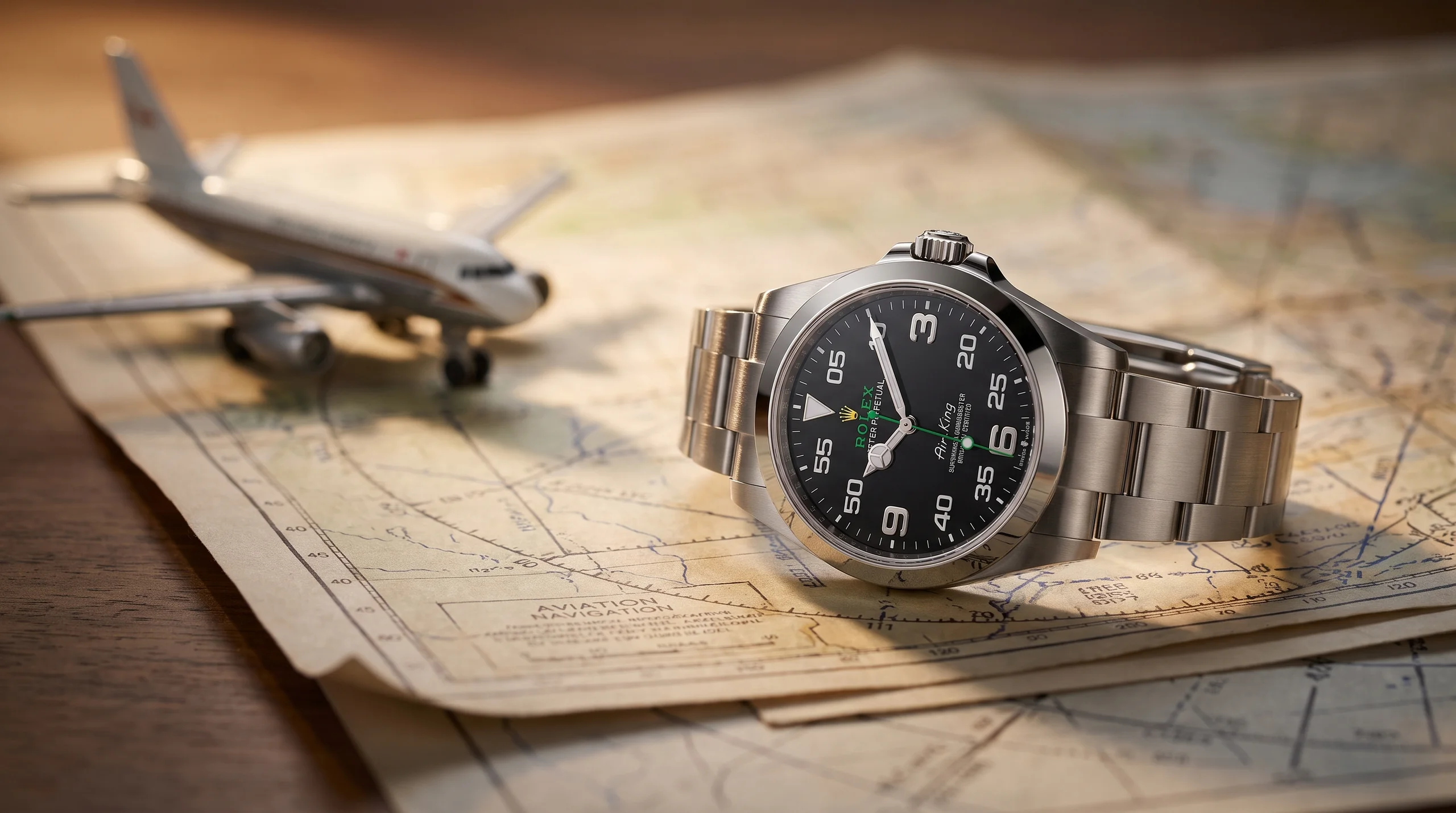 Aviation heritage runs deep in the Air-King line, going back to Rolex pilots in the 1940s.
Which one should you buy
Pick the Air-King if you want a Rolex you actually wear hard, one you can service, scratch, and replace without drama. It is current, it holds value sensibly, and it costs the least to own.
Pick the Milgauss if you collect with an eye on the exit. Discontinued Rolex references with a signature dial rarely get cheaper, and the 116400GV has the look and the story to keep demand warm. Just pay for condition and paperwork, not for a seller's optimism.
Frequently asked questions
Is the Rolex Air-King a good investment?
The Air-King holds value well but is not a strong appreciation play because it is still in production. Expect it to track retail with modest movement rather than jump. Buy it to wear, not to flip.
Why is the Rolex Milgauss so expensive now?
Rolex discontinued the Milgauss in 2023, so supply is fixed while demand for the green-crystal Z-blue dial keeps growing. Discontinuation plus a distinctive design is the classic recipe for firming pre-owned prices.
How anti-magnetic are these watches?
The Milgauss resists 1,000 gauss using a soft-iron cage around the movement. The Air-King relies on caliber 3230 with a paramagnetic blue Parachrom hairspring, which handles the magnetic fields most people encounter daily.
Does the Air-King have a date?
No. The Air-King 126900 is a no-date, time-only watch, which keeps the dial clean and the case symmetrical. If you want a date, look at the Oyster Perpetual Datejust instead.
Which is better for a first Rolex?
The Air-King is the easier first Rolex: lower price, current production, and simple servicing. The Milgauss suits a buyer who already knows they want something rarer and is comfortable with a discontinued-model premium.
The bottom line
The Air-King and Milgauss are proof that Rolex's most interesting watches are not always the ones with a waitlist. One is the honest daily you can still buy new, the other is the discontinued cult piece the market is quietly chasing. Both wear the same anti-magnetic heritage, and both belong on more collector shortlists than they get.
Ready to add one to your collection? Browse our current Rolex inventory and talk to a specialist about sourcing the exact reference you want.