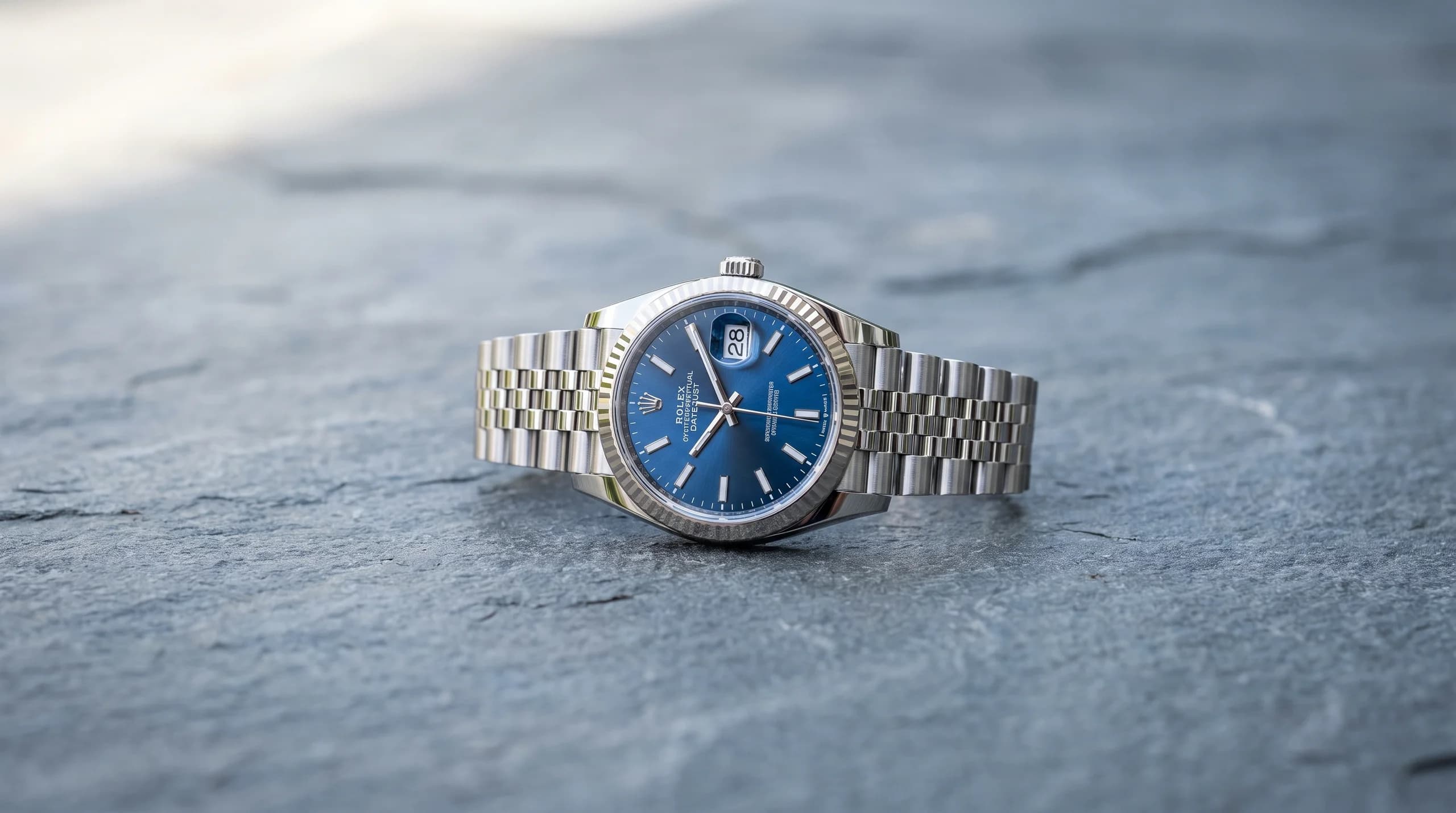
The Rolex Datejust is the watch most people picture when they picture a Rolex, and it is the one most collectors either start with or come back to. It has been in continuous production since 1945, which means the buying decision is less about whether it is good and more about navigating an enormous range of references, sizes, and dials without overpaying.
This is a working dealer's guide to doing exactly that. We will cover the sizes, the bezel and bracelet choices, the dials worth chasing, current pricing, and what actually matters when you inspect one.
The short answer: Decide 36mm or 41mm by wrist and taste, choose your bezel and bracelet, then hunt the dial. Steel references run roughly $7,500 to $16,500 pre-owned depending on configuration. Buy on condition and completeness, and remember that a fluted bezel, a Jubilee bracelet, and a rare dial each add real money.
The images in this article were generated by AI using real reference photography of the Rolex Datejust to keep the case, bezel, and bracelet detailing accurate. They are illustrations, not photographs of specific inventory.
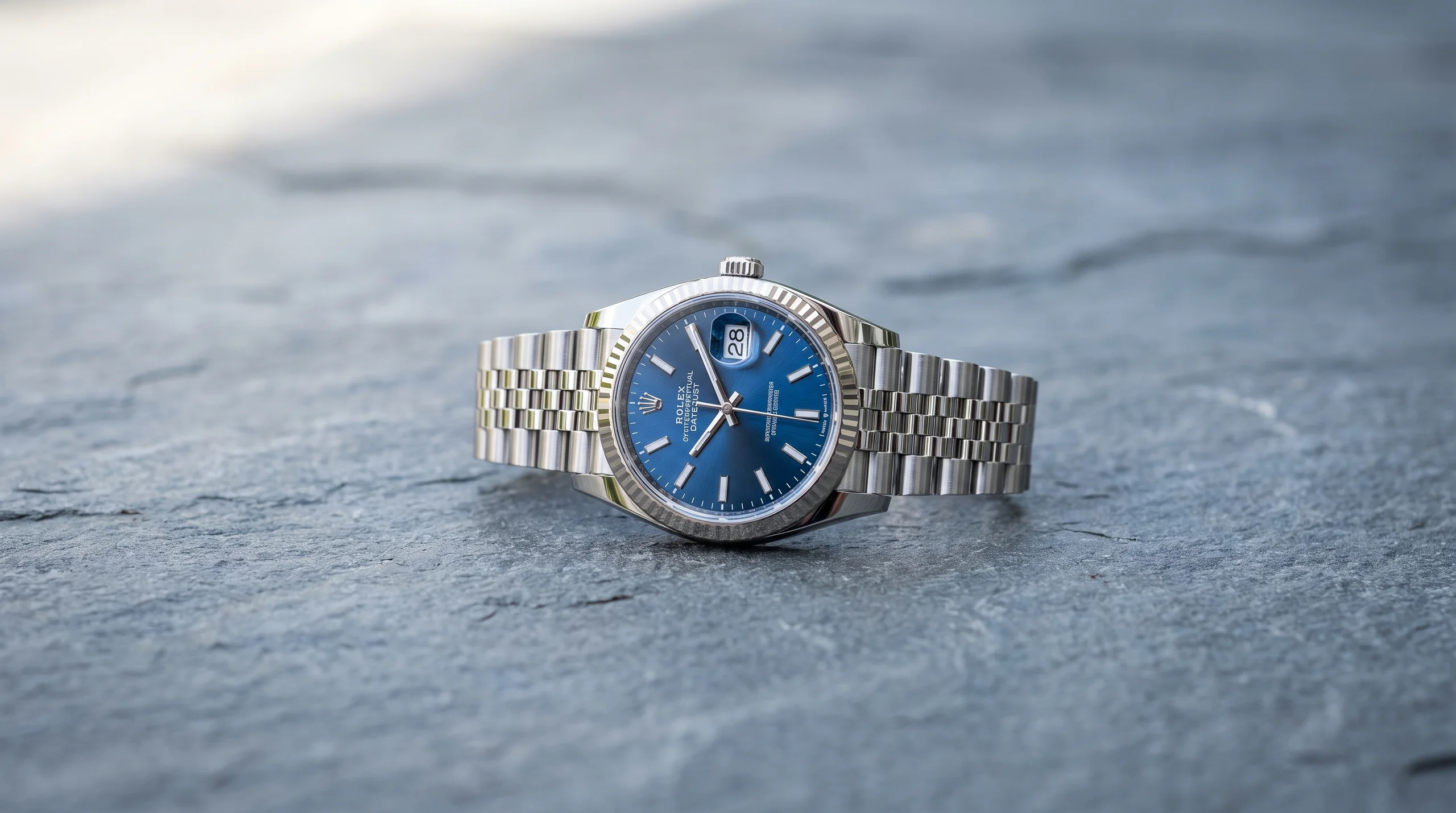 A steel Datejust 36 with a blue dial, fluted bezel, and Jubilee bracelet. The most classic expression of the model.
First Decision: 36mm Or 41mm
Every Datejust purchase starts here, and it is the choice that matters most because you cannot change it later.
The 36mm is the original size, the same as the 1945 debut, and collectors tend to call it the most correct Datejust proportion. It wears discreetly, slips under a cuff, and reads classic rather than trendy. The 41mm, introduced in its current form in 2016, has real modern presence and a larger, more legible dial.
How To Choose Between Them
Both sizes share the same movement, the same 100m water resistance, and the same bracelet and bezel options, so the decision is purely about fit and feel.
Wrists under about 6.7 inches usually suit the 36mm best. Wrists over 7 inches generally carry the 41mm better. In between, it comes down to whether you want the watch to whisper or to announce itself. Neither is a wrong answer, and the right answer is the one that looks correct on your arm.
Second Decision: Bezel And Bracelet
Two configuration choices define how a Datejust looks and how much it costs.
Smooth, Fluted, Or Diamond Bezel
The bezel is the fastest way to change the watch's character. A smooth steel bezel is clean and sporty and sits on the base references. A fluted bezel, Rolex's signature ridged crown, is only ever struck in gold or platinum, so a steel Datejust with a fluted bezel is technically a two-tone watch with a white gold bezel. Diamond bezels exist too and command the highest premiums.
Oyster Or Jubilee Bracelet
The bracelet changes the feel entirely. The three-link Oyster is broad, flat, and sportier. The five-link Jubilee, created for the Datejust in 1945, is dressier and more intricate. Both use Rolex's Easylink 5mm comfort extension. If you want to understand how these compare to every other band out there, our guide to watch bracelet types breaks it down. As a rule of thumb, fluted-bezel Datejusts look most at home on a Jubilee, and smooth-bezel versions pair naturally with an Oyster.
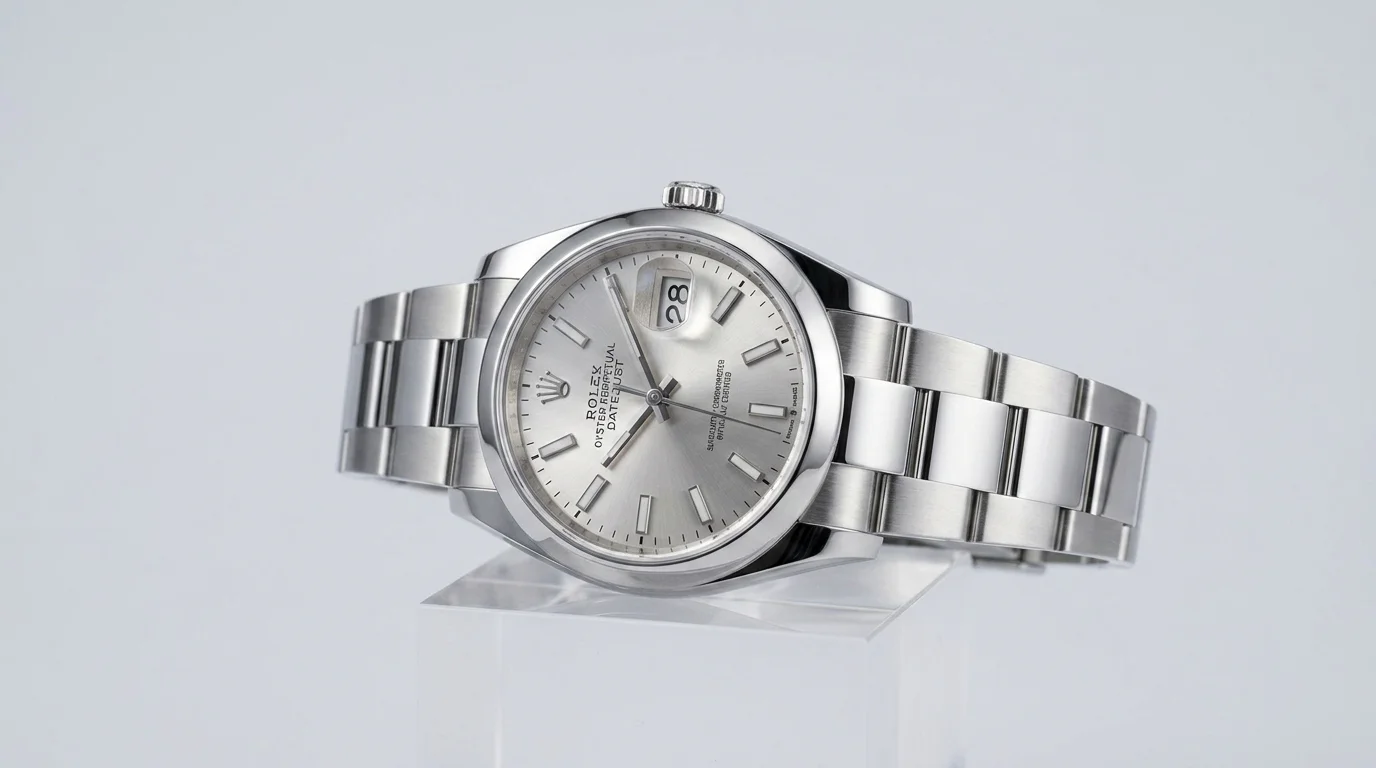 A smooth bezel on an Oyster bracelet reads sportier and sits at the accessible end of the range.
The Current Steel References And What They Cost
For most buyers, the choice narrows to four current-production steel references. Here is where they sit on the secondary market in 2026, after Rolex's roughly 7% retail increase in January.
| Reference | Size / Config | Approx. secondary price |
|---|---|---|
| 126200 | 36mm, smooth bezel, steel | $7,500 to $9,000 |
| 126234 | 36mm, fluted white gold bezel | $10,500 to $14,500 |
| 126300 | 41mm, smooth bezel, steel | $9,500 to $11,500 |
| 126334 | 41mm, fluted white gold bezel | $13,500 to $16,500 |
The 126200 is the accessible entry point and trades close to retail, only a few percent above sticker. The fluted references carry meaningful premiums, and WatchCharts data shows the 126234 has appreciated over 30% in five years, ranking among the highest-volume Rolex references by resale.
The Movement Is The Same Across All Of Them
Every current Datejust runs the in-house calibre 3235, with a 70-hour power reserve, the efficient Chronergy escapement, the anti-magnetic Parachrom hairspring, and Superlative Chronometer accuracy of -2/+2 seconds per day. You are not paying more for a better engine when you move up references. You are paying for materials, bezel, and dial.
The Dial Is Where You Spend Your Attention
With size, bezel, and bracelet settled, the dial is the fun part and the one that most affects both price and personality.
Standard dials in black, silver, blue, and white are widely available and keep the watch versatile. Certain dials, though, carry real premiums. The grey-and-green Wimbledon dial, the mint green Roman, and the palm and floral motif dials regularly sell above comparable standard-dial examples. If a specific dial is the reason you want the watch, budget for the premium rather than hoping to find it cheap.
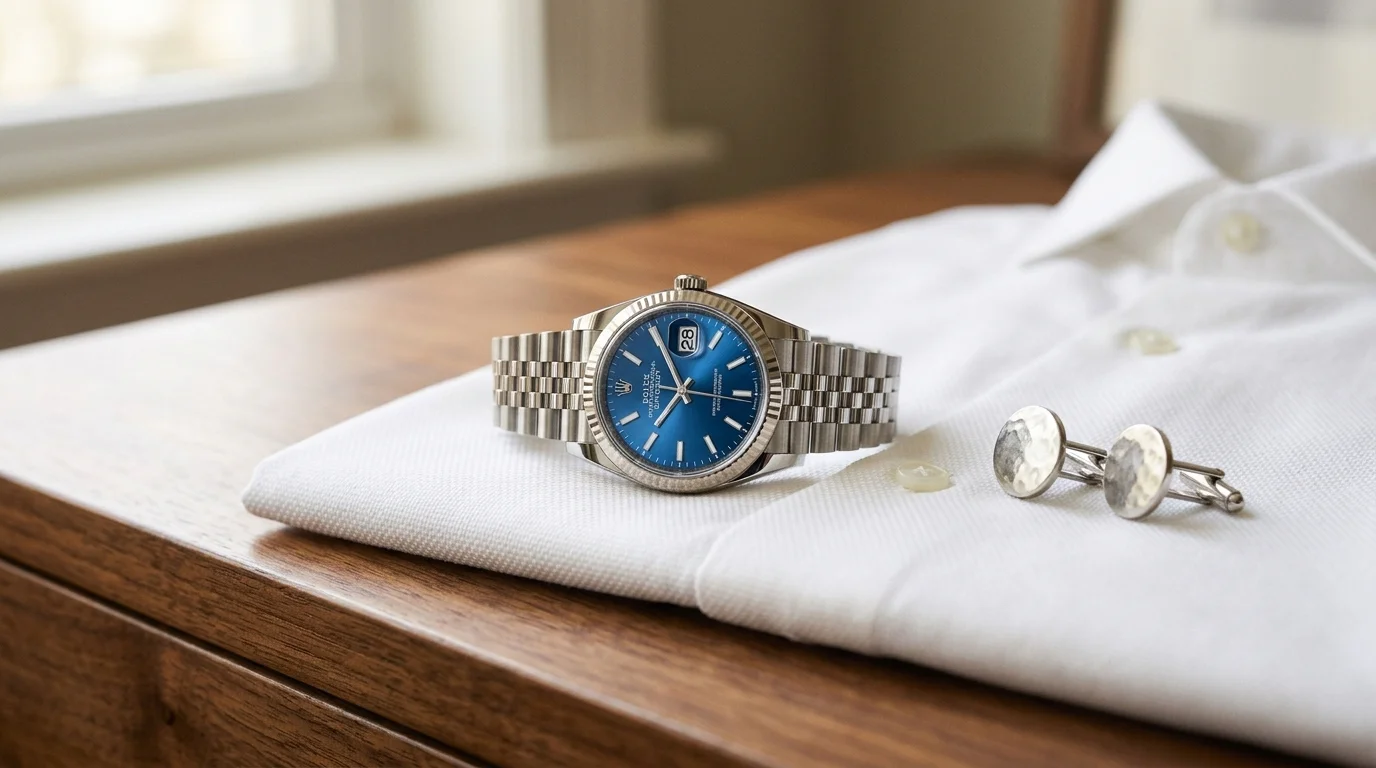 The Datejust's whole appeal is that it works with a suit and with a t-shirt. The dial sets the tone.
What To Check Before You Buy
Once you have found the right configuration, the purchase itself comes down to condition and completeness.
Inspect the case for over-polishing. Crisp, defined edges between the brushed and polished surfaces signal an honest watch, while soft, rounded lugs mean it has been polished hard and lost value. Confirm the movement runs within spec and ask when it was last serviced, since Rolex recommends service roughly every 10 years and a recent service is a genuine value add.
Box, Papers, And The Right Seller
Box and papers add value and resale confidence, though a watch without them is not automatically a problem if the price reflects it and the seller is trustworthy. That last point is the one that protects you most. Buy from a dealer who authenticates, grades condition honestly, and stands behind the watch.
The Datejust also makes a natural anchor for a small collection. If you are weighing it against the obvious alternative, our comparison of the Omega Aqua Terra versus the Datejust lays out where each one wins.
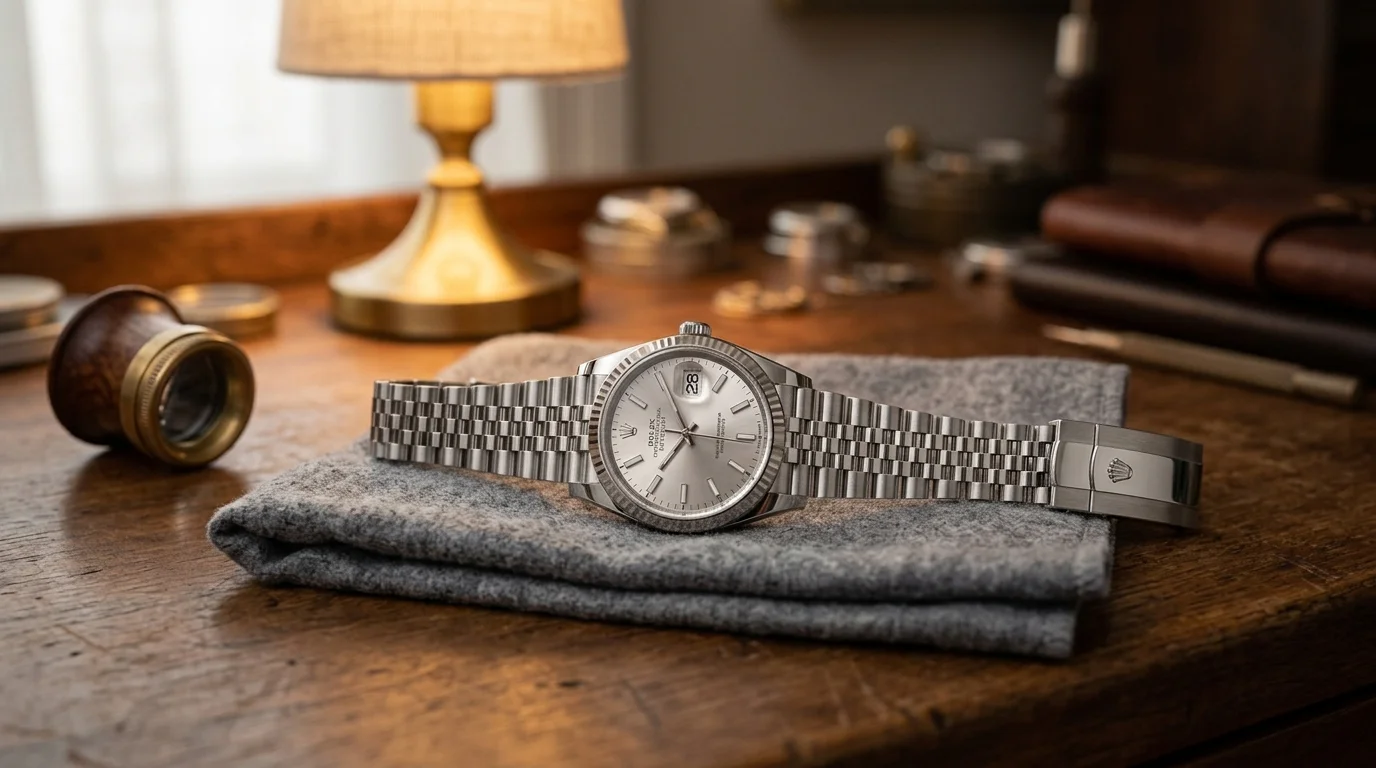 Check the case edges, confirm the service history, and buy the seller as much as the watch.
The Bottom Line
The Datejust is the rare watch that is genuinely hard to get wrong once you know the framework. Pick your size, settle your bezel and bracelet, hunt the dial you love, and buy a clean example from someone you trust. Do that and you end up with the most versatile watch Rolex makes, one that has held its relevance for 80 years and shows no sign of stopping.
For a broader look at where the Datejust sits against the rest of the current lineup, our 5 Best Rolex Watches to Buy in 2026 names the 126234 the strongest everyday dress pick in the catalog.
When you are ready to look, browse authenticated pre-owned Datejust references at 5dwatches.com across sizes, dials, and bracelet options.
Frequently Asked Questions
Should I buy a 36mm or 41mm Datejust?
Choose by wrist size, since the two share the same movement and features. Wrists under about 6.7 inches usually suit the 36mm, the original and most classic proportion. Wrists over 7 inches carry the 41mm better. In between, it comes down to whether you want the watch to whisper or announce itself.
How much does a Rolex Datejust cost in 2026?
Current steel references run roughly $7,500 to $16,500 on the secondary market, depending on configuration. The base 126200 sits near $7,500 to $9,000, while the fluted white gold bezel 126334 in 41mm reaches $13,500 to $16,500. Rare dials add further premiums.
What is the difference between a fluted and smooth bezel?
A smooth bezel is clean, sporty, and struck in steel on the base references. A fluted bezel, Rolex's ridged signature, is only ever made in gold or platinum, so a steel Datejust with a fluted bezel actually carries a white gold bezel and costs more. Diamond bezels command the highest premiums.
Oyster or Jubilee bracelet on a Datejust?
The three-link Oyster is broad, flat, and sportier, and pairs naturally with a smooth bezel. The five-link Jubilee, made for the Datejust in 1945, is dressier and more intricate, and looks most at home under a fluted bezel. Both use Rolex's Easylink comfort extension, so pick on feel.
What movement is in the current Rolex Datejust?
Every current Datejust runs the in-house calibre 3235, with a 70-hour power reserve, the Chronergy escapement, an anti-magnetic Parachrom hairspring, and Superlative Chronometer accuracy of -2/+2 seconds per day. The movement is the same across references, so higher prices reflect materials, bezel, and dial, not a better engine.