The Short Answer
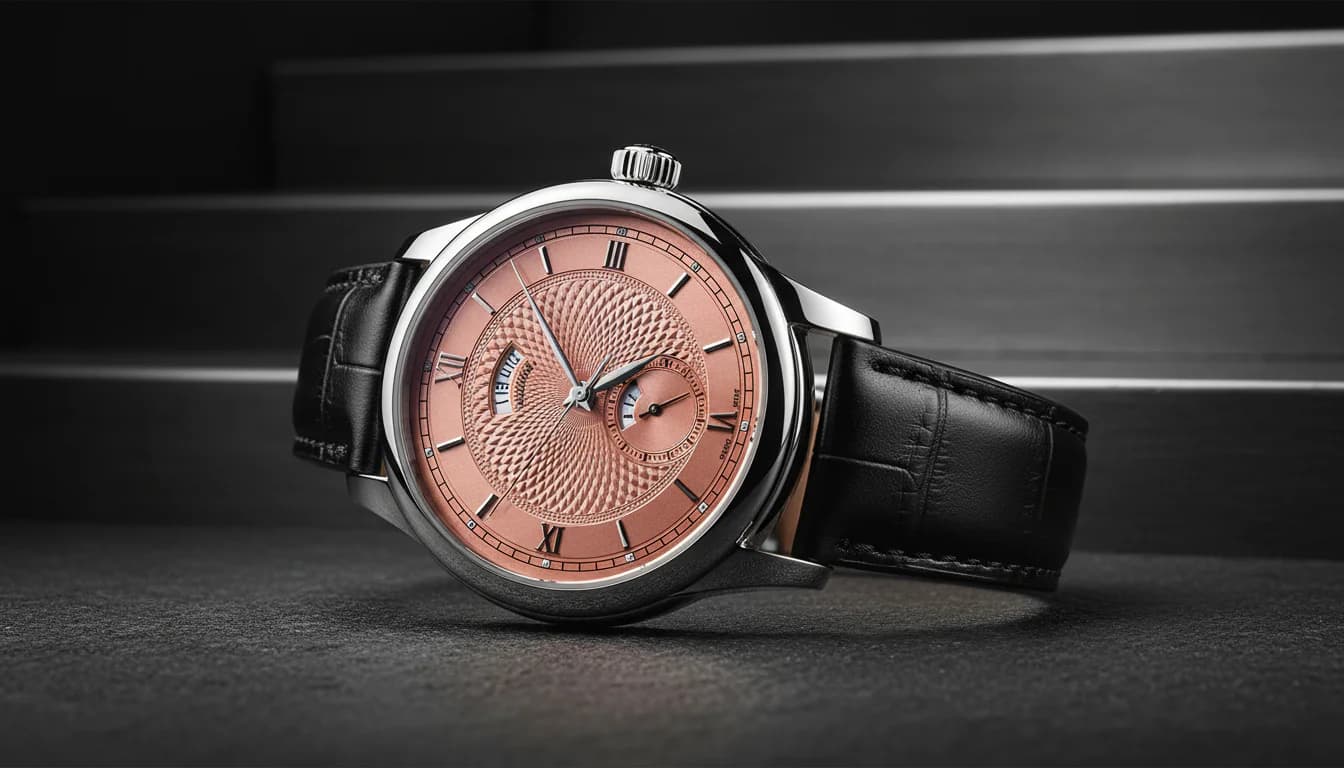
A salmon dial is a watch dial finished in a warm pink to copper tone, achieved by electroplating a thin layer of gold onto a brass dial blank rather than by painting or dyeing the metal. The look dates back to the late 19th century, when Patek Philippe and Vacheron Constantin used the technique on complicated pocket watches. Collectors coined the term "salmon" decades later. Patek Philippe itself has always called the finish "rose-gilt opaline."
The color is not fixed. It shifts from pink to copper to near-silver depending on the angle of light hitting the dial, which is part of why collectors chase good examples so hard. A flat photo under even lighting rarely shows what the dial actually looks like on the wrist.
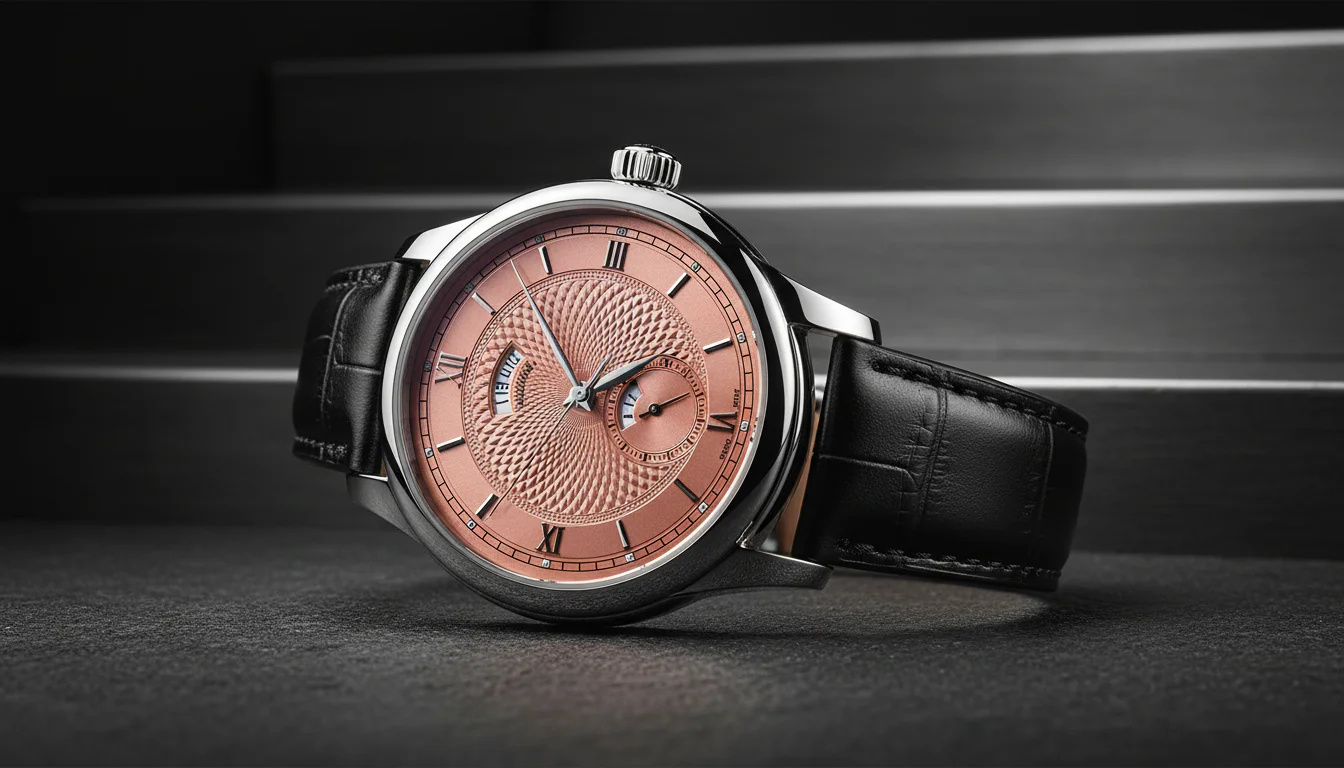 A salmon dial's color depends heavily on the angle of light. This shot and the one further down the page are the same dial under different lighting.
The watch photos in this article were generated with AI image tools, conditioned on real reference photography of salmon dial watches so the dial texture, color, and case construction are accurate representations.
Where the Term Actually Comes From
Salmon dial is modern collector slang. Manufacturers never called it that on the invoice. Patek Philippe used "rose-gilt opaline," and other houses reached for words like "gilded," "rose," "pink," or simply "copper," depending on the era and the country selling the watch.
The finish itself goes back further than the nickname. Late 19th-century manufacturers used it on their most complicated pocket watches, where the warm tone paired well with the gold cases those movements typically lived in.
From Pocket Watches to Wristwatches
The technique carried over to wristwatches by the 1930s and 1940s. Patek Philippe's reference 130 chronograph and the later ref. 1518 and ref. 2499 perpetual calendar chronographs all used salmon dials, as did the 1939 Rolex Anti-Magnetic chronograph and the vintage Longines 13ZN.
How a Salmon Dial Is Actually Made
The base process is electroplating, sometimes called a galvanic bath. A brass dial blank goes into an electrochemical bath that deposits an extremely thin metallic coating onto its surface, with gold historically doing most of the work.
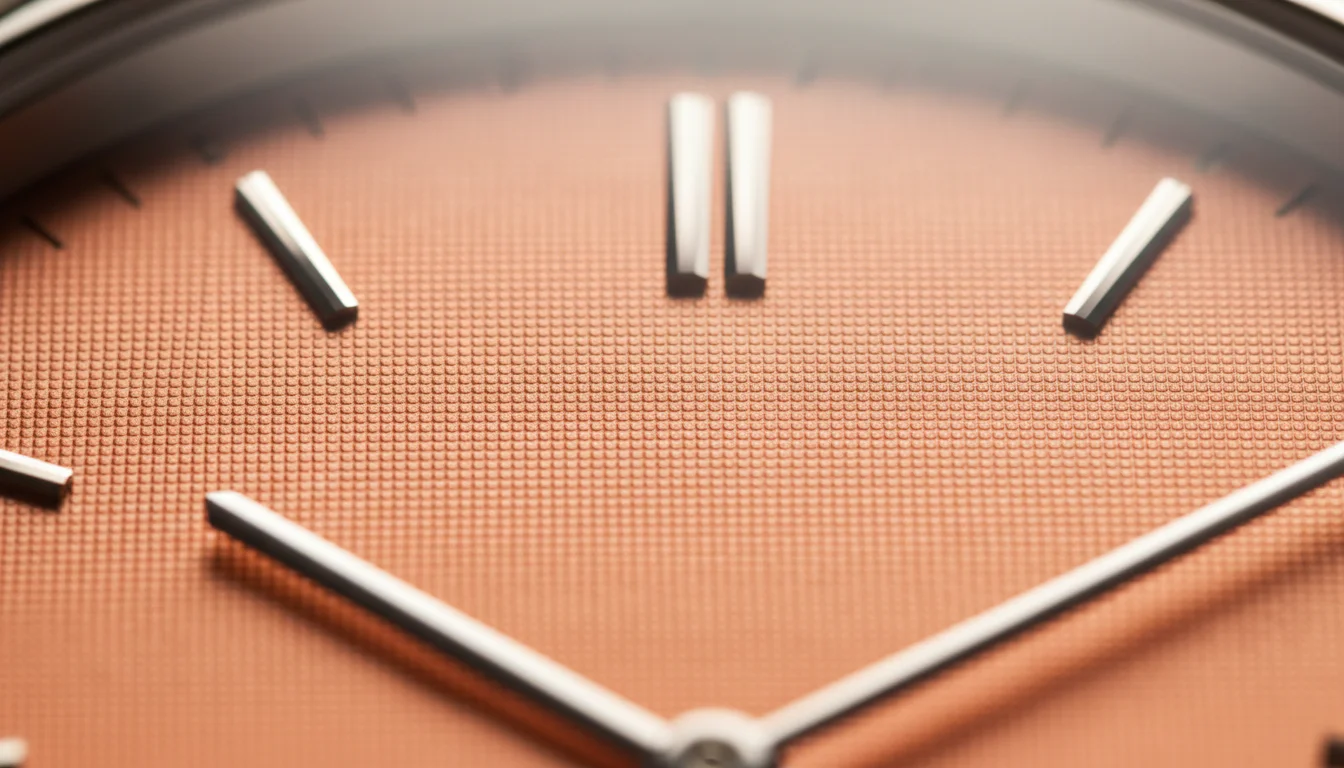 The texture underneath the plating matters as much as the color. A hand-guilloched pattern catches light differently than a flat or stamped surface.
Modern high-end production typically uses 3N gold, a specific alloy where the numeric designation describes the proportion of copper mixed with gold. More copper pushes the tone warmer and pinker. Manufacturers control the final hue by adjusting the electrolyte composition, the metal chemistry, the immersion time, and the current running through the bath.
Why Some Brands Guard the Recipe
Whether actual gold participates in a given brand's specific bath, and in what ratio, is often treated as proprietary information. That secrecy is one reason two salmon dials from different manufacturers can look noticeably different in tone even under identical lighting.
Why the Color Changes on the Wrist
A salmon dial's electroplated surface interacts with light the way a thin metallic coating does generally: reflectively, not through pigment. Depending on the angle of the light source and the viewer's eye, the same dial can read pink, copper, or almost silver.
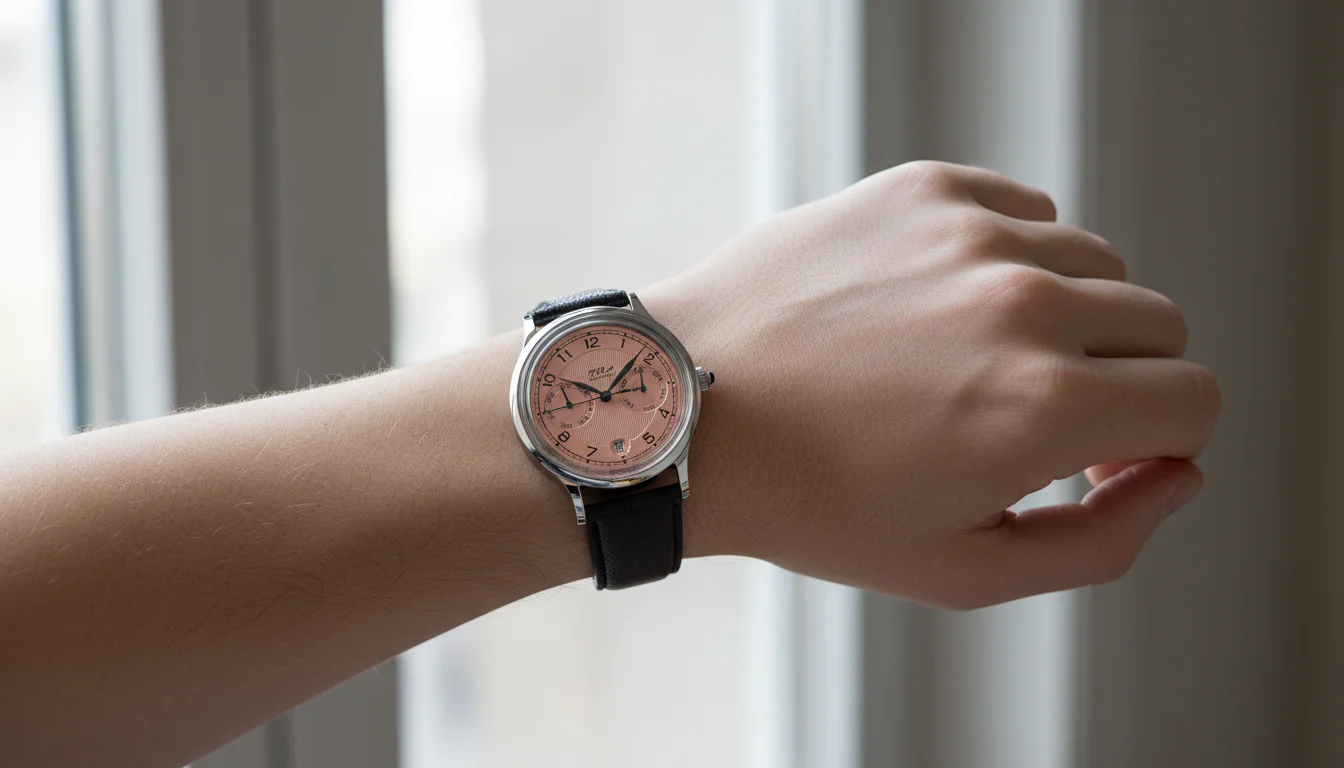 Natural window light tends to bring out the warmest version of a salmon dial's color.
This is genuinely useful information before buying pre-owned. A seller's photo taken under flat studio light can undersell or oversell the actual color you will see day to day. Ask for a photo taken in natural daylight if you are buying based on images alone.
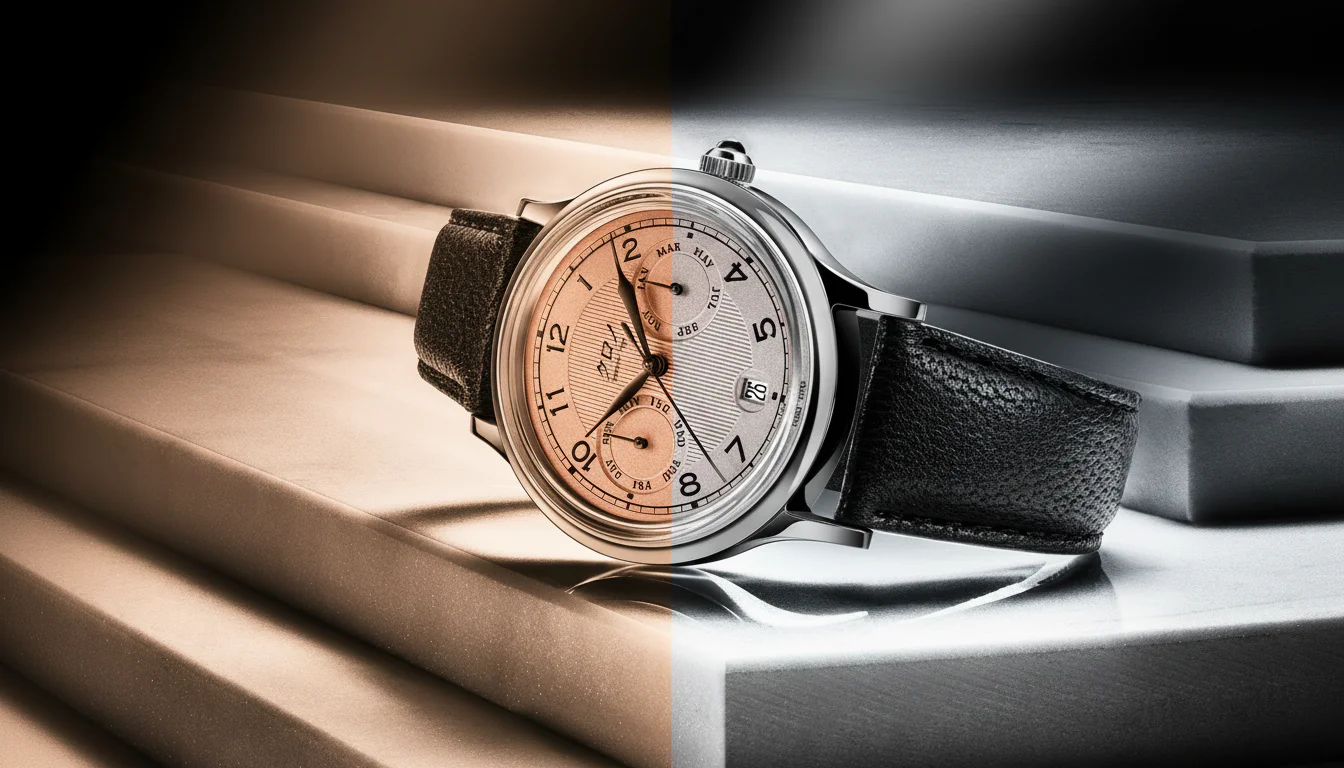 Same dial, same watch, two lighting setups. Warm light on the left pulls out the pink and copper. Cooler light on the right pushes it toward silver.
Texture Changes the Effect Further
A hand-guilloched surface, like the fine barleycorn or sunburst patterns common on higher-end salmon dials, scatters light differently across its grooves than a smooth plated surface would. That is part of why the better examples read as more dynamic rather than uniformly flat.
Salmon vs a Silver or Champagne Dial
The comparison worth making is not salmon versus every other color. It is salmon versus the plain silver or opaline finish it is most often confused with in bad lighting or a low-resolution photo.
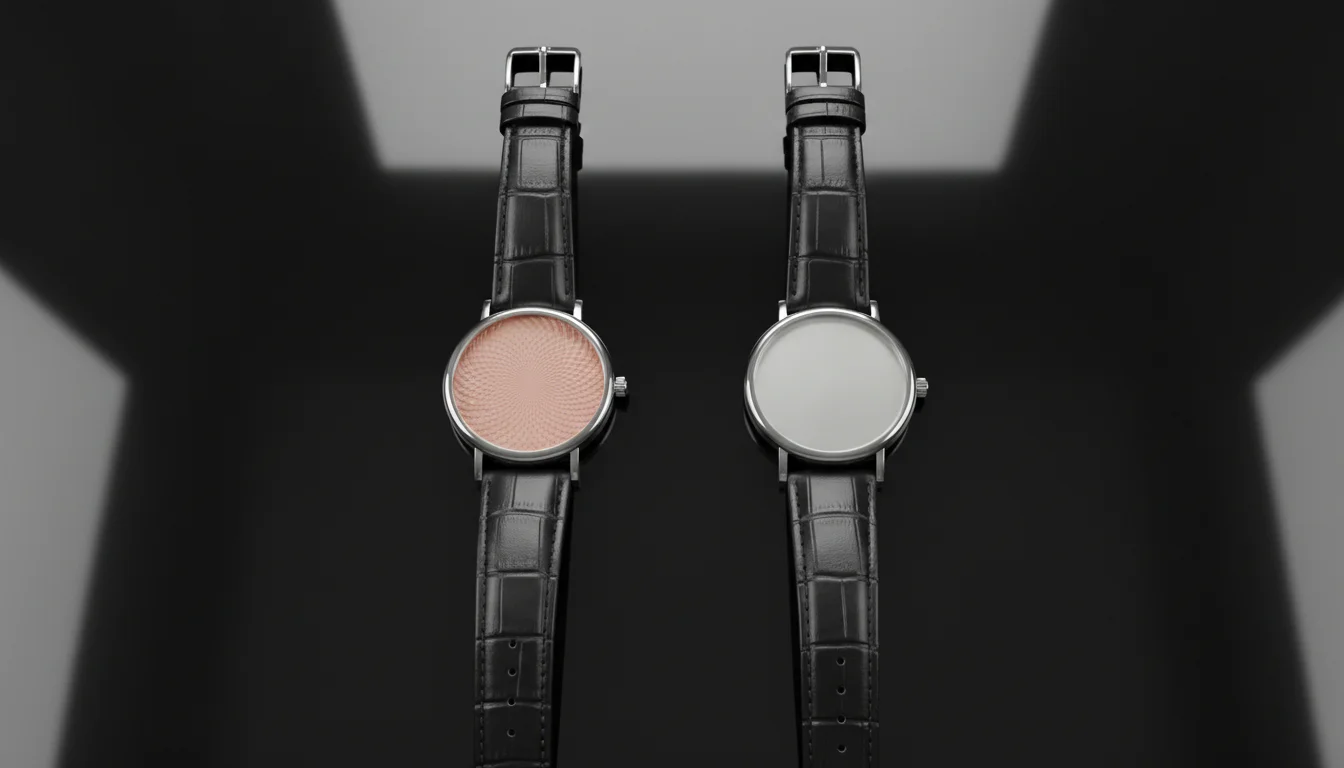 Side by side, the difference is obvious. In a dim listing photo, it is easy to see how the two get confused.
A genuine salmon dial holds a pink to copper cast in most lighting, while a silver dial stays cool and neutral regardless of angle. If a listing photo makes you squint to tell which one you are looking at, ask for a second photo before buying.
The Quartz Crisis Nearly Killed the Look
Salmon dials all but disappeared during the Quartz Crisis of the 1970s, when mechanical complications generally fell out of production. The style only came back into serious circulation once collecting itself picked back up in the 1990s and 2000s.
FAQ
What is a salmon dial watch?
A watch dial finished in a warm pink to copper tone, traditionally achieved by electroplating a thin layer of gold onto a brass dial blank rather than painting or dyeing the surface.
Where did the term "salmon dial" come from?
It is modern collector slang. Manufacturers historically used other names, including Patek Philippe's own term, "rose-gilt opaline."
How is a salmon dial actually made?
Through electroplating, an electrochemical bath process that deposits a thin metallic coating, often a specific gold alloy like 3N, onto a brass dial blank. The copper content in the alloy controls how warm or pink the final tone reads.
Why does a salmon dial look different in every photo?
Because the color comes from a reflective metallic coating rather than pigment. The dial's actual tone shifts from pink to copper to near-silver depending on the light source and viewing angle.
Are salmon dials rare or expensive?
They tend to command a premium over the same reference in a standard silver or black dial, since the plating process is more involved and the look has become genuinely popular with collectors over the last two decades.
Related Reading
- Grand Feu Enamel Dials Explained: The Fired Finish Only a Handful of Watchmakers Still Do by Hand
- Watch Case Finishing Explained: Polished, Brushed, and Sandblasted
- The Complete Parmigiani Fleurier Brand and Model Guide: Tonda PF, Toric, and the Foundation-Owned Manufacture
- What Is a Regulator Dial? The Watchmaker's Layout, Explained