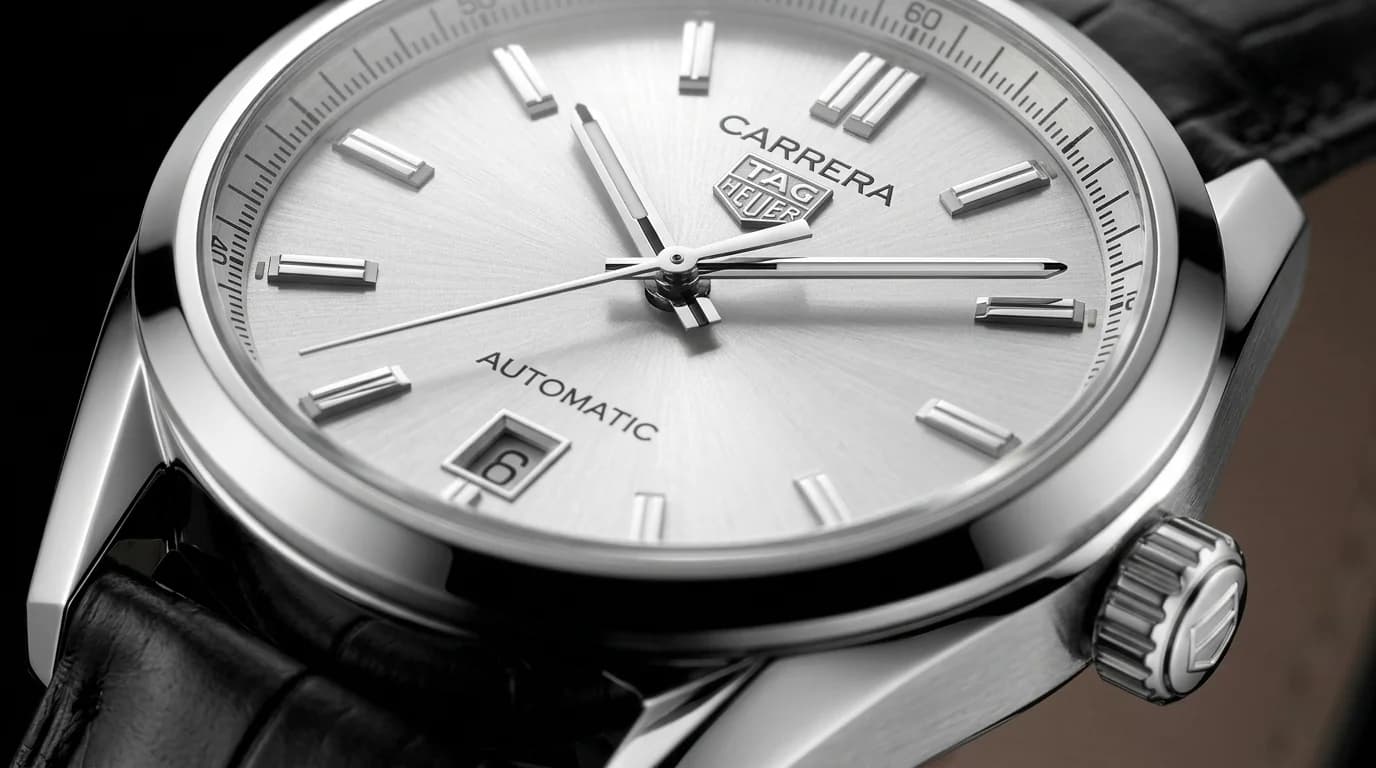
Jack Heuer named the Carrera after the Carrera Panamericana, a five-day road race across Mexico that killed dozens of drivers in the 1950s before it was shut down. He wanted a chronograph legible enough to read at speed and tough enough to survive the dashboard of a race car. That watch launched in 1963 at 36mm, hand-wound, with the cleanest chronograph dial TAG Heuer has ever put out. Sixty-plus years later the Carrera is still the brand's flagship, and it now spans a genuinely confusing range of sizes, movements, and configurations.
This post includes AI-generated images built from real reference photography of the watch discussed, verified by our team for accuracy before publishing.
The short answer
The modern TAG Heuer Carrera lineup splits into three groups. Three-hand automatics like the Carrera Date run 39mm on Calibre 5 (an ETA 2824 based movement) starting around $3,700 retail. Chronographs run 39mm to 44mm on either Calibre 16 (ETA 7750 based, reliable, easy to service) or the in-house Heuer 02 (column wheel, vertical clutch, 80 hour reserve), starting around $5,300 and climbing well past $7,000 for Heuer 02 references. The 2023 Glassbox revival brought back the original domed crystal in 39mm and 41mm for collectors chasing the vintage look. Pre-owned prices for the common references run $2,000 to $4,000, making the Carrera one of the more accessible entry points into genuine Swiss chronograph heritage.
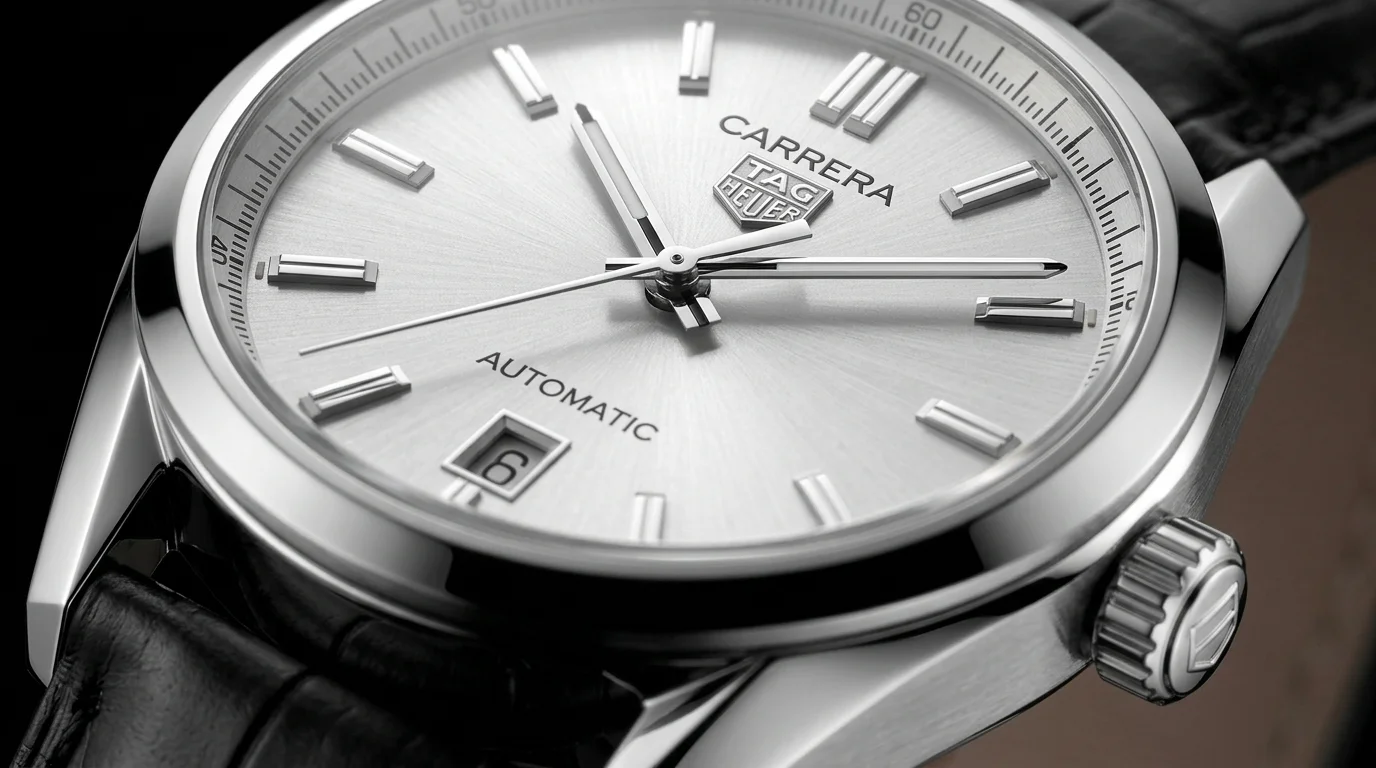 The current Carrera Date, ref. WBN2111.BA0639: 39mm, silver sunray dial, Calibre 5 automatic. Clean enough to see why Jack Heuer's original design still works.
The three-hand automatics: the accessible entry point
If you just want a Carrera and do not need a chronograph, the three-hand Carrera Date is the move. Reference WBN2111.BA0639 runs $3,700 retail: 39mm steel case, silver dial with a brushed sunray finish, applied indices, a date window at 6 o'clock, and Calibre 5, TAG Heuer's name for an ETA 2824-2 based automatic with a 38-hour power reserve. It is not an exciting movement on paper. It is a proven one, easy and cheap to service anywhere in the world, which matters more than a spec sheet once you actually own the watch.
This is also where most first-time Carrera buyers land pre-owned, since the three-hand models trade at a real discount to retail once they hit the secondary market.
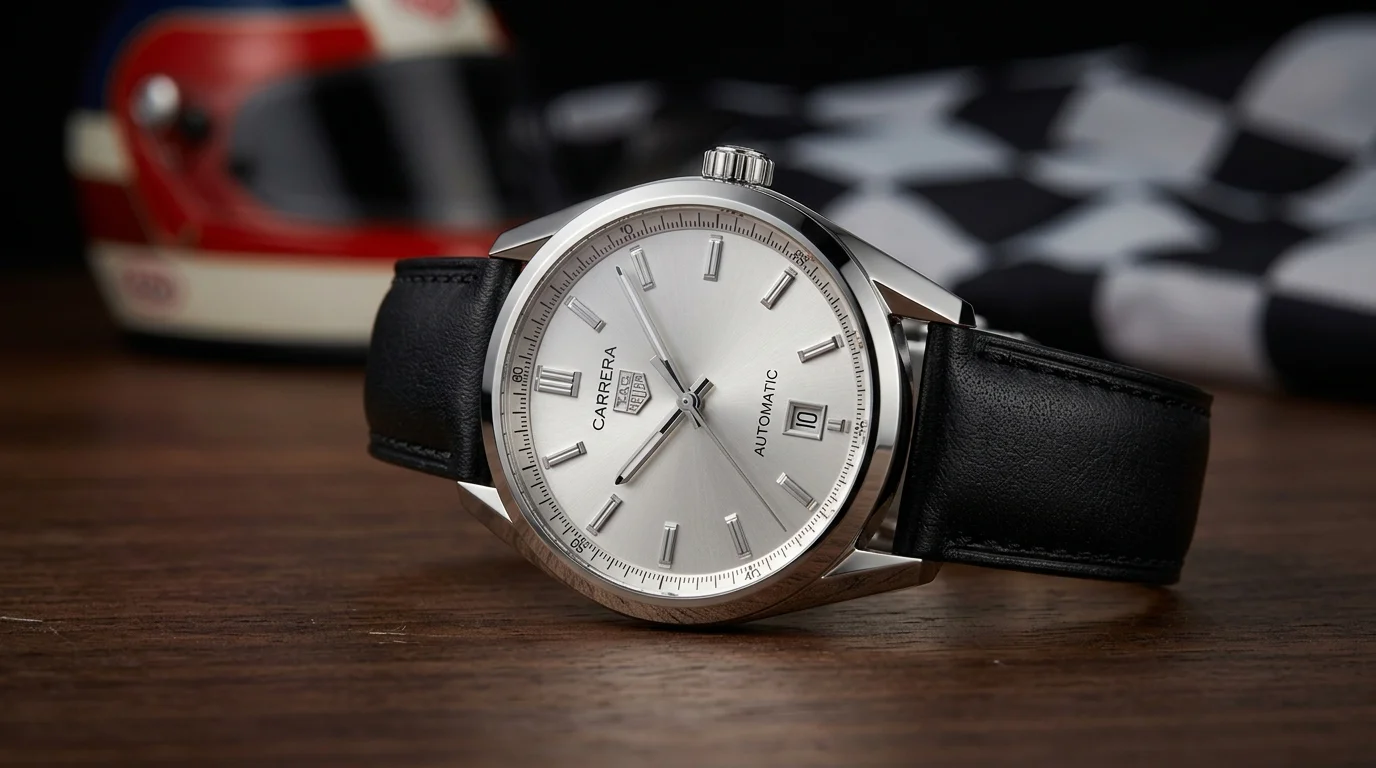 The Carrera never fully leaves the motorsport story behind, even on a simple three-hand reference. Jack Heuer built it for drivers, not collectors.
The chronographs: Calibre 16 vs Heuer 02
This is where the range gets genuinely wide, and where the movement choice actually matters.
Calibre 16 is TAG Heuer's name for a modified ETA/Valjoux 7750, the workhorse automatic chronograph movement most of the Swiss industry has used for decades. Tricompax layout, roughly 42-hour power reserve, and the kind of movement any competent watchmaker in the world can service without ordering specialty parts. Carrera chronographs on Calibre 16 start around $5,300 retail.
Heuer 02 is TAG Heuer's in-house automatic chronograph, and it is a genuinely different tier of engineering: column wheel control, vertical clutch engagement (smoother pusher action, no jumping seconds hand), and an 80-hour power reserve, double what Calibre 16 offers. Heuer 02 references generally start above $7,000 and run higher depending on complications and case material. We break down exactly what column wheel and vertical clutch construction mean in practice, using the Carrera alongside four other chronographs, in our column wheel vs cam-lever explainer.
Neither movement is a wrong choice. Calibre 16 is the pragmatic pick if you want lower cost and dead-simple servicing. Heuer 02 is the pick if you want the more technically ambitious movement and do not mind paying for it.
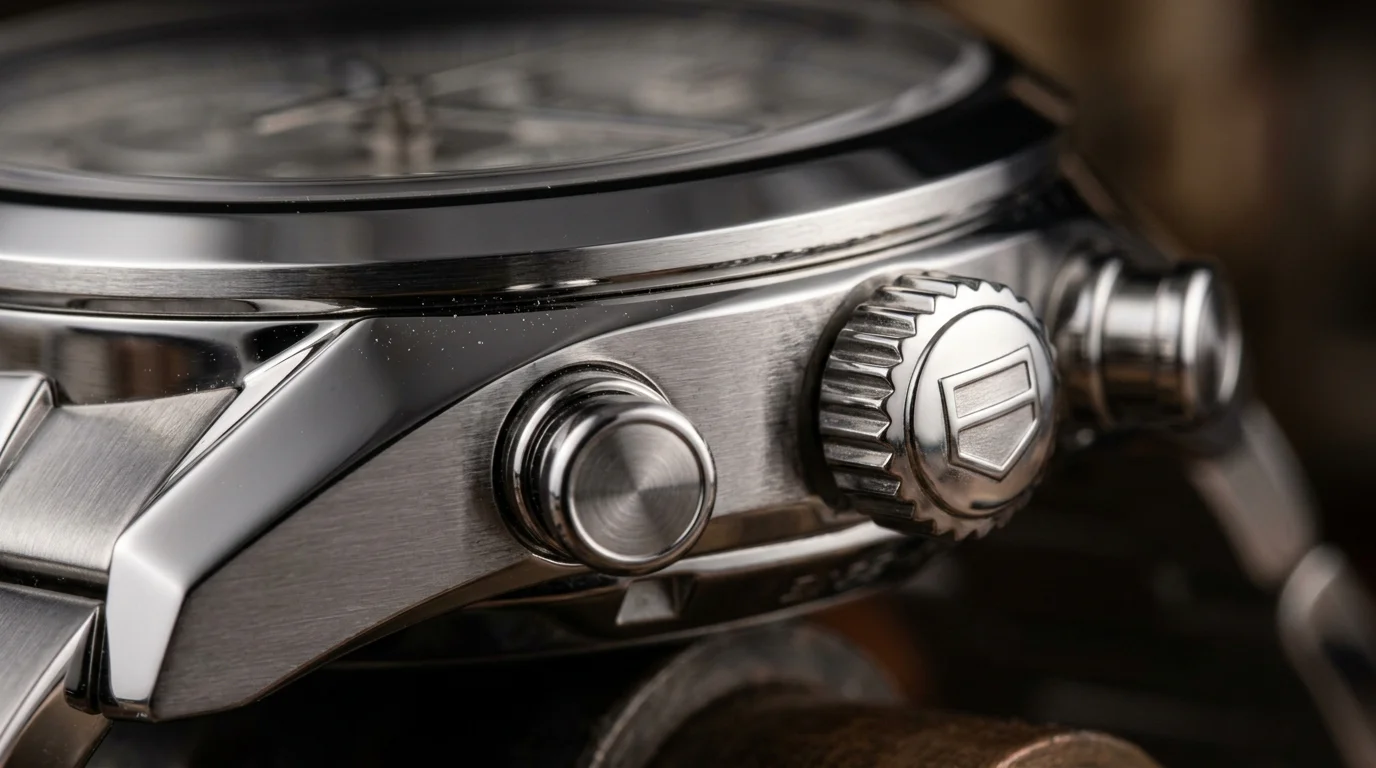 Chronograph pushers and crown, TAG Heuer shield engraved into the crown cap. Whether you are running Calibre 16 or Heuer 02 underneath, the pusher action is the first thing you feel.
The Glassbox: the vintage-correct revival
TAG Heuer brought back the Carrera's original domed crystal in 2023 for the model's 60th anniversary, calling the line Glassbox. Available in 39mm and 41mm, these reference the 1963 original more directly than any other current Carrera, with a case profile and dial layout meant to echo Jack Heuer's first design rather than modernize it.
If the appeal of the Carrera for you is specifically the 1963 story and not just the name, the Glassbox is the reference to look at. It costs a real premium over the standard chronographs for that vintage-correct detailing.
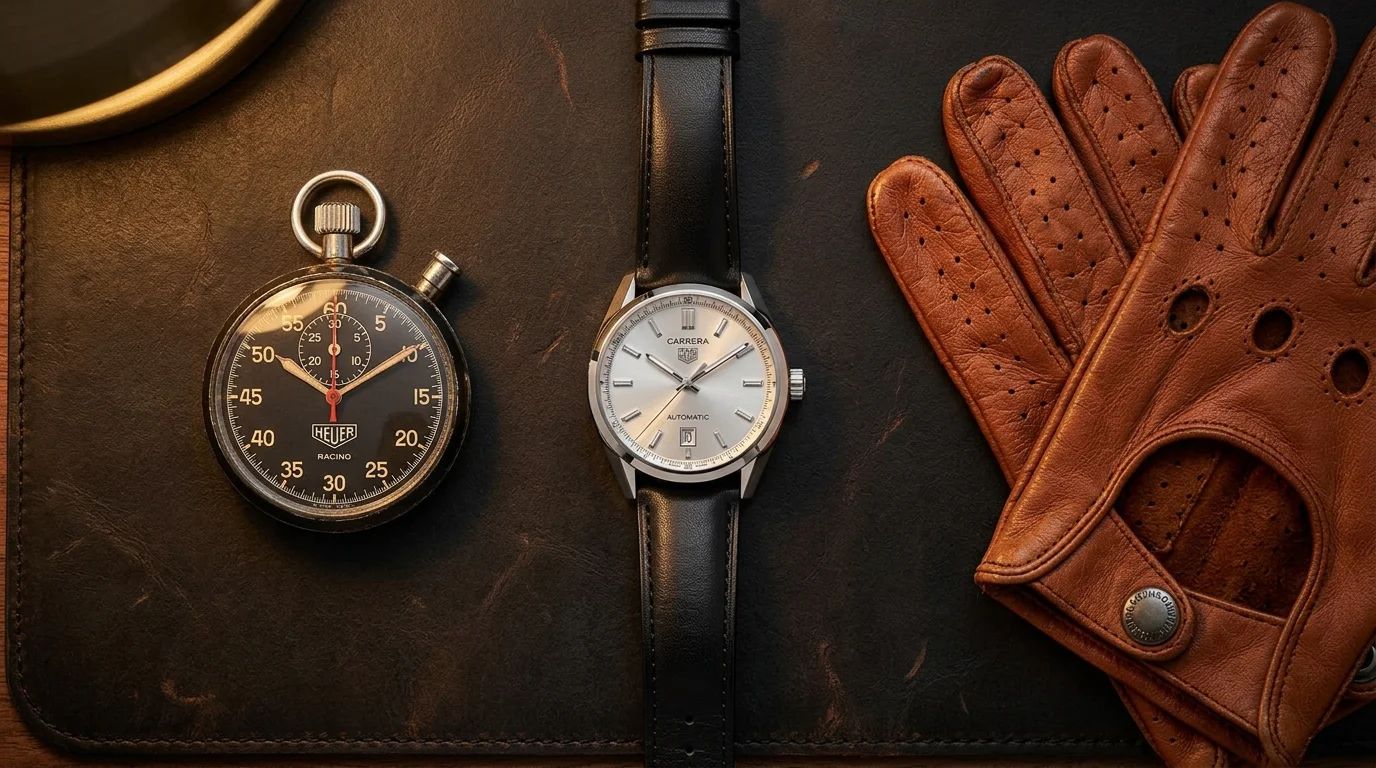 A vintage Heuer racing stopwatch next to a modern Carrera. The Glassbox revival leans into exactly this history rather than modernizing away from it.
Reference comparison
| Configuration | Case size | Movement | Power reserve | Starting retail |
|---|---|---|---|---|
| Carrera Date (three-hand) | 39mm | Calibre 5 (ETA 2824 based) | 38 hours | $3,700 |
| Carrera Chronograph | 39-44mm | Calibre 16 (ETA 7750 based) | ~42 hours | ~$5,300 |
| Carrera Chronograph | 39-44mm | Heuer 02 (in-house) | 80 hours | $7,000+ |
| Carrera Glassbox | 39mm / 41mm | Calibre 16 or Heuer 02 | Varies | Premium over standard |
Pre-owned pricing on the common Calibre 5 and Calibre 16 references generally runs $2,000 to $4,000, a real discount to retail that makes the Carrera one of the more accessible ways into a genuine Swiss chronograph heritage nameplate.
On the wrist
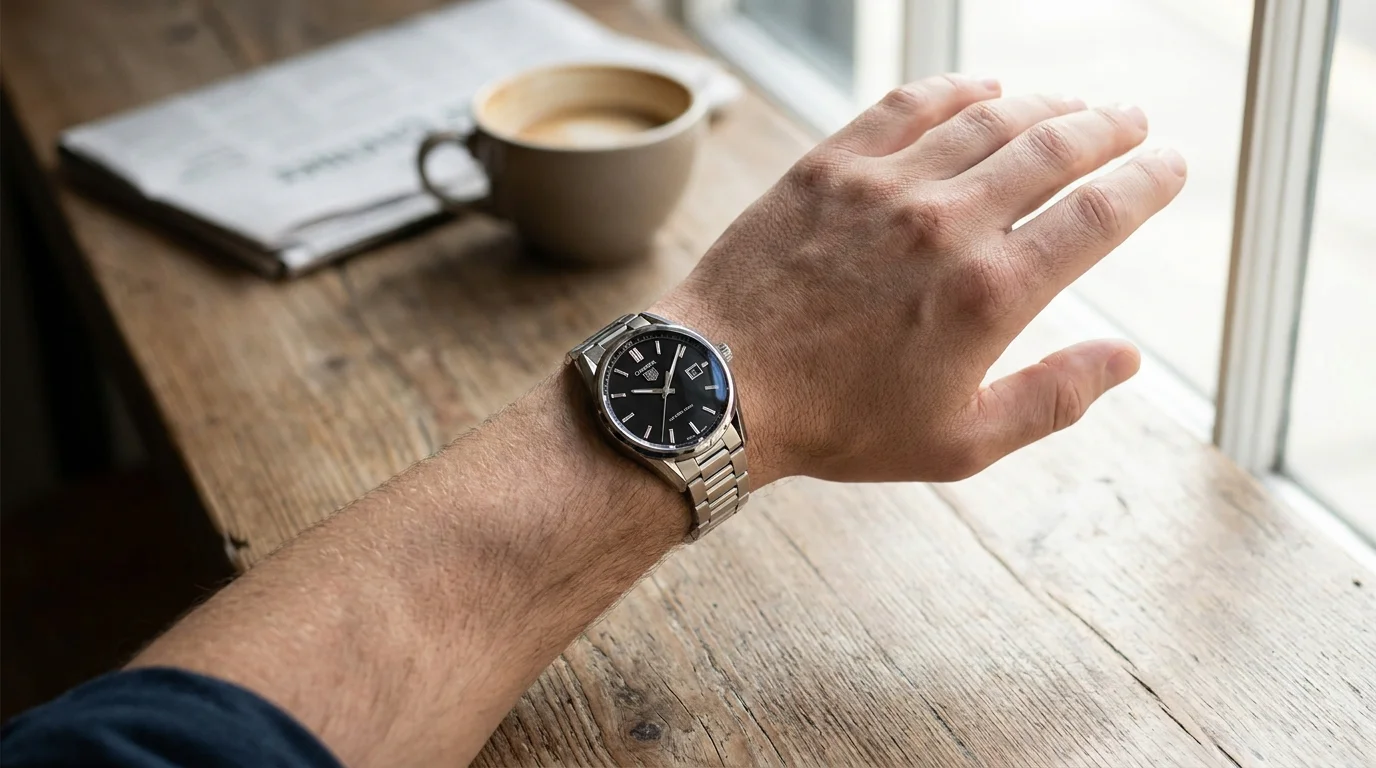 At 39mm the Carrera wears close to the wrist and works equally under a jacket cuff or a t-shirt sleeve. This is the size most buyers should start with.
At 39mm, the Carrera sits comfortably under most cuffs and does not read as oversized on smaller wrists. The 41mm and 44mm chronograph cases wear noticeably sportier and suit those who want more wrist presence. If you are buying your first Carrera and are unsure which size, 39mm is the safer starting point.
FAQ
What is the cheapest TAG Heuer Carrera?
The three-hand Carrera Date on Calibre 5 is the most accessible current reference, starting around $3,700 retail and considerably less pre-owned. It is also the easiest to service long term since Calibre 5 is ETA 2824 based.
What is the difference between Calibre 16 and Heuer 02?
Calibre 16 is a modified ETA/Valjoux 7750 with roughly 42 hours of power reserve. Heuer 02 is TAG Heuer's in-house chronograph movement with a column wheel, vertical clutch, and 80 hours of power reserve. Heuer 02 is the more technically advanced and more expensive option.
Is the TAG Heuer Carrera a good investment?
The Carrera is not a watch to buy expecting appreciation. It is a well-built, historically significant chronograph that holds a reasonable percentage of its value on the pre-owned market rather than one that reliably climbs in price.
What does Glassbox mean on a Carrera?
Glassbox refers to the domed crystal TAG Heuer revived in 2023 for the Carrera's 60th anniversary, referencing the original 1963 design more directly than the standard modern Carrera case.
What size Carrera should I buy?
39mm is the safest starting point for most wrists and is available across both the three-hand and chronograph lines. Go up to 41mm or 44mm only if you specifically want a sportier, larger presence.
Related reading
For the two chronograph icons the Carrera competes against in spirit if not in price, see Speedmaster vs Daytona: A Working Dealer's Read on the Two Chronograph Icons. For a broader shortlist across brands and budgets, see The Best Chronograph Watches to Buy in 2026. And for how the chronograph complication itself actually works, read What Is a Chronograph? How the Stopwatch on Your Wrist Actually Works.