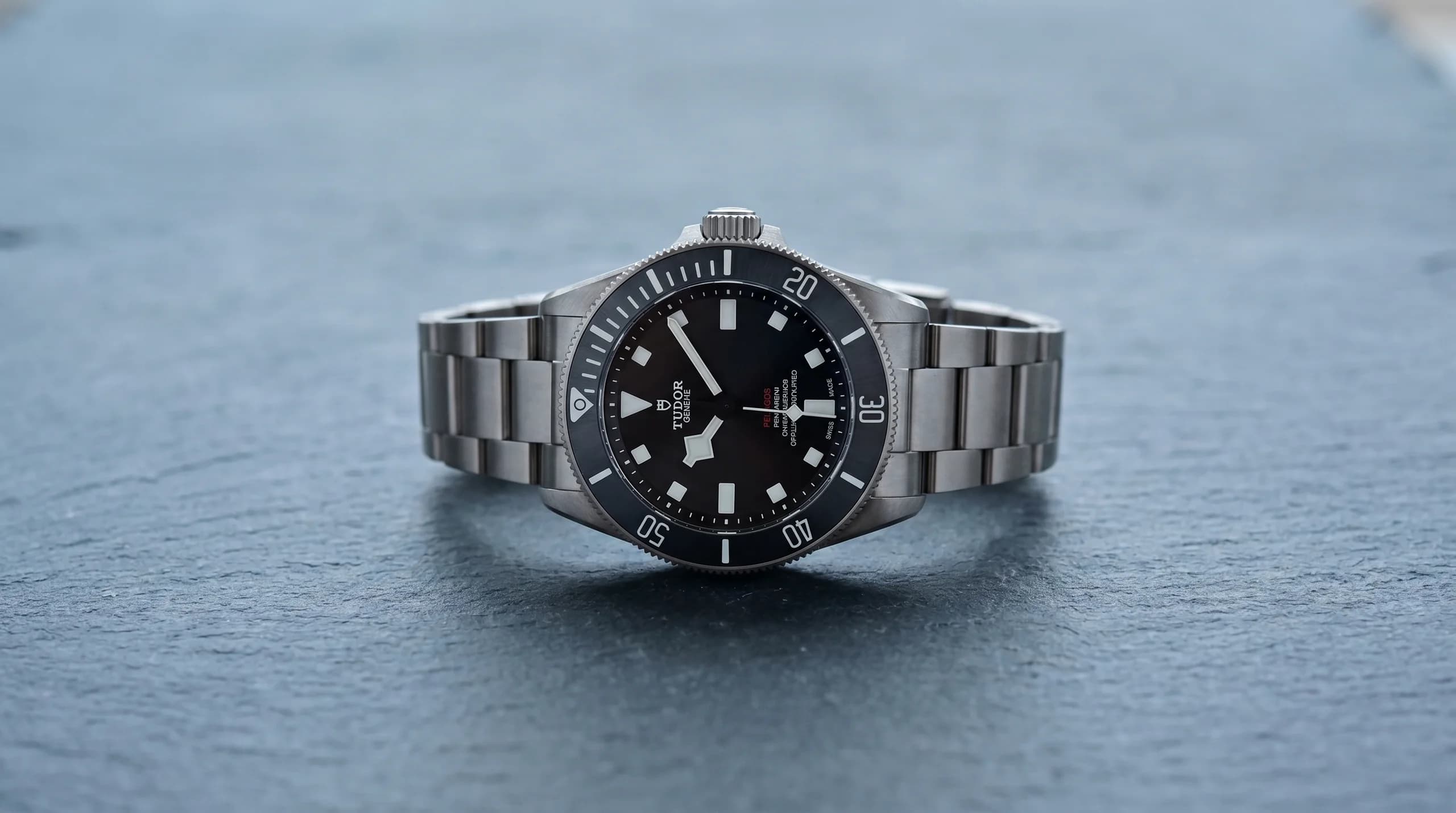
Titanium or steel is one of the first real forks in the road when you buy a sport watch, and the honest answer is that neither wins outright. They feel different, age differently, and suit different lives. The trick is knowing which trade-offs you are actually signing up for.
The images in this post are AI-generated illustrations for editorial purposes and may not exactly represent specific watches.
The short version
Titanium is lighter, warmer on the skin, hypoallergenic, and nearly corrosion-proof, with a matte grey look. Steel is heavier, brighter, easier to polish back to new, and cheaper to service. Most of the decision comes down to weight and how you feel about scratches.
Weight is the headline
The first thing you notice with titanium is what you don't feel.
Titanium is roughly 40% lighter than stainless steel, and on a real watch that gap is dramatic. As aBlogtoWatch notes in its titanium buyer's guide, a titanium Tudor Pelagos weighs about 157 grams against roughly 212 grams for a steel Rolex Sea-Dweller. For active wear, long days, and bigger cases, that lightness is pure comfort. The catch is psychological: many people equate heft with quality, so titanium can feel oddly insubstantial at first.
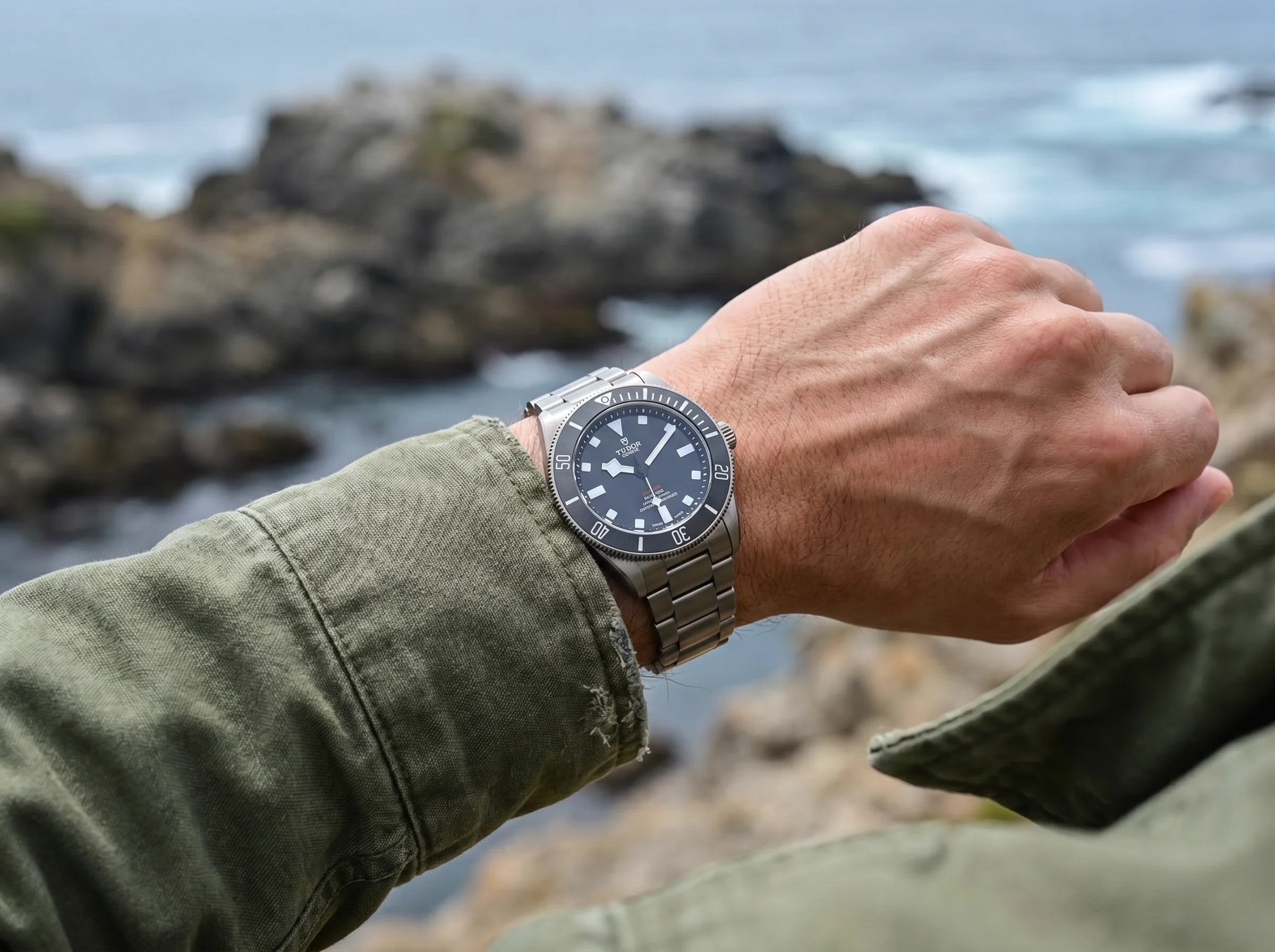 Titanium's headline trait is comfort. You stop noticing it is there. (AI-generated illustration.)
Scratches, finishing, and feel
This is where the two metals genuinely diverge.
Steel shows scratches as bright, crisp hairlines, especially on polished surfaces, but a watchmaker can refinish it back to near-new with standard tools. Titanium does the opposite: its matte grey surface hides marks from a distance and develops a soft haze rather than sharp lines, though refinishing it properly is harder and needs specific technique. Steel also offers more visual range, from mirror polish to brushed, while titanium is fixed at a gunmetal matte. One underrated detail: titanium feels warmer on the wrist, because it pulls heat from your skin more slowly than steel.
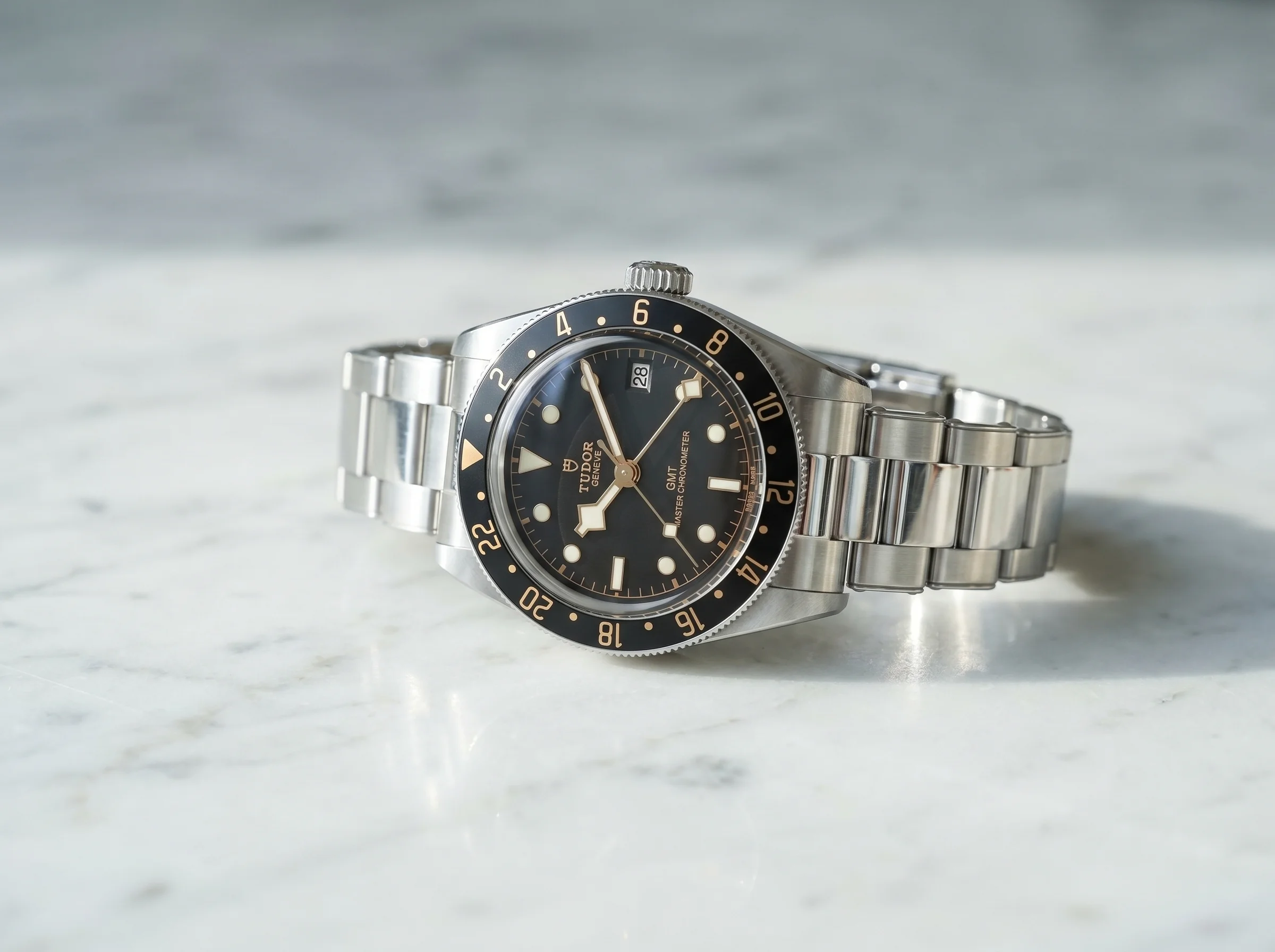 Steel rewards you with a brighter polish and easy refinishing. (AI-generated illustration.)
Corrosion, allergies, and the grades that matter
Two practical points settle a lot of buying decisions.
Titanium is almost impossible to corrode and is hypoallergenic, since it carries no nickel and forms an inert oxide layer, which is why it shows up on dive watches and suits sensitive skin. Steel resists corrosion well too, but cheaper alloys contain nickel that can irritate some wearers. The bigger thing to check is grade. Most steel is 316L, with Rolex using tougher 904L Oystersteel, while titanium comes as soft-but-pure Grade 2 or harder Grade 5, and brands like Sinn, Citizen, and Grand Seiko apply surface hardening that can push titanium past steel for scratch resistance.
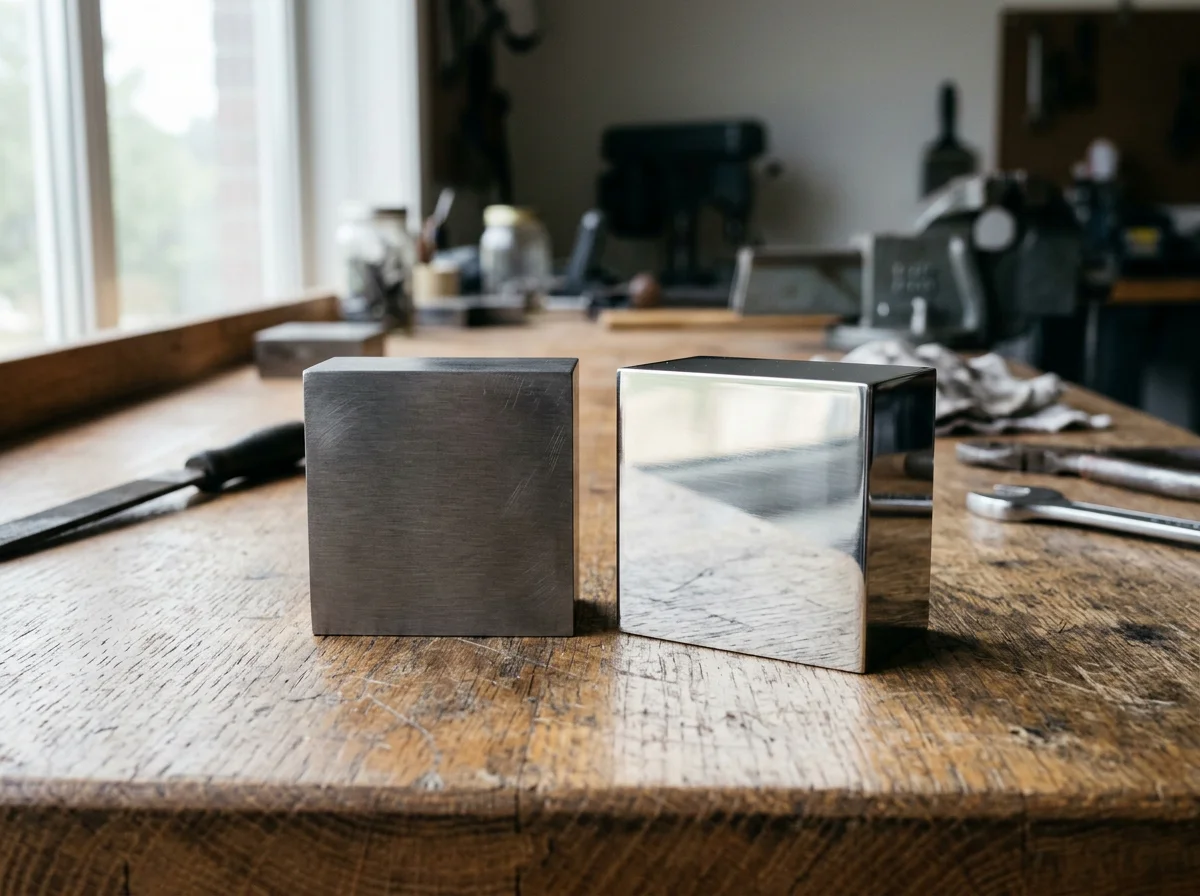 Grade 2, Grade 5, 316L, 904L: the alloy matters more than the label. (AI-generated illustration.)
A working dealer's read
Here is how we would frame it across the counter.
Steel is the safe, liquid default. It is easy to service, easy to refinish, broadly demanded, and that keeps resale strong, which matters whether or not you ever plan to sell. If you want one do-everything sport watch and care about condition holding up, steel is hard to argue with, and our Black Bay 58 buying guide is a good place to start.
Titanium is the enthusiast's choice, and you should buy it for the wearing experience rather than the spreadsheet. It is the move if you want all-day lightness, a stealthy matte look, marine-grade corrosion resistance, or a hypoallergenic case, and the Tudor Pelagos is the obvious gateway, which we cover in our Pelagos 39 versus FXD guide. Two honest caveats: a scratched titanium watch is harder and costlier to make look new again, and a softer Grade 2 case will mark more easily than hardened or Grade 5 titanium, so always check which you are buying. If the lightweight, go-anywhere brief appeals, our pre-owned Tudor selection is a sensible first stop.
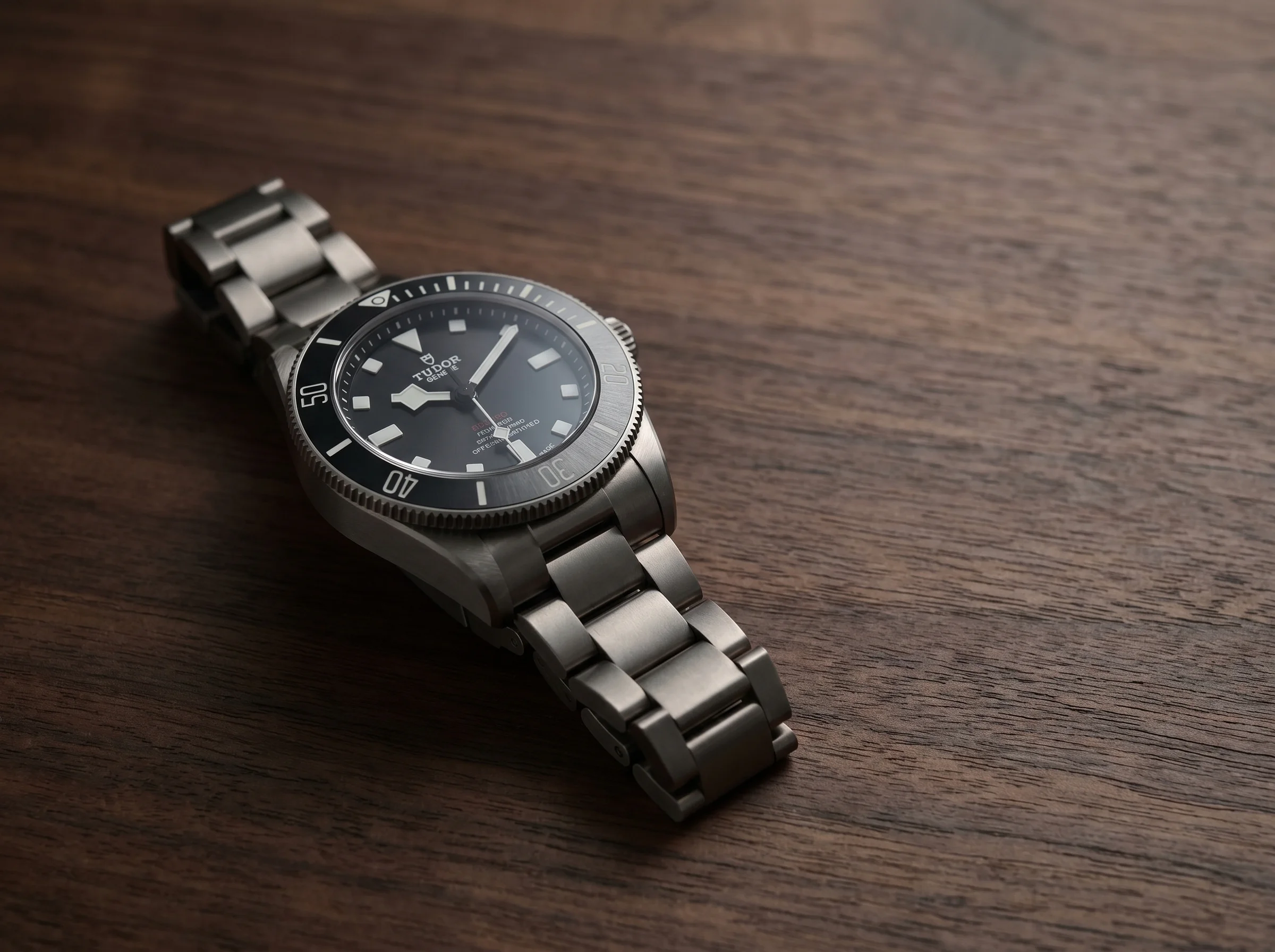 Buy titanium for how it wears, not for the resale math. (AI-generated illustration.)