The Short Answer
The Tudor Ranger and Rolex Explorer solve the same brief, a simple three-hand field watch with black dial and no date, at two very different price points. The Ranger retails from $3,350 and gets you a genuine Kenissi-built COSC movement in a 36mm or 39mm case. The Explorer starts at $7,900 for the same 36mm size and adds the Rolex name, a Superlative Chronometer rating, and meaningfully stronger resale.
If you want the purest expression of the field watch idea for the least money, buy the Ranger. If you want the watch that started the format in 1953 and will hold value like only a steel Rolex sports model can, buy the Explorer. Both are honest, well-built answers to the exact same question.
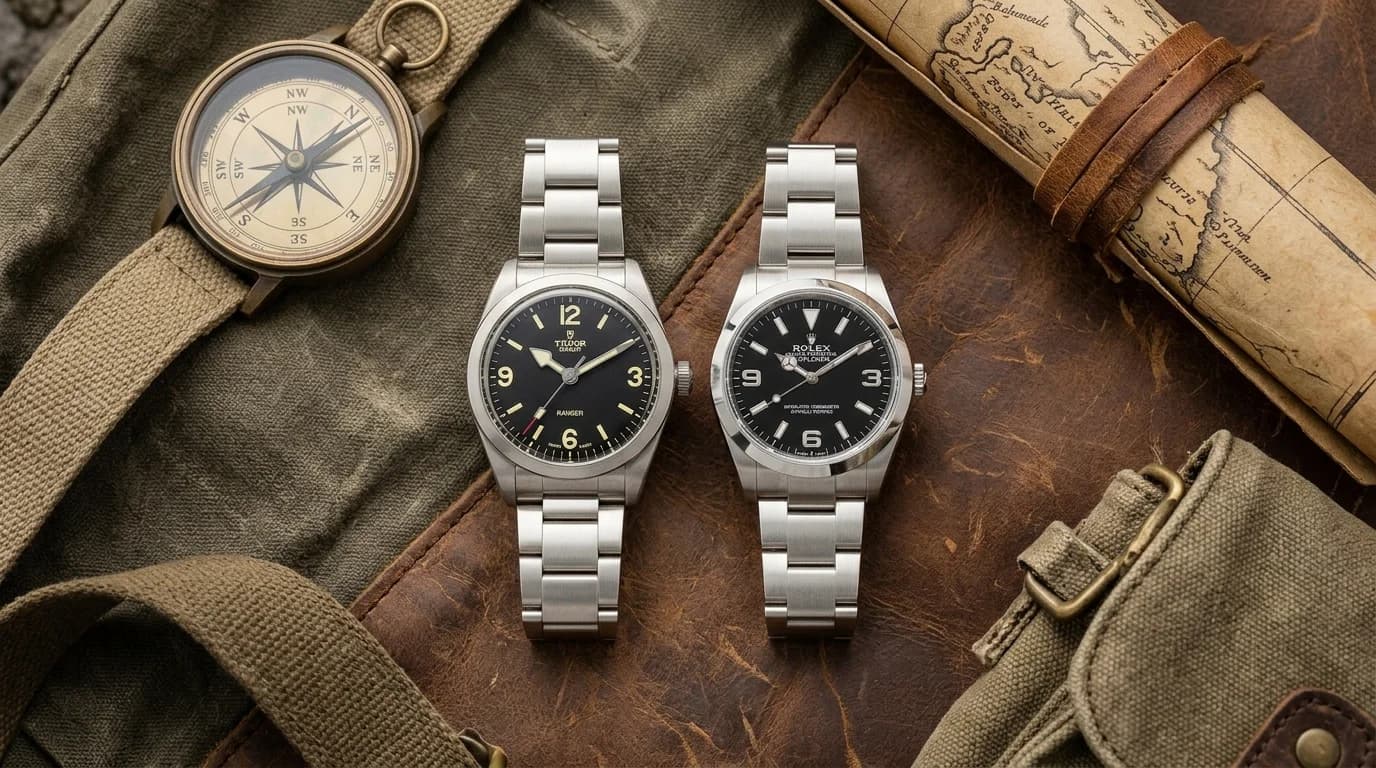
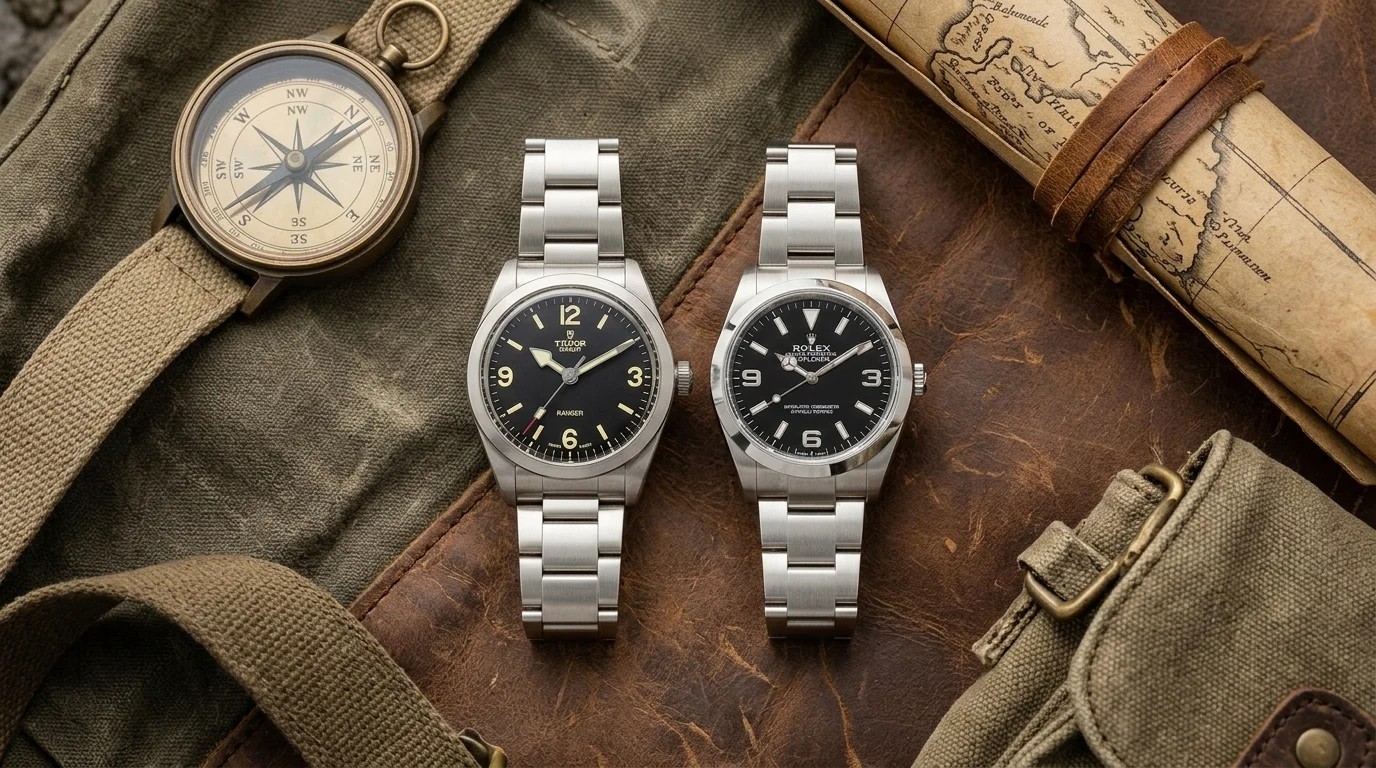 Same brief, two very different prices: the Tudor Ranger and Rolex Explorer side by side.
AI disclosure: the photos in this post are AI-generated composites built from real reference images of each watch, not photos of actual in-store inventory.
Two Watches Built From the Same Brief
Rolex created the Explorer format in 1953 to commemorate the first successful summit of Everest: a legible black dial, oversized numerals at 3, 6, and 9, and nothing else to distract from reading the time in bad conditions. Tudor's modern Ranger, relaunched in late 2025, is a direct homage to Tudor's own 1960s expedition watches worn on British and French Everest and polar expeditions, which were themselves siblings to Rolex's originals.
Both brands are drawing from the same well. The difference is what each one charges to get there.
The Tudor Ranger
36mm (M79930) and 39mm (M79950)
The relaunched Ranger comes in two sizes, both running Tudor's in-house MT5400-family movement built by Kenissi, COSC-certified to -2/+4 seconds a day with a 70-hour power reserve. Water resistance sits at 100 meters.
Pricing starts at $3,350 for the fabric strap 36mm and runs to $3,825 for the steel bracelet 39mm. Dial options are black or a sandy Dune White with beige Super-LumiNova lume, printed markers rather than applied, and a tapered steel Oyster bracelet or woven textile pass-through strap.
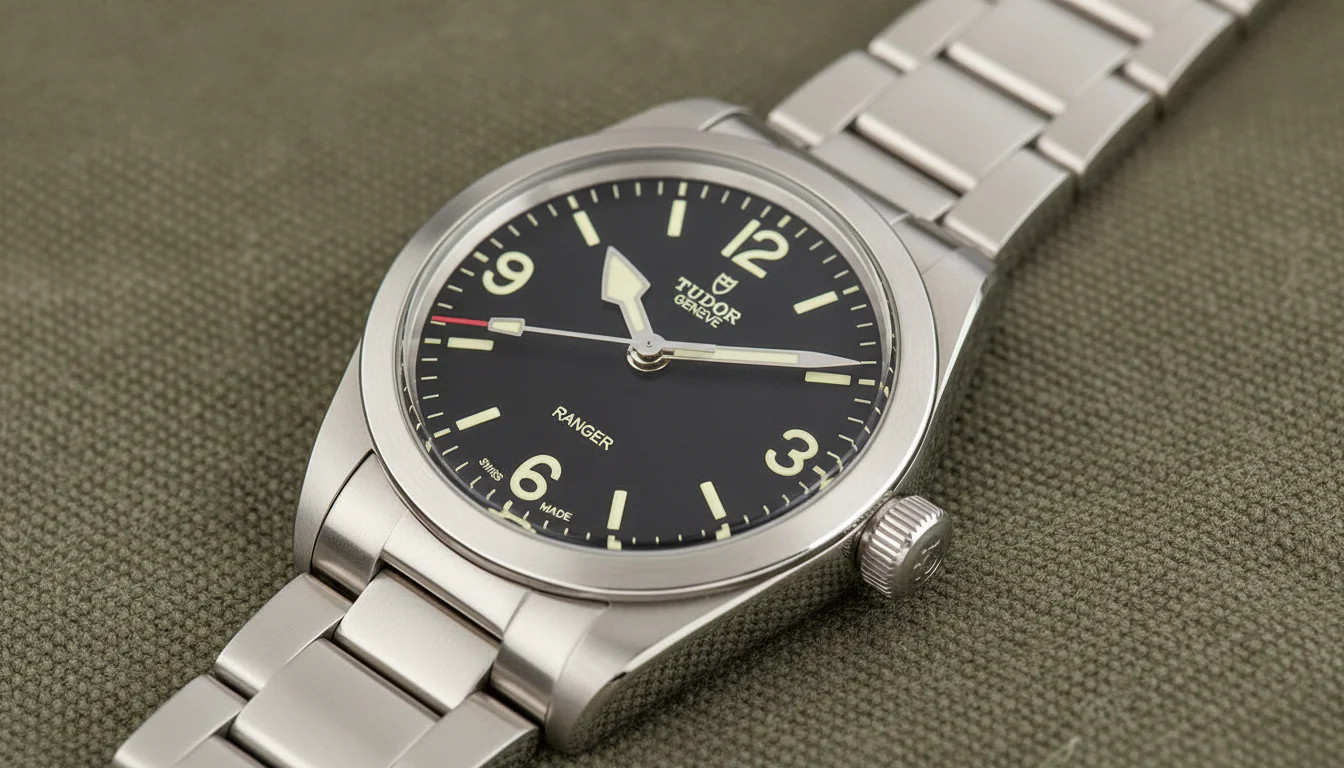 Black domed dial, oversized Arabic numerals: the Ranger's take on the expedition-watch format.
What You Actually Get for the Money
A genuine in-house COSC movement, a real Everest-adjacent design lineage, and a watch that wears close to identical to an Explorer at a little over a third of the price. The trade-off shows up in finishing: printed dial markers instead of applied, and a bracelet that reads a step below Rolex's Oyster in fit and finish, though still well ahead of most watches at this price.
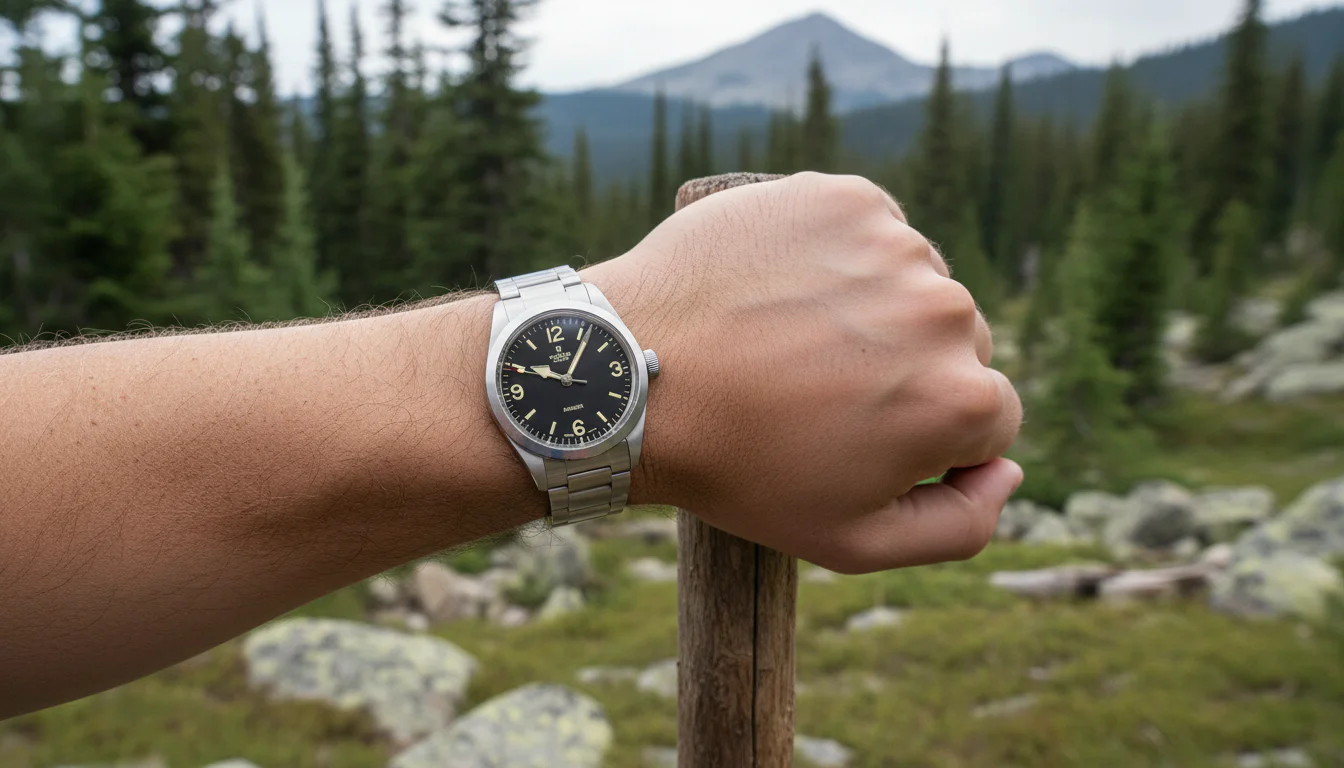 The Ranger on the wrist, exactly where a $3,350 field watch is supposed to spend its life.
The Rolex Explorer
36mm (124270) and 40mm (224270)
Both current three-hand Explorer references run the caliber 3230, Rolex's latest generation automatic with 70 hours of power reserve and Superlative Chronometer certification, meaning accuracy is verified after full case assembly, not just at the movement level. Water resistance matches the Ranger at 100 meters.
The 36mm retails at $7,900. The 40mm runs $8,350, with the option of an Oyster or Jubilee bracelet on the larger size. Both come in black dial only, no date, applied markers, and Rolex's Chromalight lume.
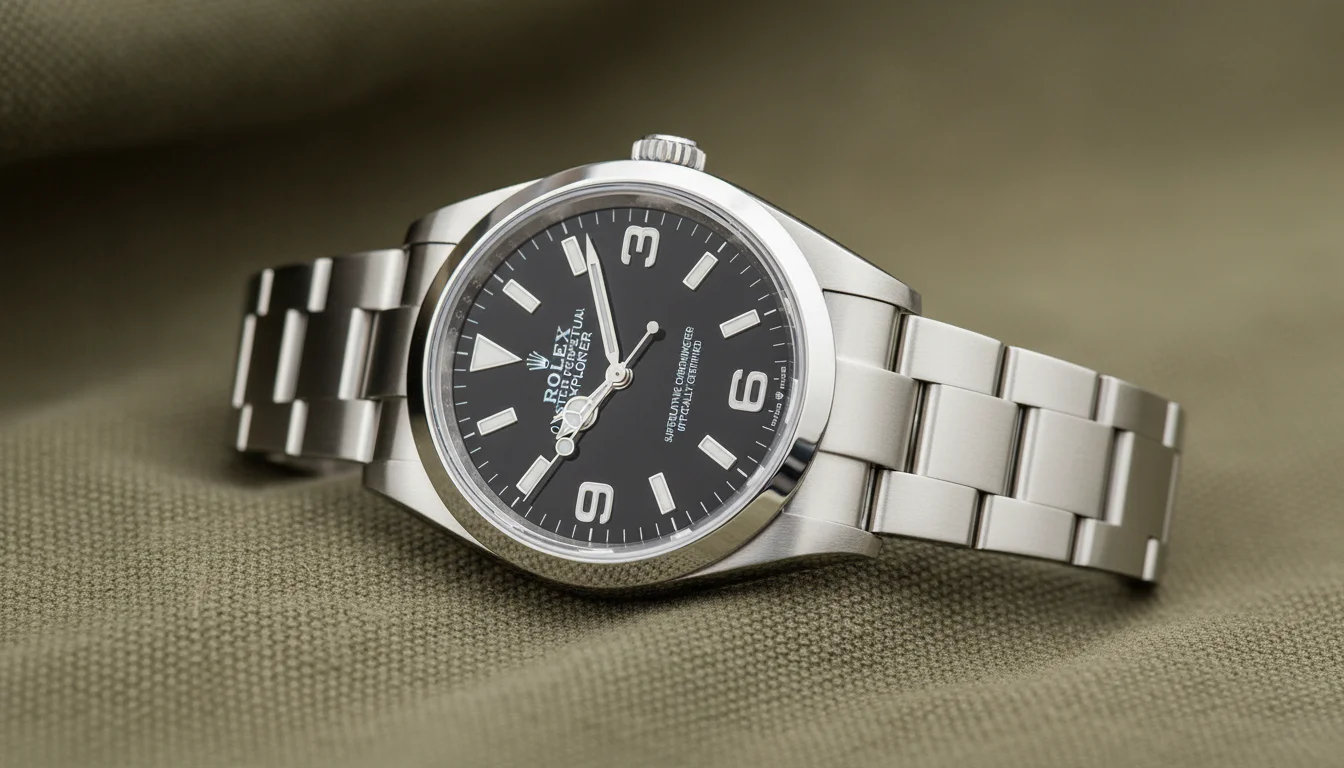 Applied numerals and Chromalight lume: the visible step up Rolex charges for.
What You Actually Get for the Money
The Rolex name, applied dial furniture with genuinely superior finishing, and a resale market that has historically held the Explorer at or near retail, something the Ranger, still building its own secondary market, has not had time to prove yet. You are also buying into Rolex's own direct lineage to the 1953 Everest expedition, not an homage to it.
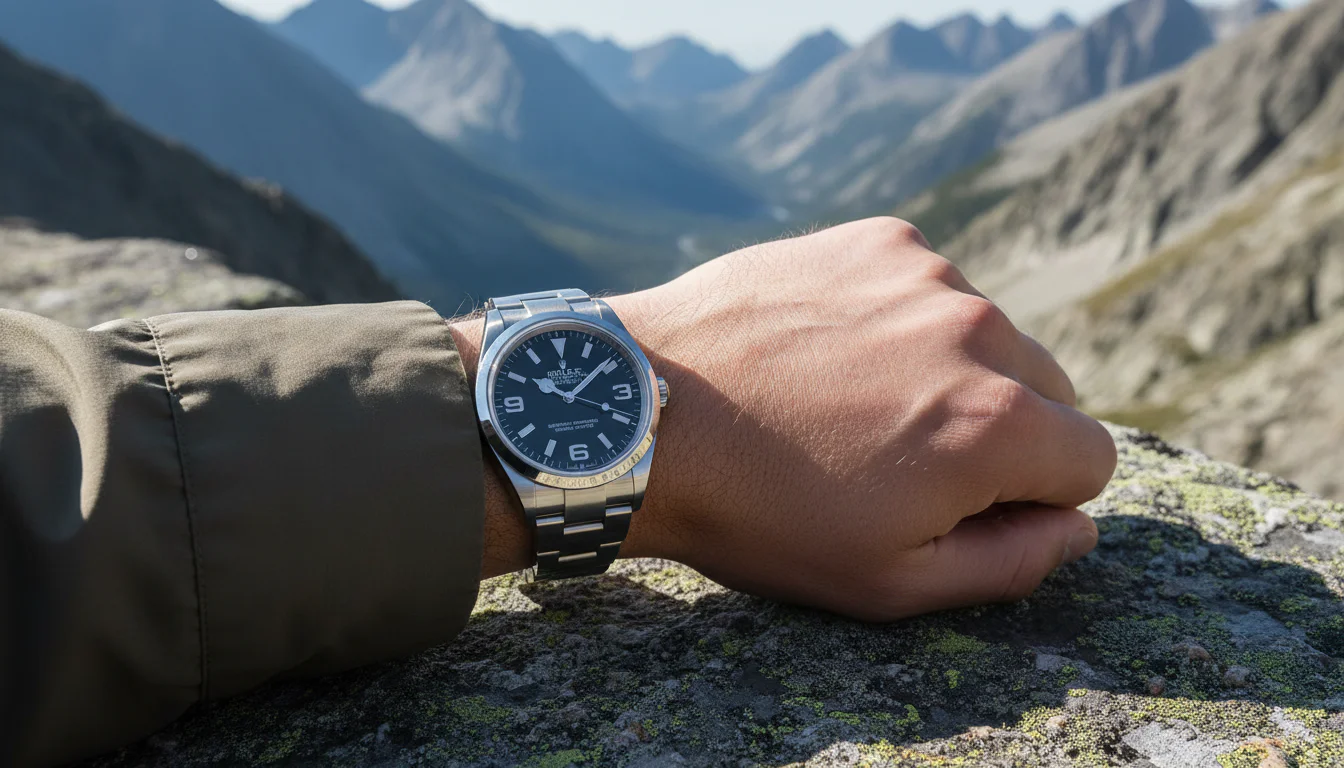 The Explorer on the wrist. Same job as the Ranger, more than double the price.
Head to Head
| Tudor Ranger (36mm) | Rolex Explorer (124270, 36mm) | |
|---|---|---|
| Case size | 36mm | 36mm |
| Movement | MT5400, Kenissi, COSC | Calibre 3230, Superlative Chronometer |
| Power reserve | 70 hours | 70 hours |
| Water resistance | 100m | 100m |
| Dial | Black or Dune White | Black only |
| Retail price | From $3,350 | $7,900 |
| Resale behavior | New; market still forming | Historically holds near or at retail |
Where Each One Actually Wins
The Ranger wins on pure value. Dollar for dollar, nothing in Rolex's own catalog gets you a COSC-certified in-house movement and a 100m field watch for $3,350. If your goal is wearing a genuinely well-built expedition watch daily without worrying about it, the Ranger does that job completely.
The Explorer wins on everything downstream of the purchase. Rolex's applied dial furniture and bracelet finishing are a visible step up in hand, and the brand's decades of controlled supply mean a steel Explorer has consistently traded near or above retail in a way few watches at any price manage. If resale and long-term liquidity matter to you, that gap is worth the extra $4,500.
The Honest Caveat on Both
The Ranger is new enough, relaunched in November 2025, that nobody has real multi-year resale data on it yet. Early demand has been strong, but "strong early demand" and "holds value at five years" are different claims, and only one of them is proven for the Explorer.
The Explorer, for its part, is not without competition even within Rolex's own catalog. The Explorer II adds a date and a GMT hand for roughly $1,850 more and has actually outperformed the three-hand Explorer at resale in recent years, driven by the polar dial's popularity.
FAQ
Is the Tudor Ranger as good as the Rolex Explorer?
Mechanically, they are closer than the price gap suggests. Both run in-house COSC-rated movements with 70-hour reserves and 100m water resistance. The Explorer wins on finishing details and resale history, not on core engineering.
What is the price difference between the Tudor Ranger and Rolex Explorer?
The Ranger starts at $3,350. The 36mm Explorer starts at $7,900, more than double, for a comparable case size and water resistance rating.
Does Tudor Ranger use the same movement family as Rolex?
No. The Ranger's MT5400 is built by Kenissi, a manufacture Tudor helped establish, not by Rolex. It shares the same silicon hairspring patent access as a Wilsdorf Foundation sibling brand, but the movement itself is Tudor's own.
Does the Rolex Explorer hold its value better than the Tudor Ranger?
Historically yes, though the comparison is not fully fair yet. The Explorer has decades of resale data showing it trades near or above retail. The relaunched Ranger has been on the market only since late 2025.
Which is the better first luxury watch, the Ranger or the Explorer?
For a first watch on a tighter budget, the Ranger delivers real Swiss manufacture quality for a fraction of the price. For a first watch bought with resale and brand recognition in mind, the Explorer is the safer long-term choice.