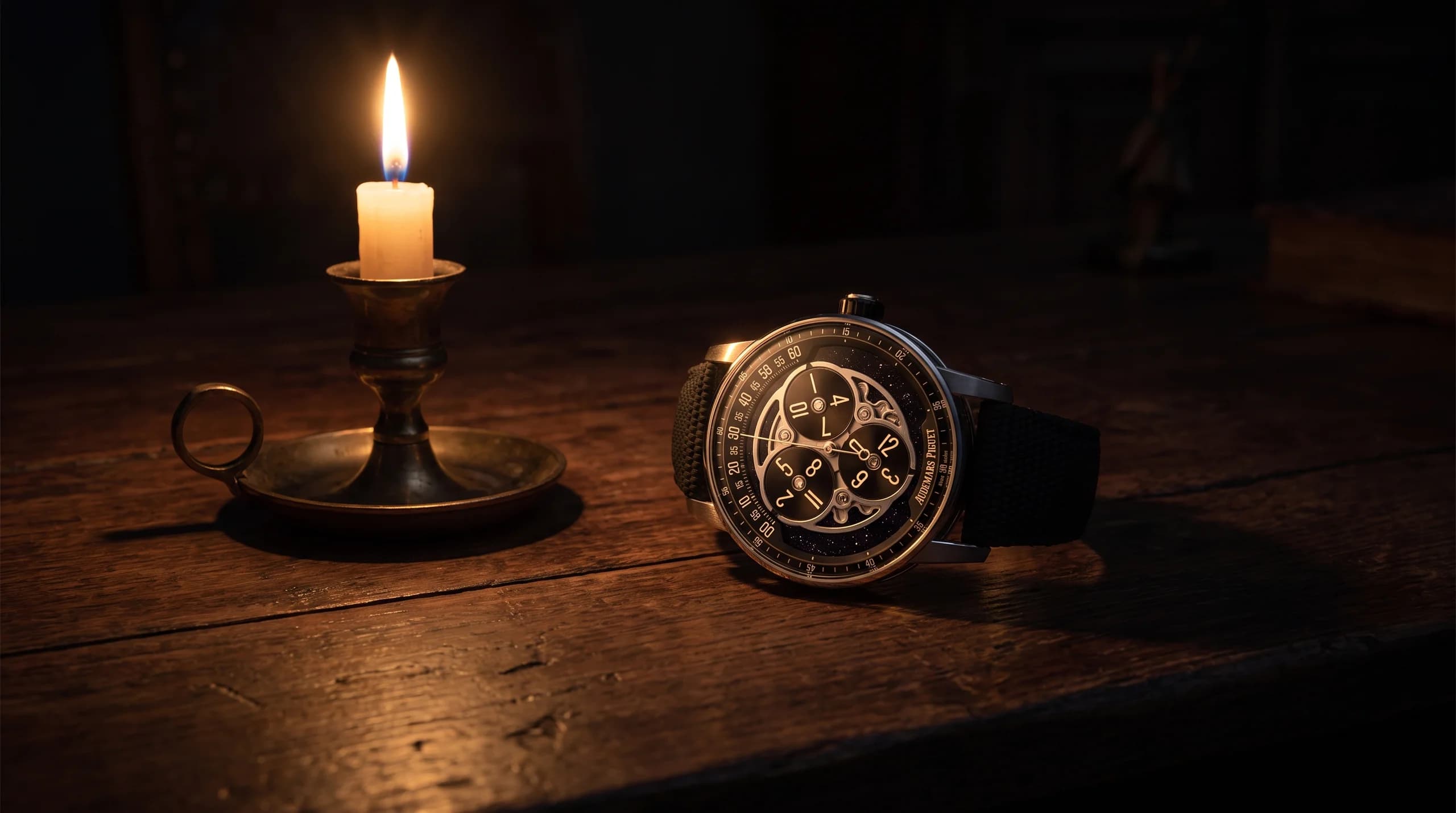
Most watches tell you the hour with a hand pointing at a number. A wandering hours watch does it backwards: the numbers move, and the hand mostly stays put. There's no hour hand at all, just a set of rotating discs that pass the current hour to each other like a relay baton.
This is a working dealer's plain-English guide to how the wandering hours complication actually works, where it came from, and the modern watch that put it back on the map.
The images in this post are AI-generated editorial illustrations based on the real Audemars Piguet Code 11.59 Starwheel reference. They are not photographs of specific watches for sale.
The Short Answer
A wandering hours watch shows the time using rotating discs printed with hour numerals instead of a conventional hour hand. A sweeping pointer or a graduated minute scale around the dial's edge indicates the minutes, and whichever numeral currently sits at the "reading" position, usually marked by a fixed index, is the current hour. When the hour changes, the disc carrying that numeral rotates out of position and the next disc's numeral takes its place. The complication dates to 1655, when the Campani brothers built it for Pope Alexander VII. Audemars Piguet revived it in 1991 with the original Star Wheel (ref. 25720, about 30 pieces, discontinued 2003) and again in 2022 with the Code 11.59 by Audemars Piguet Starwheel (ref. 15212NB, CHF 48,000).
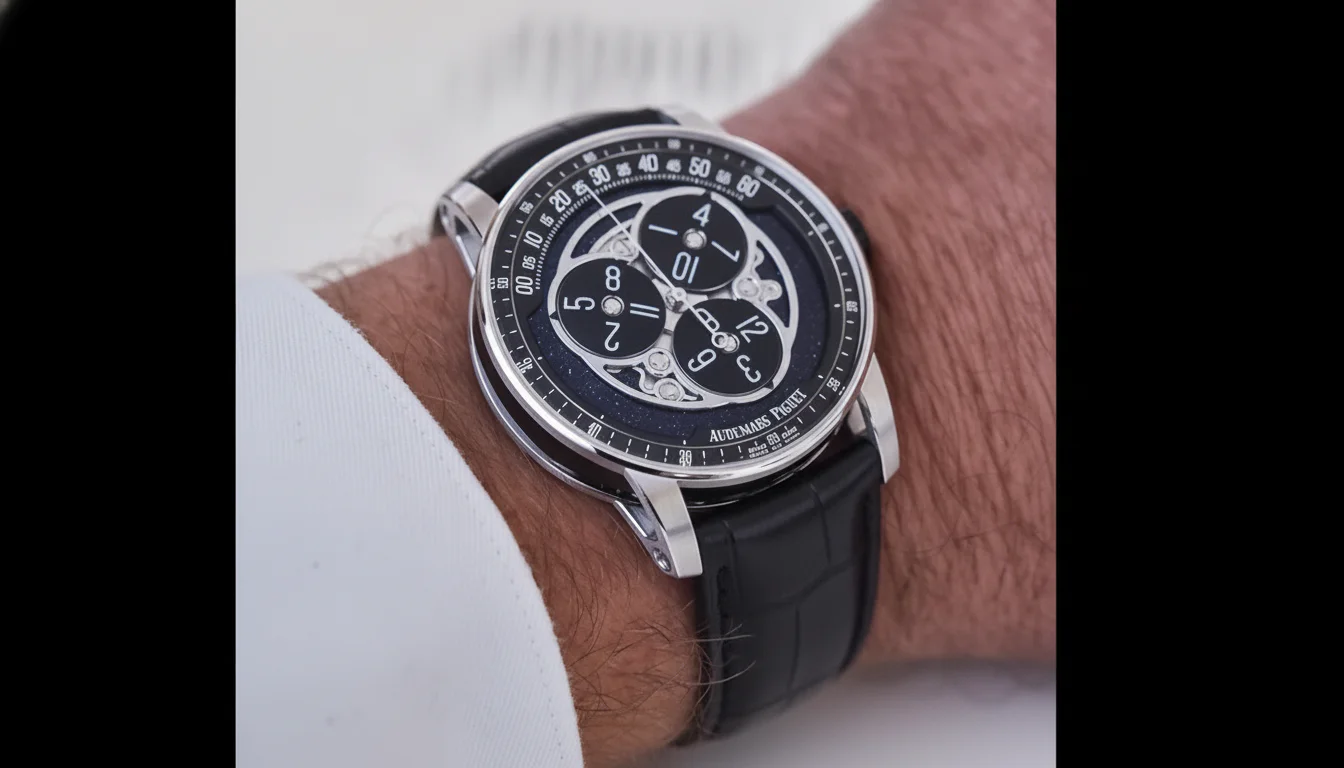
The Code 11.59 Starwheel on the wrist. Three rotating discs, each printed with a pair of numerals, sit in a cluster on the dial. A sweeping hand tracks the minutes around the outer scale.
Why a Watch Would Do This
The wandering hours mechanism wasn't invented to look clever. It was invented to solve a real problem: reading the time silently, in the dark, without a ticking sound. Pope Alexander VII suffered from insomnia that his bedroom's ticking clocks made worse, so in 1655 he commissioned the Campani brothers, Giuseppe, Pietro, and Matteo, to build something different: a silent night clock with numerals visible through a lit aperture that moved on its own, instead of a hand and a loud escapement.
That aperture-and-moving-numeral idea is the ancestor of every wandering hours watch since. It spread into pocket watches over the following centuries, then mostly disappeared after the Second World War as watchmaking turned toward tool watches and, later, quartz accuracy. It sat dormant for decades until a journal article in 1989 reintroduced the mechanism to a new generation of watchmakers.
H3: Not to Be Confused With a Jump Hour
Wandering hours and jump hour watches get mixed up constantly, and they're genuinely different mechanisms. A jump hour watch shows the hour through a single fixed window as a numeral that snaps forward once every sixty minutes, while the minutes still run on a conventional hand or dial. A wandering hours watch has no fixed hour window at all. The numerals themselves travel across the dial, and the current hour is whichever one happens to be sitting in the reading zone at that moment.
How the Mechanism Actually Works
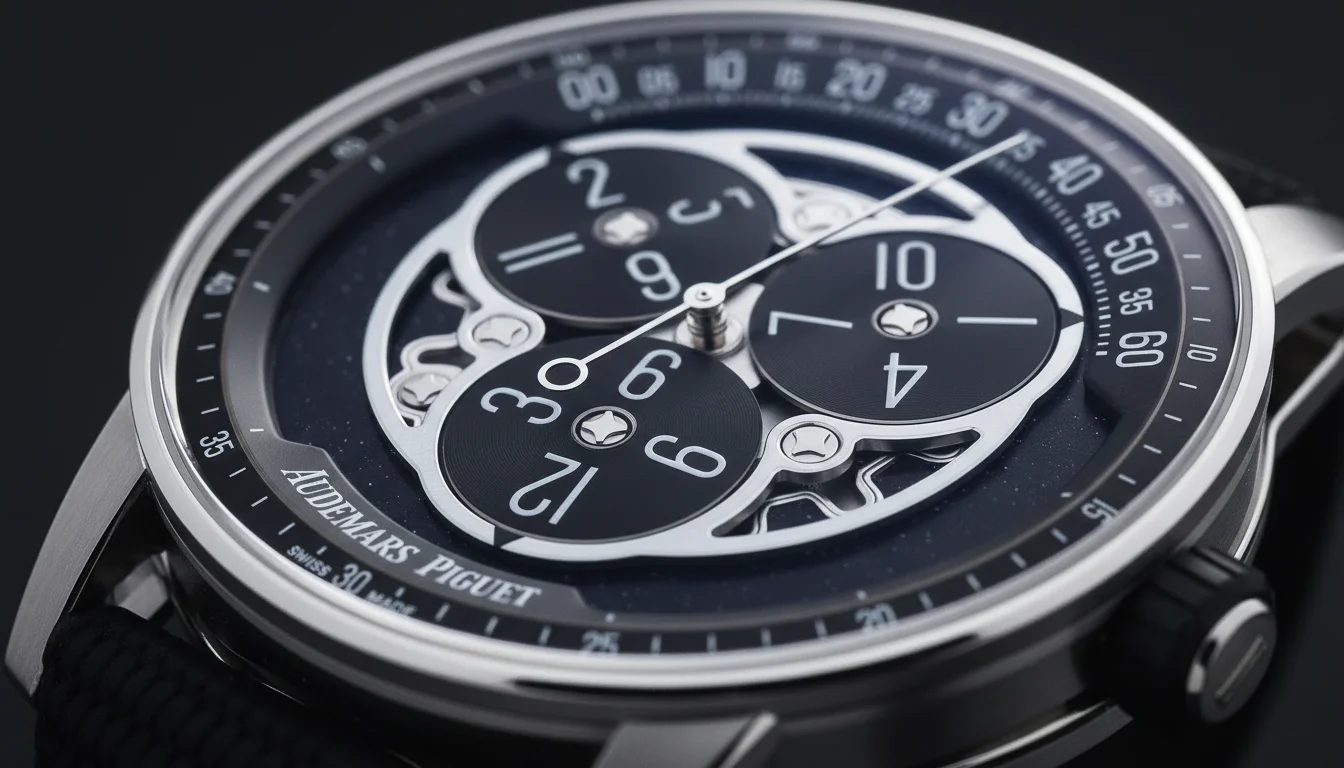
A closer look at the disc cluster. Each disc carries multiple numerals around its face, evenly spaced so the math works out over a 12-hour cycle.
The classic layout, the one Audemars Piguet has used since 1991, arranges three discs in a triangular cluster on the dial. Each disc carries four numerals, spaced 90 degrees apart, since three discs times four numerals covers all twelve hours. The discs sit on their own axles and rotate slowly and continuously, driven off the movement's hour wheel through a reduction gear train.
A single hand pivots from the center of the dial and sweeps around a graduated minute scale on the dial's outer edge, usually marked 0 through 60. At any given moment, exactly one numeral from the disc cluster sits closest to a fixed reference point, often near 12 o'clock, and that's the current hour. As the minute hand completes its lap of the scale, the discs advance just enough to bring the next hour's numeral into that same reading position exactly as the hand resets to zero.
Read together, the hand tells you the minutes the way it always has. The disc cluster tells you the hour without ever pointing at anything.
The Original: Audemars Piguet's 1991 Star Wheel
Audemars Piguet wasn't the first modern brand to try wandering hours, but its 1991 Star Wheel (reference 25720) is the piece most credited with reviving the complication for contemporary collectors. The original ran with transparent sapphire discs, letting the star-shaped indexing wheels underneath show through, an unusually technical, almost mechanical-diagram look for the era. Audemars Piguet built roughly 30 examples before discontinuing the reference in 2003, which makes original Star Wheels a genuine rarity on the collector market today.
The Modern Revival: Code 11.59 by Audemars Piguet Starwheel
Audemars Piguet brought the complication back in 2022 with the Code 11.59 by Audemars Piguet Starwheel, reference 15212NB.OO.A002KB.01. The modern version swaps the original's transparent sapphire discs for opaque aluminum ones, trading mechanical transparency for dial boldness. The case is 41mm in white gold and black ceramic, 10.7mm thick, running the automatic Calibre 4310 with a 70-hour power reserve. Retail is CHF 48,000 (about EUR 57,100 with tax).
| Spec | Detail |
|---|---|
| Reference | 15212NB.OO.A002KB.01 |
| Case | 41mm, white gold and black ceramic |
| Case thickness | 10.7mm |
| Movement | Calibre 4310, automatic |
| Power reserve | 70 hours |
| Discs | Opaque aluminum, 3 discs |
| Price | CHF 48,000 |
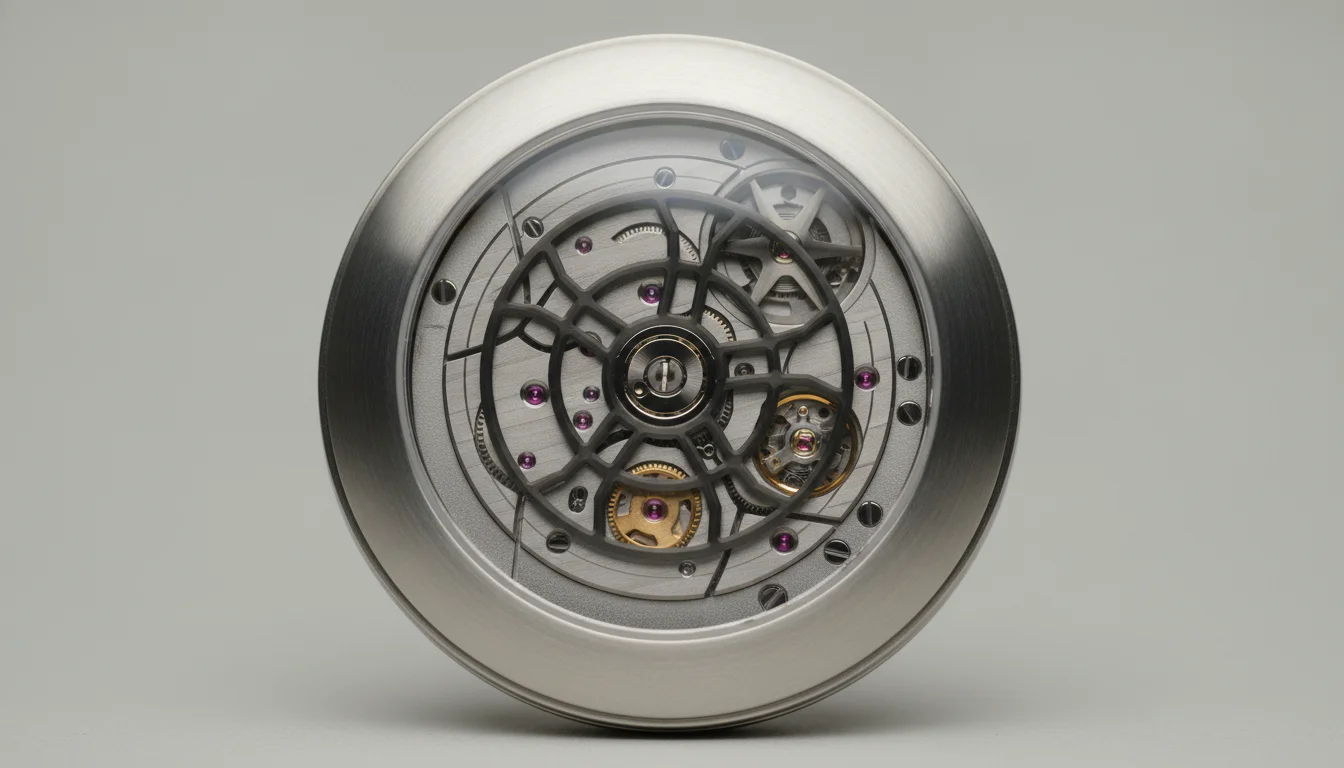
The indexing mechanism that advances each disc lives behind the movement, driven off the going train through a reduction gear. It only needs to move once an hour.
Who Else Builds Wandering Hours
Audemars Piguet isn't alone in keeping this complication alive. Van Cleef & Arpels has built its own variations of the wandering hours display across its Poetic Complications collection, typically dressing the mechanism up with painted or enameled scenes rather than the more technical, industrial look Audemars Piguet favors. The underlying idea, numerals that travel instead of a hand that points, stays the same across both approaches even when the finishing philosophy couldn't be more different.
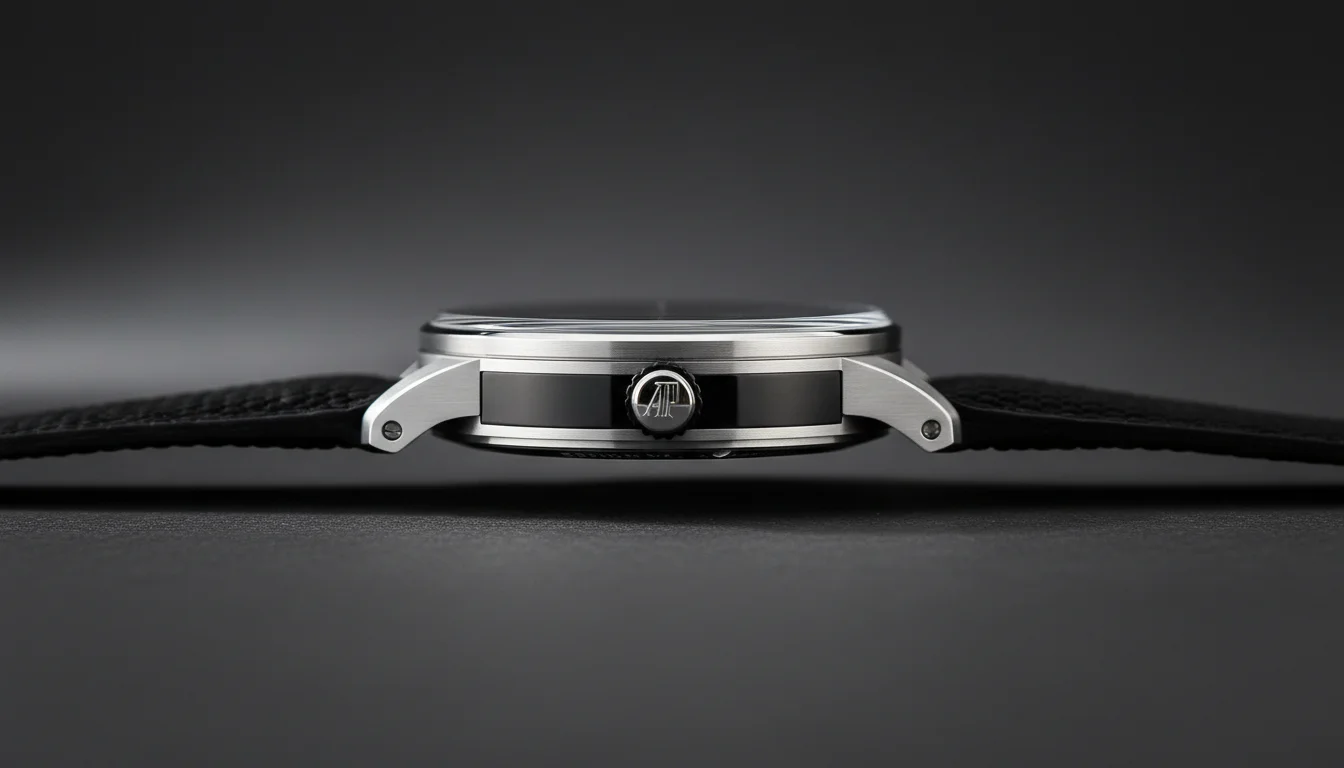
The case in profile. A single crown at 3 o'clock, nothing unusual here, the complication is entirely a dial-side and movement story.
What to Check Before Buying One Pre-Owned
Wandering hours watches are mechanically unusual enough that a pre-purchase inspection matters more than it does on a simpler three-hand watch. Confirm the disc cluster reads correctly at every point in the hour, not just at the moment you glance at it in a shop, since a disc that's drifted out of sync will show the wrong numeral in the reading position for part of the hour. Ask about service history specifically for the disc-indexing mechanism, since it's a less commonly serviced complication and not every watchmaker has direct experience with it. Original 1991 Star Wheels in particular should come with a clear service record given their age and rarity.
Frequently Asked Questions
What is a wandering hours complication?
A wandering hours complication shows the time using rotating discs printed with hour numerals instead of a conventional hour hand. The current hour is whichever numeral sits at a fixed reading position on the dial, and a separate hand or scale shows the minutes.
How is wandering hours different from a jump hour watch?
A jump hour watch shows the hour through one fixed window as a numeral that snaps forward every sixty minutes, with the minutes on a separate hand or dial. A wandering hours watch has no fixed window at all. The numerals themselves move across the dial, and there's no hour hand.
Who invented the wandering hours complication?
The Campani brothers, Giuseppe, Pietro, and Matteo, built the first wandering hours mechanism in 1655 for Pope Alexander VII, who wanted a silent clock he could read in the dark without a ticking mechanism disturbing his sleep.
What is the Audemars Piguet Star Wheel?
The Star Wheel is Audemars Piguet's wandering hours watch, first released in 1991 as reference 25720 with transparent sapphire discs (about 30 pieces made before discontinuation in 2003), and revived in 2022 as the Code 11.59 by Audemars Piguet Starwheel with opaque aluminum discs.
How much does a modern Audemars Piguet Starwheel cost?
The current Code 11.59 by Audemars Piguet Starwheel, reference 15212NB.OO.A002KB.01, retails for CHF 48,000.
The Bottom Line
A wandering hours watch is one of the few complications that changes how you actually read a dial, not just what it displays. Once you know to look for the numeral sitting in the reading zone instead of hunting for a hand, it becomes second nature, and it's a genuinely different way to interact with a watch every single hour. For collectors who already own the standard complications, chronograph, GMT, date, it's one of the more interesting next steps precisely because it asks you to look at the dial differently.