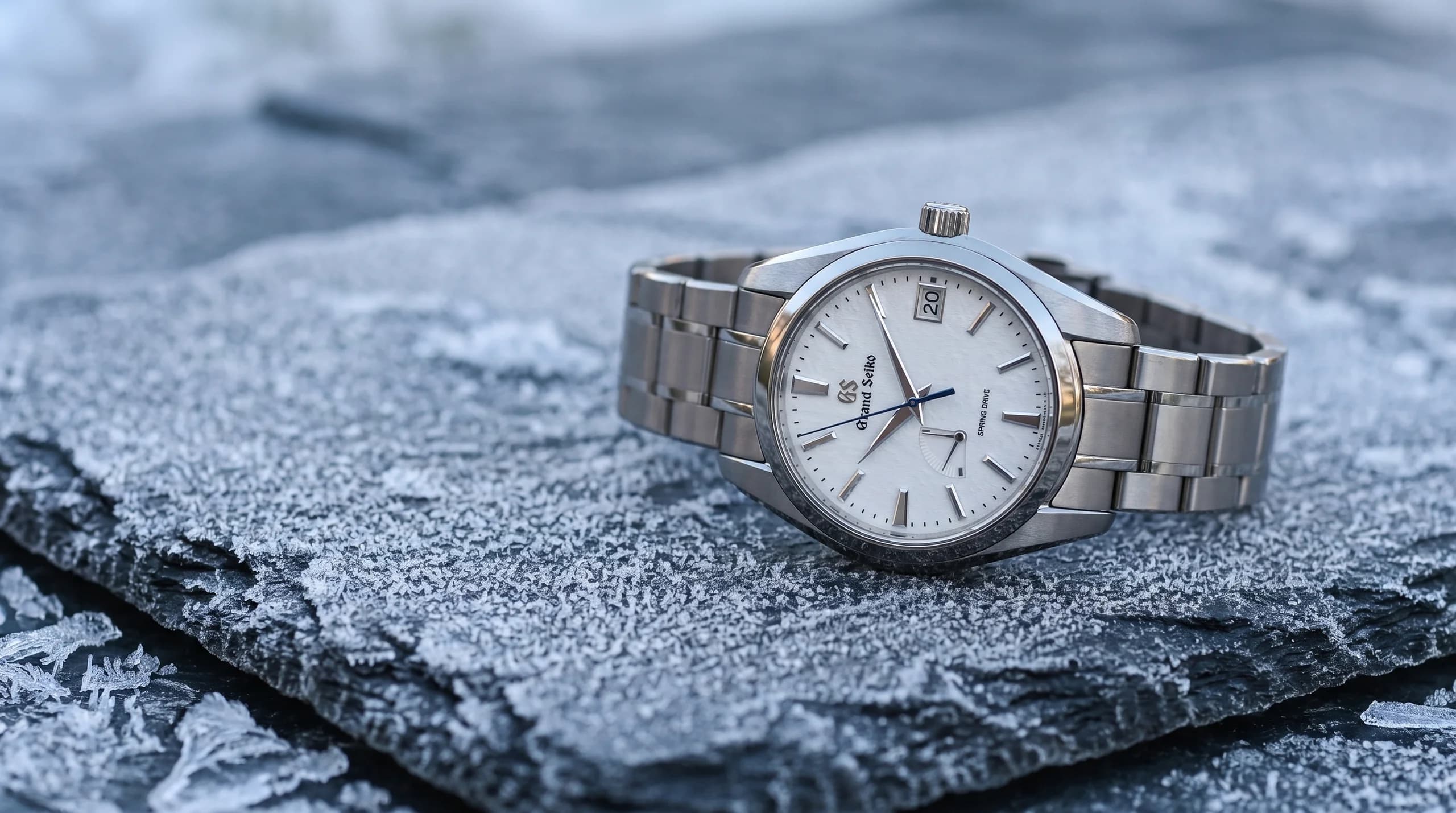
A good mechanical watch that gains or loses a few seconds a day is doing its job. Grand Seiko just released one that drifts by about 20 seconds a year. That is the latest shot in a quiet arms race over accuracy that has been running for more than a decade.
The short answer
Accuracy comes in a ladder. The industry baseline, COSC, allows -4/+6 seconds per day. Rolex and Omega pushed past it: Rolex guarantees -2/+2 per day, Omega's Master Chronometer 0/+5. Grand Seiko's Spring Drive U.F.A. now claims ±20 seconds per year, and a quartz Citizen holds ±1 second per year.
Here is the part that matters. For a watch you actually wear, anything at or above COSC is already far more accurate than daily life requires. The race is about engineering pride and marketing, and when it comes to value and resale, the Swiss names still lead.
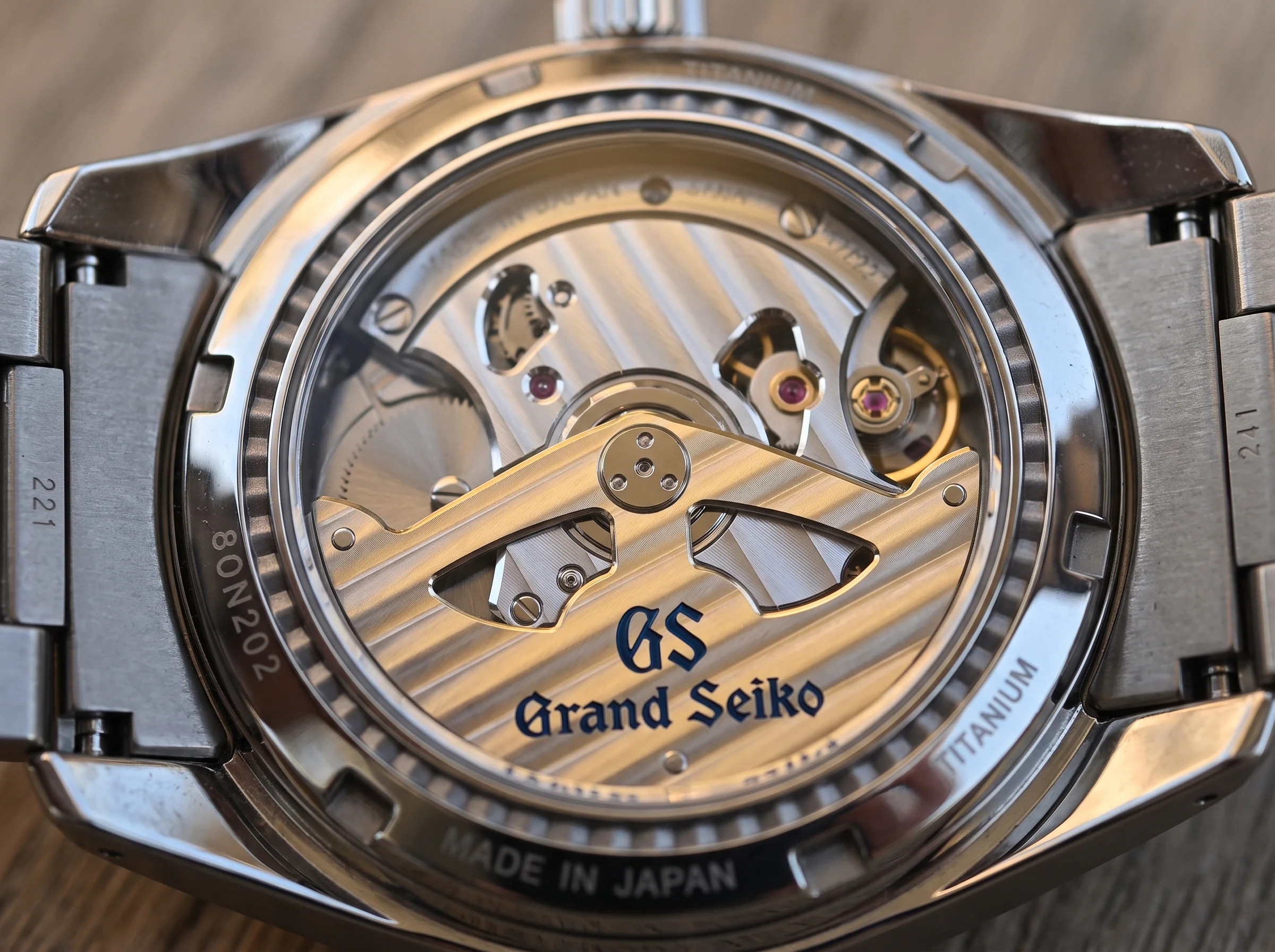
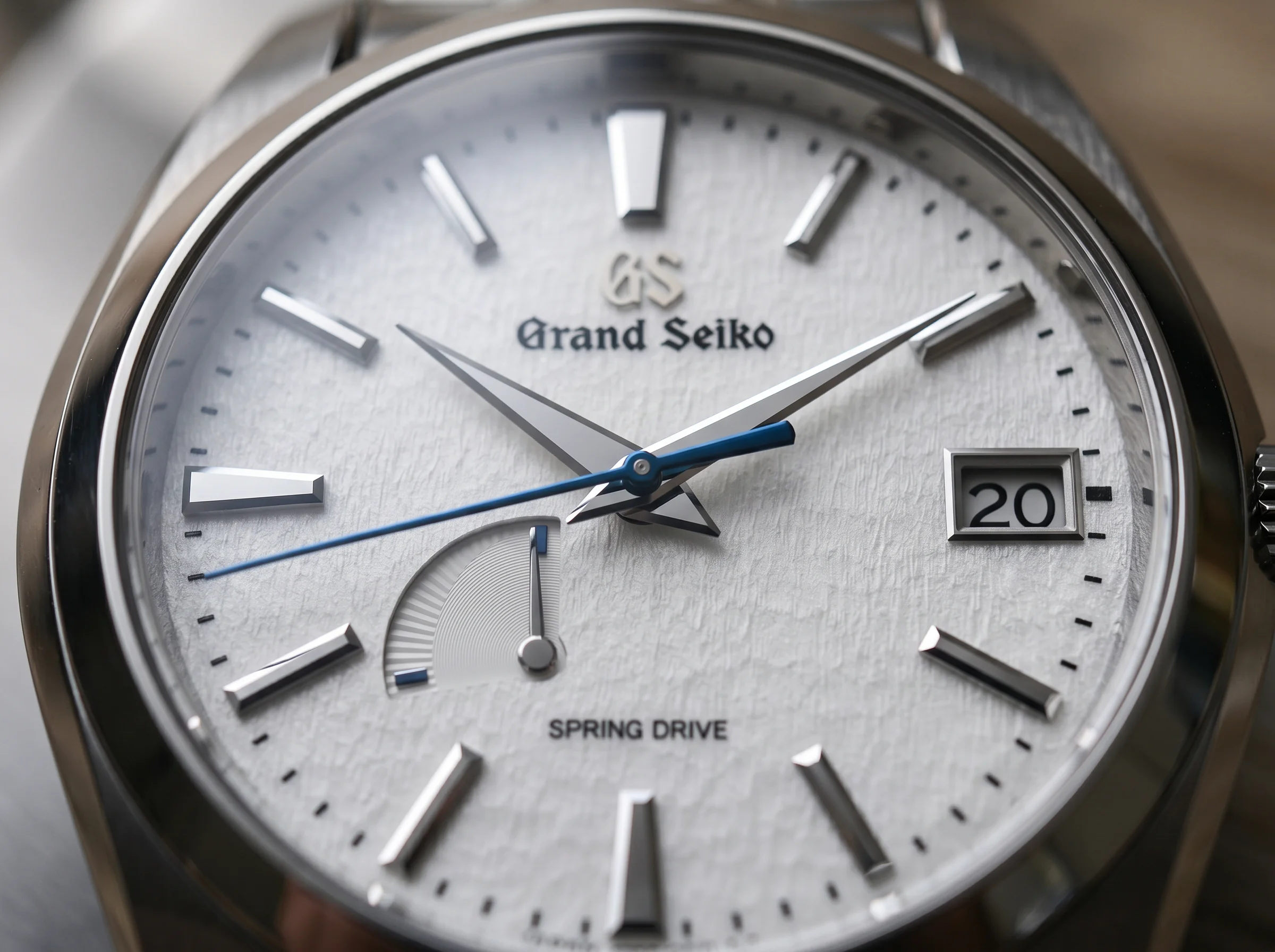
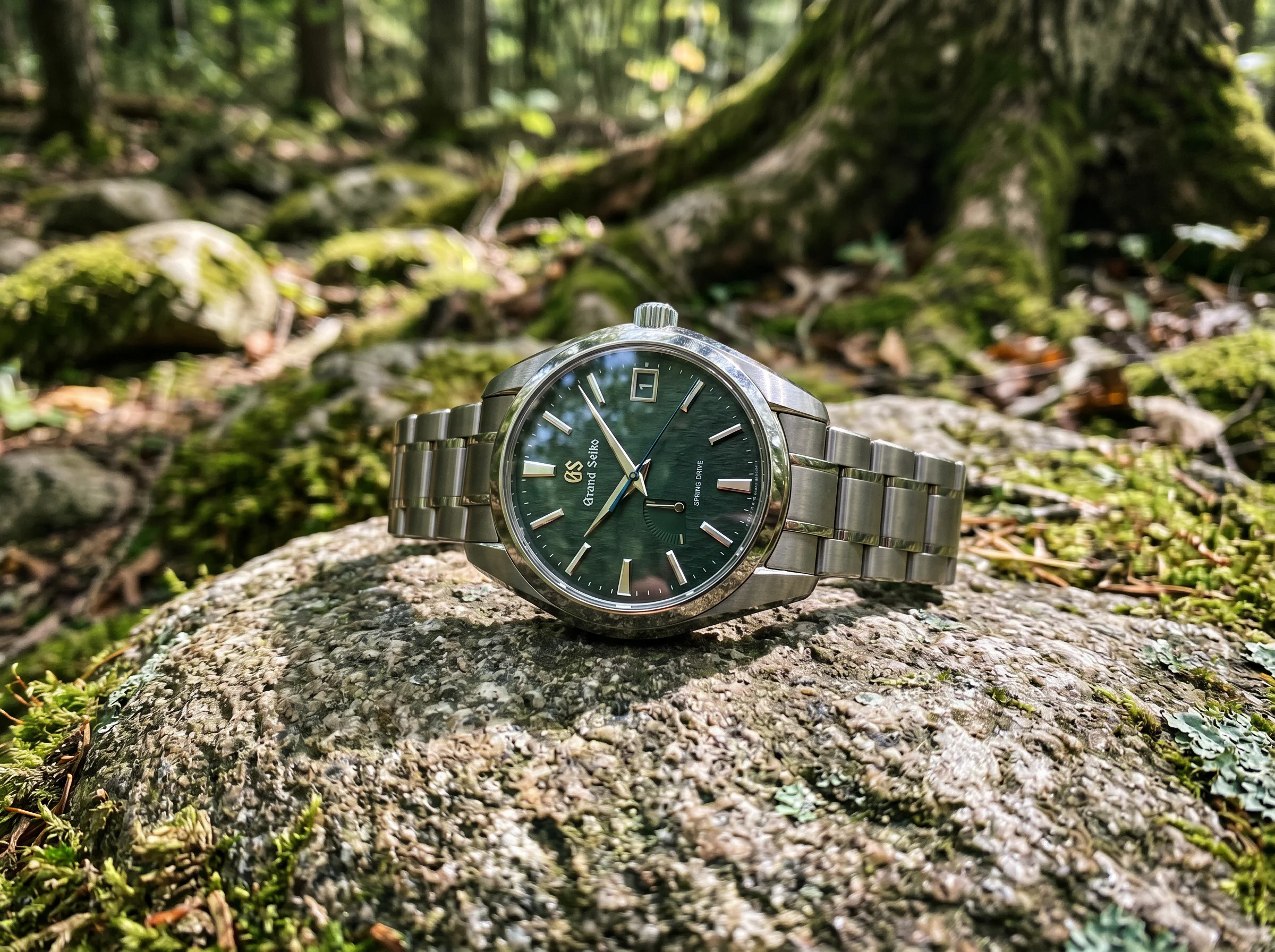
The images in this article are AI-generated editorial illustrations. They represent the ideas discussed and are not photographs of specific watches for sale.
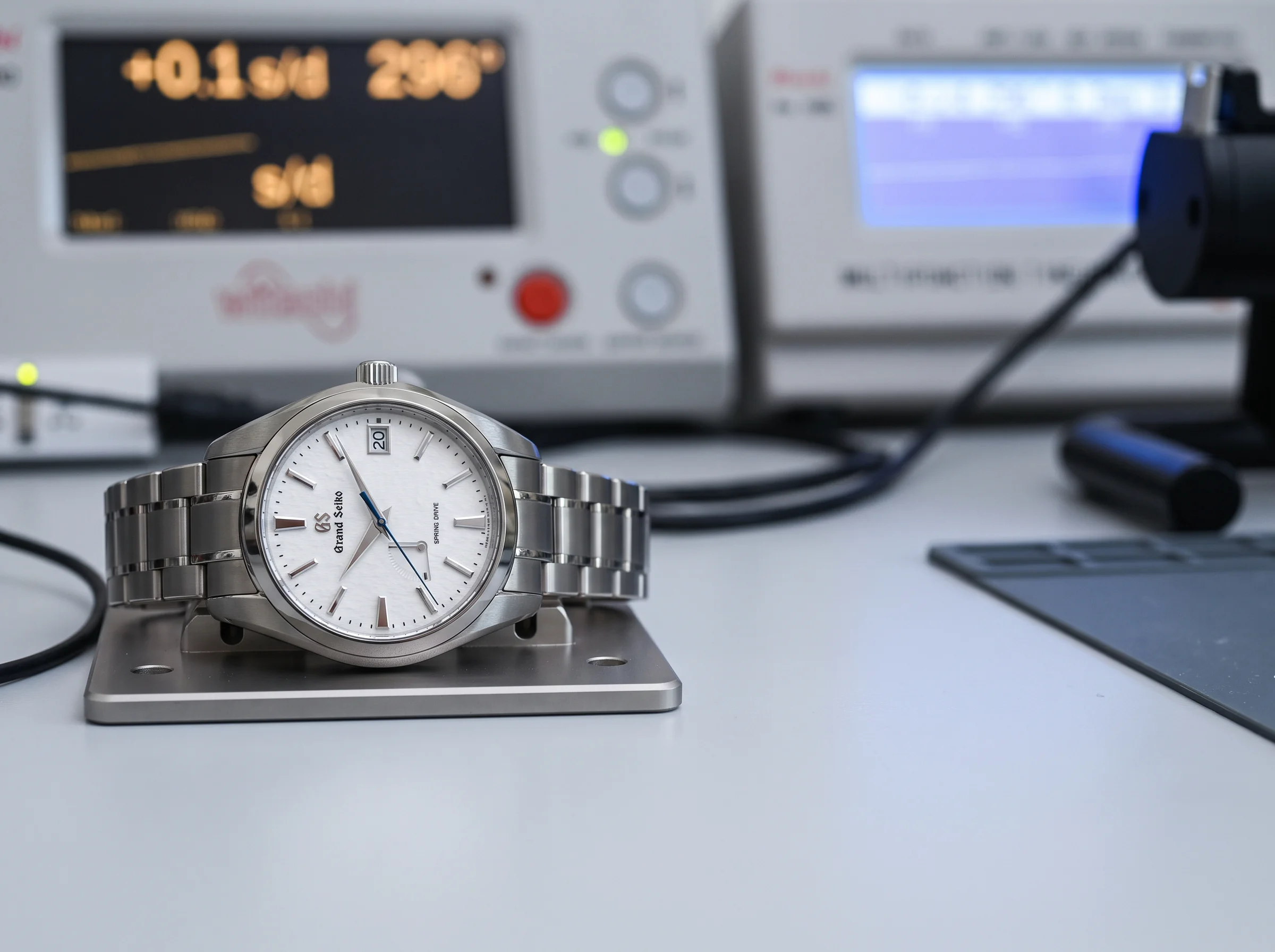
How accurate does a watch actually need to be?
Be honest about the use case. You reset your clocks twice a year for daylight saving, and you probably glance at your phone for the real time now and then. A chronometer that runs two seconds fast per day is off by about a minute a month, which almost no one notices.
So the pursuit of extreme accuracy is not really about need. It is about proof of engineering, bragging rights on a spec sheet, and a brand showing what it can do. That is a fine reason to admire a watch. It is a poor reason to choose one watch over another for daily wear.
The chronometer ladder
Most precision claims sit on a short ladder of standards. Here is how the common ones compare.
| Standard or movement | Rated accuracy | Notes |
|---|---|---|
| COSC chronometer | -4/+6 sec/day | The baseline. Tests the bare movement. |
| Omega Master Chronometer | 0/+5 sec/day | Cased and METAS-certified. Resists 15,000 gauss. |
| Rolex Superlative Chronometer | -2/+2 sec/day | Cased, tested in-house. Green seal. |
| Grand Seiko Spring Drive (9RA2) | ±10 sec/month | Smooth gliding seconds hand. |
| Grand Seiko Spring Drive U.F.A. (9RB2) | ±20 sec/year | Most accurate mainspring watch. |
| Citizen Caliber 0100 (quartz) | ±1 sec/year | Most accurate production watch. |
COSC: the baseline
A chronometer is any watch whose movement passes testing by Switzerland's COSC to within -4/+6 seconds per day, measured over 15 days in five positions and three temperatures. It tests the uncased movement only, which is the standard's main limitation.
Rolex and Omega raise the bar
Both brands treated COSC as a floor, not a ceiling. In 2015 Omega introduced its Master Chronometer standard, verified by the independent Swiss agency METAS, testing the fully cased watch to 0/+5 seconds per day plus resistance to 15,000 gauss. Rolex followed with its Superlative Chronometer standard, tightening its own in-house testing to -2/+2 seconds per day across the entire collection, as Time and Tide details.
That is the practical peak for a mechanical watch you buy to wear. Both figures are twice as tight as COSC.
Above COSC, the accuracy gaps are real on paper and invisible on the wrist.
Grand Seiko and the ±20-second year
Grand Seiko plays a different game, using a technology that is neither fully mechanical nor quartz.
How Spring Drive works
Spring Drive runs on a mainspring, like any mechanical watch, so there is no battery. As the mainspring unwinds, it spins a glide wheel eight times a second, and that wheel works like a bicycle dynamo to generate a tiny electric current. That current powers a quartz oscillator running at 32,768 Hz, and an integrated circuit compares the quartz signal to the wheel's speed and applies an electromagnetic brake to keep it exact.
Grand Seiko calls this the Tri-Synchro Regulator. The result is the signature Spring Drive trait: a seconds hand that glides in one smooth, silent sweep instead of ticking.
The new U.F.A. 9RB2
At Watches and Wonders 2025, Grand Seiko unveiled the Spring Drive U.F.A. (Ultra Fine Accuracy), Caliber 9RB2, rated to ±20 seconds per year, roughly ±3 seconds a month. Monochrome confirms it is the most accurate mainspring-powered watch made. It gets there by aging the quartz crystal for three months, sealing it with the circuit in a vacuum package, and reading temperature 540 times a day to correct for drift.
In 2026 Grand Seiko expanded the U.F.A. line into more wearable Evolution 9 models in Ever-Brilliant Steel and titanium, priced around $11,000 to $12,000, as Fratello reported. The tradeoff for that accuracy is a shorter 72-hour power reserve against the 5-day reserve of the standard Spring Drive.
The outright champion is quartz
Here is the twist. No mechanical watch is the most accurate watch. That title belongs to quartz, and specifically to the Citizen Caliber 0100, an Eco-Drive movement rated to ±1 second per year. Radio-controlled and GPS watches from Casio, Seiko, and Citizen go further still, syncing to atomic clocks and staying correct to the second indefinitely.
The irony writes itself. A few-hundred-dollar quartz watch will out-time a $40,000 mechanical marvel every day of the week. Mechanical watches survive on craft, history, and feel, not on keeping better time.
So what should you actually buy?
Here is the working dealer's read. Above COSC, accuracy is a solved problem, and the gaps between a Rolex at -2/+2 a day, an Omega at 0/+5, and a Spring Drive at ±20 a year will never affect your life. Buy the watch you actually want to wear.
If value and resale are part of the decision, that points somewhere specific. A pre-owned Rolex at the Superlative standard or an Omega Master Chronometer gives you near-the-top accuracy, real magnetic resistance, and the strongest secondary market in watches. Our comparison of the Omega Aqua Terra and the Rolex Datejust shows that trade in action, and if you are buying used Rolex, Certified Pre-Owned explained covers what the seal is worth.
Grand Seiko's Spring Drive is a genuine engineering achievement and a joy to watch glide. It is also niche, and it holds value less predictably than the Swiss leaders, which is worth knowing before you buy.
The bottom line
The accuracy race is real, and Grand Seiko's ±20-second year is a beautiful piece of engineering. For the rest of us, it is a reminder that any modern chronometer already keeps better time than we need. Buy for love and for value, and let the spec sheet be a bonus. Browse authenticated pre-owned Rolex and Omega at 5dwatches.com to see where accuracy, magnetism, and resale actually meet.