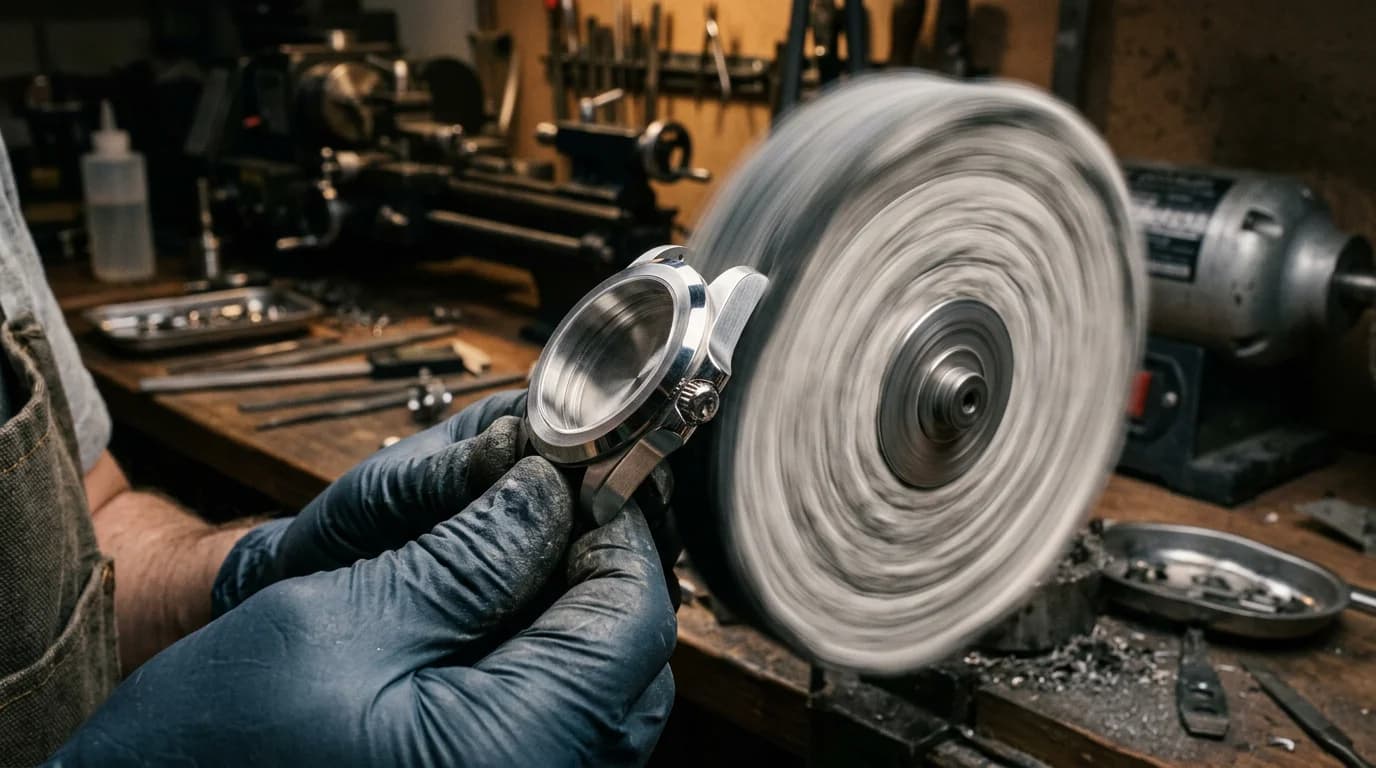
Two watches can share the exact same case shape and come off looking like completely different products. The steel is identical. The finishing is not.
The Short Answer
Watch case finishing is the surface treatment applied to a case after it is machined. A polished finish is a mirror surface made with progressively finer abrasives. A brushed (or satin) finish is a set of fine, uniform parallel lines made with an abrasive belt or wheel. A sandblasted finish is a matte, non-reflective surface made by blasting the metal with fine media under pressure. Most modern sports watches mix two or more of these on a single case to define its shape under light.
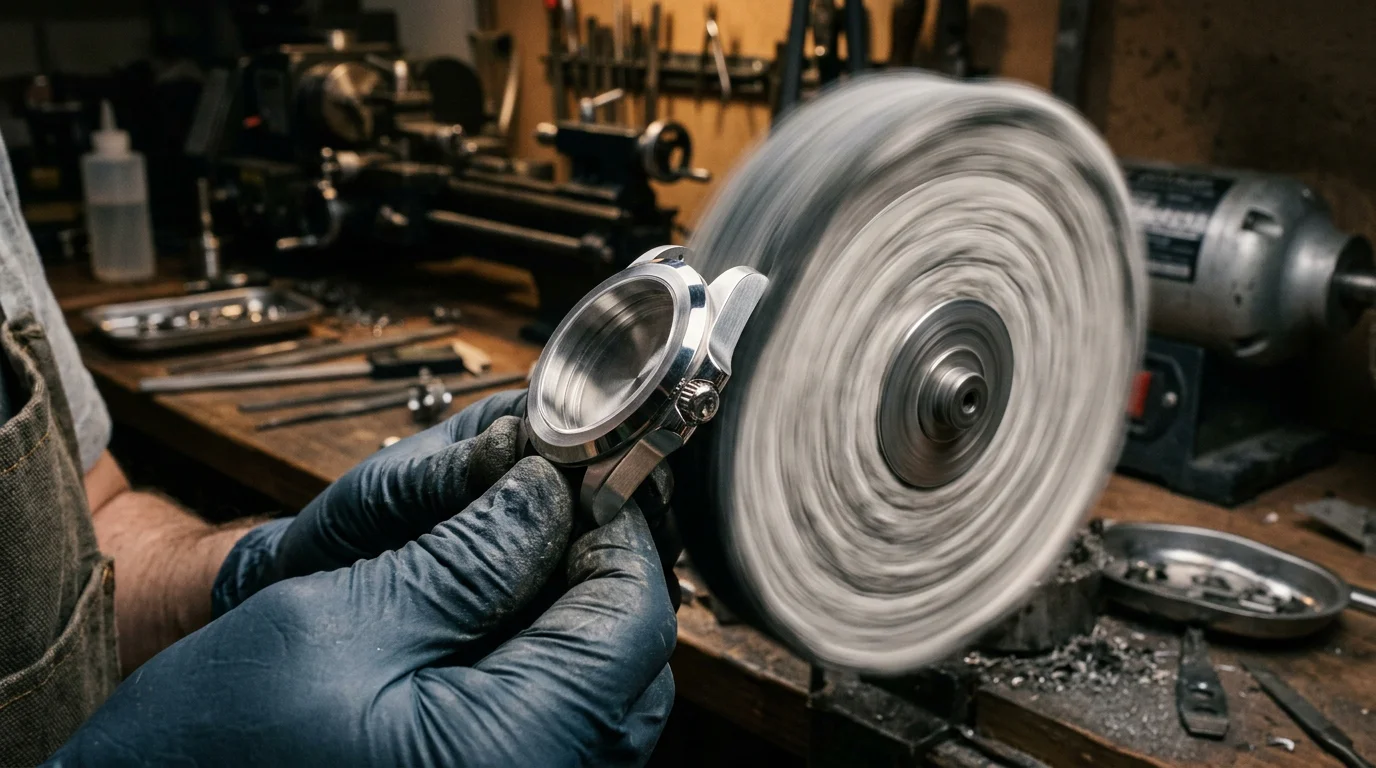 Case finishing happens on the bench, not in a design file. Each pass over the wheel removes material and can't be undone.
The Polished Finish
Polishing brings steel or gold to a genuine mirror surface. It is achieved by working the metal through a sequence of progressively finer abrasive compounds until the surface reflects like glass, with no visible grain or line at all.
Where Polishing Is Used and Why
Polished surfaces are usually reserved for bezels, center links, and case edges, the surfaces a brand wants to catch the eye and show contrast against a matte or brushed surrounding surface. A fully polished case reads as more formal and dressier. A fully brushed case reads as more tool-like and utilitarian.
The Brushed (Satin) Finish
A brushed finish, sometimes called a satin finish, is made by drawing an abrasive belt or wheel across the metal in one direction, creating fine, uniform parallel lines. Light scatters along those lines instead of reflecting in a single point, which is why a brushed surface looks soft and even rather than mirror-bright.
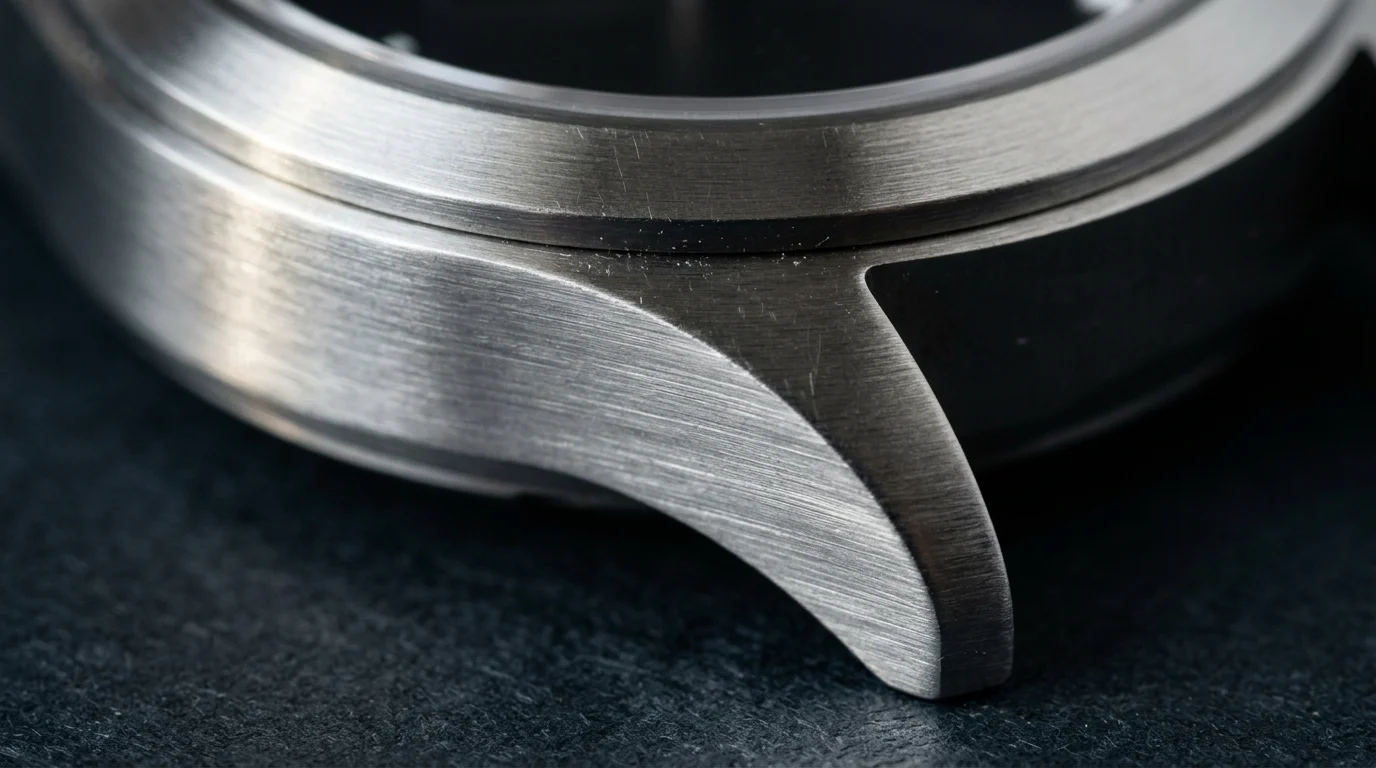 Up close, a brushed case shows fine, directional lines rather than a single reflective point.
Why Brands Combine Polished and Brushed on One Case
The classic move, seen across integrated-bracelet sports watches like the Royal Oak, Nautilus, and Laureato, is alternating polished bevels against brushed case flanks. That contrast is what makes the octagonal bezel shape on those watches visually pop rather than reading as a flat, uniform surface. Our Girard-Perregaux Laureato buying guide covers a current example of exactly this finishing approach.
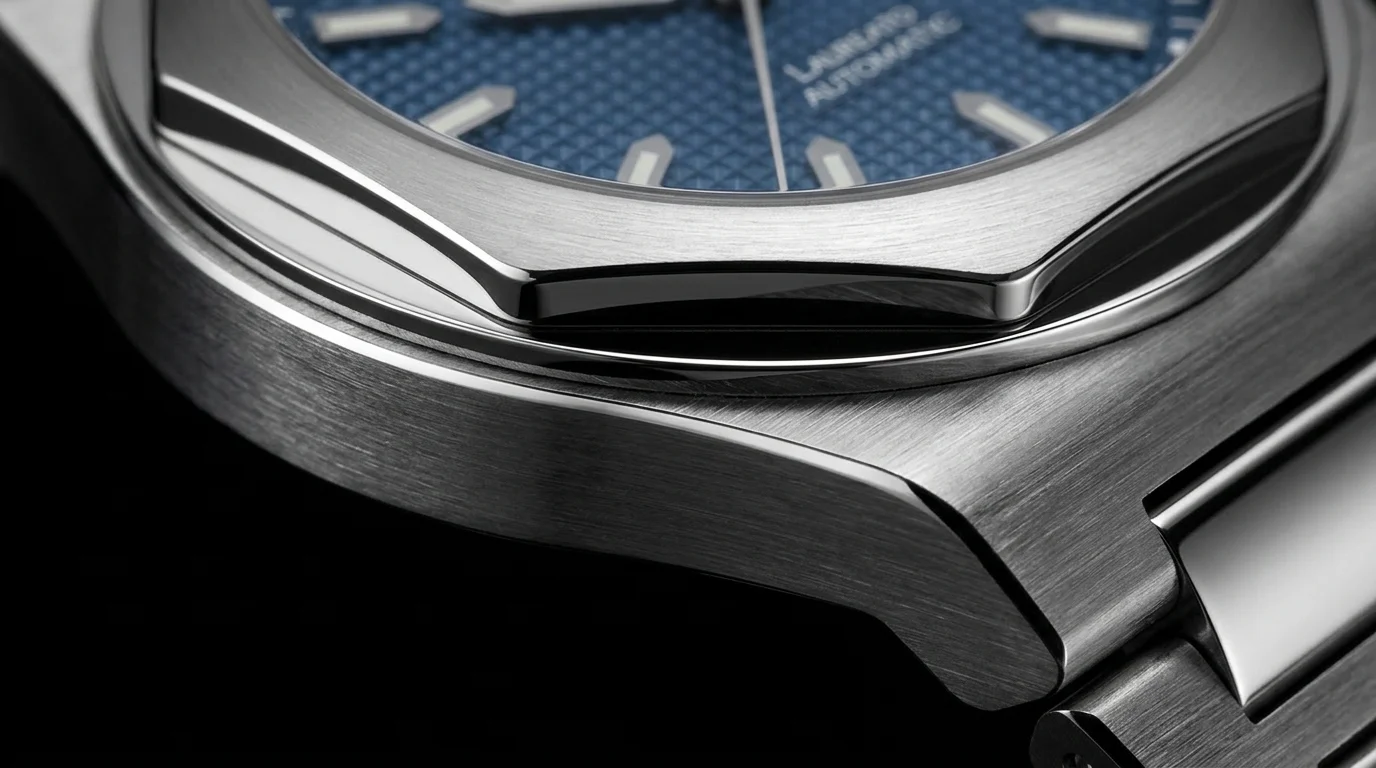 The Laureato's octagonal bezel alternates polished bevels against brushed flanks, the same technique used on the Royal Oak and Nautilus.
The Sandblasted Finish
Sandblasting, sometimes called bead blasting, fires fine media (traditionally sand, though modern shops often use glass beads or aluminum oxide) at the case surface under air pressure. The result is a uniformly matte, non-directional texture with no visible grain lines and almost no reflectivity at all.
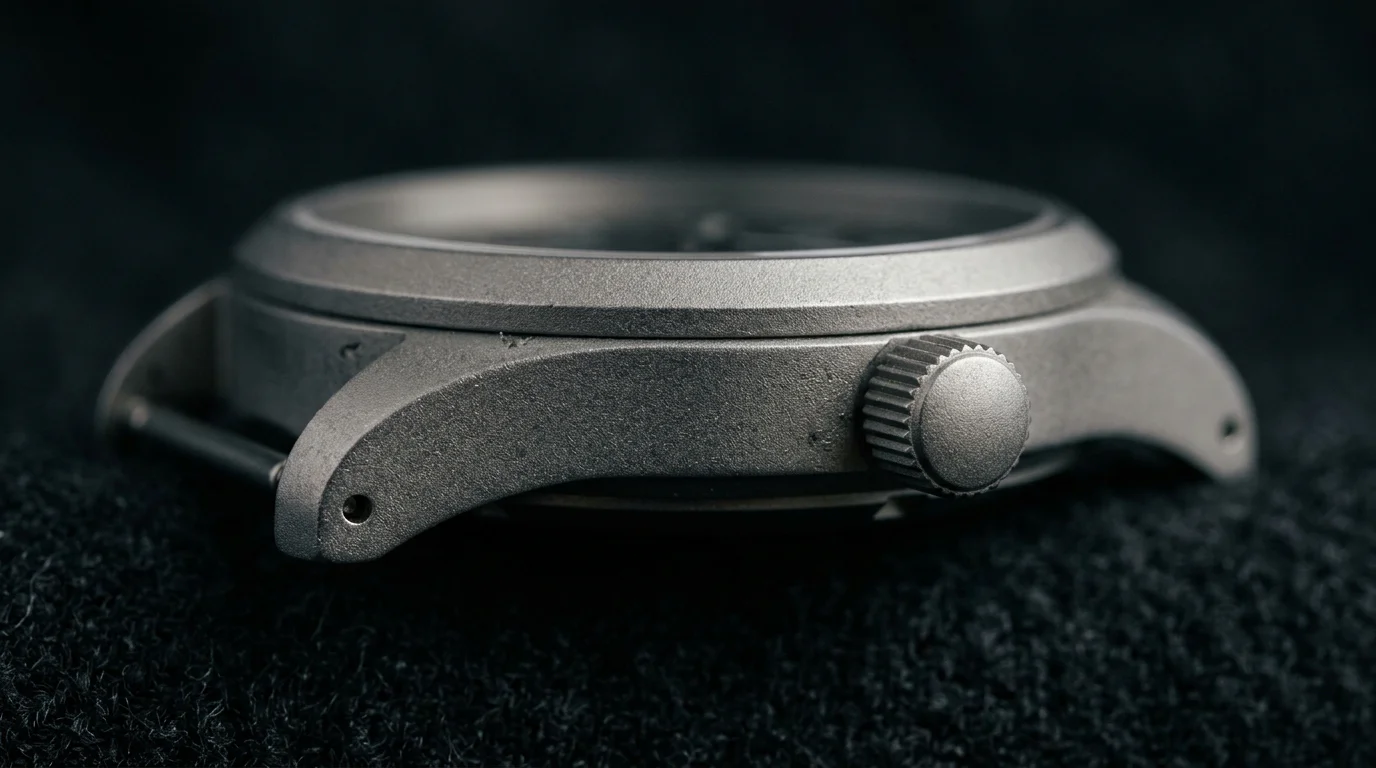 A sandblasted case has no mirror surface at all, which is exactly why it hides marks so well.
Why Some Buyers Prefer It
A sandblasted case shows fingerprints and light scratches far less than a polished surface, since there is no mirror surface for a mark to disrupt. Military and tool watch references frequently use sandblasted finishing specifically because it stays visually consistent under hard daily use.
Side by Side
| Finish | How It's Made | Visual Effect | Scratch Visibility |
|---|---|---|---|
| Polished | Progressive fine abrasives to a mirror surface | Bright, reflective, high contrast | High, shows scratches and fingerprints readily |
| Brushed (satin) | Directional abrasive belt or wheel | Soft, even, uniform lines | Moderate, fine scratches blend into the grain |
| Sandblasted | Blasted media under pressure | Fully matte, non-directional | Low, texture masks marks well |
What This Means at Service Time
A polished case that has picked up years of scratches can typically be re-polished back to a mirror finish by a competent watchmaker. A brushed case has to have its directional grain re-cut correctly, which is harder to do well and easy to botch if the technician rushes it. A sandblasted case is the hardest of the three to restore to factory condition, since matching the exact original media and pressure is difficult outside the manufacturer's own service center.
Buying Pre-Owned: What to Check
When shopping a pre-owned watch, look closely at where polished and brushed surfaces meet. A previous over-polishing job (usually from an inexperienced service center trying to remove scratches) often rounds off edges that should be crisp, or blurs the transition line between a polished bevel and a brushed flank. That is one of the more reliable signs a case has been serviced by someone other than the manufacturer.
FAQ
What is the difference between a polished and brushed watch case?
A polished case is a mirror-bright surface made with fine abrasive compounds, while a brushed (satin) case has fine parallel lines made by an abrasive belt or wheel moving in one direction, giving it a softer, less reflective look.
What is a sandblasted watch case?
A sandblasted, or bead-blasted, case is finished by firing fine media at the surface under pressure, producing a fully matte, non-directional texture that resists showing scratches and fingerprints.
Why do some watches mix polished and brushed finishes on one case?
Alternating polished and brushed surfaces creates visual contrast that defines a case's shape under light, a technique used heavily on integrated-bracelet sports watches like the Royal Oak, Nautilus, and Laureato.
Which watch case finish hides scratches best?
Sandblasted finishes hide scratches and fingerprints best, since the matte, non-directional texture has no mirror surface for a mark to visibly disrupt.
Can a watch case finish be restored during service?
A polished case can usually be re-polished to a mirror finish fairly reliably. A brushed case is harder to restore correctly since the directional grain must be re-cut evenly, and a sandblasted case is the hardest to match to factory condition outside the manufacturer's own service center.