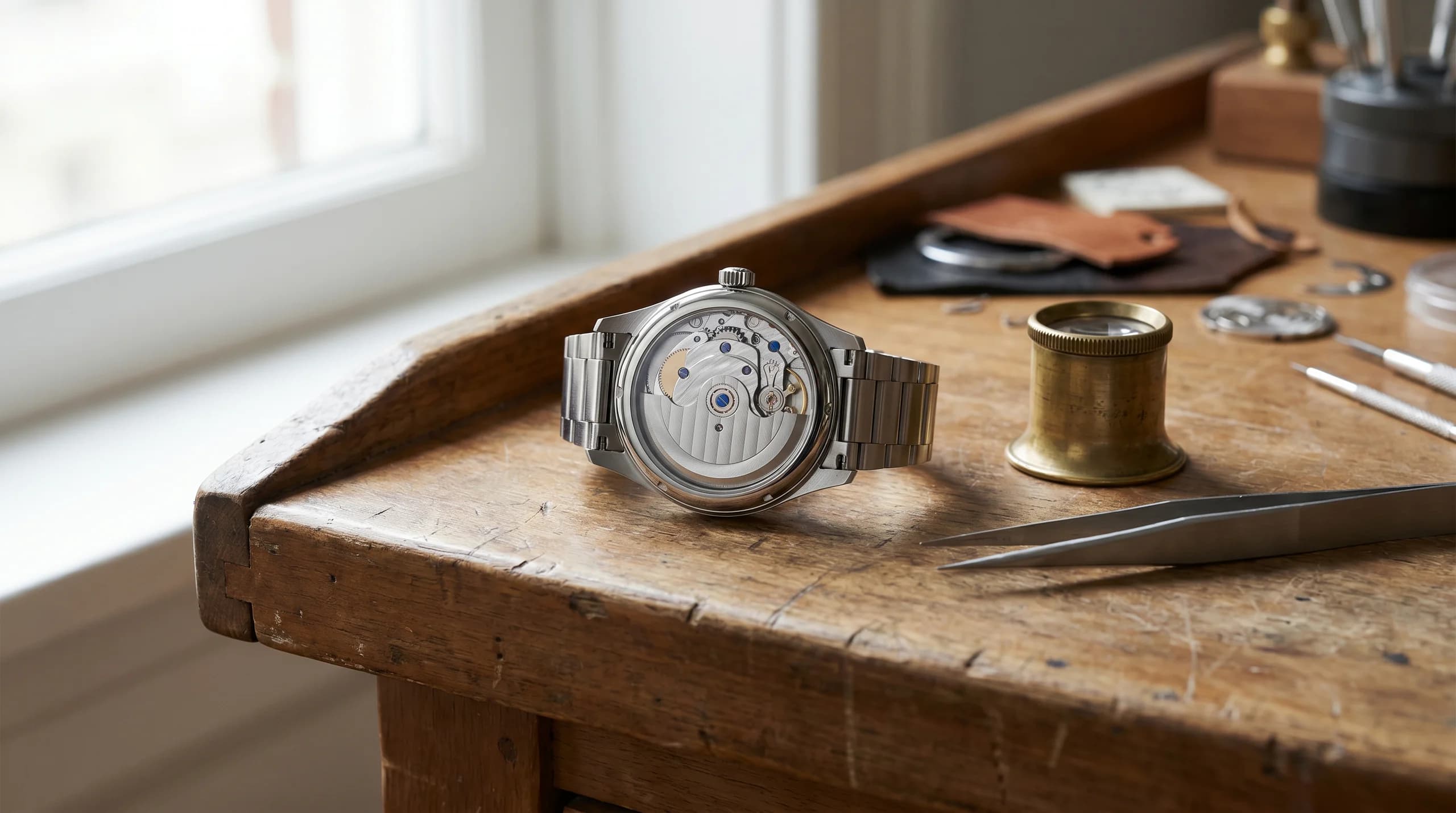
The short answer: There are four ways a watch keeps time. Automatic and manual are both mechanical, powered by a mainspring and regulated by an escapement; the difference is that an automatic winds itself from your wrist while a manual is wound by hand. Quartz uses a battery and a vibrating crystal: cheapest, very accurate, with a once-a-second tick. Spring Drive, a Grand Seiko invention, is the hybrid: a mainspring for power but quartz-grade regulation, giving roughly one second of deviation a day and a glide-smooth seconds hand with no battery. None is "best." Each answers a different question.
When someone asks which movement they should buy, the real question underneath is simpler: what do you want from a watch? Accuracy? Romance? Low maintenance? The best of both worlds? Once you know that, the choice gets easy.
Here is the plain-English version, with the tradeoffs a spec sheet leaves out.
The images below are AI-generated illustrations created for this article and do not represent specific watches offered for sale.
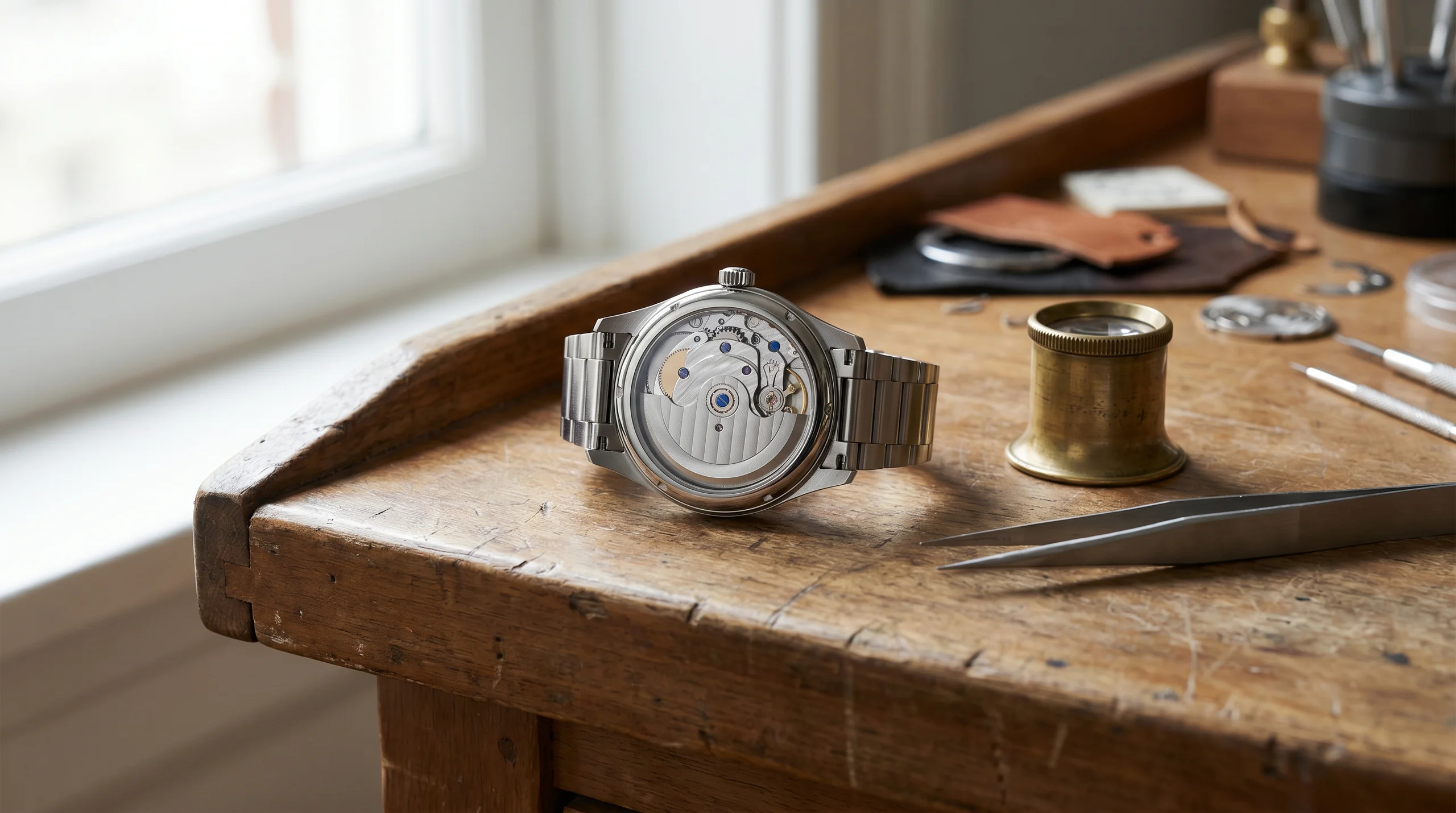 Four very different engines can sit behind a similar dial, and the one you choose shapes how you live with the watch.
Automatic: the default luxury movement
An automatic runs on a coiled mainspring, released through a gear train and regulated by an escapement and balance wheel beating around 28,800 times an hour. A weighted rotor winds the mainspring as your wrist moves, so the watch stays running as long as you wear it.
This is the heart of most luxury watches, from the Tudor-derived automatic in the Breitling Superocean to Omega's co-axial automatic. A chronometer-grade automatic runs to roughly minus 4 or plus 6 seconds a day, and the appeal is craftsmanship, heritage, resale, and a mechanism you can service for generations. The cost is real, too: it needs wearing or winding, a service every five years or so, and it is the least accurate of the four.
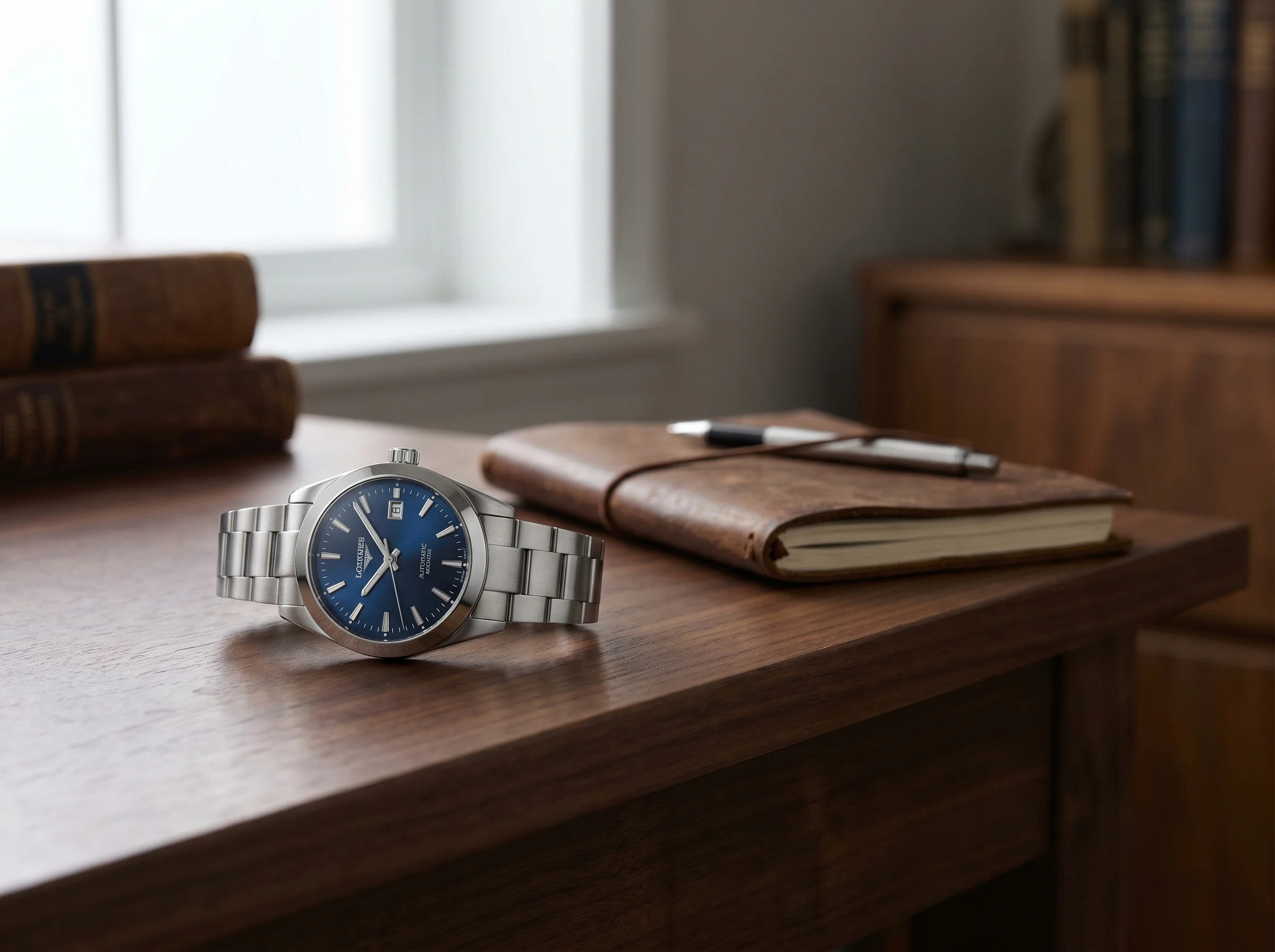 The automatic is the default of the luxury world, and its sweeping seconds hand is part of the romance.
Manual: the purist's mechanical
A manual movement is mechanically identical in spirit, with one difference: there is no rotor, so you wind it by hand. That makes the watch thinner and lets the movement show through a display caseback without a rotor blocking the view.
The accuracy class is the same as an automatic. What you gain is slimness and a daily ritual; what you trade is convenience, since a manual that goes unwound simply stops. It is the classic choice for thin dress watches and for people who like the small daily act of winding.
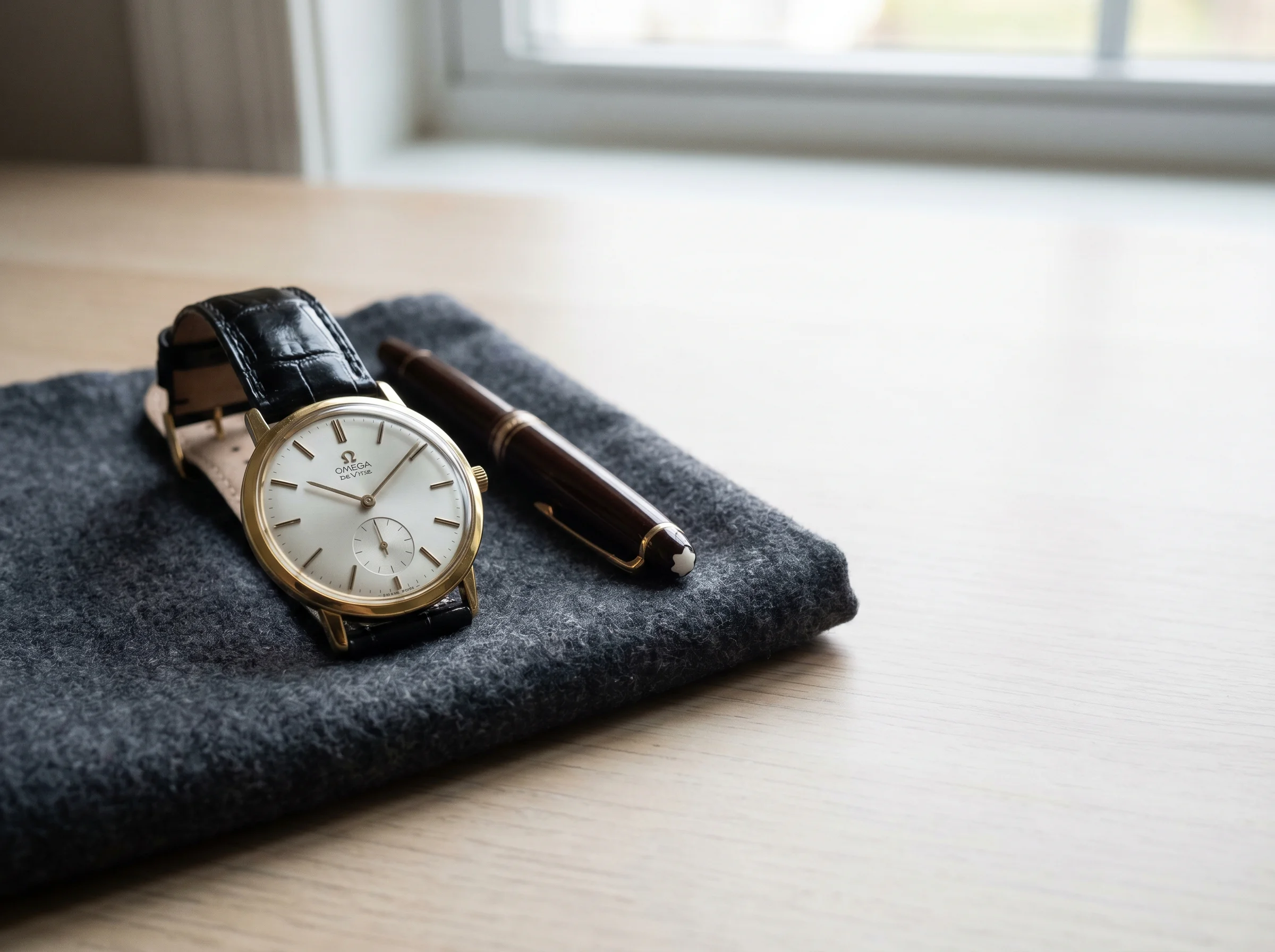 Without a rotor, a manual movement runs thinner, which is why it lives in the dressiest watches.
Quartz: accuracy and convenience
A quartz movement runs a tiny current from a battery through a quartz crystal that vibrates 32,768 times a second. A circuit counts those vibrations, ticks the seconds hand once per second, and keeps time to about 15 seconds a month, far better than any standard mechanical watch.
Quartz is the cheapest, most accurate-for-the-money, and lowest-maintenance option, asking only for a battery every couple of years. The trade is romance and the once-a-second tick, though dismissing all quartz is a mistake. High-accuracy quartz like Grand Seiko's 9F runs to around 10 seconds a year and is genuinely collectible. That quartz-versus-mechanical split runs straight through a watch like the Cartier Ballon Bleu, where the quartz pieces and the automatics live in different worlds.
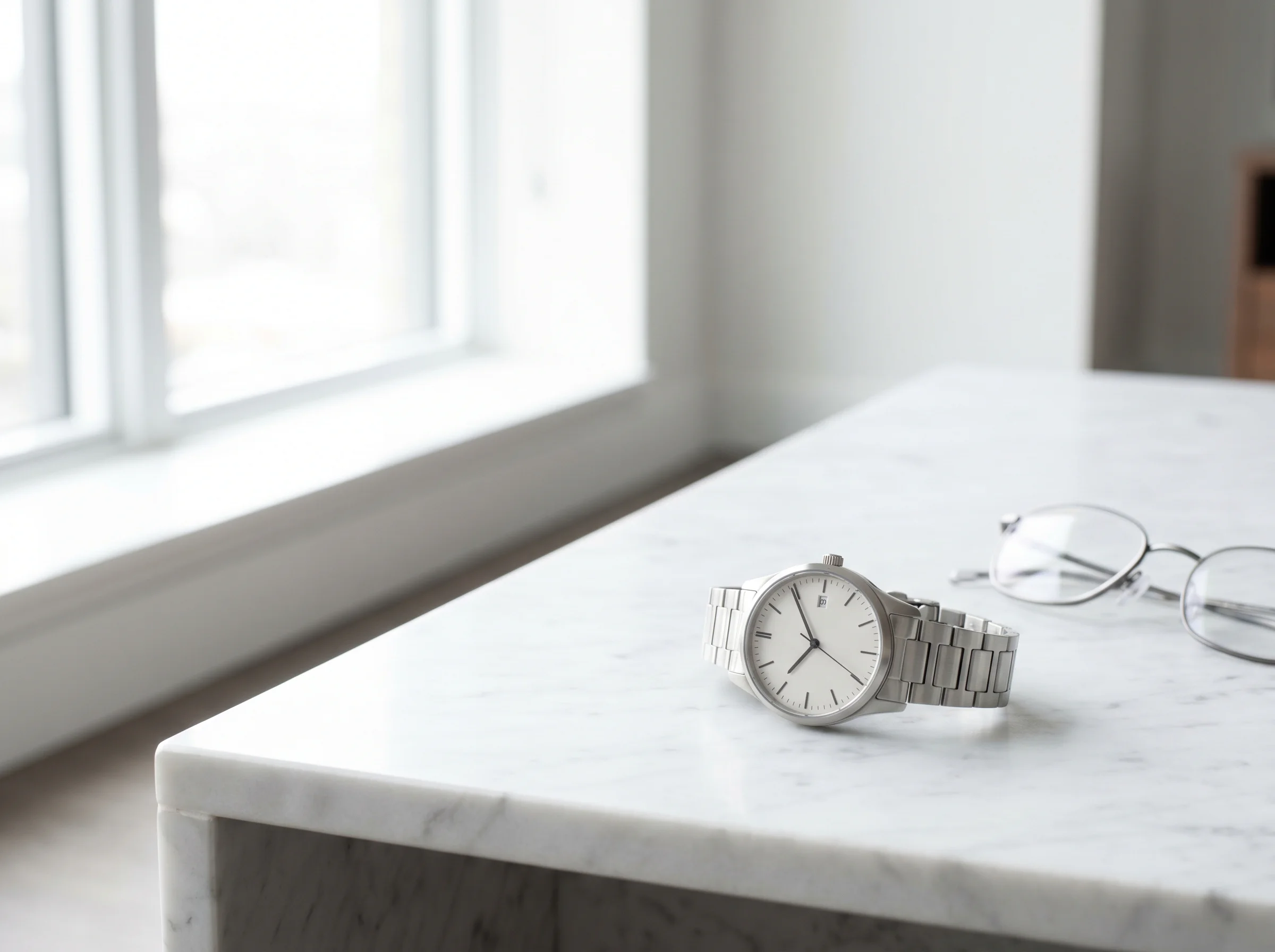 Quartz trades romance for precision, convenience, and a lower price.
Spring Drive: the best of both
Spring Drive is Grand Seiko's hybrid, and it is genuinely unlike the other three. It keeps a mainspring for power, like a mechanical watch, but replaces the escapement with a Tri-Synchro Regulator. A glide wheel spins eight times a second, generating a small current like a dynamo, and an integrated circuit compares that speed against a quartz oscillator and applies an electromagnetic brake to hold the watch exactly on time.
The result is mechanical power with quartz-grade precision, around one second a day, and no battery, since the mainspring runs everything. The seconds hand does not tick or stutter; it glides in a perfectly smooth, silent sweep. It took engineer Yoshikazu Akahane 28 years and 600 prototypes before the technology launched in 1999, and it remains exclusive to Grand Seiko and its sister brands. The catch is that exclusivity, plus a purist crowd that considers any quartz regulation a compromise.
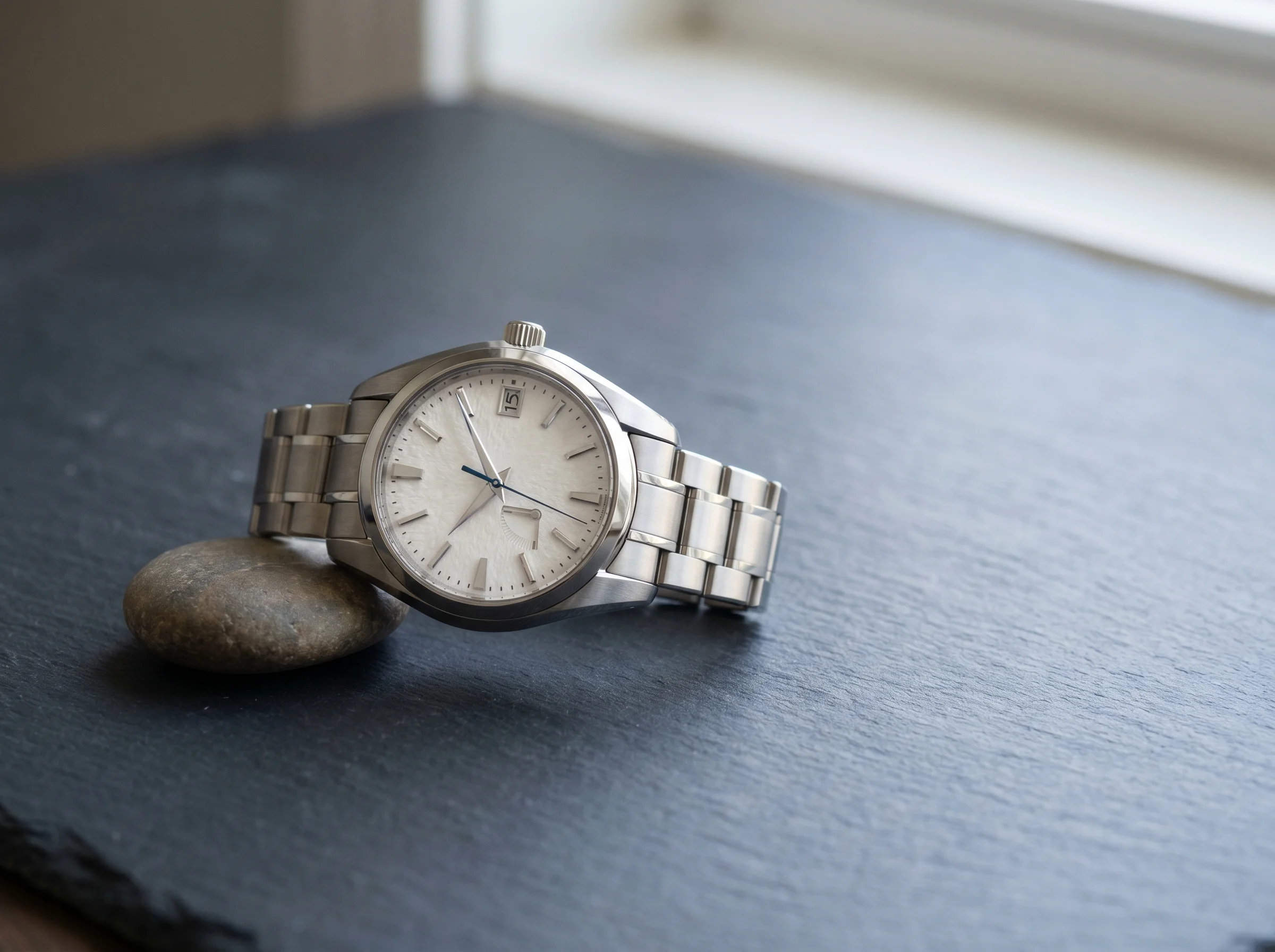 Spring Drive pairs a mainspring with quartz regulation, and its seconds hand glides rather than ticks.
The four side by side
| Type | How it works | Accuracy | Seconds hand | Maintenance | Best for |
|---|---|---|---|---|---|
| Automatic | Mainspring wound by a rotor | -4/+6 sec/day | Sweeping | Service ~5 yrs | Soul, heritage, resale |
| Manual | Mainspring, hand-wound | -4/+6 sec/day | Sweeping | Service ~5 yrs, daily wind | Thin dress, purists |
| Quartz | Battery and quartz crystal | ~15 sec/month | One tick/sec | Battery ~2-3 yrs | Accuracy, low cost, grab-and-go |
| Spring Drive | Mainspring, quartz-regulated | ~1 sec/day | Smooth glide | Service ~3-5 yrs | Best of both, engineering |
Here is the part nobody tells beginners: more expensive does not mean more accurate. A $50 quartz watch keeps better time than a $50,000 tourbillon. You are not buying accuracy when you buy mechanical. You are buying everything else.
The dealer's read
Most of what we sell is automatic, because that is the heart of the luxury market, the movement that holds value and gets handed down. But asking for the "best" movement is a category error. The right answer depends entirely on what you are optimizing for.
Buy automatic for the soul and the resale, manual for the slim purity and the ritual, quartz for accuracy and grab-and-go convenience, and Spring Drive for the engineering and that gliding hand. All four hold their place in the resilient part of the market we mapped at 5dwatches.com/blog/swiss-watch-market-barbell-split-2026. Decide what you actually want on your wrist, and the movement chooses itself.
Browse our authenticated pre-owned collection at 5D Watches.