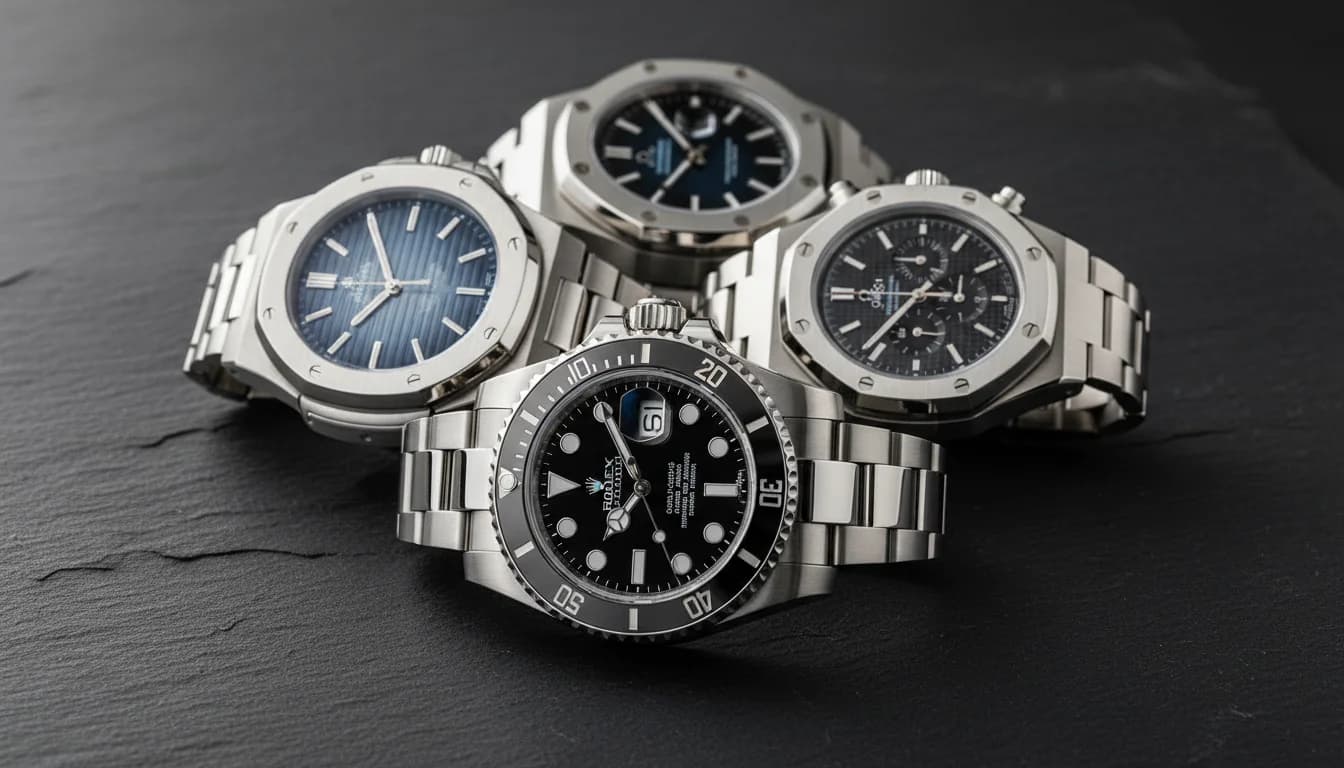
The Rolex Daytona 116500LN currently trades at $22,000–$28,000 on the pre-owned market. Its retail price is $13,150. That's a 67–113% premium above retail — on a watch that came out in 2016.
Most luxury goods lose value the moment you own them. A small number of watches do the opposite.
TL;DR
- Rolex (Daytona, Submariner, GMT-Master II) remains the strongest category for value retention, with 56% of Rolex models trading above retail as of early 2026
- Patek Philippe and Audemars Piguet hold premiums for their flagship steel sport models, though both have cooled from 2022 peaks
- Grand Seiko limited editions, particularly the SBGA211 "Snowflake," have appreciated 26–28% in recent years
- Pre-owned watches already past the depreciation curve offer lower risk than buying new
- Quartz fashion watches and trend-driven brands can lose 50–80% of value once hype fades
What "Holds Value" Actually Means
A watch that "holds its value" doesn't just avoid depreciation. It maintains a stable resale price that stays close to — or above — what you paid. A small number go further and appreciate year over year.
Most watches do neither. The average luxury watch loses 32.9% in the first year alone.
The Three Value Categories
Appreciating watches trade above their retail price. The Rolex Daytona is the clearest example — not by luck, but because Rolex deliberately constrains supply against consistent global demand. These are not investments in a regulated sense, but they have behaved like assets.
Value-stable watches hold 75–95% of their purchase price over time. These include the Omega Speedmaster Moonwatch (75–88%), the Tudor Black Bay 58 (84–94%), and most well-made Swiss mechanical watches from brands with genuine collector bases.
Depreciating watches lose value quickly. This includes fashion brand watches, quartz models without collector status, and heavily marketed limited editions that relied on hype rather than mechanical merit. Some lose 40–60% within the first year.
Watches That Appreciate: The Short List
Most secondary market articles list 15 brands. The real list is shorter. Three categories have consistent track records.
Rolex Steel Sport Models
56% of Rolex models trade above retail as of early 2026. The reasons are structural: Rolex controls supply tightly, uses in-house movements, and has never chased volume. Waiting lists at authorized dealers are measured in years for most sport references.
The standout model for appreciation is the 116500LN Daytona. Retail: $13,150. Current pre-owned range: $22,000–$28,000. That premium has compressed from 2022 peaks but has never fully closed. No other steel chronograph from any brand has sustained those numbers.
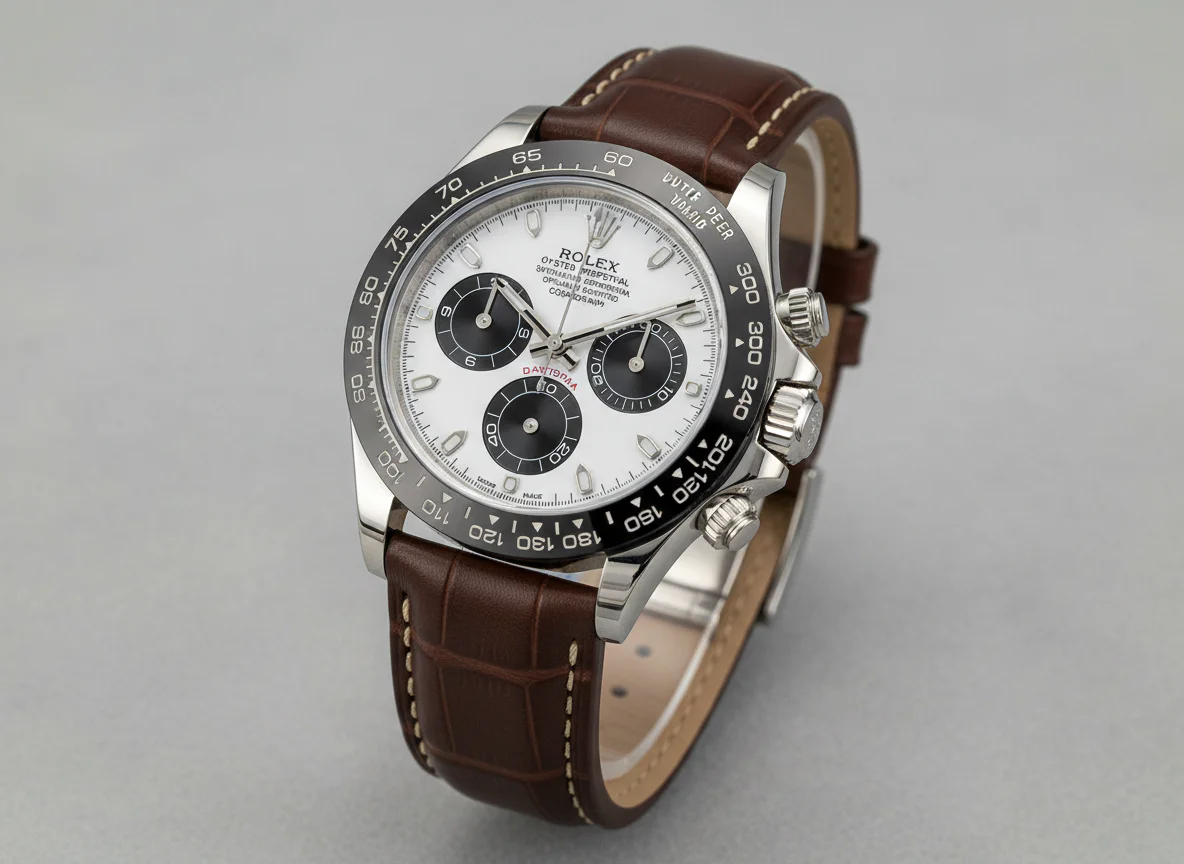
The Submariner (126610LN, current production) trades at $12,000–$14,000 pre-owned against a $10,050 retail price. That's roughly 15–20% above retail — modest by Daytona standards, but the Submariner is also the most recognized luxury watch in the world and has maintained some premium for decades. See our Rolex Submariner 126610LN buying guide for what to check before buying one pre-owned.
The GMT-Master II line is covered in detail in our GMT-Master II comparison guide. The discontinued Pepsi (126710BLRO) saw an immediate jump after Rolex pulled it from production at Watches & Wonders 2026.
Patek Philippe and Audemars Piguet
The Patek Philippe Nautilus 5711/1A retailed for approximately $27,550 before discontinuation. It routinely sells above 50,000 euros on the secondary market. The Patek Aquanaut climbed 5.0% year-to-date through mid-2025; the Nautilus gained 2.2% over the same period. Neither has crashed.
Audemars Piguet stands out because 63% of AP models trade above retail — higher than any other major brand. The Royal Oak remains the main driver. Its steel configuration, particularly the iconic 15202ST "Jumbo," commands multi-year waiting lists and consistent premiums.
Neither Patek nor AP is in 5D Watches' current inventory, but the data is relevant context for understanding where Rolex and other high-retention brands sit in the broader landscape.
Grand Seiko: The Appreciation Story Most People Miss
Grand Seiko has built a cult following that the mainstream watch press was late to acknowledge. The result: meaningful appreciation that went underpriced for years.
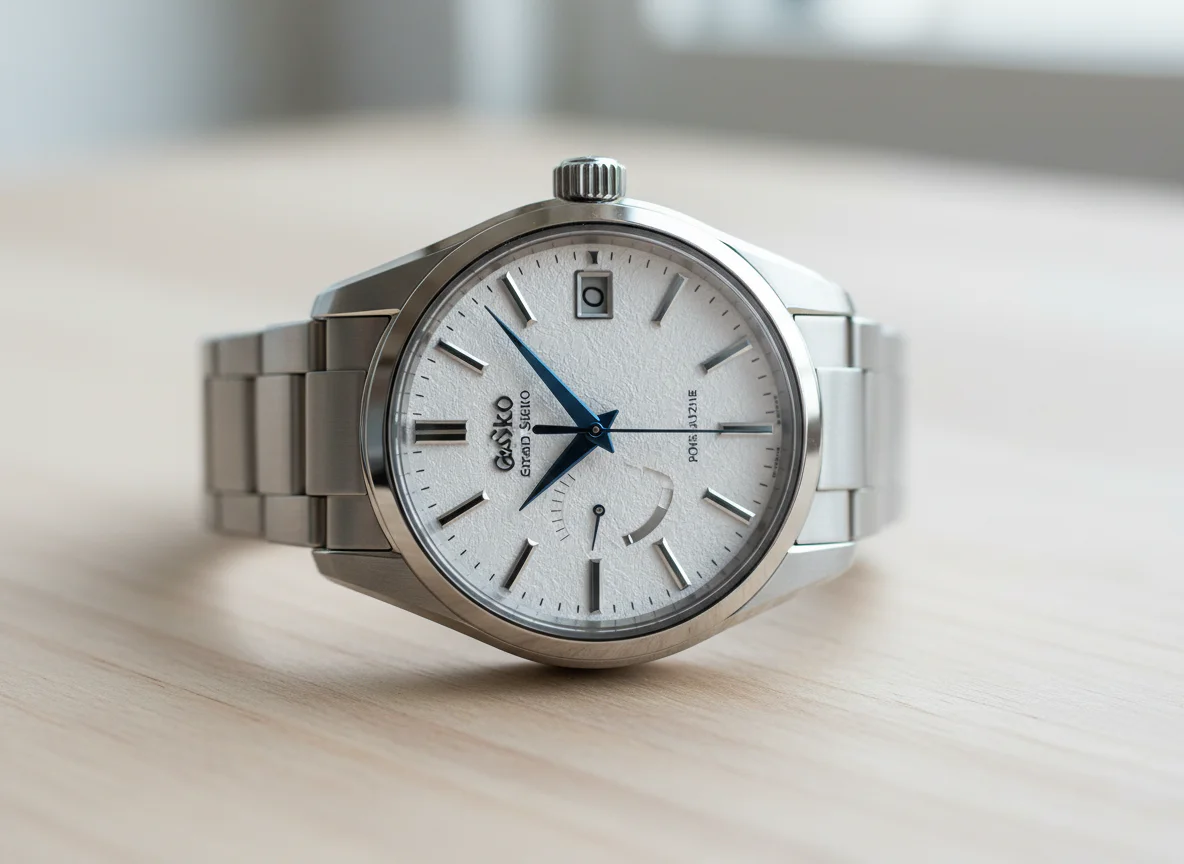
The SBGA211 "Snowflake" Spring Drive — one of the most instantly recognizable dials in watchmaking — has posted 26–28% gains among Spring Drive models. Models that traded at $4,200–$4,500 in early 2024 now consistently hit $5,200–$5,600 on the secondary market. That's an 8.1% one-year gain on a watch that costs $5,700 retail.
Why Grand Seiko Holds
The Snowflake and similar high-craft Grand Seiko references hold value for three reasons.
First, the Spring Drive movement is genuinely unusual. It uses a tri-synchro regulator to achieve quartz-level accuracy from a mechanical power source. Collectors who understand movement finishing recognize it as singular.
Second, Grand Seiko's dial artistry — the hand-lacquered and textured surfaces inspired by Japanese seasons — cannot be replicated at scale. The dials take hours to produce individually.
Third, limited production. Grand Seiko does not chase volume. That constraint translates directly to secondary market support.
Browse authenticated pre-owned Grand Seiko at 5D Watches.
Watches That Hold Their Value: Reference Table
| Watch | Reference | Retail Price | Pre-Owned Range | Premium/Retention |
|---|---|---|---|---|
| Rolex Daytona | 116500LN | $13,150 | $22,000–$28,000 | +67–113% |
| Rolex Submariner Date | 126610LN | $10,050 | $12,000–$14,000 | +15–20% |
| AP Royal Oak | 15202ST | ~$28,000 | $35,000–$50,000 | +25–79% |
| Patek Nautilus | 5711/1A | ~$27,550 | 50,000+ EUR | +80%+ |
| Grand Seiko Snowflake | SBGA211 | $5,700 | $5,200–$5,600 | ~95–98% |
| Tudor Black Bay 58 | 79030N | $3,825 | $3,200–$3,600 | ~84–94% |
| Omega Speedmaster Pro | 310.30.42.50.01.001 | $6,600 | $4,950–$5,800 | ~75–88% |
Data reflects secondary market observations as of early 2026. Prices fluctuate.
Why Most Watches Lose Value Fast
Understanding the losers explains the winners.
The Fashion Brand Problem
Gucci, Versace, Michael Kors, and similar fashion-house watches share a common structure: they use stock movements — standard ETA or Miyota calibers — housed in trend-driven cases. The case styling is the product, not the movement.
When the trend fades, the watch trades on the movement's commodity value. That can be 40–60% below the original retail price within a year. A Gucci G-Timeless retailing at $2,000 AUD typically resells below $800 AUD on Chrono24.
Quartz Movements Without Collector Status
Quartz watches can be excellent. Grand Seiko's 9F caliber is among the most accurate production movements ever made. But most quartz fashion watches — and many luxury-positioned quartz models outside of that narrow collector tier — depreciate faster than equivalent mechanical models.
The exception is always the same: collector recognition driven by genuine mechanical interest, rarity, or cultural provenance (the Casio G-Shock and Casio Databank are useful counterexamples). Without that, quartz is a commodity.
New Release Hype Without Fundamentals
Limited editions that launched at inflated prices tend to fall back. 2021 and 2022 saw a wave of hyped releases that have since retraced. The secondary market for watches has corrected 30–50% from 2022 peaks for the mid-tier flippers who overpaid during the bubble.
For buyers who want to avoid being on the wrong side of that — buying pre-owned watches under $5,000 and under $10,000 with established track records is a lower-risk approach than chasing new releases.
The Pre-Owned Entry Point: A Better Value Argument
This is the angle most articles miss.
The steepest depreciation on any watch happens between purchase and the first year of ownership. The average luxury watch loses 32.9% in year one. Pre-owned prices fell only 0.3% in the second quarter of 2025 — the lowest quarterly decline in 13 quarters. The curve flattens fast after initial depreciation.
A watch bought pre-owned at 2–5 years old has already absorbed that initial hit. The buyer captures the full ownership experience at a lower entry price, with a flatter depreciation curve going forward and, for the right references, genuine appreciation potential.
Tudor as the Clearest Example
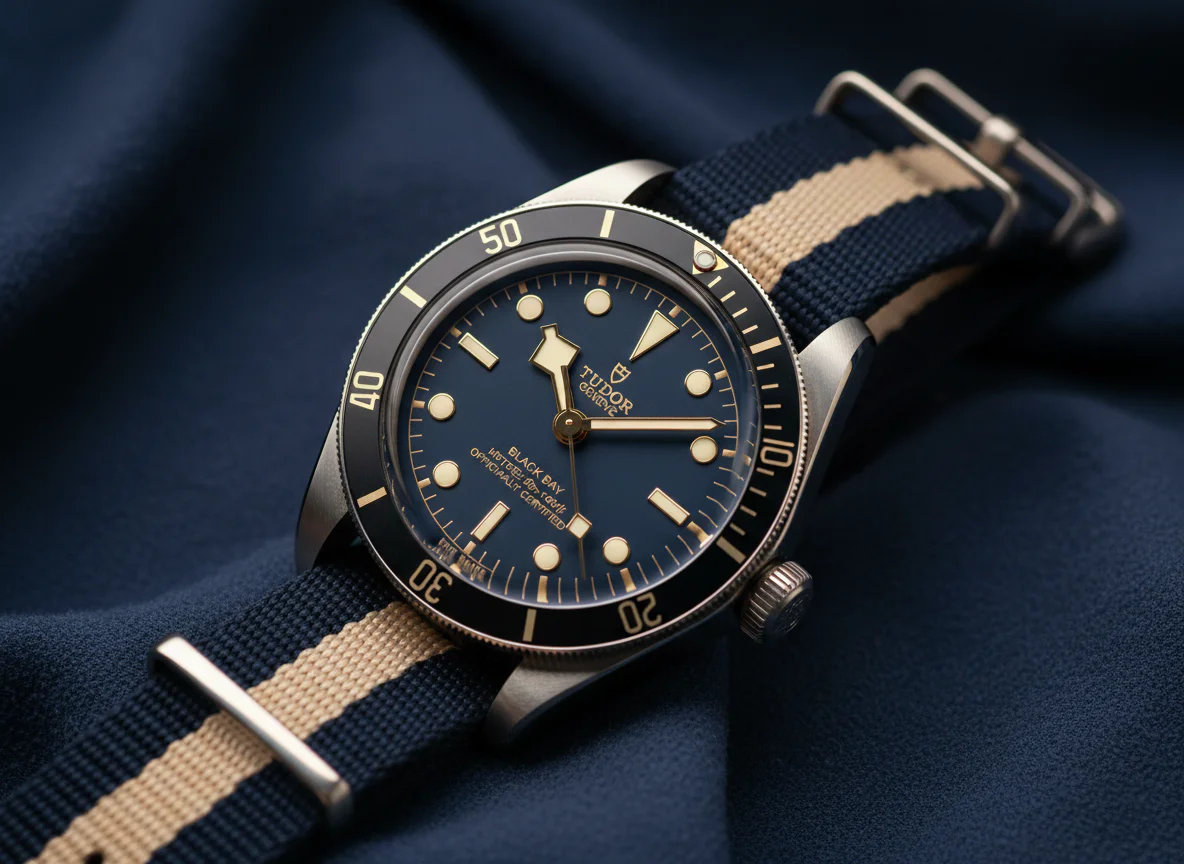
The Tudor Black Bay 58 retails at $3,825. Pre-owned examples of the 79030N trade at $3,200–$3,600. That 84–94% retention rate is one of the best in the sub-$5,000 segment.
Buying a pre-owned 79030N for $3,200 instead of $3,825 new means you've already absorbed most of the depreciation. If you need to sell in two years, you're unlikely to lose much. And the watch is mechanically identical to new.
The Rolex vs. Tudor comparison covers this angle in detail: Tudor's value proposition is its own — not a budget substitute for Rolex, but a watch with strong retention and real craft.
Browse authenticated pre-owned Tudor at 5D Watches.
IWC and Omega: Honest Value Retention
IWC and Omega hold their value solidly — neither as dramatically as Rolex, nor as culturally singular as Grand Seiko's best work, but both have stable collector bases that support meaningful secondary market prices.
Omega Speedmaster Moonwatch
The Speedmaster Professional (310.30.42.50.01.001) retails at $6,600. Pre-owned examples trade at $4,950–$5,800, a 75–88% retention rate. The NASA moon landing provenance is real and documented. Omega has been careful to maintain the Moonwatch as a consistent reference rather than constantly updating it — a discipline that keeps collector values stable.
IWC Portugieser
The IWC Portugieser holds value less dramatically than the Speedy, but IWC's engineering reputation and the Portugieser's timeless dial design provide a stable floor. The Portofino and Pilot lines vary. Pre-owned buyers get clean Swiss movements and IWC's in-house calibers at a discount that the market tends to support over time.
Browse authenticated pre-owned Omega and IWC at 5D Watches.
Should You Buy a Watch as an Investment?
No financial advisor will tell you to buy watches as an investment strategy. That's the right answer.
The watches in this article appreciate or hold value because they are deeply desirable objects made in constrained quantities. That's not an investment thesis — it's a description of scarcity economics applied to manufactured goods. Markets shift, tastes change, and nothing is guaranteed.
What is reliably true: some watches are dramatically better stores of value than others. And buying pre-owned, from an authenticated dealer, at a price that already reflects initial depreciation, is a smarter entry point than retail for most buyers.
Browse authenticated pre-owned watches at 5D Watches — every watch is inspected, authenticated, and sold with a warranty. Shop Tudor, Omega, Grand Seiko, and IWC.