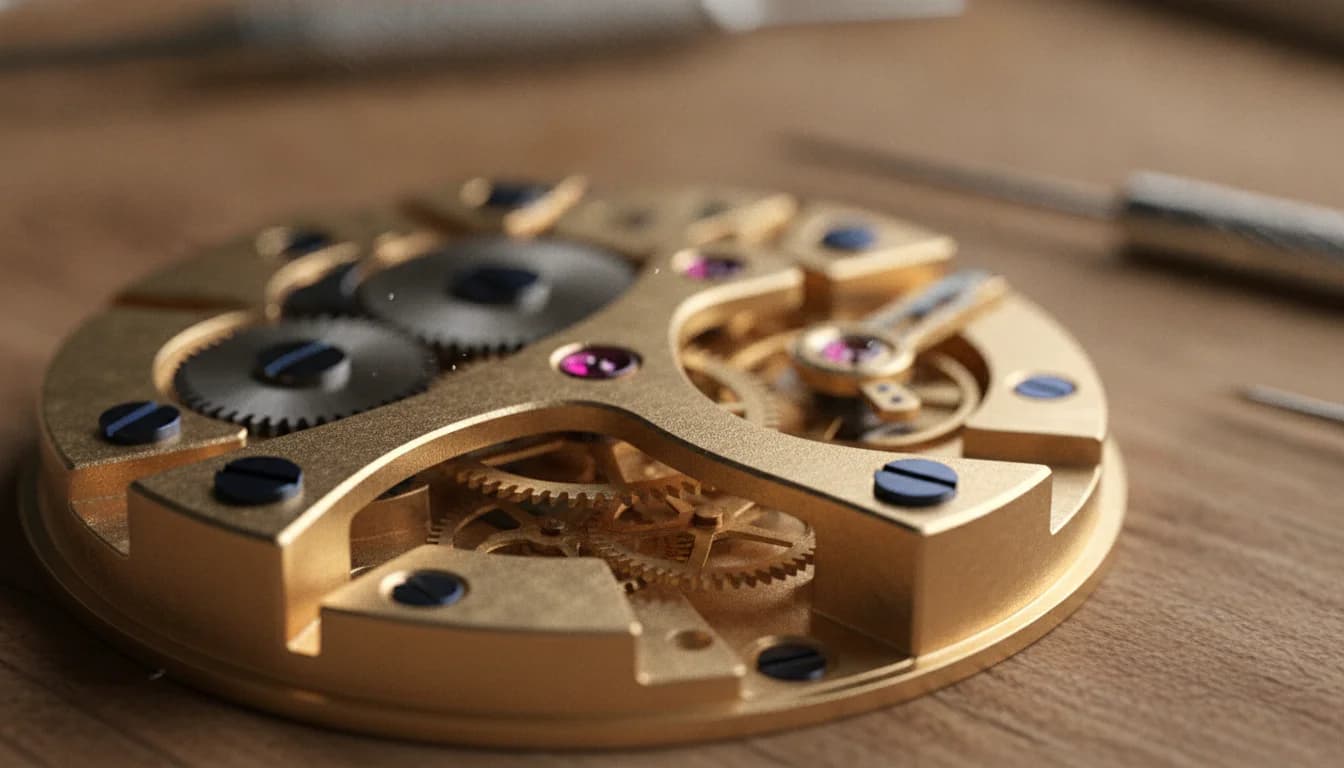
Look at almost any mechanical watch dial or caseback and you will eventually see a number followed by the word jewels. Seventeen jewels. Twenty-one jewels. It sounds like the watch is studded with gemstones. It is not. Those jewels are tiny synthetic ruby bearings, and they are one of the quiet reasons a good mechanical watch can run for decades.
So here is a plain-English explainer on what jewels in a watch movement actually are, why they exist, what the count really means, and why more is not automatically better.
The images in this article were generated by AI from real reference photographs of watch movements. They are illustrations, not photos of a specific watch for sale.
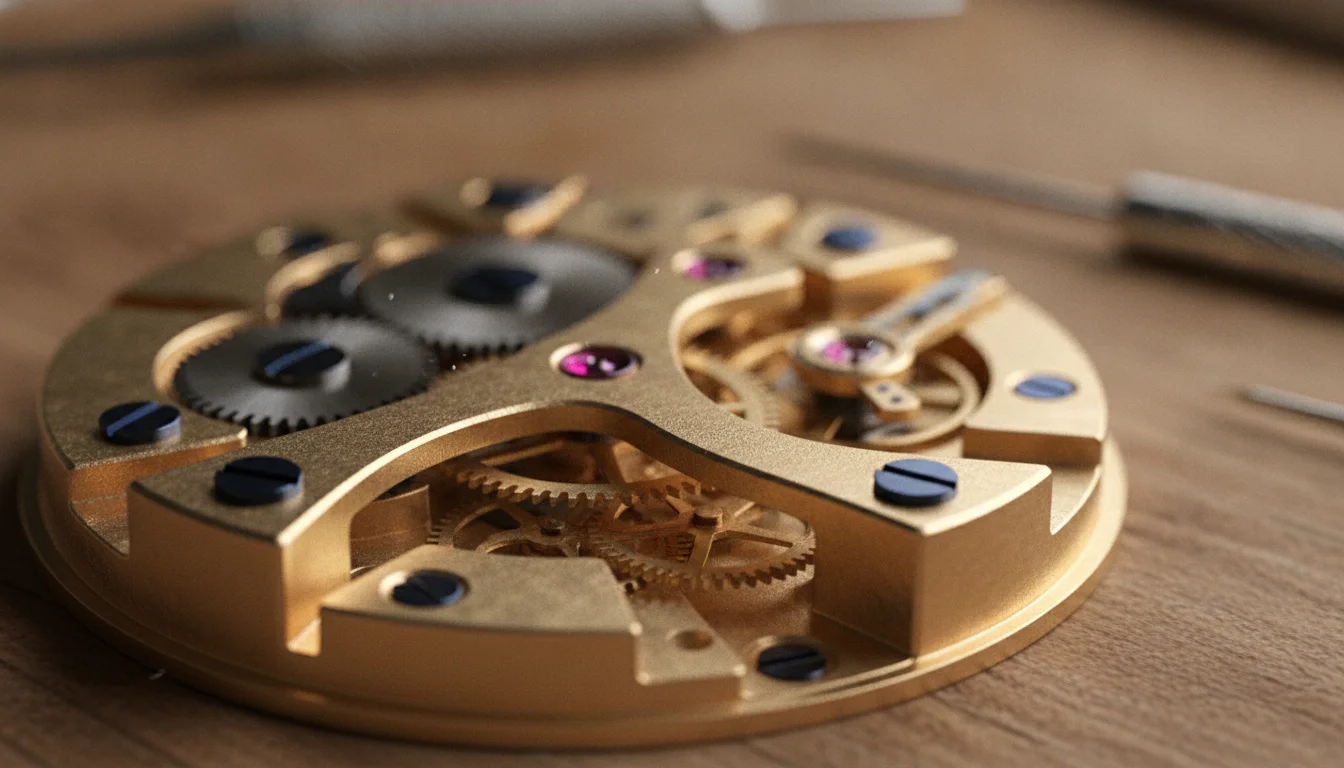 The little red discs are the jewels: synthetic ruby bearings pressed into the movement to carry the moving parts.
The short answer
Jewels are synthetic ruby or sapphire bearings set at the points where the gears and balance turn. They are hard, smooth, and low-friction, so they reduce wear where metal pivots would otherwise grind against metal. A typical hand-wound watch has 17 jewels, and a modern automatic runs 21 to 31. The count is a function of the movement's design, not a quality score you can read off the dial.
What the jewels actually do
Every wheel in a movement spins on a thin metal pivot. Without a bearing, that pivot would ride in a metal hole, and over years of running, the friction would wear both the pivot and the plate. That wear is what kills accuracy.
A jewel fixes this. Synthetic ruby is extremely hard, takes a mirror polish, and holds oil well, so the pivot spins in a smooth, low-friction bearing that barely wears at all. It is the same idea as a ball bearing, scaled down to something the size of a pinhead.
Why ruby, and why synthetic
Natural ruby was used in the 1700s because it was hard and available to jewelers. Since the early 1900s, watchmakers have used lab-grown synthetic ruby (corundum) instead. It is chemically identical, more consistent, and cheap enough that the jewels are the least expensive part of the equation. The red color is just what corundum looks like.
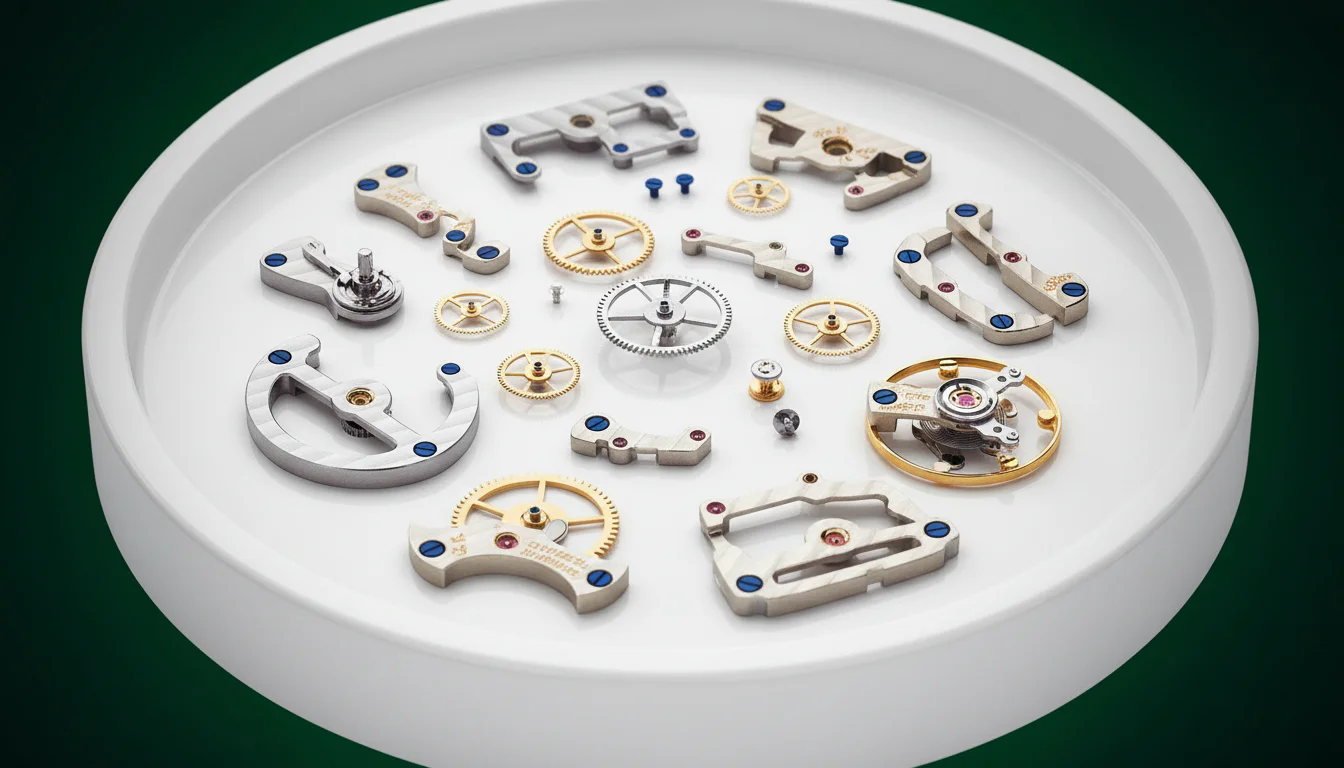 Jewels sit at the pivot points across the movement, seated into the bridges and the main plate.
The types of jewels
Not all jewels do the same job. A full movement uses a few different shapes:
- Hole jewels are doughnut-shaped bearings that the pivots run through. These are the most common.
- Cap jewels sit on top of a hole jewel to control endshake and hold oil, used on the fastest-moving pivots like the balance.
- Pallet jewels are the two small rectangular stones on the pallet fork that lock and release the escape wheel.
- The impulse jewel is the single stone on the balance that receives the push from the fork.
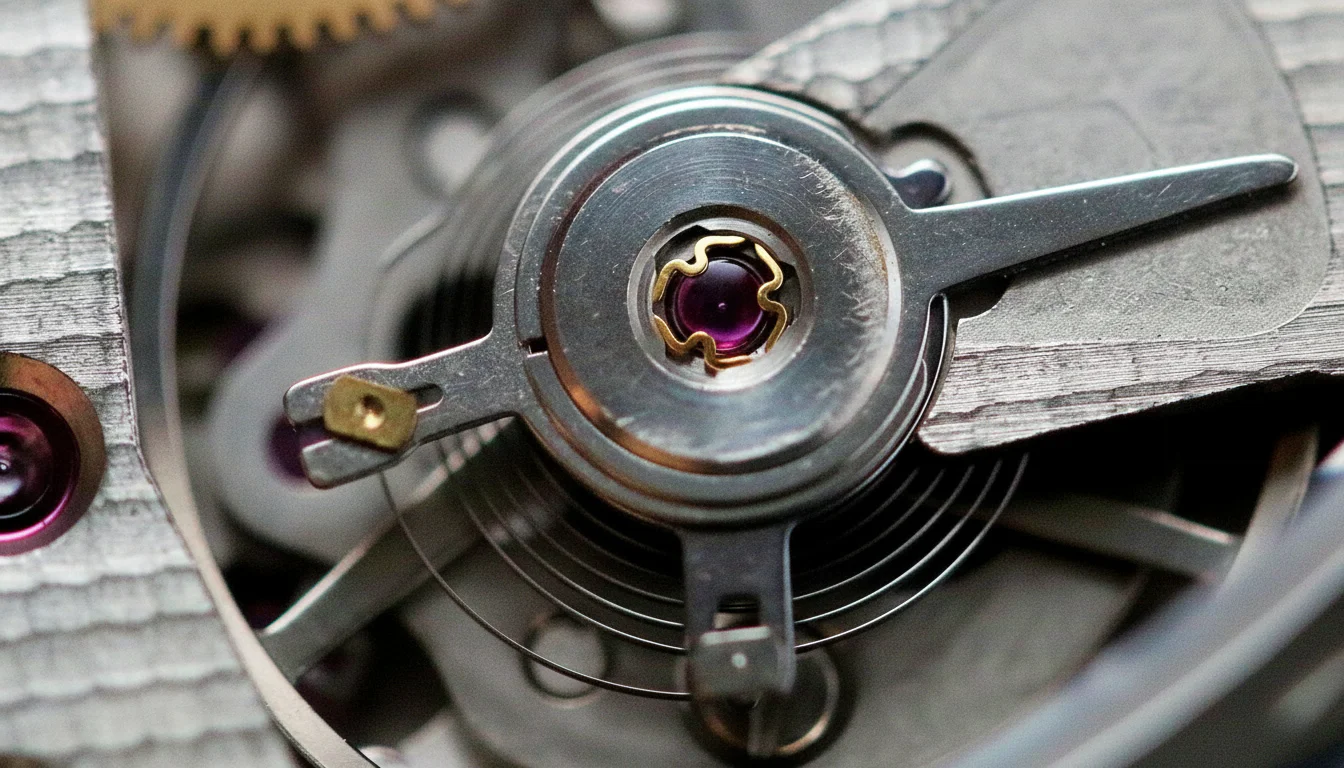 A cap jewel and shock setting on the balance, where friction and impact matter most.
What the jewel count really means
Here is where marketing muddies the water. The 17-jewel standard covers the bearings a simple time-only movement genuinely needs: the balance, the escapement, and the going train. That is a fully jeweled watch.
An automatic adds jewels for the winding rotor and reversing wheels, which is why self-winding movements land around 21 to 25. Complications like a chronograph or calendar add more. So a higher count usually just means a more complex movement, not a better-made one.
When more jewels is meaningless
Some quartz and some novelty mechanical watches carry inflated jewel counts, adding non-functional stones purely for the number on the dial. A 40-jewel quartz watch is not better than a 7-jewel one. Read the count as a clue to the movement's architecture, never as a grade.
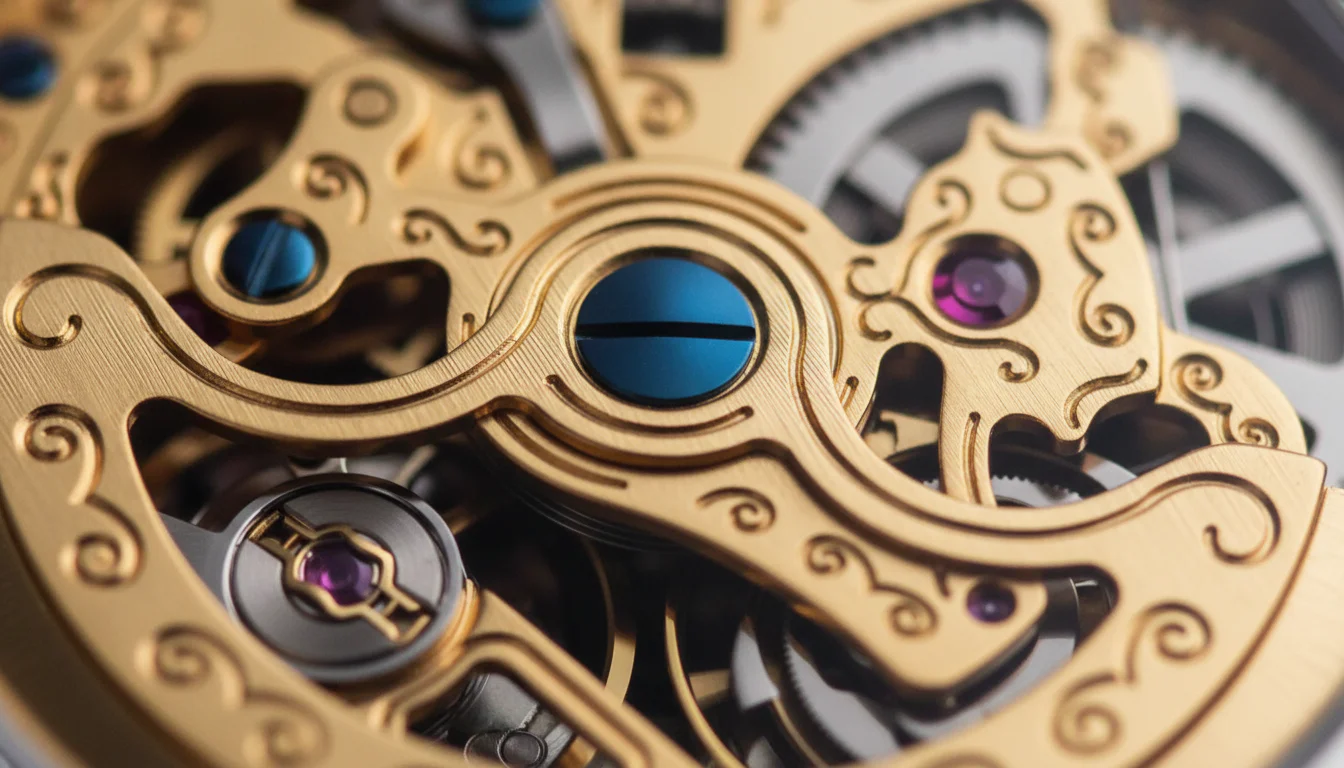 On finished movements, jewels are sometimes set in gold chatons, a decorative nod to how they were held a century ago.
Do jewels wear out
The jewels themselves almost never fail. What ages is the oil around them. As lubrication dries, friction climbs at the jewel, and eventually the pivot can wear even against ruby. This is the real reason a mechanical watch needs periodic service. Our watch servicing guide covers when and why.
A cracked or chipped jewel does happen, usually from a hard impact, and a watchmaker can replace a single jewel during a service. The shock-protection settings on the balance, like Incabloc, exist specifically to keep the most delicate jewels from breaking when the watch gets knocked. If you want the movement basics, our explainer on in-house versus supplied movements covers how calibers are built and sourced.
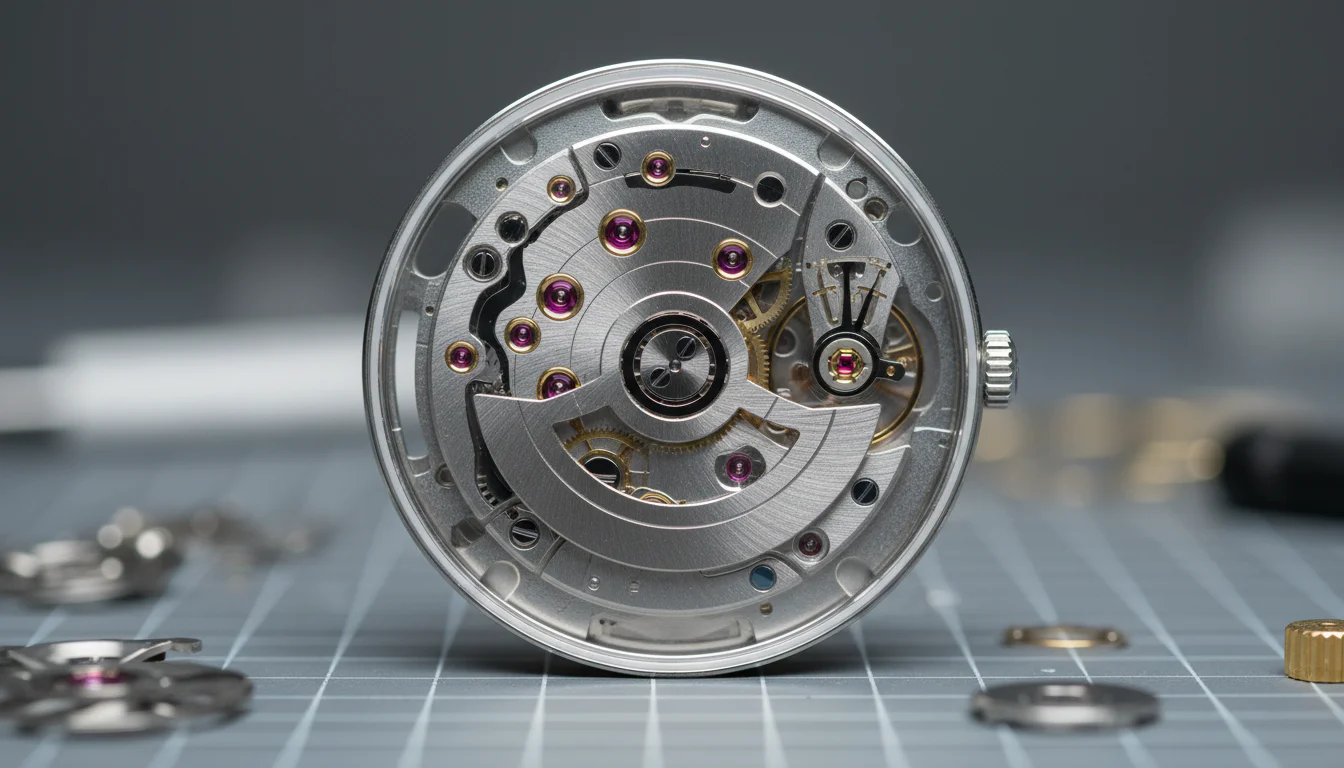 Through a display caseback, the jewels are the easiest way to spot where the movement's working pivots sit.
Frequently asked questions
What are the jewels in a watch movement?
They are synthetic ruby or sapphire bearings set at the pivot points of the gears and balance. Their job is to provide a hard, smooth, low-friction surface so the moving parts wear far more slowly than they would in metal bearings.
Are watch jewels real rubies?
They are real ruby in the material sense, but lab-grown rather than mined. Synthetic corundum is chemically identical to natural ruby, more uniform, and inexpensive, which is why it has been standard since the early 1900s.
How many jewels should a watch have?
A time-only mechanical watch is fully jeweled at 17. Automatics typically run 21 to 25, and complications add more. The right number is whatever the movement's design requires, so count is not a measure of quality.
Does a higher jewel count mean a better watch?
No. A higher count usually just signals a more complex movement, such as an automatic or a chronograph. Some watches pad the number with non-functional jewels, so treat the count as a design clue, not a grade.
Do watch jewels wear out or need replacing?
The jewels rarely wear because ruby is so hard. What degrades is the oil around them, which is why watches need periodic servicing. A jewel can crack from a hard impact, and a watchmaker can replace an individual jewel if needed.
The bottom line
Jewels are not decoration and not a quality score. They are hard little bearings that let a mechanical watch run for decades with minimal wear, and the count on the dial simply reflects how the movement is built. Keep the oil fresh with regular service, and the jewels will outlast everything around them.
Browse authenticated pre-owned mechanical watches at 5dwatches.com.
Written by the 5D Watches desk. We buy, sell, and trade authenticated pre-owned watches every day, and we write these guides from what actually crosses the bench, not from a spec sheet.