Two of the most confused words in watchmaking sound almost identical: chronometer and chronograph. They are not the same thing, and mixing them up is the fastest way to out yourself as new to watches.
A chronograph is a function, a stopwatch built into the watch. A chronometer is a grade of accuracy, a movement certified to keep time within a tight tolerance. One is about what the watch does. The other is about how well it does it. This is a working dealer's plain-English guide to what a chronometer actually is, who certifies it, and why the word matters when you are spending real money.
The short answer: A chronometer is a mechanical watch whose movement has passed an independent precision test, almost always run by Switzerland's COSC, to keep time within -4 to +6 seconds per day. Rolex and Omega both go beyond that baseline with their own stricter, fully cased standards. In February 2026, COSC launched a tougher new tier called the Excellence Chronometer, its first major upgrade in 50 years.
The images in this article were generated with AI for illustration, conditioned on real reference photography of the watches and testing equipment shown. They depict recognizable models but are not photographs of specific watches for sale.
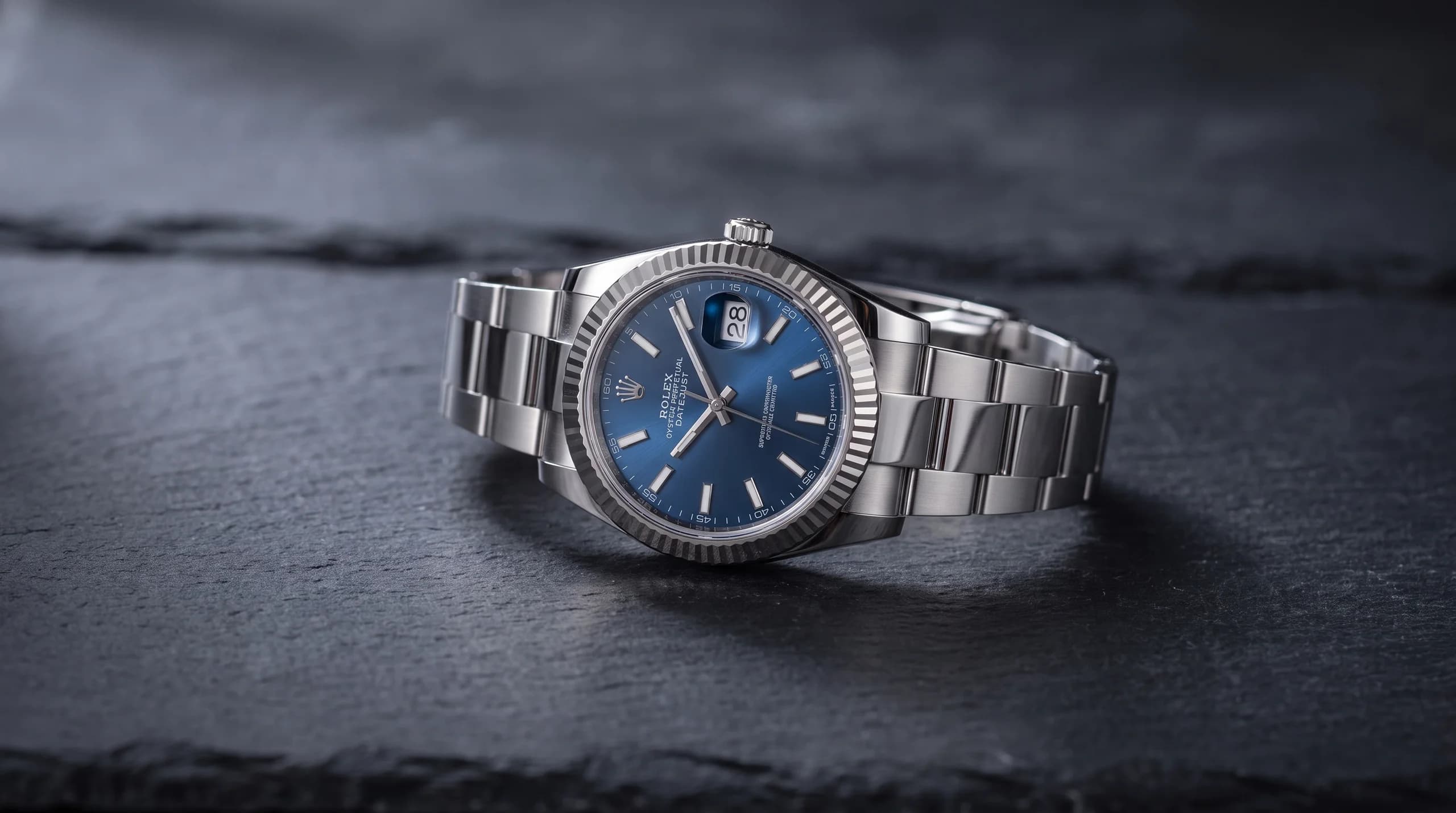
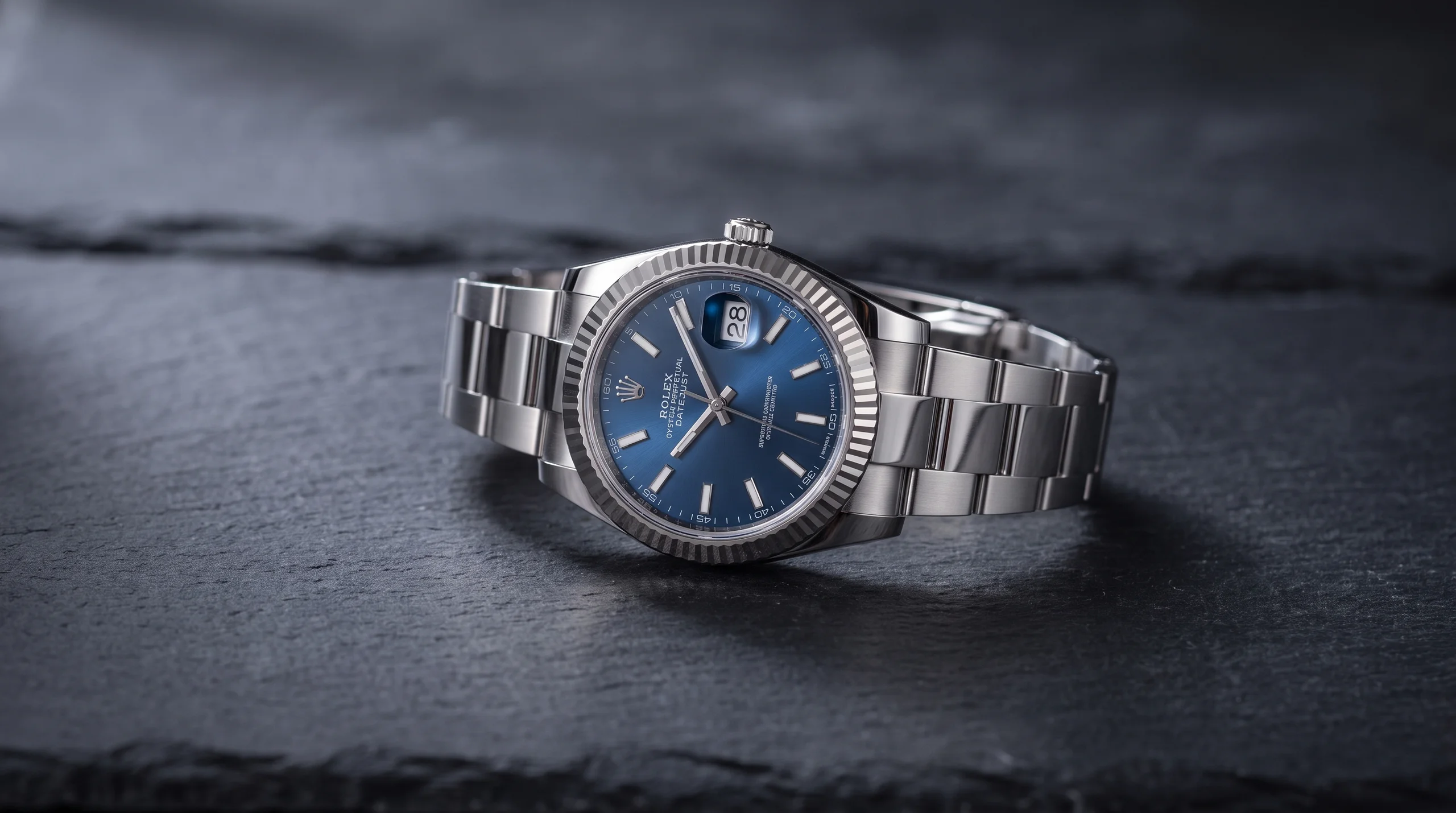 Every modern Rolex, this Datejust included, is a certified chronometer before Rolex even adds its own stricter testing.
Chronometer vs Chronograph: The Difference
Start here, because it trips up almost everyone. A chronograph has pushers and sub-dials and times events like a stopwatch. A chronometer has no special look at all. It is a precision rating you cannot see from the outside.
A watch can be both, one, or neither. A steel Rolex Daytona is a chronograph and a chronometer. A no-date Submariner is a chronometer but not a chronograph. A cheap quartz stopwatch is a chronograph but no one would call it a chronometer. The words rhyme, but they answer completely different questions.
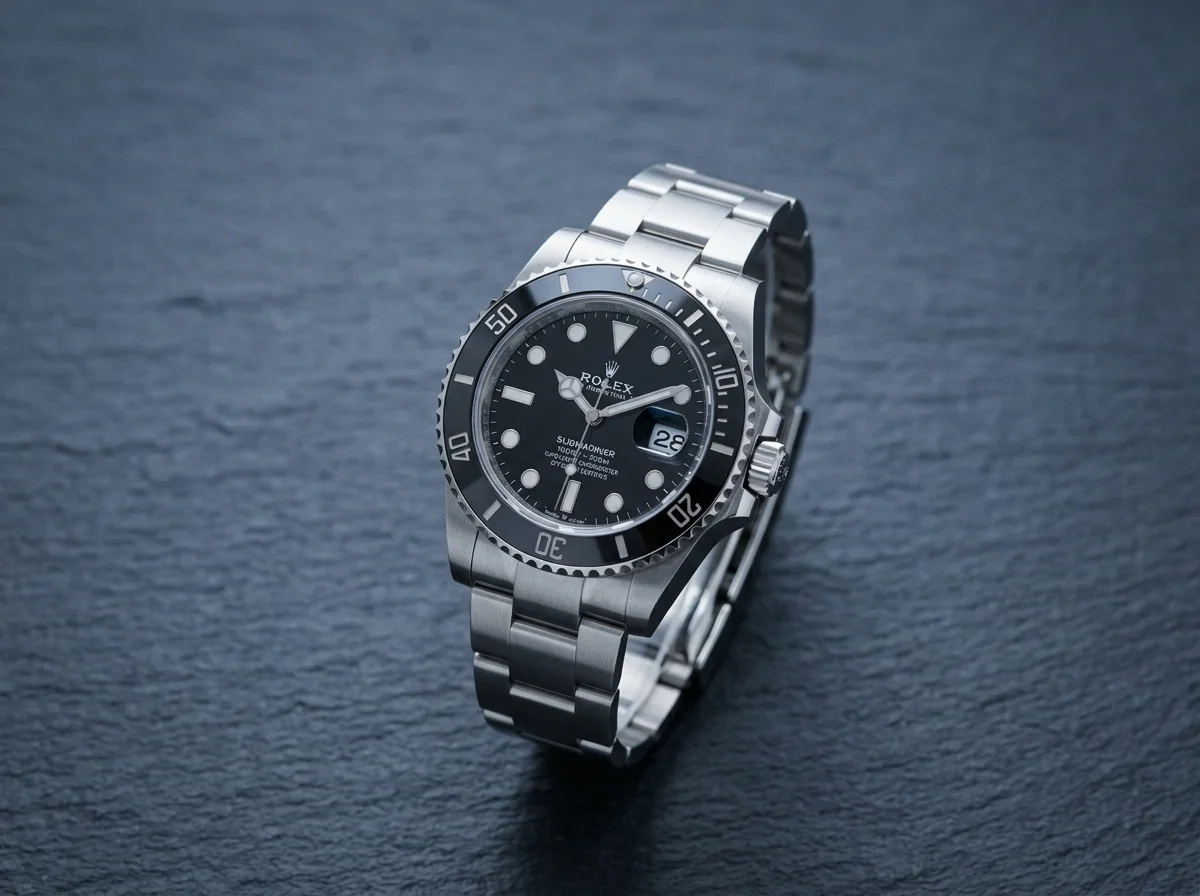 A Submariner is a chronometer but not a chronograph. The rating is invisible; you cannot see it on the dial.
What COSC Certification Actually Means
When a watch is called a chronometer, it almost always means one thing: the movement passed the tests at COSC, the Contrôle Officiel Suisse des Chronomètres, Switzerland's independent testing body.
COSC tests to the ISO 3159 standard, and the bar is specific. Each movement is run for 15 days, in 5 positions, at 3 temperatures (8, 23, and 38 degrees Celsius), and must hold an average daily rate of -4 to +6 seconds per day across the trial. Pass, and the movement earns the chronometer certificate. Fail on any of the seven criteria, and it does not.
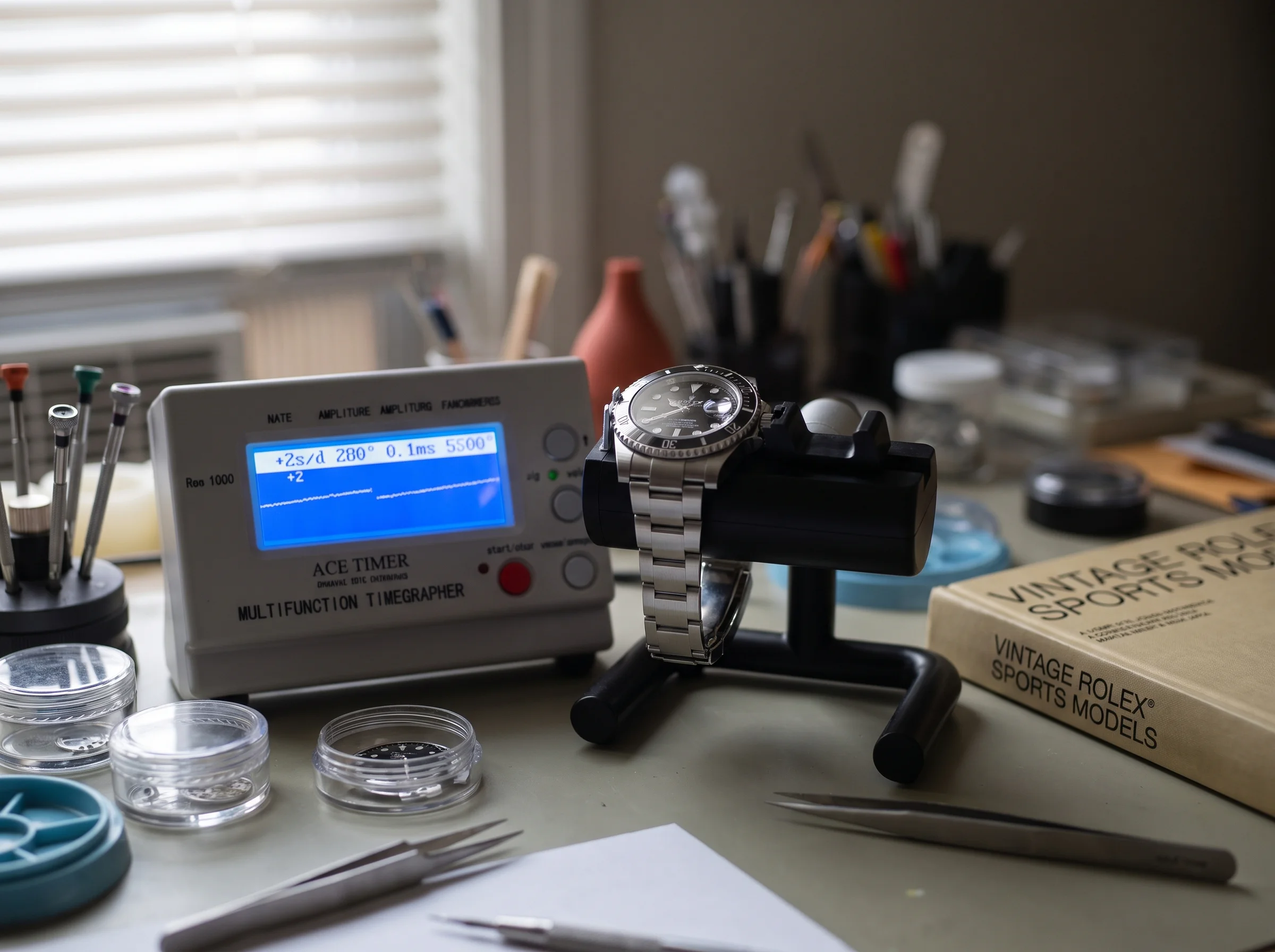 A timing machine, or timegrapher, reads a movement's rate, amplitude, and beat error. It is the everyday tool behind the numbers COSC certifies.
One detail most buyers miss
COSC tests the bare movement, not the finished watch. The movement is certified loose, then cased up afterward, which means the certificate technically covers the engine and not the whole car. That gap is exactly what the newer standards below set out to close.
Who Certifies the Most
COSC certifies a staggering number of watches, well over 1.8 million a year, both mechanical and quartz. A handful of brands account for most of them.
Rolex is by far the largest client. The last year COSC published per-brand numbers, 2015, Rolex certified 795,716 watches, Omega 511,861, and Breitling 147,917. After 2016 the brands asked COSC to stop publishing individual figures, so the exact split is now private, but the order has not meaningfully changed. Rolex, Omega, Breitling, TAG Heuer, and Panerai remain the volume names.
Going Beyond COSC: Rolex and Omega
Here is where it gets interesting for buyers. Both Rolex and Omega treat COSC as the starting line, not the finish, and each adds a second, stricter test on the fully cased watch.
Rolex Superlative Chronometer
Every Rolex movement is COSC-certified first. Then Rolex re-tests the assembled watch in its own labs and guarantees an average rate of -2 to +2 seconds per day, tighter than COSC and centered closer to zero. That is what the "Superlative Chronometer Officially Certified" line on the dial means, and it comes with a 5-year guarantee. The catch: the final testing is internal, not verified by an outside authority.
Omega Master Chronometer (METAS)
Omega takes a different route. Its movements pass COSC, then clear eight further tests certified by METAS, the Swiss Federal Institute of Metrology, an independent government body. Master Chronometer watches are tested fully cased to 0 to +5 seconds per day and must resist magnetic fields up to 15,000 gauss, far beyond the roughly 1,000-gauss threshold where most mechanical watches falter. The trade-off versus Rolex is a slightly wider accuracy window in exchange for third-party verification and serious anti-magnetism. Our Omega Aqua Terra versus Rolex Datejust comparison puts a Master Chronometer against a Superlative Chronometer in daily wear, and our Grand Seiko vs Omega Seamaster comparison covers how Master Chronometer certification stacks up against Grand Seiko's very different approach to accuracy, Spring Drive.
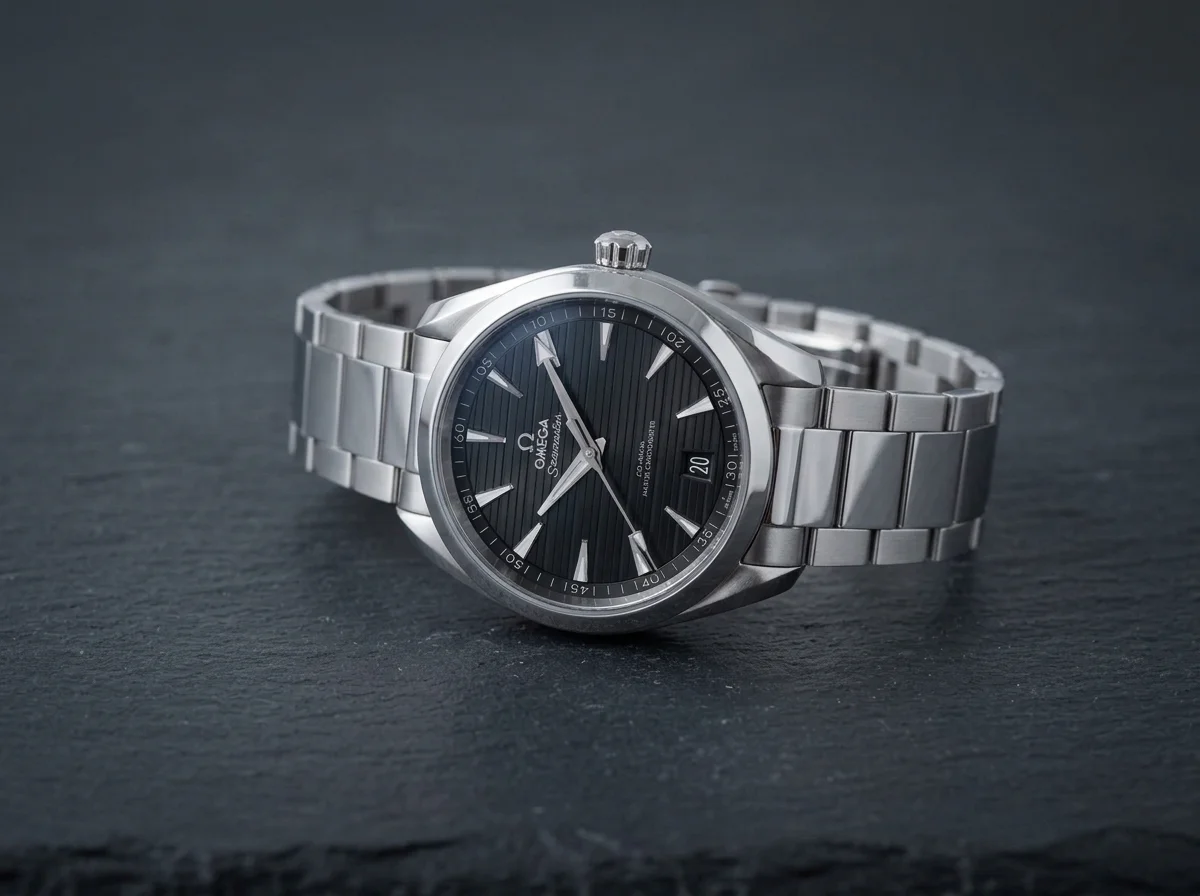 Omega's Aqua Terra is a METAS Master Chronometer, tested cased and independently to 15,000 gauss.
The New 2026 Standard: Excellence Chronometer
On February 12, 2026, the 50th anniversary of the ISO 3159 standard, COSC announced its first major upgrade in half a century: the Excellence Chronometer certification.
It answers the old criticism head-on. To earn it, a watch must first pass standard COSC certification, then clear a second round of testing on the fully cased, assembled watch. The accuracy bar tightens to -2 to +4 seconds per day, a robotic system simulates a full 24 hours of average wrist wear under semi-dynamic conditions, and the test adds checks for magnetic resistance and power reserve. In short, COSC moved toward what Rolex and Omega were already doing in-house, and made it an open, independent standard any brand can use.
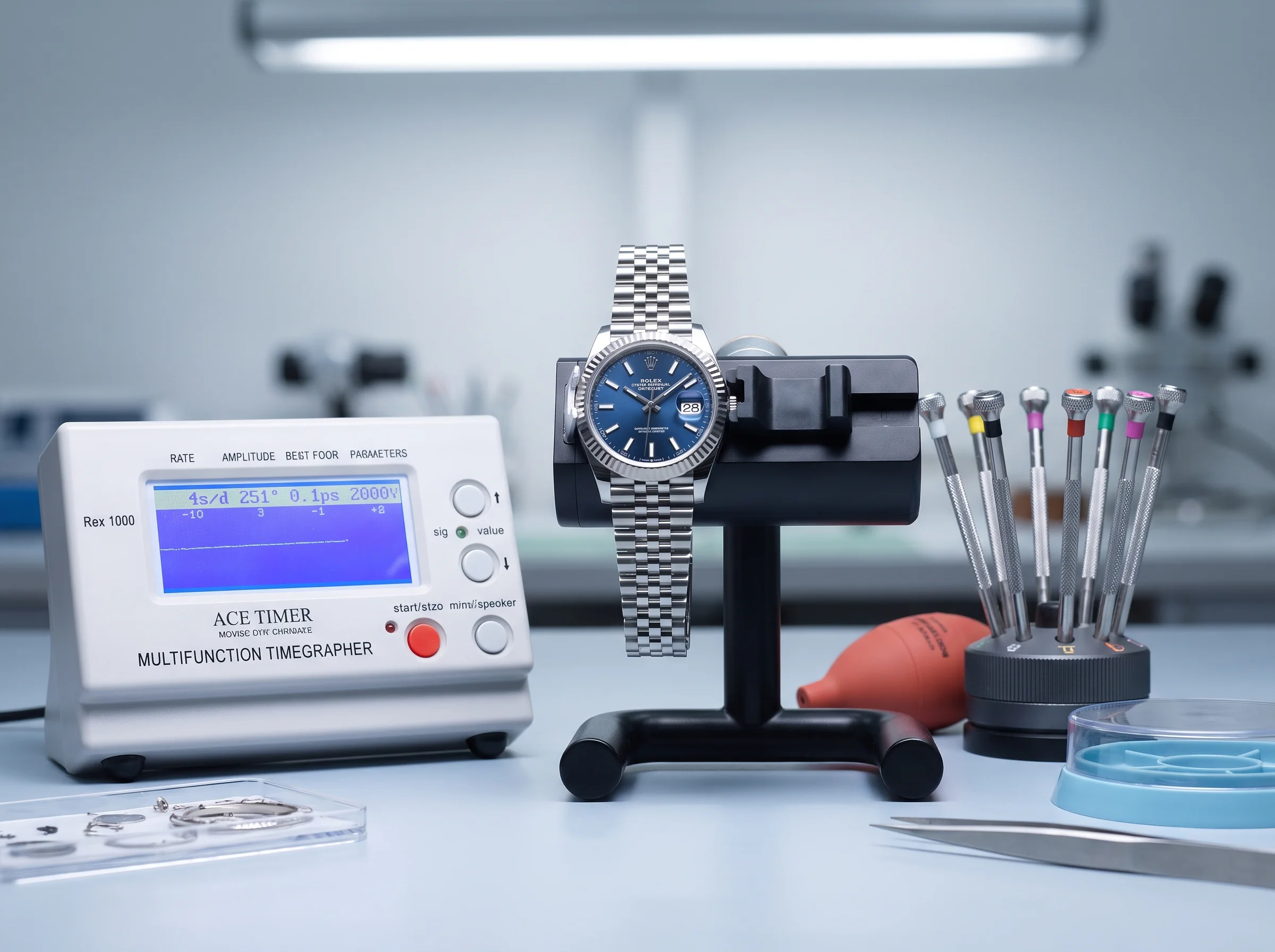 Accuracy is measured in multiple positions, dial up, crown down, and more, because gravity changes how a movement runs. The Excellence Chronometer takes this to the fully cased watch.
The Standards at a Glance
Here is how the main certifications compare.
| Certification | Certified by | Accuracy per day | Tested as | Notable |
|---|---|---|---|---|
| COSC Chronometer | COSC (independent) | -4 / +6 sec | Bare movement | The baseline, ISO 3159, 15 days |
| Excellence Chronometer | COSC (independent) | -2 / +4 sec | Cased watch | New Feb 2026, adds wrist simulation |
| Superlative Chronometer | Rolex (in-house, post-COSC) | -2 / +2 sec | Cased watch | 5-year guarantee, internal testing |
| Master Chronometer | METAS (independent, post-COSC) | 0 / +5 sec | Cased watch | 15,000 gauss magnetic resistance |
Does a Chronometer Rating Matter When You Buy?
For most buyers, a chronometer certification is a genuine mark of quality, but it should not be the only thing you chase. It tells you the movement met a real precision standard. It does not tell you the watch is beautiful, comfortable, or a good value.
Plenty of superb watches are not chronometer-certified, including many from Patek Philippe and independents who test to their own internal standards. And a chronometer that has not been serviced in fifteen years will not hold its rated accuracy anyway, which is why buying from a seller who tests and authenticates matters more than the words on the dial. For how much accuracy actually matters, and where the chronometer ladder stacks up against Grand Seiko's Spring Drive, read our take on the watch accuracy race. And if you want the mechanics behind the numbers, our explainer on how a moonphase complication works is a good companion read. Accuracy testing measures how well a movement keeps time; it says nothing about how the winding system itself works, which is a separate story we cover in our micro-rotor movements explainer.
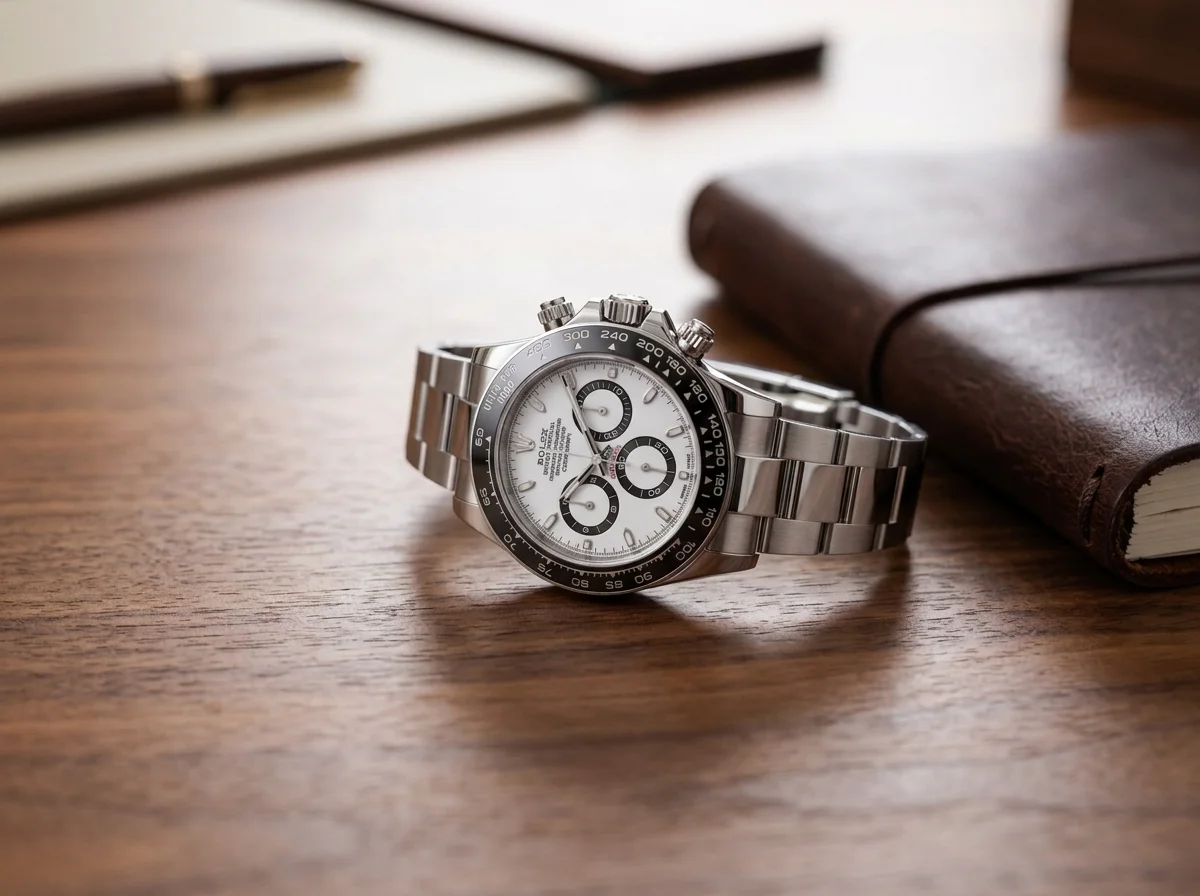 The steel Daytona is both a chronograph and a chronometer, the rare watch that earns both words honestly.
The Bottom Line
A chronometer is a certified-accurate watch, a chronograph is a stopwatch, and knowing the difference is basic fluency. COSC sets the -4/+6 baseline, Rolex and Omega push past it with their own cased standards, and as of 2026 COSC's Excellence Chronometer raises the open bar for everyone. Treat the rating as one quality signal among several, not a guarantee of a great buy.
A certification is only as good as the last service behind it. Before you buy any chronometer, from us or anyone else, ask when it was last serviced. That single answer tells you more about how the watch actually keeps time than the words printed on the dial.
Frequently Asked Questions
What is the difference between a chronometer and a chronograph?
A chronograph is a function, a stopwatch built into the watch with pushers and sub-dials to time events. A chronometer is a grade of accuracy, a movement independently certified to keep time within a tight tolerance. A watch can be one, both, or neither. A steel Rolex Daytona, for example, is both a chronograph and a certified chronometer.
What does COSC certification mean?
COSC is the Contrôle Officiel Suisse des Chronomètres, Switzerland's independent chronometer testing body. It tests a movement to the ISO 3159 standard over 15 days, in 5 positions and at 3 temperatures, and certifies it as a chronometer only if it holds an average rate of -4 to +6 seconds per day. COSC tests the bare movement, not the finished, cased watch.
Is a Rolex a chronometer?
Yes. Every modern Rolex is a Superlative Chronometer. Each movement passes COSC certification first, then Rolex re-tests the fully cased watch in-house to a stricter -2 to +2 seconds per day and backs it with a 5-year guarantee. That is what the "Superlative Chronometer Officially Certified" text on the dial refers to.
What is the difference between Superlative Chronometer and Master Chronometer?
Both start with COSC certification, then add a second test on the cased watch. Rolex's Superlative Chronometer is tested internally to -2/+2 seconds per day. Omega's Master Chronometer is certified independently by METAS to 0/+5 seconds per day and to 15,000 gauss of magnetic resistance. Rolex has a slightly tighter accuracy window; Omega offers third-party verification and stronger anti-magnetism.
What is the new Excellence Chronometer certification?
Launched by COSC on February 12, 2026, the Excellence Chronometer is a stricter tier introduced on the 50th anniversary of the ISO 3159 standard. A watch must first pass standard COSC certification, then clear a second round on the fully cased watch, tightening accuracy to -2 to +4 seconds per day, adding a 24-hour robotic wrist-wear simulation, and checking magnetic resistance and power reserve.