The Short Answer
The co-axial escapement is George Daniels' 1970s invention that Omega put into production in 1999, the first genuinely new practical watch escapement in about 250 years. Where the standard Swiss lever escapement transfers energy through sliding friction between its parts, the co-axial design uses a three-level system of escape wheel, co-axial wheel, and lever that swaps most of that sliding contact for radial and lateral impulses instead.
The promise was less friction, less wear, and less need for lubrication. The reality, according to watchmakers who actually service them, is more complicated: co-axial movements still need oil, and servicing one takes more skill and more oiling points than a standard lever escapement, not fewer.
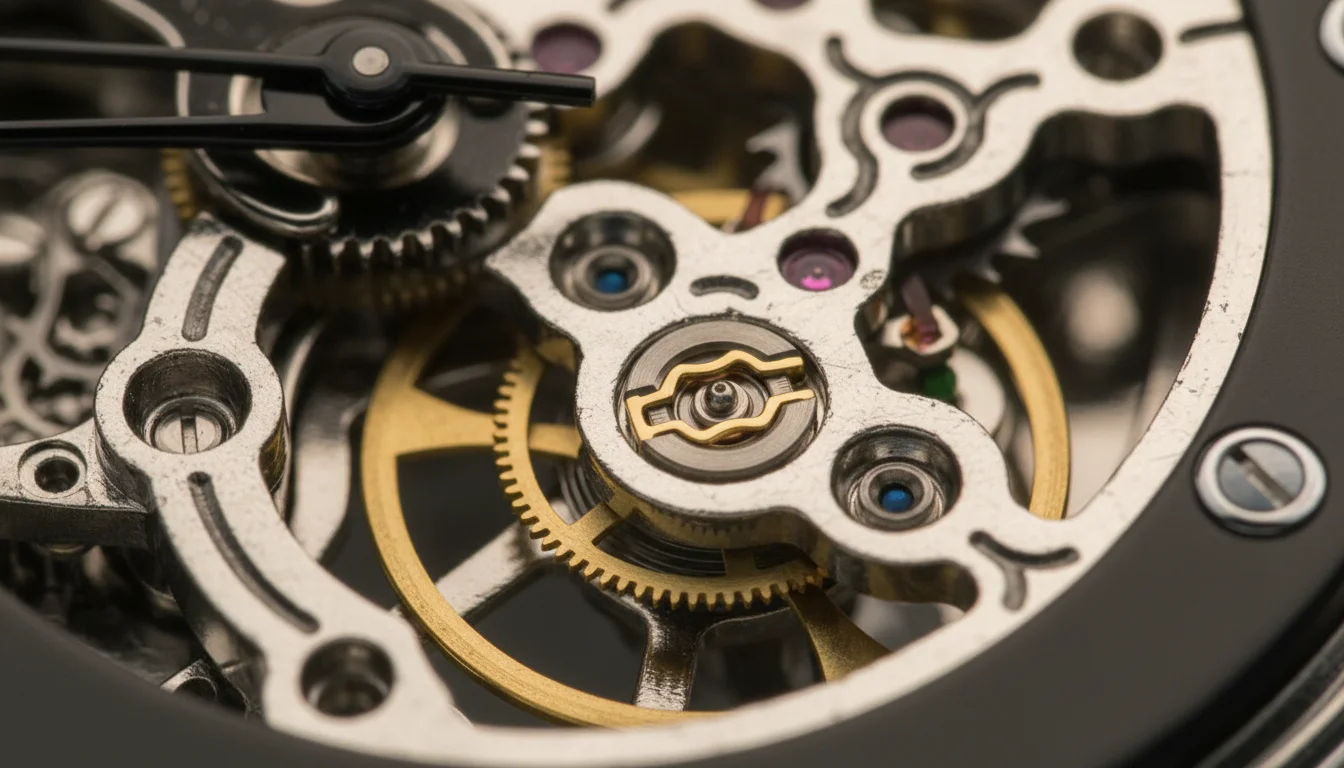 The co-axial escapement adds a second escape wheel stacked on the same axis as the first, the detail that gives the mechanism its name.
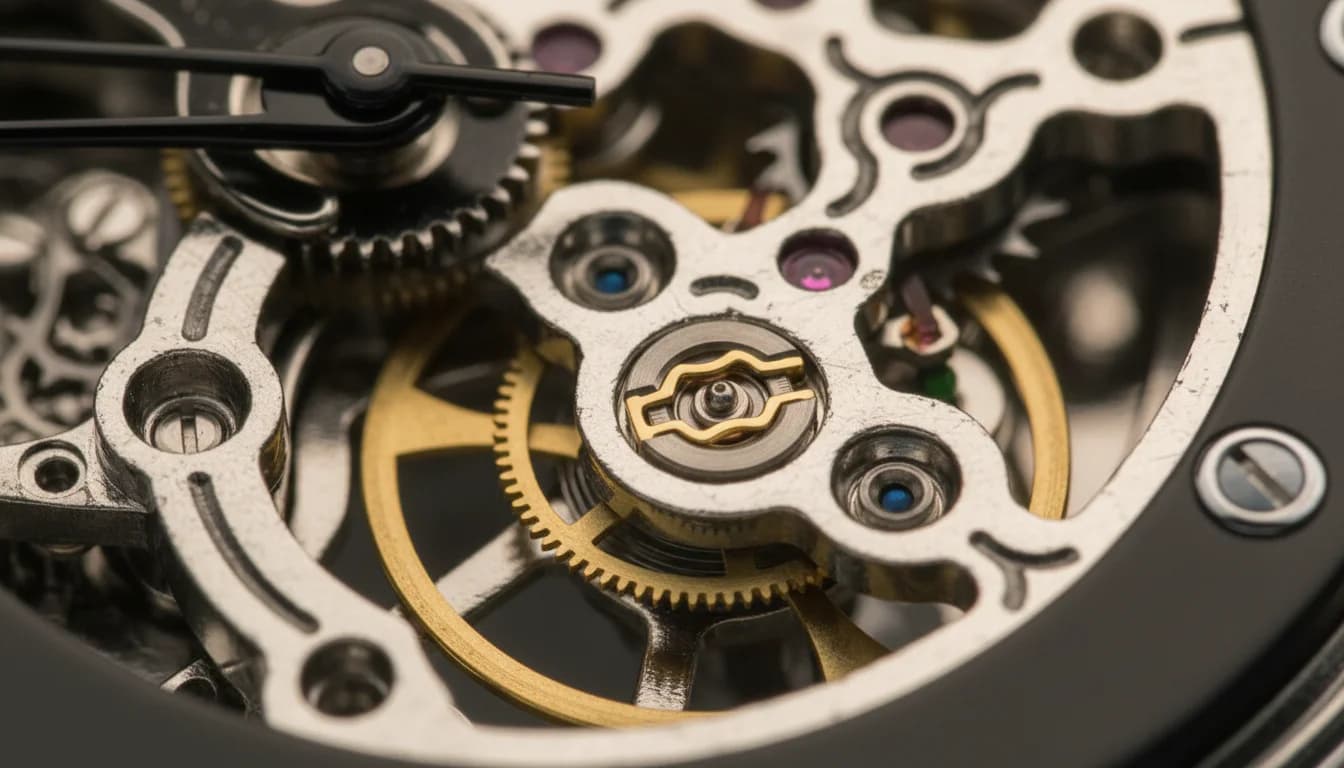
The watch photos in this article were generated with AI image tools, conditioned on real reference photography of Omega co-axial movements so the mechanical layout is accurate to the real thing.
The Watchmaker Who Built It Alone
George Daniels grew up poor in London and became, by most accounts, the finest independent watchmaker of the 20th century, building complete watches by hand from a small workshop rather than a factory floor. He developed the co-axial escapement in the 1970s, decades before any manufacturer adopted it, at a moment when quartz watches had already convinced most of the industry that mechanical escapement design was a solved, closed problem.
Omega licensed the design and brought it to market on April 12, 1999, in a limited-run De Ville automatic of 999 pieces. Nicolas Hayek, then running the Swatch Group, backed the project at a time when reviving genuine mechanical innovation was still a gamble against a market that had only recently rediscovered mechanical watches at all.
Why the Standard Lever Escapement Needed Replacing
A conventional Swiss lever escapement moves energy from the escape wheel to the balance wheel through parts that slide against each other under load. That sliding contact is where friction lives, and friction is what lubricating oil exists to manage. Oil degrades over time, and as it does, the escapement's performance drifts, which is the main reason a mechanical watch needs periodic servicing at all.
How the Co-Axial Mechanism Actually Works
The co-axial escapement splits the job across three components: two escape wheels mounted on a shared axis (hence the name) and a lever that coordinates impulses between them. Instead of relying on sliding friction to deliver power to the balance, the design uses radial and lateral impulses, contact that pushes more directly and slides less.
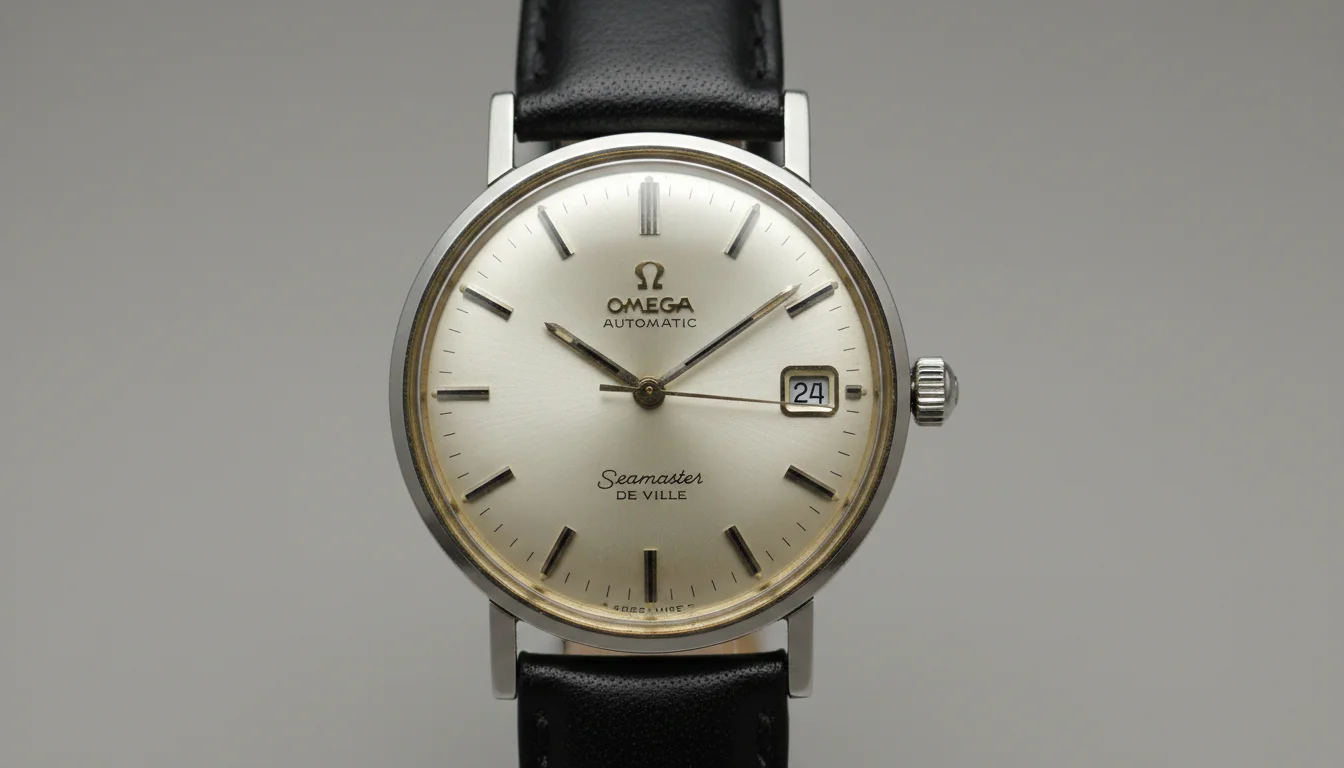 Omega's original 1999 co-axial De Ville, limited to 999 pieces, was the first watch to carry Daniels' escapement into series production.
Less Friction, Not Less Oil
The theoretical case was straightforward: less sliding friction should mean less wear on the escapement's contact surfaces and, in principle, less dependence on the lubricant that normally protects them. That is the version of the story most of Omega's own marketing has told since 1999.
The Honest Trade-Off
In practice, watchmakers who actually work on co-axial movements tell a more complicated story. Roger Smith, who trained under Daniels himself, has said lubrication is still applied to the escape wheel teeth, just as Daniels always intended, not to cut friction but to prevent oxidative damage to the metal over time. The escapement was never meant to run completely dry.
Servicing Is Harder, Not Easier
Because of that oiling complexity, co-axial movements generally require an Omega-trained watchmaker with specific hands-on experience, and independent watchmakers not authorized by Omega often decline the work outright. The promised extension in service intervals has not clearly materialized either: the rest of a co-axial watch, from the mainspring barrel to the keyless works, still runs on the same service schedule as any other mechanical movement, so the escapement's own durability gains do not necessarily stretch the whole watch's maintenance timeline.
Does It Actually Improve Accuracy?
Not on its own. Reduced friction is a durability and wear argument, not an accuracy one, and watchmakers who service both escapement types generally agree a well-adjusted Swiss lever escapement can keep time just as well as a co-axial equivalent. Omega's real accuracy gains over the past two decades have come more from METAS Master Chronometer certification, silicon hairsprings, and magnetic resistance testing than from the escapement type alone.
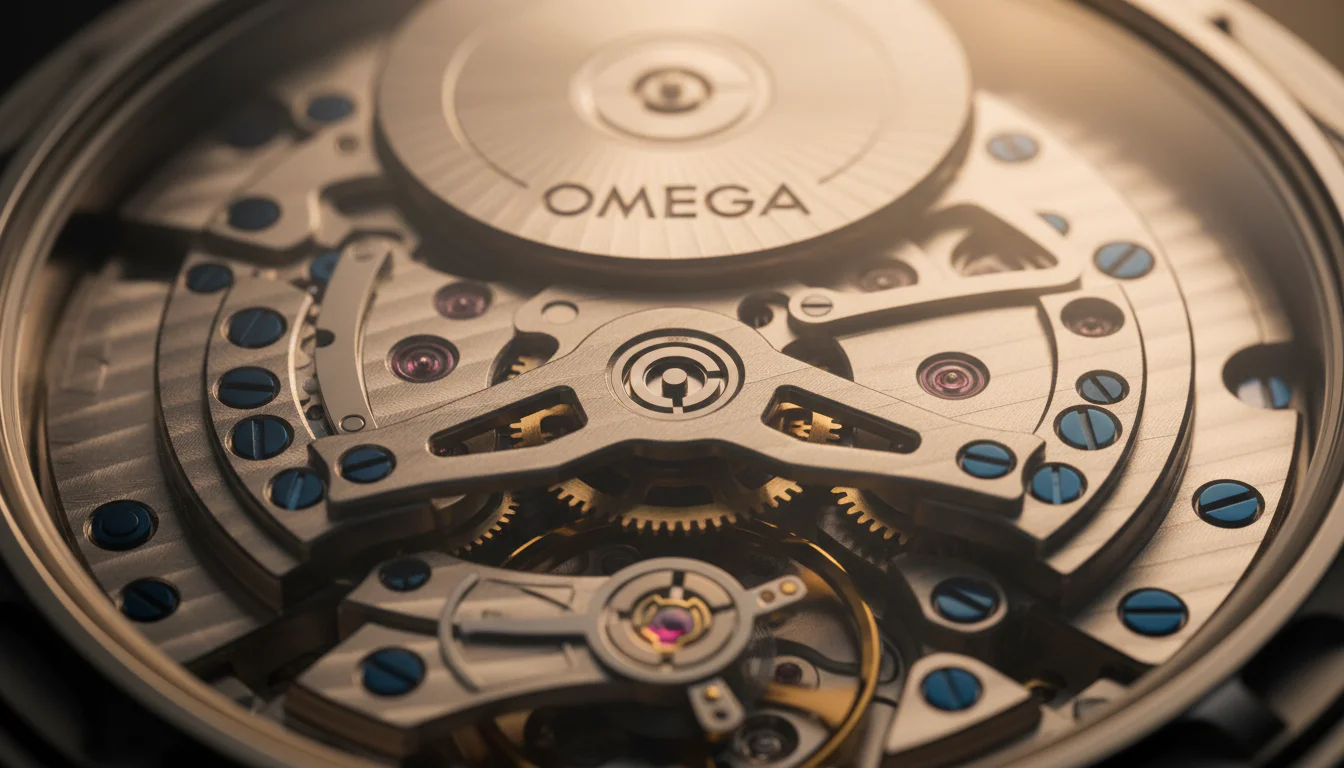 Most modern Omega calibers, including current Speedmaster and Seamaster movements, now run some version of the co-axial escapement as standard.
Where Co-Axial Sits Among Modern Escapement Alternatives
Daniels' invention was the first crack in a quarter-millennium of lever-escapement consensus, but it was not the last. Rolex introduced its own lubrication-reduced Chronergy escapement in 2015, still lever-based but re-engineered for efficiency, and Grand Seiko has pursued a dual-impulse escapement of its own. None of these fully abandoned the lever architecture Mudge established in 1754. Co-axial remains the one built on a genuinely different mechanical principle.
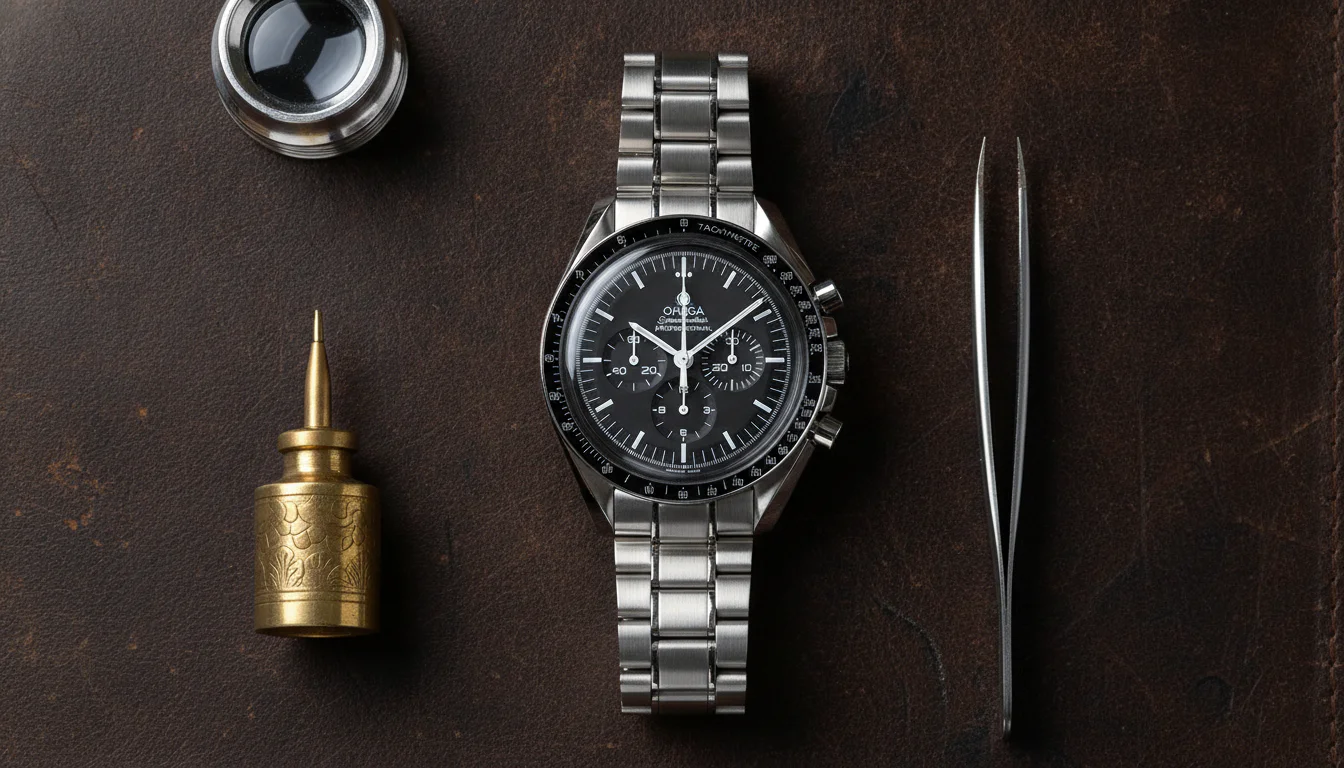 Servicing a co-axial escapement correctly takes more oiling points and more specific training than a standard lever escapement, one honest cost behind the friction-reduction pitch.
What This Means When Buying Pre-Owned
A pre-owned co-axial Omega is not a red flag. It is a normal, well-proven mechanism at this point, over 25 years into production across most of the catalog. The one thing worth confirming is service history: because the escapement takes specialized attention, a watch serviced by an independent watchmaker unfamiliar with co-axial oiling points carries more risk than one serviced through Omega's own network.
FAQ
What is a co-axial escapement?
A co-axial escapement is George Daniels' escapement design, adopted by Omega starting in 1999, that uses a three-level system of two escape wheels and a lever to deliver power to the balance through radial and lateral impulses rather than the sliding friction a standard Swiss lever escapement relies on.
Who invented the co-axial escapement?
George Daniels, an independent English watchmaker, developed it in the 1970s. Omega licensed the design and brought it to market in 1999, the first new practical watch escapement design in roughly 250 years.
Does a co-axial escapement need less oil than a standard escapement?
No, not in the way it was originally marketed. It still requires lubrication, and a two-level co-axial escapement actually needs more individual oiling points than a standard lever escapement, making it more demanding to service correctly, not less.
Does the co-axial escapement make a watch more accurate?
Not by itself. It is primarily a friction and wear-reduction design. Omega's real accuracy improvements over the past two decades come more from Master Chronometer certification and materials science than from the escapement type alone.
Is it more expensive to service an Omega with a co-axial movement?
Generally yes. The added oiling complexity means co-axial movements typically require an Omega-trained watchmaker, and independent watchmakers without that specific training often will not take the work.