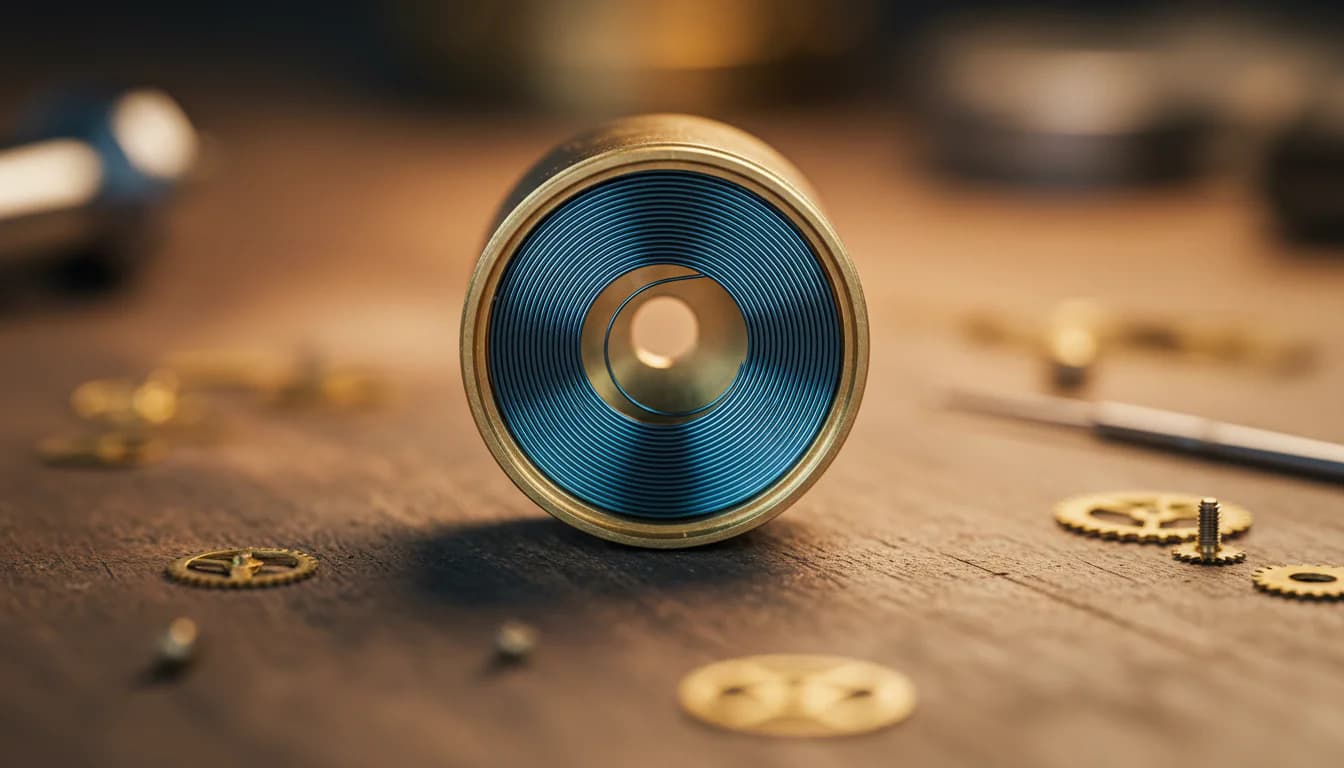
Every mechanical watch runs on a wound spring, and that spring is the mainspring. It is a thin ribbon of hardened steel coiled inside a container called the barrel, and it stores the energy that powers everything else. Wind the watch and you are tensioning the mainspring. Everything the movement does, it does by slowly letting that spring unwind.
So here is a plain-English explainer on what the mainspring and barrel are, how they store and release energy, why the mainspring wears out, and how it sets the power reserve. It is where a watch gets its life.
The images in this article were generated by AI from real reference photographs of watch movements. They are illustrations, not photos of a specific watch for sale.
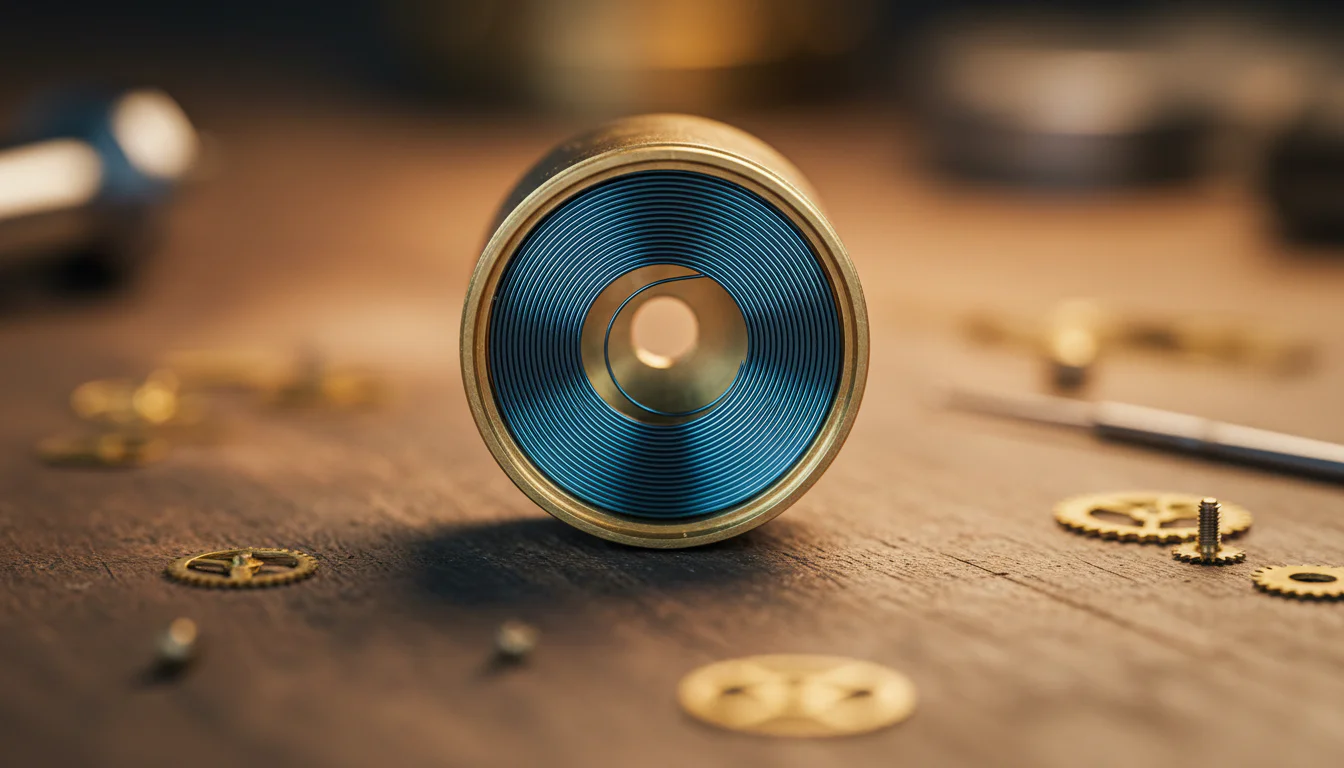 The mainspring coiled inside its barrel: the fuel tank of a mechanical watch.
The short answer
The mainspring is a coiled steel spring that stores energy when you wind the watch. It lives inside the barrel, a round toothed container, and as it slowly unwinds it drives the gear train and powers the watch. How much energy it stores sets the power reserve, and the mainspring is a wear part replaced at every full service.
What the mainspring and barrel do
Think of the mainspring as the fuel tank and the barrel as its housing. Winding the watch, by hand or by the automatic rotor, coils the mainspring tighter and stores energy in it.
The barrel is a round drum with teeth around its edge. As the mainspring unwinds, it turns the barrel, and the barrel's teeth drive the first wheel of the gear train. That is how stored spring energy becomes turning hands.
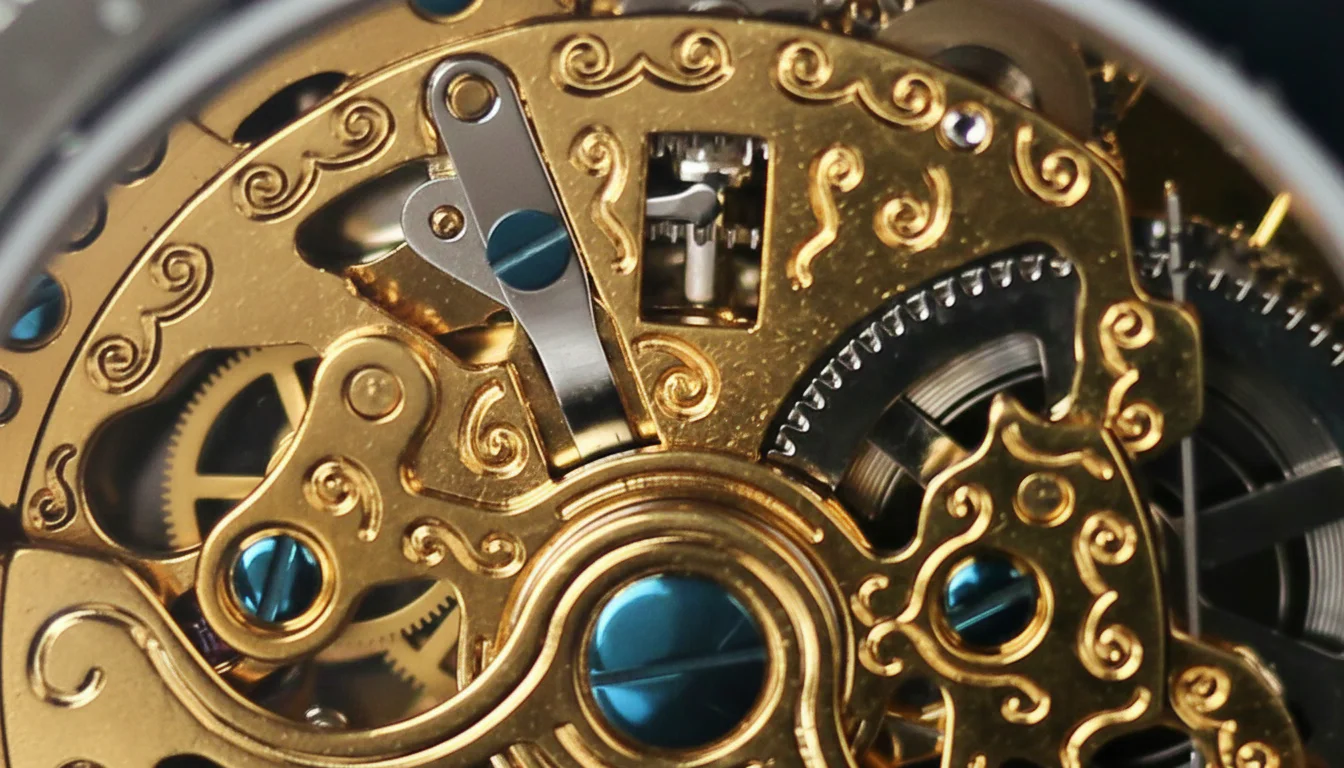 The toothed barrel drives the gear train as the mainspring unwinds inside it.
How energy is stored and released
Winding tensions the mainspring against the barrel wall. A ratchet and click hold that tension so it cannot unwind backward through the crown.
From there, the energy flows in one controlled direction: the mainspring pushes the barrel, the barrel drives the gears, and the escapement releases it all in tiny, even steps. That metered release is what our guide to the escapement explains.
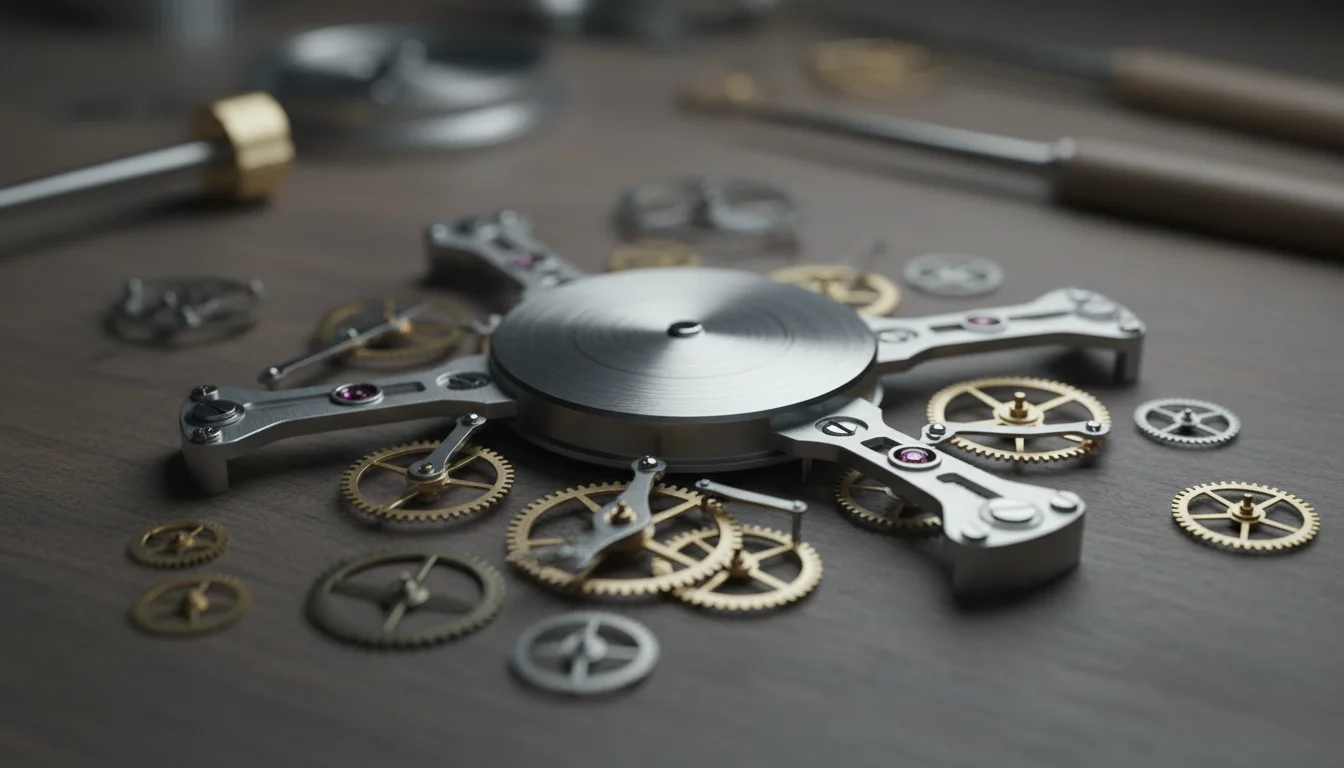 The barrel sits under its own bridge, feeding energy to the rest of the movement.
How the mainspring sets the power reserve
The length and strength of the mainspring largely determine the power reserve, meaning how long the watch runs on a full wind. A longer or more efficient mainspring stores more energy and runs longer.
This is why modern movements advertising 70 or 80 hours of reserve use longer mainsprings or twin barrels. Our guide to power reserve covers what those numbers mean in daily use.
Automatic watches and the slipping bridle
An automatic watch could over-wind its mainspring, since the rotor keeps adding energy as you move. To prevent that, automatic mainsprings have a slipping bridle at the outer end that lets the spring slip against the barrel wall once it is fully wound. That is why you cannot over-wind a modern automatic.
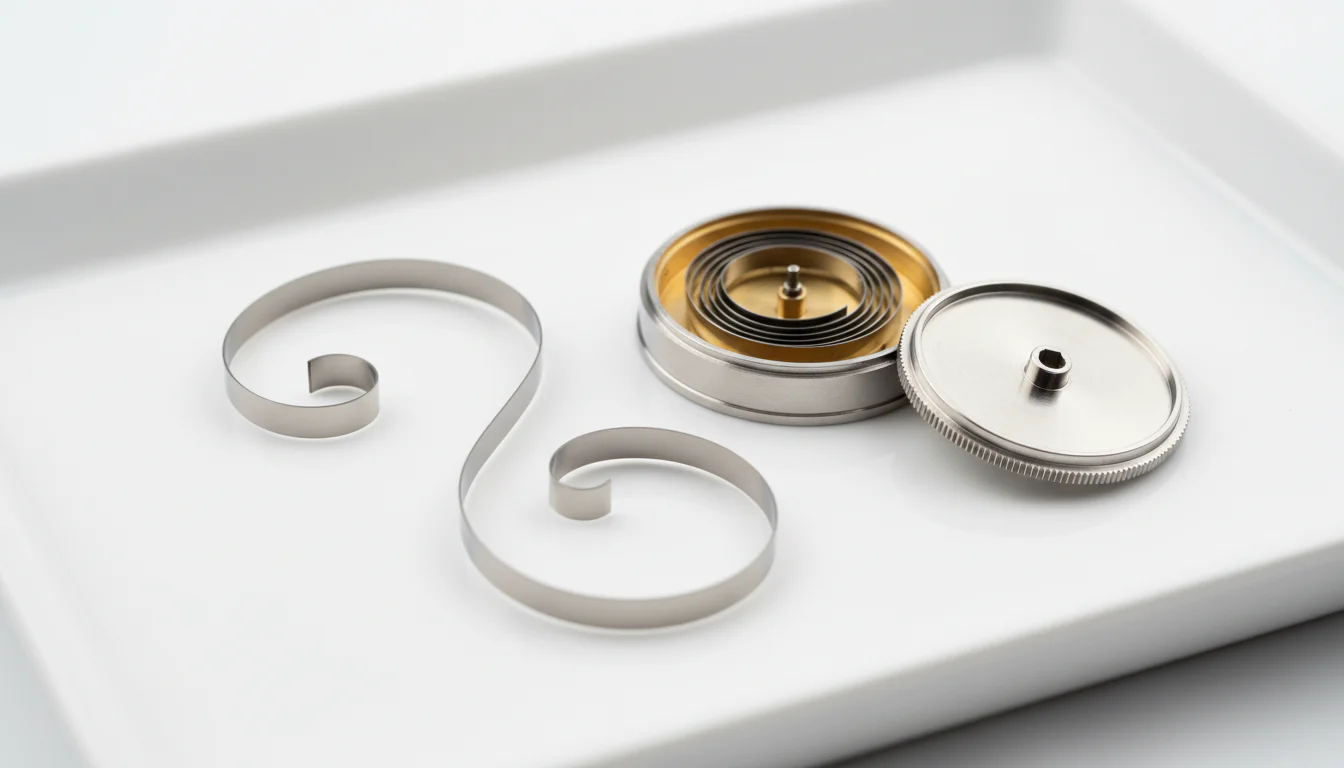 Uncoiled, the mainspring is just a long, precisely shaped ribbon of spring steel.
Why the mainspring is a wear part
The mainspring flexes millions of times over its life, and old ones lose their shape and strength. A tired mainspring gives a shorter power reserve and weaker torque, which hurts timekeeping. Modern alloys like Nivaflex resist this far better than old carbon steel, but nothing lasts forever.
That is why a proper service replaces the mainspring along with the gaskets and lubrication. If the barrel or spring wears badly, the watch simply will not hold a full reserve. Our watch servicing guide covers when that matters.
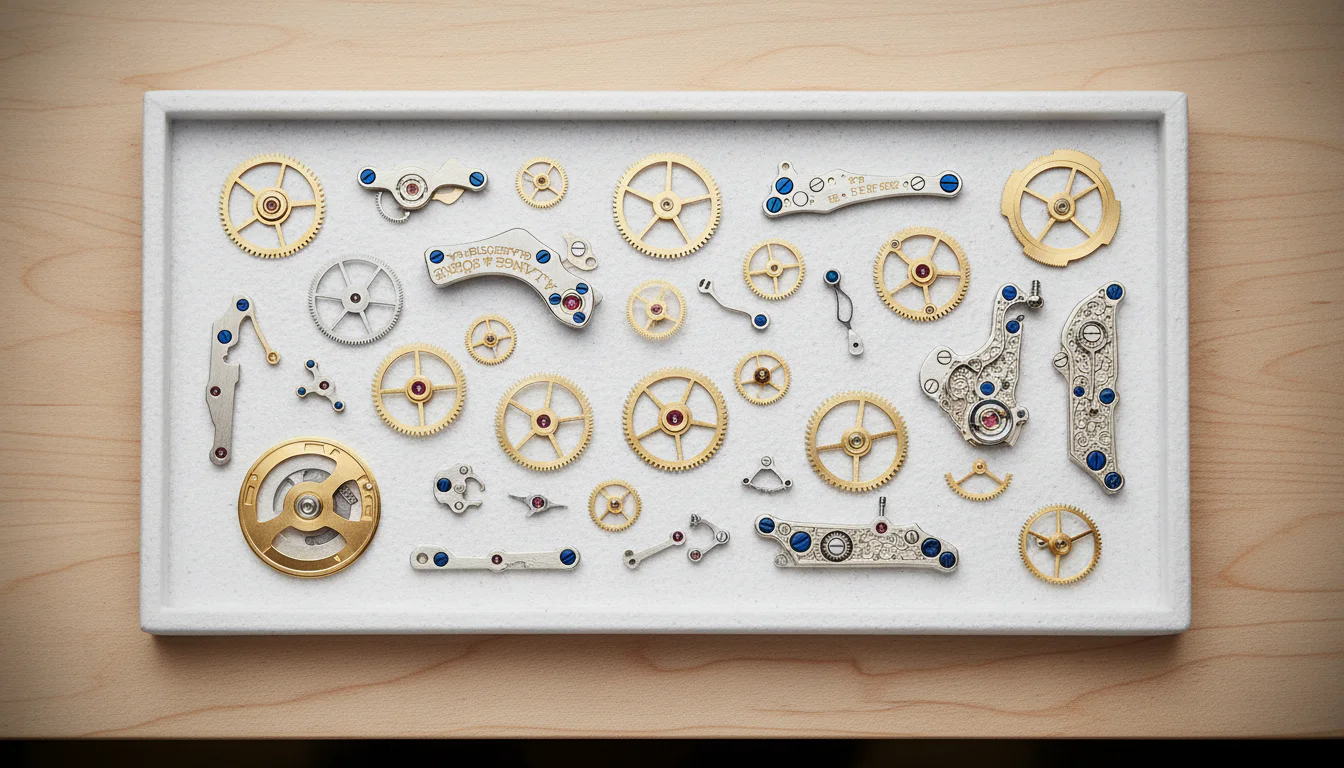 During a service, the barrel comes out and the mainspring is inspected or replaced.
Frequently asked questions
What is a mainspring in a watch?
A mainspring is a coiled ribbon of spring steel that stores the energy powering a mechanical watch. Winding the watch tensions the mainspring, and as it slowly unwinds inside the barrel it drives the gear train and moves the hands.
What is the barrel in a watch movement?
The barrel is the round, toothed container that houses the mainspring. As the mainspring unwinds, it turns the barrel, and the barrel's teeth drive the first wheel of the gear train, transferring the stored energy into the movement.
How does the mainspring affect power reserve?
The length and efficiency of the mainspring largely set the power reserve. A longer or more advanced mainspring stores more energy and runs longer, which is why movements with 70 or 80 hour reserves use longer springs or multiple barrels.
Can you over-wind an automatic watch?
No. Automatic mainsprings have a slipping bridle at the outer end that lets the spring slip against the barrel wall once fully wound. Hand-wound watches can be wound until they stop, but you should not force them past that point.
Does the mainspring wear out?
Yes. The mainspring flexes constantly and gradually loses shape and strength, which shortens the power reserve. It is a wear part replaced during a full service, along with fresh lubrication and new gaskets.
The bottom line
The mainspring and barrel are where a mechanical watch stores its life. Wind the watch, tension the spring, and it feeds energy through the barrel to the rest of the movement for hours or days. It sets the power reserve, it cannot be over-wound on an automatic, and it wears out, which is one more reason a watch needs a service on time.
Browse authenticated pre-owned mechanical watches at 5dwatches.com.
Written by the 5D Watches desk. We buy, sell, and trade authenticated pre-owned watches every day, and we write these guides from what actually crosses the bench, not from a spec sheet.