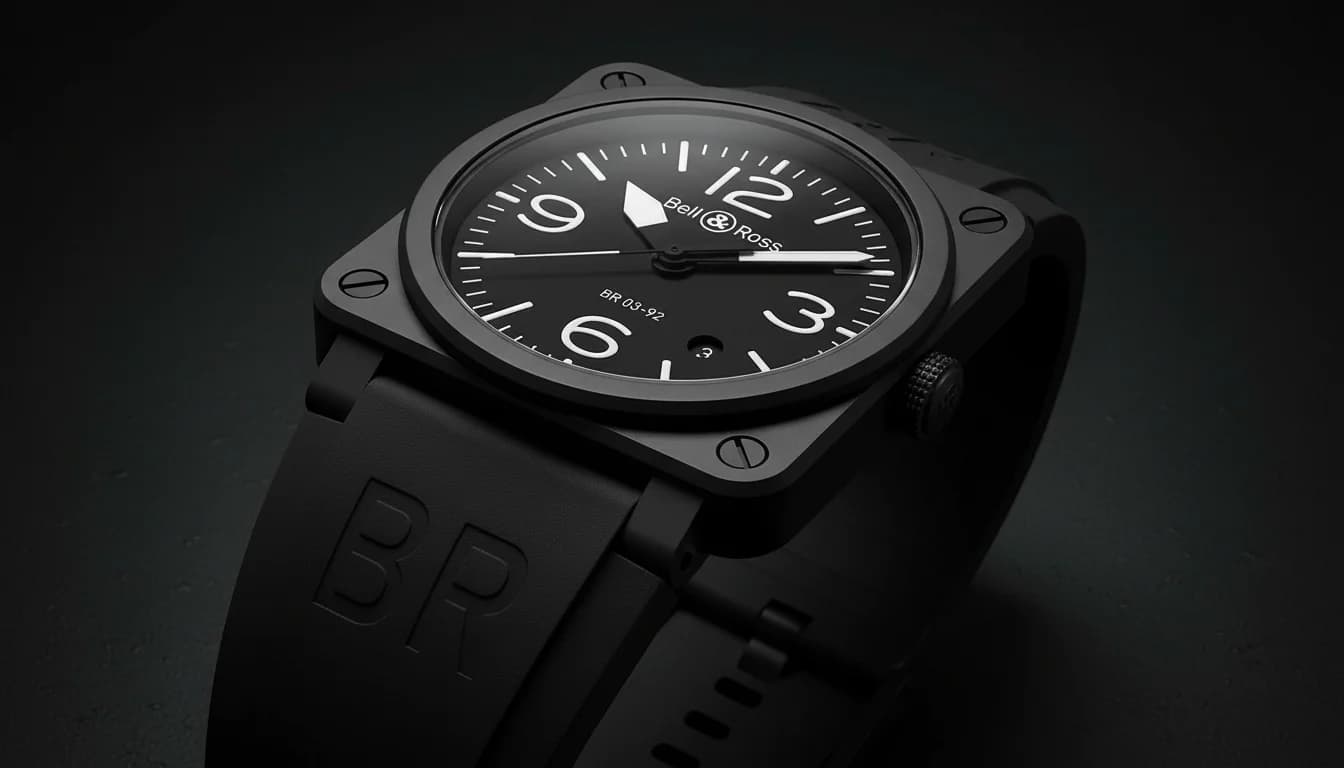
AI disclosure: the images in this post are AI-generated renderings created from real reference photography. They are illustrative, not photographs of specific inventory.
Open the back of most watches and you will find a round metal disc, held on with screws or threads, that pops off for service. A monobloc case does not have that disc. There is nothing to remove.
The short answer
A monobloc case (sometimes called monocoque) is machined from a single, solid block of metal, with the caseback built directly into the case rather than as a separate removable piece. There is no back door. The movement goes in and comes out through the front, via the crystal and bezel. Brands use it for water resistance, mostly. Fewer seams mean fewer places for water to get in.
No removable caseback means no removable-caseback gasket to fail. That is the entire point.
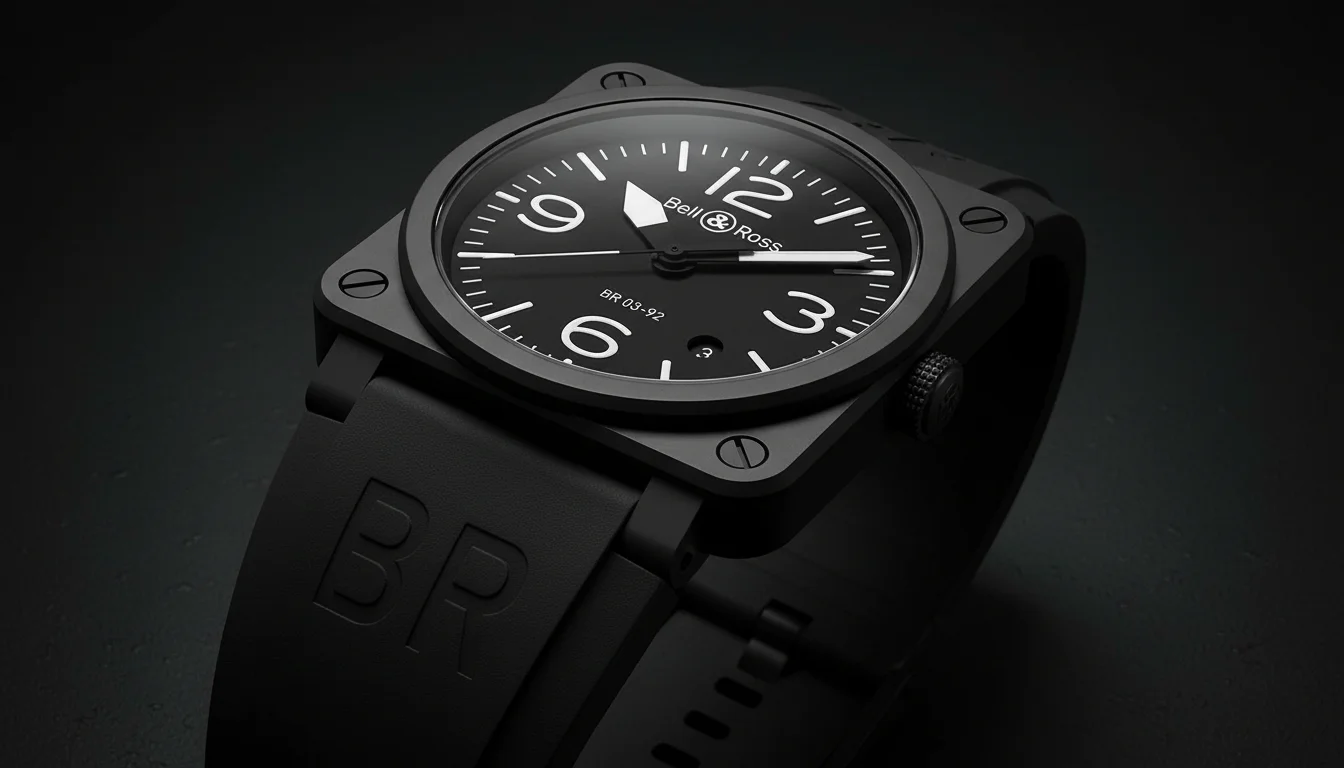 The Bell & Ross BR-03. Four screws hold the bezel and crystal in place. There is no separate caseback to unscrew.
How a monobloc case is actually built
One block, not three
A conventional watch case is an assembly: a middle case, a bezel, and a caseback, machined separately and fitted together with gaskets between each. A monobloc case skips the third piece. The case body and the back are the same solid piece of metal from the start, usually milled from a billet of steel, titanium, or ceramic.
Where the movement goes in
Since there is no back door, the movement has to go in from the front. The bezel and crystal are removed, the movement drops in from the top, and the bezel and crystal are pressed back into place over it. This is sometimes called a front-loading or top-loading case for exactly that reason.
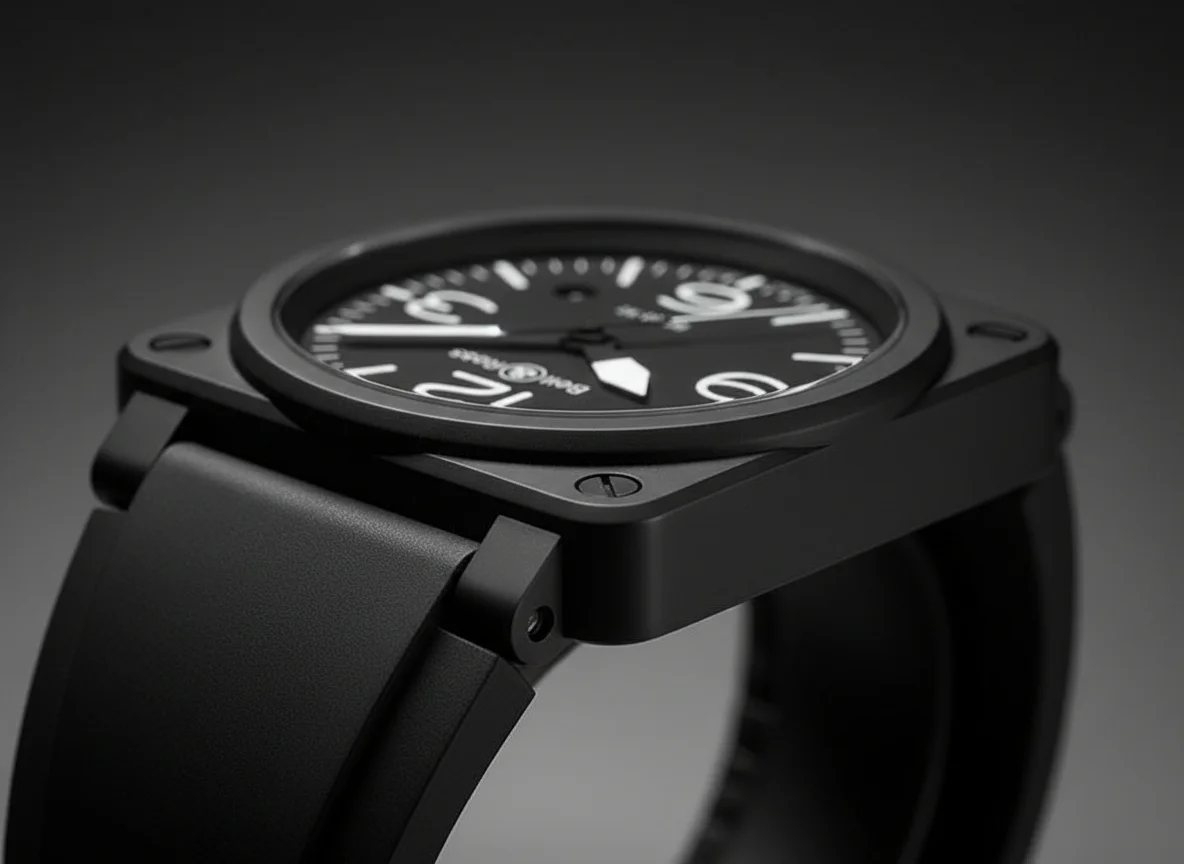 No seam runs around the back of the case. The case wall is one continuous piece of metal.
Fewer seals, fewer failure points
A three-piece case needs a gasket where the caseback meets the middle case, plus gaskets at the crystal and the crown tube. A monobloc case drops the caseback gasket entirely, since there is no joint there to seal. That is one less point where water resistance can fail over time.
How it gets serviced
This is the part that surprises most first-time owners.
The watchmaker removes the bezel and crystal, not a caseback
A watchmaker services a monobloc case by removing the bezel, prying off the crystal with a case-opening tool, and lifting the movement out through the front. It takes specific tools and, often, more time than popping a screw-down caseback.
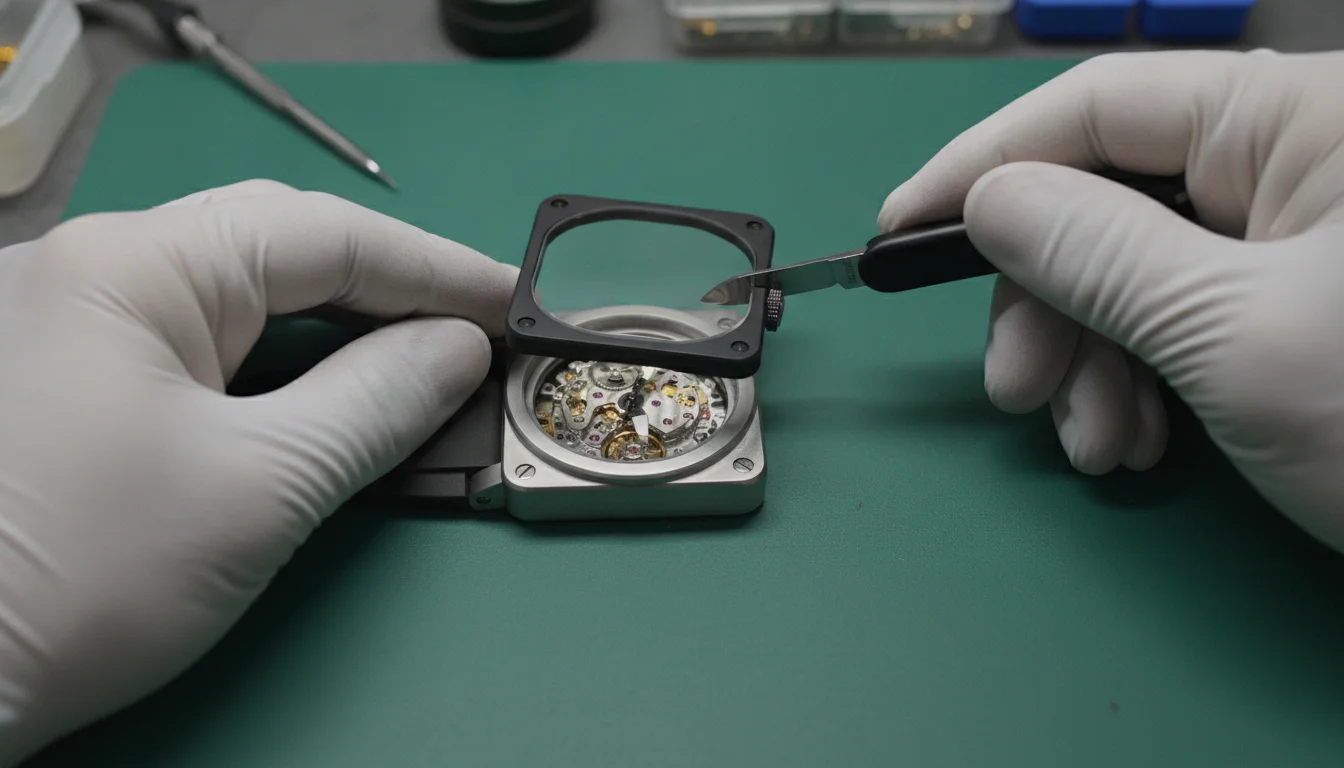 Front-loading access. The bezel and crystal come off first, then the movement lifts straight out.
Not every watchmaker will touch one
Independent watchmakers who are used to popping a caseback off with a case knife sometimes decline monobloc cases outright, or send them back to the brand. A fresh crystal gasket and a proper crystal press are non-negotiable for putting the case back together with its original water resistance intact. For more on how movement sourcing affects service turnaround, see our breakdown of in-house versus outsourced movements.
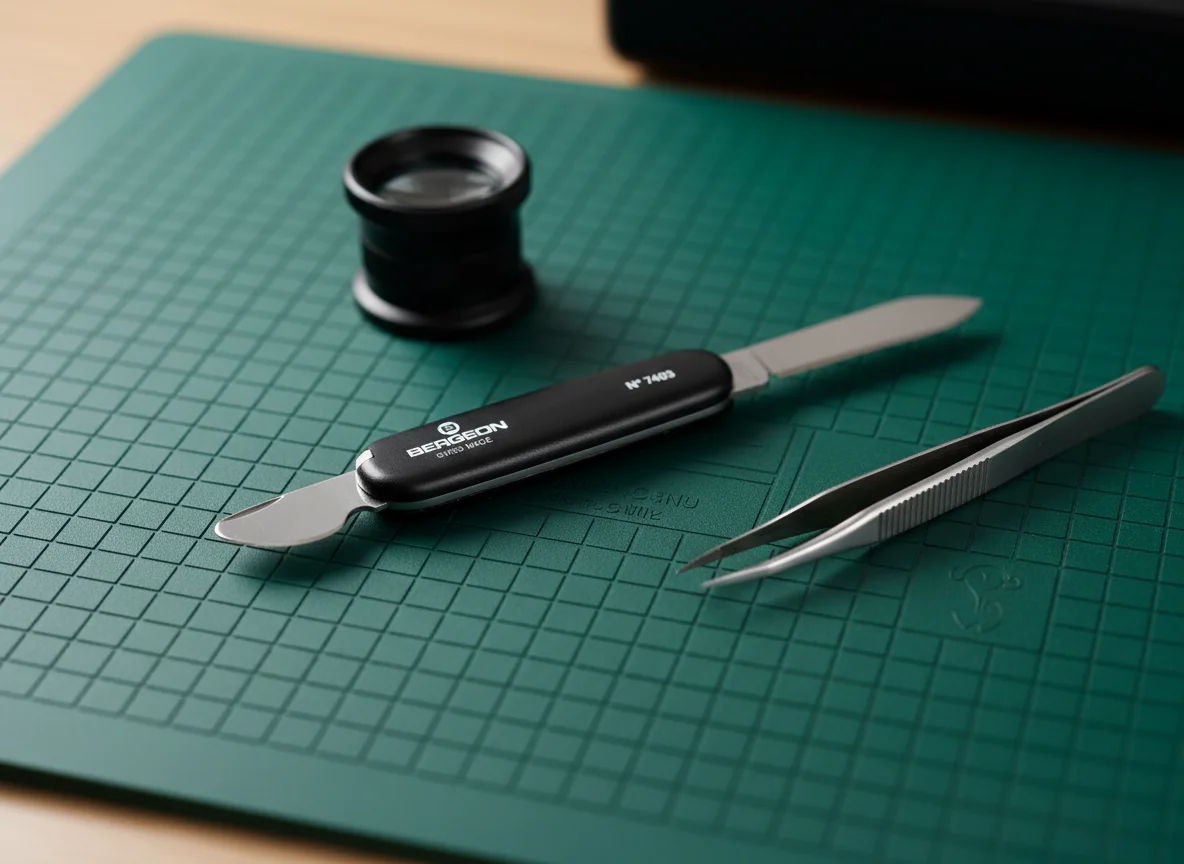 The tools involved: a case knife, tweezers, and a loupe. Simple tools, but the technique matters.
Ask before you buy pre-owned
If you are shopping a pre-owned monobloc watch, ask when it was last serviced and by whom. A generic repair shop that has never opened one before is a real risk to both the case finish and the water resistance rating.
Why brands still use it
Water resistance is the main reason
Fewer seams and gaskets is a genuine advantage for dive watches and tool watches rated deep. Seiko has pushed monocoque construction to 600 meters on some Prospex references specifically because of this.
It is also a design signature
Bell & Ross built its entire BR 03 line around a visibly monobloc, four-screw case, turning a manufacturing choice into a recognizable design language. If you want the full reference-by-reference breakdown, we cover it in the Bell & Ross BR 03 buying guide. Rado does the same with its ceramic True line, where a monobloc high-tech ceramic case is central to the brand's pitch on scratch resistance and comfort.
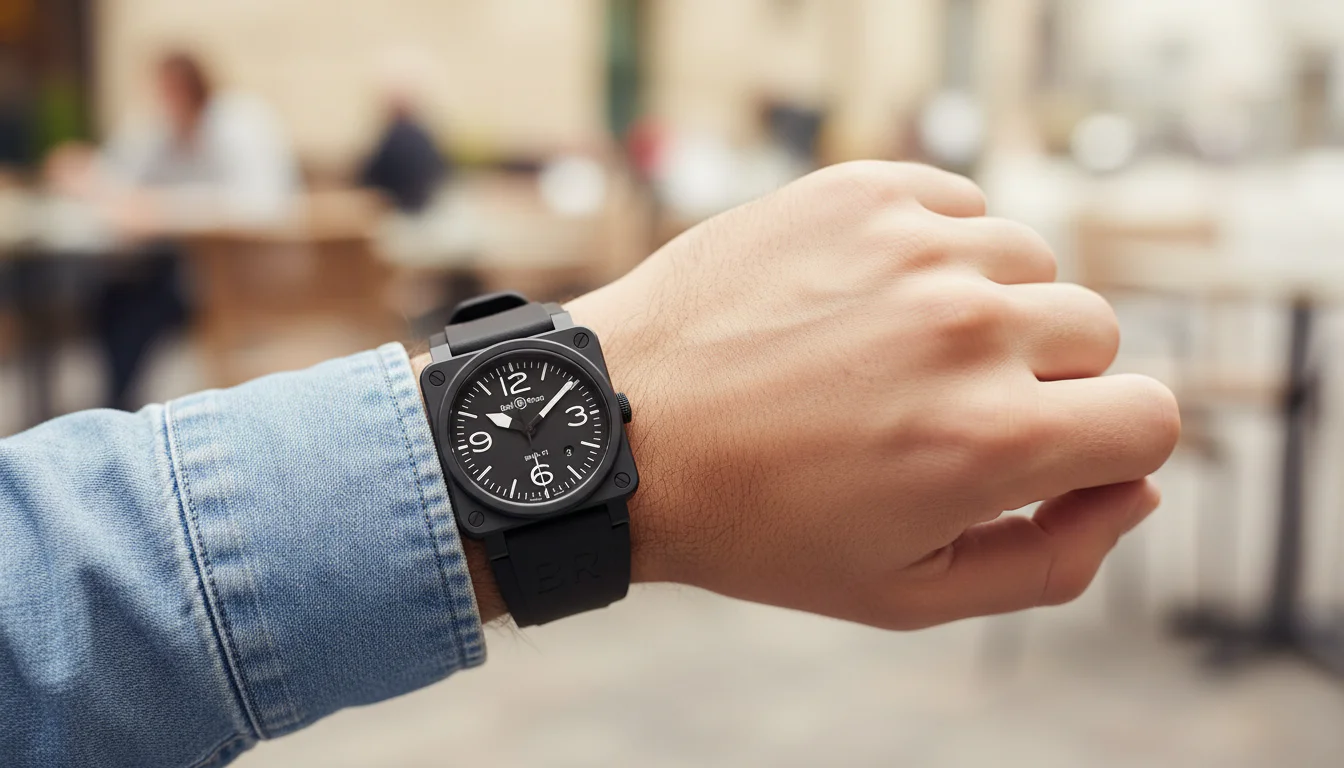 On the wrist, a monobloc case looks no different from a conventional one. The construction is entirely internal.
Monobloc vs traditional case: quick comparison
| Monobloc case | Traditional three-piece case | |
|---|---|---|
| Caseback | Built in, not removable | Separate, screwed or snapped on |
| Movement access | Through the front (crystal/bezel) | Through the back |
| Gaskets needed | Crystal and crown only | Crystal, crown, and caseback |
| Typical use case | Dive watches, tool watches | Most watches |
| Servicing | Requires front-loading technique | Standard for most watchmakers |
The honest tradeoffs
- Servicing cost can run higher. Not every local watchmaker is set up for front-loading service, which sometimes means shipping the watch to a brand's service center.
- You lose the display caseback option. A monobloc case cannot show off a decorated movement through a sapphire window, since there is no removable back to put glass in. Our exhibition caseback explainer covers the opposite design choice in detail.
- Case repairs are harder. A dented or scratched caseback on a traditional watch is a simple part swap. On a monobloc case, damage to the case body means refinishing the whole case.
FAQ
What is a monobloc watch case?
A monobloc, or monocoque, case is machined from a single solid block of metal with the caseback built into the case itself rather than as a separate removable piece. The movement is installed and serviced through the front, via the crystal and bezel.
How do you open a monobloc watch case?
A watchmaker removes the bezel and pries off the crystal using a case-opening tool, then lifts the movement out through the front. There is no caseback to unscrew or snap off.
Why do brands use monobloc cases?
Mainly water resistance. Fewer seams and gaskets mean fewer places for water to get in, which is why monobloc construction shows up often on dive watches and other deep-rated tool watches.
Which watch brands use monobloc cases?
Bell & Ross built its BR 03 line around a visible four-screw monobloc case. Rado uses monobloc ceramic construction on its True collection. Rolex and Omega both used monobloc-style Oyster cases on earlier references, and Seiko uses monocoque construction on some high-depth Prospex divers.
Can a monobloc watch have a display caseback?
No. Since the caseback is not a separate removable piece, there is nowhere to fit a sapphire display window. Monobloc watches never show the movement from the back.
Browse pre-owned watches at 5D Watches
Browse authenticated pre-owned watches at 5dwatches.com.