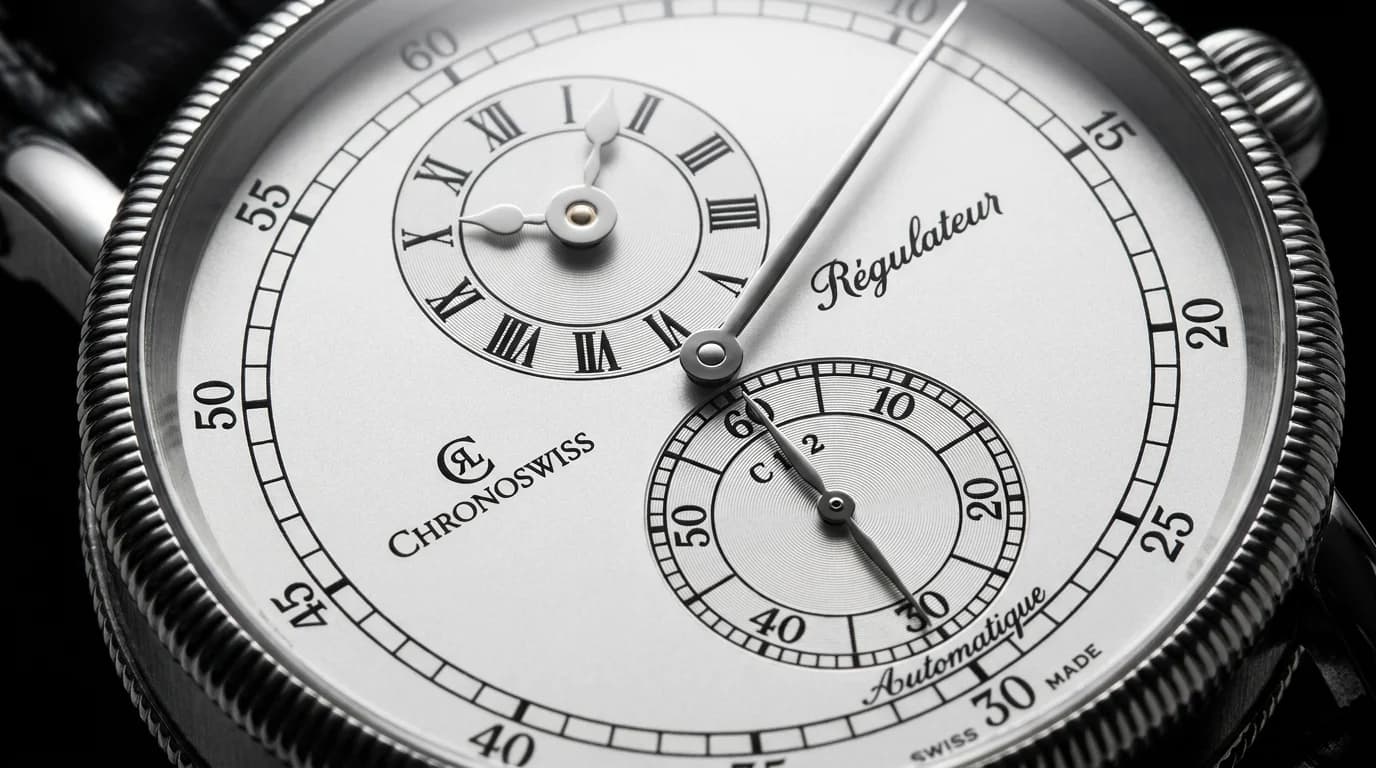
Look at most watches and one pair of hands does everything: hours and minutes stacked on the same center pinion, sweeping together. A regulator dial breaks that up. The hours get their own small sub-dial. The minutes get a single long hand sweeping the main track. The seconds get a separate sub-dial of their own. Nothing overlaps, nothing stacks, and at a glance the layout looks more like a scientific instrument than a wristwatch.
That is because it started as one.
This post includes AI-generated images built from real reference photography of the watches discussed, verified by our team for accuracy before publishing.
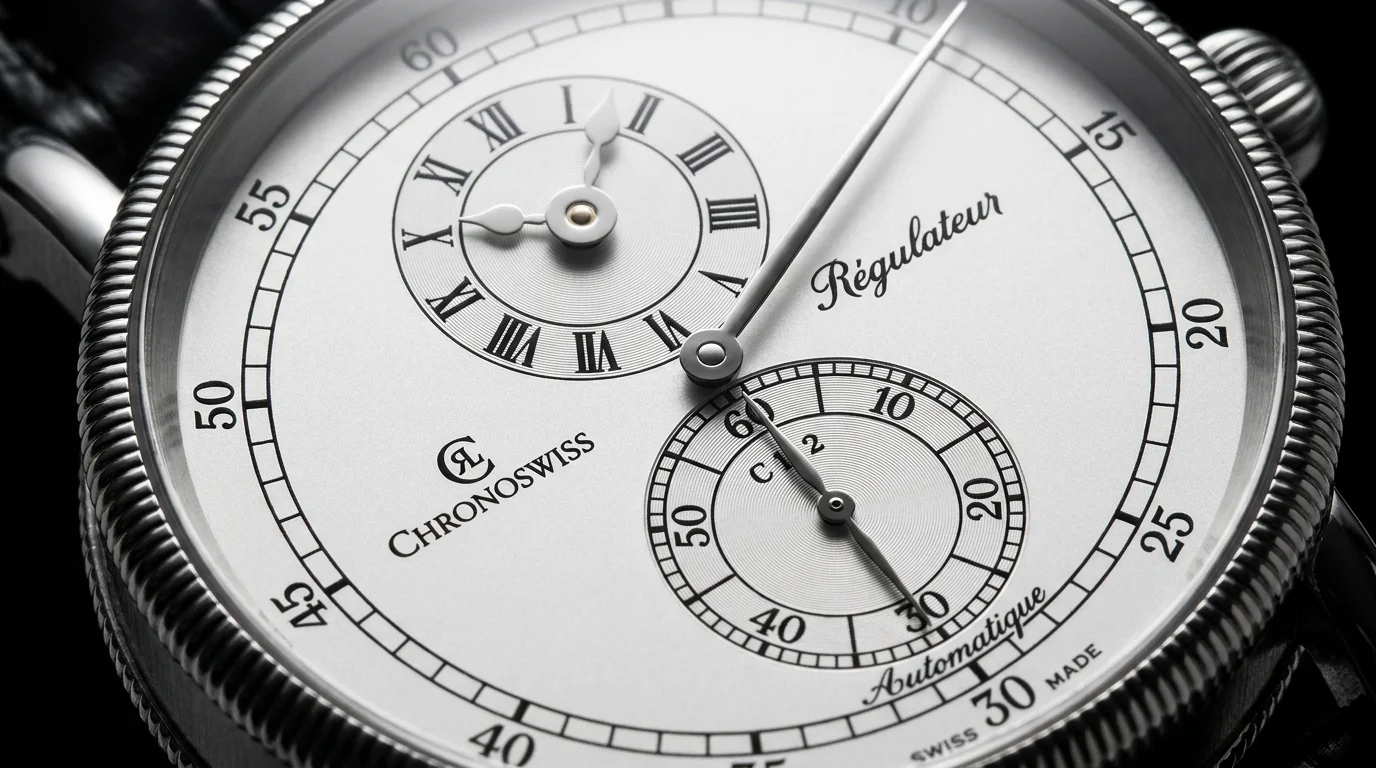 The regulator layout in one glance: hour sub-dial at 12, sweeping minute hand across the main track, seconds sub-dial at 6.
The short answer
A regulator dial separates the hour, minute, and second displays instead of stacking them on shared hands. It exists because 18th-century workshop clocks used this layout to eliminate a reading error called parallax, letting a watchmaker set every other timepiece in the shop against one trusted master clock with total precision. The name "regulator" comes from that job: the clock regulated the rest of the workshop. Today it survives mostly as a dial aesthetic on brands like Chronoswiss, Louis Erard, and Patek Philippe, prized for its clarity and its nod to horological history.
Where the layout actually came from
Before wristwatches, before pocket watches even, workshops full of clockmakers needed one dependable reference. That reference was the regulator clock: a tall, wall-mounted precision clock built for one job, keeping the most accurate time in the room so every other clock and pocket watch could be set against it.
A standard dial with stacked hour and minute hands has a small but real problem for that use case. When the hands sit at different heights above the dial, viewing them from even a slightly off-center angle creates parallax error: the hands appear to point to a different minute than they actually do. For a clock the whole shop depended on, that margin of error was not acceptable.
The fix was mechanical, not optical. Separate the functions entirely. Put the hour on its own small sub-dial where imprecision does not matter much, since nobody needs the hour to the minute. Give the minute hand the main dial and make it long, thin, and unmistakable. Add a seconds sub-dial for the rare moments a craftsman needed to set a watch to the exact second. Read each function on its own plane, and parallax stops being a problem.
Master clockmakers in 18th-century Europe built regulator clocks this way, and the layout eventually filtered down into pocket watches carried by people who needed serious precision on the move: railroad conductors coordinating train schedules against a shared clock, ship's navigators, and later military units and scientists in the field.
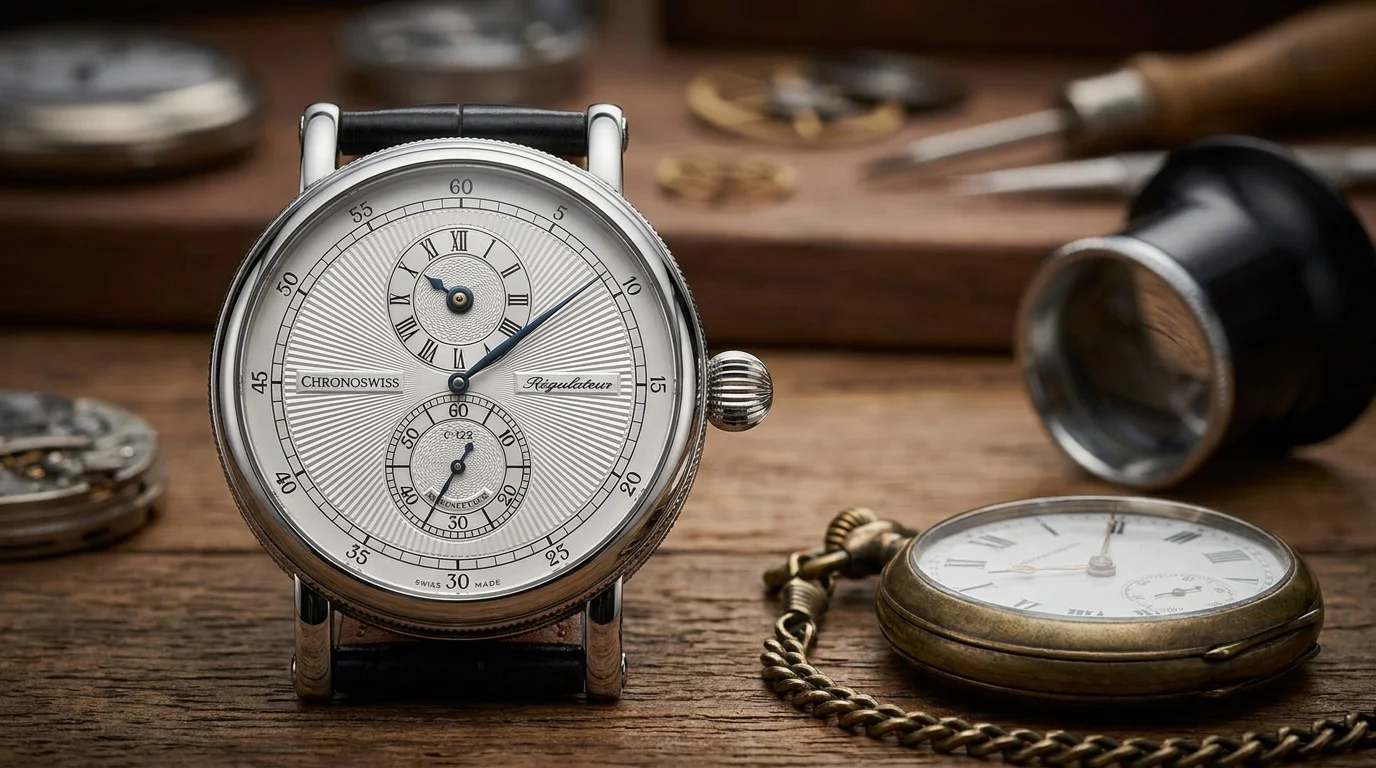 A regulator wristwatch alongside the pocket watches and loupes it descended from. The layout is a direct carryover from workshop precision clocks.
How to read one
A regulator dial takes a few extra seconds to read the first time and about zero after that.
Hours: a small sub-dial, usually at 12 o'clock, numbered 1 through 12. A short hand points to the current hour.
Minutes: the large center hand, sweeping the main dial track exactly like a normal minute hand, except it works alone with nothing else stacked on the same pinion.
Seconds: a separate small sub-dial, typically opposite the hour register at 6 o'clock, running continuously or in some movements ticking each second forward.
Look at the Chronoswiss Régulateur pictured throughout this post. Hour register at 12, sweeping minute hand across the main silvered track, seconds register at 6. Nothing is stacked, nothing is guessed. That is the entire idea in one glance.
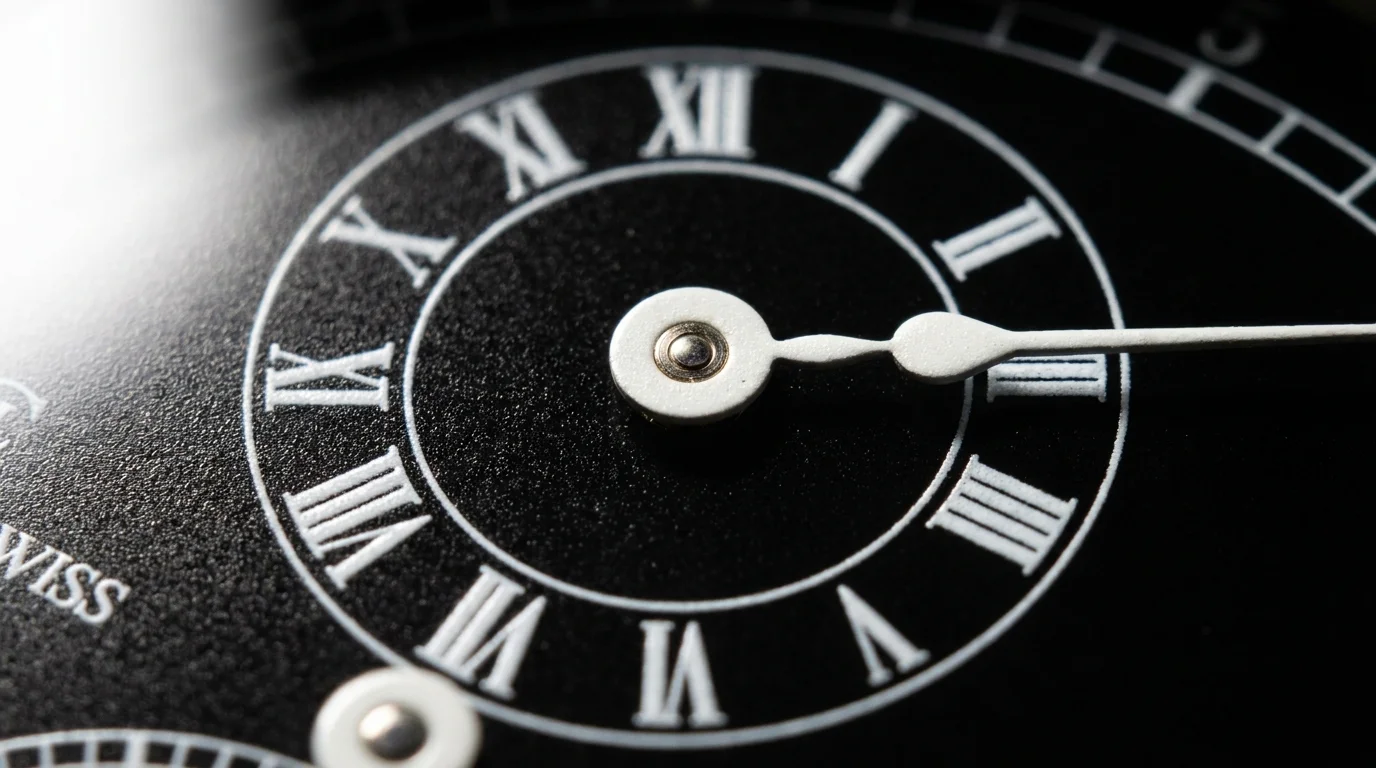 The hour register up close. Roman numerals, its own hand, its own small track, entirely independent of the minute display.
The catch: regulator dials are genuinely harder to read fast
Ask any regulator owner and they will tell you the truth: the layout that solved a precision problem for 18th-century clockmakers is not actually faster to read on a wrist than a normal dial. Your brain has to process three separate positions instead of one hand configuration, and there is a real learning curve the first week you wear one.
That tradeoff is exactly why regulator dials stayed a niche. They never became the standard wristwatch layout, because most people do not need workshop-clock precision reading. They need to glance down and know it is 2:47. A regulator makes you work a little for that. What it gives back is a dial that looks unlike anything else in your collection and carries three centuries of watchmaking history in its layout.
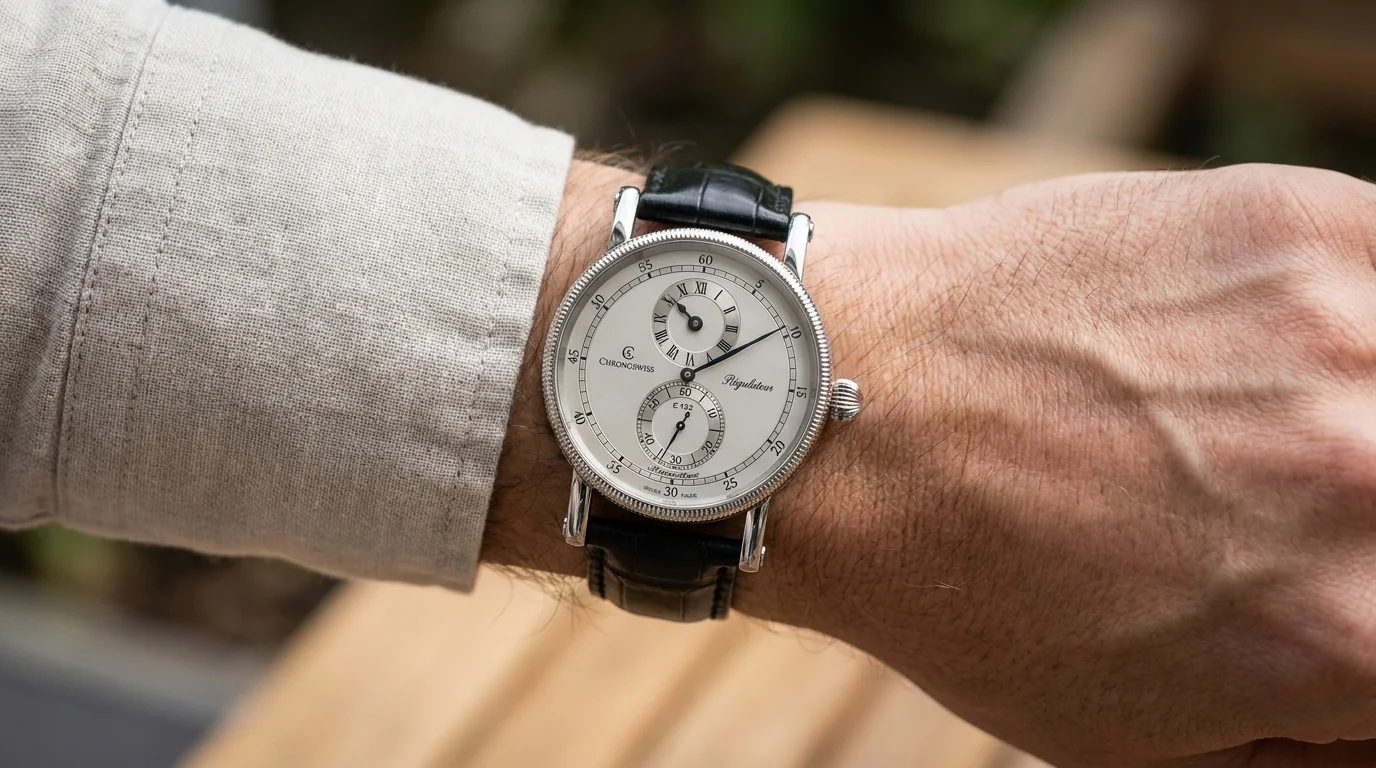 On the wrist, the eye has to check two sub-dials and a sweeping hand instead of one hand pair. It becomes second nature within days.
Regulator watches you can actually buy today
The regulator complication never went fully mainstream, but a handful of brands keep it alive, at very different price points.
| Watch | Reference | Movement | Approx. price |
|---|---|---|---|
| Chronoswiss Régulateur | CH-1223 | In-house automatic | Around $3,080 pre-owned (Chrono24) |
| Louis Erard Excellence Régulateur | 85237AA21.BVA31 | Sellita SW266-1 | CHF 2,750 retail |
| Patek Philippe Ref. 5235R | 5235R | Caliber 31-260 PS | Six figures, grand complication territory |
| Chopard L.U.C Regulator | L.U.C 1860 | In-house manual | Discontinued, collector market only |
| Habring2 Josef Regulator | Josef | In-house caliber A11GSP, deadbeat seconds | EUR 7,450 |
Chronoswiss essentially built its identity around the regulator dial starting in the 1980s, reviving the layout for modern wristwatches when almost nobody else was making them. Louis Erard's Excellence Régulateur brings the same idea to a more accessible price point with a reliable Sellita base caliber. Patek's version dresses the complication up in a rose gold case and an in-house movement, which is a different conversation entirely about price. Habring2's Josef Regulator goes a step further and pairs the regulator layout with a genuine deadbeat seconds complication, the same precision-first philosophy taken to its logical extreme.
Prices above are current secondary-market figures as of publishing and will move with the broader watch market.
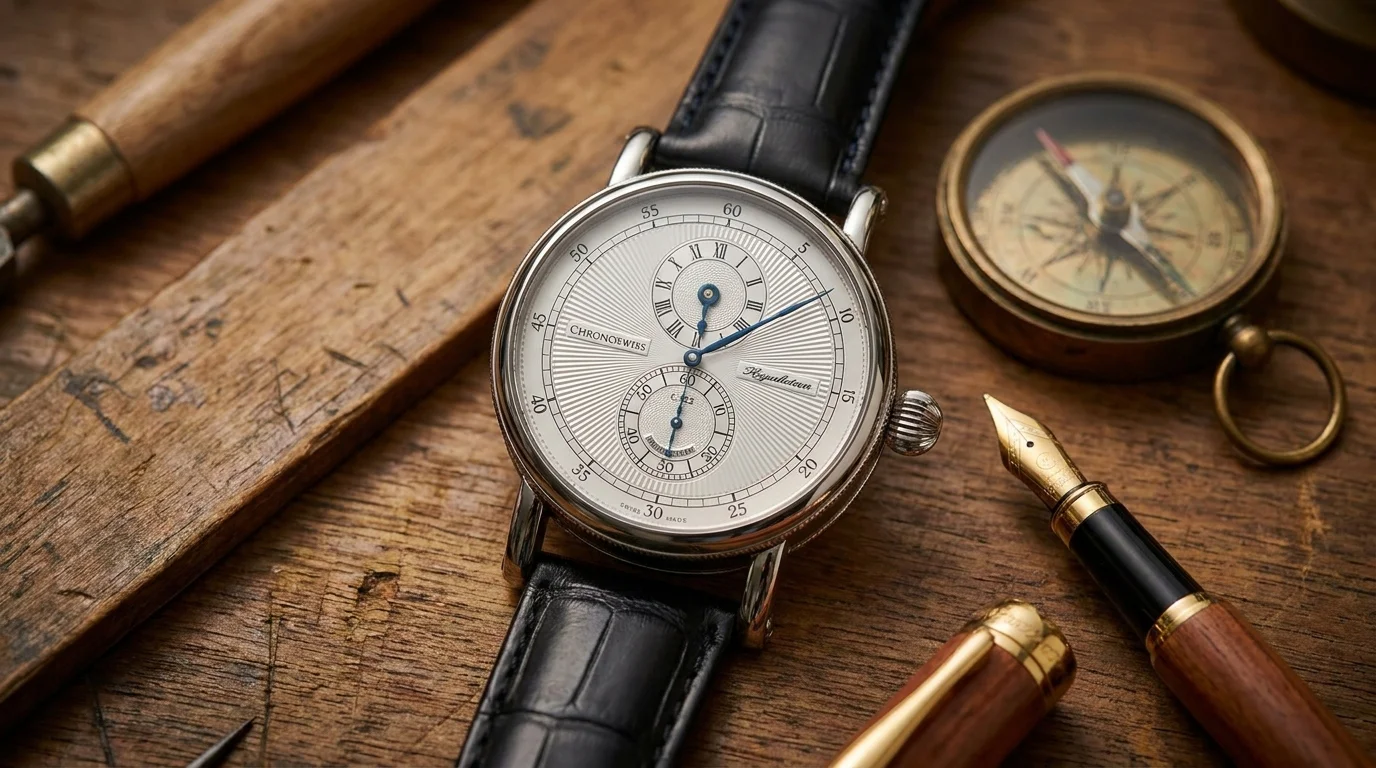 The regulator's roots as a precision instrument, not just a wristwatch, still show in how these dials get photographed and sold today.
Regulator dial vs a standard three-hand dial
| Standard three-hand | Regulator | |
|---|---|---|
| Hour display | Stacked with minute hand | Separate sub-dial |
| Minute display | Stacked with hour hand | Large central hand, standalone |
| Seconds display | Small sub-dial or sweep hand at center | Separate sub-dial |
| Reading speed | Instant | Requires a beat of processing |
| Historical origin | Standardized pocket/wristwatch layout | 18th-century precision workshop clocks |
| Common today on | Nearly every watch | Chronoswiss, Louis Erard, a few haute horlogerie pieces |
FAQ
What is a regulator dial on a watch?
A regulator dial is a watch face that separates the hour, minute, and second displays instead of stacking hour and minute hands together. The hour sits on a small sub-dial, the minute hand sweeps the main track alone, and the seconds get their own register.
Why is it called a regulator?
The name comes from the regulator clock, a precision wall clock 18th-century workshops used as the master reference for setting every other clock and watch in the room. The layout regulated the shop's timekeeping.
Are regulator dials harder to read?
Yes, slightly, at least at first. Reading three separate displays takes a moment longer than glancing at stacked hands. Most owners adjust within a week and stop noticing.
Which brands still make regulator watches?
Chronoswiss is the brand most associated with the modern regulator wristwatch, alongside Louis Erard's more affordable Excellence Régulateur and occasional high-end pieces from Patek Philippe and Chopard.
Is a regulator dial the same as a chronometer?
No. A chronometer is an accuracy certification, tested and verified by an independent body like COSC. A regulator dial is a layout choice with no bearing on the movement's actual accuracy. A regulator watch can be a chronometer or not, the two are unrelated.
Related reading
For more on how watch accuracy is actually measured and certified, see What Is a Chronometer? COSC Certification and the New 2026 Standard, Explained. For the mechanism that makes any mechanical watch tick in the first place, read What Is an Escapement? The Beating Heart of a Watch, Explained. And for another dial-construction deep dive in this same vein, see Applied vs Printed Indices: What the Difference Actually Costs You. For a complication that displays a different kind of time discrepancy entirely, see Equation of Time Explained: Why Your Watch and the Sun Disagree. And for the complication that pairs most naturally with this dial layout, see Deadbeat Seconds Explained: The Mechanical Tick That Fakes a Quartz Watch.