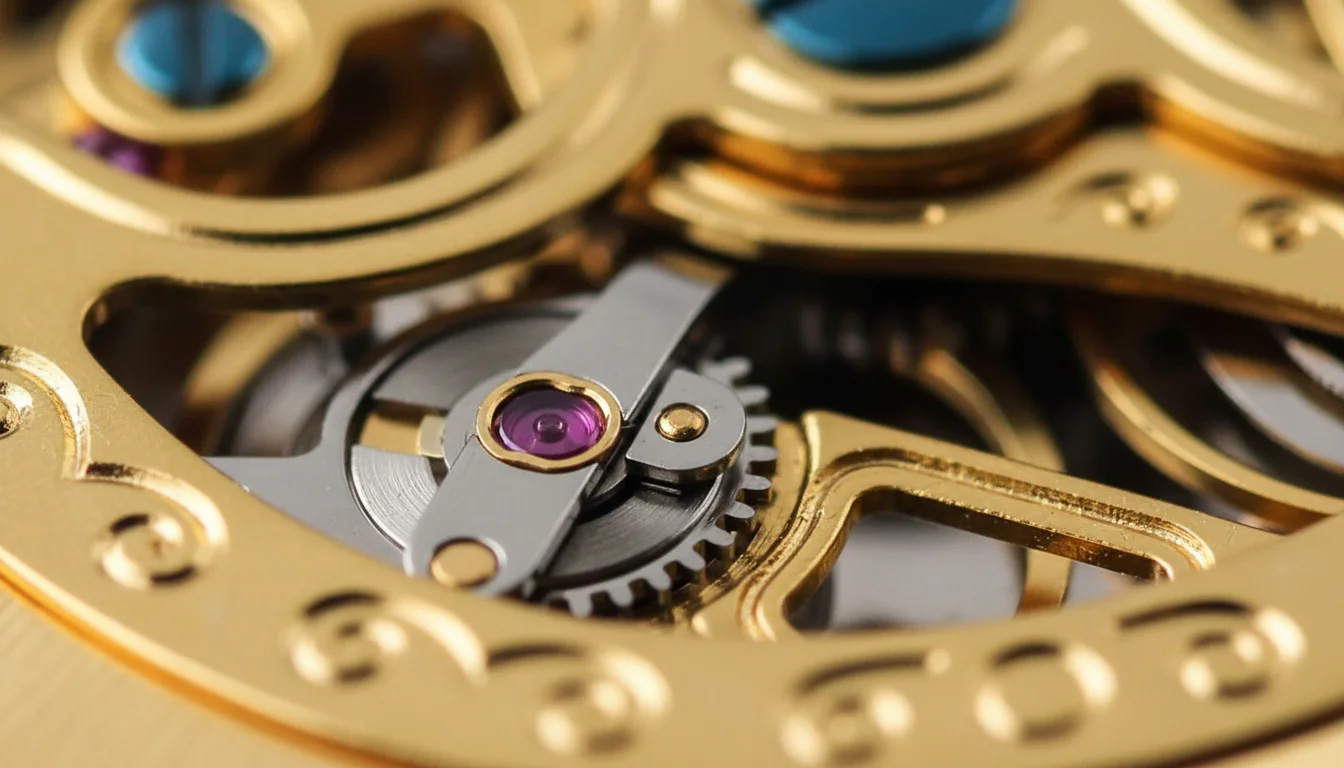
Every mechanical watch stores energy in a wound spring, and something has to release that energy in tiny, even amounts so the hands move at a steady pace. That something is the escapement. It is the beating heart of the watch, the part that makes the ticking sound, and the reason a mechanical watch can keep time at all.
So here is a plain-English explainer on what an escapement is, how the common Swiss lever version works, why it matters for accuracy, and what the alternatives are. It is the most important mechanism in the movement and the least understood.
The images in this article were generated by AI from real reference photographs of watch movements. They are illustrations, not photos of a specific watch for sale.
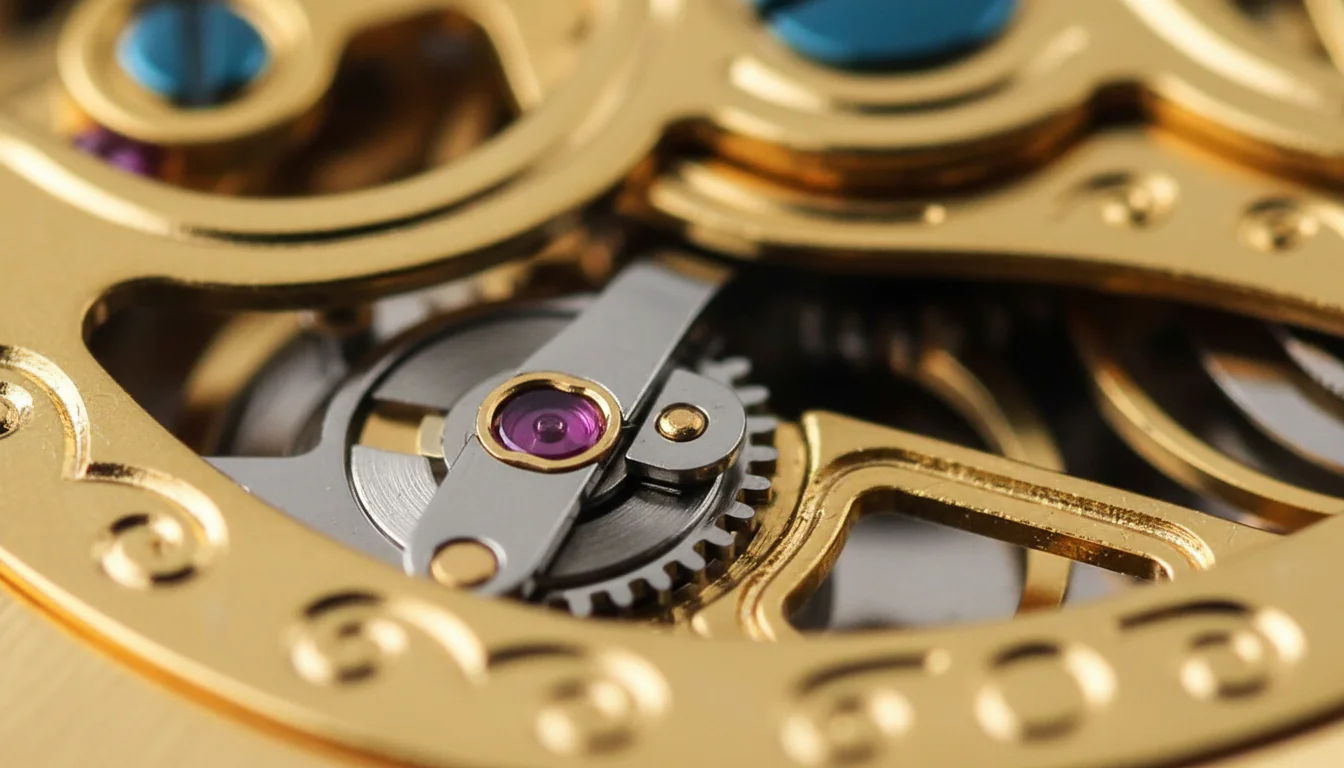 The escapement: the pallet fork locking and releasing the escape wheel, one beat at a time.
The short answer
An escapement is the mechanism that releases the movement's stored energy in small, regular steps, and keeps the timekeeping oscillator swinging. In the common Swiss lever escapement, an escape wheel, a pallet fork, and a balance wheel work together to lock, release, and count time. Each lock-and-release is one tick, and the number of ticks per second sets the watch's beat rate.
What the escapement does
Picture the mainspring trying to unwind all at once. Without a brake, the gears would spin free and the watch would run down in seconds. The escapement is that brake, but a smart one: it lets the gear train advance one precise step at a time.
Each step is triggered by the balance wheel, which swings back and forth at a fixed rate like a pendulum. Every swing releases the escapement to advance once, and that steady rhythm is what turns raw spring power into accurate timekeeping.
The parts of a Swiss lever escapement
The Swiss lever is the escapement in almost every mechanical watch made today. It has three key parts working in a tight loop.
The escape wheel
The escape wheel is the last wheel in the gear train, with distinctively shaped teeth. It carries the push from the mainspring and delivers it, one tooth at a time, to the pallet fork.
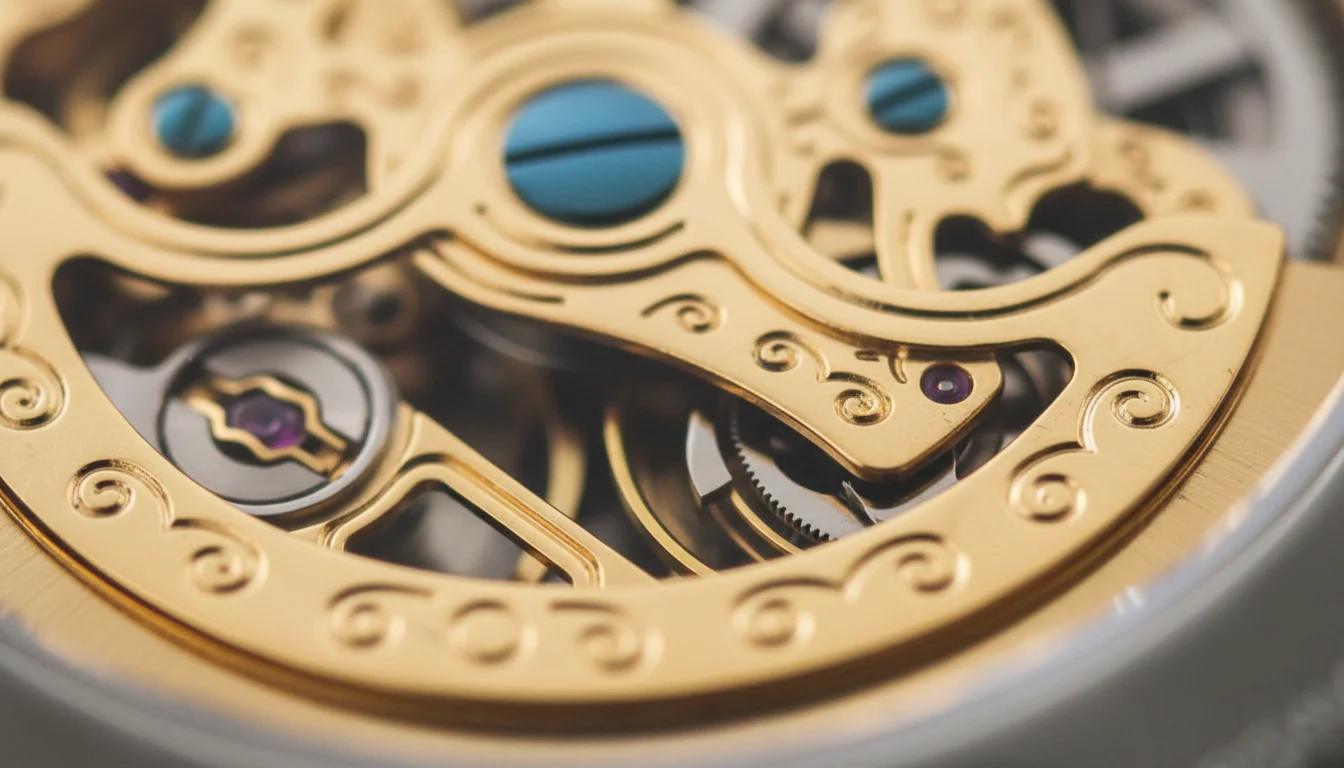 The escape wheel, whose angled teeth hand energy to the pallet fork in single steps.
The pallet fork
The pallet fork sits between the escape wheel and the balance. It has two jeweled pallets that alternately lock and release the escape wheel teeth, and it passes a small push to the balance on each release to keep it swinging. Those pallets are among the jewels we covered in our guide to jewels in a watch movement.
The balance wheel and hairspring
The balance wheel is the timekeeper. It swings back and forth, regulated by a fine coiled hairspring, at a constant rate. Its rhythm governs how often the escapement releases, which is what determines accuracy.
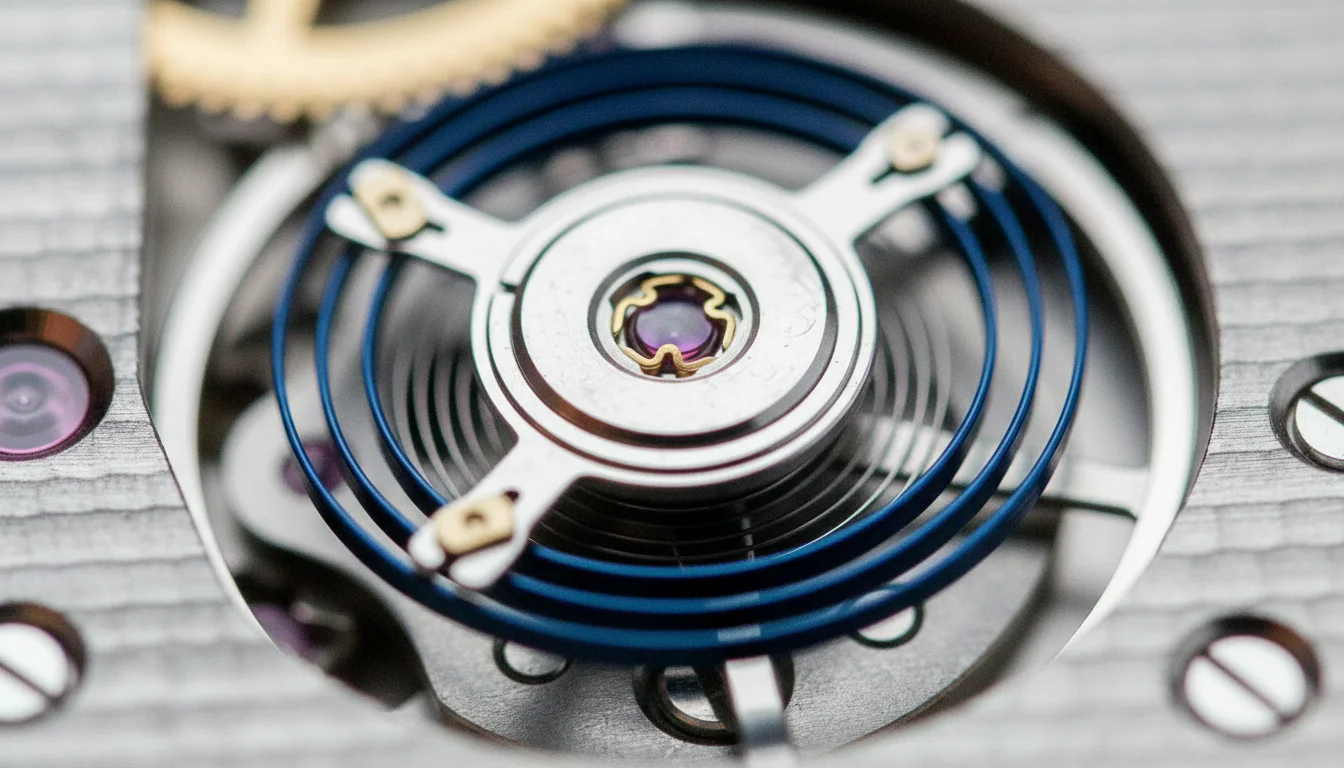 The balance and hairspring, the oscillator whose steady swing the escapement counts.
Why the escapement makes the ticking sound
That familiar tick is the escapement at work. Each sound is a tooth of the escape wheel slamming to a stop against a pallet, then releasing. A modern watch beating at 28,800 vibrations per hour ticks eight times a second, which the ear blends into a fast, even buzz.
Beat rate matters. It is measured in vibrations per hour (vph) or hertz (Hz), and a higher rate, like 5Hz or 36,000 vph, can improve stability. It is also what a timegrapher reads when checking a watch's accuracy, which we cover in our guide to what a chronometer is.
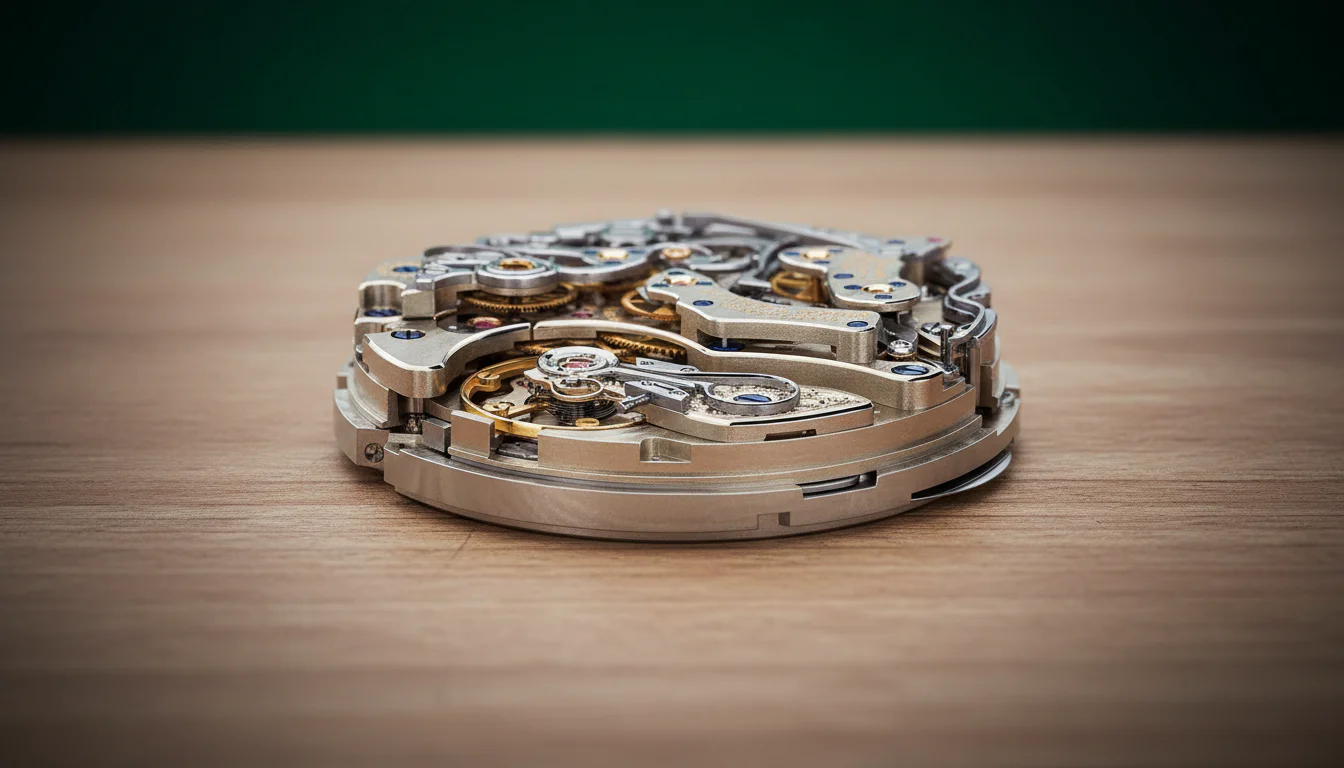 The escapement and balance sit at the heart of the movement, setting the pace for everything else.
The alternatives to the Swiss lever
The Swiss lever dominates, but it is not the only escapement.
- Co-axial escapement. Developed by George Daniels and used by Omega, it reduces sliding friction, which can extend service intervals.
- Detent escapement. A high-accuracy design from marine chronometers, rare and delicate, seen in a few high-end pieces.
- Spring Drive. Grand Seiko's system replaces the mechanical escapement with an electromagnetic brake, giving a gliding seconds hand and very high accuracy while still running on a mainspring.
Each is a different answer to the same problem: how to release stored energy in perfectly even amounts.
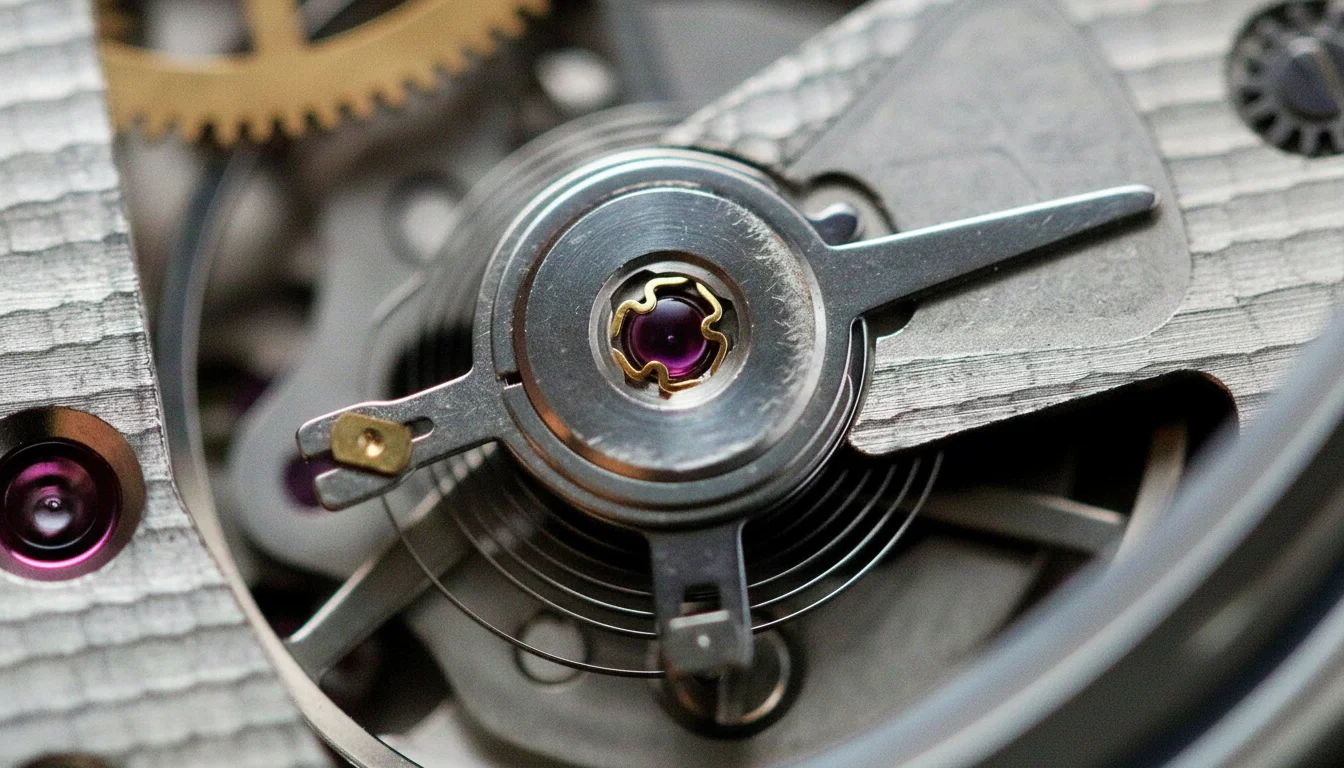 The balance and pallet fork together, the handoff point where energy becomes timekeeping.
Frequently asked questions
What is an escapement in a watch?
An escapement is the mechanism that releases the mainspring's energy in small, regular steps and keeps the balance wheel oscillating. It converts stored power into steady timekeeping and produces the watch's ticking sound.
How does a Swiss lever escapement work?
An escape wheel driven by the gear train pushes on a pallet fork, which alternately locks and releases the wheel. On each release, the fork gives the balance wheel a small push to keep it swinging, and the balance's steady rhythm controls the timing.
Why does a mechanical watch tick?
The tick is the sound of the escape wheel teeth being locked and released by the pallet fork. A watch beating at 28,800 vibrations per hour ticks eight times per second, which the ear hears as a fast, even sound.
What is beat rate or vph?
Beat rate is how many times the balance wheel swings per hour, measured in vibrations per hour (vph) or hertz (Hz). Common rates are 21,600, 28,800, and 36,000 vph. A higher rate can improve timekeeping stability.
Is the co-axial escapement better than the Swiss lever?
The co-axial escapement reduces sliding friction, which can lengthen the time between services. It is not automatically more accurate day to day, but it is a genuine engineering improvement that Omega has adopted across its lineup.
The bottom line
The escapement is the single most important mechanism in a mechanical watch. It brakes the mainspring, feeds energy to the balance, and turns raw power into the steady beat that keeps time. The Swiss lever does this job in nearly every watch you will handle, and understanding it is understanding how a watch actually works.
Browse authenticated pre-owned mechanical watches at 5dwatches.com.
Written by the 5D Watches desk. We buy, sell, and trade authenticated pre-owned watches every day, and we write these guides from what actually crosses the bench, not from a spec sheet.