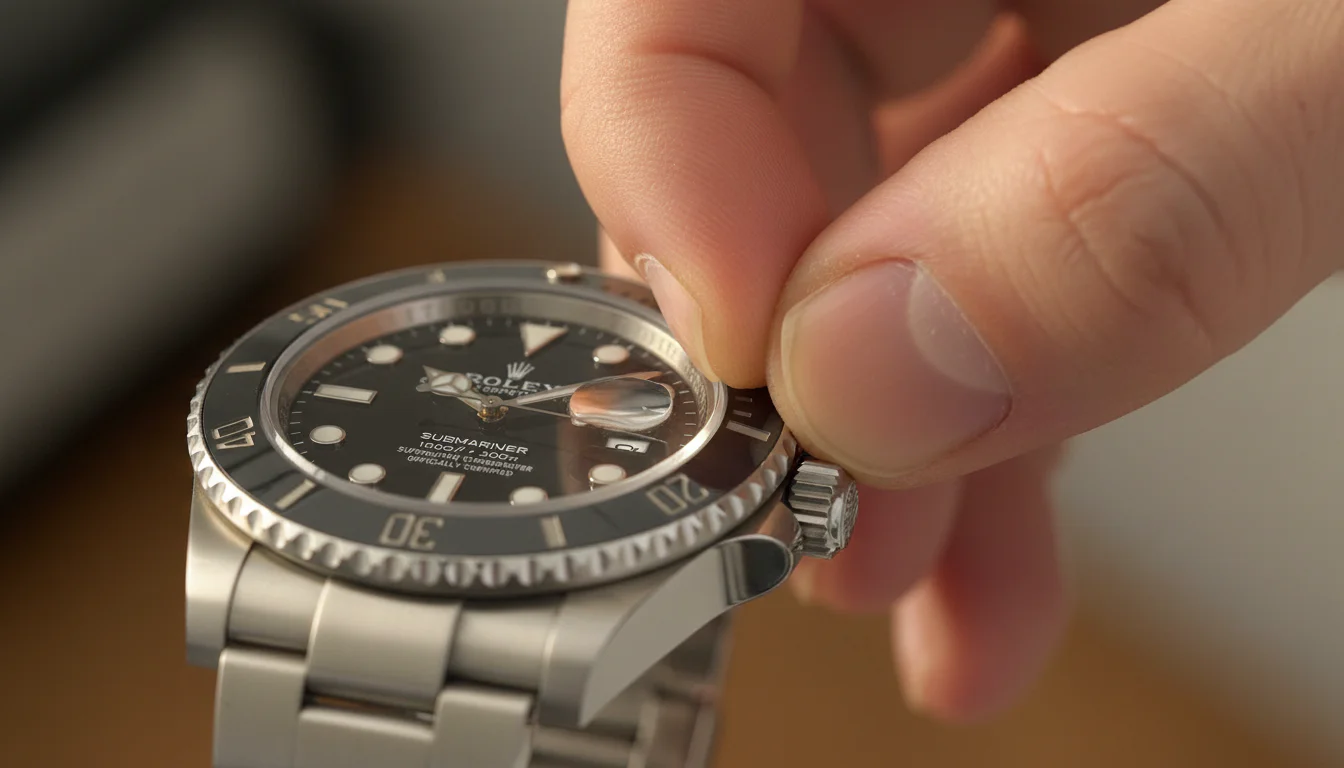
Pull the crown on most modern mechanical watches and the seconds hand stops dead. That is hacking, and it is the small feature that lets you set the time to the exact second. It sounds trivial until you try to sync a watch to an atomic clock without it, and then you understand why collectors care.
So here is a plain-English explainer on what hacking seconds is, how it works, why it exists, and which watches have it. It is one of those details that separates a considered movement from a basic one.
The images in this article were generated by AI from real reference photographs of watches and movements. They are illustrations, not photos of a specific watch for sale.
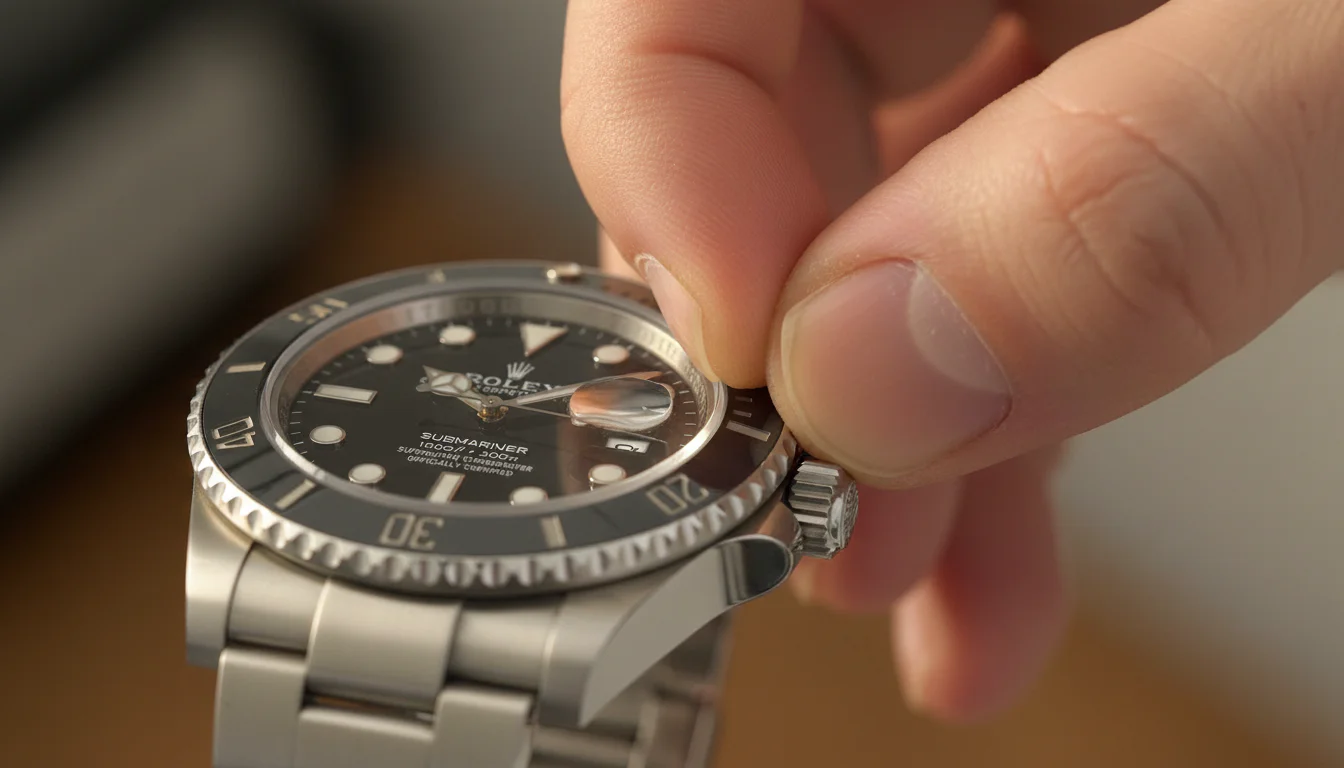 Pull the crown, and on a hacking movement the seconds hand freezes so you can set the time exactly.
The short answer
Hacking seconds is a feature that stops the seconds hand when you pull the crown out to set the time. It lets you synchronize the watch precisely to a time signal, down to the second. A small lever brakes the balance wheel to halt the movement, and it has no effect on accuracy or wear. Most modern mechanical watches hack, but some entry-level and vintage movements do not.
What hacking actually does
On a hacking watch, pulling the crown to the time-setting position stops the seconds hand at once. You wait for a reference clock to hit the top of a minute, push the crown back in, and the watch starts running in perfect sync.
Without hacking, the seconds hand keeps sweeping while you set the hands, so you can get the minute right but never the exact second. For most people that is fine. For anyone who wants their watch dead accurate against a phone or an atomic clock, hacking is the difference.
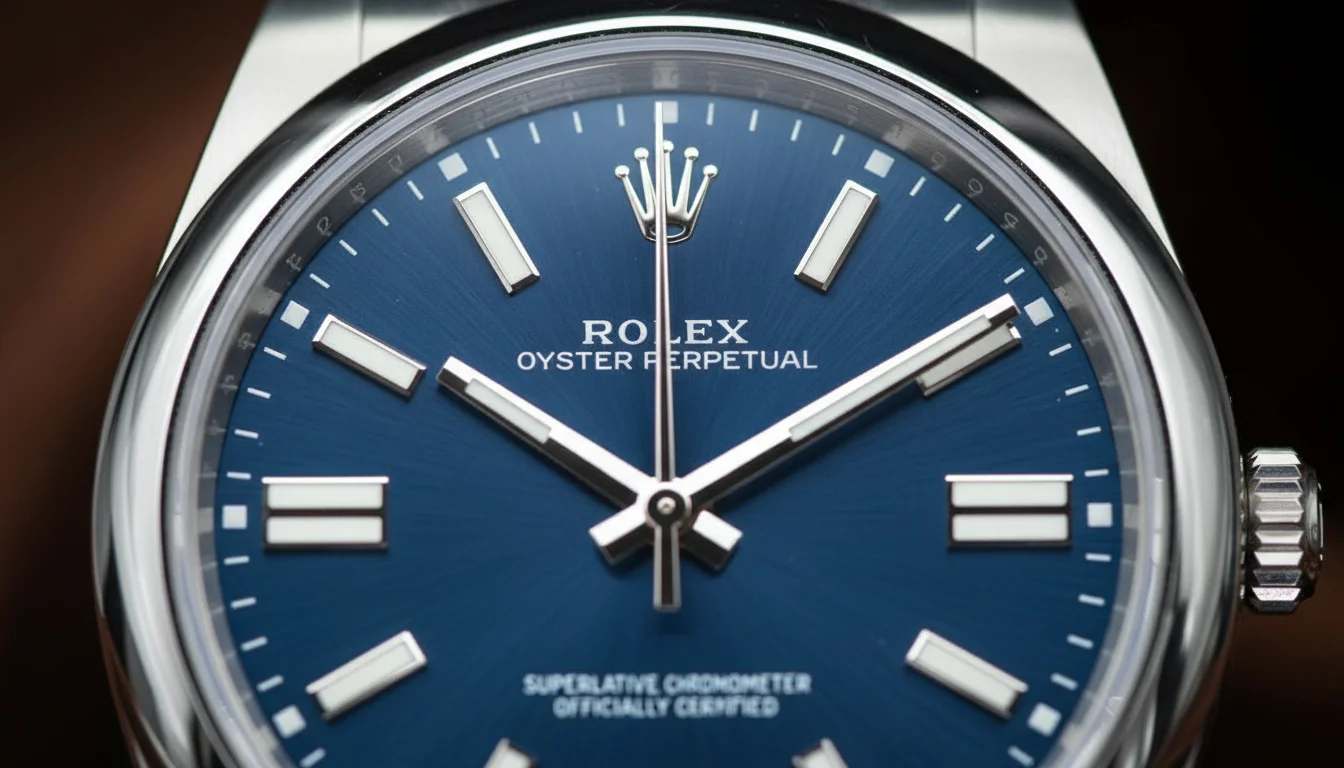 The seconds hand parked at 12 with the crown out is hacking doing its one job.
How it works
The mechanism is simple. When you pull the crown to the setting position, a thin lever swings in and touches the rim of the balance wheel, stopping it. A stopped balance means a stopped gear train, which means a stopped seconds hand.
Push the crown back in and the lever retracts, the balance swings free, and the watch runs again. That is the whole trick. It is sometimes called a stop-seconds or seconds-stop mechanism, and hacking is just the common name.
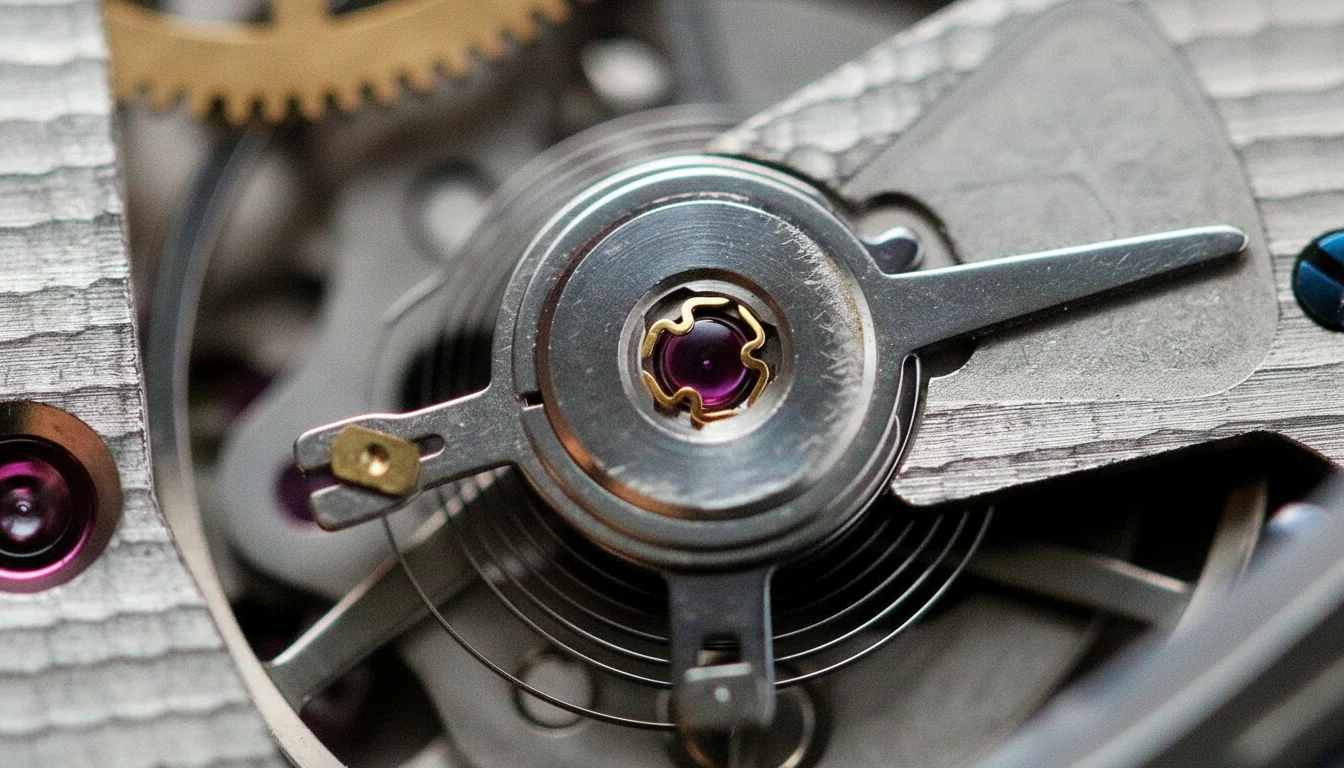 A hacking lever brakes the balance wheel, and the whole movement stops with it.
Where the name comes from
The term traces to the military. Soldiers synchronizing watches before an operation would call out a time and hack, meaning stop, their seconds hands to a shared mark so every watch matched. A watch that could do this was a hacking watch, and the name stuck.
Which watches hack, and which do not
Most modern mechanical movements hack, including Rolex, Omega, Tudor, and the current ETA and Sellita calibers that power much of the Swiss industry. If you buy a mechanical watch new today, it almost certainly hacks.
The exceptions are worth knowing:
- Older and entry-level movements often skip it. Many classic Seiko calibers and some budget Miyota movements do not hack.
- Vintage watches from before hacking became standard frequently lack it.
- A few modern movements omit it as a deliberate simplicity choice.
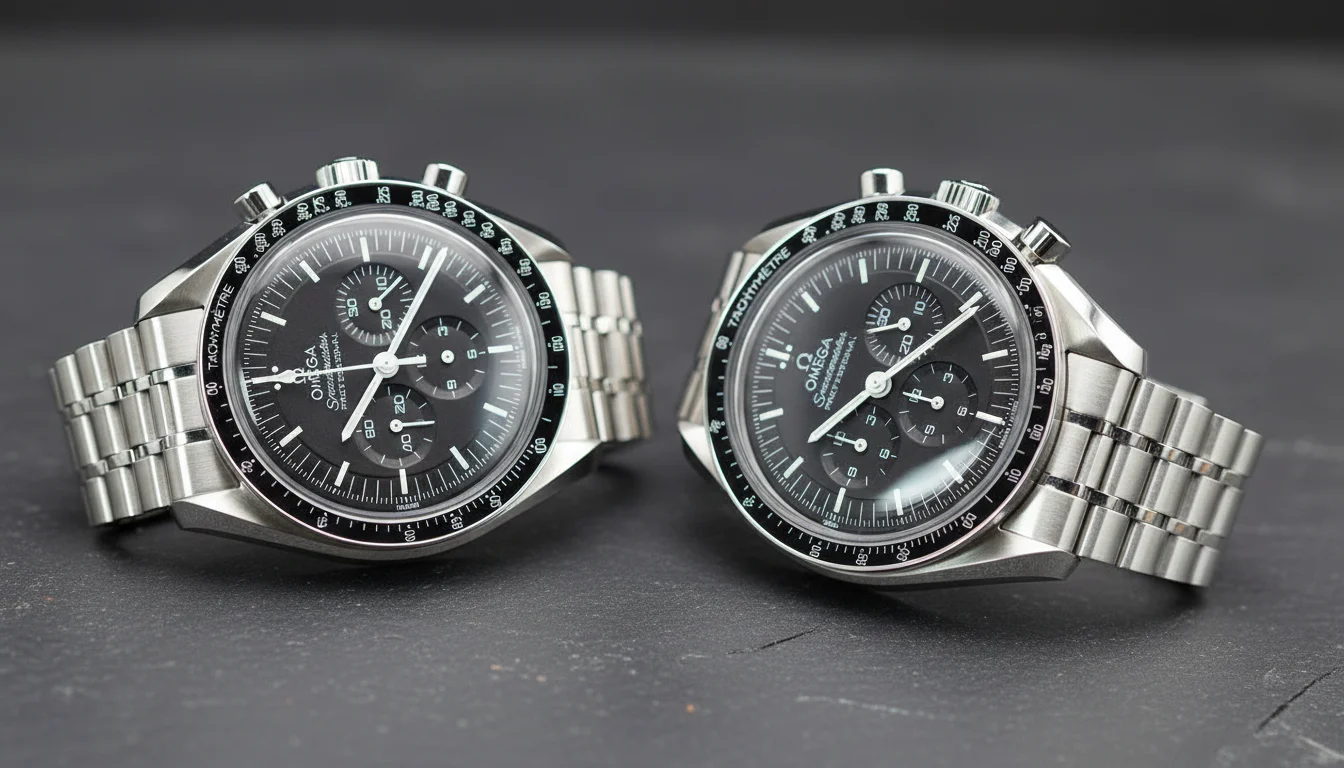 The payoff of hacking: two watches set to exactly the same second.
Does hacking affect accuracy or value
Hacking does not make a watch more accurate. It only lets you set the time more precisely, which is a different thing. A hacking watch and a non-hacking watch of the same caliber keep time identically once they are running. If you want to understand real accuracy, our guide to what a chronometer is covers the standards that matter.
On value, hacking is a mild plus. It signals a more complete movement and it is genuinely useful, but its absence does not tank a watch, especially on a vintage piece where it is period-correct. For the practical side of setting your watch, our guide to winding an automatic walks through doing it right.
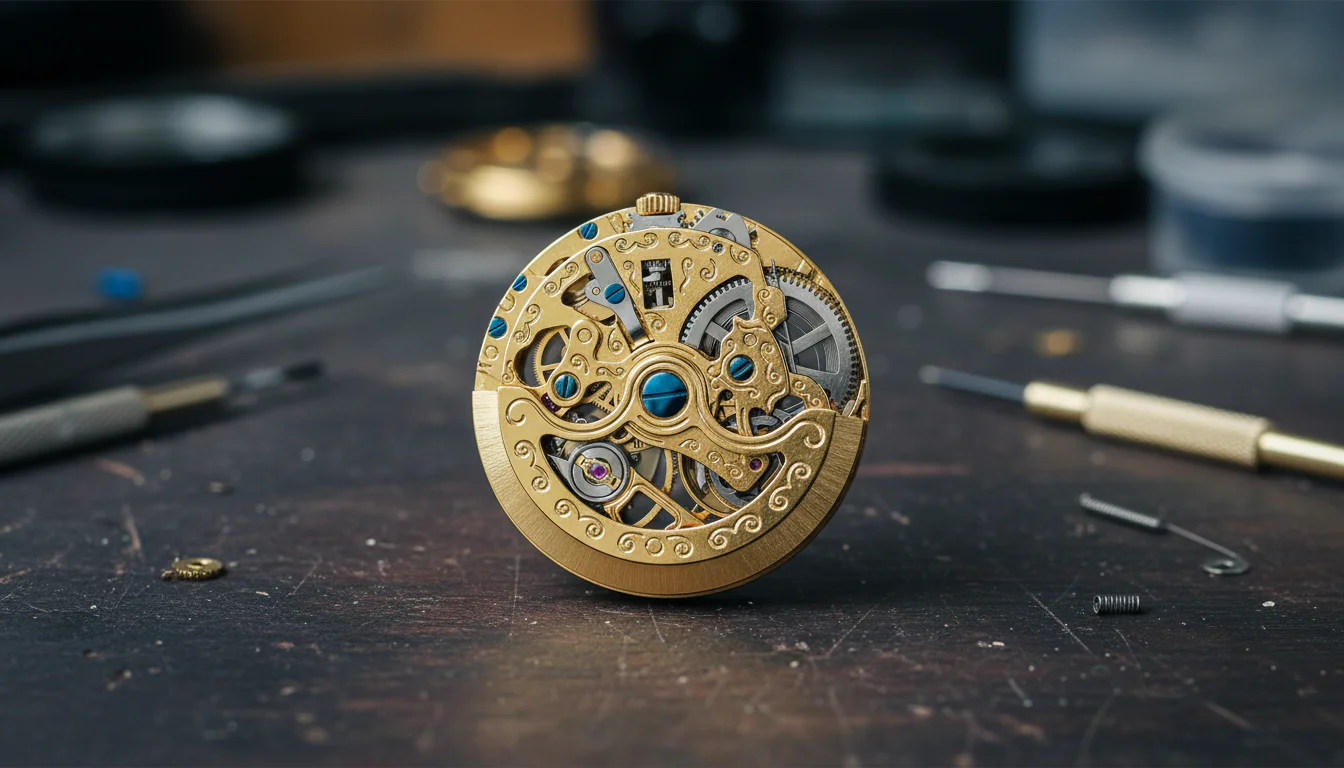 Inside a hacking movement, stopping the balance stops everything downstream of it.
Frequently asked questions
What is hacking seconds on a watch?
Hacking seconds is a feature that stops the seconds hand when you pull the crown to set the time. It lets you synchronize the watch to a reference clock down to the exact second, then restart it in sync by pushing the crown back in.
How does a hacking movement work?
When you pull the crown, a small lever touches the balance wheel and stops it. A stopped balance halts the gear train and the seconds hand. Pushing the crown back releases the lever and the movement runs again.
Do all watches have hacking seconds?
No. Most modern mechanical watches hack, including Rolex, Omega, Tudor, and current ETA and Sellita movements. Some entry-level calibers, many classic Seiko movements, and most vintage watches do not.
Does hacking make a watch more accurate?
No. Hacking only lets you set the time more precisely. It has no effect on how well the watch keeps time once it is running, and it does not cause extra wear.
Is a watch without hacking worse?
Not necessarily. Hacking is useful and signals a more complete movement, but its absence is normal on vintage watches and some entry-level pieces. It is a nice-to-have, not a dealbreaker.
The bottom line
Hacking seconds is a small, useful feature: pull the crown, the seconds hand stops, and you set the time to the exact second. It works by braking the balance wheel, it does not change accuracy, and most modern mechanical watches have it. Know whether a watch hacks before you buy, especially if setting it dead-on matters to you.
Browse authenticated pre-owned mechanical watches at 5dwatches.com.
Written by the 5D Watches desk. We buy, sell, and trade authenticated pre-owned watches every day, and we write these guides from what actually crosses the bench, not from a spec sheet.