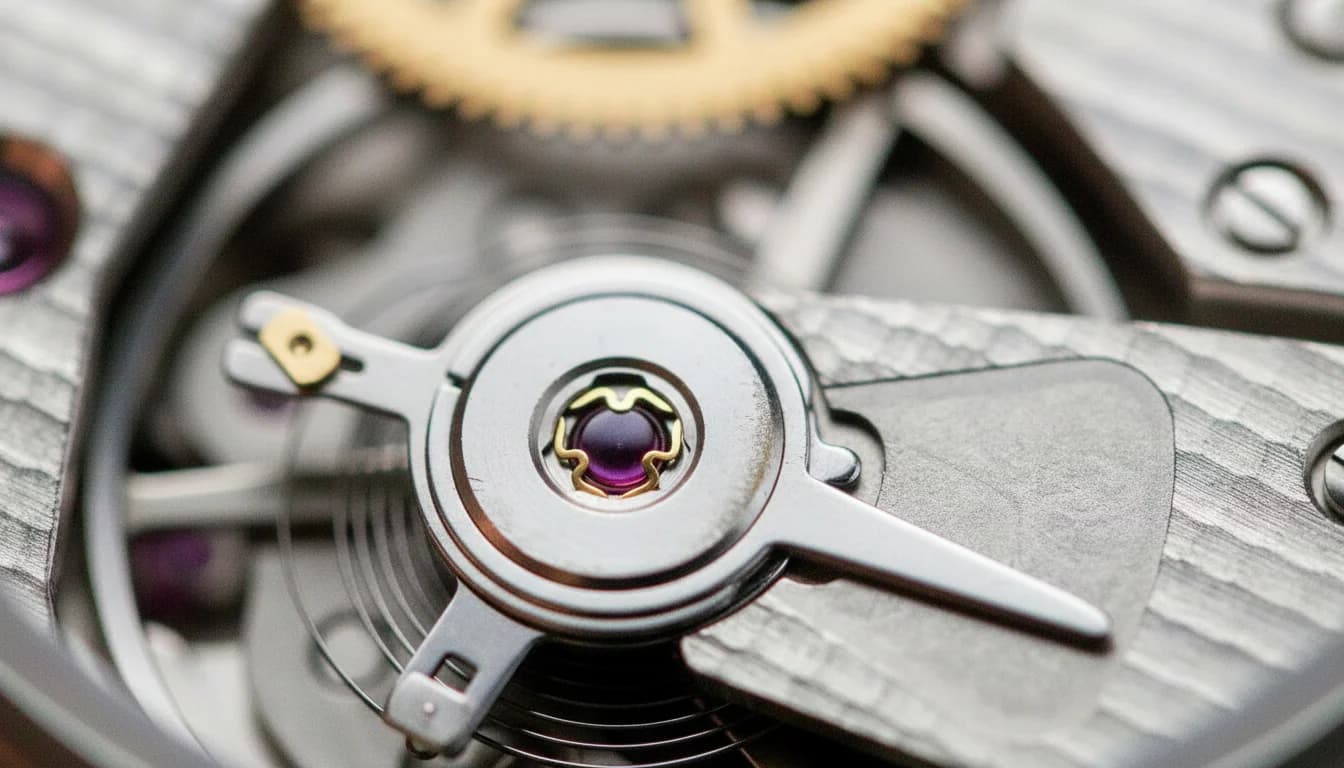
Drop a watch or knock it against a doorframe and the part most likely to break is one you never see: the balance staff. It is the thin axle the balance wheel spins on, and its pivots are finer than a human hair. Shock protection is the clever little system that keeps those pivots from snapping when the watch takes a hit.
So here is a plain-English explainer on what shock protection is, how the common Incabloc system works, why the balance staff is so fragile, and whether it makes a watch truly shockproof. It is one of the quiet reasons modern watches survive daily life.
The images in this article were generated by AI from real reference photographs of watch movements. They are illustrations, not photos of a specific watch for sale.
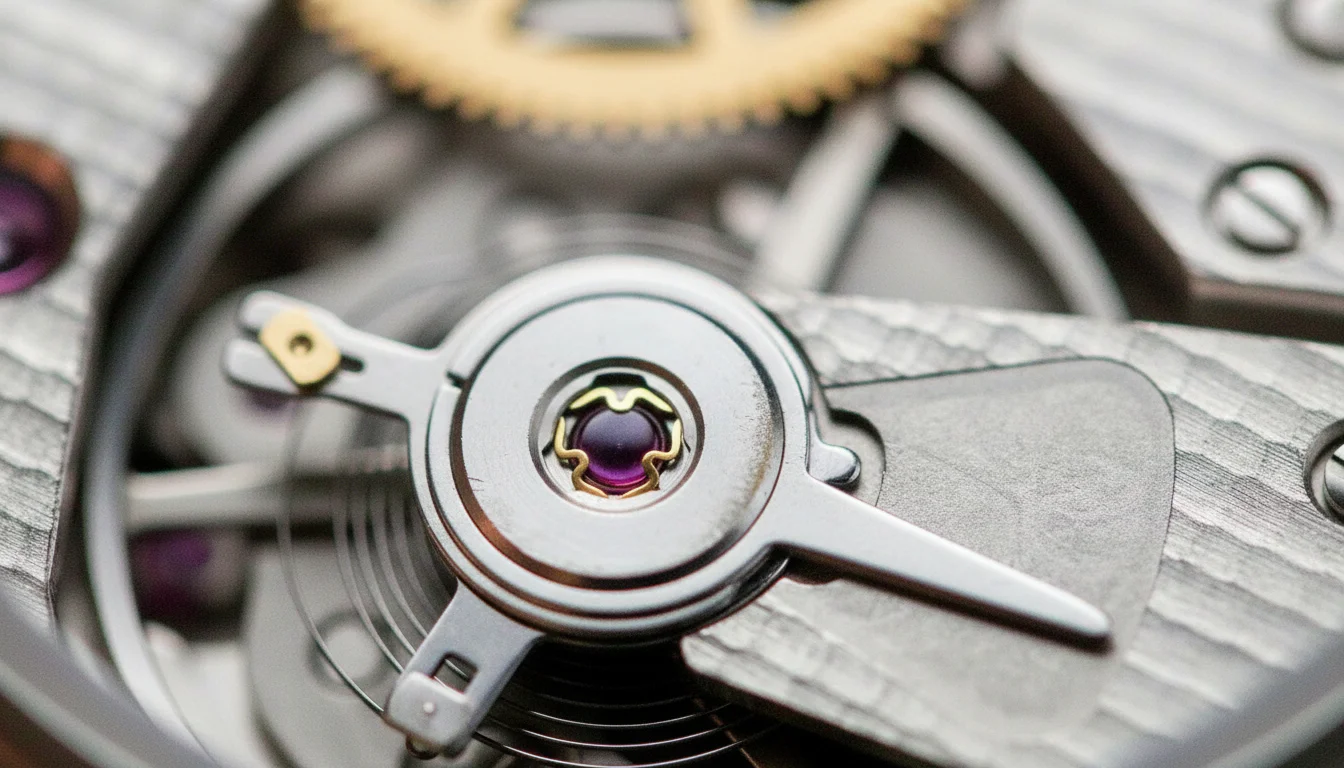 The heart of shock protection: a spring-mounted jewel that lets the balance pivot move and re-center under impact.
The short answer
Shock protection is a spring-mounted mounting for the balance wheel's jewel bearings. When the watch takes a hit, the spring lets the jewel and balance pivot shift slightly and then snap back into place, so the fragile pivot does not break. Incabloc is the most common system, and while it greatly reduces impact damage, no mechanical watch is truly shockproof.
Why the balance staff is so fragile
The balance wheel swings on a tiny axle called the balance staff, and the ends of that staff, the pivots, are incredibly thin. They have to be, because thin pivots mean low friction and good timekeeping.
The problem is that thin also means brittle. A hard knock can drive the balance sideways with enough force to snap a pivot, and a broken balance staff stops the watch dead. Before shock protection, a dropped watch often meant a broken pivot and a trip to the watchmaker.
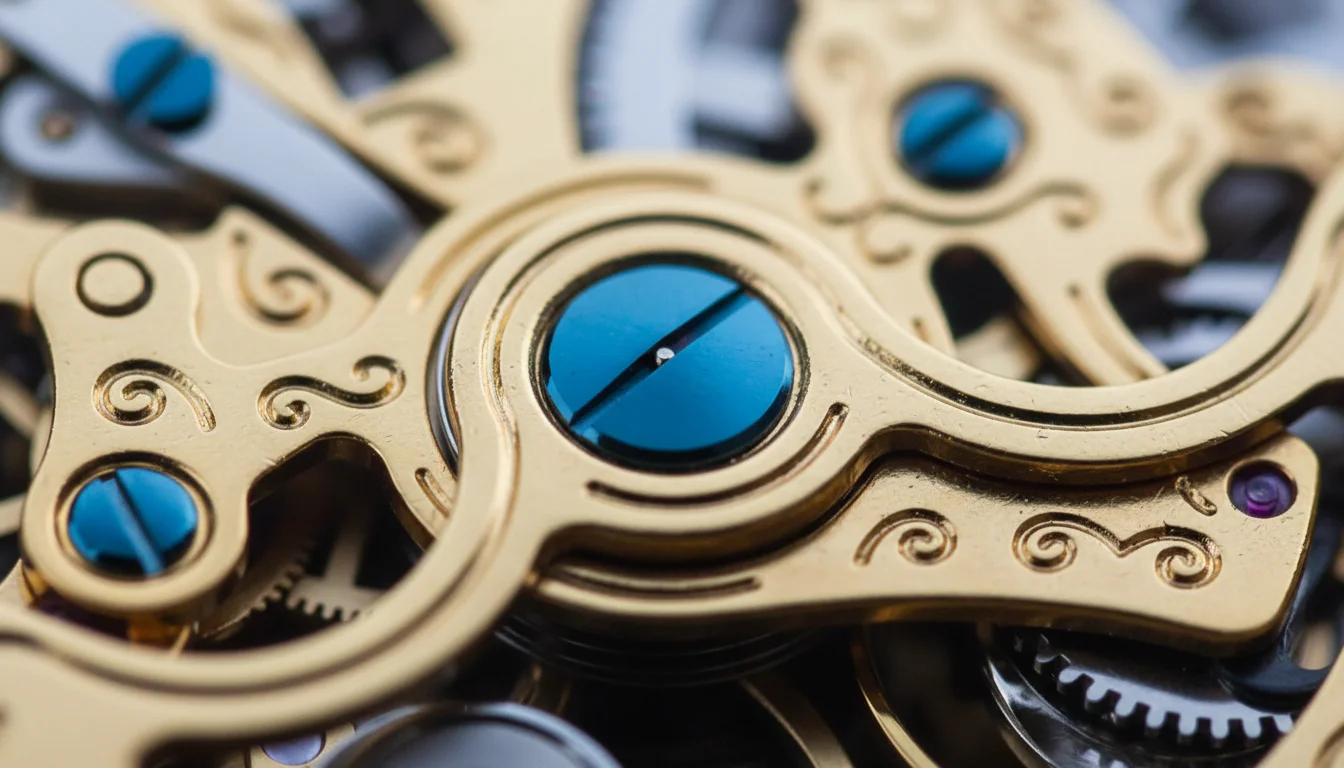 The balance staff pivot is finer than a hair, which is exactly why it needs protecting.
How Incabloc works
Incabloc, introduced in the 1930s, is the shock-protection system in most mechanical watches. The idea is elegant: instead of fixing the balance jewels rigidly, it mounts them on a spring.
Under normal running, the jewels stay perfectly centered. When the watch takes a hard knock, the balance staff pushes the jewel setting aside against the spring, so the shoulder of the staff, not the delicate pivot, absorbs the blow. Then the lyre-shaped spring snaps the jewel back into exact position.
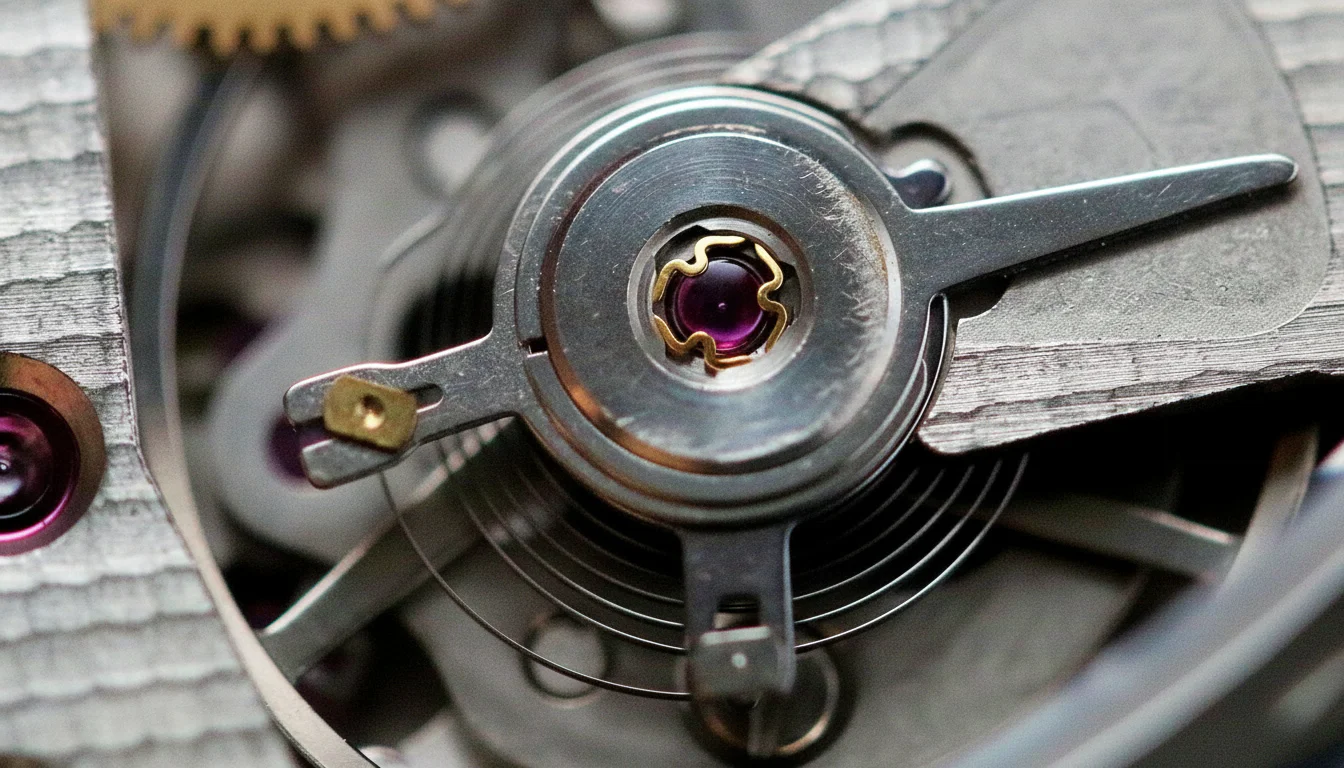 The cap jewel sits on a spring that gives under impact and then re-centers.
The jewels doing the work
The bearings involved are the same synthetic ruby jewels found throughout the movement, just mounted to move. Our guide to jewels in a watch movement covers what they are, and our explainer on the escapement covers the balance they protect.
Other shock-protection systems
Incabloc is the most famous, but it is not the only one.
- Kif is another widely used Swiss system, common in high-end watches.
- Etachoc is the system on ETA movements found across the industry.
- Rolex Paraflex is Rolex's in-house design, which the brand claims improves shock resistance over standard systems.
They all solve the same problem the same way: let the balance jewel move under impact, then return it to center.
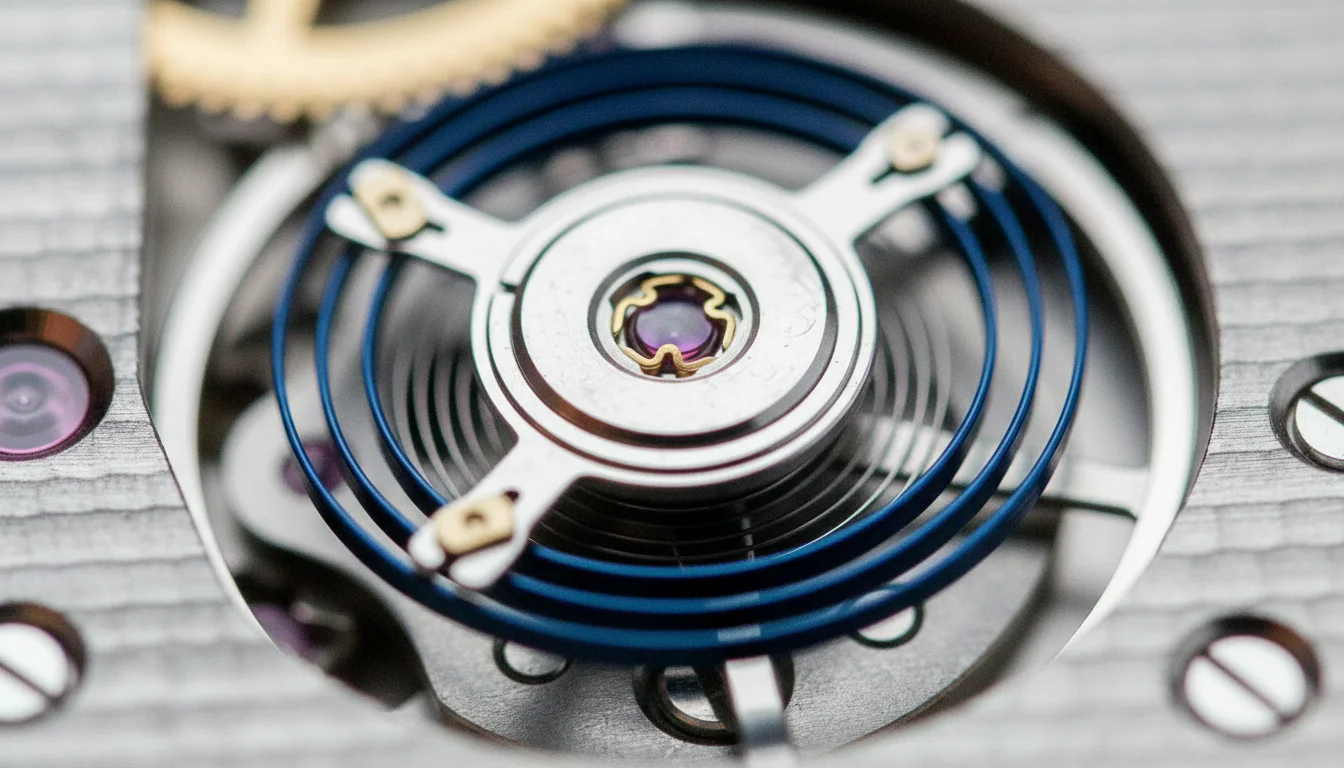 Shock protection exists to keep this balance assembly running after a knock.
Does shock protection make a watch shockproof
No, and this is the part buyers get wrong. Shock protection greatly reduces the risk of a broken balance staff, which is the most common impact failure, but it does not make a watch indestructible.
A hard enough impact can still damage other parts, knock the timing off, or crack a crystal. Shock protection is insurance against the most likely break, not a license to abuse the watch. If you want genuine toughness, our guide to titanium versus steel covers case durability too.
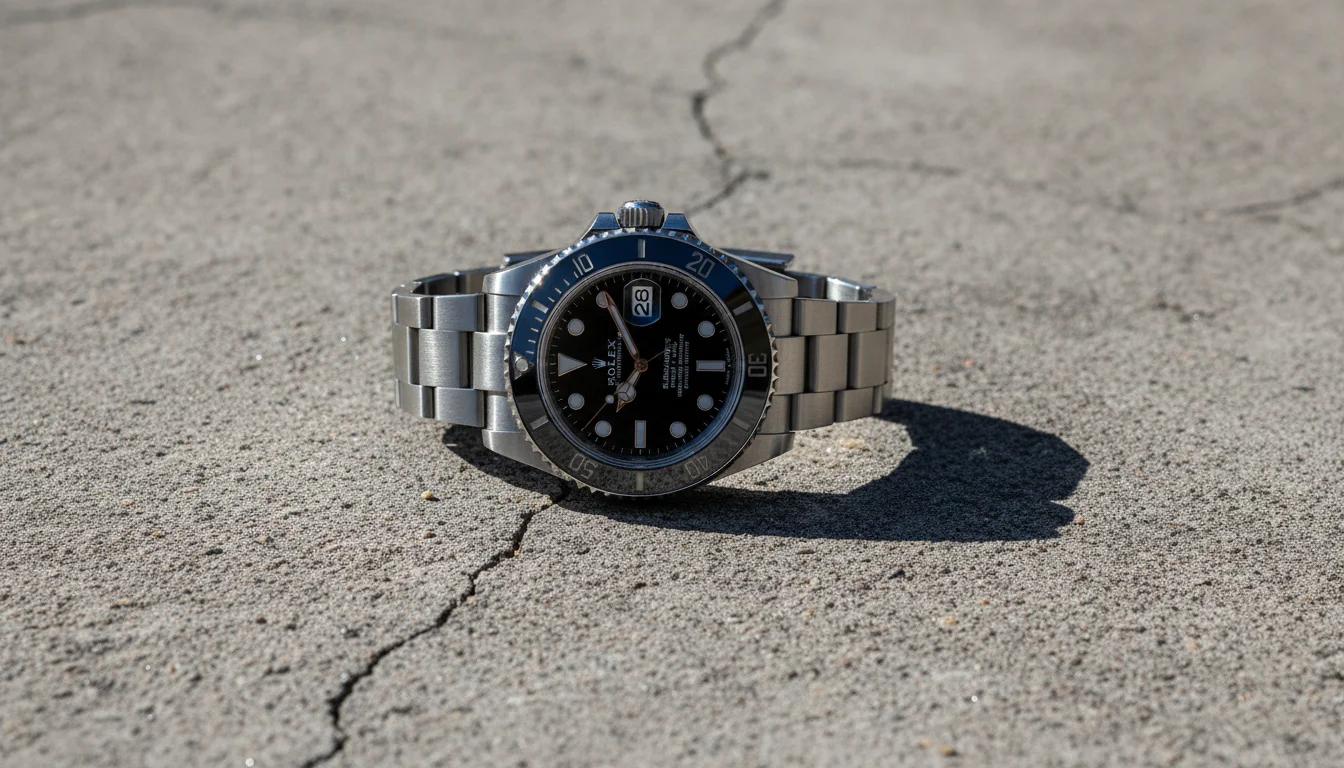 Shock protection helps a watch survive knocks, but no mechanical watch is truly shockproof.
Frequently asked questions
What is shock protection in a watch?
Shock protection is a spring-mounted mounting for the balance wheel's jewel bearings. It lets the balance pivot shift and re-center when the watch takes an impact, so the fragile pivot does not snap. Incabloc is the most common system.
How does Incabloc work?
Incabloc mounts the balance jewels on a lyre-shaped spring instead of fixing them rigidly. Under a knock, the balance staff pushes the jewel aside so its stronger shoulder absorbs the blow, and the spring then returns the jewel to its exact centered position.
Does shock protection make a watch shockproof?
No. It greatly reduces the most common impact failure, a broken balance staff, but no mechanical watch is truly shockproof. A hard enough hit can still knock the timing off, damage other parts, or crack the crystal.
Do all watches have shock protection?
Almost all modern mechanical watches do, using systems like Incabloc, Kif, Etachoc, or Rolex Paraflex. Many vintage watches from before the 1930s and some very cheap movements lack it, which makes their balance staffs more vulnerable.
What is a balance staff and why does it break?
The balance staff is the thin axle the balance wheel spins on, and its pivot ends are finer than a hair. They are thin to keep friction low, which also makes them brittle, so a hard impact can snap a pivot and stop the watch unless shock protection absorbs the blow.
The bottom line
Shock protection is the small system that saves your watch when you knock it. It cradles the fragile balance pivots on a spring, letting them shift and re-center instead of snapping under impact. Almost every modern mechanical watch has it, it makes them far more durable, but it does not make them indestructible, so treat the watch with a little care regardless.
Browse authenticated pre-owned mechanical watches at 5dwatches.com.
Written by the 5D Watches desk. We buy, sell, and trade authenticated pre-owned watches every day, and we write these guides from what actually crosses the bench, not from a spec sheet.