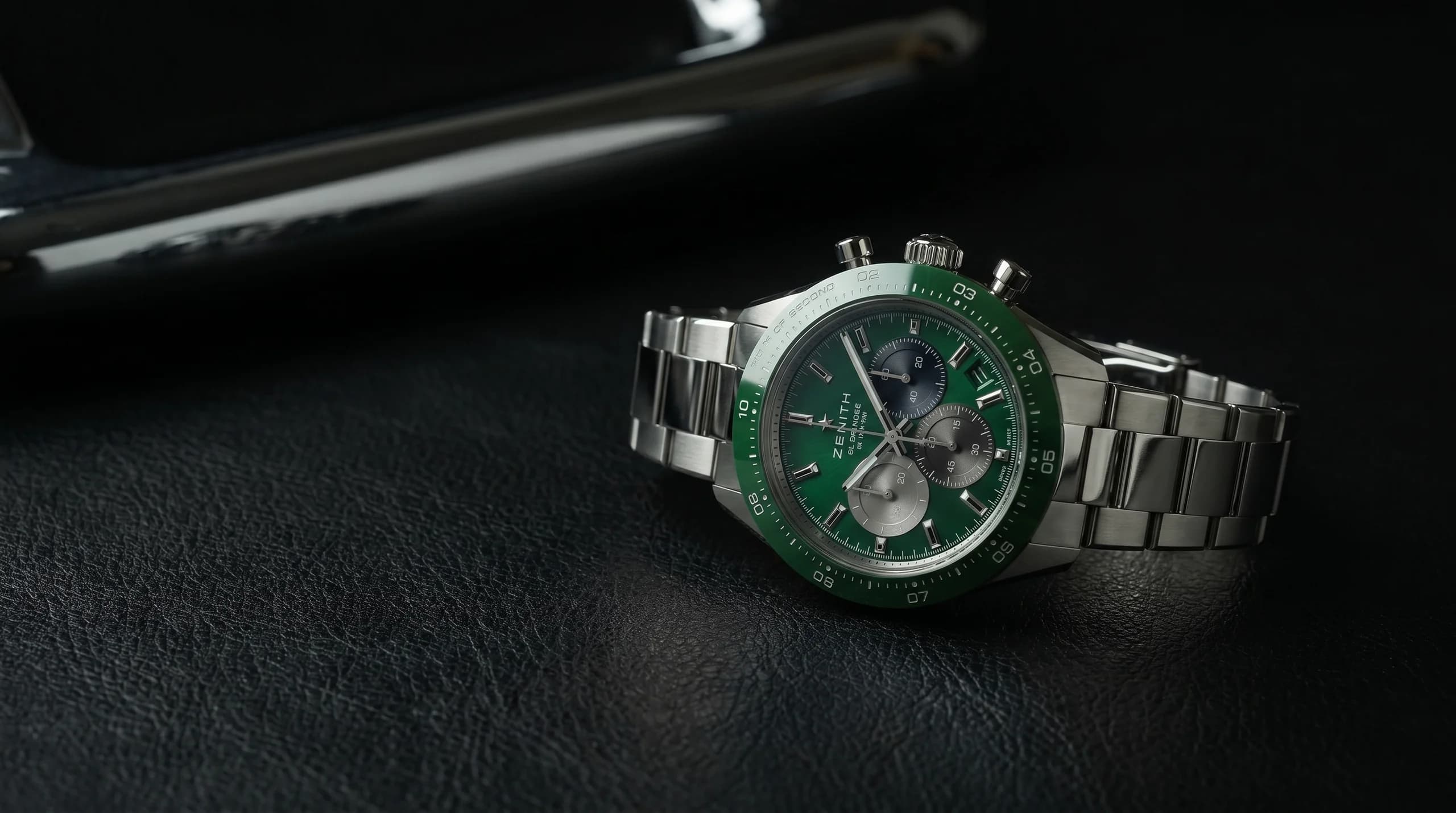
For twelve years, the engine inside the most coveted chronograph on earth was not built by Rolex. From 1988 to 2000, the automatic Rolex Daytona ran on a movement made by Zenith, the El Primero. That Daytona now trades north of thirty thousand dollars on the secondary market. The watch wearing the modern version of that same movement, a steel Zenith Chronomaster Sport, sells for around a third of the price. It is one of the strangest value gaps in mechanical watchmaking, and almost nobody is talking about it.
The images in this post are AI-generated illustrations for editorial purposes and may not exactly represent the actual watch, its dial, or its finishing.
The short answer
Zenith is a genuine manufacture, meaning it designs and builds its own movements, and the El Primero is one of the most important chronograph calibres ever made. It was among the first automatic chronographs when it launched in 1969, it runs at a high 5Hz that lets it time to a tenth of a second, and Rolex thought enough of it to power the Daytona for more than a decade. Yet a steel Chronomaster Sport sells for roughly $9,500 to $10,500, and the grey market has softened further this year. You are paying manufacture money for a movement with more pedigree than watches costing three times as much. The market is pricing the name on the dial, not the engineering behind it.
The movement that out-ran its own brand
In 1969, three groups raced to build the first automatic chronograph. Zenith's answer was the El Primero, Spanish for "the first," and it arrived as a fully integrated, high-frequency caliber rather than a module bolted onto an existing movement. Beating at 36,000 vibrations per hour, it could measure a tenth of a second when most chronographs stopped at a fifth or an eighth.
That frequency was never just a spec-sheet number. On the modern Chronomaster Sport, the central chronograph hand sweeps the entire dial in ten seconds rather than sixty, six times the usual speed, and the ceramic bezel is graduated from zero to ten to read those tenths directly. The current El Primero 3600 adds a 60-hour power reserve and a stop-seconds function, and Zenith's El Primero 21 splits off a second escapement running at a remarkable 50Hz to time hundredths.
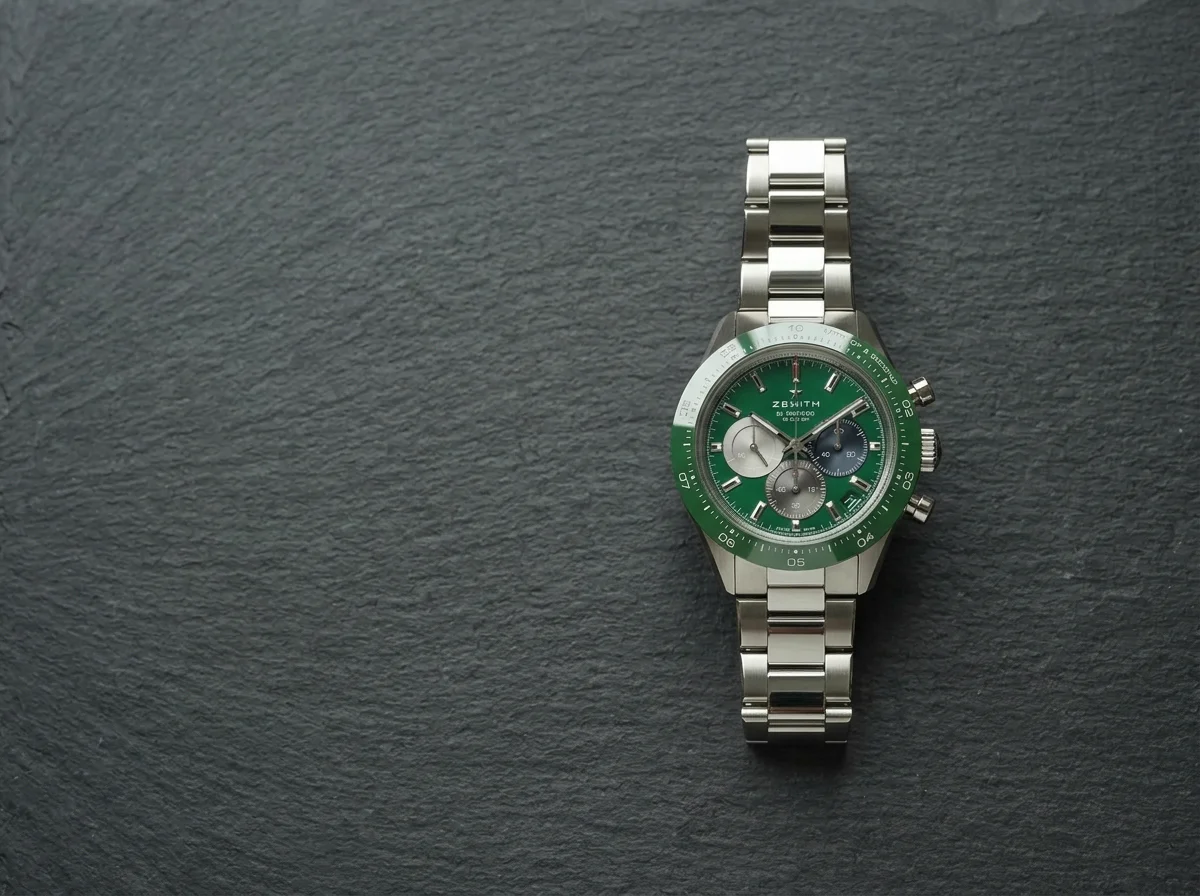 The El Primero's high frequency is why the chronograph hand and the tenth-of-a-second bezel exist. (AI-generated illustration.)
The watchmaker who hid the future in an attic
The El Primero almost did not survive the 1970s. As quartz gutted the Swiss industry, Zenith's American owner ordered the tooling for its mechanical movements scrapped. A watchmaker named Charles Vermot refused. As Teddy Baldassarre's history of the brand recounts, he secretly boxed up the presses, cams, and plans for the El Primero and hid them in an attic above the workshop, defying a direct corporate order.
That quiet act of disobedience is the only reason the caliber exists today. When demand for mechanical watches returned, Zenith pulled the tooling back out and reindustrialised the El Primero in 1986, then launched the Chronomaster collection in 1994. Few movements owe their survival to one person ignoring head office.
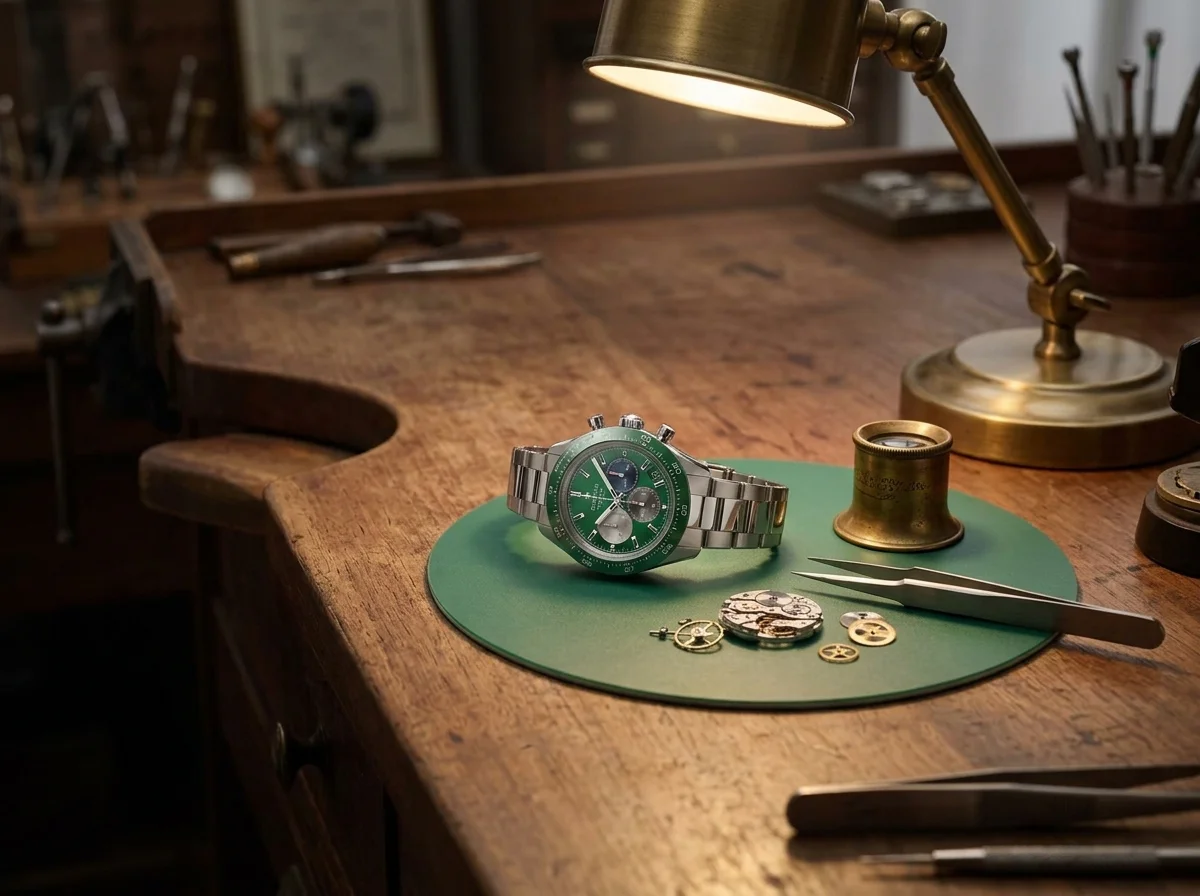 The El Primero survived the quartz crisis because one watchmaker hid the tooling rather than destroy it. (AI-generated illustration.)
The Daytona it quietly powered
Once the El Primero was back, the rest of the industry noticed. Ebel used it first, and then Rolex came calling. From 1988, the automatic Rolex Daytona reference 16520 ran on a modified El Primero, and it stayed that way until Rolex introduced its in-house caliber 4130 in 2000. Oracle of Time describes the El Primero as a benchmark chronograph movement, good enough that the most demanding brand in the business built its halo chronograph around it for twelve years.
Sit with that for a moment. The watch that defines chronograph desirability, the one with multi-year waitlists and brutal secondary premiums, spent its most collectible automatic era powered by Zenith. The crown got the credit. Zenith got the invoice.
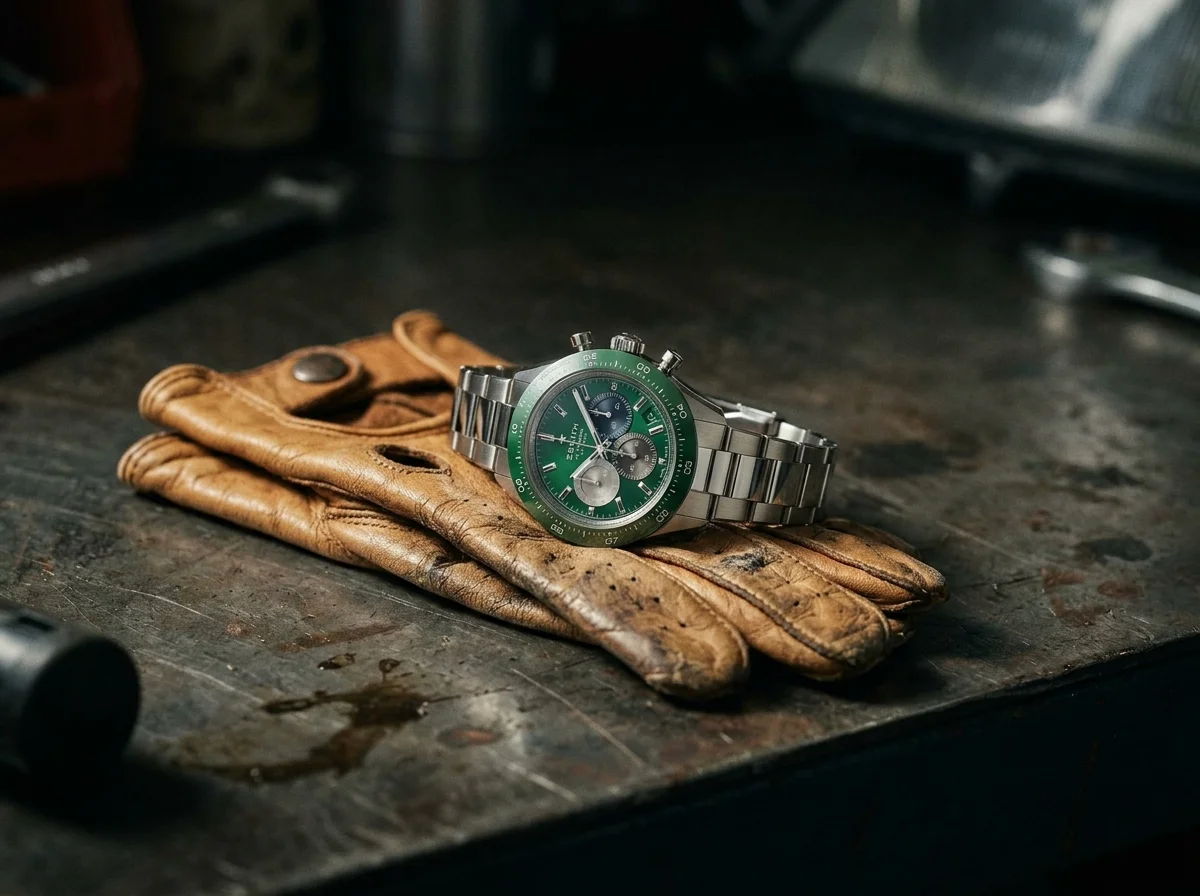 From 1988 to 2000, the automatic Daytona ran on a modified El Primero. (AI-generated illustration.)
What it costs now, and why that is strange
Here is the value gap laid out plainly. These are rough pre-owned figures, but the shape of the table is the whole story.
| Watch | What it is | Rough pre-owned price |
|---|---|---|
| Zenith Chronomaster Open | El Primero with an aperture onto the balance | from about $7,000 |
| Zenith Chronomaster Original | Classic 38mm tricolor El Primero | about $8,200 |
| Zenith Chronomaster Sport | Modern 41mm, ceramic 1/10 bezel | about $9,500 to $10,500 |
| Vintage Zenith A384 / A386 | The original 1969 El Primero references | about $14,000 to $19,000 |
| Rolex Daytona 16520 | The El Primero-powered Daytona | $30,000+ |
The same family of movement sits in the first three rows and the last one. The difference in price is almost entirely the name on the dial. On top of that, Oracle of Time flagged that Chronomaster Sport grey-market prices have cooled over the last eighteen months, with steel examples turning up below Zenith's own retail. The value case was already strong. It just got stronger.
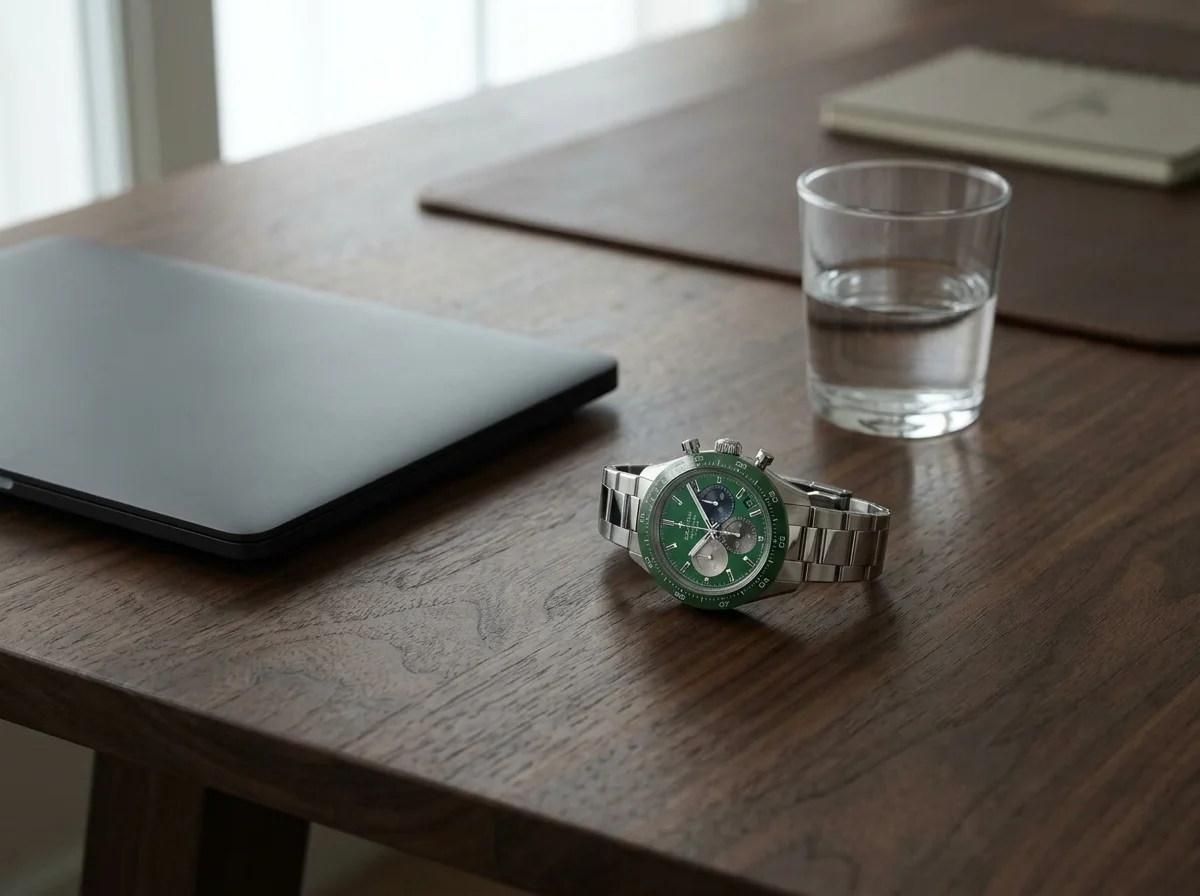 Manufacture movement, landmark history, and a price that sits below the hype brands. (AI-generated illustration.)
A working dealer's read
If you want a mechanical chronograph and you care more about what is inside than whose logo is on the dial, the El Primero is the most watch for the money in the category. You get a true manufacture caliber, a genuine place in horological history, and the kind of high-frequency engineering that most brands cannot offer at any price, all for less than a fashion-house quartz chronograph in a precious-metal case.
The catch is the one thing Zenith cannot manufacture: hype. That is also the opportunity, because the same market that overpays for a badge underpays for the movement that badge once borrowed. It is the identical logic that keeps Grand Seiko trading below where its watchmaking sits, and it traces back to the concentration I wrote about in this month's market read, where the money keeps piling into a handful of names while the rest of the field sits undervalued. Buy the movement. Let someone else pay for the crown.