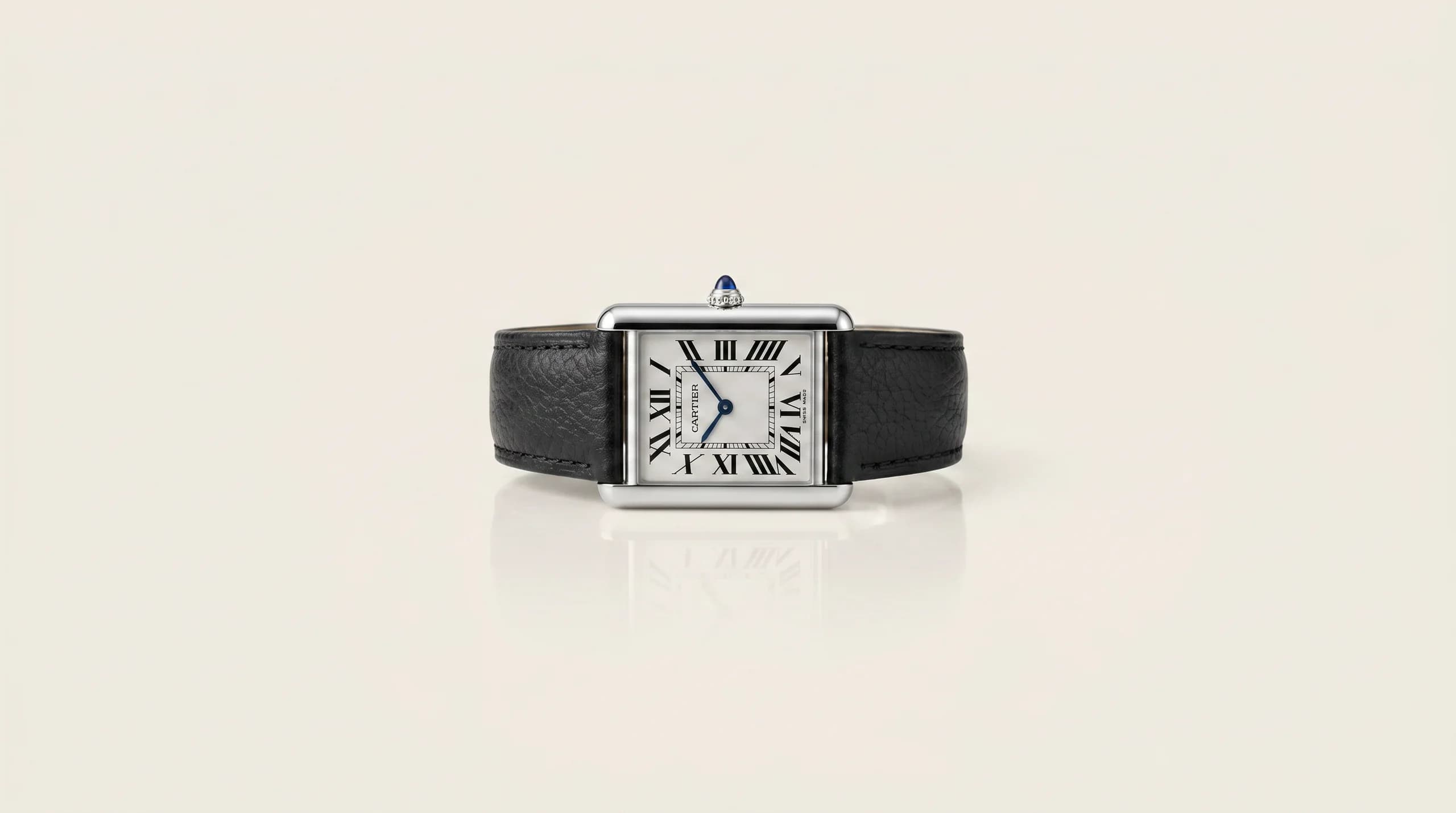
The short answer
For a decade the smart-money line was that Cartier is a fashion brand that does not hold value. The 2026 secondary market has quietly retired that idea.
While the hype-driven steel sports watches corrected hard, Cartier held. The catch is that "Cartier holds value" is too blunt to act on. The right reference in steel with papers behaves very differently from a trend-chasing variant bought at a peak.
Cartier earned its place on the value table. Just buy the core design in steel, with papers, and do not pay the hype tax.
All images in this post are AI-generated and may not perfectly represent the actual watch references discussed. They are intended for illustration only.
The reputation was wrong, and the data says so
The old knock on Cartier was that it sold jewelry first and watches second, so the watches would not hold up. The numbers tell another story.
During the market correction, when the broad index of the 50 most-traded watches fell sharply, Cartier was the one major brand to gain on the secondary market, rising while Rolex, Patek, and Tudor indexes all slipped. Collectors looked past the hype models and rediscovered shaped dress watches.
That was not a blip. By 2025 Cartier had moved from fashion favorite to a recognized secondary-market player, ranking among the top five brands for secondary-market gains alongside Patek, Rolex, Tudor, and Omega.
Why the shift happened
Two forces lined up at once: design fundamentals and a cultural moment.
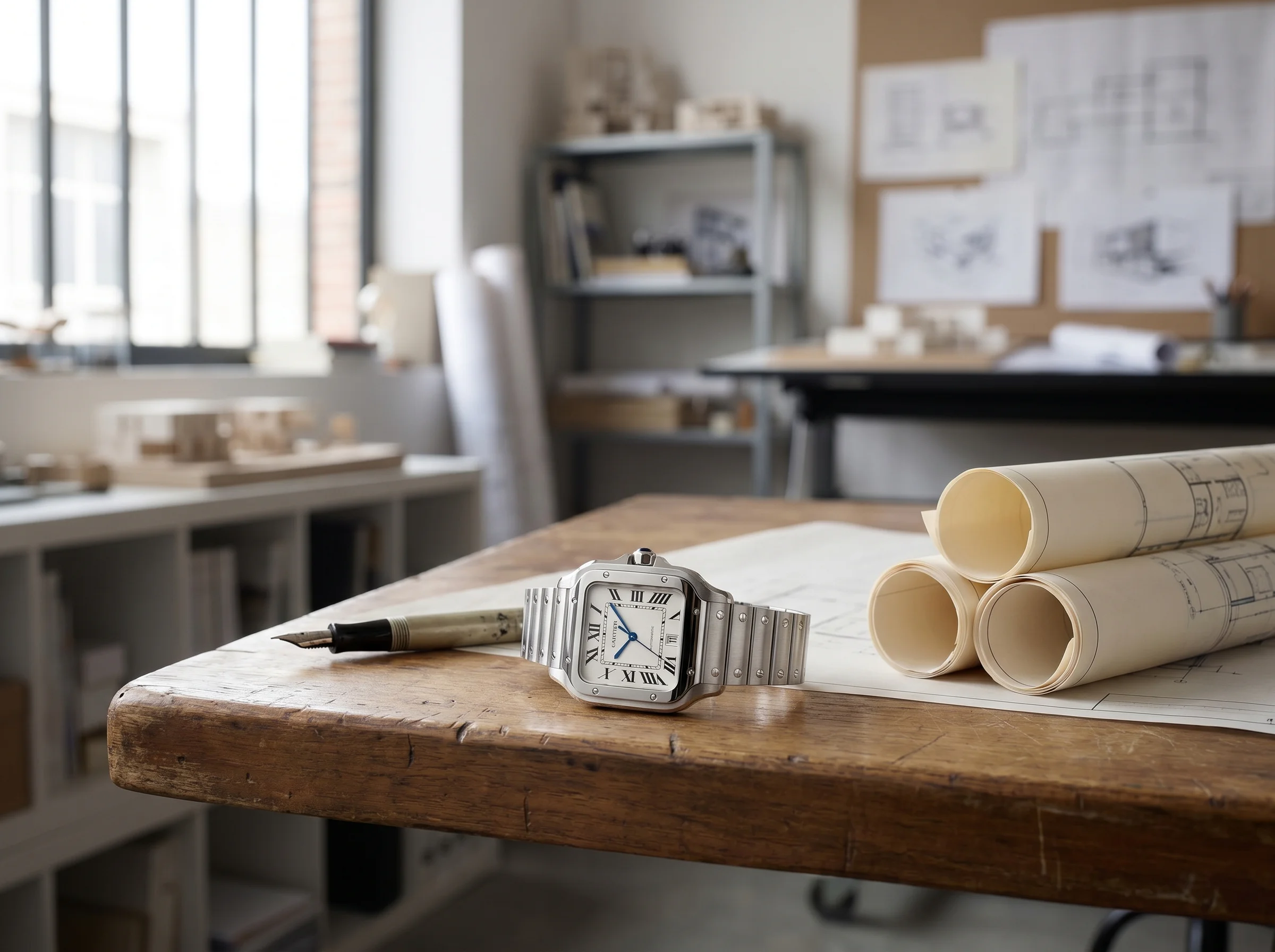 The Santos pairs an in-house automatic movement with a design that has barely changed in decades, the kind of stability the market rewards.
The design case is simple. A Tank from the 1990s looks like a Tank today, and a Santos keeps its proportions across generations. That visual continuity means an older piece does not look dated, which protects resale.
The cultural case is louder. Dress watches came back into fashion after years of steel-sports dominance, and Cartier sits at the center of that swing. The trend went into overdrive when Taylor Swift's engagement photos featured a Cartier Santos, and Cartier became, in the shorthand of the moment, Gen Z's Rolex. Three core models, the Tank, Santos, and Panthere, now drive the bulk of Cartier's secondary-market volume.
The honest part: "holds value" is not the whole picture
Here is where most Cartier hype pieces stop, and where a dealer has to keep going.
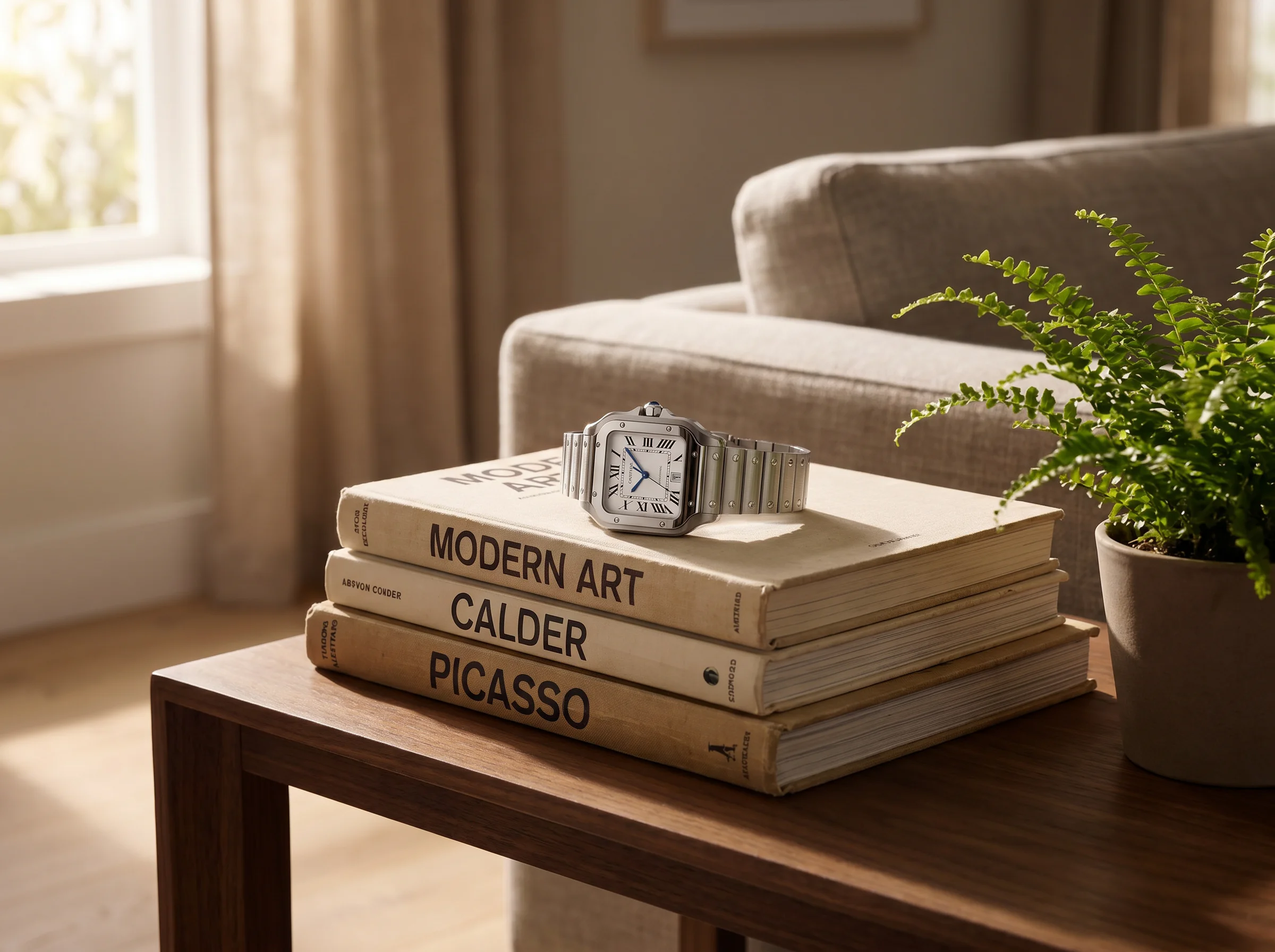 Strong as a category, the Santos still shows a meaningful average gap to retail. The reference and the entry price decide your outcome.
Look closely and the picture is mixed. WatchCharts puts the Santos collection's average value retention at about negative 23%, meaning the typical Santos trades well below its retail sticker. Other analyses cite retention of 75 to 125% on the strongest references.
Both are true, and that is the point. A core steel reference in the value sweet spot holds far better than a precious-metal or trend variant bought at full retail. The brand-level headline hides a wide spread between references. Buy the headline and you can still overpay badly.
Where the value actually concentrates
The reliable zone is narrow and easy to describe.
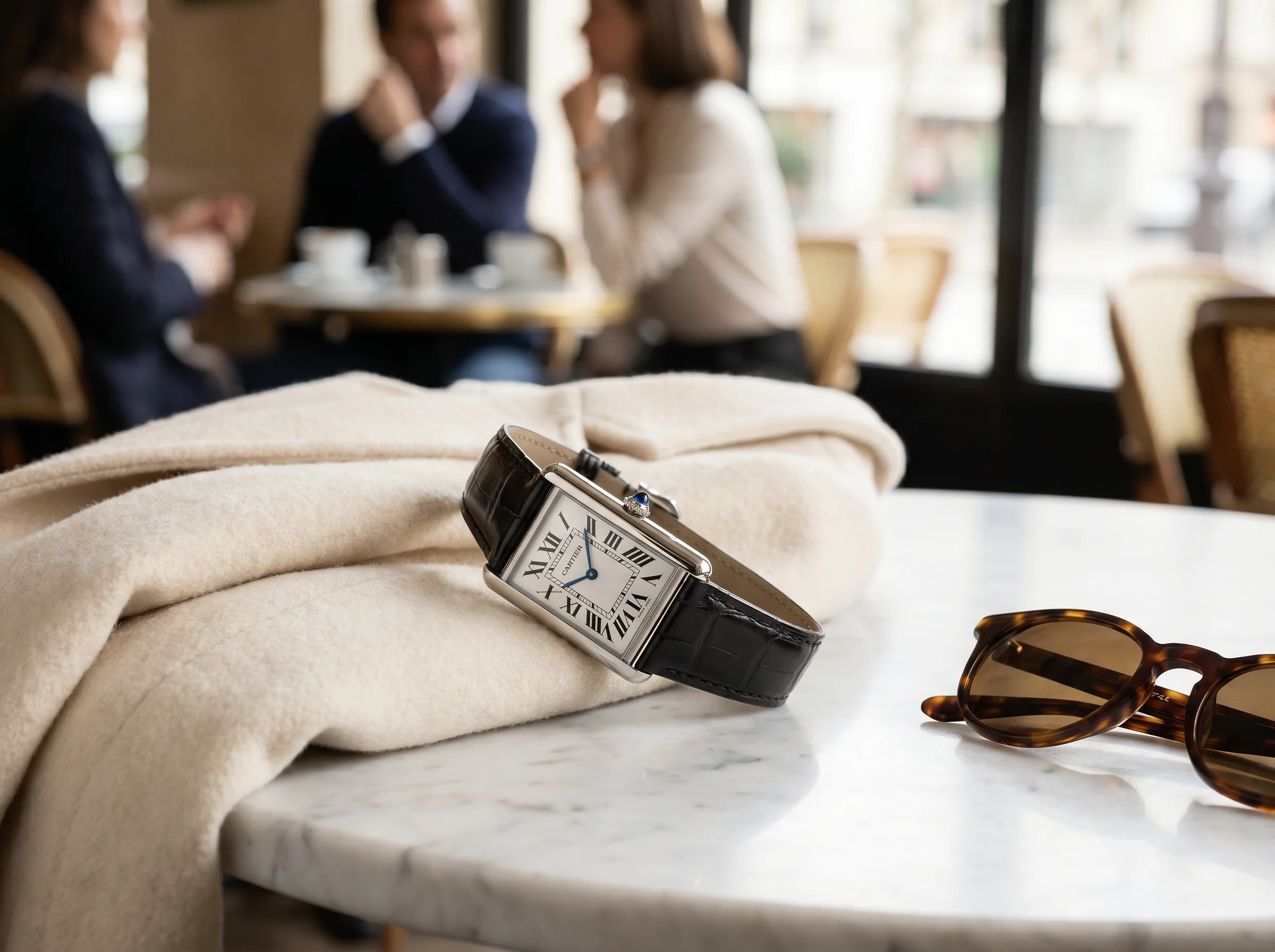 Steel Tank and Santos references in the four-to-eight-thousand-dollar band are the stable core of Cartier value.
| Model | Why it holds | Watch for |
|---|---|---|
| Tank (Must, Louis, Française) | Century-old design, deep name recognition, strong liquidity | Quartz Must versions appeal to fewer collectors than mechanical |
| Santos (steel, large/medium) | In-house movement, daily-wear versatility, consistent demand | Average retention still trails retail; entry price matters |
| Panthère (steel) | Riding the micro-watch trend, strong Gen Z demand | Trend-sensitive, spreads tightening as the fad matures |
| Ballon Bleu / trend variants | Recognizable | Narrower collector appeal, softer resale |
Steel pieces in the roughly $4,000 to $8,000 band show the most stable retention, historically holding 65 to 75% of value. That is the part of the catalog to shop.
How to buy a Cartier well in 2026
A few rules turn the brand-level strength into a smart individual purchase:
- Buy the core, not the trend. Tank and Santos in steel are the durable picks. The hotter a variant is right now, the more hype you risk paying for.
- Target the steel sweet spot. The $4,000 to $8,000 steel band is where retention is steadiest.
- Demand papers. Modern Cartier needs to be unworn-or-excellent with box and papers for full liquidity. A complete set is not optional at resale.
- Mind the spread and the exit. Aim to enter 25 to 30% below retail on pre-owned, and expect a slower sale than a Rolex, think weeks, not days.
This is the same logic from our brand-by-brand value map: the reference and the entry price decide your outcome, not the badge.
The dealer take
Cartier is no longer the exception you apologize for. It is a legitimate value hold, and one of the few places in 2026 where genuine design pedigree comes in under $8,000.
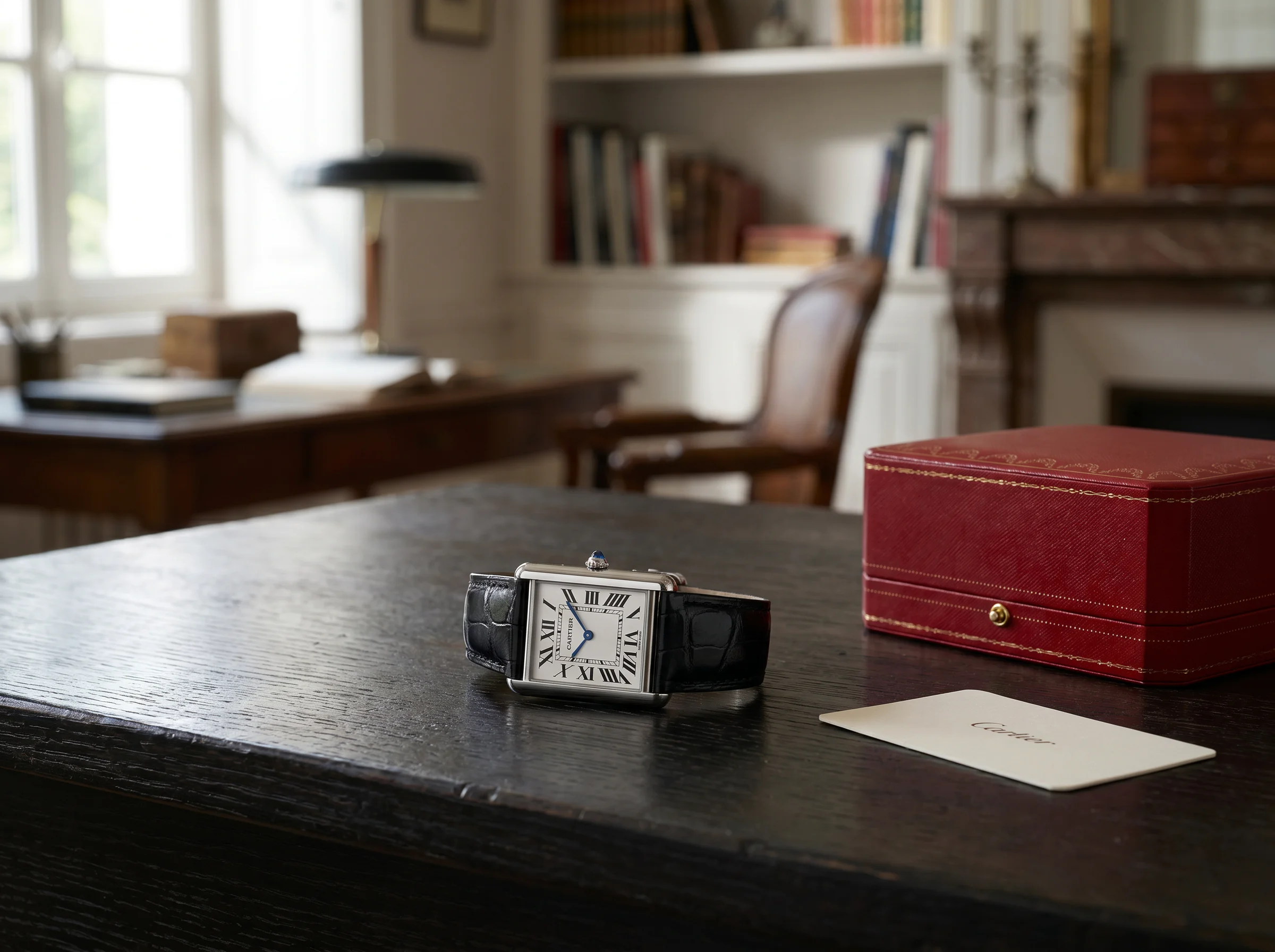 Buy the core steel reference with a complete set, and Cartier rewards you. Chase the trend variant at peak and it will not.
Just respect the nuance the headline skips. The brand holds because specific references hold, bought in steel, with papers, at a sensible price. Do that and you own one of the most recognizable designs in watch history at a fair number. Chase the hottest variant at a peak and you inherit the same depreciation as any fashion buy.
You can browse the pre-owned Cartier collection at 5dwatches.com.